
These Crock-Pot teriyaki chicken thighs cook in a balanced homemade sauce with soy, ginger, garlic, rice vinegar and a measured amount of brown sugar. The chicken is removed as soon as each thickest portion reaches 165°F, then the sauce is boiled and thickened separately. That keeps the thighs tender while giving the teriyaki a glossy, clingable finish.
Boneless skinless thighs are left whole for more reliable temperature checks. They can be sliced or cut into large pieces after resting, then returned to just enough sauce to coat. The result works over rice, in meal-prep bowls or alongside steamed vegetables.
This recipe was developed through culinary research and editorial review. Thigh size, soy-sauce sodium, sugar packing, slow-cooker heat and sauce evaporation vary, so temperature and final consistency determine the finish.
For another flexible shredded filling, see the 3-ingredient slow cooker salsa chicken recipe. The slow cooker chicken piccata recipe uses a brighter lemon-caper sauce.
Why the sauce is thickened after cooking
A covered slow cooker traps moisture, so teriyaki sauce rarely becomes glossy by evaporation alone. Leaving chicken in the cooker while attempting to reduce the liquid only overcooks the meat.
This method separates the finish into two jobs:
- Remove each thigh when it reaches 165°F.
- Boil the cooking liquid in a saucepan to make it food-safe and concentrate it.
- Add a cornstarch slurry gradually.
- Return rested chicken only long enough to coat.
The saucepan also lets you skim fat and taste the sauce before deciding how much thickener it needs.
Ingredients
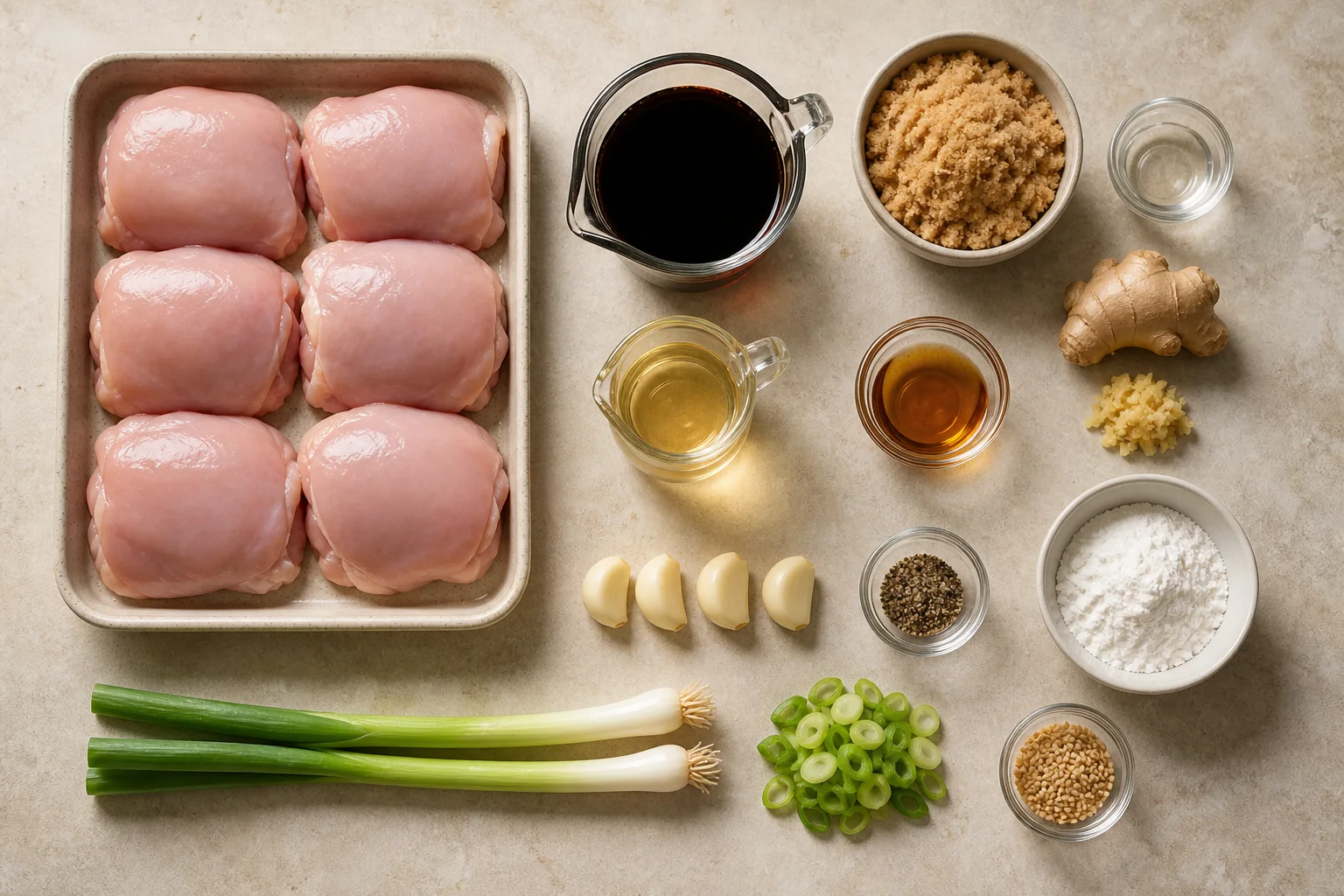
- 2 pounds boneless skinless chicken thighs, fully thawed and trimmed, 6 to 8 pieces
- 1/2 cup low-sodium soy sauce
- 1/3 cup packed light brown sugar
- 1/4 cup water, divided
- 3 tablespoons unseasoned rice vinegar
- 1 tablespoon toasted sesame oil
- 1 tablespoon finely grated fresh ginger
- 4 garlic cloves, minced
- 1/2 teaspoon black pepper
- 2 tablespoons cornstarch
- 2 scallions, thinly sliced
- 2 teaspoons toasted sesame seeds
Ingredient notes and substitutions
Chicken thighs: Boneless skinless thighs tolerate slow cooking well and stay juicy. Trim large pieces of fat but leave the thighs whole until after cooking.
Chicken breasts: Breasts can replace thighs by weight, but begin checking earlier. Remove each piece at 165°F and slice after resting. The finished meat will be leaner and less forgiving.
Soy sauce: Use low-sodium soy sauce; standard soy can make the reduced sauce too salty. For gluten-free preparation, use certified gluten-free tamari and verify every condiment.
Brown sugar: One-third cup gives a recognizable teriyaki sweetness without making the sauce candy-like. Pack it into the measuring cup for consistency. Honey can replace half, but it changes flavor and browning.
Rice vinegar: Choose unseasoned rice vinegar. Seasoned versions contain added sugar and salt, changing the balance.
Sesame oil: Toasted sesame oil is potent and used as a flavoring, not a frying oil. One tablespoon is enough for the entire batch.
Ginger: Fresh grated ginger provides a clean aromatic bite. Use 1 teaspoon ground ginger only if fresh is unavailable; the flavor will be warmer and less bright.
Cornstarch: Mix it with cool water before adding it to hot sauce. Arrowroot can substitute, but add it after removing sauce from a hard boil because prolonged high heat can weaken its texture.
How to make Crock-Pot teriyaki chicken thighs
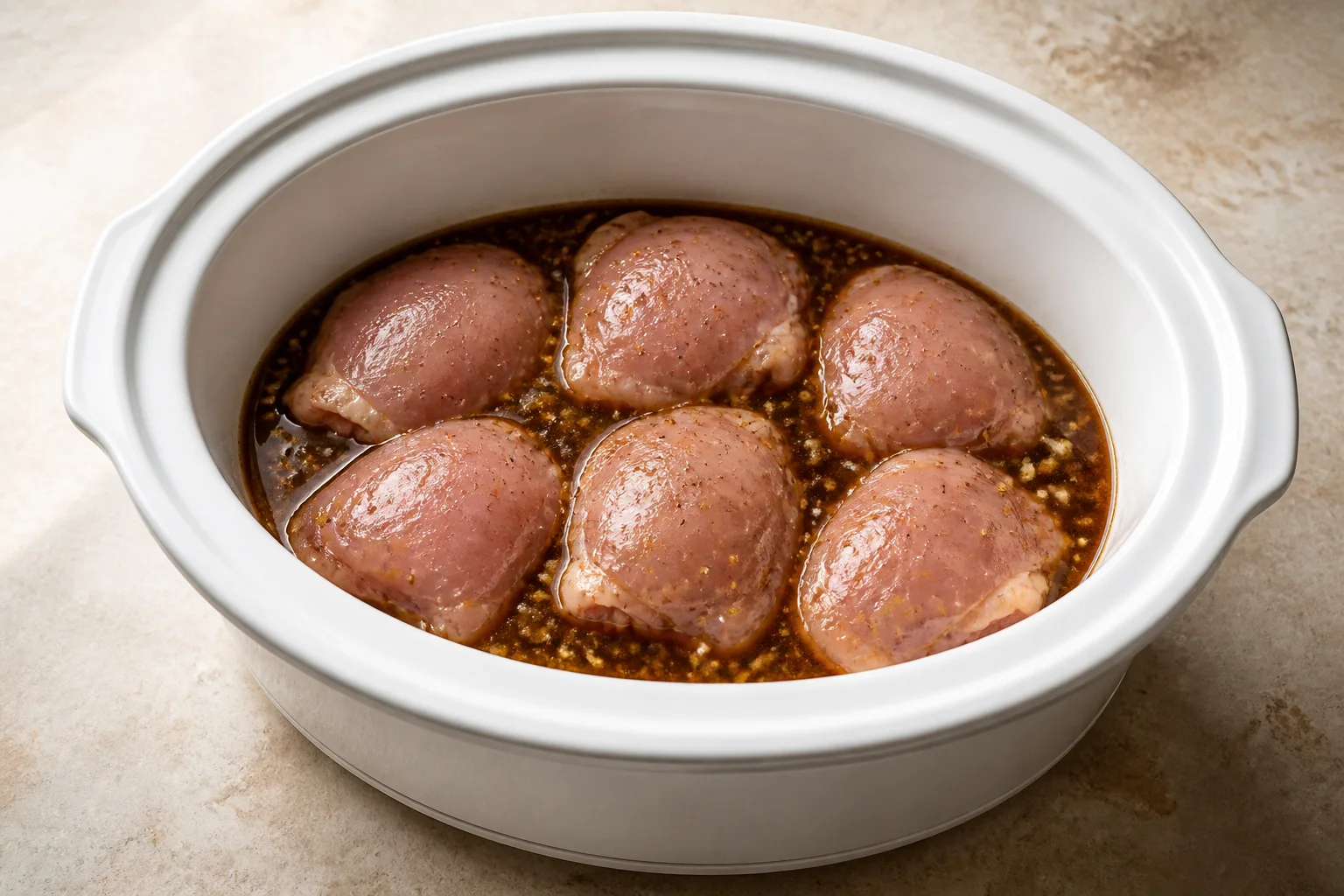
1. Trim and arrange the chicken
Pat fully thawed chicken thighs dry; do not rinse them. Trim large flaps of fat and check that the pieces are similar in thickness.
Arrange thighs in one layer in a 4- to 6-quart slow cooker with minimal overlap. A very large, lightly filled cooker may heat the edges quickly.
2. Mix the teriyaki braising sauce
Whisk soy sauce, brown sugar, 2 tablespoons water, rice vinegar, sesame oil, ginger, garlic and black pepper until the sugar begins dissolving.
Pour the mixture over and around the chicken. Turn each thigh once with dedicated tongs to coat, then cover immediately.
3. Slow-cook and check early
Cook on low for 3 to 4 hours or high for 1 1/2 to 2 1/2 hours. Begin checking at the earliest time because boneless thighs and slow cookers vary.
Insert a clean thin-probe thermometer into the thickest center of each piece. Remove each thigh to a clean plate when it reaches 165°F, consistent with the federal safe minimum temperature for poultry. Rest 5 minutes.
4. Boil and skim the sauce
Pour the cooking liquid through a fine-mesh strainer into a medium saucepan. Discard strained ginger or garlic solids if a smooth sauce is preferred.
Bring the liquid to a full boil over medium-high heat and boil for at least 1 minute, stirring. Skim excess fat from the surface with a wide spoon.
5. Thicken gradually
Whisk cornstarch with the remaining 2 tablespoons cool water until smooth. While the sauce simmers, whisk in half the slurry. Cook for 30 to 60 seconds and assess.
Add more slurry only until the sauce coats the back of a spoon. It thickens further as it cools, and using all the slurry may not be necessary.
6. Slice and glaze
Slice rested thighs across the grain or cut them into large bite-size pieces. Return them to the slow cooker or a serving bowl and add enough hot teriyaki sauce to coat.
Garnish with scallions and toasted sesame seeds. Serve extra sauce at the table rather than drowning the chicken.
How to keep teriyaki sauce from becoming too salty
Reduction concentrates salt along with flavor. Start with low-sodium soy sauce and do not add salt to the chicken. Taste only after the cooking liquid has been boiled safely.
If the reduced sauce is too salty:
- Add water 2 tablespoons at a time.
- Add a teaspoon rice vinegar for balance.
- Increase sweetness with brown sugar 1 teaspoon at a time only if needed.
- Thicken again after diluting.
Do not simply add more cornstarch; thickening changes texture but does not reduce sodium intensity.
Can sauce be thickened in the Crock-Pot?
Yes, but it is slower and less predictable. After removing the chicken, stir in slurry, cover and cook on high for 10 to 20 minutes, stirring every 5 minutes. The sauce may remain looser because it is not boiling vigorously.
The saucepan method is preferred for two reasons: the raw-chicken cooking liquid receives a clear boil, and reduction happens without continuing to cook the thighs.
Never use a marinade that touched raw chicken as a serving sauce unless it is boiled thoroughly first.
Food-safety setup
Start with fully thawed chicken. USDA slow cooker safety guidance advises thawing meat or poultry before slow cooking and keeping perishables refrigerated until preparation.
Do not use a delayed-start timer. Load the chicken and sauce, cover and turn on the cooker immediately. Use dedicated tongs for raw chicken, then replace them with clean utensils.
Clean the thermometer probe between checking separate thighs. Place cooked chicken on a clean plate, never the raw-meat plate.
Troubleshooting
The sauce is watery
Boil it in a saucepan before adding slurry. A slow cooker traps moisture, so a thin cooking liquid is normal. Add slurry gradually and allow 30 to 60 seconds of simmering between additions.
The sauce is too thick
Whisk in hot water one tablespoon at a time. Stop when it flows from a spoon but still coats the chicken. Over-thick teriyaki becomes gel-like after cooling.
The sauce has lumps
Cornstarch was probably added directly to hot liquid or the slurry sat long enough to settle. Re-whisk slurry immediately before pouring. Strain a lumpy sauce and whisk while reheating.
The chicken is dry
It stayed in the cooker after reaching 165°F or the thighs were unusually small. Start checks earlier and remove pieces individually. Slice into larger pieces and coat generously with sauce.
The chicken is greasy
Trim visible fat before cooking and skim the boiled sauce. Boneless thighs still release some fat, which floats to the surface for easy removal.
The sauce tastes too sweet
Add rice vinegar one teaspoon at a time and a splash of water. Do not add extra soy first; it can swing the sauce from too sweet to too salty.
The sauce tastes flat
Fresh ginger, garlic and rice vinegar provide brightness. Add a little vinegar after boiling or grate a small amount of fresh ginger into the finished hot sauce. Sesame oil should remain restrained.
Serving ideas
Serve teriyaki thighs over steamed short-grain rice, brown rice or quinoa. Add steamed broccoli, snap peas, green beans or bok choy for contrast.
For meal-prep bowls, portion rice and vegetables separately from sauced chicken when possible. Keep scallions and sesame seeds in a small container so they stay fresh.
The chicken also works in lettuce cups with shredded cabbage and cucumber. Use a small amount of sauce so the leaves remain crisp.
Variations
Pineapple: Add 1 cup drained pineapple chunks during the final 10 minutes, after chicken is cooked. Pineapple juice changes sweetness and acidity; do not replace all the water with it without retasting.
Spicy teriyaki: Stir 1 to 2 teaspoons sambal oelek or sriracha into the finished sauce. Adding heat at the end lets each serving be adjusted.
Orange-ginger: Add 1 teaspoon finely grated orange zest after thickening. Do not slow-cook peel or white pith.
Vegetable add-in: Steam broccoli separately and fold it into the glazed chicken. Raw broccoli cooked for hours becomes soft and can add water to the sauce.
Storage and reheating
Refrigerate chicken and sauce in shallow airtight containers within 2 hours. The federal cold-storage chart gives cooked poultry leftovers a 3-to-4-day refrigerated window at 40°F or below.
Reheat chicken with a spoonful of sauce in a covered skillet over medium-low or in the microwave, pausing to turn pieces. Heat the center to 165°F. Thin the sauce with water if it gels in the refrigerator.
Do not reheat refrigerated leftovers from cold in a slow cooker. Heat rapidly first; a preheated cooker can then hold already-hot food.
Freezing instructions
Cool chicken and sauce promptly and freeze meal-size portions for up to 3 months for best quality. Leave some headspace because sauce expands.
Thaw overnight in the refrigerator and reheat gently to 165°F. The cornstarch sauce may look slightly separated after freezing; whisk in a splash of water while heating.
Freeze rice separately and prepare green toppings fresh.
Frequently asked questions
Can I put frozen chicken thighs in the Crock-Pot?
No. Thaw them safely in the refrigerator first. This cooking window and federal slow-cooker guidance apply to fully thawed poultry.
Do chicken thighs need to be browned first?
No. The soy-based sauce colors the exterior, and the chicken is glazed after cooking. Browning is optional and adds another pan without being necessary for safety or sauce texture.
Can I use bone-in thighs?
Yes, but remove the skin first and expect a longer cooking window. Check the thickest meat without touching bone and remove every bone before serving sliced chicken.
Is teriyaki sauce the same as a marinade?
It can serve both roles, but liquid that contacts raw chicken must be boiled before it is used as a serving sauce. This recipe boils and thickens the cooking liquid after the chicken is removed.
Can I double the recipe?
Only if the slow cooker stays within its recommended fill range and thighs can be arranged with limited stacking. A crowded cooker changes heating time; check multiple pieces rather than relying on the original clock.
Can it stay on warm?
Hold only briefly if the appliance maintains food safely hot. Keep the chicken in a small amount of sauce, but prolonged holding still softens and dries it.
Why is my teriyaki sauce not glossy?
It may be too thin, not hot enough to activate cornstarch or cloudy with fat. Boil, skim and add smooth slurry gradually. Gloss increases as the starch cooks.
Recipe development note
This recipe was developed through culinary research and editorial review. It has not been represented as a personal kitchen test. Thigh size, soy-sauce sodium, sugar packing and slow-cooker heat vary; remove each piece at 165°F and finish the sauce separately.
Nutrition is an estimate based on generic ingredients and excludes rice and vegetables. The accompanying visuals are AI-assisted food-editorial images, not photographs of a kitchen test.
Recipe at a glance
| Metric | Details |
|---|---|
| Prep time | 15 minutes |
| Cook time | 240 minutes |
| Total time | 260 minutes |
| Yield | 8 servings |
Printable recipe card

Crock-Pot Teriyaki Chicken Thighs Recipe
Ingredients
Equipment
Method
- Pat fully thawed thighs dry, trim large pieces of fat and arrange in one layer in a 4- to 6-quart slow cooker.
- Whisk soy sauce, brown sugar, 2 tablespoons water, rice vinegar, sesame oil, ginger, garlic and pepper. Pour over chicken and turn once to coat.
- Cover and cook on low 3 to 4 hours or high 1 1/2 to 2 1/2 hours, beginning checks at the earliest time.
- Remove each thigh when its thickest center reaches 165°F. Rest on a clean plate for 5 minutes.
- Strain cooking liquid into a saucepan. Bring to a full boil for at least 1 minute, stirring, and skim excess fat.
- Whisk cornstarch with remaining 2 tablespoons cool water. Add slurry gradually to simmering sauce until it coats a spoon.
- Slice rested chicken, coat with enough hot teriyaki sauce and garnish with scallions and toasted sesame seeds.
Notes
- Use fully thawed chicken and remove each piece at 165°F.
- Use low-sodium soy sauce because reduction concentrates salt.
- Boil raw-chicken cooking liquid before using it as serving sauce.
- Add cornstarch slurry gradually; sauce thickens more as it cools.
- This recipe was developed through culinary research and editorial review.
This recipe was developed through culinary research and editorial review. Thigh size, soy-sauce sodium, sugar packing and slow-cooker heat vary; remove each piece at 165°F and finish the sauce separately.
Nutrition is an estimate based on generic ingredients and excludes rice and vegetables; actual values vary by brand.