
Slow cooker beef stew becomes rich rather than watery when the beef is browned, the added liquid is restrained, and the thickener is added near the end. Chuck roast has enough connective tissue for a long gentle cook, while waxy potatoes and large carrot pieces hold their shape better than fragile small cuts.
Slow cookers differ in crock shape and running temperature. Use the stated range to plan the day, then let the texture and reduction cues determine when the recipe is ready.
This recipe was developed through culinary research and editorial review. It is not represented as a personal kitchen test.
For a related idea, see easy slow cooker chicken soup. You may also want slow cooker apple butter.
Why this recipe works
Browning develops a savory base: The skillet creates roasted flavor that a moist slow cooker cannot produce on its own.
Liquid stays below the ingredients: Beef and vegetables release moisture during cooking, so the recipe does not begin with a pot full of broth.
Starch goes in near the end: Cornstarch thickens predictably after the meat and vegetables are tender without coating them during the long cook.
The first batch is the useful reference point. Measure as written, note the finish in your equipment, and change only one variable at a time if an adjustment is needed.
Ingredients
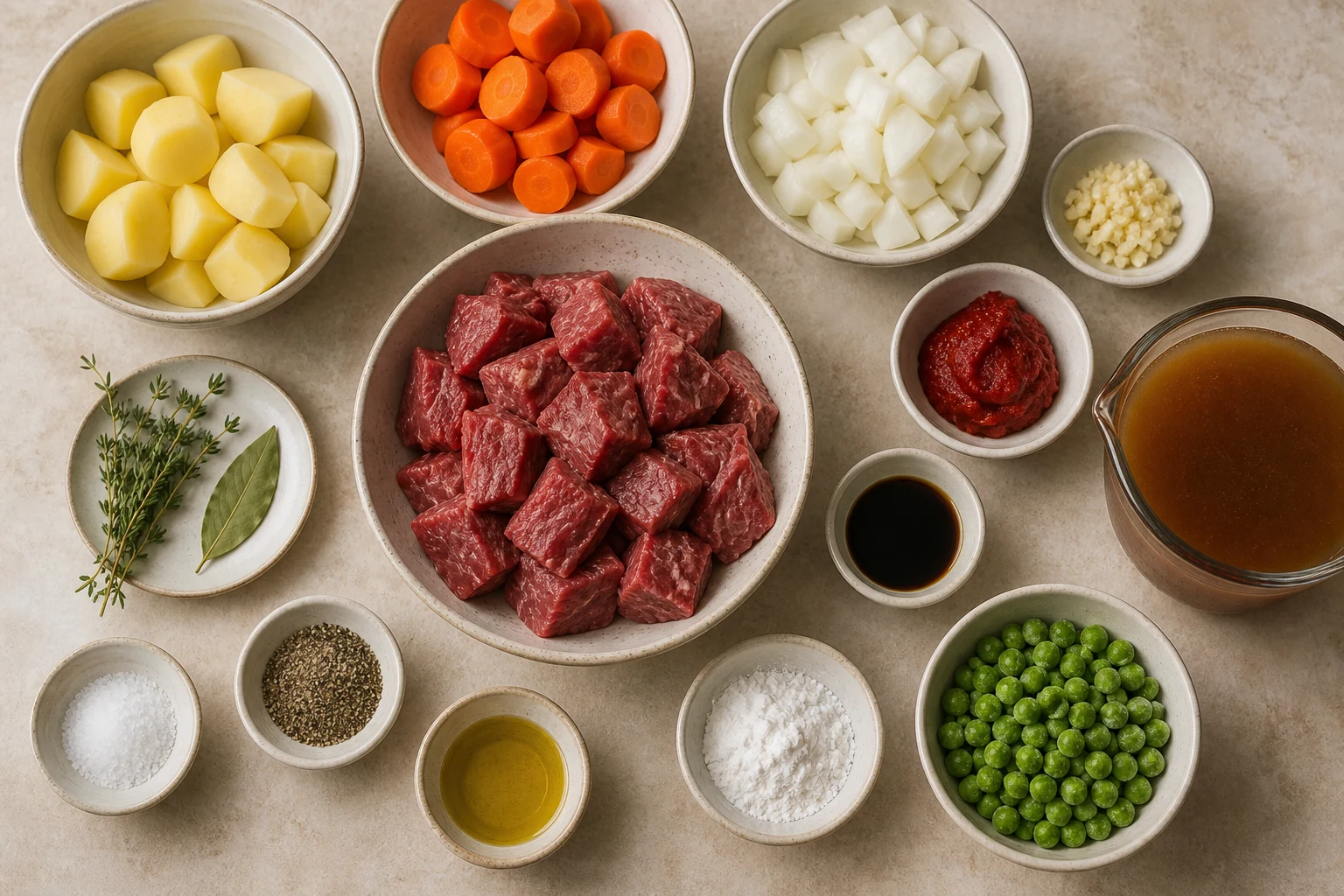
- 3 pounds boneless beef chuck roast, cut into 1 1/2-inch pieces
- 1 1/2 teaspoons kosher salt, divided
- 1/2 teaspoon black pepper
- 2 tablespoons neutral oil, divided
- 1 large yellow onion, diced
- 3 cloves garlic, chopped
- 2 tablespoons tomato paste
- 2 1/2 cups low-sodium beef broth
- 1 tablespoon Worcestershire sauce
- 1 teaspoon dried thyme
- 1 bay leaf
- 1 1/2 pounds Yukon Gold potatoes, cut into 1 1/2-inch pieces
- 4 large carrots, cut into 1-inch pieces
- 3 tablespoons cornstarch, mixed with 3 tablespoons cold water
- 1 cup frozen peas
Ingredient notes
Beef chuck
Choose a well-marbled boneless chuck roast and cut it yourself; lean stew meat can dry before connective tissue softens.
Potatoes
Yukon Gold potatoes keep a creamy center and hold better than very starchy russets.
Broth
Low-sodium broth leaves room for Worcestershire, reduction and final seasoning.
How to make slow cooker beef stew
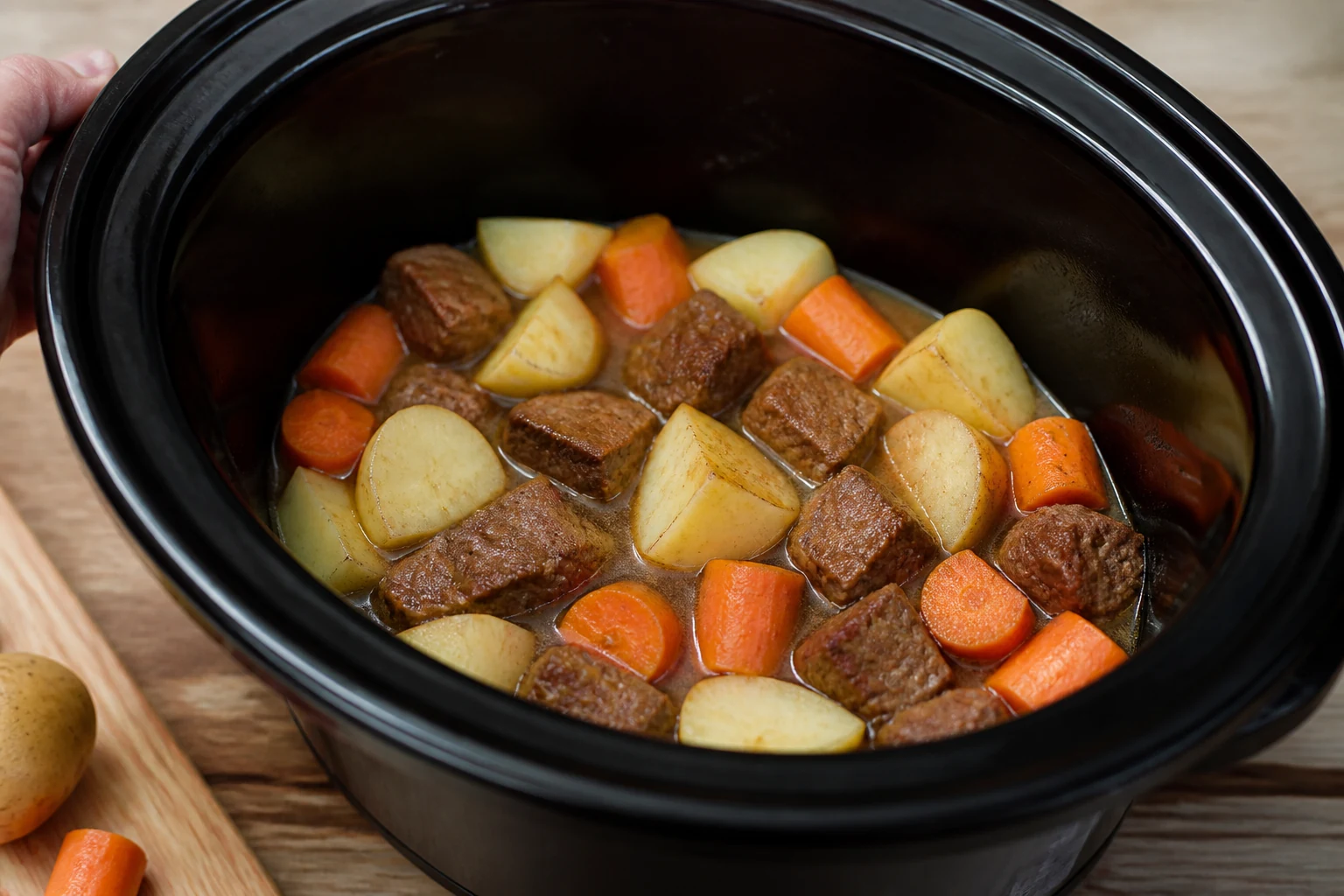
1. Brown the beef
Pat beef dry and season with most of the salt and pepper. Brown in two batches in hot oil, leaving space around each piece, then transfer to the slow cooker.
2. Build the base
Soften onion in the skillet for 4 minutes. Add garlic and tomato paste for 1 minute, then deglaze with 1/2 cup broth, scraping browned bits into the cooker.
3. Load safely
Add remaining broth, Worcestershire, thyme, bay leaf, potatoes and carrots. Keep the lid in place and do not use frozen beef.
4. Slow cook
Cook on LOW for 7 to 9 hours or HIGH for 4 to 5 hours, until the beef separates easily with a fork and vegetables are tender.
5. Thicken
Discard the bay leaf. Stir in the cornstarch slurry and peas, cover, and cook on HIGH for 15 to 25 minutes until the gravy lightly coats a spoon.
6. Finish
Taste for salt, rest uncovered for 10 minutes and skim excess surface fat if desired before serving.
Quick timing and doneness guide
| Stage | What to look for | What to do |
|---|---|---|
| Preparation | The skillet creates roasted flavor that a moist slow cooker cannot produce on its own. | Complete the size, moisture or equipment setup before cooking |
| First check | Cook on LOW for 7 to 9 hours or HIGH for 4 to 5 hours, until the beef separates easily with a fork and vegetables are tender. | Check at the early end of the range and keep unfinished portions cooking |
| Finished | Taste for salt, rest uncovered for 10 minutes and skim excess surface fat if desired before serving. | Stop when the stated texture or safe temperature is reached |
| If adjustment is needed | Rest briefly and skim the surface, or chill and remove hardened fat before reheating. | Make the smallest useful change, then check again |
This table is a decision guide, not a replacement for ingredient labels, the appliance manual or safe-temperature guidance. When food safety depends on internal temperature, check more than one thick piece with a reliable thermometer.
Substitutions and variations
No peas
Use trimmed green beans during the final 30 minutes or omit the green vegetable.
Gluten-aware
Use certified gluten-free Worcestershire sauce and broth, and verify every packaged ingredient.
Mushroom variation
Brown 12 ounces quartered mushrooms after the beef and add them to the cooker with the vegetables.
Change one major component at a time. Moisture, sweetness, structure and cooking time affect one another, so several simultaneous substitutions are harder to predict.
Serving ideas
Serve with crusty bread, biscuits or a simple green salad. The stew is already rich, so bright parsley or a small splash of vinegar can be more useful than extra dairy.
Troubleshooting
The gravy is watery
Likely cause: Too much broth was added or the slurry did not simmer long enough.
Fix: Cook covered on HIGH after adding a fresh small slurry, then rest uncovered before judging.
The beef is tough
Likely cause: Chuck has not cooked long enough for connective tissue to soften.
Fix: Keep cooking on LOW in 30-minute intervals; do not raise the heat only to rush it.
The potatoes are falling apart
Likely cause: They were cut too small or the cooker runs hot.
Fix: Use larger waxy-potato pieces and begin checking at the early end.
The stew tastes greasy
Likely cause: The chuck released substantial fat.
Fix: Rest briefly and skim the surface, or chill and remove hardened fat before reheating.
Storage, freezing and reheating
Refrigerator: Divide into shallow containers within 2 hours and refrigerate for 3 to 4 days.
Freezer: Freeze for up to 3 months; potatoes may soften after thawing.
Reheating or serving after storage: Reheat covered on the stove or in the microwave, stirring periodically, until the stew reaches 165°F.
For general handling, the USDA Safe Minimum Internal Temperature Chart is the authoritative outside reference used for this article. USDA slow-cooker safety guidance recommends thawing meat before cooking and keeping the lid in place; reheat leftovers to 165°F.
Frequently asked questions
Do I need to brown beef before slow cooking?
The stew will cook without browning, but searing adds substantial roasted flavor and improves the gravy’s color.
Can frozen beef go in a slow cooker?
No. Thaw beef safely in the refrigerator before slow cooking so it moves through unsafe temperature ranges promptly.
Why is my slow cooker beef stew thin?
Slow cookers trap evaporation. Start with restrained broth and thicken near the end with a slurry.
Recipe development note
The method for slow cooker beef stew recipe was developed through culinary research and editorial review. The quantities and time ranges are an editorial recipe specification, not a claim that every ingredient brand, appliance or batch was personally tested in one kitchen.
Nutrition is an estimate per servings and varies with brands, optional ingredients and portion size. The accompanying visuals are AI-assisted food-editorial images, not photographs of a kitchen test.
Printable recipe card
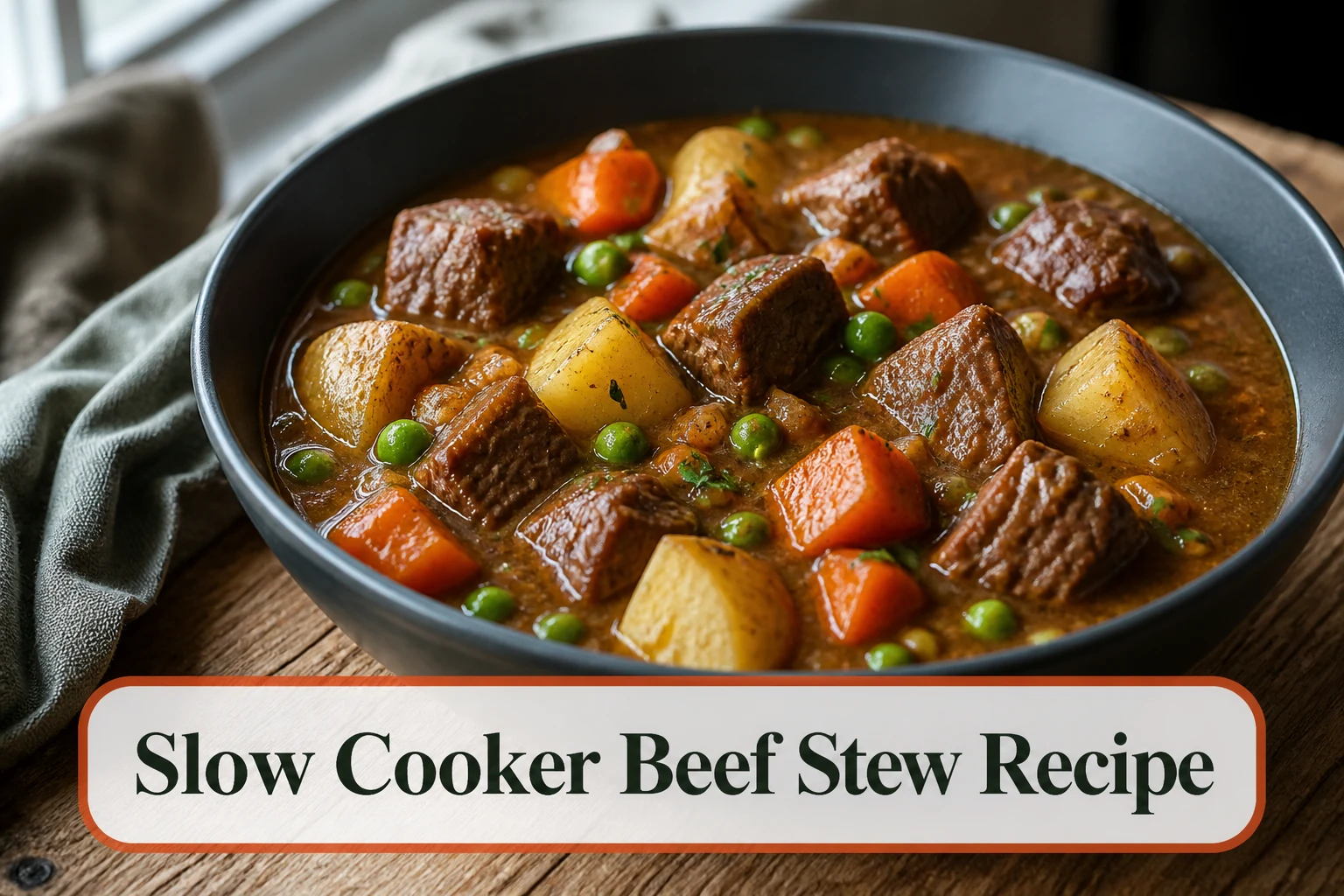
Slow Cooker Beef Stew Recipe
Ingredients
Equipment
Method
- Pat beef dry and season with most of the salt and pepper. Brown in two batches in hot oil, leaving space around each piece, then transfer to the slow cooker.
- Soften onion in the skillet for 4 minutes. Add garlic and tomato paste for 1 minute, then deglaze with 1/2 cup broth, scraping browned bits into the cooker.
- Add remaining broth, Worcestershire, thyme, bay leaf, potatoes and carrots. Keep the lid in place and do not use frozen beef.
- Cook on LOW for 7 to 9 hours or HIGH for 4 to 5 hours, until the beef separates easily with a fork and vegetables are tender.
- Discard the bay leaf. Stir in the cornstarch slurry and peas, cover, and cook on HIGH for 15 to 25 minutes until the gravy lightly coats a spoon.
- Taste for salt, rest uncovered for 10 minutes and skim excess surface fat if desired before serving.
Notes
- Read ingredient labels and the manual for any appliance used.
- Begin checking at the early end of the range.
- USDA slow-cooker safety guidance recommends thawing meat before cooking and keeping the lid in place; reheat leftovers to 165°F.
- This recipe was developed through culinary research and editorial review.
This recipe was developed through culinary research and editorial review. Equipment, ingredient brands, starting temperature and batch size can change timing; follow the method cues and applicable safety guidance.
Nutrition is an estimate per servings and varies with brands, optional ingredients and portion size.