
This slow cooker chicken piccata has tender chicken cutlets and a glossy lemon-caper sauce that tastes bright rather than bitter. Chicken and broth cook gently with shallot and garlic, but the lemon juice, capers, butter and parsley wait until the end. That staged finish preserves their flavor and lets you control the sauce after the chicken is safely cooked.
A quick skillet sear gives the cutlets color and cooks the thin flour coating, while the Crock-Pot provides a flexible finishing window. The method also solves the most important timing issue: remove each cutlet when it reaches 165°F, then thicken and finish the sauce without continuing to cook the chicken.
This recipe was developed through culinary research and editorial review. Cutlet thickness, slow-cooker heat, broth sodium and lemon acidity vary, so temperature, sauce consistency and final tasting determine the finish.
For another staged dinner with a savory sauce, see the slow cooker chicken and potatoes recipe. The 3-ingredient slow cooker salsa chicken recipe is a simpler shredded option.
Why this slow cooker chicken piccata works
- Similar-size chicken cutlets finish close together and are easy to remove individually.
- A light flour coating browns in the skillet and later helps give the sauce body.
- Only broth, shallot and garlic slow-cook with the chicken.
- Fresh lemon juice and rinsed capers go in after cooking, so they stay lively and balanced.
- Butter is whisked into hot sauce off heat, creating gloss without separating.
- A small cornstarch slurry is available only if the sauce needs more thickening.
The slow cooker is useful here as a gentle braising vessel, not an excuse to leave thin chicken cooking all day.
Ingredients
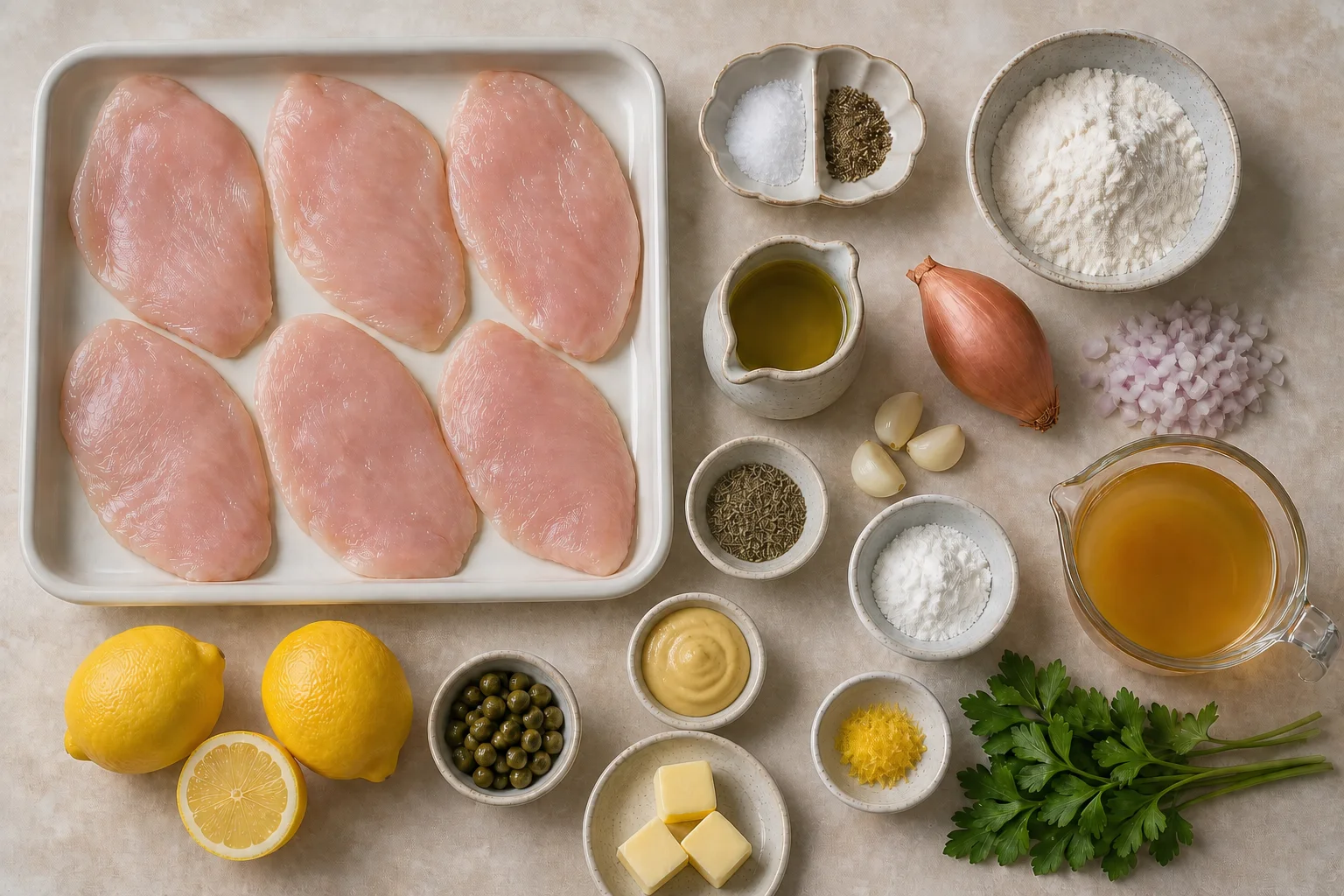
- 1 1/2 pounds boneless skinless chicken breasts, fully thawed and cut into 6 cutlets
- 3/4 teaspoon kosher salt, divided
- 1/2 teaspoon black pepper
- 1/3 cup all-purpose flour
- 2 tablespoons olive oil, divided
- 1 medium shallot, finely chopped
- 3 garlic cloves, minced
- 1 cup low-sodium chicken broth, divided
- 1 teaspoon Dijon mustard
- 1/2 teaspoon dried thyme
- 2 tablespoons cornstarch
- 1/4 cup fresh lemon juice
- 3 tablespoons capers, drained and rinsed
- 3 tablespoons unsalted butter, cut into cubes
- 1 teaspoon finely grated lemon zest
- 1/4 cup chopped flat-leaf parsley
Ingredient notes and substitutions
Chicken cutlets: Slice three similar-size breasts horizontally to make six cutlets about 1/2 inch thick. Uniform thickness is more important than exact weight. Pre-cut cutlets work if they are not unusually thin.
Chicken thighs: Boneless skinless thighs can replace cutlets by weight. They need a longer cooking window and produce a richer sauce. Check every thickest portion for 165°F.
Flour: The light coating supports browning and subtly thickens the liquid. For gluten-free preparation, use a cup-for-cup gluten-free flour blend and certified gluten-free broth and Dijon.
Broth: Use low-sodium broth because capers contribute salt. Reserve 1/4 cup cool broth for the cornstarch slurry rather than pouring all of it into the cooker.
Lemon: Fresh juice matters in a sauce this simple. Zest the lemon before juicing, taking only the yellow outer layer; the white pith is bitter. Do not slow-cook lemon slices with their peel.
Capers: Drain and rinse capers to remove excess brine. Add them near the end so their floral, salty flavor remains distinct.
Butter: Unsalted butter gives control over seasoning. Add cold cubes off heat for the smoothest finish. For a dairy-free sauce, use a neutral plant butter designed for cooking, understanding that the flavor and emulsification may differ.
How to make slow cooker chicken piccata
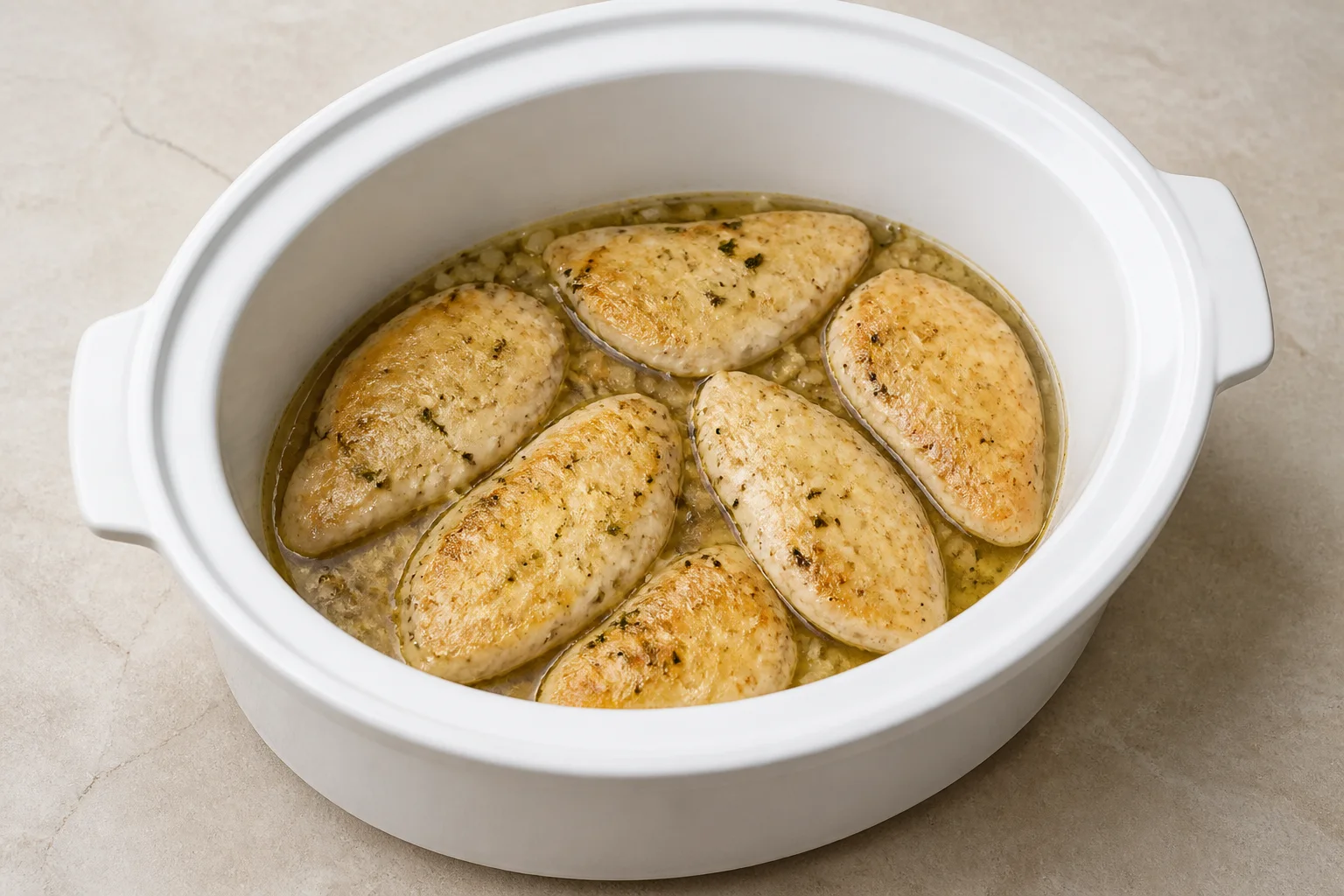
1. Make even cutlets
Place each chicken breast flat on a dedicated raw-meat cutting board. Hold it steady with one hand and slice horizontally with the knife parallel to the board, creating two thinner cutlets.
If any cutlet is thicker than 1/2 inch, place it between sheets of parchment and pound gently to an even thickness. Do not rinse raw chicken.
2. Season and flour lightly
Mix 1/2 teaspoon salt and the black pepper. Season both sides of the cutlets. Put flour in a shallow dish, coat each piece lightly and shake off all loose excess.
Discard flour that contacted raw chicken; do not save it for the sauce.
3. Sear in batches
Heat 1 tablespoon olive oil in a wide skillet over medium-high. When the oil shimmers, add half the cutlets without crowding. Sear about 60 to 90 seconds per side, just until pale golden; the centers will still be raw.
Transfer to a clean holding plate. Add remaining oil and repeat. Browning in batches prevents steaming.
4. Deglaze the skillet
Reduce heat to medium. Add shallot and cook for 2 minutes. Add garlic for 30 seconds. Pour in 3/4 cup broth and scrape the browned bits from the pan. Whisk in Dijon and thyme.
Bring the liquid just to a simmer, then pour it into a 6-quart slow cooker.
5. Arrange and slow-cook the chicken
Arrange cutlets in the broth with minimal overlap. Cover and cook on low for 2 to 3 hours. Begin checking at 1 hour 45 minutes because thin pieces and hot-running cookers can finish early.
High is possible but offers a narrow window: cook for about 1 to 1 1/2 hours and begin checking at 45 minutes.
Insert a clean thin-probe thermometer into the thickest part of each cutlet. Remove each one to a clean plate when it reaches 165°F, following the federal safe minimum internal temperature chart. Rest 5 minutes.
6. Thicken the sauce only as needed
Whisk cornstarch with the reserved 1/4 cup cool broth. First inspect the cooking liquid: the flour coating may already have thickened it lightly.
For a thicker sauce, whisk in half the slurry, cover and cook on high for 5 to 10 minutes. Add more only if needed. The goal is a light sauce that coats the chicken, not gravy.
For the smoothest, fastest result, strain the liquid into a small saucepan, simmer it and whisk in slurry gradually. Return it to the switched-off cooker.
7. Add lemon and capers at the end
Switch off the slow cooker. Stir lemon juice and rinsed capers into the hot sauce. Taste before using the remaining 1/4 teaspoon salt.
Whisk in cold butter one cube at a time until glossy, then stir in lemon zest and parsley. Return the rested chicken only long enough to coat it in sauce. Serve promptly.
How to keep lemon sauce from turning bitter
Lemon bitterness usually comes from prolonged heat applied to peel and white pith, or from reducing too much acidic juice. The recipe avoids both.
- Do not cook lemon slices in the Crock-Pot for hours.
- Zest only the thin yellow layer, not the white pith.
- Add fresh juice after the heat is switched off.
- Use broth for the braise and lemon for the finish.
- Taste before adding every drop; individual lemons vary in acidity.
If the finished sauce is too sharp, whisk in another tablespoon cold butter or a tablespoon of broth. A small pinch of sugar can soften an unusually acidic lemon, but it should not make the sauce sweet.
Do you have to sear the chicken?
Searing is recommended because it browns the flour coating and creates flavorful bits for the broth. It also produces the familiar pale-golden piccata appearance.
The recipe can be made without searing. Omit the flour and oil, put shallot, garlic, 3/4 cup broth, Dijon and thyme in the slow cooker, then add seasoned cutlets. The finished chicken will be pale and the sauce thinner. Use the cornstarch slurry at the end.
Never partially cook chicken in advance and refrigerate it for later completion. If searing ahead, cool the fully prepared sauce separately and keep the chicken raw and refrigerated; sear and continue cooking in one uninterrupted session.
Slow-cooker size and arrangement
A 6-quart oval cooker gives six cutlets room to spread with limited overlap. A smaller crock may require more stacking and a longer, less even cooking time.
Thin cutlets do not need to be submerged. The covered cooker traps steam while the broth circulates beneath them. If the cooker is unusually wide and the liquid barely covers its base, add 2 to 4 tablespoons broth—not several cups.
Follow your appliance’s minimum and maximum fill guidance. Keep the lid closed until the first temperature check.
USDA slow cooker safety guidance recommends thawing meat or poultry before it goes into a slow cooker. Load the crock and turn it on immediately rather than using a delayed start with raw chicken.
Troubleshooting
The chicken is dry
Thin cutlets finished earlier than expected or remained in the cooker after reaching 165°F. Begin checking sooner and remove pieces individually. Spoon plenty of sauce over sliced chicken when serving.
The sauce is too thin
Use the cornstarch slurry gradually. For reliable control, thicken the sauce in a small saucepan while chicken rests. Do not leave cooked chicken in the Crock-Pot just to evaporate liquid.
The sauce is too thick
Whisk in warm broth a tablespoon at a time. Add lemon only after the consistency is corrected, because extra juice can make an over-reduced sauce too acidic.
The sauce tastes bitter
Remove any cooked lemon peel or seeds. Add a little broth and butter to dilute and round the flavor. Next time, add juice and zest after switching off the heat and avoid zesting into the white pith.
The sauce is too salty
Capers, broth and chicken enhancement may all contribute sodium. Add unsalted broth and a small amount of lemon juice, then thicken again if needed. Use rinsed capers and low-sodium broth next time.
The butter looks oily or separated
The sauce was probably boiling when butter was added. Switch off the heat, wait a minute and whisk in cold cubes gradually. A teaspoon of Dijon can help bring a lightly separated sauce together.
The flour coating came off
Loose flour, overcrowding or frequent turning can disturb it. Shake off excess flour, use a hot wide skillet and turn each piece only once during the brief sear.
Serving ideas
Piccata sauce pairs well with angel hair pasta, mashed potatoes, rice or crusty bread. For a vegetable, serve steamed green beans, roasted asparagus or sautéed spinach.
Keep the side lightly seasoned because capers and sauce already bring salt. Spoon sauce over the chicken just before serving rather than letting cutlets soak for a long time.
For a lower-starch plate, serve the chicken with cauliflower mash or zucchini noodles. Warm zucchini noodles separately; cooking them in the sauce releases water and dilutes it.
If you are planning a creamy mushroom-and-noodle dinner, slow cooker chicken stroganoff explains how to finish the sauce with sour cream after the chicken cooks.
Storage and reheating
Refrigerate chicken and sauce in shallow airtight containers within 2 hours. The federal cold-storage chart gives cooked poultry leftovers a 3-to-4-day refrigerated window at 40°F or below.
Reheat gently in a covered skillet over medium-low with a splash of broth. Turn the cutlets once and heat to 165°F. A microwave works in short intervals at reduced power; pause to turn the chicken and stir the sauce.
Butter sauce can separate under high heat. Gentle reheating and a fresh squeeze of lemon after heating restore a better texture and flavor. Do not reheat refrigerated leftovers from cold in a slow cooker.
Freezing chicken piccata
Freeze chicken with the broth-based sauce before adding butter, lemon, capers and parsley for the best result. Thaw overnight in the refrigerator, reheat to 165°F, then finish the sauce with those fresh ingredients.
Fully finished leftovers can still be frozen for up to 2 months for best quality, but the butter emulsion may look less smooth and fresh lemon flavor will fade. Cool promptly and use a freezer-safe airtight container.
Frequently asked questions
Can I put frozen chicken in the slow cooker?
No. Thaw chicken safely in the refrigerator before starting. The cooking window is calibrated for thin, fully thawed cutlets.
Can I use whole chicken breasts?
You can, but thick breasts take longer and have less sauce contact. Slice them into even cutlets for more predictable timing and a classic piccata presentation.
Can I add lemon slices to the Crock-Pot?
It is better not to slow-cook slices with their peel. Extended heating can extract bitterness from the pith. Use fresh juice and finely grated zest after cooking.
Do capers go in before or after cooking?
Add rinsed capers near the end. They need only to warm through; long cooking mutes their bright flavor and adds more briny salt to the sauce.
Can I make this without flour?
Yes. Omit the flour coating, sear the seasoned chicken if desired and rely on the cornstarch slurry for thickening. Check that all packaged ingredients meet any gluten-free requirement.
What is the difference between piccata and francese?
Piccata is associated with lemon and capers, while chicken Francese typically uses an egg batter and lemon-butter sauce without capers. This recipe follows the piccata flavor profile.
Can it stay on warm?
The sauce can be held briefly if the appliance maintains a safe temperature, but thin chicken cutlets continue drying. For best texture, serve promptly or cool leftovers within 2 hours.
Recipe development note
This recipe was developed through culinary research and editorial review. It has not been represented as a personal kitchen test. Chicken thickness, broth sodium, lemon acidity and slow-cooker heat vary; remove cutlets individually at 165°F and finish the sauce to taste.
Nutrition is an estimate based on generic ingredients and excludes serving sides. The accompanying visuals are AI-assisted food-editorial images, not photographs of a kitchen test.
Recipe at a glance
| Metric | Details |
|---|---|
| Prep time | 25 minutes |
| Cook time | 180 minutes |
| Total time | 210 minutes |
| Yield | 6 servings |
Printable recipe card
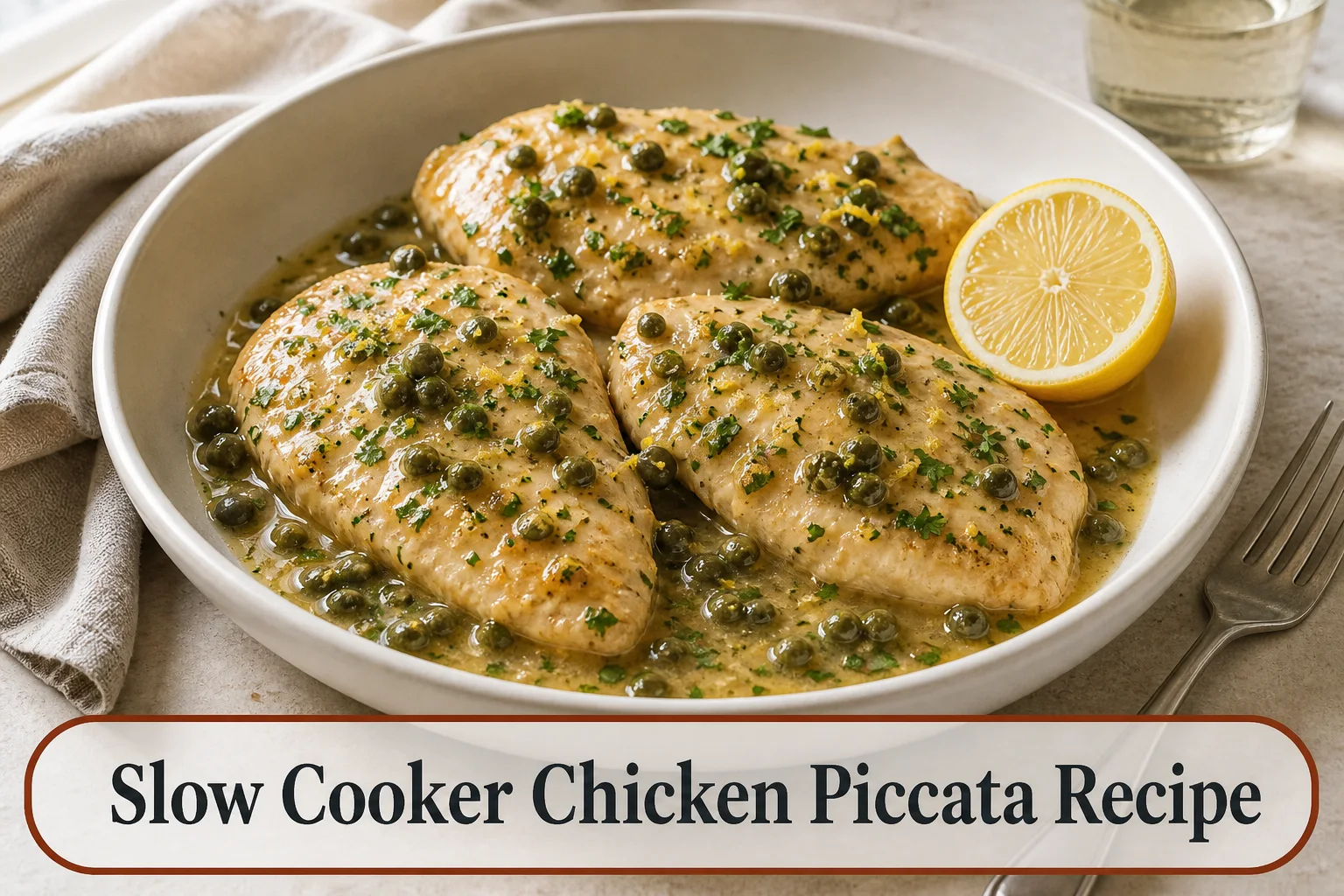
Slow Cooker Chicken Piccata Recipe
Ingredients
Equipment
Method
- Slice fully thawed chicken breasts horizontally into 6 even cutlets about 1/2 inch thick.
- Season cutlets with 1/2 teaspoon salt and pepper. Coat lightly in flour, shake off excess and discard contacted flour.
- Heat oil in a wide skillet over medium-high. In two batches, sear cutlets 60 to 90 seconds per side until pale golden but still raw inside.
- Cook shallot 2 minutes and garlic 30 seconds. Add 3/4 cup broth, scrape the pan and whisk in Dijon and thyme. Pour into slow cooker.
- Arrange cutlets with minimal overlap. Cover and cook on low 2 to 3 hours, beginning checks at 1 hour 45 minutes.
- Remove each cutlet when its thickest portion reaches 165°F. Rest on a clean plate for 5 minutes.
- Whisk cornstarch with remaining cool broth. If sauce needs thickening, add slurry gradually and cook on high 5 to 10 minutes.
- Switch off cooker. Add lemon juice and rinsed capers, taste and adjust salt. Whisk in cold butter, then zest and parsley; return chicken only to coat.
Notes
- Use fully thawed, even cutlets and remove each one at 165°F.
- Add lemon juice, capers, butter, zest and parsley after cooking for bright flavor.
- Do not slow-cook lemon slices with their bitter white pith.
- Add cornstarch slurry gradually because the flour coating may already thicken the sauce.
- This recipe was developed through culinary research and editorial review.
This recipe was developed through culinary research and editorial review. Chicken thickness, broth sodium, lemon acidity and slow-cooker heat vary; remove cutlets individually at 165°F and finish the sauce to taste.
Nutrition is an estimate based on generic ingredients and excludes serving sides; actual values vary by brand.