
Buffalo chicken in the slow cooker should be moist enough to shred but not submerged in a thin sauce. This recipe starts with thawed chicken, uses a restrained amount of liquid, and checks temperature at the early end so the meat can be shredded before it dries out.
Slow cookers differ in crock shape and running temperature. Use the stated range to plan the day, then let the texture and reduction cues determine when the recipe is ready.
This recipe was developed through culinary research and editorial review. It is not represented as a personal kitchen test.
For a related idea, see buffalo chicken pasta recipe. You may also want buffalo chicken wing recipe.
Why this recipe works
The chicken is fully thawed: Thawed pieces heat more predictably and follow USDA slow-cooker safety guidance.
Temperature checks start early: Lean chicken can dry out during an all-day cook, so the thermometer decides when it is ready.
Fresh sauce goes in after shredding: A final portion restores bright Buffalo flavor that can soften during long cooking.
The first batch is the useful reference point. Measure as written, note the finish in your equipment, and change only one variable at a time if an adjustment is needed.
Ingredients
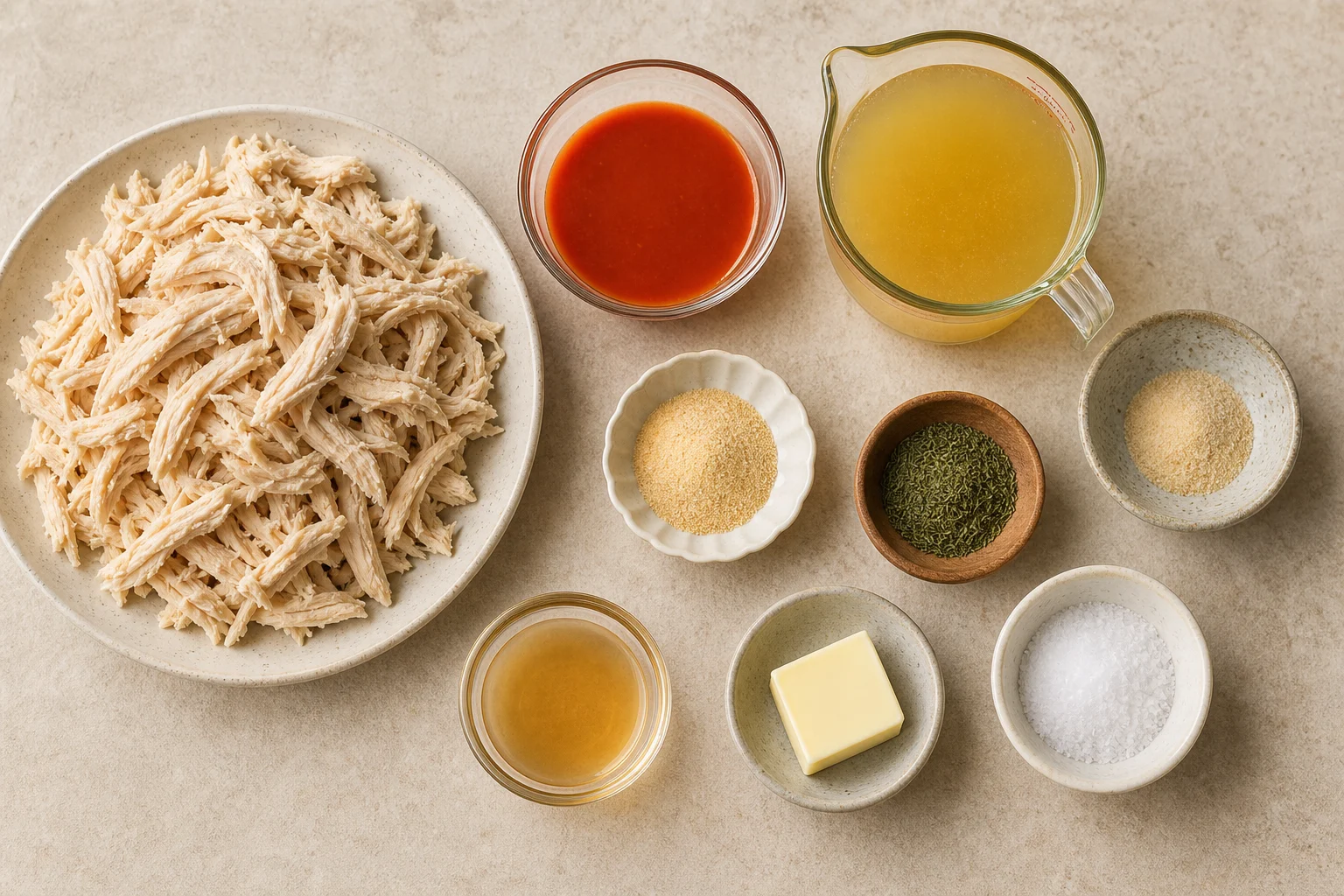
- 2 pounds boneless skinless chicken breasts or thighs, fully thawed
- 3/4 cup Buffalo-style cayenne hot sauce, divided
- 1/3 cup low-sodium chicken broth
- 1 teaspoon garlic powder
- 1 teaspoon onion powder
- 1/2 teaspoon dried dill
- 1/2 teaspoon kosher salt
- 2 tablespoons unsalted butter, optional
- 1 tablespoon apple cider vinegar, as needed
Ingredient notes
Chicken cut
Thighs are more forgiving, while breasts are leaner and may finish sooner. Avoid mixing very different sizes in one batch.
Hot sauce
Use a thin cayenne-based sauce. Thick sweet wing sauces can scorch around the slow cooker’s edge.
Broth
Only one-third cup is needed because covered chicken releases liquid as it cooks.
How to make crockpot buffalo chicken
1. Prepare the cooker
Lightly grease a 6-quart slow cooker. Keep thawed chicken refrigerated until the cooker and seasonings are ready.
2. Build the base
Whisk 1/2 cup hot sauce, broth, garlic powder, onion powder, dill and salt in the cooker.
3. Add chicken
Turn the chicken in the sauce and arrange pieces in one even layer where possible. Cover and keep the lid closed.
4. Slow cook
Cook on LOW for 3 to 4 hours or HIGH for 2 to 3 hours, beginning temperature checks at the early end.
5. Verify and shred
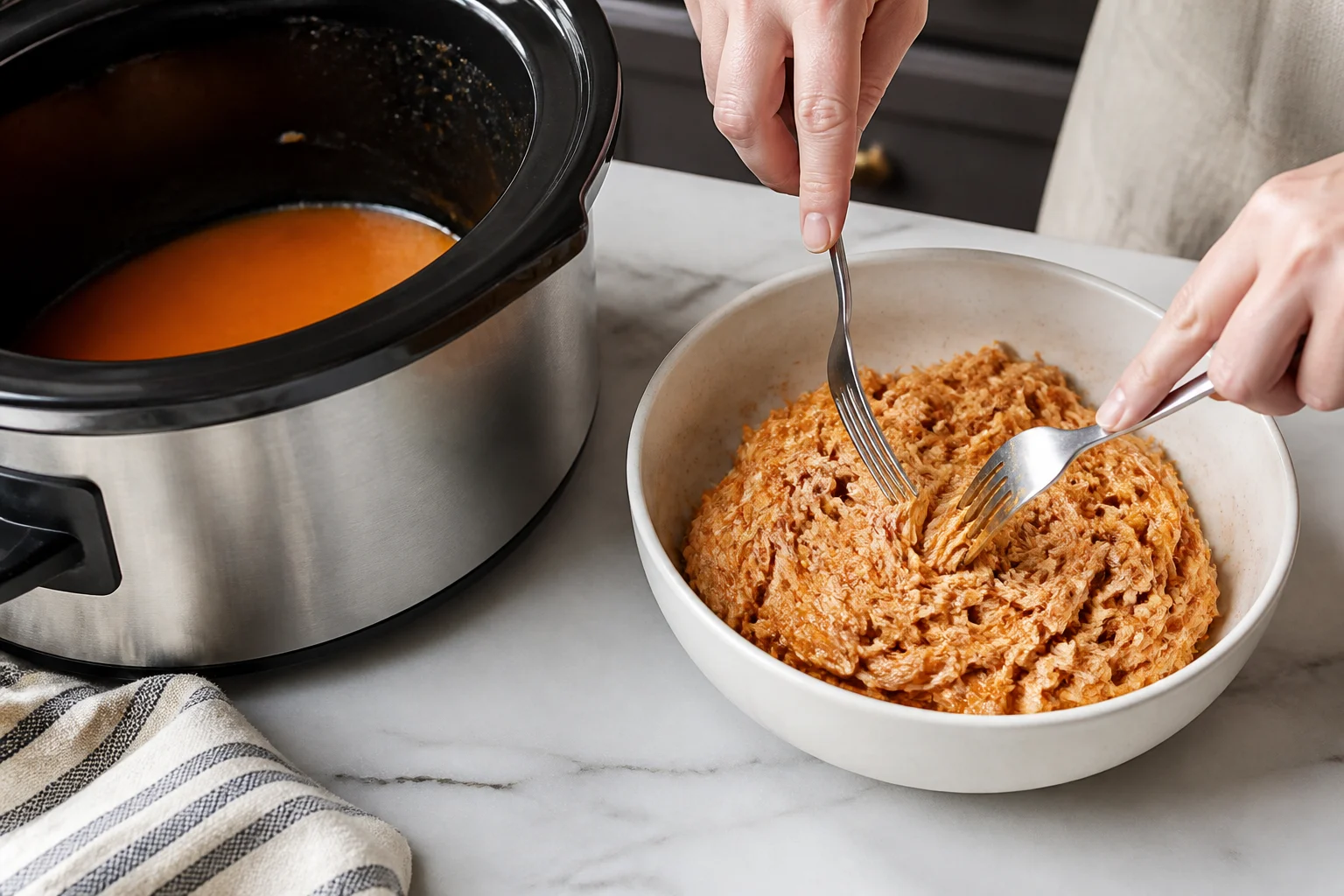
When every piece reaches at least 165°F, transfer chicken to a clean bowl, rest 5 minutes and shred with two forks.
6. Finish the sauce
Skim excess fat if needed. Return chicken with remaining 1/4 cup hot sauce and optional butter. Cover 5 minutes, then balance with vinegar if needed.
Quick timing and doneness guide
| Stage | What to look for | What to do |
|---|---|---|
| Preparation | Thawed pieces heat more predictably and follow USDA slow-cooker safety guidance. | Complete the size, moisture or equipment setup before cooking |
| First check | Cook on LOW for 3 to 4 hours or HIGH for 2 to 3 hours, beginning temperature checks at the early end. | Check at the early end of the range and keep unfinished portions cooking |
| Finished | Skim excess fat if needed. Return chicken with remaining 1/4 cup hot sauce and optional butter. Cover 5 minutes, then balance with vinegar if needed. | Stop when the stated texture or safe temperature is reached |
| If adjustment is needed | Return it to the cooker and continue until it reaches 165°F and separates under fork pressure. | Make the smallest useful change, then check again |
This table is a decision guide, not a replacement for ingredient labels, the appliance manual or safe-temperature guidance. When food safety depends on internal temperature, check more than one thick piece with a reliable thermometer.
Substitutions and variations
Milder chicken
Use 1/2 cup total hot sauce and increase broth to 1/2 cup; serve extra sauce separately.
Dairy-free
Omit butter or use a labeled dairy-free butter added after shredding.
Creamy finish
Stir 3 ounces softened cream cheese into the hot sauce after the chicken is safely cooked and shredded.
Change one major component at a time. Moisture, sweetness, structure and cooking time affect one another, so several simultaneous substitutions are harder to predict.
Serving ideas
Use in sandwiches, wraps, baked potatoes, grain bowls or salads. Add slaw, celery and a cooling dressing at serving time so those crisp ingredients do not soften in storage.
Troubleshooting
The chicken is dry
Likely cause: It cooked well past 165°F or the pieces were small.
Fix: Start checking at three hours on LOW and remove each piece as soon as it is done.
The sauce is watery
Likely cause: The chicken released more liquid than expected.
Fix: Transfer the chicken, reduce the liquid on HIGH uncovered only if the manual permits, or discard some before finishing.
The flavor is flat
Likely cause: Long cooking muted the acidity and chile.
Fix: Add the reserved hot sauce and vinegar after shredding, then taste before adding salt.
The chicken is hard to shred
Likely cause: It has not cooked through evenly or is a dense thick breast.
Fix: Return it to the cooker and continue until it reaches 165°F and separates under fork pressure.
Storage, freezing and reheating
Refrigerator: Refrigerate promptly in shallow containers with enough sauce to keep the chicken moist and use within 3 to 4 days.
Freezer: Freeze in meal-size portions for up to 3 months for best quality.
Reheating or serving after storage: Reheat covered with a spoonful of broth or sauce, stirring often, until the chicken reaches 165°F.
For general handling, the USDA Safe Minimum Internal Temperature Chart is the authoritative outside reference used for this article. USDA slow-cooker guidance recommends thawing poultry before slow cooking, keeping the lid in place and cooking poultry to at least 165°F.
Frequently asked questions
Can I put frozen chicken in the Crockpot?
USDA guidance recommends thawing meat and poultry before placing it in a slow cooker.
How long does Buffalo chicken take on LOW?
Two pounds of thawed boneless chicken commonly needs about 3 to 4 hours on LOW, but temperature rather than the clock confirms doneness.
Can I leave Buffalo chicken on WARM all day?
Extended holding can dry the meat. Follow the appliance manual and move leftovers to shallow containers for prompt refrigeration.
Recipe development note
The method for crockpot buffalo chicken recipe was developed through culinary research and editorial review. The quantities and time ranges are an editorial recipe specification, not a claim that every ingredient brand, appliance or batch was personally tested in one kitchen.
Nutrition is an estimate per servings and varies with brands, optional ingredients and portion size. The accompanying visuals are AI-assisted food-editorial images, not photographs of a kitchen test.
Printable recipe card
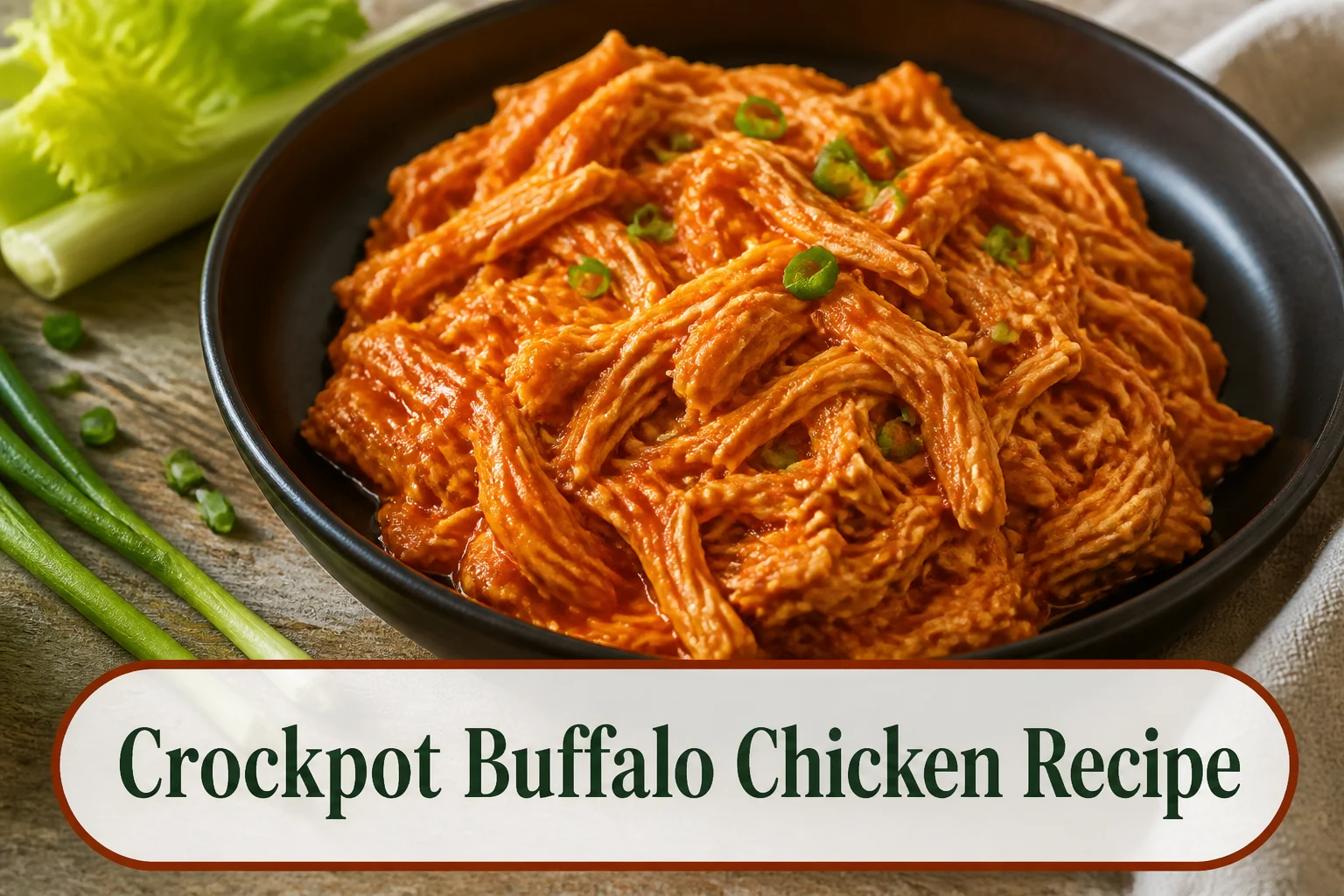
Crockpot Buffalo Chicken Recipe
Ingredients
Equipment
Method
- Lightly grease a 6-quart slow cooker. Keep thawed chicken refrigerated until the cooker and seasonings are ready.
- Whisk 1/2 cup hot sauce, broth, garlic powder, onion powder, dill and salt in the cooker.
- Turn the chicken in the sauce and arrange pieces in one even layer where possible. Cover and keep the lid closed.
- Cook on LOW for 3 to 4 hours or HIGH for 2 to 3 hours, beginning temperature checks at the early end.
- When every piece reaches at least 165°F, transfer chicken to a clean bowl, rest 5 minutes and shred with two forks.
- Skim excess fat if needed. Return chicken with remaining 1/4 cup hot sauce and optional butter. Cover 5 minutes, then balance with vinegar if needed.
Notes
- Read ingredient labels and the manual for any appliance used.
- Begin checking at the early end of the range.
- USDA slow-cooker guidance recommends thawing poultry before slow cooking, keeping the lid in place and cooking poultry to at least 165°F.
- This recipe was developed through culinary research and editorial review.
This recipe was developed through culinary research and editorial review. Equipment, ingredient brands, starting temperature and batch size can change timing; follow the method cues and applicable safety guidance.
Nutrition is an estimate per servings and varies with brands, optional ingredients and portion size.