
Apple butter becomes rich and spreadable through evaporation, not through added thickeners. The slow cooker softens the fruit first, then a partially uncovered final stage lets moisture escape while the puree darkens and concentrates.
Slow cookers differ in crock shape and running temperature. Use the stated range to plan the day, then let the texture and reduction cues determine when the recipe is ready.
This recipe was developed through culinary research and editorial review. It is not represented as a personal kitchen test.
For a related idea, see easy slow cooker chicken soup. You may also want chicken piccata slow cooker.
Why this recipe works
Mixed apples build flavor: Tart fruit brings acidity while sweeter apples reduce how much added sugar the finished spread needs.
Blending comes before reduction: A smooth puree releases steam evenly and is easier to stir as it thickens.
The lid is offset at the end: Slow-cooker lids trap condensation; a small opening allows controlled evaporation without moving the hot puree to another pan.
The first batch is the useful reference point. Measure as written, note the finish in your equipment, and change only one variable at a time if an adjustment is needed.
Ingredients
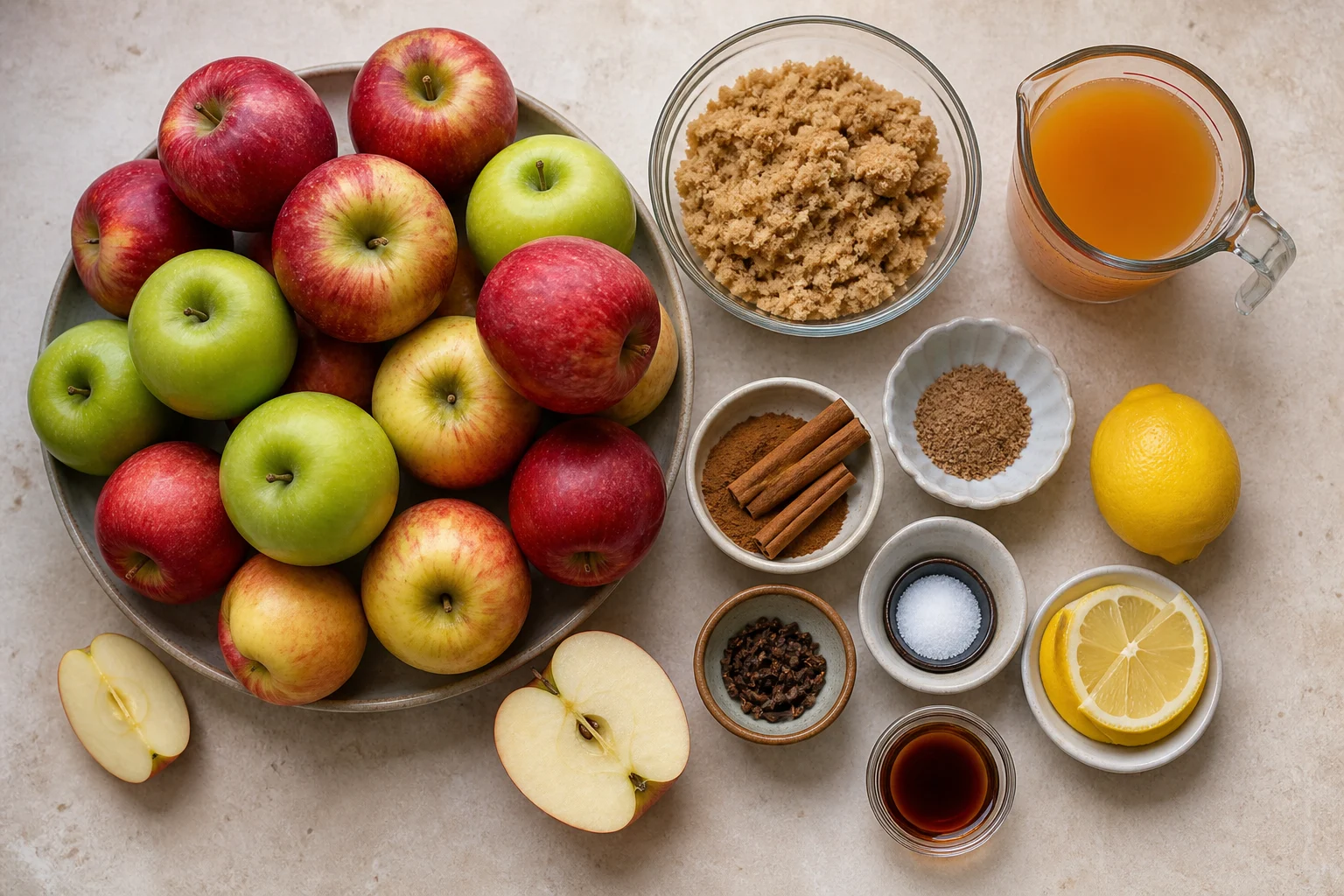
- 6 pounds apples, a mix of sweet and tart; peeled, cored and sliced
- 1/2 cup packed light brown sugar, use less for very sweet apples
- 1/2 cup apple cider or unsweetened apple juice
- 1 tablespoon lemon juice
- 2 teaspoons ground cinnamon
- 1/4 teaspoon ground nutmeg
- 1/8 teaspoon ground cloves
- 1/4 teaspoon fine salt
- 1 teaspoon vanilla extract, add after cooking
Ingredient notes
Apples
Firm baking apples and aromatic eating apples both work. Avoid using only bland, watery fruit because concentration cannot create missing flavor.
Sugar
The amount is modest for 6 pounds of fruit. Taste only after some cooling; hot puree can seem less sweet than it is.
Spices
Clove is powerful, so measure a level 1/8 teaspoon. More can obscure the apple flavor during the long cooking time.
How to make apple butter in a slow cooker
1. Fill the cooker
Put apples, brown sugar, cider, lemon juice, cinnamon, nutmeg, cloves and salt in a 6-quart slow cooker. Toss until the spices are dispersed.
2. Cook until soft
Cover and cook on LOW for 7 to 8 hours, stirring once or twice if convenient, until the apples collapse when pressed.
3. Blend
Turn off the cooker briefly and blend with an immersion blender until completely smooth, keeping the blade head submerged.
4. Concentrate
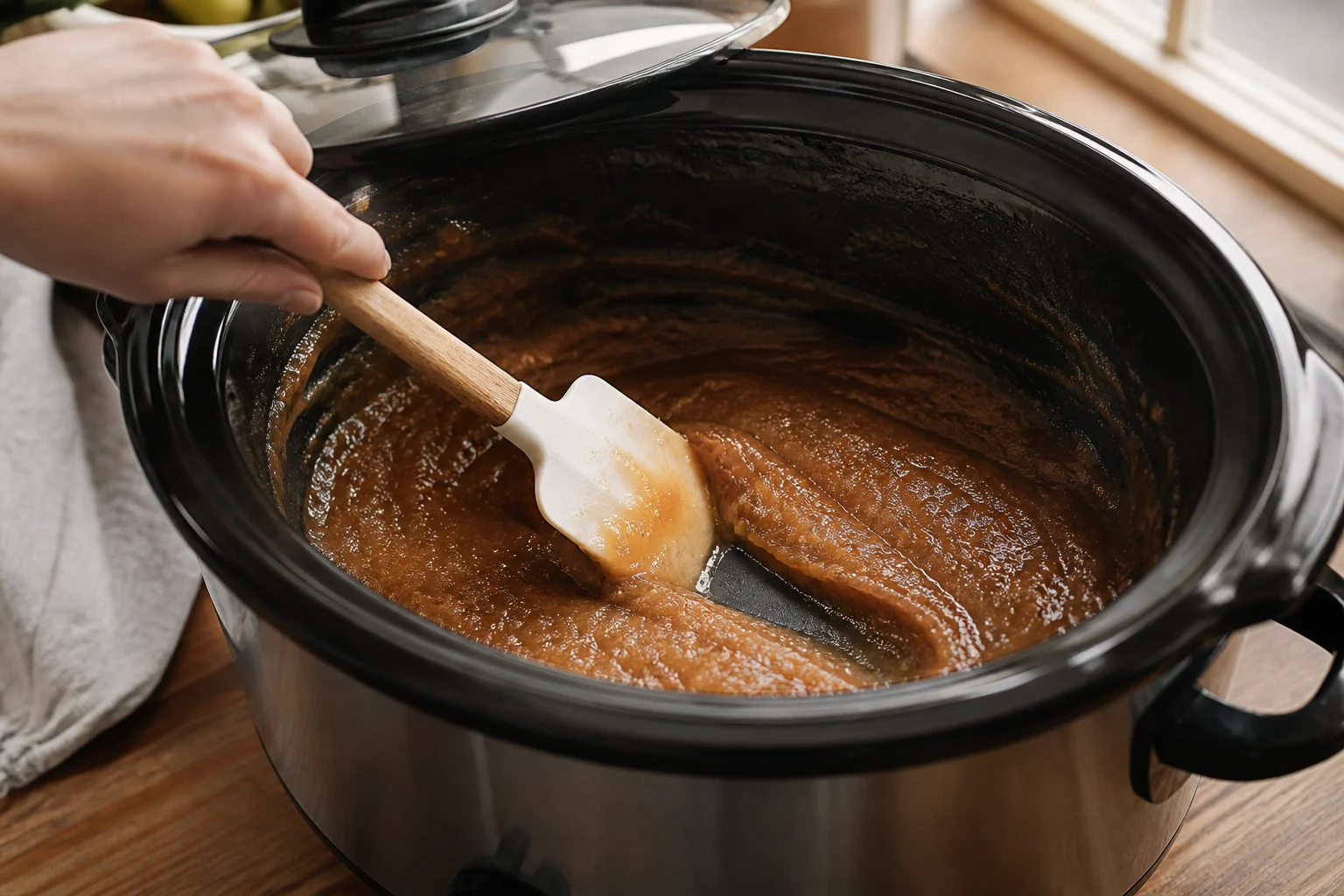
Return to LOW with the lid offset slightly so steam can escape. Cook 1 to 3 hours more, stirring every 30 minutes, until a spoonful holds a soft mound.
5. Finish
Stir in vanilla. Taste after cooling a spoonful; add a pinch more salt or lemon only if needed.
6. Cool and store
Transfer to shallow clean containers, cool promptly and refrigerate. This recipe is not a shelf-stable canning formula.
Quick timing and doneness guide
| Stage | What to look for | What to do |
|---|---|---|
| Preparation | Tart fruit brings acidity while sweeter apples reduce how much added sugar the finished spread needs. | Complete the size, moisture or equipment setup before cooking |
| First check | Return to LOW with the lid offset slightly so steam can escape. Cook 1 to 3 hours more, stirring every 30 minutes, until a spoonful holds a soft mound. | Check at the early end of the range and keep unfinished portions cooking |
| Finished | Transfer to shallow clean containers, cool promptly and refrigerate. This recipe is not a shelf-stable canning formula. | Stop when the stated texture or safe temperature is reached |
| If adjustment is needed | Blend longer while warm, then press through a fine sieve if necessary. | Make the smallest useful change, then check again |
This table is a decision guide, not a replacement for ingredient labels, the appliance manual or safe-temperature guidance. When food safety depends on internal temperature, check more than one thick piece with a reliable thermometer.
Substitutions and variations
No peeling
Leave thin skins on for more fiber, then blend thoroughly and pass through a fine sieve if the texture is not smooth enough.
No added sugar
Omit brown sugar and use naturally sweet apples; the yield may be slightly lower because the spread needs more reduction.
Maple-spiced
Replace brown sugar with 1/3 cup maple syrup and reduce cider to 1/3 cup.
Change one major component at a time. Moisture, sweetness, structure and cooking time affect one another, so several simultaneous substitutions are harder to predict.
Serving ideas
Spread on toast, biscuits or pancakes; swirl into oatmeal or yogurt; or serve with sharp cheddar. Use a clean spoon each time so the refrigerated jar stays fresh.
Troubleshooting
The apple butter is runny
Likely cause: The lid stayed fully closed or the apples released abundant juice.
Fix: Offset the lid and continue cooking, stirring regularly, until a cooled spoonful mounds.
The bottom scorches
Likely cause: The cooker runs hot or the thick puree was left unstirred late in cooking.
Fix: Stir every 20 to 30 minutes during reduction and stop when the spread is thick.
The flavor tastes dull
Likely cause: The apples were mild or the spread needs acid and salt.
Fix: Add lemon juice 1/2 teaspoon at a time and a small pinch of salt after cooling a sample.
The texture is grainy
Likely cause: Peel fragments or coarse apple tissue remained.
Fix: Blend longer while warm, then press through a fine sieve if necessary.
Storage, freezing and reheating
Refrigerator: Refrigerate in clean covered containers for up to 2 weeks.
Freezer: Freeze with 1/2 inch of headspace for up to 6 months; thaw in the refrigerator.
Reheating or serving after storage: Apple butter is normally served cool or at room temperature. Warm only the portion needed in short intervals.
For general handling, the FoodSafety.gov Four Steps to Food Safety is the authoritative outside reference used for this article. FoodSafety.gov recommends prompt cooling and refrigeration of prepared foods; this editorial recipe is for refrigerated or frozen storage, not shelf-stable canning.
Frequently asked questions
Is slow cooker apple butter safe to can?
Do not use this recipe for shelf-stable canning. Tested canning formulas control acidity and processing; store this batch in the refrigerator or freezer.
How do I know when apple butter is thick enough?
Chill a teaspoon for a minute. It should sit in a soft mound and spread without a watery ring.
Can I cook it on HIGH?
Cook 4 to 5 hours on HIGH until soft, then reduce with the lid offset while stirring more often because scorching risk is higher.
Recipe development note
The method for slow cooker apple butter was developed through culinary research and editorial review. The quantities and time ranges are an editorial recipe specification, not a claim that every ingredient brand, appliance or batch was personally tested in one kitchen.
Nutrition is an estimate per servings and varies with brands, optional ingredients and portion size. The accompanying visuals are AI-assisted food-editorial images, not photographs of a kitchen test.
Printable recipe card
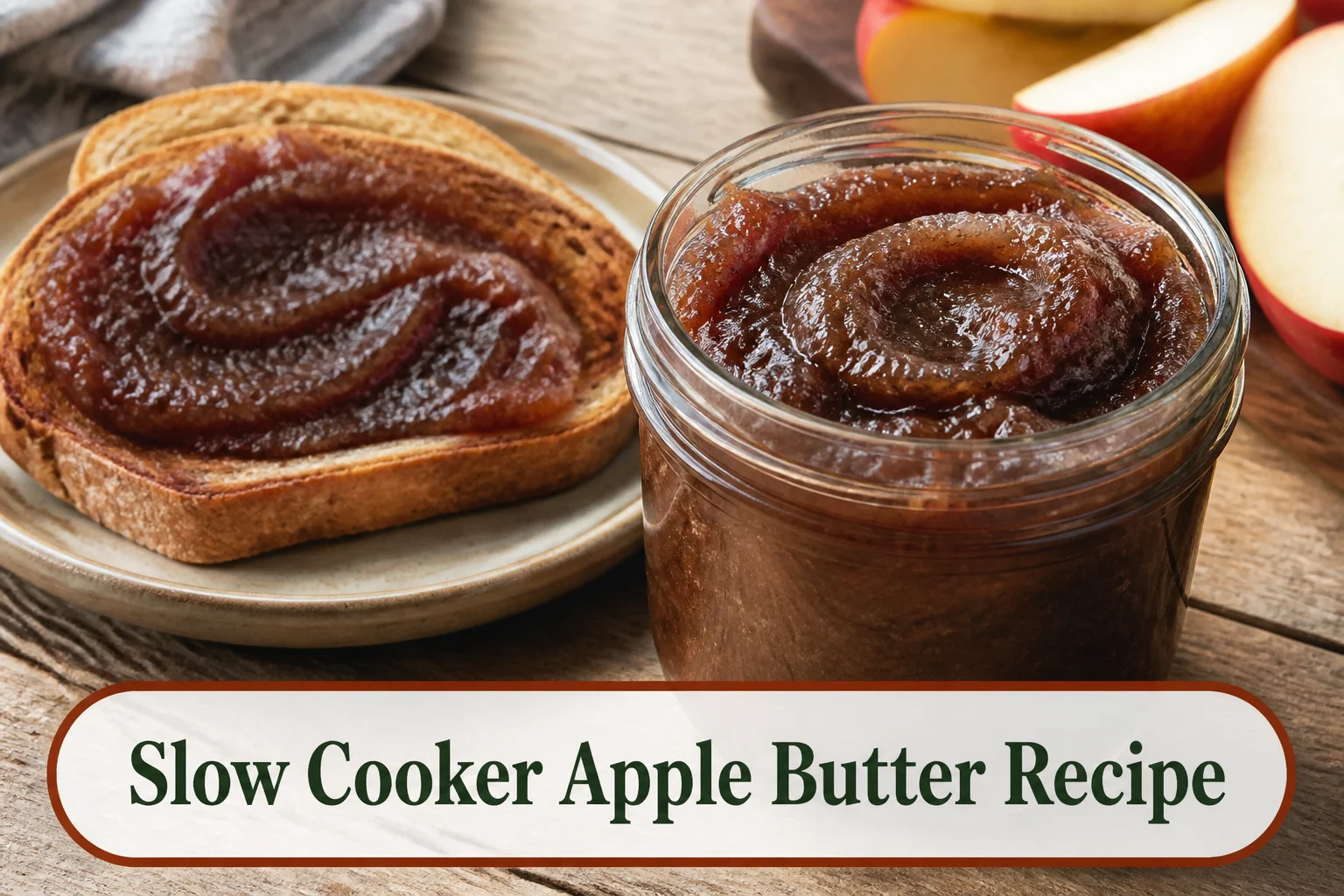
Slow Cooker Apple Butter Recipe
Ingredients
Equipment
Method
- Put apples, brown sugar, cider, lemon juice, cinnamon, nutmeg, cloves and salt in a 6-quart slow cooker. Toss until the spices are dispersed.
- Cover and cook on LOW for 7 to 8 hours, stirring once or twice if convenient, until the apples collapse when pressed.
- Turn off the cooker briefly and blend with an immersion blender until completely smooth, keeping the blade head submerged.
- Return to LOW with the lid offset slightly so steam can escape. Cook 1 to 3 hours more, stirring every 30 minutes, until a spoonful holds a soft mound.
- Stir in vanilla. Taste after cooling a spoonful; add a pinch more salt or lemon only if needed.
- Transfer to shallow clean containers, cool promptly and refrigerate. This recipe is not a shelf-stable canning formula.
Notes
- Read ingredient labels and the manual for any appliance used.
- Begin checking at the early end of the range.
- FoodSafety.gov recommends prompt cooling and refrigeration of prepared foods; this editorial recipe is for refrigerated or frozen storage, not shelf-stable canning.
- This recipe was developed through culinary research and editorial review.
This recipe was developed through culinary research and editorial review. Equipment, ingredient brands, starting temperature and batch size can change timing; follow the method cues and applicable safety guidance.
Nutrition is an estimate per servings and varies with brands, optional ingredients and portion size.