
This Crock-Pot rotisserie chicken recipe produces juicy, sliceable meat with a savory paprika-herb rub and no added cooking liquid. The chicken rests on thick onion slices above the liquid it naturally releases, so the result tastes roasted rather than boiled.
Because a slow cooker cannot brown skin like a rotating spit, “rotisserie-style” describes the seasoning and whole-chicken presentation. For crisp skin, transfer the fully cooked chicken to a rimmed sheet pan and broil it briefly. The broiler step is optional and happens only after the breast and inner thigh both reach 165°F.
This recipe was developed through culinary research and editorial review. Chicken shape, exact weight, starting temperature and slow-cooker heat vary, so check more than one location with a thermometer instead of relying only on the clock.
If you prefer an appliance with dry circulating heat, compare the whole chicken in the air fryer recipe. Save the carcass and plain bones for the slow cooker chicken bone broth recipe.
What rotisserie-style means here
A store rotisserie turns chicken beside a dry heat source, encouraging even browning. A covered slow cooker surrounds the bird with moist heat and traps steam. It can make tender meat, but it cannot create truly crisp skin on its own.
This version recreates the familiar flavor profile with paprika, garlic, onion, thyme and oregano. Thick onion slices elevate the chicken slightly without foil balls or a specialty rack. A short broil supplies the missing direct heat.
Expect these honest differences:
- The slow-cooked skin is soft before broiling.
- The underside remains less crisp than the top, even after broiling.
- The chicken releases substantial juices without added broth.
- The meat is gently cooked and easy to carve, not smoky or spit-roasted.
Ingredients
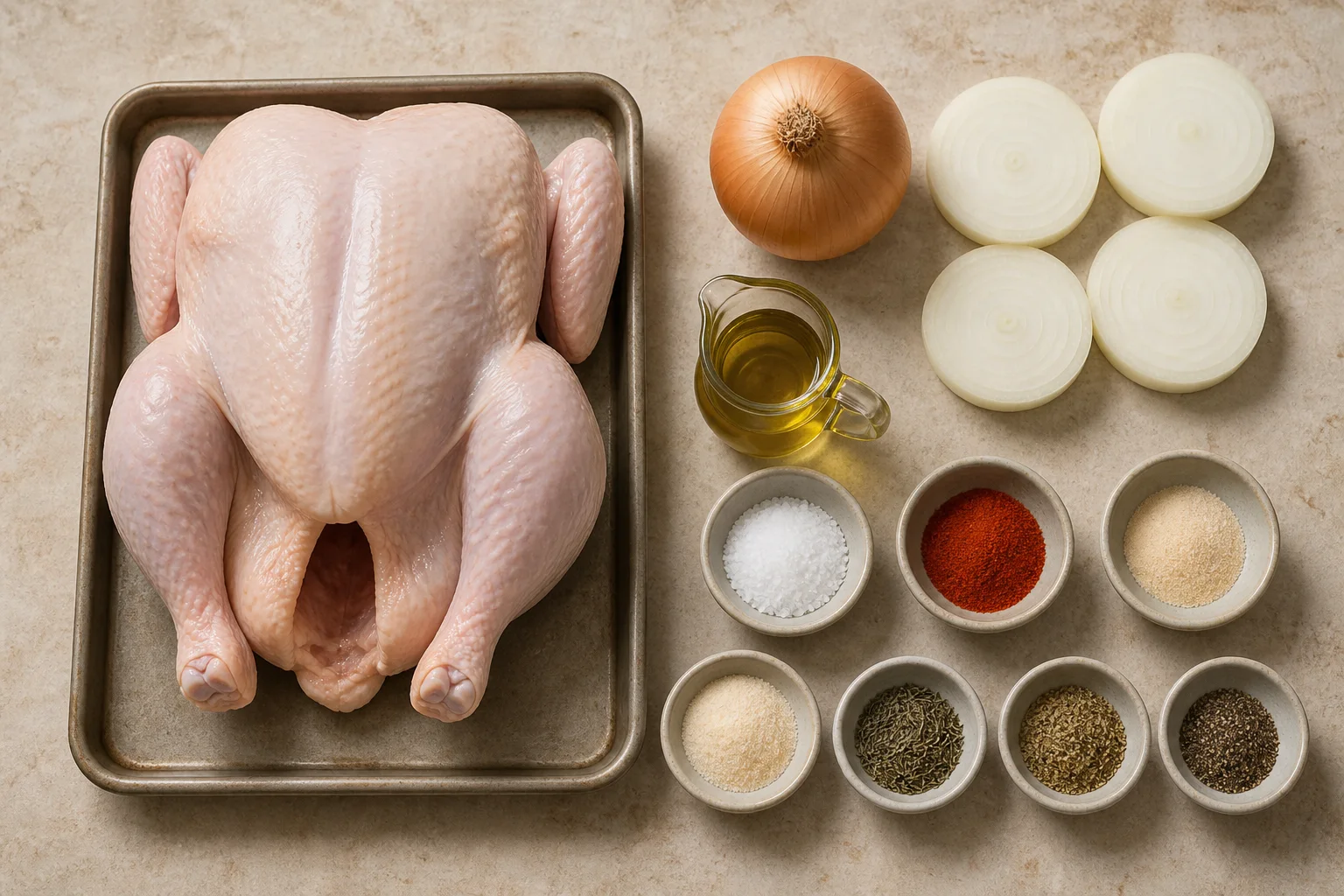
- 1 whole chicken, 4 to 4 1/2 pounds, fully thawed, giblets removed
- 1 large yellow onion, cut into four 1-inch-thick rounds
- 1 tablespoon olive oil
- 2 teaspoons kosher salt
- 2 teaspoons sweet paprika
- 1 1/2 teaspoons garlic powder
- 1 teaspoon onion powder
- 1 teaspoon dried thyme
- 1/2 teaspoon dried oregano
- 1/2 teaspoon black pepper
Ingredient notes and substitutions
Whole chicken: Choose a bird that fits comfortably in a 6-quart oval slow cooker with the lid fully closed. A 4-to-4 1/2-pound chicken is a practical size. Do not force a large chicken against the lid or overfill the appliance.
Enhanced chicken: Check the label for retained water, broth or salt solution. Reduce kosher salt to 1 teaspoon when the bird is already enhanced or pre-brined.
Onion: Four thick rounds make a stable edible platform and flavor the drippings. Large carrot pieces can supplement the onion, but do not use small vegetables that collapse early.
Paprika: Sweet paprika provides classic color without heat. Smoked paprika can replace half for a subtle smoky note, but using all smoked paprika may dominate.
Dried herbs: Thyme and oregano tolerate slow cooking. Poultry seasoning can replace both; check whether the blend contains salt before adjusting.
Oil: A tablespoon helps the dry rub adhere. Neutral avocado oil also works. Butter can soften and slide off under prolonged moist heat, so it is not as reliable here.
How to make Crock-Pot rotisserie-style chicken
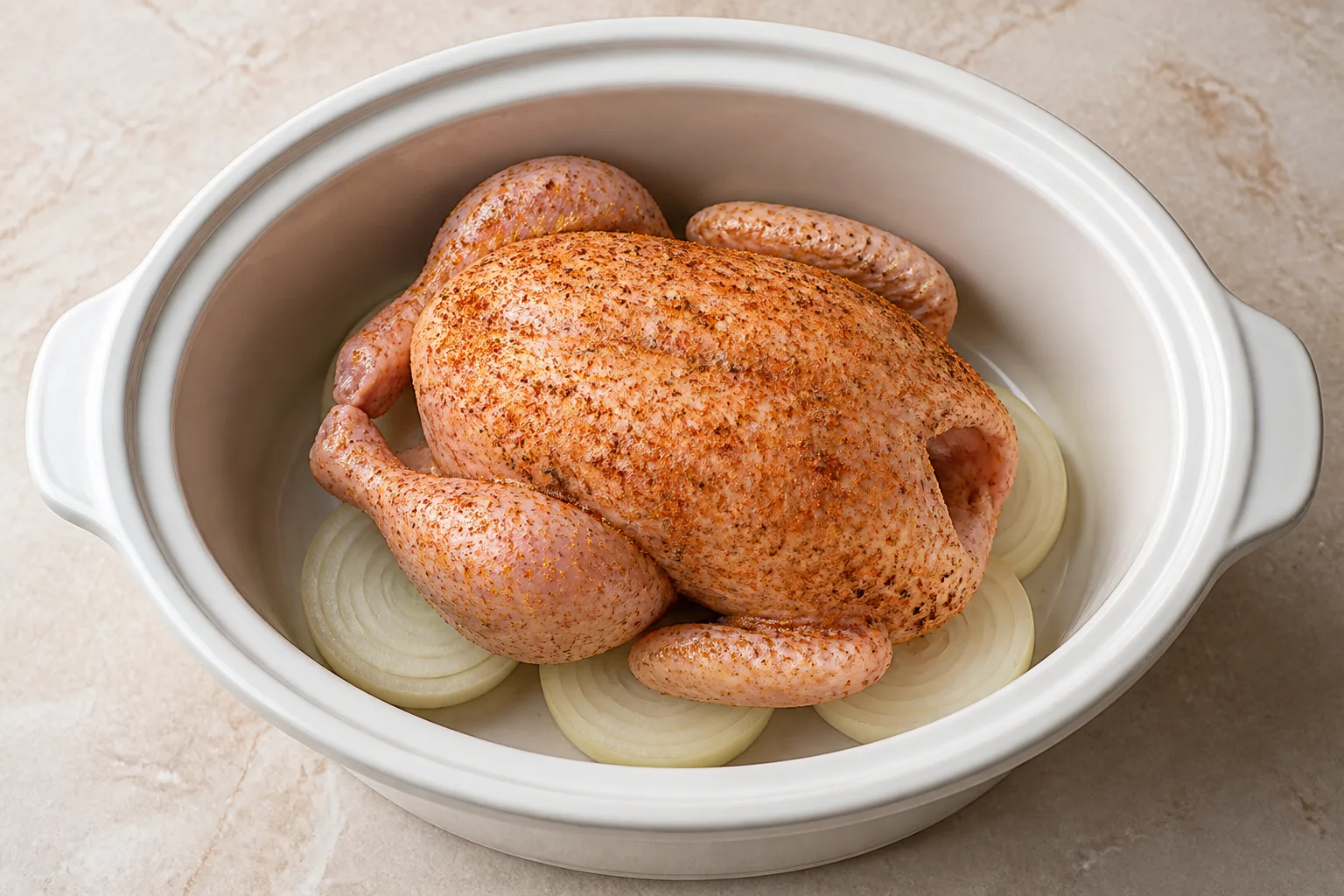
1. Check the fit and remove the giblets
Make sure the fully thawed chicken fits inside a 6-quart oval slow cooker with clearance for the lid. Remove the neck and giblet packet from both cavities. Do not cook the chicken with packaging inside.
Do not rinse raw poultry. Pat the exterior and cavity dry with paper towels, then discard them. Keep the raw-chicken board and tools separate from ready-to-eat food.
2. Build the onion platform
Cut the onion crosswise into four sturdy rounds about 1 inch thick. Arrange them in a single layer across the bottom of the slow cooker.
No broth or water is added. A whole chicken releases enough juice and fat during cooking, and extra liquid would dilute the seasoning.
3. Mix and apply the dry rub
Combine salt, paprika, garlic powder, onion powder, thyme, oregano and black pepper. Rub the chicken with olive oil, then coat the breast, legs, back and cavity opening evenly with the seasoning.
Gently loosen the skin over the breast with clean fingers and apply a small amount of rub underneath if desired. Do not tear the skin.
4. Position the chicken
Set the chicken breast-side up on the onion rounds. Tuck wing tips underneath to reduce overcooking and keep them away from the hot crock wall. The legs can remain in their natural position; no trussing is required.
Cover immediately and wash hands, tools, sink handles and work surfaces that contacted raw poultry.
5. Slow-cook on high
Cook on high for 3 1/2 to 4 1/2 hours. Begin checking at 3 hours 15 minutes for a smaller bird or a cooker known to run hot.
Avoid repeated early lid lifting. Every check releases heat, but near the finish accurate temperature is more important than preserving every minute.
6. Check several places for 165°F
Insert a clean thin-probe thermometer into the thickest part of the breast from the side, avoiding bone. Check the innermost thigh near the body without touching the joint. Check the other breast and thigh if readings differ or the bird has an uneven shape.
The chicken is ready only when every checked area reaches at least 165°F, the federal safe minimum temperature for poultry. If one area is below 165°F, cover and continue in 15-minute increments.
7. Rest before carving or broiling
Use two wide spatulas or sturdy tongs to move the chicken carefully to a rimmed sheet pan. Slow-cooked joints and skin can be delicate. Rest for 10 minutes before carving.
For soft skin, skip directly to carving. For a more golden, crisp top, use the optional broiler step after the chicken is fully cooked.
8. Optional broiler crisping
Move an oven rack so the chicken will sit about 6 to 8 inches below the broiler element. Pat visible skin very gently if it is wet and brush with a teaspoon of oil.
Broil for 3 to 6 minutes, watching continuously and rotating the pan if needed. Paprika can darken quickly. Stop when the breast and leg skin are golden; do not try to crisp the underside by extending the broil.
Rest another 5 minutes, then carve and serve.
Why no liquid is added
Whole chicken contains water and fat that release as heat breaks down muscle and connective tissue. A covered slow cooker prevents much of that moisture from evaporating. By the end, the crock may contain several cups of flavorful liquid even though it began dry.
Adding broth submerges the underside, washes seasoning into the liquid and creates a poached texture. The onion platform reduces direct contact while letting juices collect below.
If the manufacturer’s manual requires a minimum amount of liquid for your specific appliance, follow the manual. Appliance-specific safety instructions take priority over a general recipe.
Why high is the preferred setting
High brings the whole bird through the heating phase more promptly and gives a practical 3 1/2-to-4 1/2-hour window. USDA slow-cooker safety guidance advises starting with thawed meat or poultry and keeping perishables refrigerated until preparation.
A low-setting method can work in some appliances, but a large whole bird heats more gradually and model performance varies. This recipe is calibrated for high. Do not use frozen chicken or a delayed-start timer.
How to transfer the chicken without breaking it
Slow-cooked chicken can be tender enough that a leg separates during lifting. Slide a wide spatula beneath each side and use tongs only to steady the bird, not to squeeze it.
A small roasting rack with handles that fits the cooker can help, provided the appliance manufacturer allows it and the lid closes completely. Do not improvise with plastic, unknown metal or materials not rated for cooking.
If the chicken breaks, it is still usable. Move the pieces to the sheet pan, verify each thick portion reaches 165°F and broil briefly if desired.
How to use the cooking juices
Strain the hot liquid into a heat-safe container. Let the fat rise and skim it, or chill the liquid promptly so the solid fat can be removed later.
For a simple gravy, bring 2 cups defatted liquid to a boil in a saucepan. Whisk 2 tablespoons cornstarch with 2 tablespoons cool water and add it gradually until the gravy coats a spoon. Taste before adding salt because enhanced chicken and the dry rub contribute sodium.
Cooking liquid that contacted raw poultry must be boiled before serving as sauce. Do not spoon unboiled crock liquid over carved chicken.
Troubleshooting
The breast is 165°F but the thigh is not
Cover and continue cooking in 15-minute increments. Shielding the breast inside a slow cooker is impractical; prompt rechecking limits extra time. Next time, choose a smaller, more evenly shaped bird.
The chicken is dry
It cooked well beyond 165°F or remained on warm for a long time. Begin checks earlier and remove the bird once all required areas are safe. Serve dry slices with defatted juices or gravy.
The skin is pale and soft
That is normal in moist heat. Use the optional broiler after the chicken is fully cooked. Pat surface moisture gently and watch constantly.
The paprika burned under the broiler
The pan was too close or the chicken broiled too long. Place it 6 to 8 inches from the element and check every 30 seconds after the first 2 minutes.
The chicken fell apart during transfer
It may have cooked beyond the needed temperature, or the lifting tools were too narrow. Use two wide spatulas. If presentation no longer matters, remove in large pieces and verify each piece before serving.
The bottom is greasy
Whole chicken releases fat, especially from the skin and tail area. Keep the meat elevated on onion, strain the liquid and skim the fat. Do not pour all drippings directly over the carved meat.
The cooker lid will not close
The chicken is too large for the appliance. Do not weigh the lid down or cook with a gap. Use a smaller chicken or a larger cooker within the manufacturer’s fill limits.
Carving guide
After resting, pull each leg away from the body and cut through the joint between thigh and body. Separate drumstick from thigh at its natural joint if desired.
Remove each breast by slicing down one side of the breastbone and following the ribs. Transfer the breast lobe to a board and slice across the grain. Remove wings last.
Check the cavity for any remaining giblets or bone fragments. Save plain bones and the carcass promptly if making broth.
Serving ideas
Serve the chicken with mashed potatoes, roasted vegetables, green beans or a crisp salad. The paprika-herb flavor also works with rice pilaf or buttered noodles.
Use leftovers for sandwiches, tacos, soup or chicken salad. Remove meat from the bones before refrigerating so it cools faster and is easier to portion.
For meal prep, store light and dark meat in separate shallow containers with a small spoonful of defatted juice.
Storage and reheating
Carve or pull meat from the bones and refrigerate it in shallow containers within 2 hours. The federal cold-storage chart gives cooked poultry leftovers a 3-to-4-day refrigerated window at 40°F or below.
Reheat slices in a covered skillet with a splash of broth or cooking juice, or microwave in short intervals. Heat leftovers to 165°F without cooking longer than necessary.
Do not reheat cold chicken in a slow cooker. Reheat rapidly first; a preheated slow cooker may then hold already-hot food if the appliance maintains a safe temperature.
Freezing instructions
Remove meat from the bones, cool promptly and portion with a spoonful of defatted juice. Freeze in airtight containers for up to 3 months for best quality.
Thaw overnight in the refrigerator and reheat to 165°F. Freeze the carcass separately if it will be used for broth, and label it with the date.
Crisp skin softens after refrigeration or freezing. Re-crisp individual skin-on pieces in an oven or air fryer while avoiding overcooking the meat.
Frequently asked questions
Can I put a frozen whole chicken in the Crock-Pot?
No. Thaw it fully in the refrigerator first. A frozen whole bird heats too gradually and this method is calibrated only for thawed chicken.
Do I need to add water?
No. The chicken releases plenty of liquid in a covered cooker. Use thick onion rounds as the base and follow any model-specific liquid requirement in the appliance manual.
Should the chicken cook breast-side up or down?
Breast-side up keeps the breast above the accumulating juices and makes temperature checks and optional broiling easier.
Can I stuff the chicken?
Do not fill the cavity with bread stuffing for this slow-cooker method. Stuffing changes heat penetration and introduces another food that must reach a safe temperature. Cook stuffing separately.
Can I cook it on low?
This version is calibrated for high to bring a whole bird through the heating phase more promptly. If using another setting, follow a tested recipe for your model and verify several areas reach 165°F.
Does broiling make all the skin crisp?
No. It crisps the exposed breast and leg surfaces. The underside stays softer because it rested near moisture and receives less direct heat.
How do I know it is done without a thermometer?
A thermometer is required for reliable confirmation. Clear juices, loose legs and color are not dependable substitutes for checking breast and inner thigh temperatures.
Recipe development note
This recipe was developed through culinary research and editorial review. It has not been represented as a personal kitchen test. Chicken weight, shape and slow-cooker performance vary; verify multiple breast and inner-thigh locations at 165°F.
Nutrition is an estimate based on generic chicken with some skin and excludes gravy and side dishes. The accompanying visuals are AI-assisted food-editorial images, not photographs of a kitchen test.
Recipe at a glance
| Metric | Details |
|---|---|
| Prep time | 20 minutes |
| Cook time | 270 minutes |
| Total time | 300 minutes |
| Yield | 8 servings |
Printable recipe card
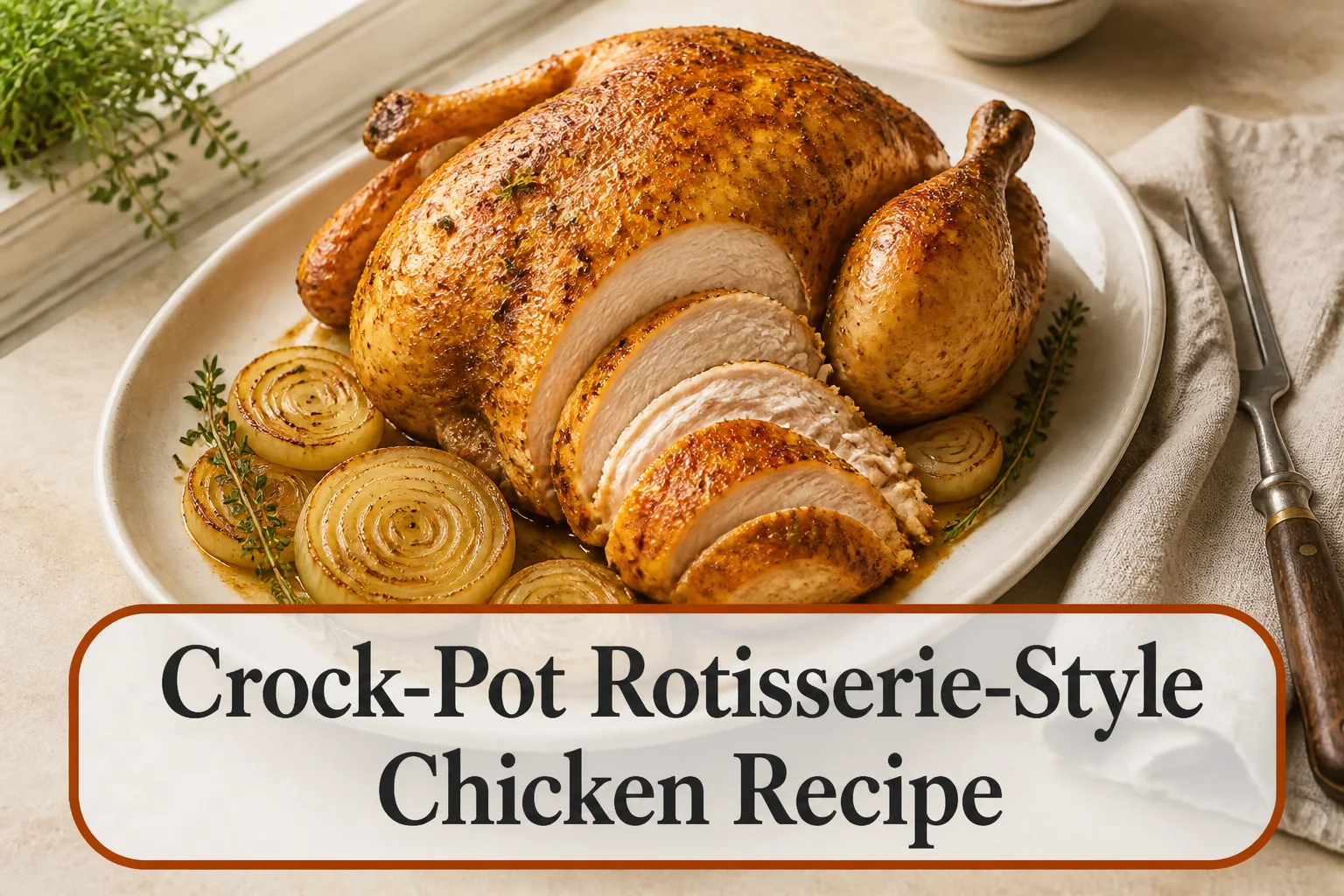
Crock-Pot Rotisserie-Style Chicken Recipe
Ingredients
Equipment
Method
- Confirm chicken is fully thawed and fits with the lid closed. Remove neck and giblets; pat chicken and cavity dry without rinsing.
- Arrange four 1-inch onion rounds across the bottom of a 6-quart oval slow cooker. Add no broth or water.
- Combine salt, paprika, garlic powder, onion powder, thyme, oregano and pepper. Rub chicken with oil and coat evenly with seasoning.
- Set chicken breast-side up on onion rounds and tuck wing tips underneath. Cover immediately.
- Cook on high 3 1/2 to 4 1/2 hours, beginning checks at 3 hours 15 minutes for a small bird or hot-running cooker.
- Check both breasts and inner thighs without touching bone. Continue in 15-minute increments until every checked location reaches 165°F.
- Transfer carefully with wide spatulas to a rimmed sheet pan. Rest 10 minutes before carving or optional broiling.
- Brush skin lightly with oil and broil 6 to 8 inches from the element for 3 to 6 minutes, watching constantly. Rest 5 minutes, carve and serve.
Notes
- Use a fully thawed 4-to-4 1/2-pound chicken that fits with the lid closed.
- Add no liquid unless the appliance manual specifically requires it.
- Verify both breasts and inner thighs reach 165°F.
- The optional broiler crisps only exposed skin and happens after full cooking.
- This recipe was developed through culinary research and editorial review.
This recipe was developed through culinary research and editorial review. Chicken weight, shape and slow-cooker performance vary; verify multiple breast and inner-thigh locations at 165°F.
Nutrition is an estimate based on generic chicken with some skin and excludes gravy and side dishes; actual values vary.