
This high-protein tuna pasta salad combines chickpea or lentil pasta, water-packed tuna, Greek yogurt dressing, celery, cucumber and peas. It makes six cold meal-prep portions with an estimated 34 grams of protein each.
Pasta keeps absorbing dressing after refrigeration. Instead of making the first bowl excessively wet, this recipe reserves one-third of the dressing and folds it in after the pasta has chilled.
This recipe was developed through culinary research and editorial review. Pasta brands, tuna drainage and yogurt thickness vary, so use the dressing and moisture cues below.
For a warm cottage-cheese pasta, try the creamy protein pasta recipe. The white bean salad with tuna is a pasta-free alternative.
Why tuna pasta salad dries out
Cooked pasta starch continues attracting moisture as it cools. Legume-based pasta can absorb especially quickly, while Greek yogurt thickens further in the refrigerator.
Rinsing briefly after cooking stops carryover heat and removes loose surface starch. The pasta should still be drained extremely well so rinse water does not dilute the dressing.
A reserved dressing portion solves the next-day problem. Fold two-thirds into the fresh salad, chill, then use the remainder to restore a creamy coating before portioning or serving.
Ingredients
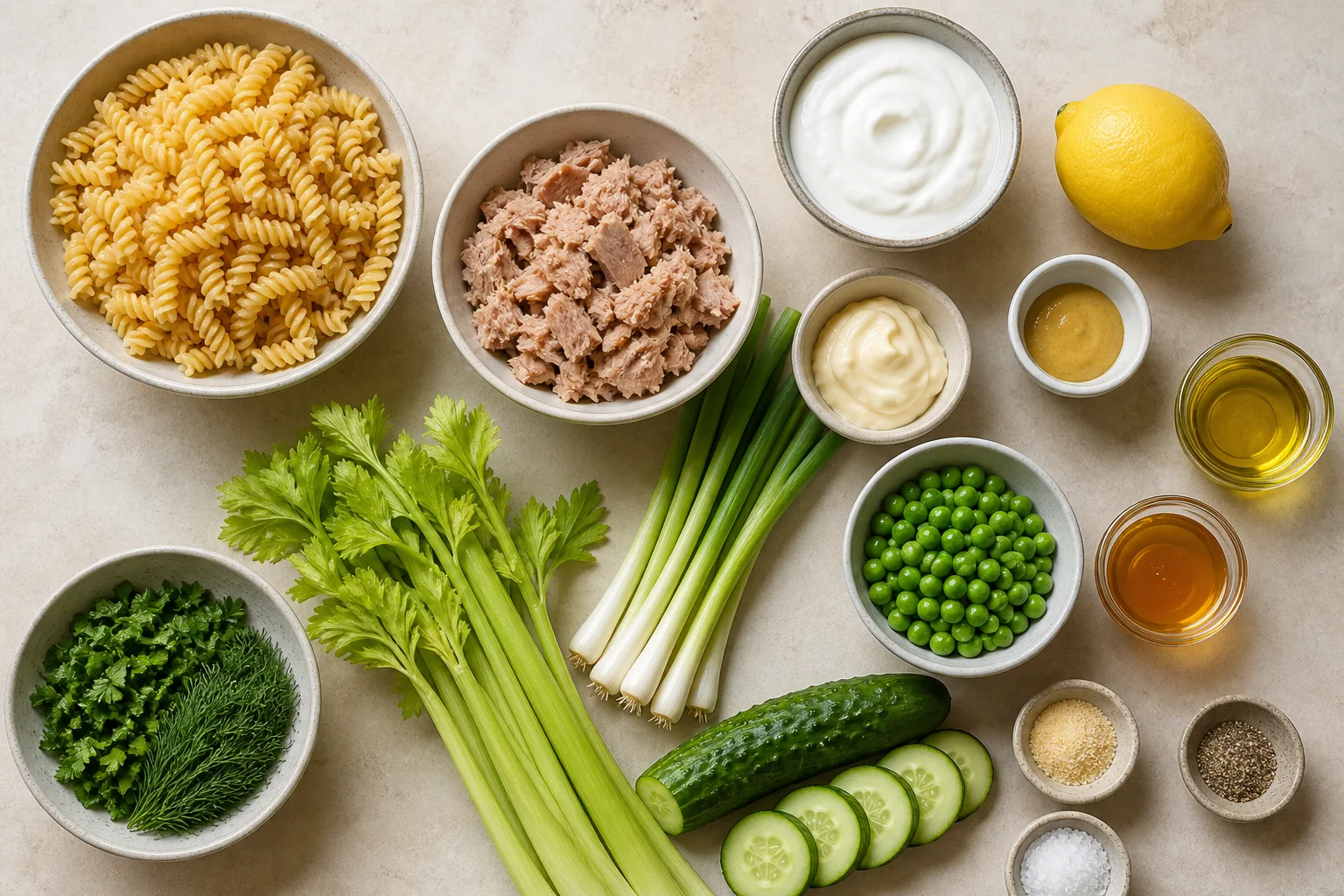
- 12 ounces chickpea or lentil rotini, 340 grams
- 3 cans water-packed tuna, drained very well, 5 ounces each
- 1 1/2 cups plain Greek yogurt, 360 grams
- 1/4 cup mayonnaise, 60 grams
- 3 tablespoons fresh lemon juice, 45 milliliters
- 2 tablespoons Dijon mustard, 30 grams
- 1 tablespoon olive oil, 14 grams
- 1 teaspoon honey, 7 grams
- 1 teaspoon garlic powder
- 1 teaspoon dried dill
- 3/4 teaspoon fine salt, plus more for pasta water
- 1/2 teaspoon black pepper
- 3 celery ribs, finely diced and dried, about 150 grams
- 1 small English cucumber, seeded, diced and dried, about 250 grams
- 1 cup frozen peas, thawed and dried, 140 grams
- 1/2 cup sliced scallions, 50 grams
- 1/2 cup chopped parsley or fresh dill, 30 grams
Ingredient notes and substitutions
Protein pasta: Chickpea or lentil rotini raises protein and holds dressing in its ridges. Conventional pasta works but changes the nutrition estimate.
Tuna: Water-packed tuna keeps the dressing lighter. Drain through a fine-mesh strainer and press gently; excess can liquid makes the salad watery.
Greek yogurt: A 2% yogurt balances creaminess and tang. Nonfat yogurt may need slightly more olive oil; full-fat changes nutrition.
Mayonnaise: A modest amount softens yogurt’s acidity and helps the dressing coat chilled pasta. More yogurt can replace it, but the salad will be tangier.
Cucumber: Remove watery seeds and pat the diced cucumber dry. Bell pepper is a drier substitute.
How to make high-protein tuna pasta salad
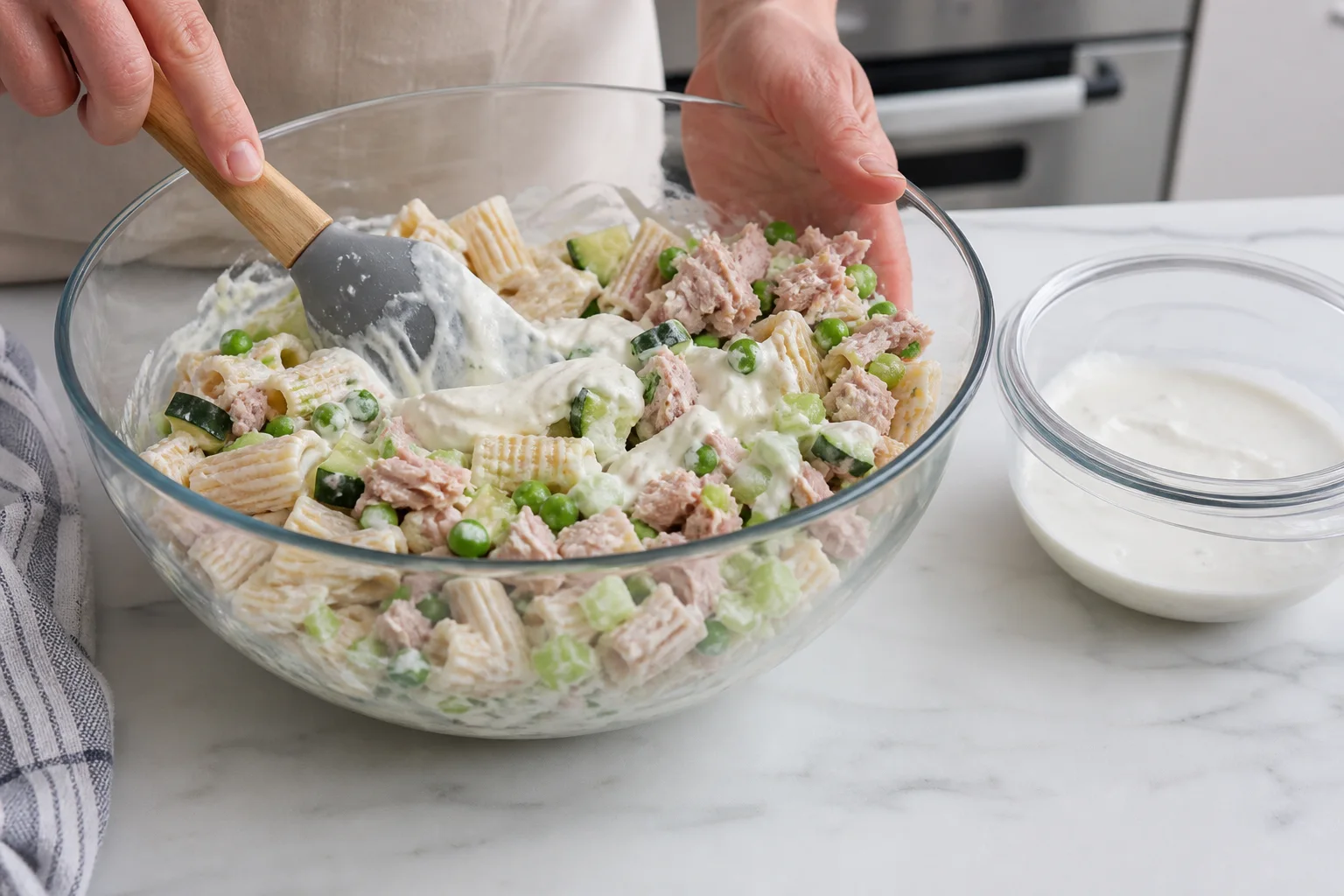
1. Mix the dressing
Whisk Greek yogurt, mayonnaise, lemon juice, Dijon, olive oil, honey, garlic powder, dill, salt and pepper until smooth. Transfer one-third to a separate covered container.
2. Cook the pasta
Boil pasta in salted water according to its package, beginning checks 2 minutes early. Cook until tender but not collapsing.
3. Rinse and drain thoroughly
Drain, rinse briefly under cool water and shake the colander well. Spread pasta on a clean towel-lined tray for 5 to 10 minutes until no water collects underneath.
4. Prepare the mix-ins
Flake drained tuna into large pieces. Dry celery, cucumber and peas with clean towels so their surface moisture does not enter the dressing.
5. Combine gently
Fold pasta, tuna, vegetables, scallions and herbs with two-thirds of the dressing. Avoid crushing the tuna or legume pasta.
6. Chill and finish
Cover and refrigerate 1 hour. Fold in reserved dressing a spoonful at a time until creamy. Divide among six containers.
Pasta-salad moisture guide
| What you see | Likely cause | Best fix |
|---|---|---|
| Creamy coating clings to pasta | Balanced moisture | Portion and chill |
| Pasta looks dry after chilling | Starch absorbed dressing | Fold in reserved dressing |
| Thin liquid pools at bottom | Tuna or vegetables were wet | Drain liquid and add 2 tablespoons Greek yogurt |
| Pasta breaks while stirring | Legume pasta overcooked | Check earlier and fold gently |
| Dressing is very thick | Yogurt brand is dense | Add lemon juice or water 1 teaspoon at a time |
| Cucumber softens quickly | Seeds and water remained | Seed, dice and dry thoroughly |
How to drain tuna and vegetables
Tuna should not be squeezed into a dry paste. Drain in a fine-mesh strainer, press gently and wait several minutes.
For cucumber, quarter lengthwise and scrape out the watery seed channel. Dice, spread on a clean towel and blot before measuring.
Thawed peas can hold frost water. Rinse briefly, drain and pat dry. Celery should also be dry after washing.
Protein per serving
One of six servings has an estimated 34 grams of protein from tuna, legume pasta and Greek yogurt.
This uses common U.S. package labels, not laboratory analysis. Tuna can size, drained weight, yogurt and pasta vary; calculate from your products when precision matters.
Meal-prep strategy
For the best texture, keep the final dressing third separate until after the first chill. If packing all six portions immediately, divide reserved dressing into small cups.
Stir each portion before eating. If it has thickened, add 1 teaspoon water or lemon juice rather than more salt.
Pack leafy greens separately. Pasta salad placed over spinach for several days will soften the leaves.
Variations
Mediterranean: Add roasted red pepper and olives; replace dill with oregano and parsley.
No cucumber: Use diced bell pepper for a drier crunch.
Regular pasta: Use the same dry weight, but expect lower protein and a different absorption rate.
No mayonnaise: Replace it with Greek yogurt and add another teaspoon olive oil.
Spicy: Add hot sauce or minced jalapeño to individual portions.
For a pasta salad with feta and vegetables, chickpea pasta salad uses chickpea pasta and a lemon dressing without adding tuna.
Troubleshooting
The salad is watery
Tuna, cucumber or peas retained water. Drain pooled liquid and fold in Greek yogurt gradually.
The salad is dry the next day
This is expected absorption. Use the reserved dressing or loosen with a teaspoon of water.
The pasta is mushy
It cooked too long or sat hot. Begin checks early and rinse promptly after draining.
The yogurt tastes too tangy
Use 2% Greek yogurt, keep the small amount of mayonnaise and balance with honey.
The tuna disappears into the salad
It was mixed aggressively. Flake into large pieces and fold last with a silicone spatula.
Storage and food safety
Refrigerate covered salad within 2 hours at 40°F or below. Use within 3 to 4 days; quality is best in the first 3 days.
USDA leftovers and food safety guidance recommends keeping cold perishable food at 40°F or below and using refrigerated leftovers within 3 to 4 days.
Do not leave tuna pasta salad at room temperature longer than 2 hours, or 1 hour above 90°F. Transport in an insulated bag with a frozen cold pack.
Freezing is not recommended. Yogurt dressing may separate, vegetables soften and pasta texture declines.
Frequently asked questions
How much protein is in tuna pasta salad?
One of six servings has an estimated 34 grams, depending on tuna, pasta and yogurt brands.
Why rinse the pasta?
Brief rinsing stops cooking and removes loose starch that can make cold dressing gluey.
Can I use regular pasta?
Yes. The method works, but protein and absorption change.
How long does the salad keep?
Keep at 40°F or below for 3 to 4 days; quality is best during the first 3.
Can I freeze it?
Freezing is not recommended because the dairy dressing and vegetables lose texture.
How do I prevent watery dressing?
Drain tuna well, seed cucumber and dry every vegetable before mixing.
Recipe development note
This high-protein tuna pasta salad was developed through culinary research and editorial review. It is not represented as a personal kitchen test. Pasta brands, tuna drainage and yogurt thickness vary; use the reserved-dressing and moisture cues.
Nutrition is an estimate per one of six servings. The accompanying visuals are AI-assisted food-editorial images, not photographs of a kitchen test.
Printable recipe card
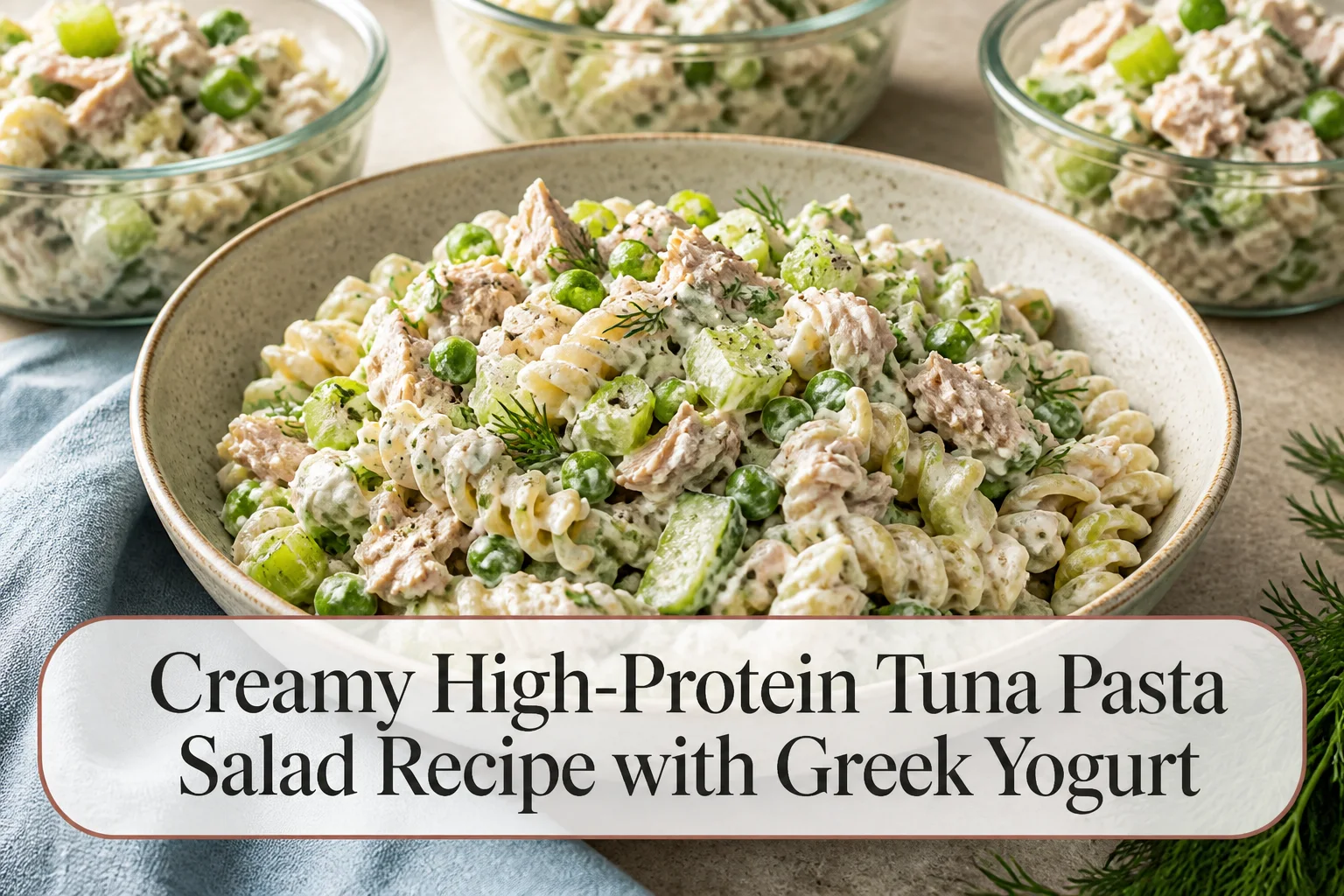
Creamy High-Protein Tuna Pasta Salad Recipe with Greek Yogurt
Ingredients
Equipment
Method
- Whisk yogurt, mayonnaise, lemon, Dijon, oil, honey, garlic, dill, salt and pepper; reserve one-third in a covered container.
- Boil pasta in salted water according to its package, beginning checks 2 minutes early.
- Rinse briefly under cool water, drain very well and spread on a towel-lined tray for 5 to 10 minutes.
- Flake well-drained tuna into large pieces and pat celery, cucumber and peas dry.
- Fold pasta, tuna, vegetables, scallions and herbs gently with two-thirds of the dressing.
- Chill 1 hour, fold in reserved dressing as needed and divide among six containers.
Notes
- Drain tuna thoroughly without squeezing it dry.
- Seed and dry cucumber; dry peas and celery.
- Cook legume pasta only until tender and rinse promptly.
- Reserve one-third dressing for after chilling.
- Keep at 40°F or below and use within 3 to 4 days.
- Contains fish, egg and milk; Dijon may contain sulfites.
- This recipe was developed through culinary research and editorial review.
This recipe was developed through culinary research and editorial review. Pasta brands, tuna drainage and yogurt thickness vary; use the reserved-dressing and moisture cues.
Nutrition is an estimate per one of six servings.