
This white bean salad with tuna turns canned cannellini beans and tuna into a fresh lunch with tomatoes, cucumber, parsley and capers. The lemon-Dijon dressing is bright enough to season the beans but has enough olive oil to keep the tuna moist.
Mixing order matters. Beans absorb the dressing first, sturdy vegetables go in next and tuna is folded through in large flakes at the end. That keeps the tuna from becoming paste-like and prevents aggressive stirring from stripping the bean skins.
This recipe was developed through culinary research and editorial review. Tuna packing liquid, bean firmness and lemon acidity vary, so use the drain, fold and final-taste cues below.
For a meatless pantry salad, use the black bean corn salad recipe. The green bean salad recipe is a crisp vegetable side with mustard vinaigrette.
Why tuna bean salad can taste dry
Tuna packed in water can be lean and firm, while thoroughly rinsed beans have very little surface seasoning. If the tuna is stirred repeatedly with dry beans, it breaks into tiny fibers that absorb dressing and feel chalky.
This recipe seasons the beans while they are still alone in the bowl. A 10-minute rest lets them take on lemon, garlic and salt. The tuna is then separated into generous flakes and folded only a few times.
Do not squeeze canned tuna until completely dry. Drain it well, but leave its natural moisture. Oil-packed tuna is richer and may require slightly less added olive oil after tasting.
Ingredients
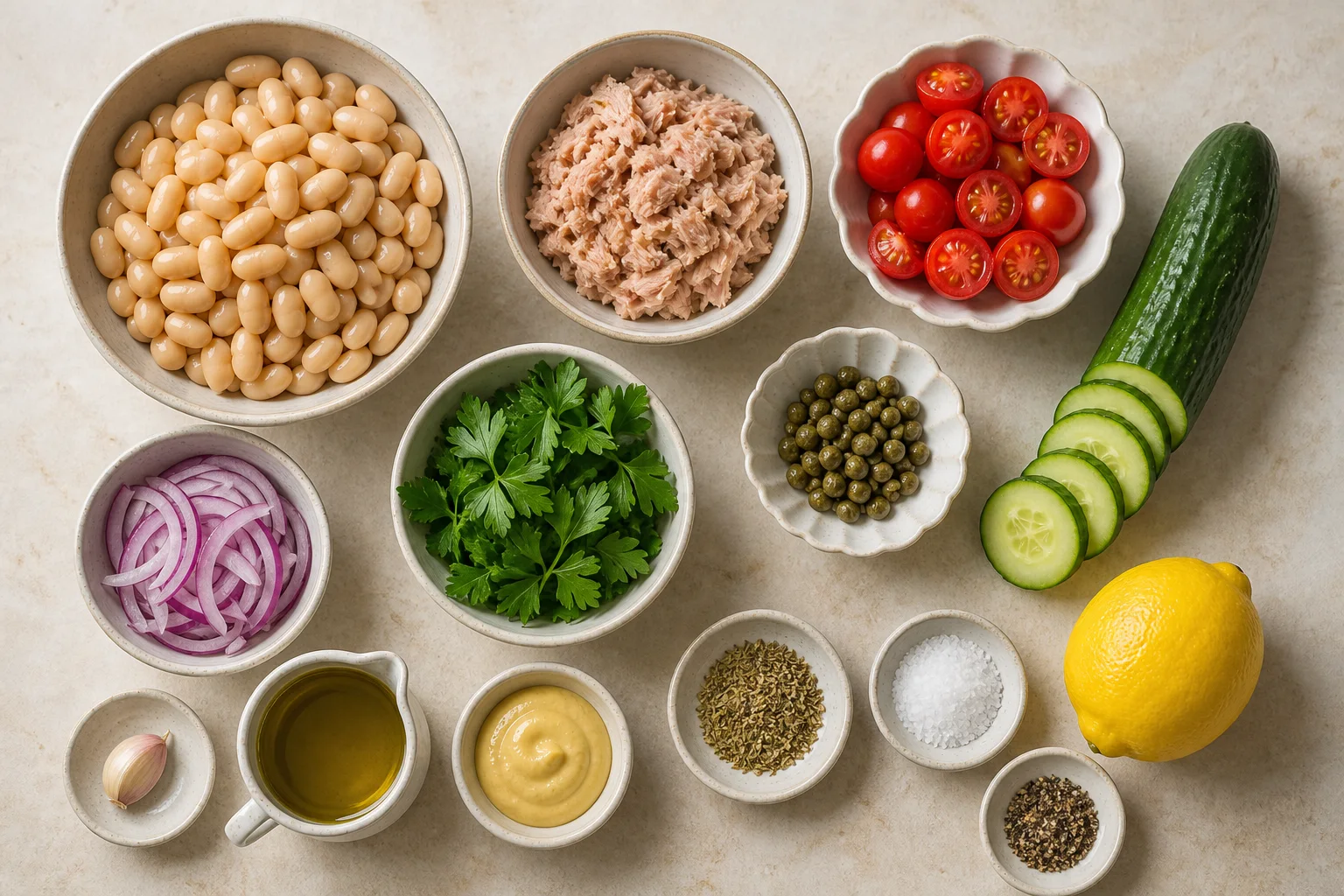
For the salad
- 2 cans cannellini beans, 15 ounces each, rinsed and drained, about 510 grams drained
- 2 cans tuna, 5 ounces each, drained, about 220 grams
- 1 1/2 cups cherry tomatoes, halved, 225 grams
- 1 cup diced English cucumber, 150 grams
- 1/3 cup finely sliced red onion, 45 grams
- 1/2 cup chopped flat-leaf parsley, 20 grams
- 2 tablespoons drained capers, 18 grams
For the lemon-Dijon dressing
- 1 teaspoon finely grated lemon zest
- 1/4 cup fresh lemon juice, 60 grams
- 1 teaspoon Dijon mustard, 5 grams
- 1 small garlic clove, finely grated
- 1/4 cup extra-virgin olive oil, 54 grams
- 1/2 teaspoon dried oregano
- 1/2 teaspoon fine salt, plus more only after tasting
- 1/4 teaspoon black pepper
Ingredient notes and substitutions
Cannellini beans: Their creamy centers pair naturally with tuna. Great Northern or navy beans work, although navy beans are smaller and need gentler folding. Rinse any canned variety and blot away excess water.
Tuna: Solid light or albacore tuna works. Water-packed tuna gives a lighter salad; olive-oil-packed tuna gives a softer, richer result. Use canned tuna you already enjoy because its flavor remains noticeable.
Tomatoes: Cherry tomatoes keep their structure. If using a large tomato, remove loose seed gel and cut the flesh into 1/2-inch pieces.
Cucumber: English or Persian cucumber has fewer watery seeds. A standard cucumber can be peeled, halved lengthwise and seeded before dicing.
Red onion: Slice it very thin. For a milder flavor, soak the slices in cold water for 10 minutes, then drain and blot.
Capers: Capers add briny contrast. Chopped green olives can replace them; begin with 1 tablespoon and reduce initial salt.
Dijon: A small amount helps the lemon and oil stay combined. It should support the tuna rather than make the salad taste strongly of mustard.
How to make white bean salad with tuna
1. Rinse and dry the beans
Rinse cannellini beans in a colander until the runoff is clear. Drain for 2 minutes, spread on a clean towel and blot gently. Remove badly split beans without rubbing the rest.
2. Drain the tuna
Open the cans and drain away packing liquid. Do not press the tuna hard against the lid. Tip it onto a plate and separate it into 1-inch flakes with a fork.
3. Prepare the vegetables
Halve tomatoes, dice cucumber, thinly slice onion, chop parsley and drain capers. Blot very juicy tomatoes or cucumber so they do not dilute the dressing.
4. Whisk the dressing
In a large bowl, whisk lemon zest, lemon juice, Dijon, garlic, oregano, salt and pepper. Stream in olive oil until the dressing looks slightly thick and uniform.
5. Season the beans first
Add dry beans to the dressing and fold gently until coated. Rest for 10 minutes at room temperature so the centers gain flavor.
6. Add vegetables
Fold in tomatoes, cucumber, onion, parsley and capers. Scrape dressing from the bottom rather than stirring in circles.
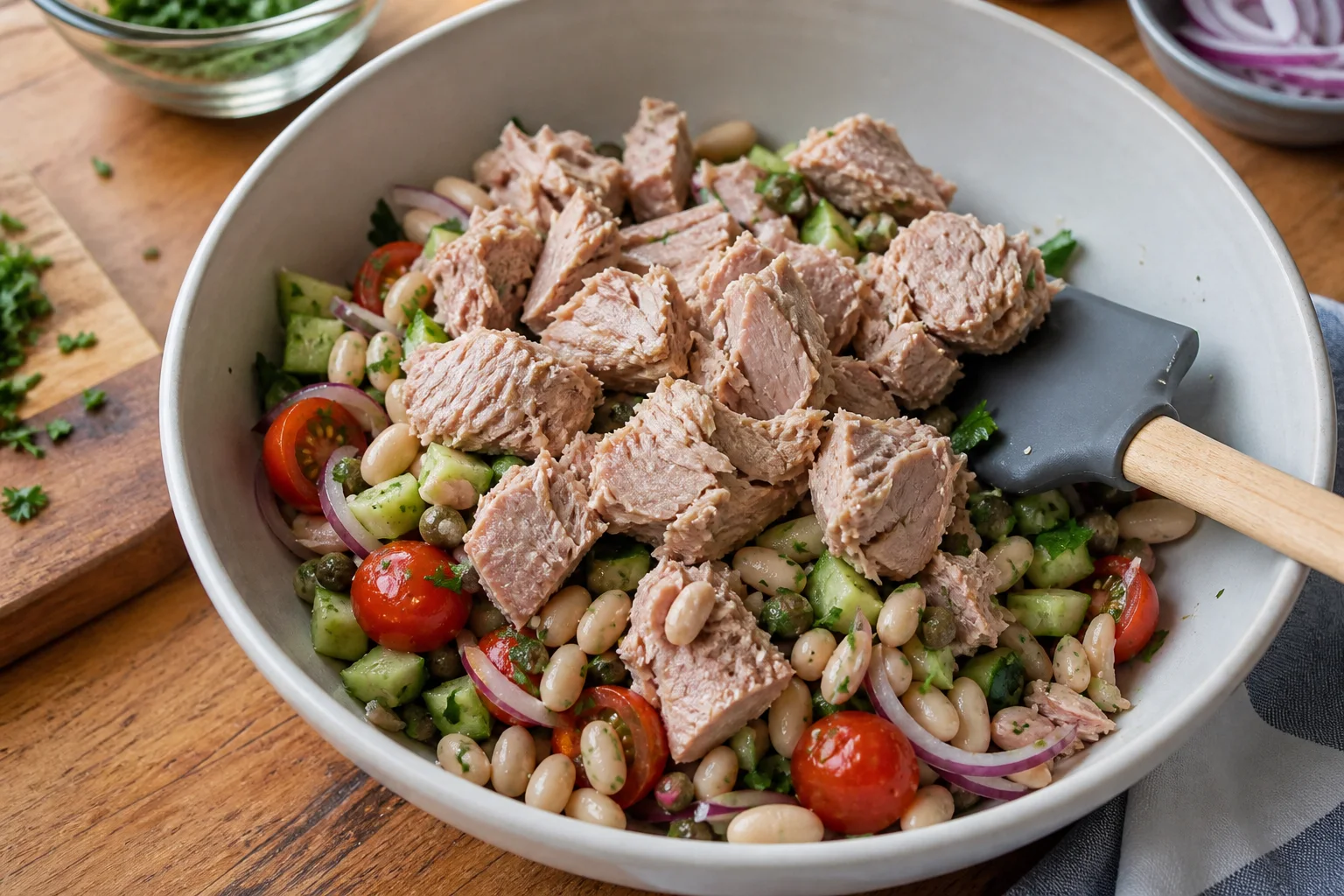
7. Add tuna last
Scatter tuna flakes over the salad. Fold three to five times with a wide spatula, stopping while generous pieces remain visible.
8. Rest and adjust
Refrigerate for 15 minutes. Taste a spoonful containing bean, tuna and tomato. Add lemon by the teaspoon, olive oil by the tablespoon or salt by a small pinch as needed.
Moisture and texture guide
| What you notice | Likely reason | Correction |
|---|---|---|
| Tuna becomes fine and pasty | It was stirred too much | Make 1-inch flakes and fold in last |
| Beans taste plain inside | They were mixed with everything at once | Dress beans alone and rest 10 minutes |
| Salad tastes chalky | Tuna is dry or dressing is lean | Fold in 1 tablespoon olive oil |
| Liquid pools after chilling | Beans or vegetables were wet | Blot components before mixing |
| Salad tastes too salty | Tuna and capers contributed more sodium | Add unsalted beans or cucumber and more lemon |
| Bean skins peel | Beans are soft or were rubbed | Rinse gently and use a lifting fold |
Water-packed versus oil-packed tuna
Water-packed tuna is usually firmer and can taste drier once refrigerated. The full 1/4 cup olive oil in the dressing helps it stay pleasant. Drain it without squeezing.
Oil-packed tuna generally has a softer texture and fuller flavor. Drain the excess oil but reserve 1 tablespoon. Begin with 3 tablespoons fresh olive oil in the dressing, then use reserved tuna oil if the salad needs more richness.
Whichever type you choose, keep the flakes large. Tuna that looks slightly under-mixed in the bowl will become distributed as portions are served.
How to balance lemon, capers and salt
Tuna, canned beans, Dijon and capers all carry different sodium levels. Adding a full amount of salt before tasting can make the salad difficult to correct.
The recipe starts with 1/2 teaspoon fine salt for six servings. After the short chilled rest, taste a complete bite. If the salad is dull, add lemon first; acidity can make the existing salt taste more vivid.
If it remains flat, add salt one small pinch at a time. If it tastes salty, increase unsalted cucumber or beans and add a little lemon—do not add sugar, which creates a different imbalance.
Make-ahead lunch plan
For the best texture, whisk the dressing and prepare vegetables up to 24 hours ahead. Store each in the refrigerator. Rinse the beans and fold the salad together 30 minutes before packing.
The fully assembled salad may also be refrigerated overnight. Expect the tuna flakes to become smaller as portions are moved, but the flavor will remain good.
Pack leafy greens, crackers or bread separately. The dressed beans make greens wilt and soften crackers. Use a cold pack when the lunch will be away from refrigeration.
Serving ideas
On greens: Spoon the salad over romaine, arugula or baby spinach just before eating.
In a pita: Drain a portion briefly with a slotted spoon and tuck into a whole-wheat pita with lettuce.
With toast: Serve over thick toasted sourdough rubbed lightly with garlic.
As a grain bowl: Add the salad to cooked chilled farro or quinoa, keeping extra lemon nearby because grains absorb dressing.
With eggs: Add quartered hard-cooked egg for a larger meal. This introduces an egg allergen and changes the nutrition estimate.
Variations
Mediterranean: Add 1/3 cup chopped Kalamata olives and 3/4 cup crumbled feta. Reduce both capers and salt.
Herby: Replace half the parsley with dill or basil. Add basil only shortly before serving to prevent bruising.
Roasted pepper: Replace tomatoes with 1 cup diced roasted red pepper, well drained.
Celery crunch: Add 3/4 cup thinly sliced celery and its pale leaves.
No capers: Use 1 tablespoon finely chopped pickles or simply add another teaspoon lemon juice.
Spicy: Add 1/4 teaspoon red-pepper flakes to the dressing.
If you prefer a feta-topped bean salad, white bean salad with feta combines beans, cucumber and tomatoes with a lemon dressing and briny olives.
Troubleshooting
The salad is dry
Tuna may have been squeezed or the beans absorbed the dressing. Fold in olive oil 1 tablespoon at a time, then add lemon 1 teaspoon if the richness needs brightness.
The salad is watery
Beans, tomatoes or cucumber carried excess water. Blot them before mixing. For the current batch, serve with a slotted spoon rather than adding more dry ingredients blindly.
The tuna disappeared into the beans
It was flaked too finely or stirred hard. Break tuna into 1-inch pieces and fold only three to five times at the end.
The beans are falling apart
The canned beans are very soft. Rinse under low pressure, avoid towel rubbing and substitute a broad silicone spatula for a spoon.
It tastes fishy
Use a tuna brand and packing style you like, drain it promptly and add fresh lemon zest. An unusually strong or off odor from a newly opened can is a reason not to use it.
The onion dominates
Slice it thinly and soak in cold water for 10 minutes. Blot before adding so the salad does not become watery.
Storage and food safety
Store tuna bean salad in a covered refrigerator container for up to 3 days. Keep it at 40°F or below and return it to refrigeration within 2 hours of serving. USDA provides practical temperature and leftover guidance on its refrigeration food-safety page.
The salad is meant to be eaten cold or cool. Reheating changes the tuna aroma and softens the vegetables, so it is not recommended.
Do not freeze the assembled salad. Tomatoes and cucumber lose their crisp texture, and the tuna can become dry after thawing.
Discard salad that has stood warm longer than recommended or develops an off smell, bubbling or visible mold. A day count cannot make temperature-abused food safe.
Frequently asked questions
Can I use another white bean?
Yes. Great Northern or navy beans work. Handle small navy beans especially gently.
Should I rinse canned beans?
Yes. Rinsing removes thick canning liquid that would cloud and dilute the lemon dressing.
Can I use tuna packed in oil?
Yes. Drain it and start with 3 tablespoons olive oil in the dressing, adding more only after tasting.
Can I make the salad the night before?
Yes. It keeps well overnight, although tuna flakes will become smaller with repeated stirring.
Is this salad served warm or cold?
Serve it cold or after 10 minutes at room temperature. It is not designed for reheating.
What can replace capers?
Use chopped green olives, a small amount of pickle or another teaspoon of lemon juice.
How many lunches does it make?
The recipe makes six moderate main-dish salad servings. Add bread, greens or grains for a larger meal.
Recipe development note
This white bean salad with tuna was developed through culinary research and editorial review. It is not represented as a personal kitchen test. Tuna moisture, bean firmness and lemon acidity vary; use the drain, large-flake and final-taste cues.
Nutrition is an estimate per one of six servings. The accompanying visuals are AI-assisted food-editorial images, not photographs of a kitchen test.
Printable recipe card
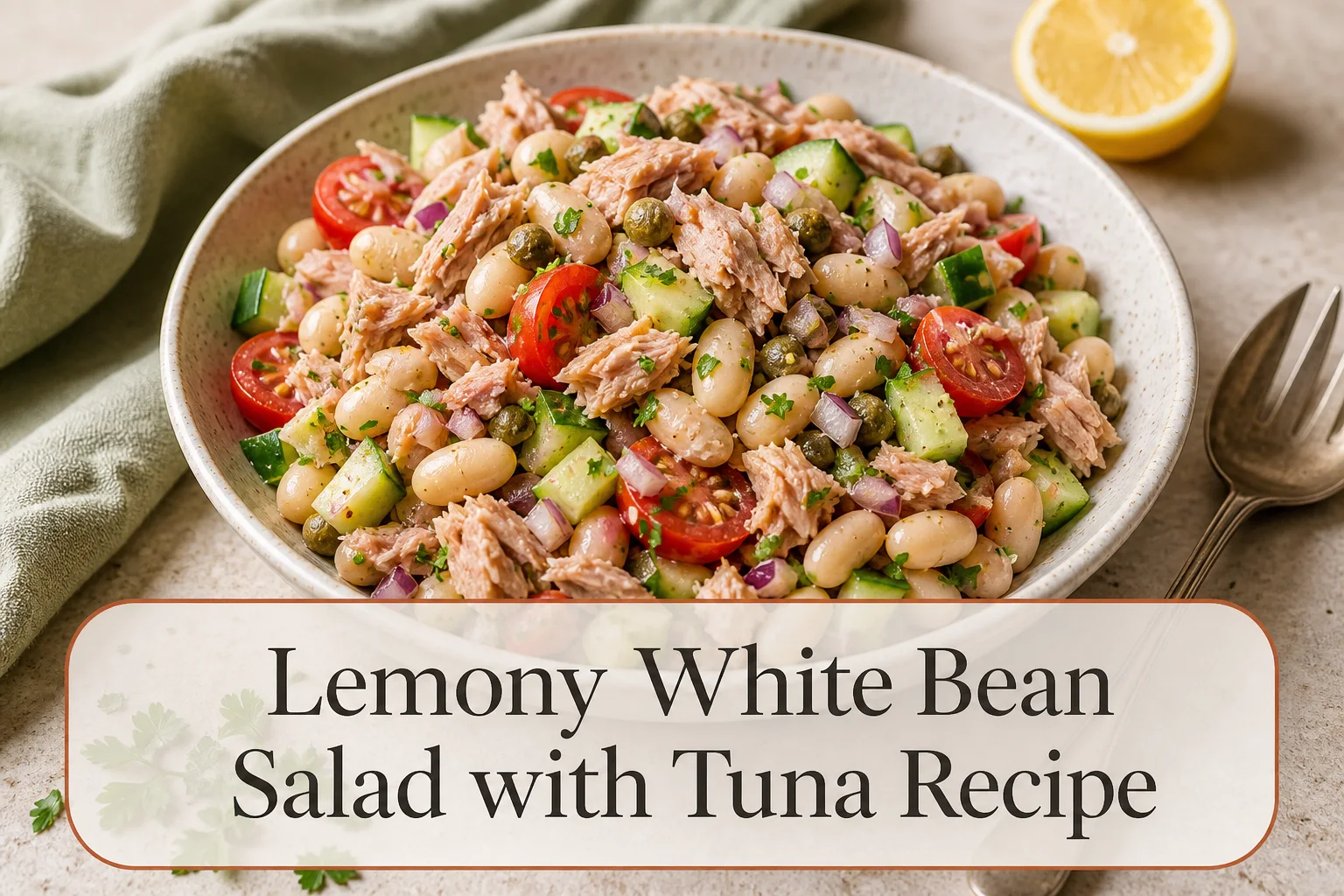
Lemony White Bean Salad with Tuna Recipe
Ingredients
Equipment
Method
- Rinse cannellini beans until runoff is clear, drain 2 minutes and blot gently on a clean towel.
- Drain without squeezing and separate into generous 1-inch flakes on a plate.
- Halve tomatoes, dice cucumber, slice onion, chop parsley and drain capers; blot juicy vegetables.
- Whisk lemon zest and juice, Dijon, garlic, oregano, salt and pepper, then stream in olive oil.
- Fold dry beans into dressing and rest 10 minutes.
- Fold in tomatoes, cucumber, onion, parsley and capers.
- Scatter tuna over the salad and fold three to five times, stopping while large flakes remain.
- Refrigerate 15 minutes; taste and adjust with lemon by the teaspoon, oil by the tablespoon or salt by a pinch.
Notes
- Do not squeeze tuna completely dry.
- Dress beans alone and rest 10 minutes.
- Keep tuna in 1-inch flakes and fold in last.
- Blot watery tomatoes and cucumber.
- Refrigerate up to 3 days.
- Contains fish; Dijon may contain sulfites depending on brand.
- This recipe was developed through culinary research and editorial review.
This recipe was developed through culinary research and editorial review. Tuna moisture, bean firmness and lemon acidity vary; use the drain, large-flake and final-taste cues.
Nutrition is an estimate per one of six servings.