
This protein pasta recipe pairs chickpea or lentil pasta with a completely blended cottage cheese sauce, wilted spinach, Parmesan and lemon. It is creamy without heavy cream and provides an estimated 24 grams of protein per serving, depending on the pasta brand.
The technique matters more than the blender. Cottage cheese becomes smooth when blended, but it can still turn grainy if the finished sauce boils. Tempering it with hot pasta water and tossing it with the burner off protects the texture.
This recipe was developed through culinary research and editorial review. Cottage-cheese moisture, Parmesan saltiness and legume-pasta absorption vary, so reserve more pasta water than seems necessary and use the visual cues below.
For another savory recipe built around blended dairy, try the high-protein breakfast casserole. The high-protein overnight oats use the same smooth-cottage-cheese idea for a cold breakfast.
Why cottage cheese pasta sauce can turn grainy
Cottage cheese contains curds suspended in a moist dairy base. Blending breaks those curds into much smaller particles, but it does not make the proteins immune to heat.
If the sauce boils after blending, milk proteins tighten and release water. Parmesan can also clump when it hits excessive heat. The pan may look watery and grainy at the same time.
The solution is to blend until smooth, loosen with starchy pasta water and finish away from direct heat. Residual heat from the drained pasta is enough to warm the sauce and wilt the spinach without simmering it.
Ingredients
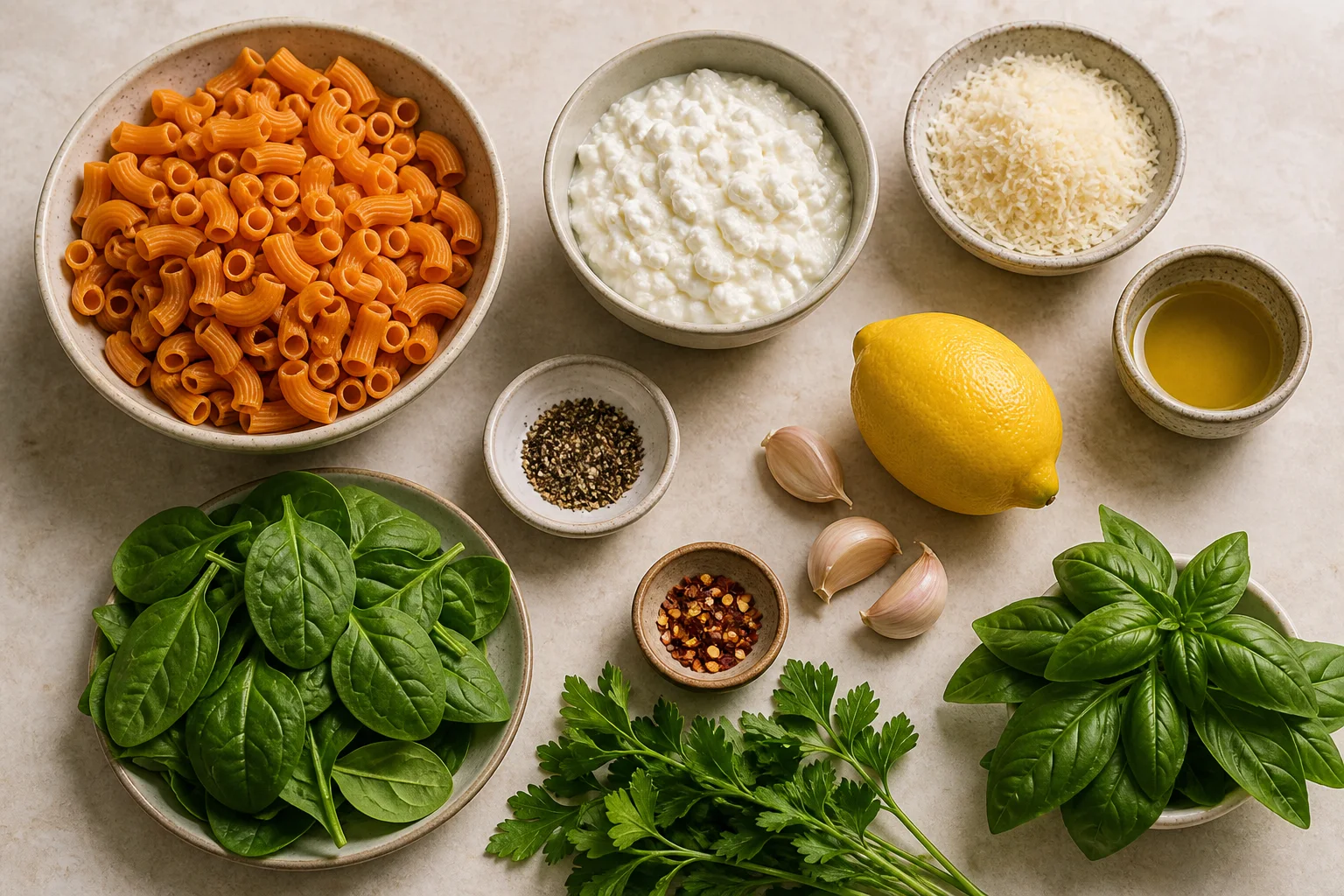
- 12 ounces chickpea or lentil pasta, 340 grams
- 2 cups 2% cottage cheese, 452 grams
- 3/4 cup finely grated Parmesan, divided, 75 grams
- 1 tablespoon extra-virgin olive oil, 14 grams
- 3 garlic cloves, thinly sliced
- 1/4 teaspoon crushed red pepper, optional
- 1 teaspoon finely grated lemon zest
- 1 tablespoon fresh lemon juice, 15 milliliters
- 1/2 teaspoon black pepper, plus more for serving
- 5 ounces baby spinach, 142 grams
- 3/4 to 1 cup reserved pasta water, as needed
- Fine salt, as needed
- 1/4 cup chopped fresh basil or parsley, optional
Ingredient notes and substitutions
Protein pasta: Chickpea and red-lentil pastas provide more protein than conventional pasta, but labels differ. Choose a short shape with ridges or curves that can hold sauce. Some brands foam heavily, so use a large pot.
Cottage cheese: A 2% version balances body and moisture. Full-fat cottage cheese makes a richer sauce; nonfat may taste tangier and feel slightly thinner. Curds may be small or large because they will be blended.
Parmesan: Finely grated cheese melts more evenly than coarse shreds. Pecorino Romano is saltier and sharper; use 1/2 cup and add salt only after tasting.
Spinach: Baby spinach wilts in the pasta’s residual heat. Chopped kale needs several minutes of cooking and is not a direct no-cook substitution.
Lemon: Zest adds aroma while juice balances the dairy. Add the juice only after blending so the acid is evenly dispersed.
Garlic: Gently cooking sliced garlic in olive oil removes its raw bite. Garlic powder can be blended into the sauce, but it will not provide the same toasted aroma.
Crushed red pepper: This is optional. Smoked paprika gives warmth without the same heat.
How to make creamy protein pasta
1. Bring the pasta water to a boil
Bring a large pot of water to a full boil. Salt it lightly rather than aggressively because cottage cheese and Parmesan already contain sodium.
2. Blend the cottage cheese sauce
Add cottage cheese, 1/2 cup Parmesan, lemon zest, lemon juice and black pepper to a blender. Blend 45 to 60 seconds, scraping once, until glossy and free of visible curds.
3. Cook the garlic gently
Heat olive oil in a wide skillet over medium-low. Add sliced garlic and optional crushed red pepper. Cook 60 to 90 seconds until fragrant and pale gold, not brown. Turn off the heat.
4. Cook the pasta and reserve water
Add pasta to the boiling water and cook according to its package, beginning checks 2 minutes early. Legume pasta can move quickly from firm to soft. Before draining, scoop out at least 1 cup pasta water.
5. Temper the sauce
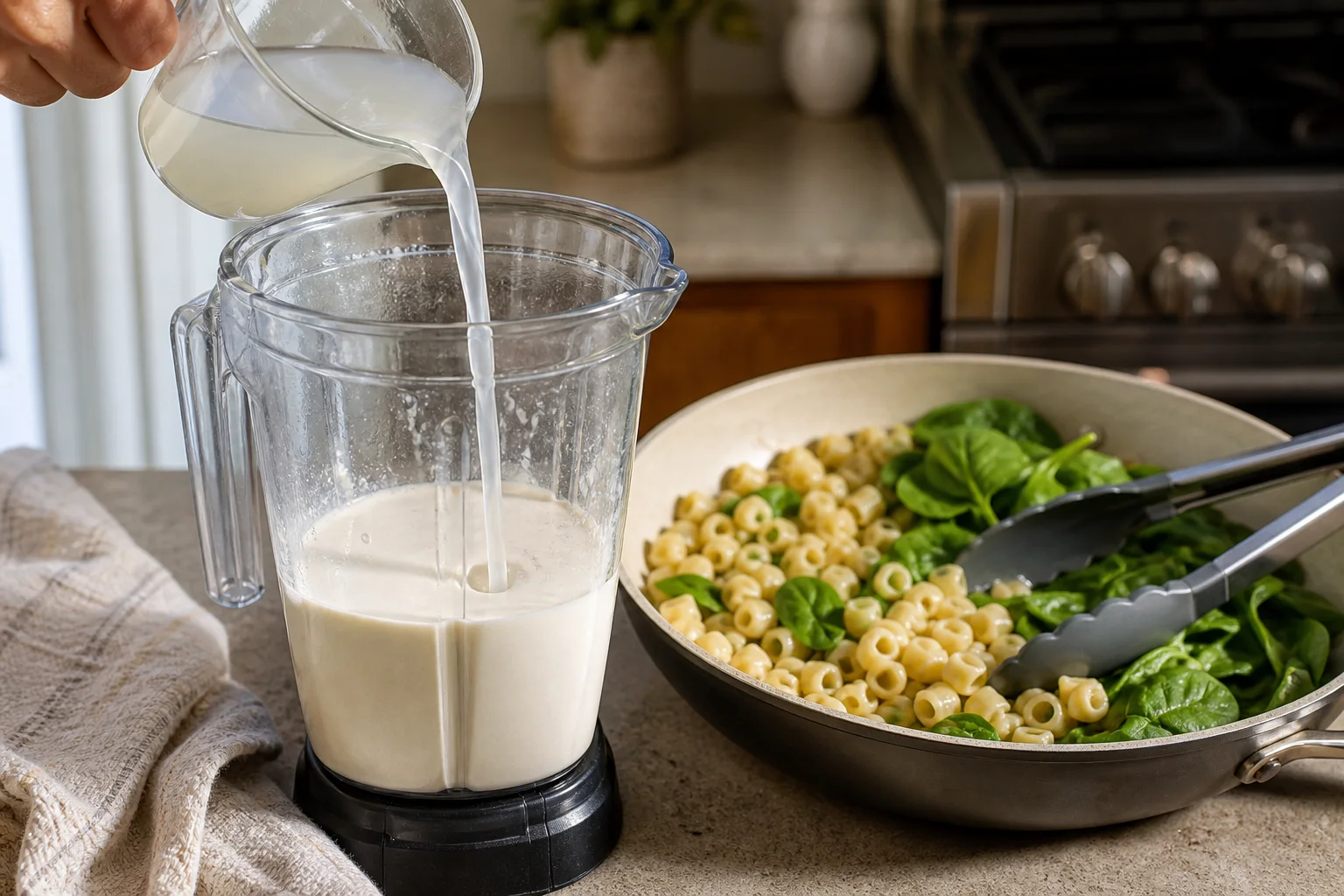
With the blender running on low, stream 1/2 cup hot pasta water into the cottage cheese mixture. Blend 10 seconds. This warms and loosens the sauce gradually.
6. Toss away from direct heat
Add drained pasta and spinach to the skillet with the garlic oil. Pour over the tempered sauce. Toss with the burner off for 1 to 2 minutes, adding pasta water 1 tablespoon at a time until the sauce coats the pasta in a glossy layer.
7. Finish and serve
Fold in the remaining 1/4 cup Parmesan. Taste before adding salt. Serve immediately with herbs and black pepper.
Cottage cheese sauce troubleshooting guide
| What happens | Most likely cause | How to fix it |
|---|---|---|
| Sauce is thick and sticky | Pasta absorbed water quickly | Toss in hot pasta water 1 tablespoon at a time |
| Sauce looks grainy | Finished sauce boiled | Remove from heat and blend a small portion with pasta water |
| Water pools under pasta | Sauce was too loose or spinach released water | Toss off heat for 1 minute; add Parmesan gradually |
| Parmesan forms strings or clumps | Cheese was coarse or pan too hot | Use finely grated cheese and add it after heat is off |
| Pasta breaks apart | Legume pasta overcooked | Check 2 minutes before package time and toss gently |
| Flavor is flat | Salt, acidity or pepper is low | Add a pinch of salt, lemon juice or black pepper after tasting |
How much pasta water should you save?
Reserve at least 1 cup even though the recipe may use only 3/4 cup. Chickpea and lentil pastas differ in starch release, and cottage-cheese brands differ in moisture.
The water should be hot when it enters the blender. Warm water tempers the dairy while its dissolved starch helps sauce cling to pasta.
Add it gradually. A sauce that looks slightly loose in the skillet will continue thickening as the pasta rests, but a flooded sauce takes longer to recover.
Choosing protein pasta
Chickpea pasta has a nutty flavor and often a firm, slightly dense bite. Red-lentil pasta is earthier and can soften faster. Yellow-pea and blended-legume products vary more by brand.
Check the package protein value rather than relying on the front label. The nutrition estimate for this recipe assumes a pasta with approximately 13 grams of protein per 2-ounce dry serving.
If your pasta has less protein, the finished serving will also have less. The cottage cheese and Parmesan still contribute protein, but “protein pasta” is not a standardized guarantee of one exact number across brands.
Conventional wheat pasta works technically. It generally produces a silkier sauce because its cooking water is starchier, but it changes the protein estimate and allergen profile.
Keeping spinach green instead of watery
Use dry baby spinach. Water clinging to washed leaves can thin the sauce, so spin or pat it dry before cooking.
Add spinach with the drained pasta and sauce, not to the boiling pasta pot. It wilts in the warm skillet while retaining brighter color.
Very large leaves may be roughly chopped. If using frozen spinach, thaw and squeeze it extremely dry; use about 1/2 cup packed instead of 5 ounces fresh.
Protein per serving
One of six servings has an estimated 24 grams of protein when made with a legume pasta providing about 13 grams per 2-ounce dry portion. Cottage cheese and Parmesan provide the remainder.
This estimate is based on common U.S. ingredient labels, not laboratory analysis. Pasta, cottage cheese and Parmesan vary widely, so calculate from your packages if precise intake matters.
“High protein” describes the recipe’s protein-forward formulation. It is not a medical, fitness or weight-loss claim, and suitability depends on individual needs and the rest of the meal.
Variations
Tomato and basil: Fold in 1 cup halved cherry tomatoes after the burner is off. Their juice will loosen the sauce slightly.
Broccoli: Add 2 cups small broccoli florets to the pasta water during the final 3 minutes. Reserve water before draining both.
Peas: Stir in 1 cup thawed peas with the spinach. They warm quickly and add sweetness.
Chicken: Add 2 cups chopped fully cooked chicken while tossing. Reheat the finished dish to 165°F; the serving count and nutrition change.
Gluten-free: Chickpea and lentil pasta are often gluten-free, but verify the package and manufacturing statement when gluten avoidance is required.
Nut-free: The base recipe contains no nuts, but check pasta and dairy packaging for facility cross-contact when allergies are involved.
Dairy-free: Cottage cheese and Parmesan define this sauce, so a dairy-free version needs a separate formula rather than a one-for-one substitution.
Meal-prep and reheating strategy
This pasta is creamiest immediately, but it can be prepared for lunches. Portion while the sauce is slightly looser than serving consistency because the pasta continues absorbing moisture in the refrigerator.
Pack 1 tablespoon milk or water with each portion. Reheat covered at 50% microwave power for 60 seconds, stir in the liquid and continue in 20-second intervals until the center reaches 165°F.
Full power overheats the edges before the center warms and can make the dairy sauce grainy. Gentle reheating plus added moisture gives it a better chance of returning to a creamy texture.
For stovetop reheating, add a portion to a small skillet with 1 to 2 tablespoons milk or water. Cover and warm over low heat, stirring often, until it reaches 165°F. Do not boil.
Troubleshooting
My sauce is still grainy after blending
Blend longer and scrape the sides. A high-speed blender may need 30 seconds; a standard blender may need a full minute. Adding a few tablespoons of milk can help the mixture circulate.
The sauce split in the skillet
Direct heat was too high. Remove the skillet from the burner, add hot pasta water and toss. If necessary, blend 1 cup of the sauced pasta mixture until smooth and fold it back in.
The pasta became dry before serving
Legume pasta absorbs sauce quickly. Keep reserved pasta water nearby and loosen just before plating.
The pasta tastes chalky
Some legume pastas have a pronounced bean flavor when undercooked. Cook to the package’s tender stage without letting it collapse, and balance with lemon, Parmesan and black pepper.
The garlic tastes bitter
It browned too far. Cook sliced garlic over medium-low only until pale gold, then remove the skillet from heat.
The sauce is too salty
Cottage cheese, Parmesan and heavily salted pasta water can stack sodium. Salt the water lightly, reserve some unsalted milk for loosening and taste before final seasoning.
Storage and food safety
Refrigerate portions within 2 hours in shallow, covered containers at 40°F or below. Use within 3 to 4 days.
The USDA’s leftovers and food safety guidance recommends keeping cold perishable food at 40°F or below and using refrigerated leftovers within 3 to 4 days.
Reheat only the portion you plan to eat and bring the center to 165°F. Discard dairy pasta left at room temperature longer than 2 hours, or 1 hour when the surrounding temperature is above 90°F.
Freezing is not recommended for best quality. Cottage-cheese sauce may separate and legume pasta can become brittle or soft after thawing.
Frequently asked questions
Does cottage cheese melt into pasta sauce?
It becomes smooth through blending rather than melting like cheddar. Gentle heat keeps the blended sauce cohesive.
Can I make the sauce without a blender?
An immersion blender works in a tall narrow container. A food processor may leave more texture but is still usable.
What protein pasta works best?
Short chickpea or lentil shapes are easiest to toss. Choose by package protein, texture preference and dietary needs.
Can I use regular pasta?
Yes. The sauce method remains the same, but the protein estimate and allergen profile change.
Why should the burner be off?
Residual heat is enough to warm the sauce. Boiling can tighten dairy proteins and clump Parmesan.
How long does protein pasta keep?
Refrigerate in covered containers for 3 to 4 days and reheat gently with added liquid to 165°F.
Can I serve it cold?
Yes, but loosen with milk and treat it as a chilled pasta salad. Keep it at 40°F or below.
Recipe development note
This protein pasta recipe was developed through culinary research and editorial review. It is not represented as a personal kitchen test. Cottage-cheese moisture, Parmesan saltiness and legume-pasta absorption vary; use the off-heat method and gradual pasta-water adjustments.
Nutrition is an estimate per one of six servings. The accompanying visuals are AI-assisted food-editorial images, not photographs of a kitchen test.
Printable recipe card
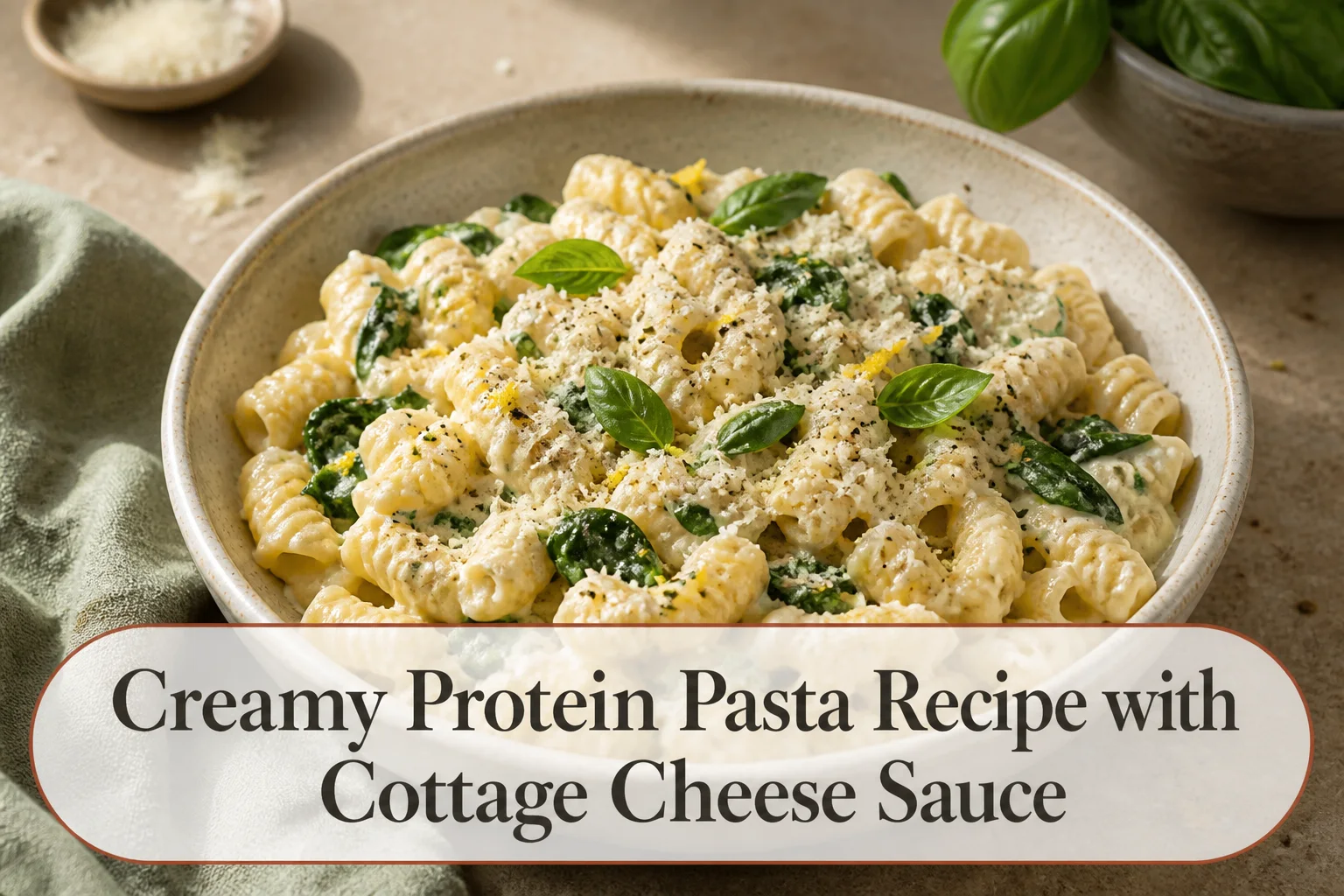
Creamy Protein Pasta Recipe with Cottage Cheese Sauce
Ingredients
Equipment
Method
- Bring a large pot of water to a full boil and salt it lightly.
- Blend cottage cheese, 1/2 cup Parmesan, lemon zest, lemon juice and black pepper for 45 to 60 seconds until glossy and smooth.
- Cook garlic and optional red pepper in olive oil over medium-low for 60 to 90 seconds until fragrant and pale gold; turn off heat.
- Boil pasta according to its package, beginning checks 2 minutes early; reserve at least 1 cup hot pasta water before draining.
- With the blender on low, stream 1/2 cup hot pasta water into the cottage cheese mixture and blend 10 seconds.
- Add drained pasta and spinach to the skillet, pour over sauce and toss with the burner off, adding pasta water gradually until glossy.
- Fold in remaining Parmesan, taste before adding salt and serve immediately with herbs and black pepper.
Notes
- Blend cottage cheese completely smooth.
- Reserve at least 1 cup hot pasta water.
- Finish with the burner off; do not boil the dairy sauce.
- Check legume pasta 2 minutes before package time.
- Refrigerate 3 to 4 days; reheat gently with added liquid to 165°F.
- Contains milk; pasta may contain wheat depending on brand.
- This recipe was developed through culinary research and editorial review.
This recipe was developed through culinary research and editorial review. Cottage-cheese moisture, Parmesan saltiness and legume-pasta absorption vary; use the off-heat method and gradual pasta-water adjustments.
Nutrition is an estimate per one of six servings.