
Protein-rich banana bread stays tender when the added protein comes from moist dairy and eggs rather than replacing too much flour. Weighing the banana and cooling the loaf fully prevent a gummy line through the center.
The ingredient amounts and timing are sized for 10 slices. Ingredient brands, starting temperature, piece size and natural moisture can change the finish, so use the texture and doneness cues below along with the clock.
This recipe was developed through culinary research and editorial review. It is not represented as a personal kitchen test.
For another useful method in the same collection, see banana bread oat recipe. You may also want oat bread recipe.
Why this recipe works
Banana is weighed: A measured 340 grams avoids an overly wet loaf.
Moist protein sources: Cottage cheese and yogurt support a tender crumb.
Full cooling: The dairy-rich center finishes setting as the loaf cools.
The method is designed around observable cues rather than one exact clock time. Begin checking at the early end of the range, then note any small adjustment that gives you the best result next time.
Ingredients
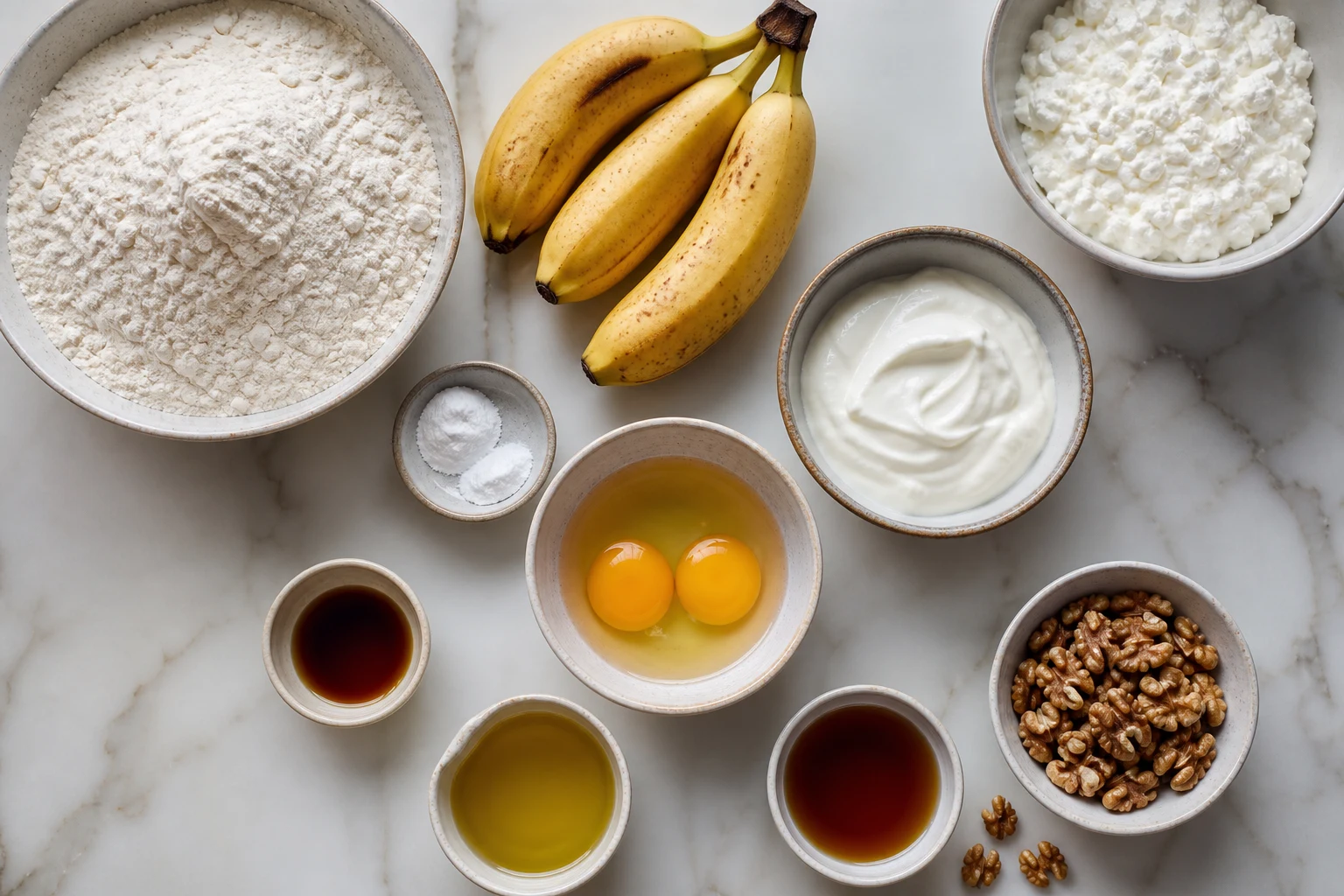
- 1 3/4 cups all-purpose flour, 210 grams
- 1 teaspoon baking soda
- 1/2 teaspoon baking powder
- 1/2 teaspoon salt
- 1 teaspoon cinnamon
- 1 1/2 cups mashed ripe banana, 340 grams
- 1 cup cottage cheese
- 1/2 cup Greek yogurt
- 2 large eggs
- 1/3 cup maple syrup
- 1/4 cup neutral oil
- 1 teaspoon vanilla
- 1/2 cup chopped walnuts, optional
Ingredient notes
Banana: Use very ripe fruit but stop at 340 grams.
Cottage cheese: Blend smooth to eliminate curd pockets.
Flour: Weigh it; packed flour makes a dry loaf.
Measure the first batch as written. Once you know how the recipe behaves with your ingredients and equipment, change one variable at a time so you can tell which adjustment improved it.
How to make high protein banana bread
1. Prepare
Heat oven to 350°F, line a 9-by-5-inch pan and grease exposed sides.
2. Mix dry
Whisk flour, baking soda, powder, salt and cinnamon.
3. Blend wet
Blend banana, cottage cheese, yogurt, eggs, maple, oil and vanilla smooth.
4. Combine
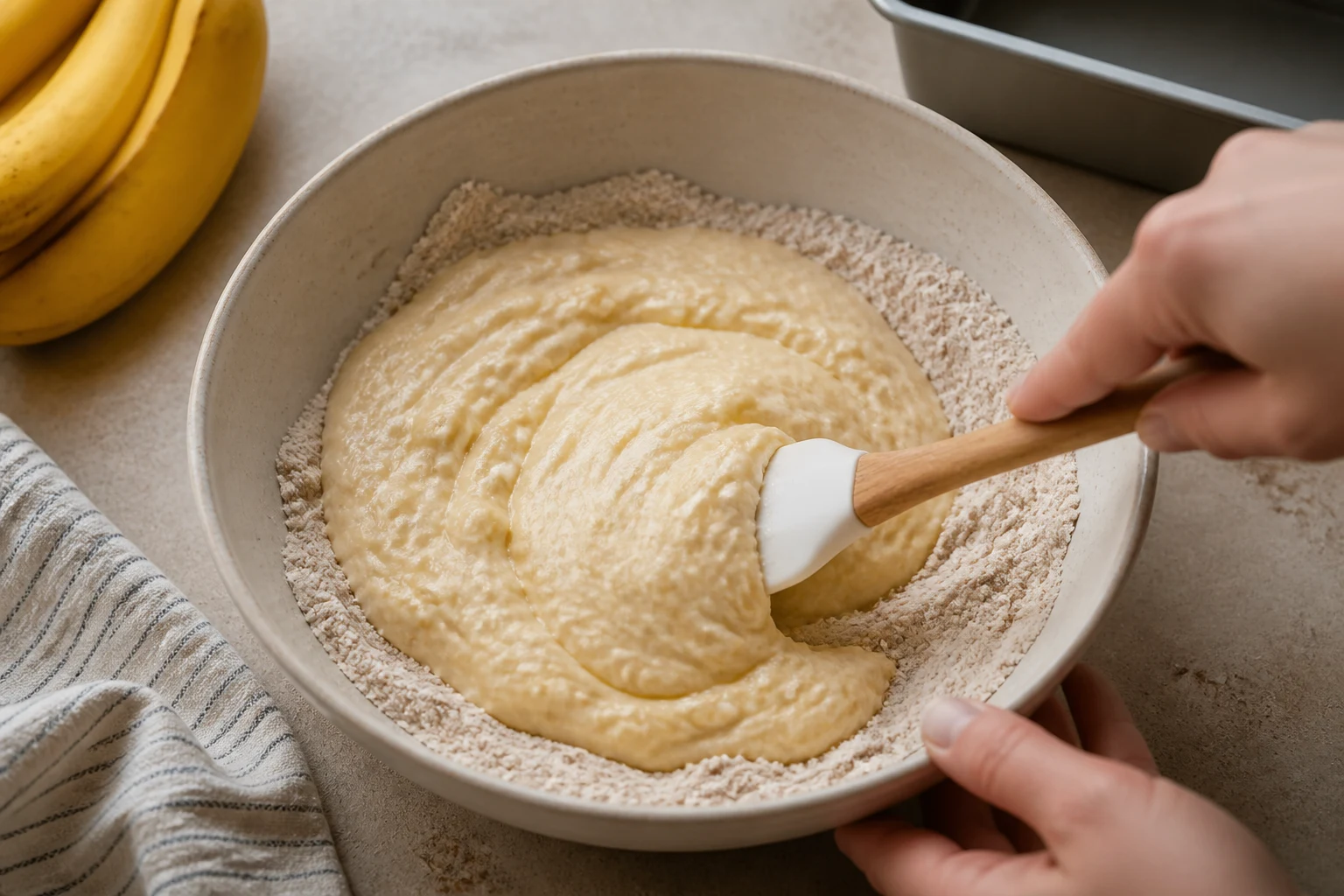
Fold wet into dry just until combined; fold in walnuts.
5. Bake
Bake 50 to 60 minutes until a tester has moist crumbs and the center is about 200°F.
6. Cool
Cool 15 minutes in the pan, then at least 2 hours on a rack before slicing.
Quick timing and doneness guide
| Stage | What to look for | What to do |
|---|---|---|
| Before you start | A measured 340 grams avoids an overly wet loaf. | Measure and prepare everything before the main cooking or mixing step |
| First check | Fold wet into dry just until combined; fold in walnuts. | Check texture or doneness at the early end of the stated range |
| Finished | Cool 15 minutes in the pan, then at least 2 hours on a rack before slicing. | Stop when the described finish is reached instead of chasing one exact clock time |
| If it needs adjustment | Verify about 200°F and fold gently. | Make the smallest useful adjustment, then check again |
Use this table as a decision guide. Follow ingredient labels and applicable food-safety guidance, and use a food thermometer whenever a safe internal temperature matters.
Substitutions and variations
Chocolate
Replace walnuts with 1/2 cup mini chocolate chips.
Whole wheat
Replace half the flour with white whole-wheat flour.
Muffins
Divide into 12 lined cups and begin checking at 18 minutes.
Change only one major component in your first variation. Moisture, sweetness, structure and cooking time affect one another, so a single change is easier to evaluate and repeat.
Serving ideas
Serve plain, toasted or with nut butter. Slice only after full cooling for clean pieces and a moist, not gummy, crumb.
Troubleshooting
Gummy center
Likely cause: Too much banana or loaf cut warm.
Fix: Weigh banana and cool 2 hours.
Top gets dark
Likely cause: Oven heat was strong late in baking.
Fix: Tent loosely after the first 40 minutes.
Loaf is dry
Likely cause: Flour was packed or bake too long.
Fix: Weigh flour and check temperature early.
Loaf sinks
Likely cause: Center was underbaked or batter overmixed.
Fix: Verify about 200°F and fold gently.
Storage, freezing and reheating
Refrigerator: Refrigerate airtight up to 5 days.
Freezer: Freeze sliced up to 3 months.
Reheating: Toast or warm briefly from chilled or frozen.
For general handling, the USDA leftovers and food-safety guidance is the outside reference used for this article. USDA recommends refrigerating perishable leftovers promptly and reheating leftovers safely.
Frequently asked questions
Do I need protein powder?
No. Cottage cheese, yogurt and eggs supply the added protein.
Why cool for two hours?
The moist center continues setting and releases steam slowly.
Can I use frozen bananas?
Yes, thaw and drain excess liquid before weighing 340 grams.
Recipe development note
The method for high protein banana bread recipe was developed through culinary research and editorial review. The times are a practical range, not a claim that every appliance, ingredient brand or batch was personally tested in one kitchen.
Nutrition is an estimate per serving and varies with brands, trimming, optional ingredients and serving size. The accompanying visuals are AI-assisted food-editorial images, not photographs of a kitchen test.
Printable recipe card
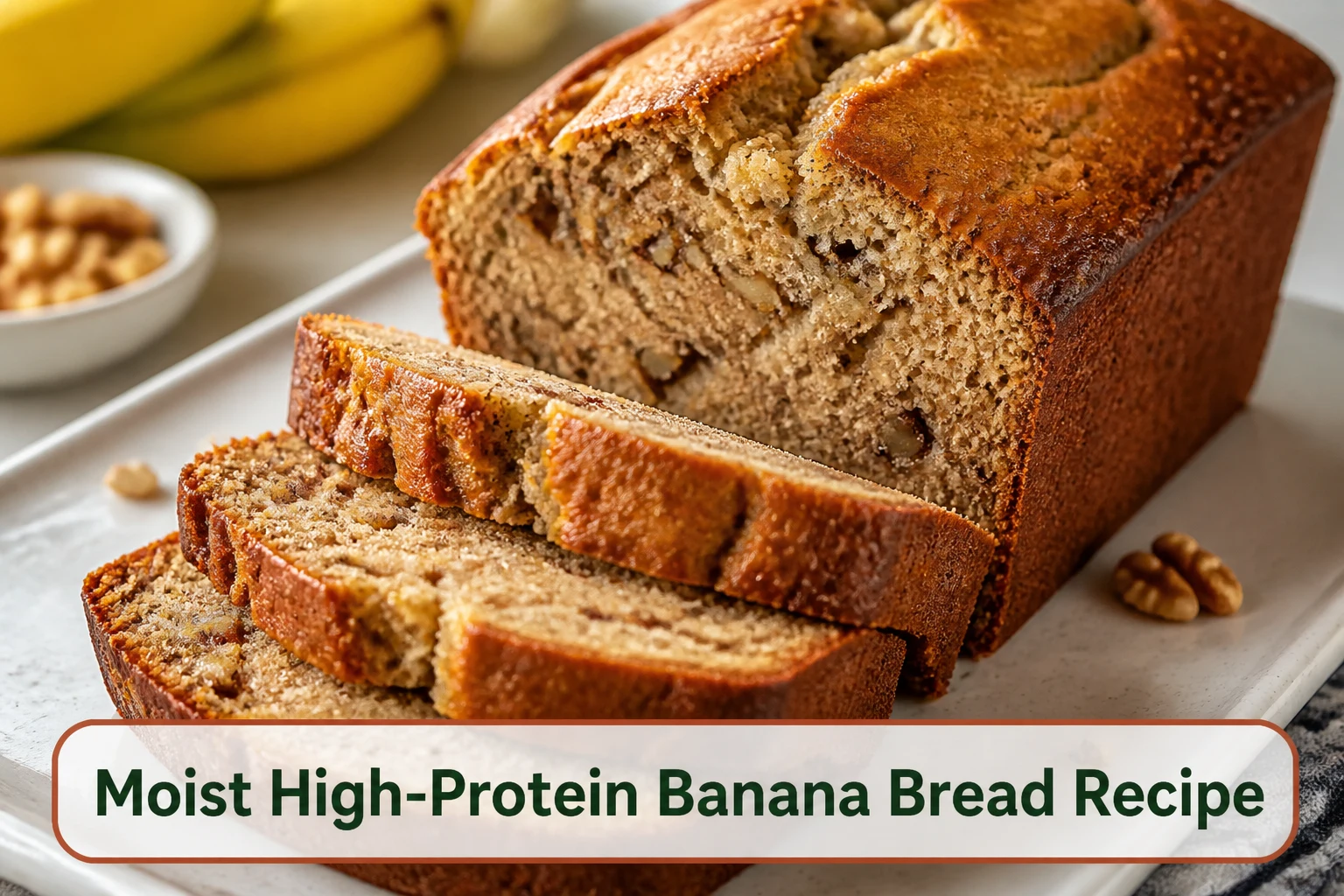
Moist High-Protein Banana Bread Recipe
Ingredients
Equipment
Method
- Heat oven to 350°F, line a 9-by-5-inch pan and grease exposed sides.
- Whisk flour, baking soda, powder, salt and cinnamon.
- Blend banana, cottage cheese, yogurt, eggs, maple, oil and vanilla smooth.
- Fold wet into dry just until combined; fold in walnuts.
- Bake 50 to 60 minutes until a tester has moist crumbs and the center is about 200°F.
- Cool 15 minutes in the pan, then at least 2 hours on a rack before slicing.
Notes
- Read relevant ingredient labels and the manual for any appliance used.
- Begin checking at the early end of the time range.
- USDA recommends refrigerating perishable leftovers promptly and reheating leftovers safely.
- This recipe was developed through culinary research and editorial review.
This recipe was developed through culinary research and editorial review. Equipment, ingredient brands, starting temperature and batch size can change the timing; follow the method cues and applicable safety guidance.
Nutrition is an estimate per serving and varies with brands, optional ingredients and portion size.