
This creamy Greek yogurt salad dressing has the body of a rich dressing but pours in a smooth ribbon rather than landing on lettuce in heavy spoonfuls. Dijon mustard, lemon and olive oil give plain yogurt a balanced savory flavor, while cold water controls the consistency without making the dressing greasy.
The base recipe takes 10 minutes and can become an herb dressing, honey mustard, ranch-style dressing or a Caesar-inspired variation. The same mixing order works for each: season the yogurt first, whisk in oil gradually and add water only after the emulsion is smooth.
This recipe was developed through culinary research and editorial review. Yogurt thickness, mustard sharpness and lemon acidity vary, so use the flavor and pour cues instead of adding all the thinning water automatically.
For a thick dip rather than a pourable dressing, use the Greek yogurt tzatziki recipe. The Greek yogurt herb sauce is another fast option for bowls, vegetables and cooked proteins.
Why the mixing order matters
Greek yogurt is a water-based dairy ingredient, while olive oil naturally resists mixing with water. Dijon mustard helps the two phases stay dispersed when the oil is whisked in gradually.
Adding water at the beginning makes the base too loose to capture oil efficiently. Starting with thick yogurt, mustard, lemon and seasonings creates a stable foundation; water then adjusts the completed emulsion to the salad you are serving.
The dressing may look slightly thicker after refrigeration. That is normal. A teaspoon or two of cold water restores its pour without diluting the flavor substantially.
Ingredients
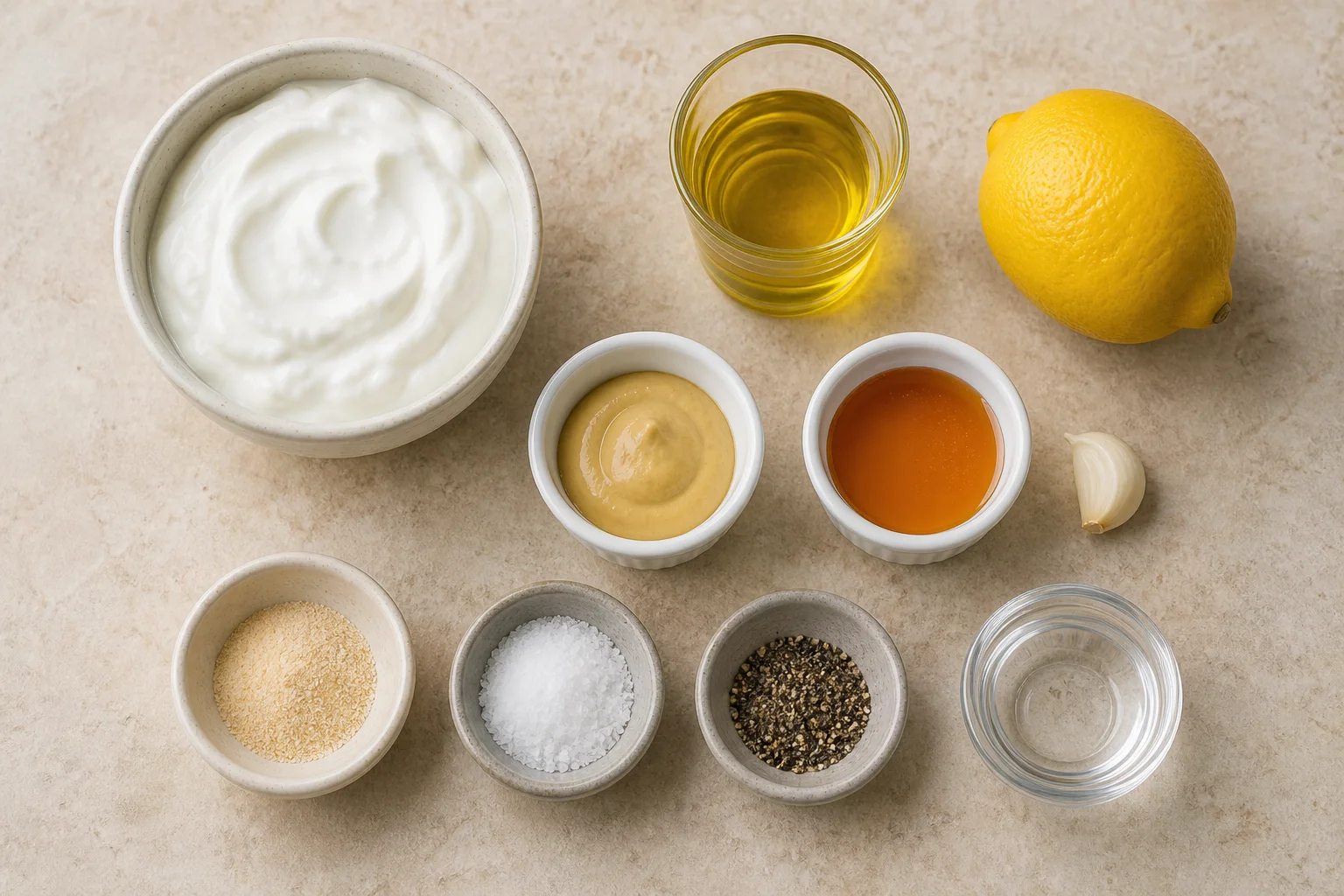
- 3/4 cup plain Greek yogurt, preferably 2% or whole-milk
- 2 tablespoons extra-virgin olive oil
- 1 1/2 tablespoons fresh lemon juice
- 1 tablespoon Dijon mustard
- 2 teaspoons honey or maple syrup
- 1 small garlic clove, finely grated
- 1/2 teaspoon onion powder
- 1/2 teaspoon kosher salt
- 1/4 teaspoon freshly ground black pepper
- 2 to 4 tablespoons cold water, as needed
Ingredient notes and substitutions
Greek yogurt: A 2% or whole-milk yogurt gives a rounded flavor and smooth finish. Nonfat yogurt works but is often tangier and may need the full sweetener amount. Regular yogurt is thinner, so begin without water and adjust only after the oil is incorporated.
Olive oil: Extra-virgin olive oil adds body and flavor. Choose one that is fruity rather than aggressively bitter. Avocado oil creates a more neutral dressing and can replace it in the same amount.
Lemon juice: Fresh lemon gives a clean finish. Apple cider vinegar or white wine vinegar can replace it; begin with 1 tablespoon because vinegar can taste sharper.
Dijon: Mustard seasons the dressing and supports the emulsion. Smooth Dijon incorporates more easily than whole-grain mustard. Yellow mustard makes the result sweeter and more casual.
Honey or maple syrup: A small amount balances yogurt and lemon; it should not make the dressing noticeably sweet. Begin with 1 teaspoon when the yogurt is mild.
Garlic: Grating distributes a small clove without harsh pieces. Garlic strengthens during storage, so avoid adding multiple raw cloves to a make-ahead batch.
Water: Cold water thins without adding more acidity or fat. Yogurt brands differ, so 2 to 4 tablespoons is a working range, not an amount that must all be used.
How to make Greek yogurt salad dressing
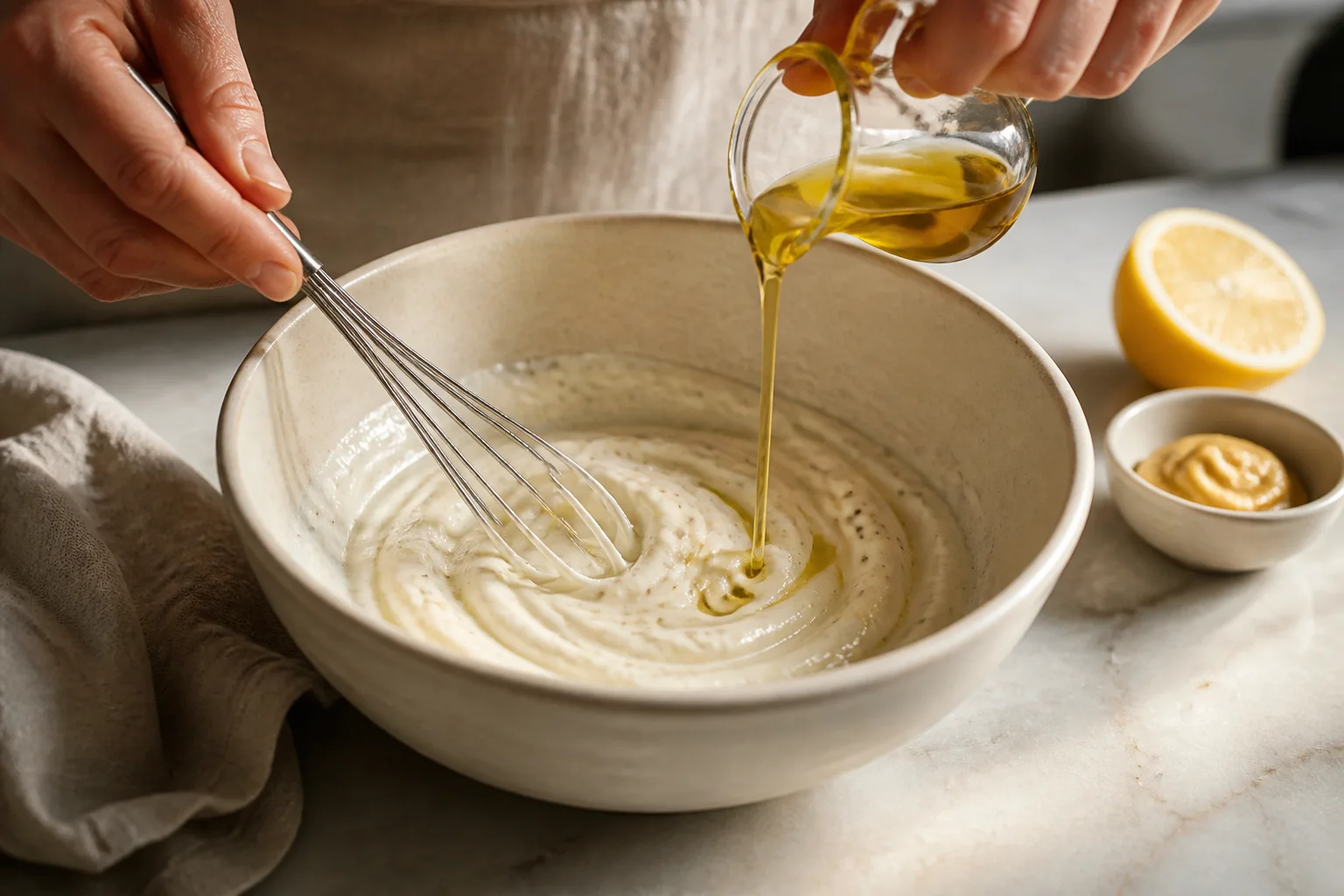
1. Mix the seasoned yogurt base
In a medium bowl, whisk Greek yogurt, lemon juice, Dijon, honey, grated garlic, onion powder, salt and pepper until completely smooth.
Scrape the bottom and sides. Taste now: it should seem slightly more concentrated than a finished dressing because olive oil and water will soften the flavor.
2. Whisk in the olive oil
Add olive oil in a thin stream while whisking continuously. Continue for about 30 seconds after all the oil is added.
The mixture should look glossy and uniform, with no yellow oil pooling around the edge. A small whisk works better than a large balloon whisk in this volume.
3. Thin gradually
Whisk in 2 tablespoons cold water, one tablespoon at a time. Lift the whisk and watch how the dressing falls.
For leafy salads, it should pour in a steady ribbon and lightly coat a spoon. For grain bowls or slaw, leave it slightly thicker. Add the remaining water only 1 teaspoon at a time.
4. Rest and adjust
Let the dressing stand for 5 minutes, then whisk again. Add salt by the pinch, lemon by the teaspoon or honey by the half-teaspoon until balanced.
If serving later, refrigerate first and make the final water adjustment after the dressing is cold.
Four Greek yogurt dressing variations
These Greek yogurt dressing recipes all begin with the same 3/4-cup yogurt base. Make only one variation per batch so the flavors remain clear.
Fresh herb dressing
Add 3 tablespoons finely chopped soft herbs after thinning. Dill, parsley, chives, basil or a combination work well. For a green appearance, blend the completed dressing briefly with the herbs; blending olive oil for too long can emphasize bitterness.
Ranch-style dressing
Reduce Dijon to 1 teaspoon. Add 1 tablespoon chopped chives, 1 tablespoon chopped dill and 1/4 teaspoon dried parsley. Keep the garlic and onion powder. Thin toward the upper end of the range for salads or leave thick for dipping.
Honey mustard yogurt dressing
Increase Dijon to 2 tablespoons and honey to 1 1/2 tablespoons. Reduce lemon juice to 1 tablespoon. This variation is especially good with crunchy cabbage, apples, roasted vegetables or chicken salad.
Caesar-inspired yogurt dressing
Omit honey and onion powder. Add 2 tablespoons finely grated Parmesan, 1 teaspoon Worcestershire sauce and another small garlic clove if desired. This is Caesar-inspired rather than a traditional raw-egg Caesar dressing; check Worcestershire ingredients when serving vegetarians or people with fish allergies.
Matching consistency to the salad
Tender greens need a thinner dressing applied lightly. Add enough water for a narrow continuous ribbon, drizzle around the bowl edge and toss from underneath. More dressing can be added; an overdressed salad cannot easily be reversed.
Kale and cabbage can handle a thicker mixture. Their sturdy surfaces benefit from a dressing that clings, and kale can be massaged briefly to soften it.
For pasta, grain or potato salad, reserve some dressing. Starchy ingredients absorb moisture as they rest, so fold in most of it first and add the remainder shortly before serving.
For bowls or dipping vegetables, stop before the full water amount. The dressing should fall from a spoon slowly and remain where placed.
Blender, jar or whisk method
A whisk gives the most control and keeps cleanup simple. Use a medium bowl with enough room to move the whisk rapidly.
A small blender creates an especially smooth dressing. Blend all ingredients except water just until uniform, then pulse in water gradually. Avoid long high-speed blending with assertive extra-virgin olive oil because mechanical agitation may emphasize bitter compounds.
A jar works when the garlic is grated very finely. Add everything except water, close tightly and shake for 30 seconds. Add water a tablespoon at a time and shake again. A jar may leave tiny mustard or garlic pockets, so inspect the bottom before serving.
Troubleshooting
The dressing is too thick
Whisk in cold water 1 teaspoon at a time. Avoid adding extra lemon unless the flavor also needs acidity; too much acid can make the dressing sharp.
The dressing is too thin
Whisk in Greek yogurt 1 tablespoon at a time. If it has already dressed a salad, add dry greens rather than trying to thicken liquid in the bowl.
Oil is pooling at the edge
The oil was added too quickly or the base was very cold and stiff. Whisk 1 tablespoon Greek yogurt with 1 teaspoon Dijon in a clean bowl, then slowly whisk the separated dressing into that base.
It tastes too tangy
Add honey 1/2 teaspoon at a time and a small drizzle of olive oil. Whole-milk yogurt is milder than many nonfat products.
It tastes flat
Add a pinch of salt first. If adequately salted, add 1 teaspoon lemon or a little Dijon. Fresh herbs can add aroma but will not replace missing salt or acidity.
The garlic is too strong
Fold in more yogurt and let the dressing rest. Next time use half a clove or briefly soak the grated garlic in the measured lemon juice before mixing.
The dressing thickened in the refrigerator
Whisk it smooth, then add cold water a teaspoon at a time. Chilling naturally firms yogurt and olive oil.
Storage and meal prep
Refrigerate the dressing promptly in a clean airtight jar or container at 40°F or below. Use the base dressing within 4 days for best flavor; herb variations are freshest within 3 days.
USDA guidance recommends refrigerating perishable food within 2 hours, or within 1 hour when the surrounding temperature is above 90°F. See current USDA refrigeration guidance for buffet and outdoor serving considerations.
Shake or whisk before each use. A little separation during storage is normal, especially in a jar, and does not by itself mean the dressing has failed.
Freezing is not recommended. Yogurt may become grainy after thawing and fresh herbs lose their clean texture and color.
Frequently asked questions
Can I use Greek yogurt instead of mayonnaise in dressing?
Yes. Greek yogurt provides creaminess and tang, but it contains more water and less fat than mayonnaise. Gradual oil addition and final water adjustment create a balanced texture.
What is the best fat percentage?
Two-percent and whole-milk Greek yogurt make the smoothest, roundest dressing. Nonfat yogurt works but usually tastes sharper.
Can I make it dairy-free?
Use a thick, unsweetened, unflavored Greek-style plant yogurt. Taste first because coconut or other bases may introduce sweetness.
Why not add all the water at once?
Yogurt brands vary dramatically in thickness. Adding water gradually prevents an overly thin dressing and lets you match the intended salad.
Can I double the recipe?
Yes. Use a larger bowl and continue streaming in the oil gradually. Begin with less than double the water, then adjust.
Does the dressing work as a marinade?
The base is better calibrated as a dressing. For a chicken marinade, a thicker, less oily formula and specific safe-handling instructions are preferable; use the Greek yogurt chicken salad for cooked-chicken meal prep instead.
Recipe development note
This recipe was developed through culinary research and editorial review. It has not been represented as a personal kitchen test. Yogurt thickness, mustard intensity and lemon acidity vary; use the emulsion, pour and flavor cues in the method.
Nutrition is an estimate based on generic 2% Greek yogurt. The accompanying visuals are AI-assisted food-editorial images, not photographs of a kitchen test.
Recipe at a glance
| Metric | Details |
|---|---|
| Prep time | 10 minutes |
| Total time | 15 minutes |
| Yield | 8 2-tablespoon servings |
Printable recipe card
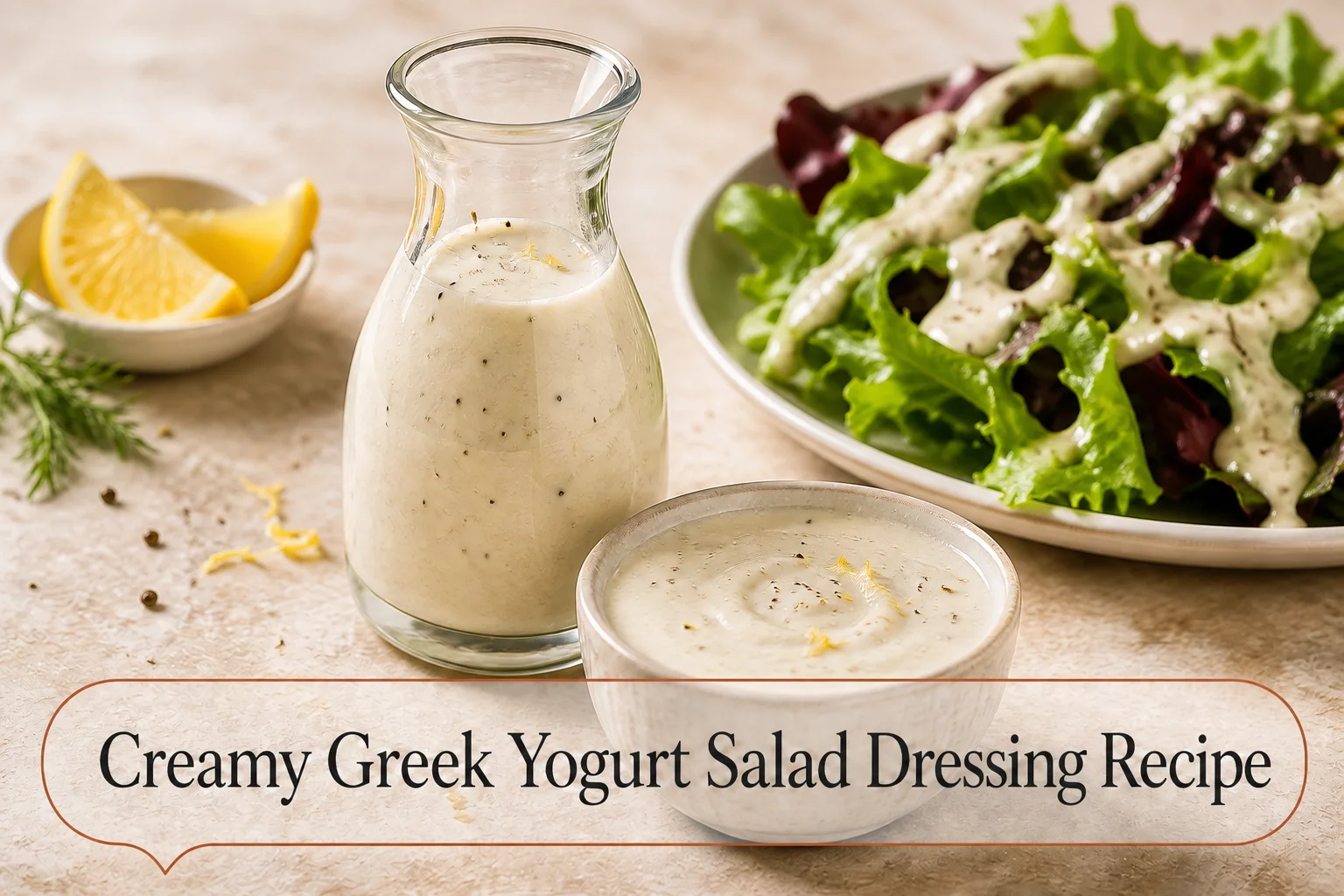
Creamy Greek Yogurt Salad Dressing Recipe
Ingredients
Equipment
Method
- Whisk Greek yogurt, lemon juice, Dijon, honey, grated garlic, onion powder, salt and pepper in a medium bowl until completely smooth.
- Pour in olive oil in a thin stream while whisking continuously. Whisk 30 seconds more, until glossy with no oil pooling at the edge.
- Whisk in 2 tablespoons cold water, one tablespoon at a time. Add more water only 1 teaspoon at a time until the dressing pours in a steady ribbon.
- Let the dressing stand 5 minutes, then whisk again so the garlic and seasonings distribute fully.
- Add salt by the pinch, lemon by the teaspoon or honey by the half-teaspoon as needed. Serve immediately or chill and readjust with water before using.
Notes
- Whisk the seasoned yogurt smooth before adding oil.
- Stream in olive oil gradually.
- Add cold water only after the emulsion forms.
- Make the final consistency adjustment after chilling.
- This recipe was developed through culinary research and editorial review.
This recipe was developed through culinary research and editorial review. Yogurt thickness, mustard intensity and lemon acidity vary; use the emulsion, pour and flavor cues in the method.
Nutrition is an estimate based on generic 2% Greek yogurt; actual values vary by brand, ingredient choice and serving size.