
The best tzatziki recipe should taste cool and bright while remaining thick enough to cling to pita, grilled chicken or vegetables. This version combines full-fat Greek yogurt with grated cucumber, garlic, dill, lemon and olive oil—and removes the cucumber water before it can thin the sauce.
That draining step is the difference between a spoonable dip and a watery bowl. Salt draws moisture from the cucumber, then gentle squeezing removes it without sacrificing its fresh texture. A 30-minute chill gives the garlic time to mellow and lets the flavors combine.
This recipe was developed through culinary research and editorial review. Yogurt thickness, cucumber size and garlic strength vary, so use the moisture, texture and flavor cues below when making adjustments.
Tzatziki is specifically a cucumber-garlic sauce. For a faster cucumber-free option, use the 5-minute Greek yogurt herb sauce. The Greek yogurt tuna salad is another practical way to use thick plain yogurt.
What makes this tzatziki thick
Greek yogurt is already strained, but brands differ considerably. Choose one that holds a mound on a spoon rather than flowing like regular yogurt.
Cucumber contains much more water than its solid texture suggests. Grating exposes that moisture; salting gives it a path out. Letting the shreds drain for 10 minutes and squeezing them in a clean towel prevents liquid from migrating into the yogurt later.
Olive oil rounds the yogurt’s tang without loosening the sauce when added in a measured amount. The sauce becomes slightly firmer during chilling as the cold yogurt settles around the drained cucumber.
Ingredients
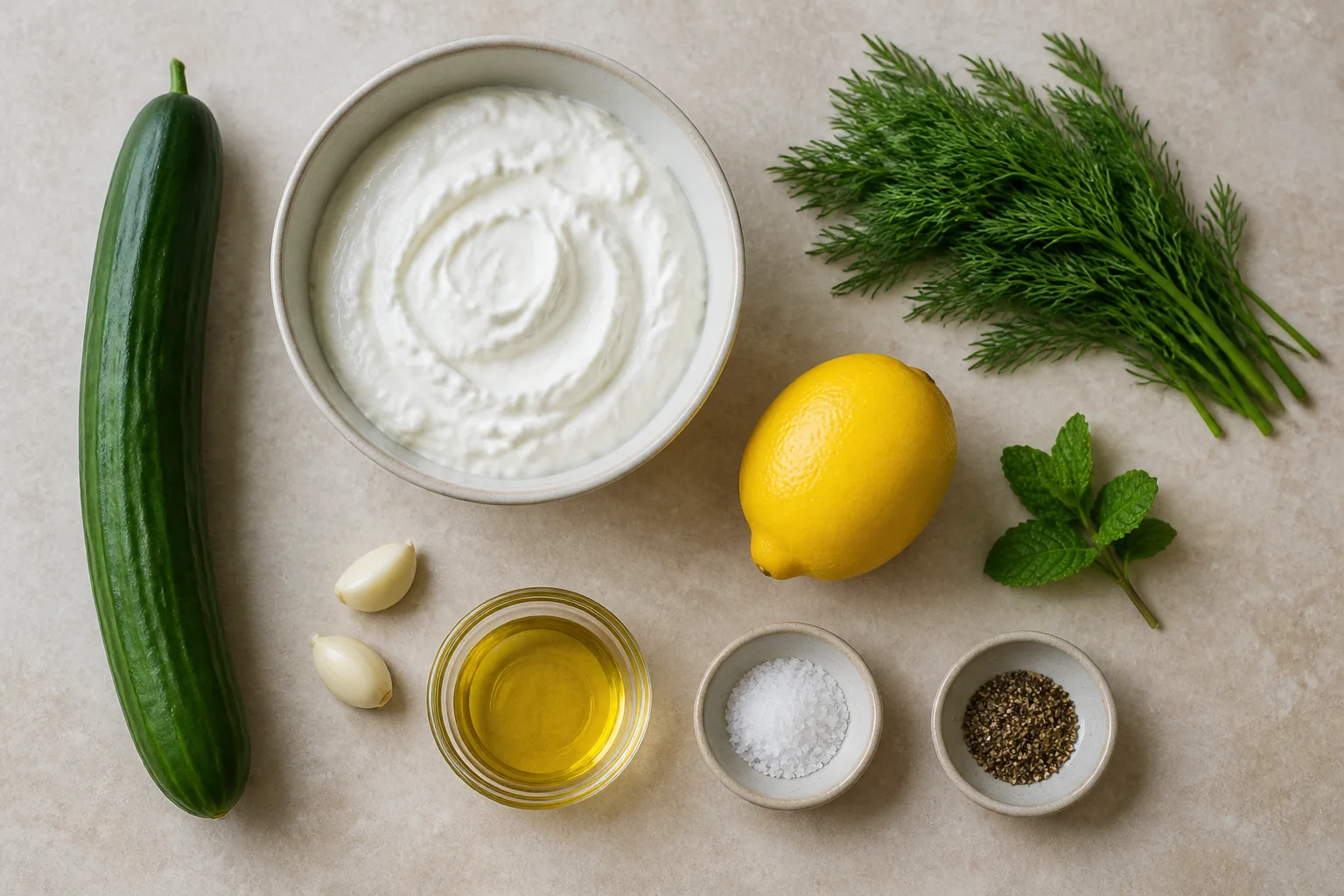
- 1 medium English cucumber, about 10 ounces
- 1/2 teaspoon kosher salt, plus more to taste
- 2 cups plain full-fat Greek yogurt
- 2 medium garlic cloves, finely grated
- 1 1/2 tablespoons extra-virgin olive oil, plus more for serving
- 1 tablespoon fresh lemon juice
- 1 tablespoon finely chopped fresh dill
- 1 teaspoon finely chopped fresh mint, optional
- Freshly ground black pepper, to taste
Ingredient notes and substitutions
English cucumber: Its tender skin and small seeds make it easy to grate without peeling or seeding. A standard garden cucumber works if peeled, halved and scraped free of large seeds before weighing or grating.
Greek yogurt: Full-fat yogurt gives the richest, least chalky sauce. A 2% version works but may taste tangier. Nonfat yogurt is usable when very thick, although it produces a leaner mouthfeel.
Garlic: Finely grate it so no harsh chunks remain. Two medium cloves give a clear garlic flavor after chilling. Begin with one if the cloves are unusually large or if the sauce is intended for children.
Olive oil: Use an extra-virgin oil that tastes pleasant on its own. Very bitter oil can dominate the delicate cucumber and yogurt.
Lemon: Lemon juice provides clean acidity and is convenient for a US kitchen. Red wine vinegar can replace it in the same amount for a slightly sharper, more traditional variation found in many Greek preparations.
Dill and mint: Dill gives the familiar flavor expected in many American tzatziki recipes. Mint adds a cool accent but is optional. Regional and family versions vary, so neither herb choice alone determines authenticity.
Salt: The measured salt first helps drain the cucumber. Season the finished sauce only after tasting because some salt remains in the squeezed shreds.
How to make thick tzatziki
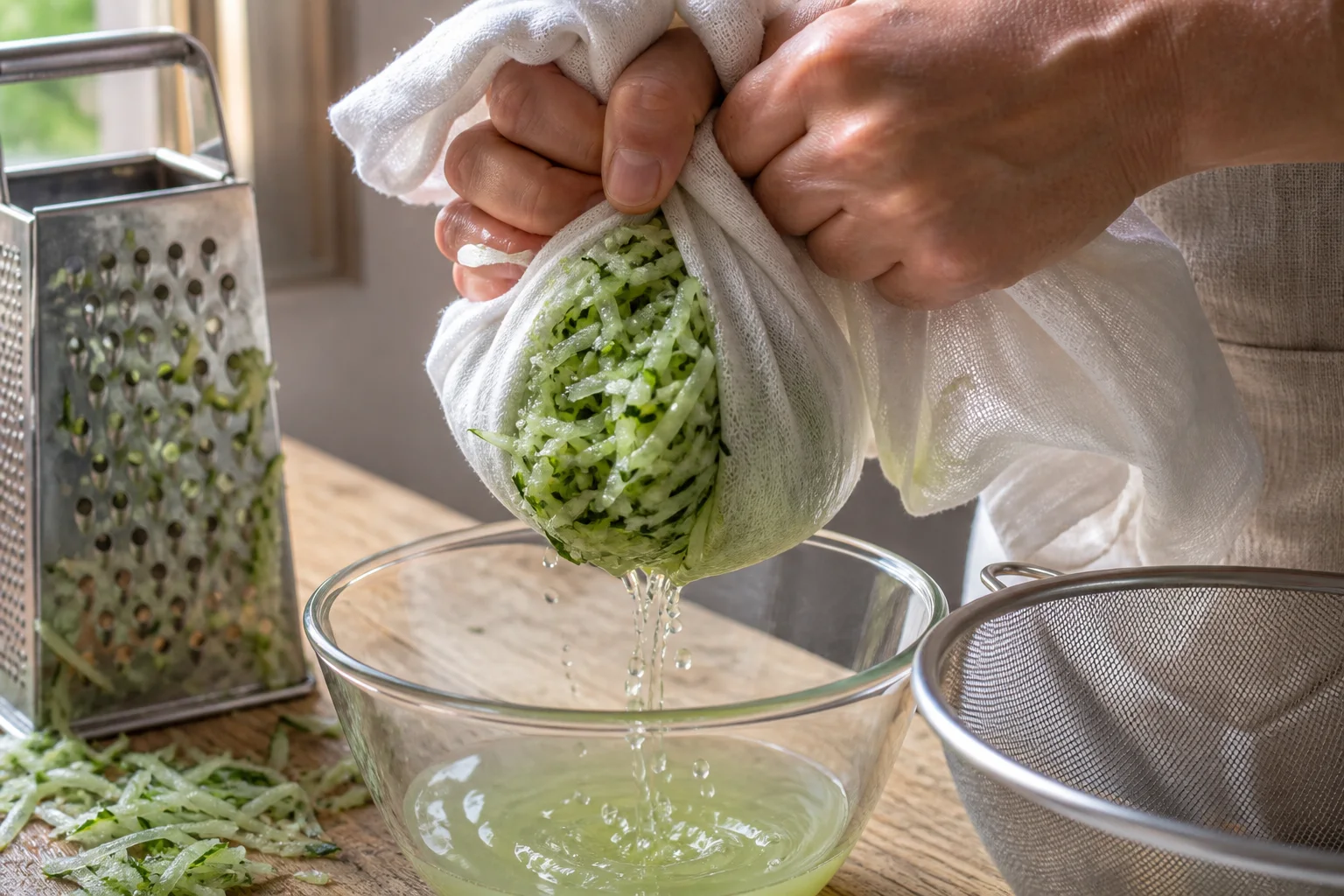
1. Grate the cucumber
Trim the cucumber and grate it on the large holes of a box grater. There is no need to peel an English cucumber.
Set a fine-mesh strainer over a bowl and add the shreds. Toss with 1/2 teaspoon kosher salt and let them drain for 10 minutes.
2. Squeeze out excess water
Transfer the cucumber to the center of a clean lint-free kitchen towel, several layers of cheesecloth or a sturdy nut-milk bag. Gather the edges and squeeze firmly over the sink.
Continue until liquid no longer streams out. The cucumber should feel damp and fluffy rather than wet, but it does not need to become completely dry.
3. Mix the yogurt base
In a medium bowl, stir Greek yogurt, grated garlic, olive oil, lemon juice, dill, optional mint and several grinds of black pepper until smooth.
Mixing the base before adding cucumber distributes the strong garlic evenly and reduces the amount of stirring required later.
4. Fold in the cucumber
Break apart any compacted cucumber and fold it through the yogurt. Scrape the bottom and sides until the green shreds are evenly dispersed.
The sauce should hold soft ridges from the spoon. If it immediately levels out, the yogurt or cucumber is carrying more moisture than expected.
5. Chill before adjusting
Cover and refrigerate for at least 30 minutes. Garlic becomes more pronounced as it rests, while the cold yogurt firms slightly.
Stir, then taste. Add salt a pinch at a time. Add a few drops of lemon for brightness or another spoonful of yogurt if the garlic is too assertive.
6. Finish and serve
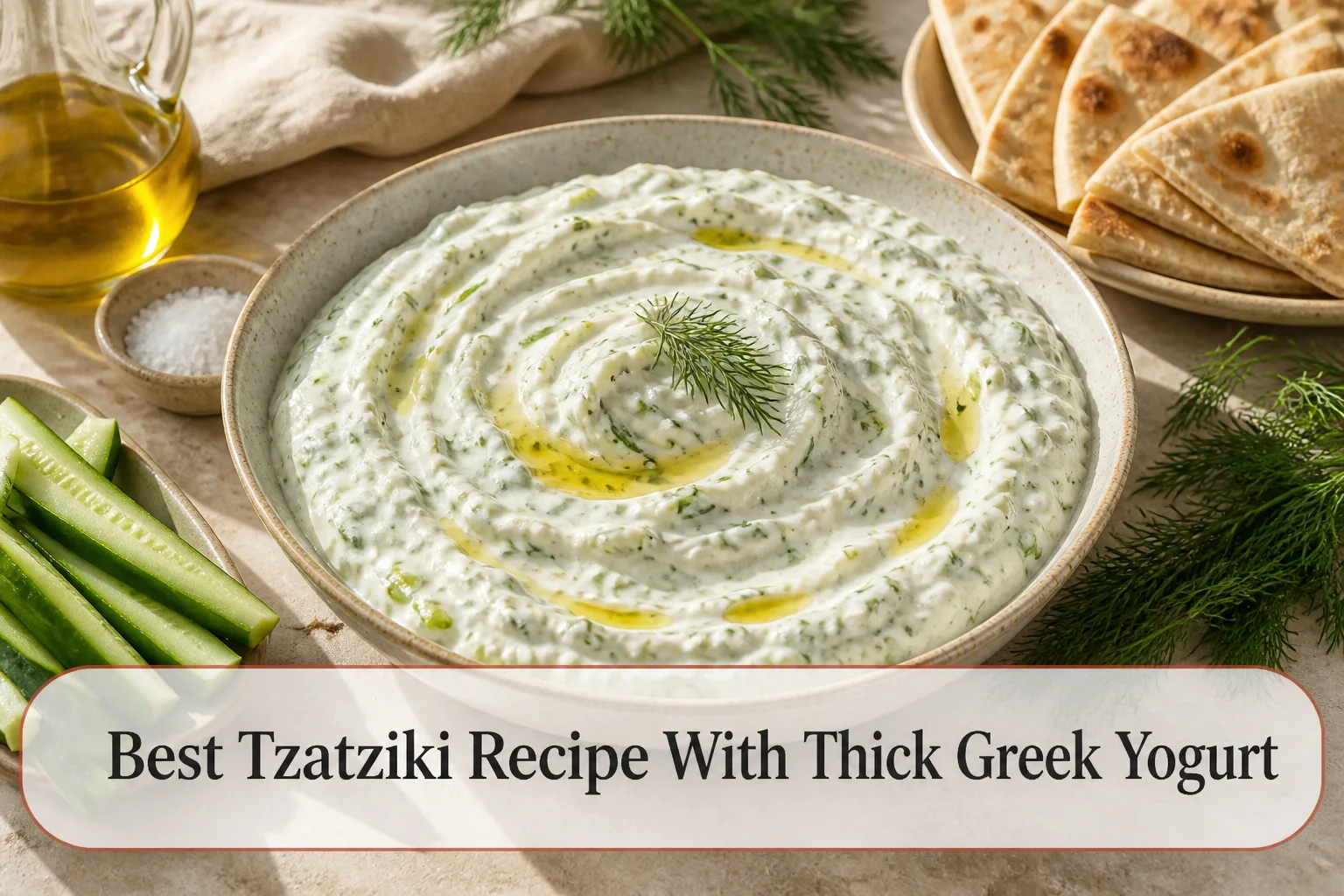
Spoon into a shallow bowl and make a swirl with the back of a spoon. Drizzle lightly with olive oil and garnish with dill or a few reserved cucumber shreds if desired.
Keep the sauce chilled until serving. Give it one stir if it has been refrigerated for several hours.
The cucumber draining method explained
Simply pressing grated cucumber in a strainer removes surface liquid, but salt reaches moisture held inside the plant cells. During the 10-minute rest, a surprising amount collects beneath the strainer.
Squeezing after salting is essential. Use a light-colored towel that is clean and free of scented detergent residue. Paper towels tend to tear and leave fibers behind, especially with a full cucumber.
Do not rinse the salted cucumber. Rinsing adds water back and makes the final seasoning unpredictable. Instead, use only 1/2 teaspoon salt for the draining step and taste the finished sauce before adding more.
If preparing the cucumber ahead, refrigerate the squeezed shreds in a covered container for no more than one day. Give them another squeeze before mixing because a little additional moisture may collect.
Choosing yogurt for tzatziki
A good container of Greek yogurt lists a thick, spoonable texture rather than visible whey pooling at the top. A small amount of whey is normal; pour it off or stir it back in for general use, but pour it off when making tzatziki.
If the yogurt seems loose, strain it in a coffee filter or cheesecloth set over a sieve in the refrigerator for 1 to 2 hours. Measure 2 cups after straining because the volume decreases.
Regular plain yogurt needs substantially more straining and is not a direct cup-for-cup substitution. Start with extra yogurt, strain until it resembles thick Greek yogurt and then measure the recipe amount.
Plant-based Greek-style yogurt can work when it is unsweetened, unflavored and thick. Coconut-based varieties may contribute a noticeable sweet flavor, so taste before committing the full batch.
How to serve tzatziki
Serve it with warm pita wedges, toasted flatbread, cucumbers, bell peppers, carrots or radishes. It makes a cooling partner for spiced foods.
Spoon it over grilled chicken, lamb meatballs, salmon, roasted chickpeas or sheet-pan vegetables. In a grain bowl, place it beside hot components rather than stirring it into them so the yogurt remains creamy.
Use tzatziki as a sandwich spread with chicken, turkey or falafel. A thick version stays in place better than a loose sauce, but assemble sandwiches shortly before eating.
For a snack board, keep the bowl nested over ice if it will sit out for an extended serving period. Replenish with a fresh chilled portion rather than topping off a warm bowl.
Troubleshooting
The tzatziki is watery
The cucumber was not squeezed enough or the yogurt was loose. Transfer the sauce to a fine-mesh strainer lined with cheesecloth and refrigerate 20 to 30 minutes, or fold in thicker Greek yogurt. Next time weigh or size the cucumber and squeeze until liquid stops streaming.
The sauce tastes too garlicky
Garlic intensifies during the rest. Add more Greek yogurt 2 tablespoons at a time and a small drizzle of olive oil. Do not try to balance excessive garlic with a large amount of lemon, which can make the sauce harsh.
The cucumber texture is mushy
It was grated too finely or squeezed with excessive force after a long salt rest. Use the large grater holes and limit draining to about 10 minutes.
The tzatziki tastes flat
Add a pinch of salt first, then reassess. If adequately salted, add several drops of lemon and a little fresh dill. Cold foods often need a clear seasoning adjustment immediately before serving.
The sauce is too sour
Very tangy yogurt plus lemon may be responsible. Fold in milder full-fat yogurt and a small drizzle of olive oil. Next time begin with 2 teaspoons lemon.
Liquid appeared overnight
A small amount of separation is normal. Stir it back in if the sauce remains thick; drain it off if there is more than a spoonful. Better cucumber squeezing reduces this effect.
Storage and make-ahead tips
Store tzatziki in an airtight container in the refrigerator at 40°F or below. It is best within 3 days, while the cucumber and herbs still taste fresh.
USDA guidance notes that perishable foods should not remain at room temperature for more than 2 hours, or more than 1 hour when the temperature is above 90°F. Follow current USDA refrigeration and food-safety guidance when serving outdoors or at a buffet.
Tzatziki can be made one day ahead. Hold back the final salt and garnish, stir before serving and adjust the acidity after it is cold.
Freezing is not recommended. Yogurt can turn grainy and cucumber loses its crisp texture after thawing.
Frequently asked questions
Do you peel cucumber for tzatziki?
An English cucumber does not need peeling because its skin is thin. Peel a standard garden cucumber and remove large seeds for a smoother sauce.
Do you have to salt the cucumber?
Salting is the most reliable way to remove enough moisture for thick tzatziki. Skipping it can work with a small, very dry cucumber, but the sauce is more likely to loosen during storage.
Can I make tzatziki without dill?
Yes. Use mint, parsley or no herb. Cucumber, yogurt and garlic remain the defining flavor base, and traditional versions vary by region and household.
Is tzatziki better the next day?
It benefits from at least 30 minutes of chilling and remains flavorful the next day. Garlic becomes stronger over time, so use a moderate amount when making it ahead.
Can I use lemon juice and vinegar together?
Yes, but keep the total acid near 1 tablespoon initially. Too much acid can make yogurt taste sharp and slightly loosen the texture.
Why is my tzatziki bitter?
A bitter cucumber, harsh garlic or very bitter olive oil may be responsible. Taste each ingredient before mixing when possible; bitterness is difficult to remove from a completed sauce.
Recipe development note
This recipe was developed through culinary research and editorial review. It has not been represented as a personal kitchen test. Yogurt thickness, cucumber moisture, garlic strength and herb flavor vary; use the draining and seasoning cues in the method.
Nutrition is an estimate based on generic full-fat Greek yogurt. The accompanying visuals are AI-assisted food-editorial images, not photographs of a kitchen test.
Recipe at a glance
| Metric | Details |
|---|---|
| Prep time | 20 minutes |
| Total time | 50 minutes |
| Yield | 8 servings |
Printable recipe card
Best Tzatziki Recipe With Thick Greek Yogurt
Ingredients
Equipment
Method
- Grate the English cucumber on the large holes of a box grater. Toss with 1/2 teaspoon kosher salt in a fine-mesh strainer and drain for 10 minutes.
- Wrap the shreds in a clean lint-free towel or cheesecloth and squeeze over the sink until liquid no longer streams out. The cucumber should remain damp and fluffy.
- Stir Greek yogurt, garlic, olive oil, lemon juice, dill, optional mint and black pepper in a medium bowl until smooth.
- Break apart the squeezed cucumber and fold it evenly through the yogurt base. The sauce should hold soft ridges from a spoon.
- Cover and refrigerate at least 30 minutes so the flavors combine and the yogurt firms slightly.
- Stir, taste and add salt or lemon a little at a time. Spoon into a shallow bowl, drizzle lightly with olive oil and serve chilled.
Notes
- Use the large holes of the grater.
- Salt for 10 minutes, then squeeze until liquid stops streaming.
- Choose Greek yogurt that holds a mound on a spoon.
- Taste after chilling because garlic strengthens as it rests.
- This recipe was developed through culinary research and editorial review.
This recipe was developed through culinary research and editorial review. Yogurt thickness, cucumber moisture, garlic strength and herb flavor vary; use the draining and seasoning cues in the method.
Nutrition is an estimate based on generic full-fat Greek yogurt; actual values vary by brand, ingredient measurement and serving size.