
This Greek yogurt sauce is thick, lemony and herb-forward, with enough olive oil to taste creamy rather than sharply sour. It takes about 5 minutes to stir together and works as a sauce for chicken, roasted vegetables, grain bowls, sandwiches or dipping.
The formula starts with whole-milk Greek yogurt and adds flavor without flooding it with liquid. Lemon zest supplies citrus aroma, while only one tablespoon of juice thins the yogurt. Grated garlic rests briefly in that lemon juice before mixing, softening its raw edge without requiring cooking.
This recipe was developed through culinary research and editorial review. Yogurt thickness, garlic strength, herb moisture and salt level vary, so the method includes adjustments for both a spoonable sauce and a thinner drizzle.
Try it with slow cooker lemon garlic chicken or as a fresh side for the Greek yogurt chicken salad recipe.
What makes this sauce versatile
Many yogurt sauces lean toward one specific use. This version stays neutral enough for roasted vegetables but has enough garlic, lemon and dill for seasoned chicken or salmon.
Parsley provides a clean green flavor, dill adds character and scallion brings a mild onion note. None of them dominates the base. Dijon adds savoriness and helps the olive oil blend smoothly into the yogurt.
The starting texture is thick enough to dollop. Water is optional and added only at the end, so one batch can become dip, sandwich spread or pourable bowl sauce.
Ingredients
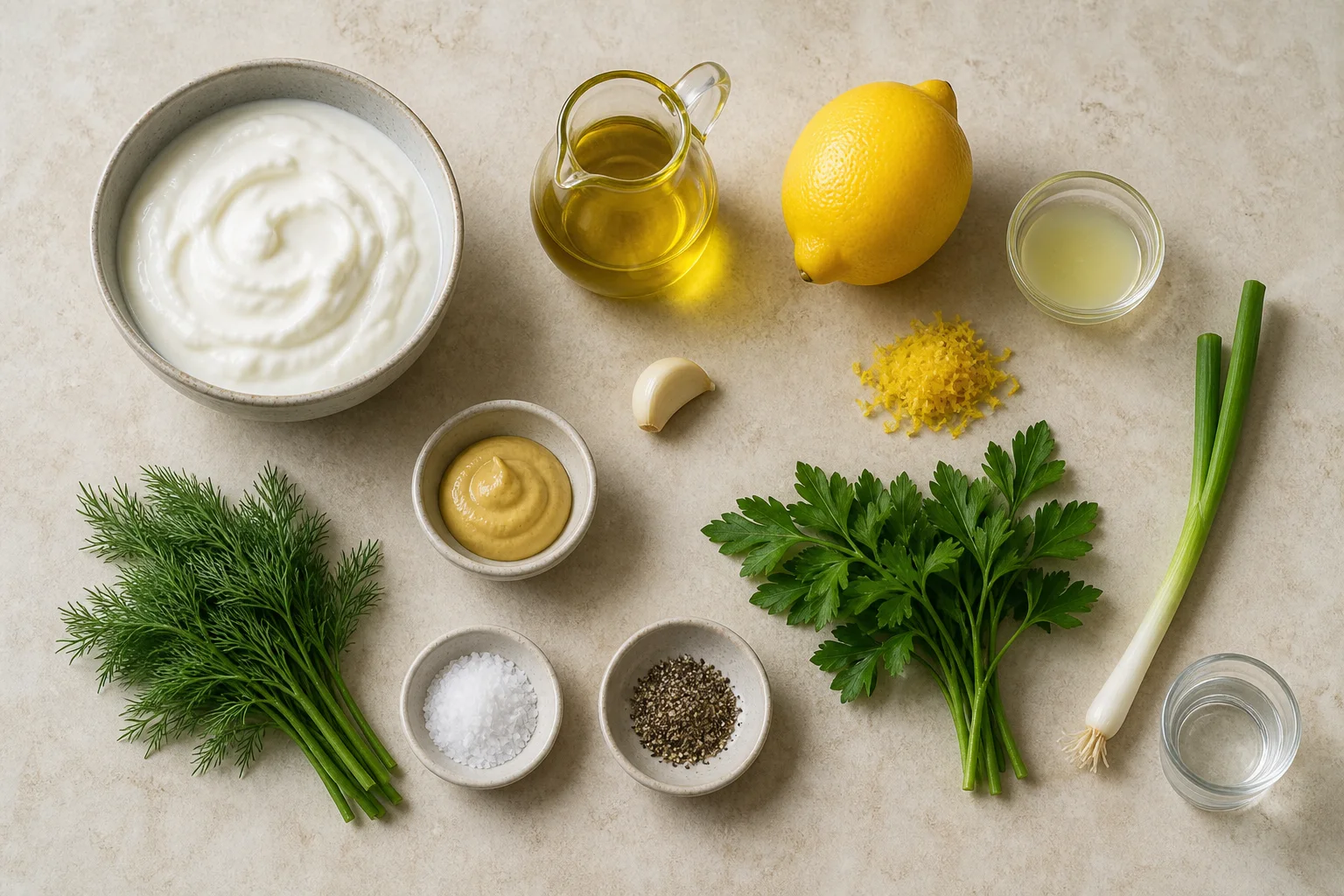
- 1 cup plain whole-milk Greek yogurt
- 1 tablespoon extra-virgin olive oil
- 1 tablespoon fresh lemon juice
- 1 teaspoon finely grated lemon zest
- 1 small garlic clove, finely grated
- 1 teaspoon Dijon mustard
- 2 tablespoons finely chopped fresh dill
- 2 tablespoons finely chopped flat-leaf parsley
- 1 scallion, very thinly sliced
- 1/2 teaspoon kosher salt, plus more to taste
- 1/4 teaspoon black pepper
- 1 to 3 teaspoons cold water, only as needed
Ingredient notes and substitutions
Greek yogurt: Whole-milk Greek yogurt makes the smoothest, least sharp sauce. A 2% yogurt works but may need a little more olive oil. Nonfat yogurt generally tastes tangier and can be less creamy.
Lemon: Zest the lemon before juicing. The zest adds aroma without extra water. Lime can replace lemon for tacos or grain bowls, though it creates a distinctly different flavor.
Garlic: One small clove is enough because raw grated garlic is potent. If the clove is large, use half. Garlic powder gives a milder alternative; start with 1/4 teaspoon and let the sauce rest before adding more.
Dill and parsley: Fresh herbs give the best color and texture. If using dried dill, begin with 2 teaspoons and rest the sauce for 20 minutes so it hydrates. Dried parsley contributes little here and is better omitted than used as the only herb.
Dijon: This rounds out the sauce and supports emulsification. Yellow mustard is brighter and more assertive; use 1/2 teaspoon if substituting.
Olive oil: A fruity but not intensely bitter oil works well. Avocado oil is a neutral substitute. Do not omit all fat unless you specifically want a leaner, tangier sauce.
How to make Greek yogurt sauce
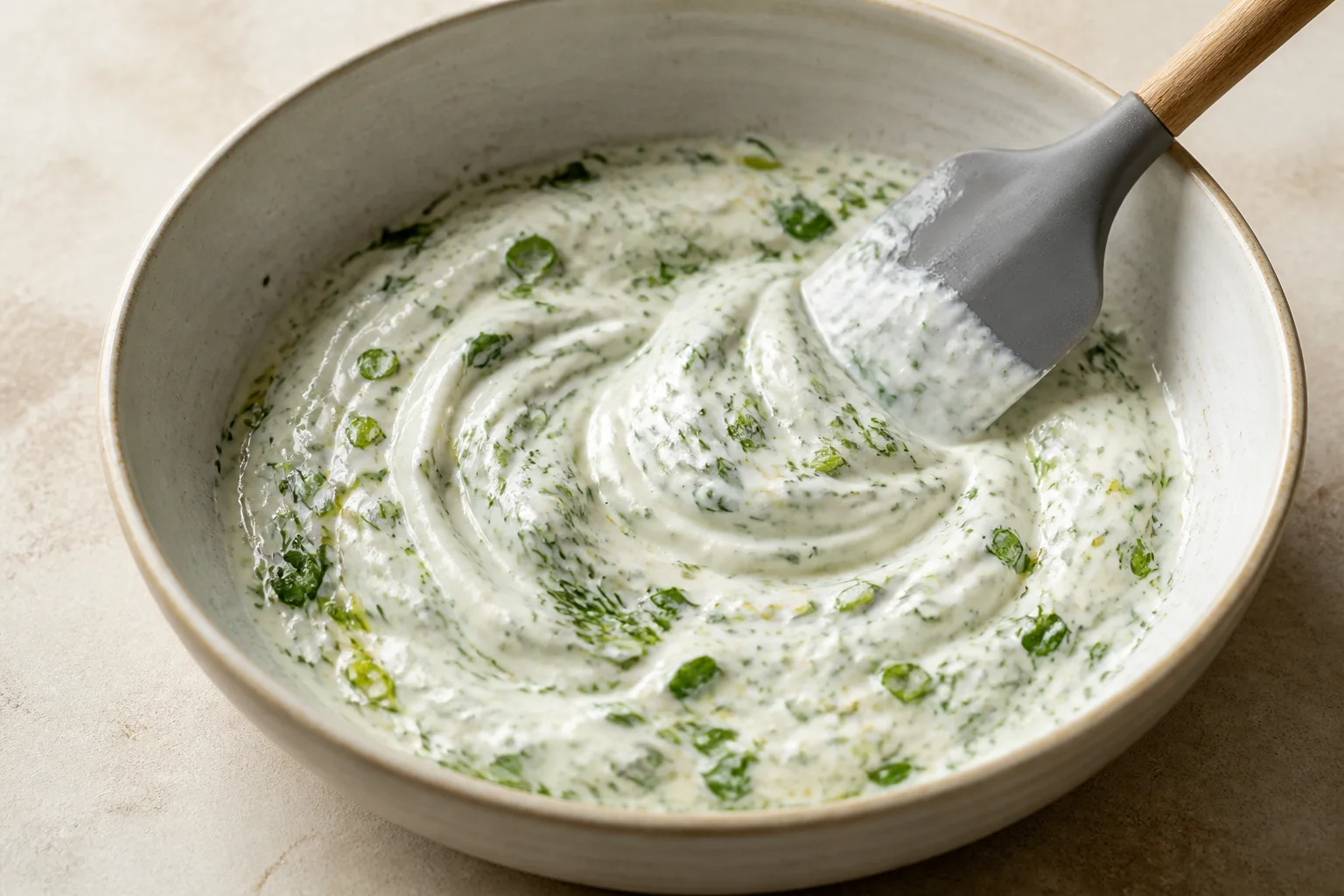
1. Prepare the garlic and lemon
Finely grate the garlic into a medium bowl. Add lemon juice and let the mixture stand for 2 minutes while chopping the herbs. This short contact does not cook the garlic, but it mellows its immediate raw bite.
Finely grate only the yellow outer zest from the lemon. Avoid the white pith, which can taste bitter.
2. Add the yogurt base
Add Greek yogurt, lemon zest, Dijon, kosher salt and black pepper. Whisk until completely smooth and no mustard streaks remain.
The mixture may look slightly looser where the lemon juice first meets the yogurt. Whisking redistributes that liquid and restores an even consistency.
3. Whisk in olive oil
Drizzle in olive oil while whisking. Continue for about 20 seconds until the sauce looks glossy and uniform rather than oily at the edges.
Taste now, before adding herbs. If the base is sharply sour, add another teaspoon olive oil. If it tastes dull, add a pinch of salt before reaching for more lemon.
4. Fold in fresh herbs
Stir in dill, parsley and scallion. Fold rather than blend so the herbs stay distinct and do not turn the entire sauce pale green.
Taste with the food you plan to serve. A sauce that seems salty by itself may be balanced on unsalted vegetables, while well-seasoned chicken needs a more restrained sauce.
5. Adjust the consistency
For dipping or spreading, leave the sauce thick. For drizzling, whisk in cold water 1 teaspoon at a time, stopping as soon as it falls slowly from a spoon.
Do not add three teaspoons automatically. Greek yogurt brands vary substantially, and some sauces need no water.
6. Rest or serve
The sauce can be used immediately, but a 15-minute refrigerator rest lets the garlic and herbs distribute. Stir once before serving and recheck seasoning.
If making it ahead, the sauce may thicken slightly as dried surface moisture redistributes. Adjust with a few drops of water only after stirring.
Consistency guide: dip, spread or drizzle
For a dip, use whole-milk Greek yogurt and no water. A spoon drawn through the bowl should leave a track that closes slowly.
For a sandwich spread, keep it equally thick but chop herbs very finely. Blot wet tomato or cucumber slices so the sauce does not loosen on the bread.
For a drizzle over grain bowls or roasted vegetables, add 1 to 3 teaspoons cold water. The sauce should flow in a ribbon but still cling to food. Lemon juice can thin it too, but adding much more also changes acidity.
How to keep yogurt sauce from becoming watery
Use strained Greek yogurt rather than regular yogurt. Wash herbs before chopping, then dry them thoroughly; water trapped in dill fronds and parsley leaves can dilute a small batch.
Measure lemon juice instead of squeezing freely over the bowl. Citrus sizes vary, and an entire lemon may add several tablespoons.
Salt slowly if the sauce will sit for days. Salt draws water from sliced scallion and herbs, so a little separation during storage is normal. Stir it back in; drain only if there is an unusually large pool caused by wet ingredients.
Serving ideas
Spoon the thick sauce over grilled, roasted or air-fried chicken. It pairs especially well with lemon, paprika, cumin, coriander or garlic seasonings.
Drizzle it over roasted carrots, cauliflower, potatoes, zucchini or eggplant. For a grain bowl, combine rice or farro with chickpeas, cucumbers, tomatoes and this sauce.
Use it as a dip for pita wedges, breadsticks or raw vegetables. Spread it inside wraps and sandwiches, keeping watery vegetables in a separate layer.
For salmon or shrimp, add another teaspoon dill and a little extra lemon zest. For tacos, swap lime for lemon and replace dill with cilantro.
Troubleshooting
The sauce is too thin
Stir first; a little liquid may simply have separated. Fold in more thick Greek yogurt 1 tablespoon at a time. If regular yogurt was used, drain it in the refrigerator before trying again.
The sauce is too thick
Whisk in cold water 1 teaspoon at a time. For a richer sauce, use olive oil instead. Avoid thinning with a large squeeze of lemon unless it also needs more acidity.
The sauce is too sour
Add olive oil 1 teaspoon at a time and a pinch of salt. A tiny amount of honey—about 1/4 teaspoon—can round harsh acidity without making the sauce sweet.
The garlic is too strong
Fold in more yogurt and let the sauce rest for at least 30 minutes. Next time, use half a clove or substitute 1/4 teaspoon garlic powder.
The sauce tastes bitter
White lemon pith, old garlic or intensely bitter olive oil may be responsible. More yogurt can dilute it, but prevention is better: zest lightly and taste the oil before using.
The herbs turned dark
Bruised or wet herbs darken quickly. Use a sharp knife, dry herbs completely and fold them in rather than blending. The sauce remains edible when properly stored, but the color is less fresh.
The sauce separated in the refrigerator
Small whey pockets are normal. Stir until smooth. If it remains thin, add a spoonful of Greek yogurt. Do not repeatedly thin and thicken the entire batch; portion out what you need.
Storage
Refrigerate in a clean airtight container promptly and use within 3 to 4 days for best quality. USDA leftover safety guidance recommends keeping the refrigerator at 40°F or below and using most cooked leftovers within a similar window.
Use a clean spoon each time rather than dipping food directly into the storage container. If the sauce has been left at room temperature for more than 2 hours, discard it; use a shorter limit in very hot outdoor conditions.
Freezing is not recommended. Yogurt sauces often separate and fresh herbs lose their appealing texture after thawing.
Frequently asked questions
Can I make it with regular plain yogurt?
Yes, after draining it in a fine-mesh strainer lined with clean cheesecloth in the refrigerator until thick. Measure one cup after draining. Do not drain perishable yogurt at room temperature.
Can I use dried herbs?
Use 2 teaspoons dried dill and omit dried parsley, or add 1 teaspoon dried parsley only for background flavor. Rest the sauce 20 minutes before adjusting because dried herbs strengthen as they hydrate.
Is this tzatziki?
No. Tzatziki normally includes cucumber and often follows a different herb and garlic balance. This is a cucumber-free all-purpose yogurt herb sauce.
Can I blend the sauce?
You can, but blending fresh herbs changes both texture and color. Pulse very briefly if a smooth green sauce is desired; do not run the blender until the yogurt becomes warm.
Can I make it dairy-free?
Use a thick unsweetened cultured plant-based yogurt designed for savory cooking. Brands vary greatly in sweetness, starch and acidity, so adjust lemon and water carefully.
Is this sauce good for chicken?
Yes. Its lemon, garlic and dill suit plainly seasoned, paprika-seasoned or herb-roasted chicken. Spoon it on after cooking rather than using the entire storage batch as a raw-chicken marinade.
Can it be used as salad dressing?
Yes. Thin a portion with water until pourable, then adjust salt and lemon. Keep the main batch thick so it remains useful for dipping and spreading.
Recipe development note
This recipe was developed through culinary research and editorial review. It has not been represented as a personal kitchen test. Yogurt thickness, garlic strength, herb moisture and serving context vary; use the taste and consistency adjustments in the method.
Nutrition is an estimate based on generic ingredients. The accompanying visuals are AI-assisted food-editorial images, not photographs of a kitchen test.
Recipe at a glance
| Metric | Details |
|---|---|
| Prep time | 5 minutes |
| Total time | 5 minutes |
| Yield | 8 servings |
Printable recipe card
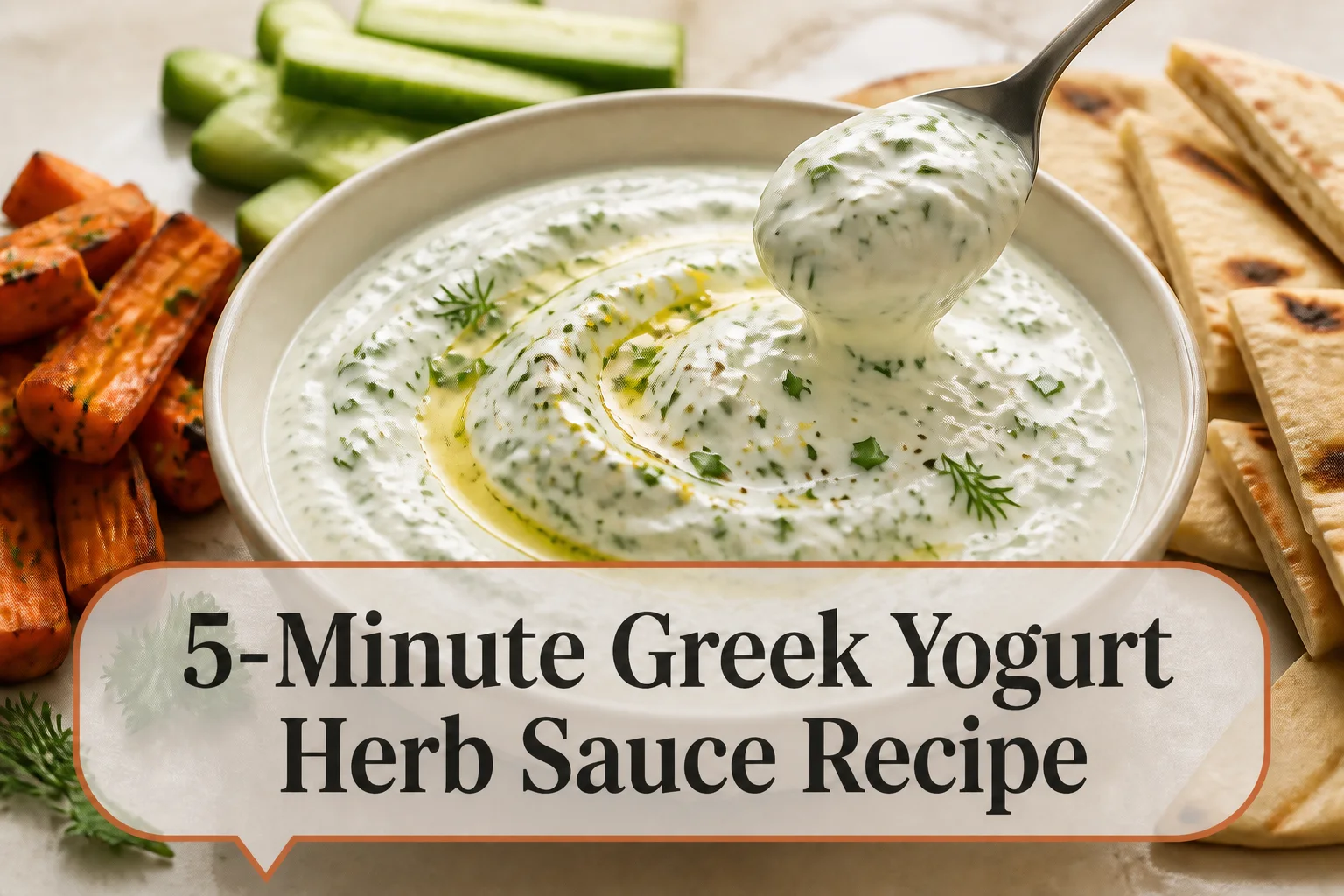
5-Minute Greek Yogurt Herb Sauce Recipe
Ingredients
Equipment
Method
- Finely grate garlic into a medium bowl, add lemon juice and let stand 2 minutes while chopping the herbs.
- Add Greek yogurt, lemon zest, Dijon, salt and pepper. Whisk until smooth with no mustard streaks.
- Drizzle in olive oil while whisking and continue until the sauce looks glossy and uniform.
- Stir in dill, parsley and scallion without blending them into the yogurt.
- Taste with the food you plan to serve. Adjust salt first; add a little oil if the yogurt tastes sharply sour.
- For dipping, leave thick. For drizzling, whisk in cold water 1 teaspoon at a time until it falls slowly from a spoon.
- Serve immediately or refrigerate 15 minutes for the garlic and herbs to distribute.
- Stir once before serving and recheck consistency and seasoning.
Notes
- Use thick strained Greek yogurt, not regular yogurt.
- Dry fresh herbs thoroughly and measure lemon juice.
- Add optional water only 1 teaspoon at a time.
- For storage, use a clean spoon and refrigerate promptly.
- This recipe was developed through culinary research and editorial review.
This recipe was developed through culinary research and editorial review. Yogurt thickness, garlic strength, herb moisture and serving context vary; use the taste and consistency adjustments in the method.
Nutrition is an estimate based on generic ingredients; actual values vary by yogurt, olive oil and serving size.