
Buffalo chicken pasta works best when the hot sauce brings tang and heat without making the cheese sauce split or turn greasy. This stovetop version builds the sauce over gentle heat, saves pasta water for the final adjustment, and warms already-cooked chicken only long enough to heat it through.
Ingredient moisture, piece size, cookware and starting temperature can shift the finish. The method therefore pairs a practical time range with visible or temperature-based doneness cues.
This recipe was developed through culinary research and editorial review. It is not represented as a personal kitchen test.
For a related idea, see buffalo chicken wing recipe. You may also want greek yogurt buffalo chicken dip.
Why this recipe works
Gentle heat protects the sauce: Cream cheese, yogurt and cheddar stay smoother when they are warmed below a boil.
Pasta water controls consistency: The starchy liquid loosens the sauce without diluting its flavor or making it watery.
Cooked chicken goes in late: The chicken needs reheating, not a second full cooking cycle, so adding it near the end limits dryness.
The first batch is the useful reference point. Measure as written, note the finish in your equipment, and change only one variable at a time if an adjustment is needed.
Ingredients
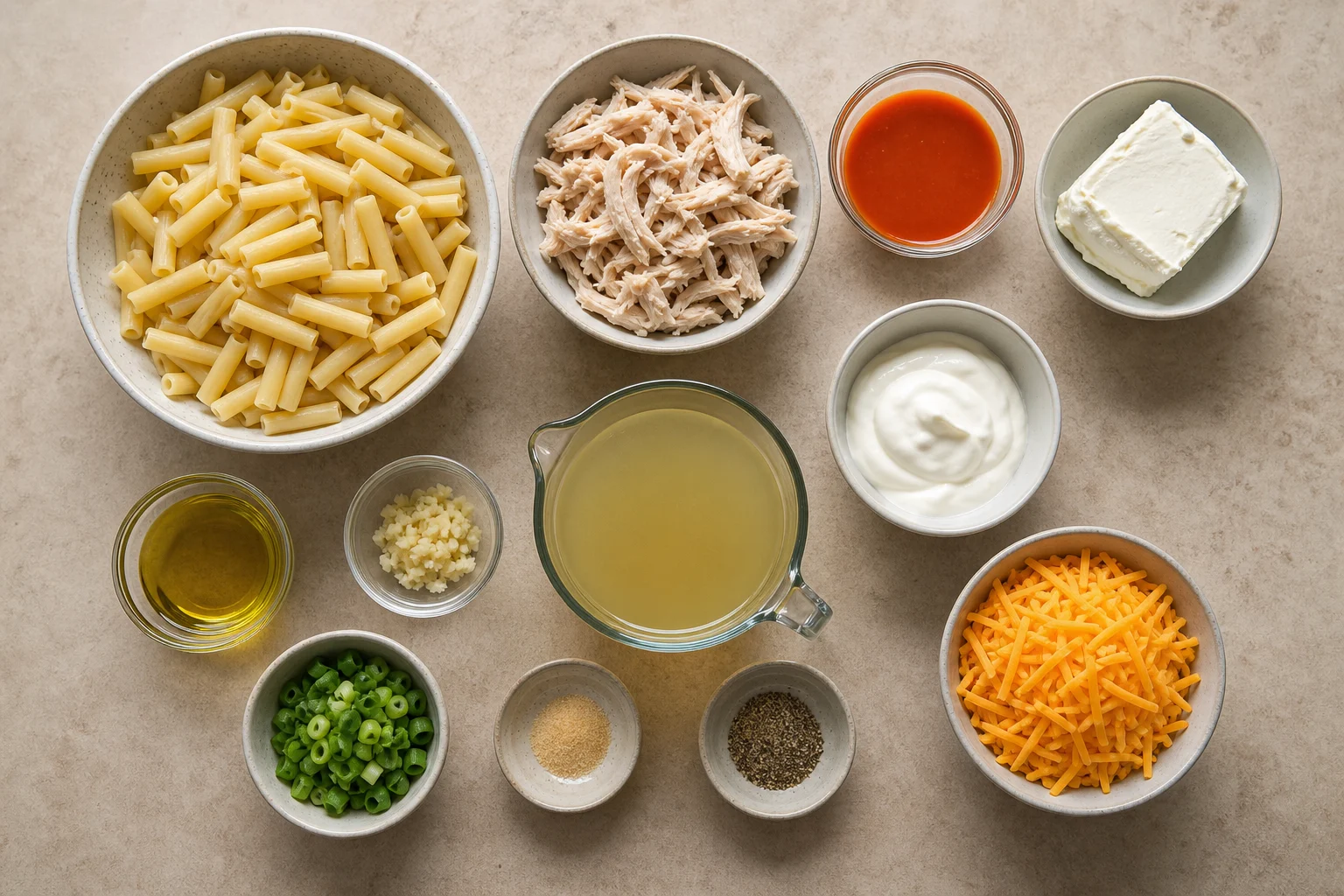
- 12 ounces short pasta, penne, rotini or shells
- 1 tablespoon olive oil
- 3 cloves garlic, finely chopped
- 1 cup low-sodium chicken broth
- 4 ounces cream cheese, cubed and softened
- 1/2 cup Buffalo-style cayenne hot sauce, plus more to taste
- 1/2 cup plain Greek yogurt, room temperature
- 1 cup shredded sharp cheddar, divided
- 3 cups cooked shredded chicken, cold or room temperature
- 1/2 teaspoon garlic powder
- 1/4 teaspoon ground black pepper
- 2 scallions, thinly sliced
Ingredient notes
Hot sauce
Use a thin cayenne-forward Buffalo sauce rather than a thick sugary wing glaze. Brands vary in salt and heat, so make the first half cup the baseline.
Greek yogurt
Room-temperature yogurt blends more smoothly than refrigerator-cold yogurt. Full-fat or 2% yogurt is less likely to look grainy than nonfat.
Cooked chicken
Rotisserie chicken or plainly cooked chicken both work. Remove skin and bones, and shred pieces to a similar size so they heat evenly.
How to make buffalo chicken pasta
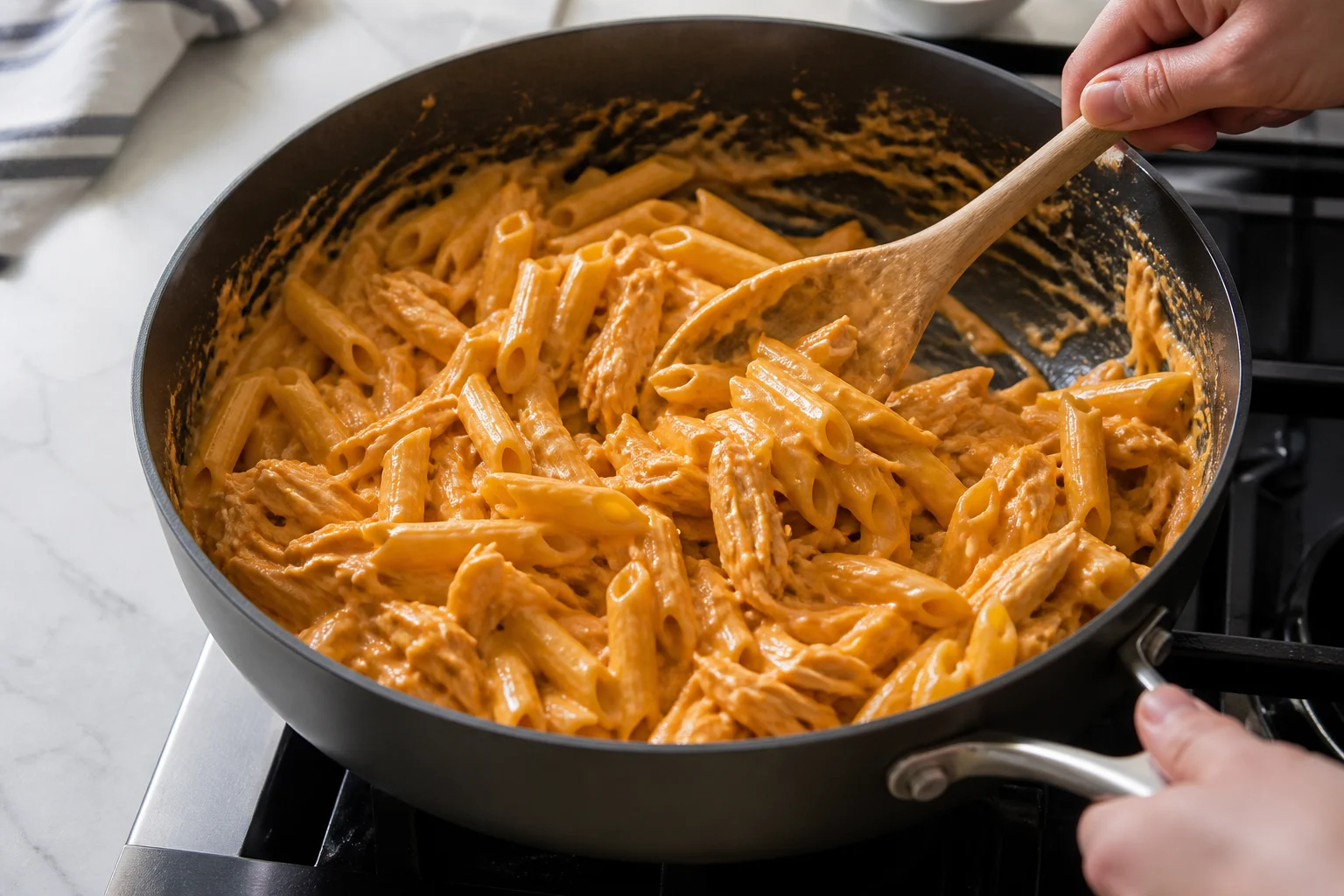
1. Cook the pasta
Boil the pasta in salted water until just tender. Reserve 1 cup pasta water, then drain without rinsing.
2. Start the sauce
While the pasta cooks, heat olive oil in a deep skillet over medium-low. Add garlic and cook for 30 seconds without browning.
3. Melt the base
Whisk in broth and cream cheese. Keep the heat gentle and whisk until the cream cheese is smooth.
4. Add Buffalo flavor
Reduce heat to low. Whisk in hot sauce, Greek yogurt, 3/4 cup cheddar, garlic powder and black pepper until combined; do not let the sauce boil.
5. Warm the chicken
Stir in cooked chicken and heat until the thickest pieces reach 165°F, adding reserved pasta water a few tablespoons at a time if the sauce tightens.
6. Finish the pasta
Fold in the drained pasta. Rest off heat for 5 minutes, loosen with more pasta water if needed, and top with remaining cheddar and scallions.
Quick timing and doneness guide
| Stage | What to look for | What to do |
|---|---|---|
| Preparation | Cream cheese, yogurt and cheddar stay smoother when they are warmed below a boil. | Complete the size, moisture or equipment setup before cooking |
| First check | Reduce heat to low. Whisk in hot sauce, Greek yogurt, 3/4 cup cheddar, garlic powder and black pepper until combined; do not let the sauce boil. | Check at the early end of the range and keep unfinished portions cooking |
| Finished | Fold in the drained pasta. Rest off heat for 5 minutes, loosen with more pasta water if needed, and top with remaining cheddar and scallions. | Stop when the stated texture or safe temperature is reached |
| If adjustment is needed | Add it only after the sauce is finished and stop heating once it reaches 165°F. | Make the smallest useful change, then check again |
This table is a decision guide, not a replacement for ingredient labels, the appliance manual or safe-temperature guidance. When food safety depends on internal temperature, check more than one thick piece with a reliable thermometer.
Substitutions and variations
Milder version
Use 1/3 cup hot sauce and add 2 tablespoons broth. Offer extra hot sauce at the table rather than making the entire skillet hotter.
No Greek yogurt
Use 1/2 cup sour cream and stir it in over very low heat. The finished sauce will be slightly richer.
Add vegetables
Fold in 2 cups steamed broccoli or spinach with the pasta. Drain vegetables thoroughly so they do not thin the sauce.
Change one major component at a time. Moisture, sweetness, structure and cooking time affect one another, so several simultaneous substitutions are harder to predict.
Serving ideas
Serve with celery sticks, a crisp green salad or steamed broccoli. Crumbled blue cheese can go on individual bowls so the main skillet keeps a balanced, family-style flavor.
Troubleshooting
The sauce looks grainy
Likely cause: The dairy boiled or the cheese was added over high heat.
Fix: Remove the skillet from heat and whisk in warm pasta water one tablespoon at a time until smoother.
The pasta is dry
Likely cause: The pasta absorbed sauce while resting or too little cooking water was reserved.
Fix: Add warm broth or pasta water in small amounts and fold gently over low heat.
The flavor is too hot
Likely cause: The hot-sauce brand is more concentrated than expected.
Fix: Stir in extra yogurt and cheddar, then serve with a cooling side rather than adding sugar.
The chicken is tough
Likely cause: Already-cooked chicken stayed over heat too long.
Fix: Add it only after the sauce is finished and stop heating once it reaches 165°F.
Storage, freezing and reheating
Refrigerator: Refrigerate in shallow covered containers within 2 hours and use within 3 to 4 days.
Freezer: Freeze portions for up to 2 months. The dairy sauce may look slightly separated after thawing, but gentle reheating can bring it back together.
Reheating or serving after storage: Reheat covered over low heat or at reduced microwave power with a splash of broth, stirring often, until the chicken and pasta reach 165°F.
For general handling, the USDA Safe Minimum Internal Temperature Chart is the authoritative outside reference used for this article. USDA guidance calls for poultry and reheated leftovers to reach 165°F and for cooked leftovers to be chilled promptly.
Frequently asked questions
Can I use rotisserie chicken?
Yes. Remove the skin and bones, shred about 3 cups of meat, and heat it in the finished sauce to 165°F.
Can I make Buffalo chicken pasta ahead?
It is best freshly finished, but the sauce and pasta can be refrigerated separately for one day and combined during gentle reheating.
Why did my sauce get too thick?
Pasta continues absorbing liquid after it is drained. Reserved pasta water lets you restore a creamy coating just before serving.
Recipe development note
The method for buffalo chicken pasta recipe was developed through culinary research and editorial review. The quantities and time ranges are an editorial recipe specification, not a claim that every ingredient brand, appliance or batch was personally tested in one kitchen.
Nutrition is an estimate per servings and varies with brands, optional ingredients and portion size. The accompanying visuals are AI-assisted food-editorial images, not photographs of a kitchen test.
Printable recipe card
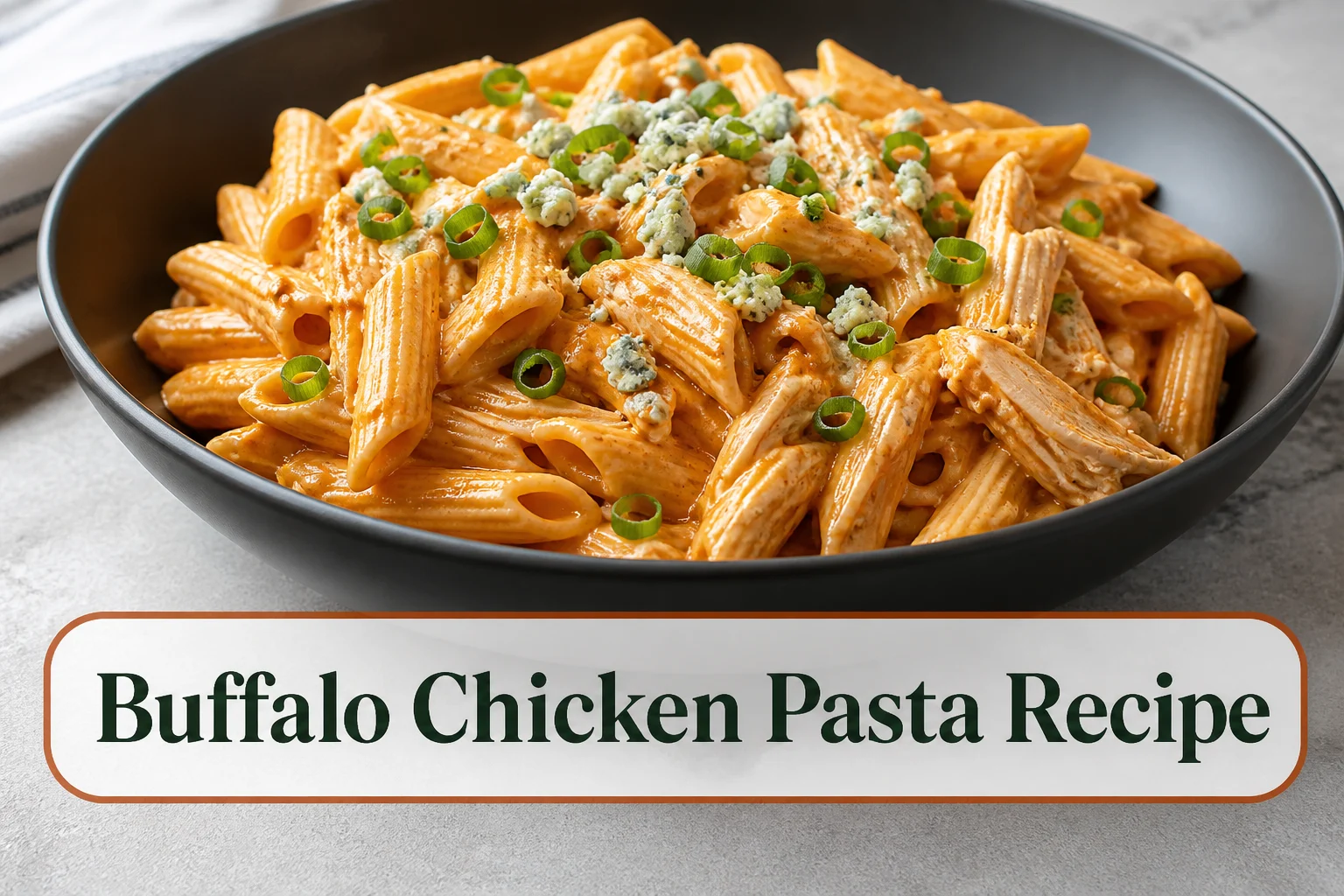
Buffalo Chicken Pasta Recipe
Ingredients
Equipment
Method
- Boil the pasta in salted water until just tender. Reserve 1 cup pasta water, then drain without rinsing.
- While the pasta cooks, heat olive oil in a deep skillet over medium-low. Add garlic and cook for 30 seconds without browning.
- Whisk in broth and cream cheese. Keep the heat gentle and whisk until the cream cheese is smooth.
- Reduce heat to low. Whisk in hot sauce, Greek yogurt, 3/4 cup cheddar, garlic powder and black pepper until combined; do not let the sauce boil.
- Stir in cooked chicken and heat until the thickest pieces reach 165°F, adding reserved pasta water a few tablespoons at a time if the sauce tightens.
- Fold in the drained pasta. Rest off heat for 5 minutes, loosen with more pasta water if needed, and top with remaining cheddar and scallions.
Notes
- Read ingredient labels and the manual for any appliance used.
- Begin checking at the early end of the range.
- USDA guidance calls for poultry and reheated leftovers to reach 165°F and for cooked leftovers to be chilled promptly.
- This recipe was developed through culinary research and editorial review.
This recipe was developed through culinary research and editorial review. Equipment, ingredient brands, starting temperature and batch size can change timing; follow the method cues and applicable safety guidance.
Nutrition is an estimate per servings and varies with brands, optional ingredients and portion size.