Frozen shrimp in the air fryer can cook evenly without thawing when the pieces are separated, the heavy ice glaze is removed and the basket is not crowded. The challenge is moisture: a thick shell of ice melts into the basket, steams the shrimp and washes seasoning away.
This two-stage method starts the frozen shrimp briefly with no seasoning. Once the surface ice loosens, the shrimp are separated and any pooled water is drained. Oil and a simple garlic-paprika seasoning then adhere to the warmer surface for the final cook.
The recipe was developed through culinary research and editorial review. Shrimp count size, shell style, ice glaze and air-fryer power change the timing. Begin checking early and remove individual shrimp as soon as they are opaque and safely cooked.
This guide is for raw frozen peeled and deveined shrimp, not cooked frozen shrimp or commercially breaded shrimp. For a from-scratch crunchy coating, use the breaded shrimp air fryer recipe. The frozen salmon in the air fryer recipe uses a similar two-stage approach for a thicker seafood cut.
Why a two-stage method works
- Frozen pieces separate before seasoning. Oil and spices reach the shrimp instead of sitting on ice.
- Meltwater is removed. Draining the basket reduces steaming and diluted flavor.
- The final stage is short. Shrimp cook quickly once their icy exterior is gone.
- One layer exposes every piece. Stacking traps water and creates uneven centers.
- Size, not color alone, guides timing. Large and jumbo shrimp need different checkpoints.
Ingredients
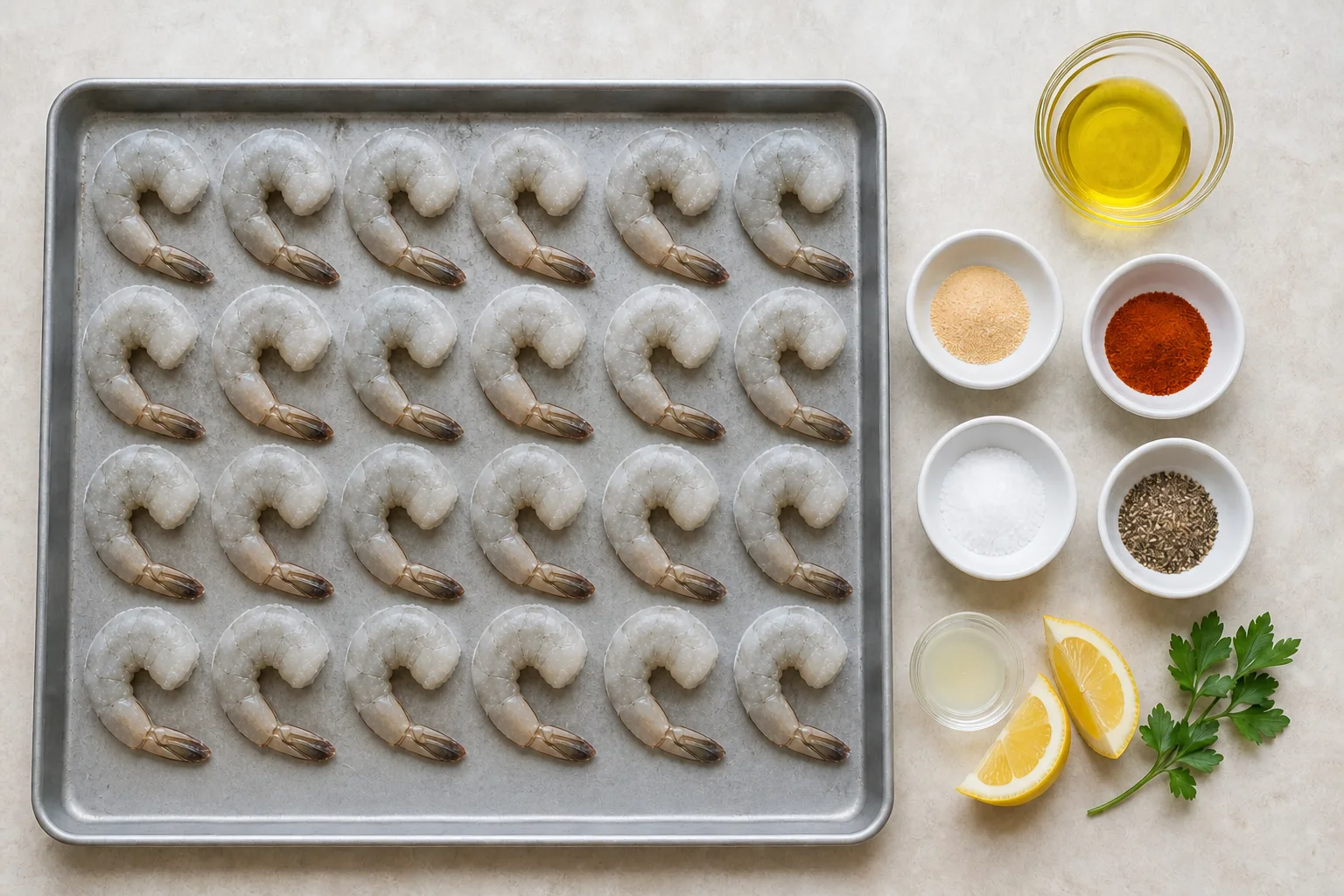
- 1 pound raw frozen large shrimp, 21/25 count, peeled and deveined
- 1 tablespoon avocado oil or olive oil
- 1/2 teaspoon garlic powder
- 1/2 teaspoon smoked or sweet paprika
- 1/2 teaspoon Diamond Crystal kosher salt, or 1/4 teaspoon fine salt
- 1/4 teaspoon ground black pepper
- 1 teaspoon fresh lemon juice
- Chopped parsley and lemon wedges, optional for serving
Ingredient notes and substitutions
Raw frozen shrimp: Look for a package that clearly says raw, peeled and deveined. Tail-on or tail-off both work. Do not use this time range for precooked shrimp; reheating cooked shrimp requires less time and can make them rubbery.
Shrimp size: The 21/25 count indicates approximately 21 to 25 shrimp per pound. Count labels are more useful than words such as large or jumbo because marketing names vary by brand.
Ice glaze: A light protective glaze is normal. Thick clumps or shrimp frozen into one solid block need more initial separation time. Avoid aggressively breaking a frozen block, which can tear the shrimp.
Oil: A tablespoon helps seasoning cling and prevents the surface from drying. Use less if the package lists added oil. Melted butter is better added after cooking because its water and milk solids do not help during the icy first stage.
Seasoning: Garlic, paprika, salt and pepper make a versatile base. Avoid adding fresh minced garlic early; small pieces may burn before the frozen shrimp finish.
Lemon: Add juice after cooking. Acid applied during the hot stage can encourage surface proteins to firm too quickly and may make the shrimp seem drier.
How to air fry frozen shrimp
1. Read the package
Confirm the shrimp are raw, peeled and deveined. Check for any manufacturer air-fryer instructions; use those when they differ from this general method.
If the package contains a sauce packet or breading, follow its directions. This recipe is for plain shrimp with no coating.
2. Preheat the air fryer
Preheat to 400°F for 3 minutes if the appliance manufacturer recommends it. A hot basket starts melting the surface glaze immediately.
Make sure the crisper plate is clean and correctly installed so water can drain beneath the food rather than collecting directly around the shrimp.
3. Start the shrimp unseasoned
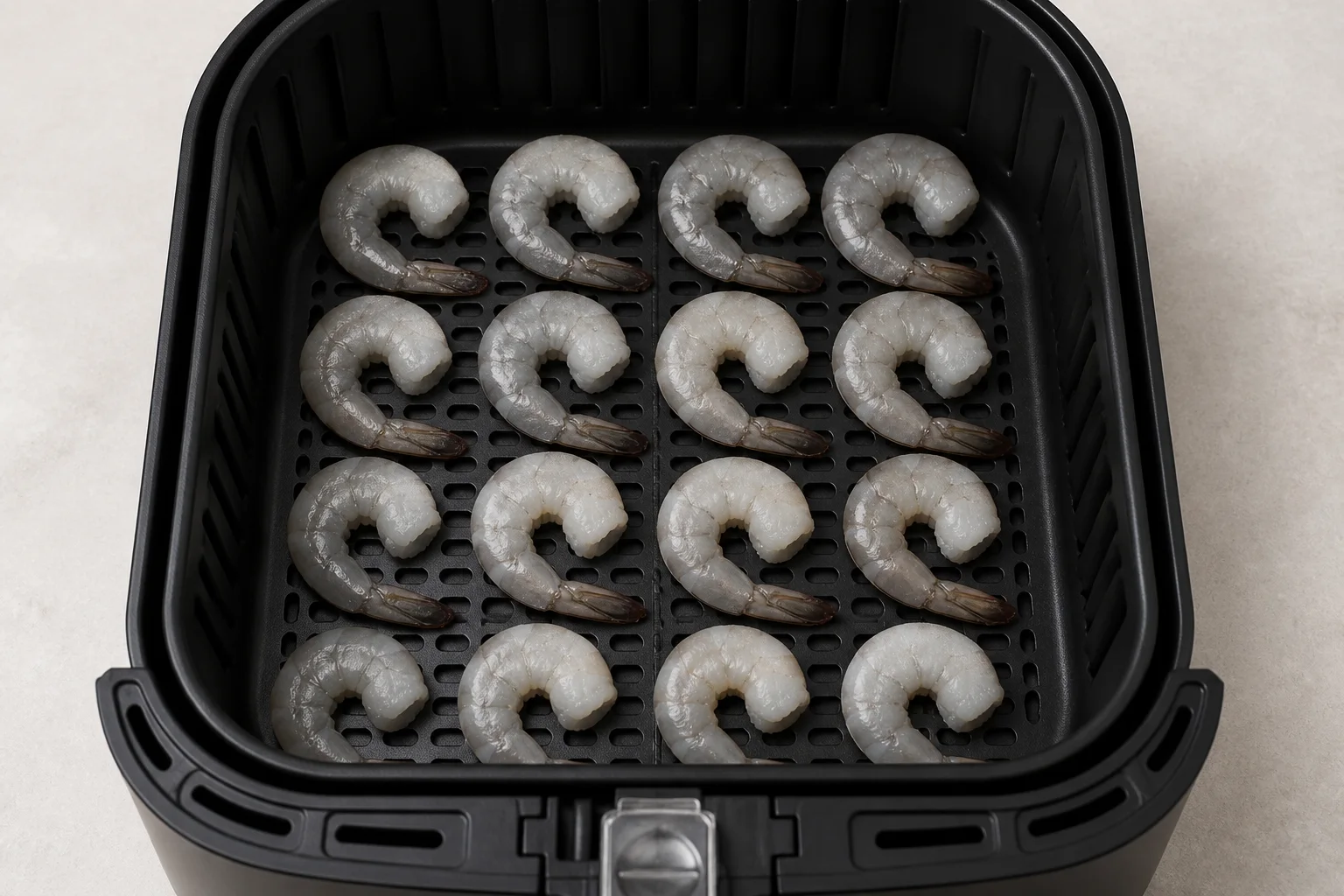
Place frozen shrimp in the basket. Spread loose pieces into one layer. If they are stuck in clusters, set the clusters in the basket without forcing them apart.
Air fry at 400°F for 3 minutes. Open the drawer and use silicone-tipped tongs to separate the shrimp gently. If a solid cluster will not release, cook for 1 minute more and try again.
4. Drain meltwater safely
Move the partly thawed shrimp to a clean bowl reserved for this stage. They are still raw and must not touch a serving plate or utensils intended for cooked food.
Remove the basket and pour accumulated water into the sink while keeping hot fat and steam away from your hands. Follow the appliance manual for safe drawer removal. Wipe only the removable cool-enough crisper plate if necessary; do not touch hot surfaces or rinse a hot nonstick basket under cold water.
5. Season the surface
Add oil, garlic powder, paprika, salt and pepper to the partly thawed shrimp. Toss until the spices form a thin, even coating.
Return the shrimp to the basket in one layer. Leave small gaps where possible. A compact air fryer may require two batches for a full pound.
6. Finish cooking
Air fry at 400°F for 4 minutes. Shake or turn, then cook for another 1 to 3 minutes.
Begin checking large 21/25 shrimp after 5 minutes in this second stage, or about 8 minutes total. The flesh should be opaque and pearly, and the shrimp should form a relaxed C rather than a tight O.
FoodSafety.gov lists seafood at 145°F, or until the flesh is no longer translucent and separates easily where applicable; see the official safe-temperature chart. A thin-probe thermometer works best for shrimp. Insert it into the thickest part from the side and check more than one large piece.
7. Finish with lemon
Transfer safely cooked shrimp to a clean serving bowl. Add lemon juice and toss briefly. Garnish with parsley and serve at once.
Frozen shrimp air fryer time
Raw frozen large shrimp usually need 8 to 11 minutes total at 400°F: about 3 minutes to loosen surface ice, followed by 5 to 8 minutes after seasoning. Use these size-based starting points:
| Shrimp count per pound | Common market name | First doneness check |
|---|---|---|
| 31/40 | Medium | 7 minutes total |
| 21/25 | Large | 8 minutes total |
| 16/20 | Jumbo | 9 minutes total |
| 13/15 | Extra jumbo | 10 minutes total |
Thick ice glaze can add 1 to 3 minutes. Tail-on shrimp may take slightly longer at the thick tail joint. The second batch may cook faster because the appliance is fully heated.
How to tell when shrimp are done
Color is useful but not perfect. Raw gray shrimp generally turn pink-orange outside and opaque white inside, while naturally pink varieties do not show as dramatic a change.
The body should curl into a loose C. A very tight O often indicates overcooking, though shape alone cannot confirm safety. The most reliable endpoint is 145°F in the thickest portion, combined with opaque, pearly flesh.
Remove finished shrimp individually. Waiting for the largest piece can overcook smaller ones, especially when a bag contains mixed sizes.
Troubleshooting
Water pools in the basket
The shrimp have a heavy ice glaze or were crowded. Use the initial unseasoned stage, separate the pieces and drain the water before adding oil. Cook in two batches if necessary.
The seasoning falls off
It was added to an icy surface. Season only after the first 3-minute stage and draining. Toss in a clean bowl so oil can cover the shrimp evenly.
The shrimp are rubbery
They cooked too long, were precooked rather than raw, or varied greatly in size. Confirm the package type, begin checking early and remove pieces separately.
The shrimp are gray in the center
They are not finished. Return them at 400°F in 1-minute intervals and verify 145°F in the thickest pieces. Do not rely only on the exterior color.
The garlic tastes bitter
Fresh garlic or a heavy spice layer may have scorched. Use garlic powder during air frying and add fresh garlic in melted butter after cooking if desired.
The shrimp stick together
Give the ice another minute to loosen rather than prying. Once separated, toss with oil and arrange in a single layer.
Flavor variations
For garlic butter shrimp, omit oil during seasoning only if using a teaspoon of neutral oil to prevent sticking. After cooking, toss with 1 tablespoon melted butter and one small grated garlic clove warmed gently in the butter.
For Cajun shrimp, replace paprika, garlic, salt and pepper with 1 1/2 teaspoons Cajun seasoning. Check the sodium content before adding extra salt.
For chili-lime shrimp, replace lemon with lime and add 1/4 teaspoon ancho chili powder or chipotle powder to the seasoning. Add lime juice only after cooking.
For Mediterranean shrimp, use 1/2 teaspoon dried oregano instead of paprika and finish with lemon, parsley and a small amount of crumbled feta.
For a garlic-butter seafood dinner with a different cut, follow the air-fried lobster tail recipe for butterflying and checking the thickest part of each tail.
Serving ideas
Serve air fried frozen shrimp with rice, couscous, pasta, salad or roasted vegetables. The shrimp also work in tacos, grain bowls and lettuce wraps.
For a quick sauce, stir Greek yogurt with lemon juice, garlic powder and chopped dill. Keep sauce on the side so the shrimp remain hot and the seasoning stays in place.
To turn shrimp into a taco dinner, air fryer shrimp tacos includes a slaw, taco seasoning and an assembly plan that keeps the tortillas from getting soggy.
Make-ahead guidance
This recipe is fastest when cooked directly from the freezer, so there is little to prepare ahead. Mix the dry spices in a small airtight jar and keep them for up to one month.
Do not partly cook the shrimp and refrigerate them for finishing later. Cook through in one session, cool leftovers promptly and reheat only what will be eaten.
Storage and reheating
Refrigerate cooked shrimp within 2 hours in a shallow airtight container. Use within 3 to 4 days, following the FoodSafety.gov cold-storage chart.
Reheat at 325°F for 2 to 4 minutes, just until the center reaches 165°F for leftovers. The lower temperature limits additional tightening. A covered skillet over low heat with a teaspoon of water is another gentle option.
Avoid repeated reheating. Freeze cooked leftovers only when necessary; texture is best when shrimp are cooked from frozen once and eaten promptly.
Frequently asked questions
Can I put frozen shrimp straight in the air fryer?
Yes. Use raw peeled and deveined frozen shrimp, loosen the ice for 3 minutes, drain meltwater, then season and finish cooking.
Do I need to thaw frozen shrimp first?
No. This method is designed for frozen shrimp. Thawed shrimp cook more quickly and should use a separate time range.
What temperature should frozen shrimp reach?
Cook seafood to 145°F in the thickest part. The flesh should also be opaque and pearly rather than translucent.
Can I use precooked frozen shrimp?
Not with this method. Precooked shrimp need only gentle reheating and can become rubbery during the raw-shrimp cooking time.
Can I cook shell-on frozen shrimp?
Shell-on shrimp can work, but the seasoning will not reach the flesh as directly and cooking may take longer. This recipe is calibrated for peeled shrimp.
Why do I season after the first stage?
Oil and spices slide off a hard ice glaze. The short first stage loosens ice and lets meltwater drain so seasoning can adhere.
Printable recipe card
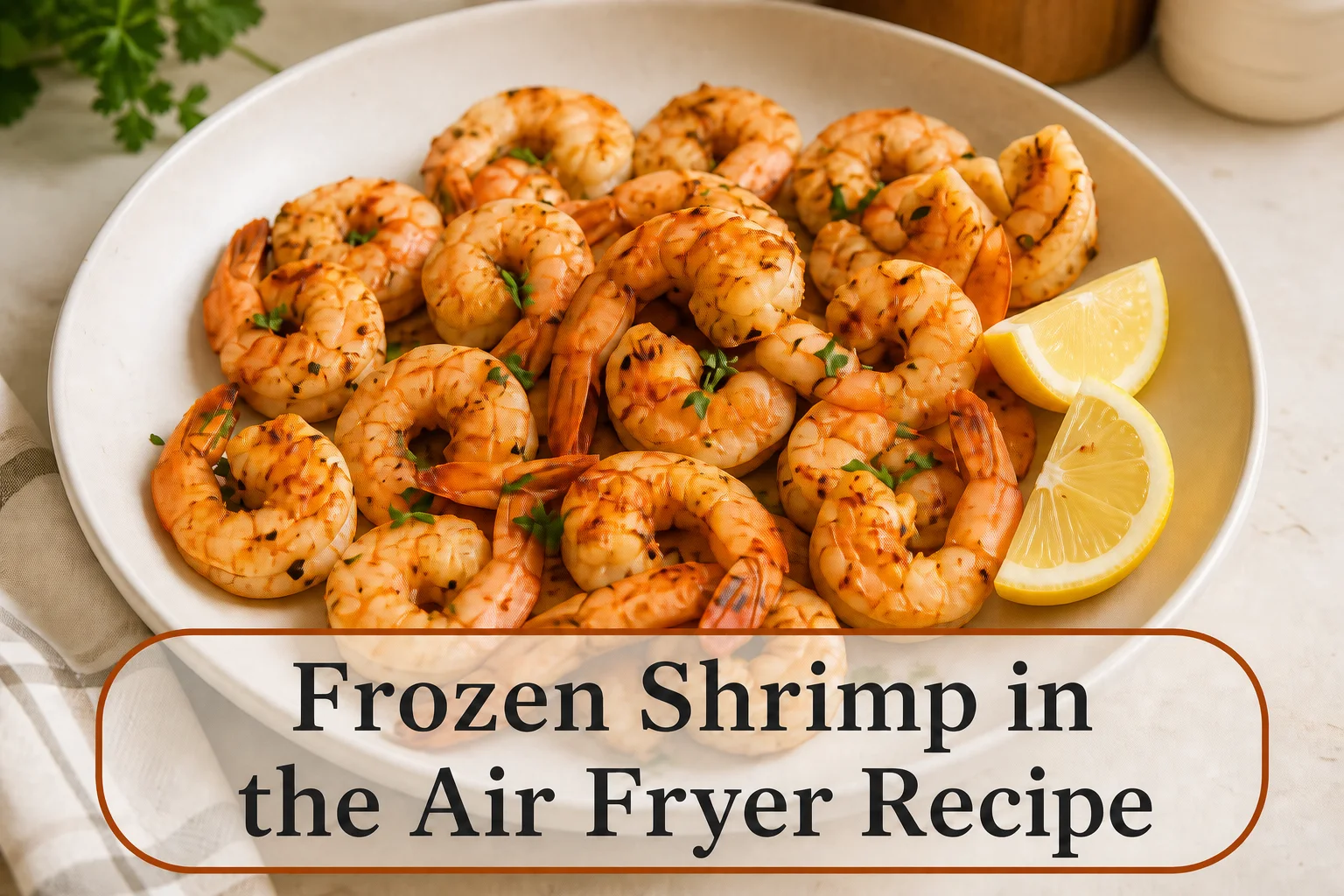
Frozen Shrimp in the Air Fryer Recipe
Ingredients
Equipment
Method
- Confirm the frozen shrimp are raw, peeled and deveined. Preheat the air fryer to 400°F if recommended.
- Place frozen shrimp in the basket and cook unseasoned for 3 minutes.
- Separate the pieces gently. Move them to a clean bowl and drain meltwater from the basket safely.
- Toss the partly thawed shrimp with oil, garlic, paprika, salt and pepper.
- Return to the basket in one layer and cook at 400°F for 4 minutes.
- Turn or shake, then cook 1 to 3 minutes more, until the thickest pieces reach 145°F and are opaque and pearly.
- Transfer to a clean bowl, toss with lemon juice and serve immediately.
Notes
- Use raw frozen peeled shrimp, not precooked shrimp.
- Season after the initial ice-loosening stage.
- Cook in one layer and remove pieces as they reach 145°F.
- This recipe was developed through culinary research and editorial review.
This recipe was developed through culinary research and editorial review. Shrimp count size, ice glaze and appliance performance vary; check the thickest pieces and remove them as they finish.
Nutrition is an estimate based on generic ingredient data; actual values vary with shrimp size and oil pickup.