
Frozen salmon in the air fryer is a practical dinner when there is no time to thaw fish, but the method needs two stages. Seasoning placed directly on a hard, icy fillet slides off, while cooking at high heat from the beginning can dry the thin edges before the center is ready.
This recipe first warms individually frozen fillets just long enough to melt surface frost. The fish is then dried, brushed with a lemon-Dijon seasoning mixture and returned to the basket to finish. That short pause makes the coating adhere and gives you a better chance of cooking the center evenly.
The recipe was developed through culinary research and editorial review. Fillet thickness, species, skin and air-fryer power all affect timing. Use the stated range only as a checkpoint and confirm the thickest part reaches 145°F with an instant-read thermometer.
Browse the air fryer recipe hub for more quick meals. The two-stage approach is also used for frozen chicken in the air fryer, although poultry requires a different safe temperature. For a ground-poultry option, make these air fryer turkey burgers.
Which frozen salmon works best?
Use four plain, individually frozen salmon fillets weighing about 5 to 6 ounces each and measuring roughly 1 inch at their thickest point. Skin-on or skinless fillets both work. Similar size and thickness matter more than having perfectly equal weights.
Do not use fillets frozen together in a solid block. Thaw them in the refrigerator only until they can be separated safely. This method is not designed for heavily glazed fish, breaded portions, stuffed seafood or a product with its own appliance directions. Follow the package when it provides specific cooking instructions.
Why the two-stage method works
- Surface frost melts before seasoning. Oil and spices adhere to a dry, flexible surface rather than ice.
- The center starts warming gently. The first stage narrows the temperature difference between the middle and the thin edges.
- A single layer exposes the sides. Space around each fillet lets circulating heat reach more than the top.
- Thickness determines the check time. A compact center needs longer than a broad, thin fillet of the same weight.
- Individual temperature checks protect moisture. Finished pieces leave the basket instead of waiting for the thickest one.
Ingredients
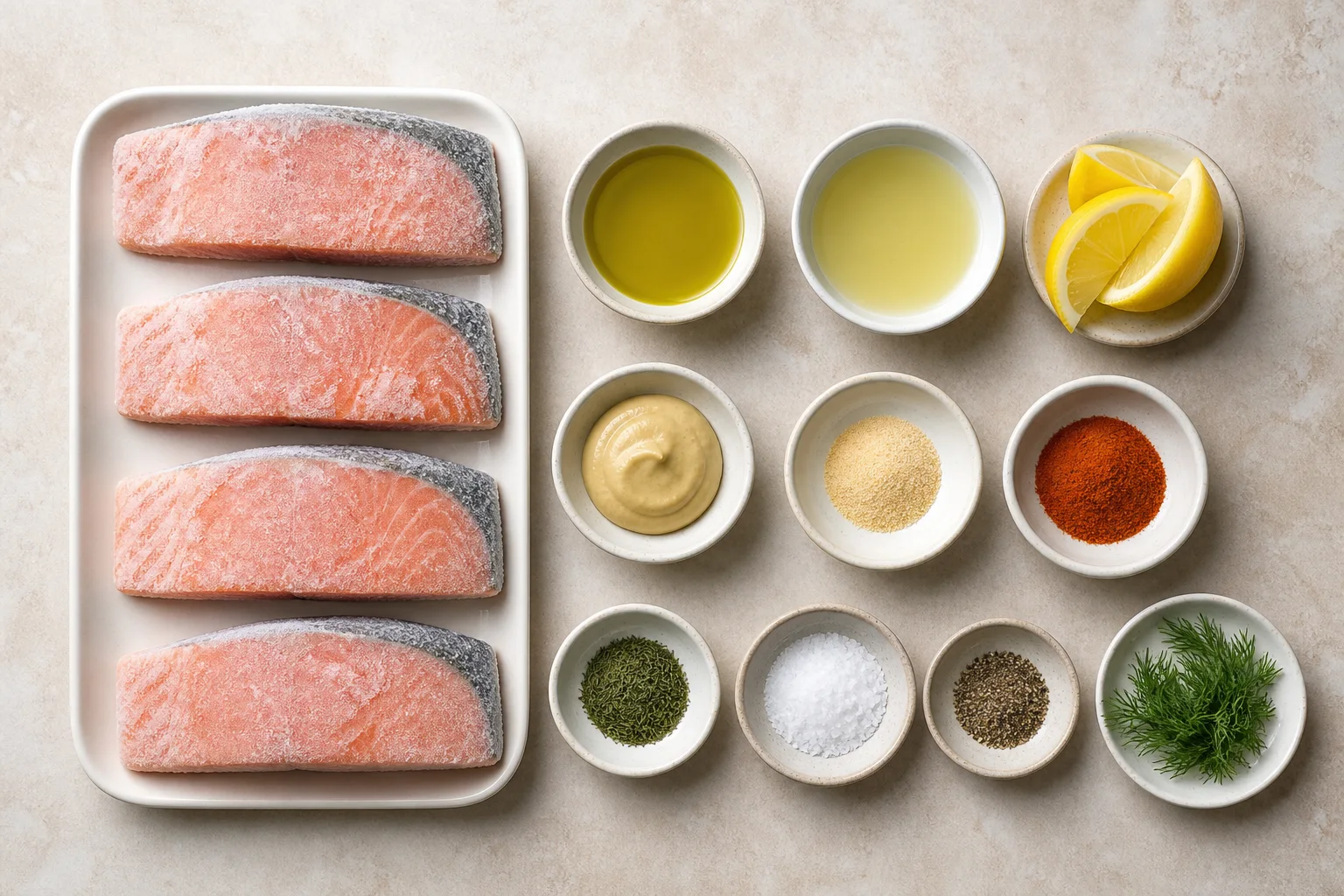
- 4 individually frozen salmon fillets, 5 to 6 ounces each and about 1 inch thick
- 1 tablespoon olive oil or avocado oil
- 1 tablespoon fresh lemon juice
- 1 teaspoon Dijon mustard
- 1 teaspoon garlic powder
- 1/2 teaspoon smoked paprika
- 1/2 teaspoon dried dill
- 3/4 teaspoon Diamond Crystal kosher salt, or 1/2 teaspoon fine salt
- 1/4 teaspoon ground black pepper
- Lemon wedges and chopped fresh dill or parsley, optional for serving
Ingredient notes and substitutions
Salmon: Center-cut fillets cook more evenly than thin tail pieces. Wild salmon is often leaner and may finish sooner than thick farmed Atlantic salmon. Check each fillet independently.
Oil: Olive oil has a savory flavor; avocado oil is neutral. Either helps protect the surface and carry the seasonings. Apply it after the first warming stage, not to the frozen glaze.
Dijon: Mustard helps the thin seasoning paste cling. Mayonnaise can replace it in the same amount for a milder flavor, while yellow mustard changes the taste noticeably.
Dill: Dried dill is convenient. Replace it with 1 teaspoon dried parsley or add 1 tablespoon chopped fresh dill after cooking. Fresh herbs applied before air-frying can darken.
Paprika: Smoked paprika adds color without sugar. Sweet paprika works as a milder substitute. Avoid sugary rubs during the main cook because they may scorch before a thick center is done.
How to air fry salmon from frozen
1. Check and preheat
Remove all packaging and confirm the fillets are separate, plain and free of a thick ice glaze. Preheat the air fryer to 390°F for 3 minutes if the manufacturer recommends preheating.
2. Start the frozen fillets
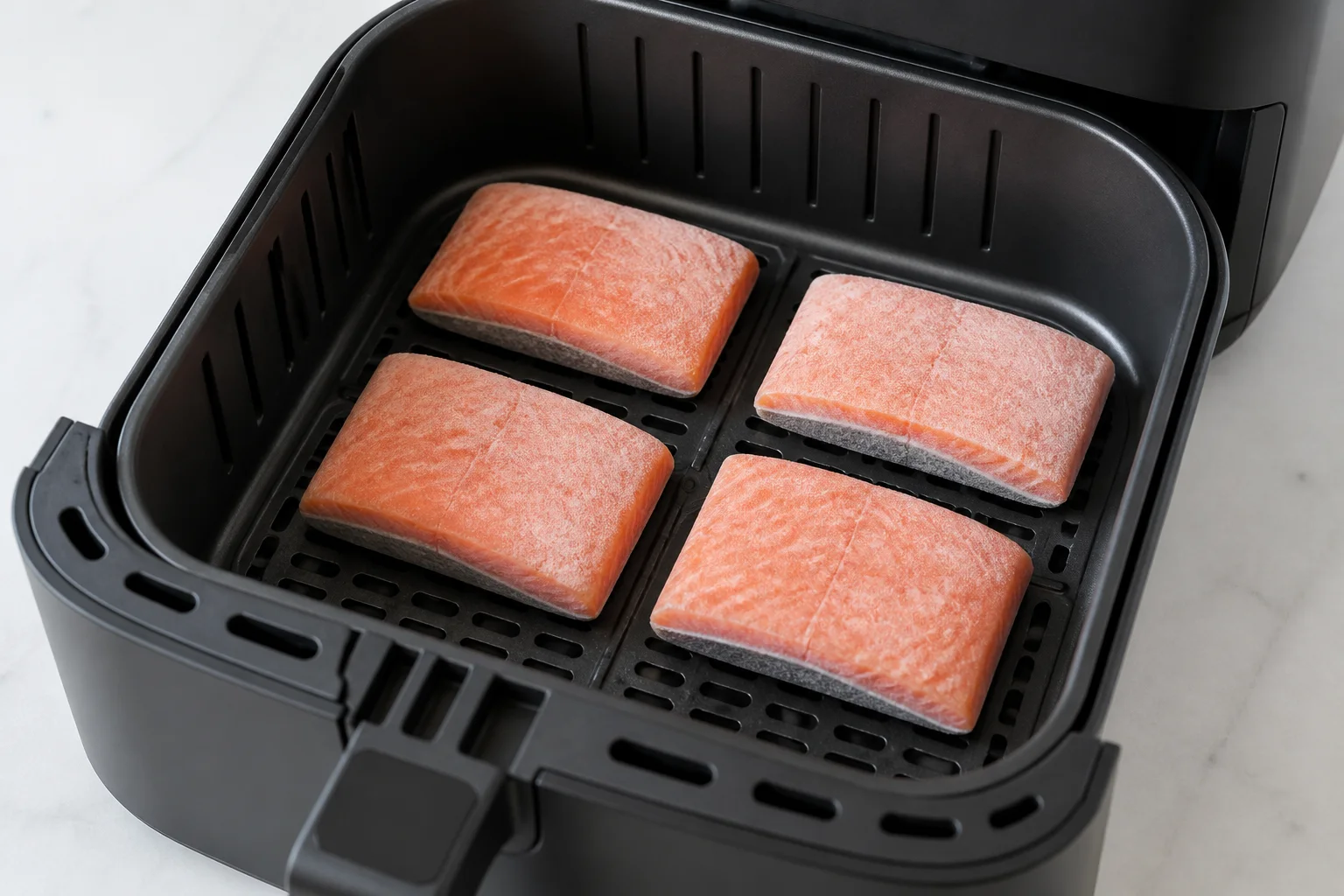
Brush off loose ice. Place the salmon skin side down, or on the flatter side if skinless, in one layer with space between pieces. Cook at 390°F for 7 minutes.
At this point the surface should be thawed and the center still undercooked. If a heavy glaze has released water, switch off the appliance and empty the basket only as directed in its manual.
3. Make the seasoning paste
While the salmon warms, stir together oil, lemon juice, Dijon, garlic powder, paprika, dill, salt and pepper. The mixture should be thin enough to brush but not watery.
4. Dry and season
Transfer the fillets to a clean plate. Pat only the top and sides dry, leaving delicate skin in place. Brush the seasoning mixture over the exposed surfaces. Return the fish to the basket in the same single-layer arrangement.
5. Finish by thickness
Cook at 390°F for 5 minutes, then begin checking the thinnest fillet. Continue for 2 to 4 minutes more as needed. Most 1-inch, 5- to 6-ounce fillets need about 12 to 16 minutes total, including the initial 7 minutes.
Insert an instant-read thermometer horizontally into the thickest part without touching the basket. Fish should reach 145°F according to the official FoodSafety.gov temperature chart. Remove each fillet when its own center reaches that temperature.
6. Rest and serve
Transfer the salmon to a clean plate and rest for 2 to 3 minutes. Add lemon wedges and fresh herbs after cooking. Slide a thin spatula between the fish and skin if you prefer to leave the skin behind.
Frozen salmon air fryer time
Use these ranges as checkpoints after preheating:
- Thin fillets, about 3/4 inch: begin checking around 11 to 13 minutes total.
- Medium fillets, about 1 inch: begin checking around 12 to 16 minutes total.
- Thick fillets, about 1 1/4 inches: expect roughly 15 to 19 minutes total.
Thickness is measured at the deepest point, not along a tapered edge. The second batch may cook faster because the appliance is fully hot. Temperature, not opacity or flaking alone, determines safe doneness.
Troubleshooting
The edges are dry but the center is under 145°F
The fillet is thicker than specified or the appliance runs hot. Reduce the temperature to 350°F and continue in 1- to 2-minute increments. Thaw unusually thick portions before using a high-heat method next time.
The seasoning slid off
The surface was still icy or wet. Complete the first 7-minute stage, transfer the fish carefully and blot surface moisture before brushing on the seasoning mixture.
The fillets cooked unevenly
Sort them by thickness and remove pieces individually. A thin tail section may finish several minutes before a thick center cut.
White protein appeared on the surface
The white material is albumin, a salmon protein that becomes visible during cooking. A large amount often means the outer layers heated quickly. It is safe to eat; lower the temperature slightly next time if appearance matters.
The salmon sticks
Keep skin-on fillets skin side down and lift with a thin spatula. For skinless fish, lightly oil a clean basket and avoid moving the fillet until its surface has set.
Flavor variations
For lemon pepper salmon, omit smoked paprika and dill, then add 3/4 teaspoon lemon pepper. Reduce the measured salt if the blend already contains it.
For a mild maple-Dijon finish, complete most of the cook with the unsweetened seasoning mixture. Brush on 2 teaspoons maple syrup mixed with 1 teaspoon Dijon only during the final 1 to 2 minutes, watching closely for darkening.
What to serve with frozen salmon
Serve with rice, quinoa, roasted potatoes, asparagus, green beans or a crisp salad. If a vegetable needs a longer air-fryer time, cook it first and keep it warm while the salmon cooks in the uncrowded basket.
Flake rested salmon into grain bowls or wraps. For meal prep, keep acidic dressing separate until serving so the fish texture stays firmer.
For a full lunch-box plan, salmon meal prep bowls includes grain and vegetable portions, packing advice and options for eating the salmon cold or reheated.
Storage and reheating
Refrigerate cooked salmon within 2 hours in a shallow airtight container. FoodSafety.gov’s cold-storage chart recommends using cooked fish within 3 to 4 days at 40°F or below.
Reheat at 320°F for about 3 to 5 minutes until hot, checking early to limit dryness. If using a microwave, add a few drops of water, cover loosely and heat at reduced power in short intervals.
Cooked salmon can be frozen, but the texture becomes softer after thawing. Cool promptly, wrap tightly and use within about 2 months for best quality. Thaw overnight in the refrigerator before reheating.
Frequently asked questions
Can you cook salmon from frozen in an air fryer?
Yes, when the fillets are plain, individually frozen and the appliance manual permits it. Use a two-stage method so surface frost melts before seasoning, and confirm the center reaches 145°F.
Do I need to thaw frozen salmon first?
Not for 5- to 6-ounce fillets around 1 inch thick. Thaw pieces frozen in a block, heavily glazed fish and unusually thick portions before using this recipe.
Should frozen salmon be flipped?
No. Keeping the skin or flatter side down protects the delicate fish. Hot air reaches the top and sides when the basket is not crowded.
Can I use foil or parchment?
An uncovered basket provides the best circulation. If the appliance manufacturer permits a liner, use a perforated piece held down completely by the food and never preheat loose parchment by itself.
How do I know salmon is done?
Insert an instant-read thermometer into the thickest point and confirm 145°F. Check each fillet because thickness varies.
Can I double the recipe?
Double the ingredients but cook in batches. Stacking or crowding prevents even circulation, and the second batch may finish slightly faster.
Recipe at a glance
| Metric | Details |
|---|---|
| Prep time | 7 minutes |
| Cook time | 14 minutes |
| Total time | 21 minutes |
| Yield | 4 servings |
Printable recipe card
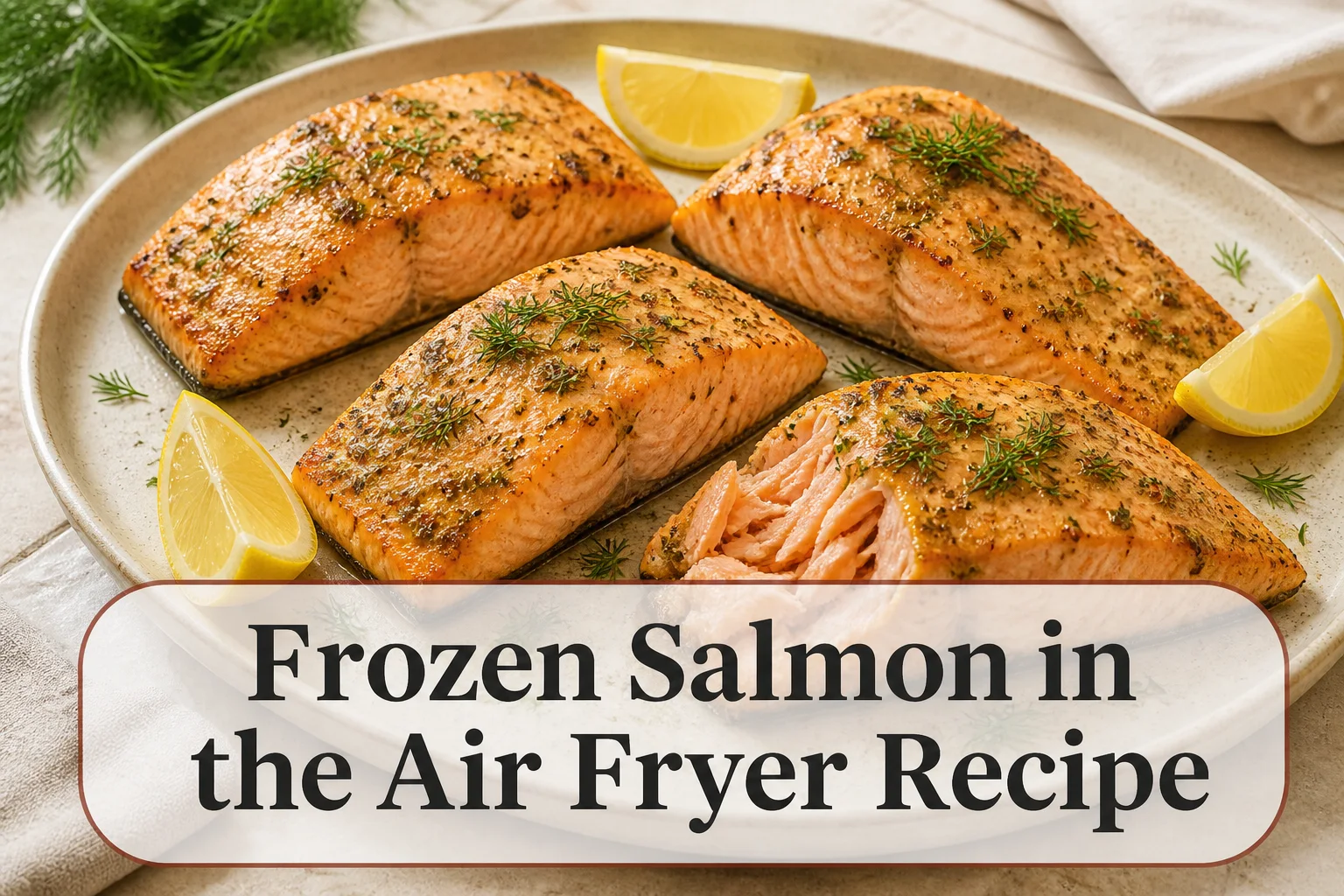
Frozen Salmon in the Air Fryer Recipe
Ingredients
Equipment
Method
- Preheat the air fryer to 390°F for 3 minutes if recommended.
- Brush off loose ice, arrange the fillets skin side down in one layer and cook at 390°F for 7 minutes.
- Mix oil, lemon juice, Dijon, garlic, paprika, dill, salt and pepper.
- Transfer the salmon to a clean plate, pat the top and sides dry and brush with the seasoning mixture.
- Return to the basket and cook for 5 to 9 minutes longer, removing each fillet when its thickest point reaches 145°F.
- Rest for 2 to 3 minutes and serve with lemon and fresh herbs.
Notes
- Use separate, plain frozen fillets about 1 inch thick.
- Season after the first 7 minutes so the mixture adheres.
- Remove fillets individually at 145°F.
- This recipe was developed through culinary research and editorial review.
This recipe was developed through culinary research and editorial review. Fillet thickness and appliance performance vary, so confirm each center reaches 145°F.
Nutrition is an estimate based on generic ingredient data; actual values vary by salmon species, fillet size and trimming.