
Chicken-wing timing in an air fryer depends on whether the pieces are split, how tightly the basket is loaded and how forcefully the appliance moves hot air. This method uses thawed split wings, a moderate first stage to render the skin and a short high-heat finish for browning, with temperature checks in several thick pieces rather than a clock-only promise.
The timing is written for 4 servings. Air-fryer wattage, basket shape, food size and starting temperature can change the finish, so use the early check and physical doneness cue instead of treating the clock as an absolute.
This recipe was developed through culinary research and editorial review. It is not represented as a personal kitchen test.
For a related idea, see air fryer chicken wings recipe. You may also want air fryer chicken sausage.
Why this recipe works
A two-temperature method balances rendering and browning: The 380°F stage gives skin fat time to render before the hotter finish deepens color.
A loose layer keeps the timing meaningful: Stacked wings block airflow and make some pieces steam while exposed edges darken.
Several thermometer checks settle doneness: Wing size and basket hot spots vary, and color alone cannot verify poultry safety.
The first batch is the useful reference point. Measure as written, note the finish in your equipment, and change only one variable at a time if an adjustment is needed.
Ingredients
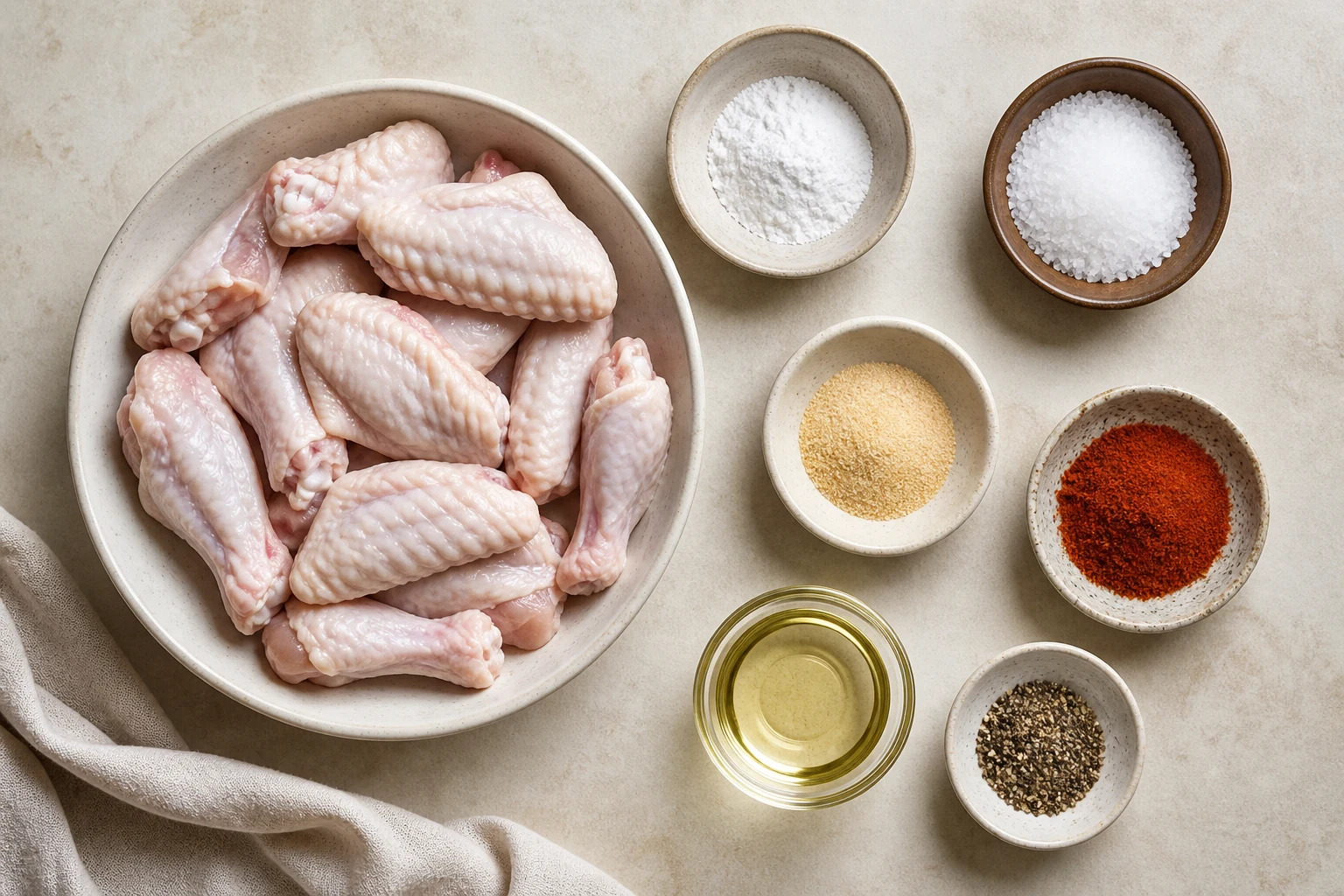
- 2 pounds split chicken wings, thawed flats and drumettes
- 1 tablespoon aluminum-free baking powder, not baking soda
- 3/4 teaspoon kosher salt
- 1/2 teaspoon garlic powder
- 1/2 teaspoon smoked paprika
- 1/4 teaspoon black pepper
- 1 teaspoon neutral oil, only if the wings are very lean
Ingredient notes
Wing size
Small split wings may finish near 24 minutes total, while large meaty drumettes can need 28 to 32 minutes. Whole unsplit wings take longer and are not covered by the primary range.
Baking powder
A light coating supports a dry crisp surface. Baking soda is much stronger and can leave an unpleasant alkaline taste.
Starting state
The timing is for fully thawed wings. Do not hold raw wings at room temperature to speed thawing; thaw safely in the refrigerator or by another USDA-approved method.
How Long to Air Fry Chicken Wings
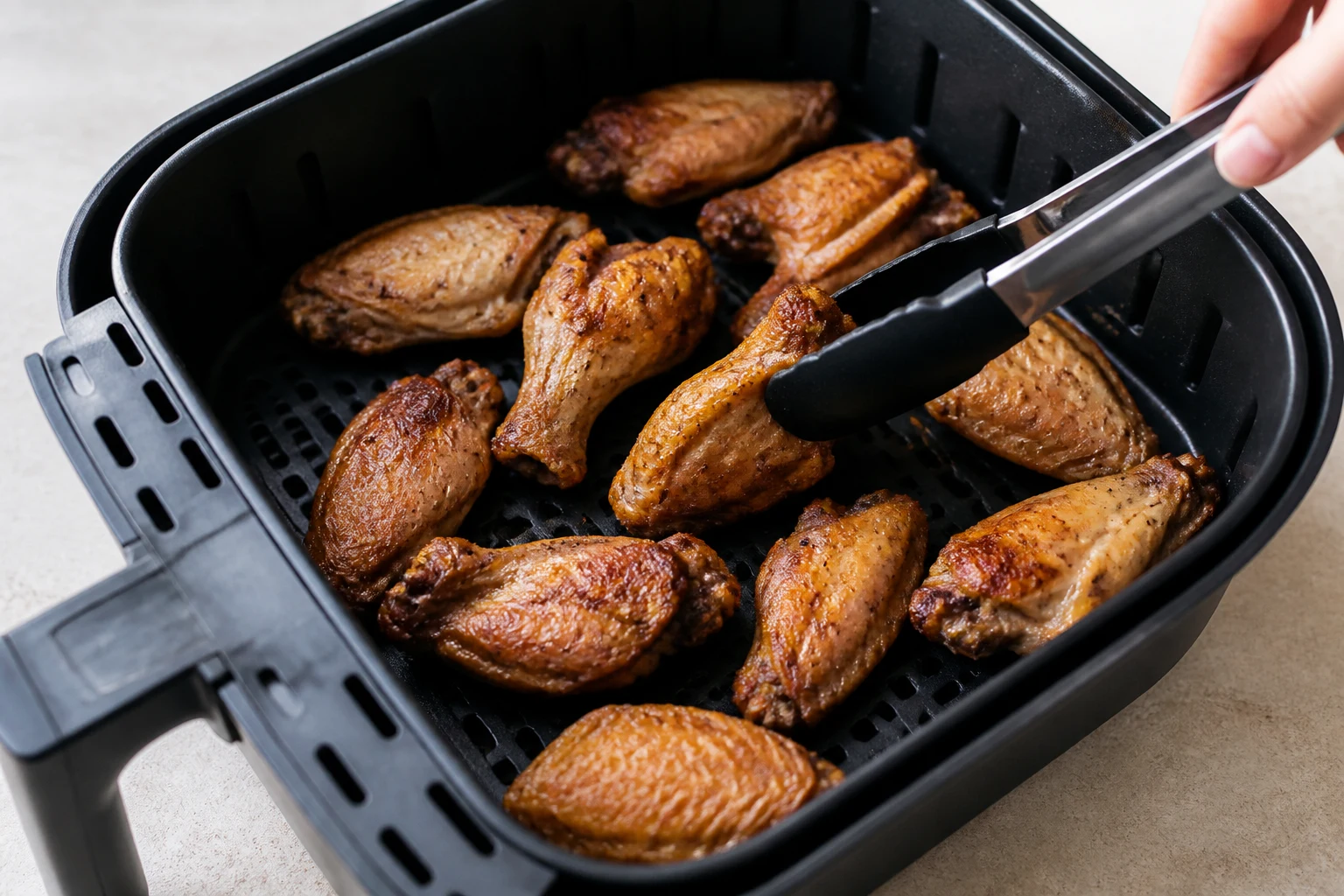
1. Preheat and dry
Preheat the air fryer to 380°F for 3 minutes if the manual recommends preheating. Blot every wing thoroughly with paper towels.
2. Season
Toss wings with baking powder, salt, garlic powder, paprika and pepper. Add the optional oil only when the surface looks unusually lean.
3. Load one loose layer
Arrange wings in a single layer with small gaps. Cook in batches rather than stacking pieces; keep uncooked poultry refrigerated between batches.
4. Render at 380°F
Air fry for 20 minutes, turning the wings at 10 minutes and rotating pieces from the cooler center to hotter edges if needed.
5. Crisp at 400°F
Increase to 400°F and cook 4 to 8 minutes more, turning once, until the skin is browned and crisp.
6. Verify and rest
Check several of the thickest flats and drumettes away from bone; each must reach at least 165°F. Rest 5 minutes before saucing or serving.
Quick timing and doneness guide
| Stage | What to look for | What to do |
|---|---|---|
| Preparation | The 380°F stage gives skin fat time to render before the hotter finish deepens color. | Complete the size, moisture or equipment setup before cooking |
| First check | Air fry for 20 minutes, turning the wings at 10 minutes and rotating pieces from the cooler center to hotter edges if needed. | Check at the early end of the range and keep unfinished portions cooking |
| Finished | Check several of the thickest flats and drumettes away from bone; each must reach at least 165°F. Rest 5 minutes before saucing or serving. | Stop when the stated texture or safe temperature is reached |
| If adjustment is needed | Begin checking the next batch 2 to 3 minutes earlier without reducing the safety check. | Make the smallest useful change, then check again |
This table is a decision guide, not a replacement for ingredient labels, the appliance manual or safe-temperature guidance. When food safety depends on internal temperature, check more than one thick piece with a reliable thermometer.
Substitutions and variations
Sauced wings
Cook and verify the wings first, then toss with a thin warm sauce so sugar and moisture do not interfere with crisping.
No baking powder
Omit it and dry the wings particularly well; the surface may be a little less blistered.
Convection-oven option
Bake on a rack at 425°F, turning once, until several thick pieces reach 165°F; expect a longer time than the air-fryer range.
Change one major component at a time. Moisture, sweetness, structure and cooking time affect one another, so several simultaneous substitutions are harder to predict.
Serving ideas
Serve immediately with celery, carrots, slaw or a crisp salad. Add Buffalo, barbecue, lemon-pepper butter or honey mustard only after the wings are safely cooked and crisp.
Troubleshooting
The skin is pale
Likely cause: The basket was crowded or the wings retained surface moisture.
Fix: Dry well, leave gaps and give pale pieces a short 400°F finish while watching closely.
The wings brown unevenly
Likely cause: The appliance has strong edge hot spots.
Fix: Turn and rotate pieces during both stages and remove individual wings as they finish.
The outside is done but a large drumette is below 165°F
Likely cause: Piece size varies within the package.
Fix: Return only underdone pieces at 360°F and check again in 2-to-3-minute intervals.
The second batch cooks faster
Likely cause: The basket and heating chamber are fully heated.
Fix: Begin checking the next batch 2 to 3 minutes earlier without reducing the safety check.
Storage, freezing and reheating
Refrigerator: Refrigerate within 2 hours in a shallow covered container and use within 3 to 4 days.
Freezer: Freeze cooked wings for up to 3 months for best quality, preferably before saucing.
Reheating or serving after storage: Air fry at 350°F until hot and the thickest pieces reach 165°F, commonly 5 to 8 minutes depending on size.
For general handling, the USDA Safe Minimum Internal Temperature Chart is the authoritative outside reference used for this article. USDA guidance lists 165°F as the safe minimum internal temperature for poultry and recommends checking the thickest area away from bone.
Frequently asked questions
How long do chicken wings take in an air fryer?
Thawed split wings commonly need 24 to 28 minutes with this 380°F-then-400°F method, but size and appliance output can move the finish.
Do air-fryer wings need to be flipped?
Yes. Turning and rotating exposes both sides to moving heat and helps correct basket hot spots.
What temperature should cooked chicken wings reach?
USDA guidance lists 165°F for poultry; check the thickest meat away from bone in several pieces.
Recipe development note
The method for how long to air fry chicken wings was developed through culinary research and editorial review. The quantities and time ranges are an editorial recipe specification, not a claim that every ingredient brand, appliance or batch was personally tested in one kitchen.
Nutrition is an estimate per servings and varies with brands, optional ingredients and portion size. The accompanying visuals are AI-assisted food-editorial images, not photographs of a kitchen test.
Printable recipe card
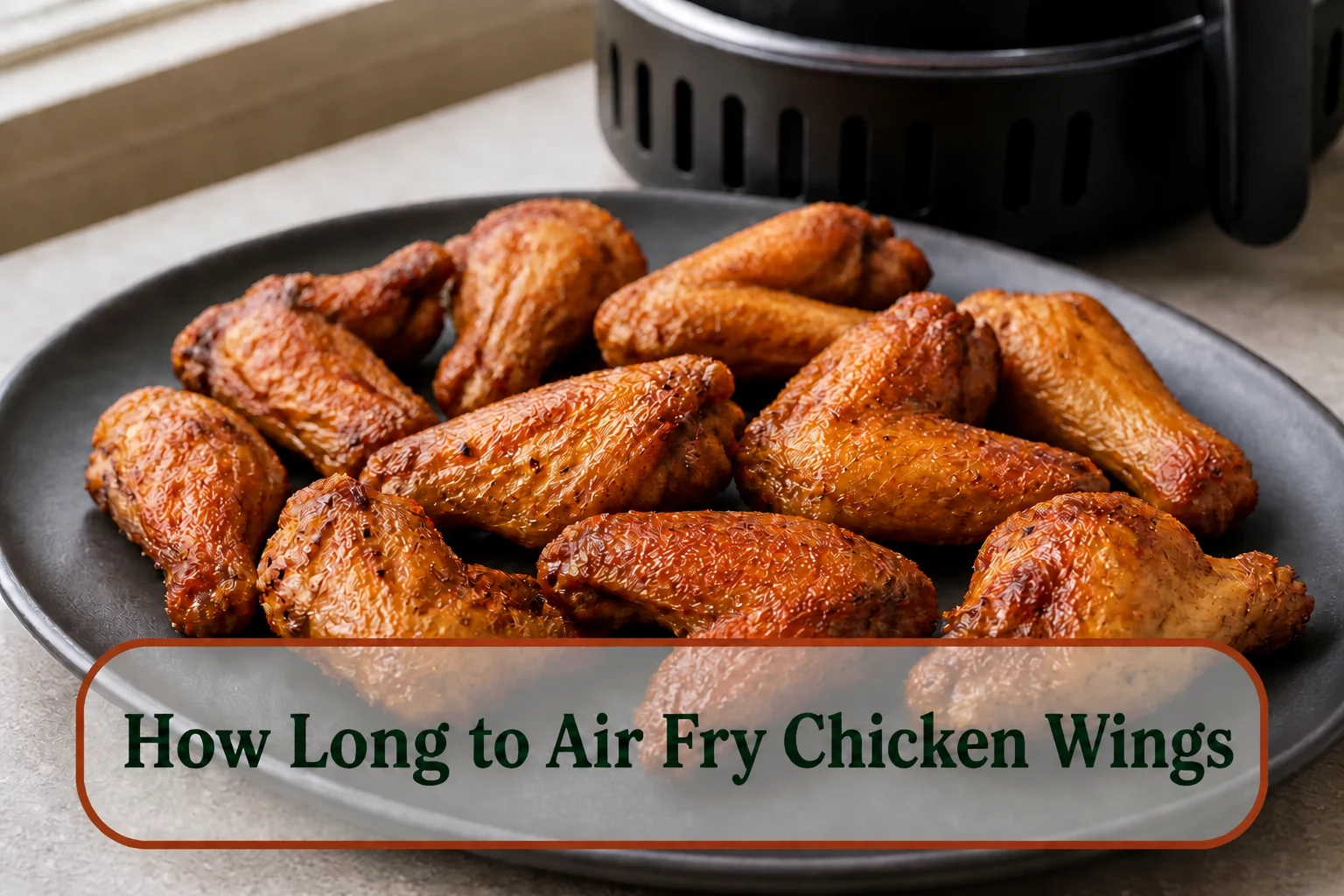
How Long to Air Fry Chicken Wings
Ingredients
Equipment
Method
- Preheat the air fryer to 380°F for 3 minutes if the manual recommends preheating. Blot every wing thoroughly with paper towels.
- Toss wings with baking powder, salt, garlic powder, paprika and pepper. Add the optional oil only when the surface looks unusually lean.
- Arrange wings in a single layer with small gaps. Cook in batches rather than stacking pieces; keep uncooked poultry refrigerated between batches.
- Air fry for 20 minutes, turning the wings at 10 minutes and rotating pieces from the cooler center to hotter edges if needed.
- Increase to 400°F and cook 4 to 8 minutes more, turning once, until the skin is browned and crisp.
- Check several of the thickest flats and drumettes away from bone; each must reach at least 165°F. Rest 5 minutes before saucing or serving.
Notes
- Read ingredient labels and the manual for any appliance used.
- Begin checking at the early end of the range.
- USDA guidance lists 165°F as the safe minimum internal temperature for poultry and recommends checking the thickest area away from bone.
- This recipe was developed through culinary research and editorial review.
This recipe was developed through culinary research and editorial review. Equipment, ingredient brands, starting temperature and batch size can change timing; follow the method cues and applicable safety guidance.
Nutrition is an estimate per servings and varies with brands, optional ingredients and portion size.