
Air fried lobster tail should be sweet, juicy and lightly browned—not curled into a tight knot or dried around the edges. The air fryer handles the fast cooking well, but lobster tails vary enough in size that a single timer setting is unreliable.
This recipe uses fully thawed, shell-on cold-water lobster tails. The top shell is cut and the meat is lifted above it for even heat and easy serving, while the lower shell and tail fan stay intact to support the meat. Garlic-lemon butter is divided before brushing so the portion used for serving never touches raw seafood.
The method was developed through culinary research and editorial review. Tail weight, shell thickness, starting temperature and appliance performance all affect timing, so the first doneness check matters more than the final minute on a chart.
For a less expensive seafood dinner, try frozen shrimp in the air fryer. If you want a crunchy coating instead of garlic butter, the breaded shrimp air fryer recipe explains how to keep breading attached.
Why this method works
- Thawed tails cook more evenly. The exterior is less likely to toughen before the center turns opaque.
- The intact lower shell limits curling. Cutting only the top shell gives the meat support as it contracts.
- The meat sits above the shell. Hot circulating air can reach its surface and lightly brown the butter.
- Butter is added in a thin layer. A heavy pool can smoke, scorch the garlic or drip below the basket.
- Timing starts with tail weight. A 4-ounce tail and a 10-ounce tail should not share the same endpoint.
- Doneness is checked in the thickest part. The narrow end always cooks before the dense meat near the base.
Ingredients
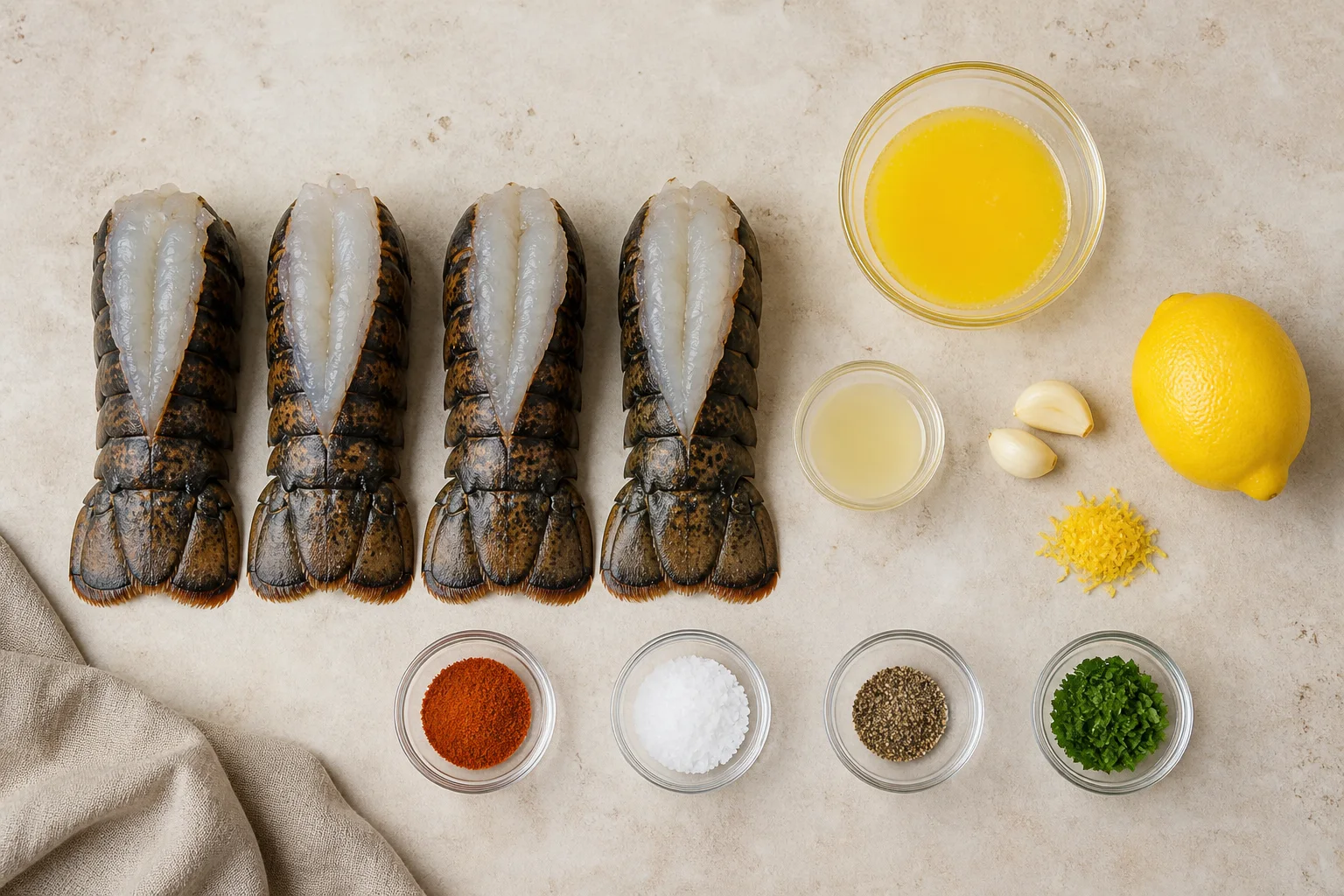
- 4 thawed cold-water lobster tails, 5 to 6 ounces each
- 4 tablespoons unsalted butter, melted
- 2 small garlic cloves, finely grated or minced
- 1 teaspoon finely grated lemon zest
- 1 tablespoon fresh lemon juice
- 1/2 teaspoon sweet paprika
- 1/2 teaspoon Diamond Crystal kosher salt, or 1/4 teaspoon fine salt
- 1/4 teaspoon ground black pepper
- Chopped flat-leaf parsley and lemon wedges, optional for serving
Ingredient notes and substitutions
Lobster tails: Cold-water tails generally have a firm, sweet texture. Buy tails that are individually frozen or smell clean and mild when fresh. Avoid packages with heavy freezer burn, broken shells or a strong ammonia odor.
Tail size: This recipe is calibrated for four 5- to 6-ounce tails. Weigh a tail if the package gives only a total weight. Cook very large tails in a separate batch so the smaller ones can be removed on time.
Butter: Unsalted butter lets you control sodium. Ghee can replace it and is less likely to brown quickly. Olive oil works, but it will not provide the same classic lobster-butter flavor.
Garlic: Finely grated garlic disperses evenly, but exposed bits can darken. Keep the layer thin. For a gentler option, use 1/2 teaspoon garlic powder.
Lemon: Zest goes into the cooking butter for aroma. Add most of the juice after cooking; too much wet acid on the raw surface can dilute the butter and inhibit browning.
Paprika: Sweet paprika adds color without making the lobster spicy. Smoked paprika is usable, though its flavor can dominate delicate meat, so reduce it to 1/4 teaspoon.
How to thaw lobster tails safely
The most even method is to thaw the sealed tails in the refrigerator for 18 to 24 hours on a rimmed plate. Once flexible, prepare and cook them promptly.
For faster thawing, place the tails in a leakproof bag, submerge them in cold water and replace the water every 30 minutes. Small tails commonly soften in 30 to 60 minutes. Do not use warm water or leave seafood on the counter.
FoodSafety.gov recommends refrigerator thawing or a sealed bag in cold water, with microwave-thawed seafood cooked immediately; its seafood handling guidance also advises rejecting seafood with sour, rancid, fishy or ammonia odors.
Do not butterfly a rock-hard frozen tail. The shell can splinter, scissors may slip and the meat will cook unevenly.
How to butterfly a lobster tail
1. Dry and position the tail
Remove the thawed tail from its packaging and pat it dry. Set it hard-shell-side up on a stable cutting board with the tail fan pointing away from you.
2. Cut only the top shell
Using sturdy kitchen shears, cut down the center of the top shell. Stop just before the tail fan. Do not cut through the bottom shell, tail fan or all the way through the meat.
Small shell points can be sharp. Work slowly and keep the hand holding the tail beside, not beneath, the cutting path.
3. Loosen the meat
Gently spread the cut shell. Slide a spoon handle or clean fingers between the meat and shell along both sides. Leave the meat attached at the tail end.
Lift the meat through the opening and rest it on top of the closed shell. The intact underside acts like a cradle and helps prevent a tight curl. Remove a visible dark intestinal vein with the tip of a knife and blot the surface dry again.
4. Repeat by size
Prepare all four tails and group similar weights together. If one is noticeably smaller, plan to check and remove it first rather than forcing every tail to cook for the same length of time.
How to cook lobster tail in the air fryer
1. Preheat
Preheat the air fryer to 380°F for 3 minutes if the manufacturer recommends preheating. Make sure the basket and crisper plate are clean; old crumbs can smoke under butter drips.
2. Make and divide the garlic butter
Stir melted butter with garlic, lemon zest, paprika, salt and pepper. Divide it between two small bowls before either bowl touches raw lobster.
Use the first bowl for brushing raw tails. Keep the second clean bowl for finishing and serving. Never dip a cooked-food brush into butter that contacted raw seafood.
3. Arrange the tails
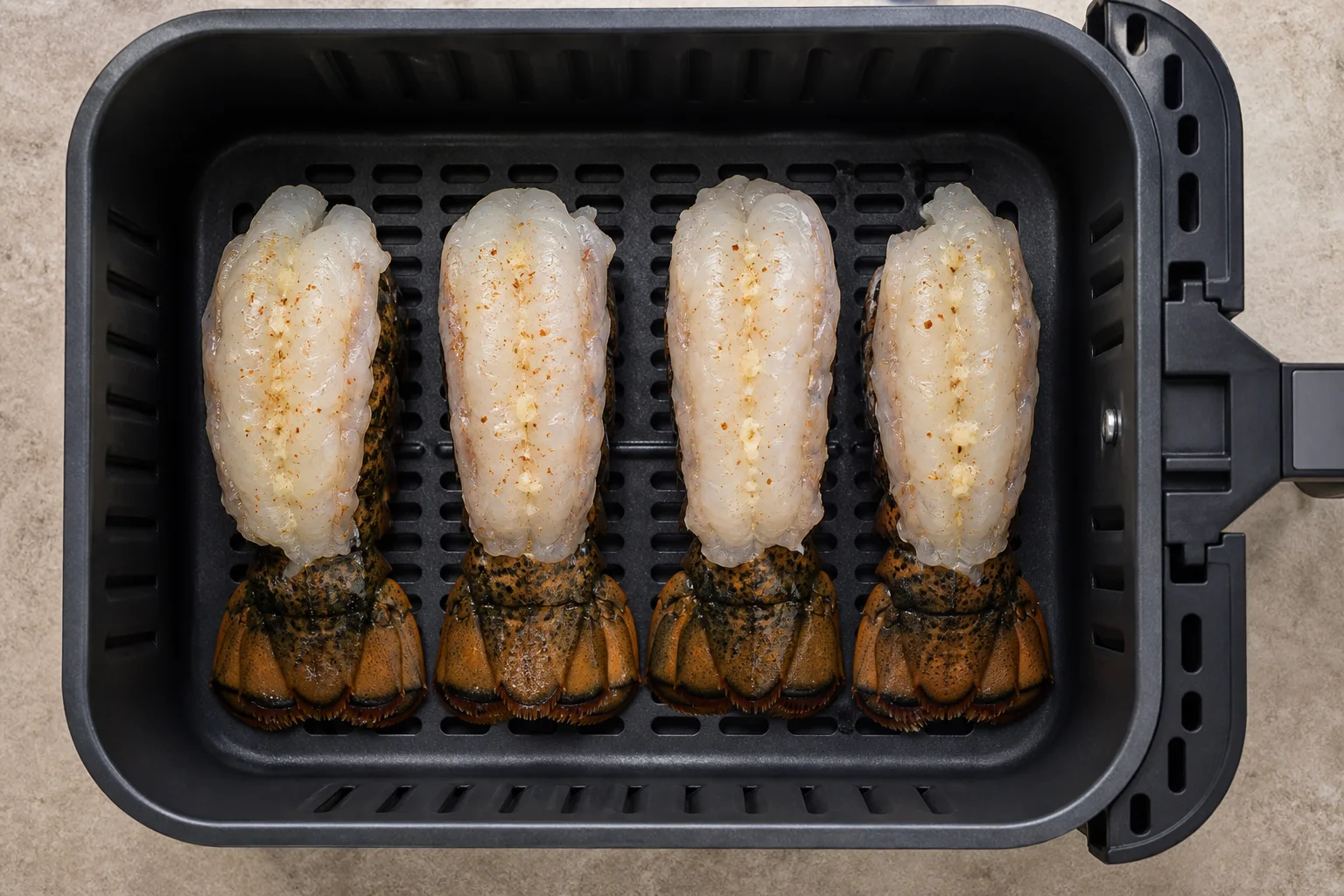
Set the butterflied tails shell-side down in the basket. Leave air space around each one and point narrow ends toward the center when possible, away from the hottest outer edge.
Brush the exposed meat lightly with butter from the raw-use bowl. Do not pour excess butter into the basket. Discard any butter left in that bowl.
4. Air fry and check early
Air fry 5- to 6-ounce tails at 380°F for 5 minutes. Open the basket and check the smallest tail in the thickest meat near the base, inserting a thin thermometer from the side without touching shell.
Continue in 1-minute increments, checking separate tails individually. Most 5- to 6-ounce tails need about 6 to 8 minutes total, but appliances and starting temperatures vary.
5. Verify doneness
Remove each tail when its flesh is opaque and pearly white rather than translucent. For the clearest safety checkpoint, use 145°F in the thickest portion. The official FoodSafety.gov temperature chart lists shrimp, lobster, crab and scallops as done when the flesh is pearly or white and opaque; its guidance for people at higher risk specifies seafood cooked to 145°F.
The temperature can rise slightly after removal. Do not keep a smaller tail in the basket simply because a larger one is not finished.
6. Finish without cross-contamination
Brush the cooked meat with clean reserved garlic butter and lemon juice. Add parsley and serve immediately with lemon wedges. Use a clean brush, plate and utensils for the cooked tails.
Air fryer lobster tail time by size
Use weight as a starting point, then confirm the center rather than treating time as a guarantee.
| Individual tail weight | First check at 380°F | Common total range |
|---|---|---|
| 3 to 4 ounces | 4 minutes | 5 to 7 minutes |
| 5 to 6 ounces | 5 minutes | 6 to 8 minutes |
| 7 to 8 ounces | 6 minutes | 8 to 10 minutes |
| 9 to 12 ounces | 8 minutes | 10 to 13 minutes |
Very thick warm-water tails may need longer even at the same weight. A crowded basket also slows cooking. For tails with a major size difference, cook in separate rounds or remove each one as it finishes.
The second batch may cook faster because the appliance is fully heated. Reset the first-check time by one minute rather than repeating the first batch blindly.
How to tell when lobster tail is done
The shell usually turns bright red, but shell color alone does not tell you whether the center is cooked. Look for these signs together:
- The meat has changed from translucent gray to opaque pearly white.
- The thick end feels firm with a little spring, not hard or rubbery.
- A thin thermometer inserted into the thickest meat from the side reads 145°F.
- The center is opaque when a small natural seam is gently opened.
Avoid repeatedly cutting the tail in half to check it; juices escape and the exposed edge dries. A thin probe leaves a much smaller opening.
How to keep lobster from curling
Do not remove the meat completely from the shell. Keep it attached at the tail fan and leave the underside membrane and bottom shell intact. That structure supports the tail as muscle fibers contract.
Also avoid cutting deep channels across the meat. Crosswise scoring may look decorative, but it weakens the structure. A simple top-shell cut is enough.
If a previously shelled tail must be cooked, insert a heat-safe metal skewer lengthwise through the center before air frying and remove it carefully after cooking. For this shell-on recipe, a skewer is normally unnecessary.
Troubleshooting
The edges are tough but the center is translucent
The tail was partly frozen, unusually thick or cooked at too high a temperature. Thaw it fully, use 380°F and check near the thick base. Shield a browned thin end loosely with a small piece of foil only if the appliance manual permits secured foil that cannot reach the heating element.
The garlic burned
The garlic pieces were large or the butter layer was too heavy. Grate the garlic finely, brush a thin coat and save most butter for after cooking. Garlic powder is the most scorch-resistant substitute.
Butter smokes below the basket
Excess butter dripped into a hot or dirty drawer. Brush rather than pour, clean the appliance before cooking and pause safely if heavy smoke develops.
The meat sticks inside the shell
It was not loosened fully before cooking. Slide a spoon handle along both sides while raw, leaving only the tail end attached. If already cooked, ease it free with a small fork rather than pulling hard.
The lobster curled tightly
The bottom shell was cut or the meat was completely detached. Keep the lower shell and tail fan intact next time. A lengthwise skewer can stabilize fully shelled meat.
One tail finishes early
Remove it. Individual weights and thicknesses vary, even within one package. Hold it loosely tented for a few minutes while the larger tail finishes; do not sacrifice its texture for synchronized timing.
Serving ideas
Serve one tail per person with rice, mashed potatoes, pasta, asparagus, green beans or a crisp salad. Spoon clean reserved garlic butter over the plate rather than filling the air-fryer drawer with it.
For surf and turf, pair half a tail with steak and use a separate cutting board and utensils for each raw protein. For lobster rolls, cool the cooked meat promptly before chopping and mixing with dressing.
Storage and reheating
Refrigerate cooked lobster within 2 hours in a shallow airtight container. Use it within 3 to 4 days, following the FoodSafety.gov cold-storage chart.
For gentler reheating, place the meat in a small covered baking dish with a teaspoon of butter or water and warm at 300°F until it reaches 165°F. In an air fryer, wrap the tail loosely in foil if the manual allows it and heat at 300°F in short intervals. High heat quickly makes lobster chewy.
Freeze cooked lobster only when necessary. Remove it from the shell, cool promptly and pack airtight. Thaw in the refrigerator before reheating; texture will be softer than freshly cooked lobster.
Frequently asked questions
Can I cook lobster tail from frozen in the air fryer?
Thaw it first for this recipe. A fully frozen tail is difficult to butterfly safely and its outer meat can overcook before the thick center becomes opaque.
What temperature should I air fry lobster tails?
Use 380°F. It is hot enough to brown the butter lightly while giving the thick center time to cook before the edges toughen.
How long does a 5-ounce lobster tail take?
Begin checking after 5 minutes at 380°F. A fully thawed 5-ounce tail commonly needs 6 to 8 minutes total, depending on thickness and the appliance.
Should I cut the bottom shell?
No. Cut only the top shell and leave the underside intact. The bottom shell supports the meat and helps limit curling.
Can I use frozen pre-cooked lobster tails?
Not with this raw-tail timing. Precooked lobster needs only gentle reheating and will become rubbery if cooked for the full recipe time.
Is red shell color enough to confirm doneness?
No. The shell can turn red before the thick meat is fully opaque. Check the flesh and use a thin thermometer in the thickest portion.
Why divide the garlic butter?
Butter used to brush raw lobster can pick up microorganisms. Dividing it first keeps the finishing butter clean and ready for the cooked tails.
Printable recipe card

Tender Air Fryer Lobster Tail Recipe
Ingredients
Equipment
Method
- Preheat the air fryer to 380°F if recommended. Pat the fully thawed tails dry.
- Cut the center of each top shell to the tail fan. Loosen and lift the meat above the shell while keeping it attached at the tail end and leaving the lower shell intact.
- Combine butter, garlic, lemon zest, paprika, salt and pepper. Divide between two bowls before brushing raw seafood.
- Set tails shell-side down in the basket. Brush lightly with butter from the raw-use bowl; discard any remainder in that bowl.
- Air fry for 5 minutes, then check the smallest tail. Continue 1 minute at a time, usually 6 to 8 minutes total for 5- to 6-ounce tails.
- Remove each tail when the thickest meat reaches 145°F and is pearly white and opaque.
- Brush with clean reserved butter, add lemon juice and parsley, and serve immediately.
Notes
- Use fully thawed raw tails; this timing is not for frozen or precooked lobster.
- Keep the lower shell and tail fan intact to support the meat.
- Divide butter before any portion touches raw seafood.
- Remove differently sized tails separately as they reach doneness.
- This recipe was developed through culinary research and editorial review.
This recipe was developed through culinary research and editorial review. Lobster tail weight, shell thickness, starting temperature and air-fryer performance vary; check each tail at the thickest point and remove it as it finishes.
Nutrition is an estimate based on generic ingredient data and assumes the divided butter is served; actual values vary with tail size and butter left behind.