
Acorn squash develops its best contrast when the cut sides touch a hot pan: the edges brown while the inside turns creamy. Cutting the squash into thick wedges shortens the roasting time compared with halves and creates more caramelized surface without requiring peeling.
Ingredient moisture, piece size, cookware and starting temperature can shift the finish. The method therefore pairs a practical time range with visible or temperature-based doneness cues.
This recipe was developed through culinary research and editorial review. It is not represented as a personal kitchen test.
For a related idea, see roasted butternut squash recipe. You may also want acorn squash in air fryer.
Why this recipe works
The skin stays on: Acorn squash skin softens during roasting and helps the wedges hold their shape.
A hot pan starts browning: Immediate contact heat gives the first cut side a caramelized surface before moisture builds.
Maple goes on late: A short final glaze adds sweetness while limiting burnt, bitter spots.
The first batch is the useful reference point. Measure as written, note the finish in your equipment, and change only one variable at a time if an adjustment is needed.
Ingredients
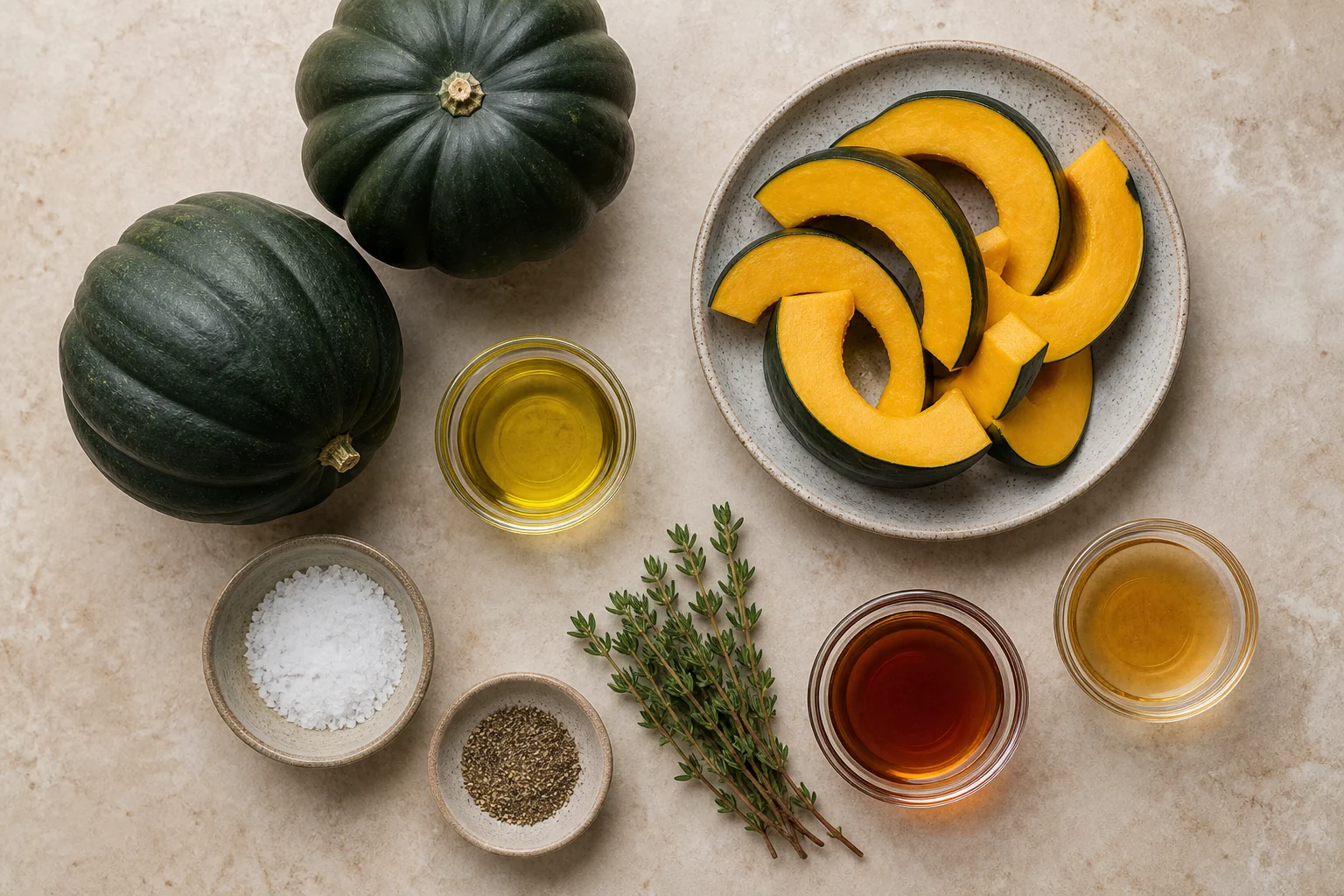
- 2 medium acorn squash, about 1 1/4 pounds each
- 1 1/2 tablespoons olive oil
- 3/4 teaspoon kosher salt
- 1/4 teaspoon ground black pepper
- 1 teaspoon fresh thyme leaves, or 1/2 teaspoon dried
- 1 tablespoon maple syrup, added near the end
- 1 teaspoon apple cider vinegar
Ingredient notes
Acorn squash
Choose squash that feels heavy for its size with a hard matte rind. A small orange patch is normal; large soft areas are not.
Thyme
Fresh thyme gives a bright savory note. Dried thyme is stronger, so use half as much and add it before roasting.
Vinegar
A small acidic finish balances the squash and maple. Lemon juice works if vinegar is not available.
How to make roasted acorn squash
1. Heat the pan
Place a heavy rimmed sheet pan in the oven and heat to 425°F.
2. Cut safely
Trim a thin slice from the stem end for stability. Halve each squash from stem to tip, scoop out seeds, then cut each half into 1-inch wedges.
3. Season
Toss wedges with olive oil, salt, pepper and thyme, coating both cut sides.
4. Roast
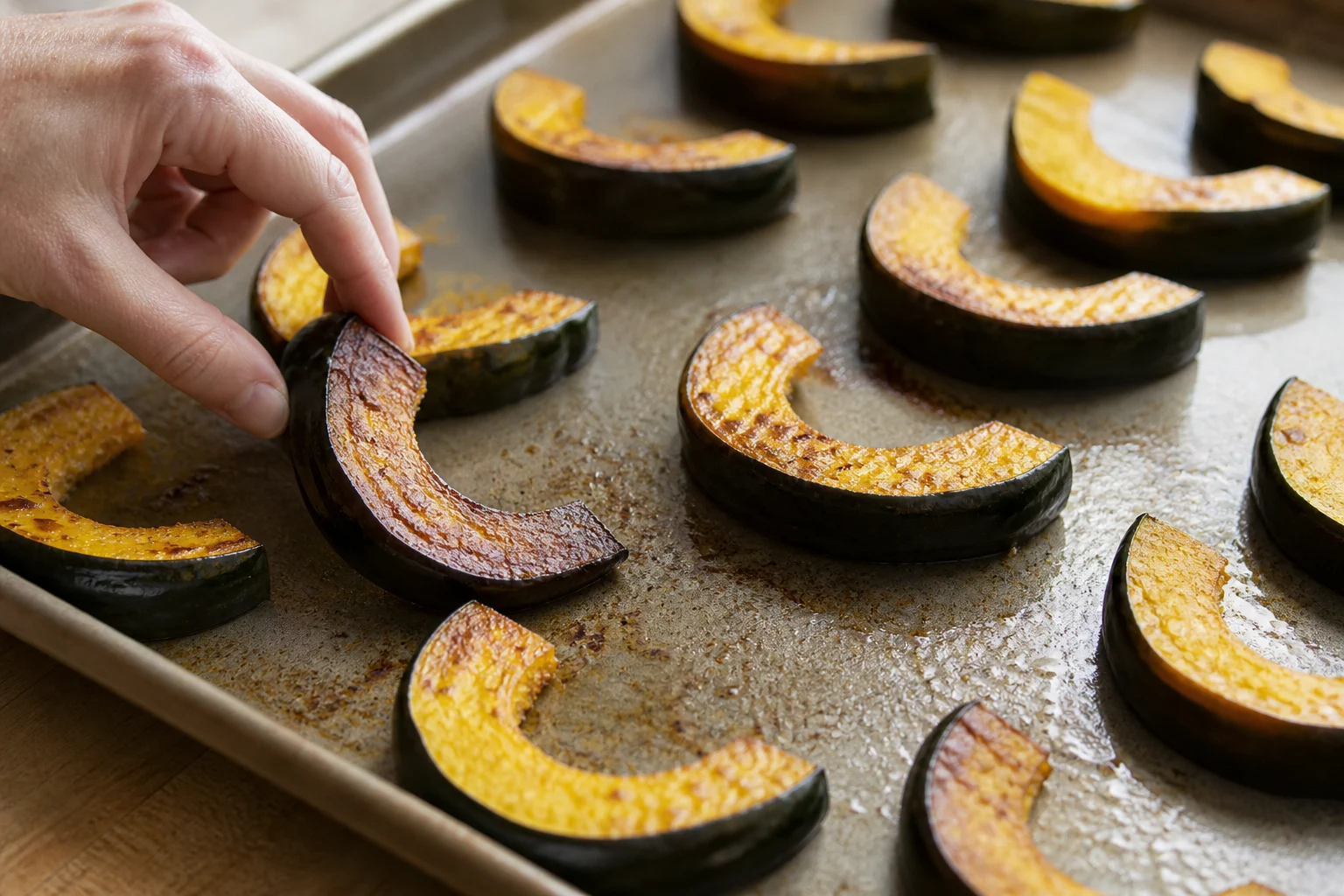
Arrange wedges on a cut side on the hot pan. Roast 18 minutes, turn to the second cut side and roast 12 to 18 minutes more.
5. Glaze briefly
Brush the wedges lightly with maple syrup during the final 3 minutes, watching the edges so the sugar does not scorch.
6. Balance and serve
Rest 5 minutes, drizzle with apple cider vinegar and serve when a knife slides easily through the thickest flesh.
Quick timing and doneness guide
| Stage | What to look for | What to do |
|---|---|---|
| Preparation | Acorn squash skin softens during roasting and helps the wedges hold their shape. | Complete the size, moisture or equipment setup before cooking |
| First check | Arrange wedges on a cut side on the hot pan. Roast 18 minutes, turn to the second cut side and roast 12 to 18 minutes more. | Check at the early end of the range and keep unfinished portions cooking |
| Finished | Rest 5 minutes, drizzle with apple cider vinegar and serve when a knife slides easily through the thickest flesh. | Stop when the stated texture or safe temperature is reached |
| If adjustment is needed | Use one-inch wedges and remove them as soon as a knife enters easily. | Make the smallest useful change, then check again |
This table is a decision guide, not a replacement for ingredient labels, the appliance manual or safe-temperature guidance. When food safety depends on internal temperature, check more than one thick piece with a reliable thermometer.
Substitutions and variations
Savory-only
Omit maple syrup and finish with grated Parmesan and black pepper after roasting.
Warm spice
Replace thyme with 1/2 teaspoon cinnamon and a pinch of cayenne.
Delicata squash
Use 3 medium delicata squash cut into half-moons and begin checking 8 to 10 minutes earlier.
Change one major component at a time. Moisture, sweetness, structure and cooking time affect one another, so several simultaneous substitutions are harder to predict.
Serving ideas
Pair with roast poultry, pork, lentils or a wild-rice salad. The wedges also make a useful grain-bowl component with feta, toasted pepitas and a sharp dressing.
Troubleshooting
The squash is pale
Likely cause: The pan was cool or the wedges were crowded.
Fix: Preheat the pan and leave a small gap between wedges.
The maple burns
Likely cause: It was added too early or pooled on the pan.
Fix: Brush on a thin layer only during the final 3 minutes.
The flesh is still firm
Likely cause: The wedges were thicker than one inch or the squash was especially dense.
Fix: Lower the heat to 400°F and continue in 5-minute intervals.
The wedges collapse
Likely cause: They were cut too thin or cooked far beyond tenderness.
Fix: Use one-inch wedges and remove them as soon as a knife enters easily.
Storage, freezing and reheating
Refrigerator: Cool promptly and refrigerate in a shallow covered container for up to 4 days.
Freezer: Freeze cooked squash for up to 3 months; use thawed pieces in soup or mash because the wedges soften.
Reheating or serving after storage: Roast at 400°F for 8 to 12 minutes or air fry at 375°F for 4 to 6 minutes until hot.
For general handling, the FoodSafety.gov Four Steps to Food Safety is the authoritative outside reference used for this article. FoodSafety.gov’s clean and chill practices provide the general framework for produce preparation and leftover storage.
Frequently asked questions
Do you have to peel acorn squash before roasting?
No. The skin is edible and softens while the wedges roast, although diners can easily leave it behind if preferred.
How do I cut acorn squash safely?
Create a flat base, use a sharp heavy knife and keep fingertips clear of the blade path; do not force a dull knife through the rind.
How do I know roasted acorn squash is done?
The cut sides should be browned and a knife should slide through the thickest flesh with little resistance.
Recipe development note
The method for roasted acorn squash recipe was developed through culinary research and editorial review. The quantities and time ranges are an editorial recipe specification, not a claim that every ingredient brand, appliance or batch was personally tested in one kitchen.
Nutrition is an estimate per servings and varies with brands, optional ingredients and portion size. The accompanying visuals are AI-assisted food-editorial images, not photographs of a kitchen test.
Printable recipe card
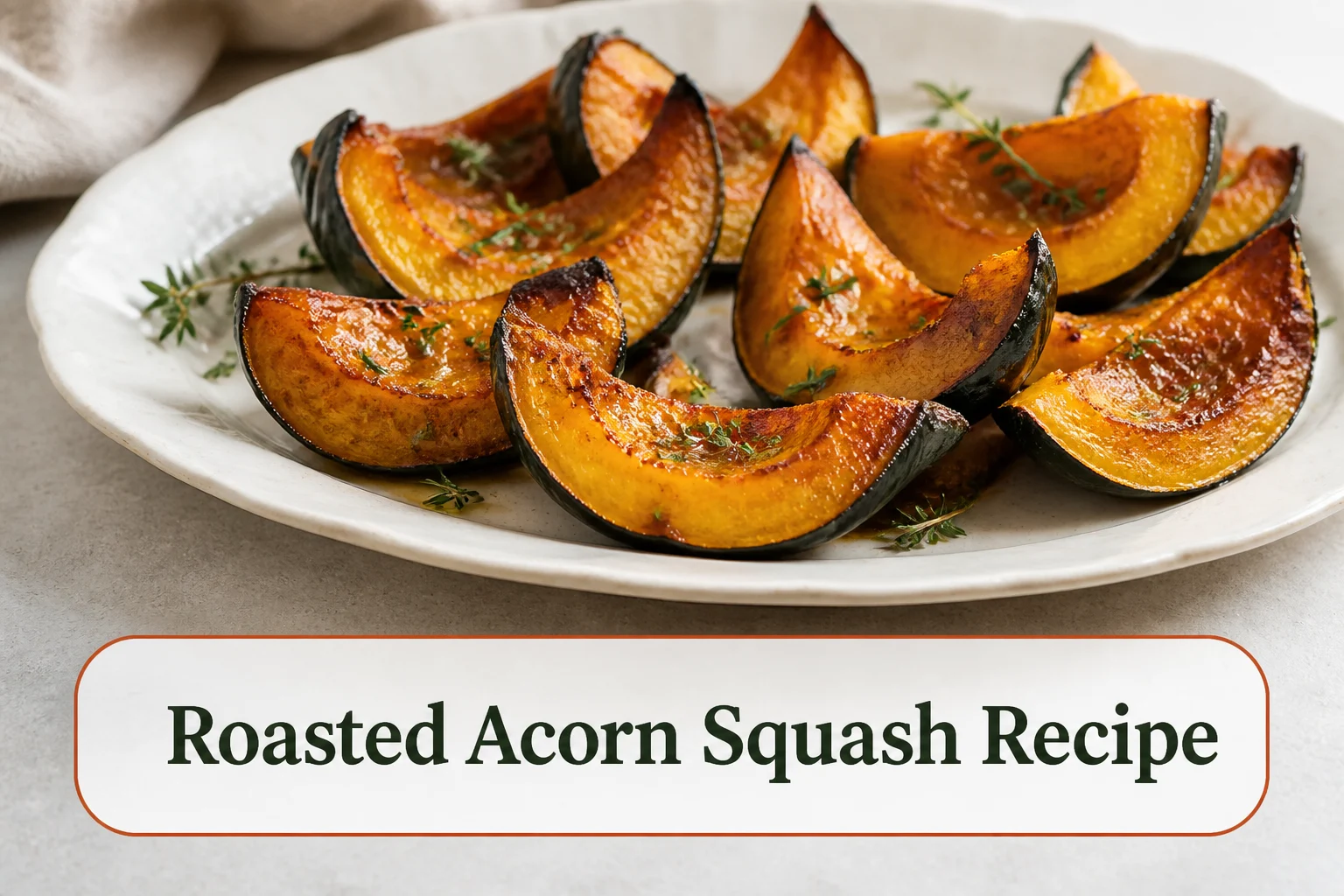
Roasted Acorn Squash Recipe
Ingredients
Equipment
Method
- Place a heavy rimmed sheet pan in the oven and heat to 425°F.
- Trim a thin slice from the stem end for stability. Halve each squash from stem to tip, scoop out seeds, then cut each half into 1-inch wedges.
- Toss wedges with olive oil, salt, pepper and thyme, coating both cut sides.
- Arrange wedges on a cut side on the hot pan. Roast 18 minutes, turn to the second cut side and roast 12 to 18 minutes more.
- Brush the wedges lightly with maple syrup during the final 3 minutes, watching the edges so the sugar does not scorch.
- Rest 5 minutes, drizzle with apple cider vinegar and serve when a knife slides easily through the thickest flesh.
Notes
- Read ingredient labels and the manual for any appliance used.
- Begin checking at the early end of the range.
- FoodSafety.gov’s clean and chill practices provide the general framework for produce preparation and leftover storage.
- This recipe was developed through culinary research and editorial review.
This recipe was developed through culinary research and editorial review. Equipment, ingredient brands, starting temperature and batch size can change timing; follow the method cues and applicable safety guidance.
Nutrition is an estimate per servings and varies with brands, optional ingredients and portion size.