
Zucchini and yellow squash contain substantial water, so thin crowded slices soften and steam before they brown. Thick half-moons, a hot bare metal pan and one loose layer give moisture room to escape. Parmesan goes on near the end, when it can toast without drawing liquid from the raw squash.
Ingredient moisture, piece size, cookware and starting temperature can shift the finish. The method therefore pairs a practical time range with visible or temperature-based doneness cues.
This recipe was developed through culinary research and editorial review. It is not represented as a personal kitchen test.
For a related idea, see roasted acorn squash recipe. You may also want roasted butternut squash recipe.
Why this recipe works
Thick cuts retain structure: Three-quarter-inch pieces can brown while the center remains tender rather than collapsing.
A hot pan accelerates evaporation: Immediate contact heat begins browning before released moisture can pool.
Parmesan goes on after turning: Late cheese has time to toast without burning across the full roasting period.
The first batch is the useful reference point. Measure as written, note the finish in your equipment, and change only one variable at a time if an adjustment is needed.
Ingredients
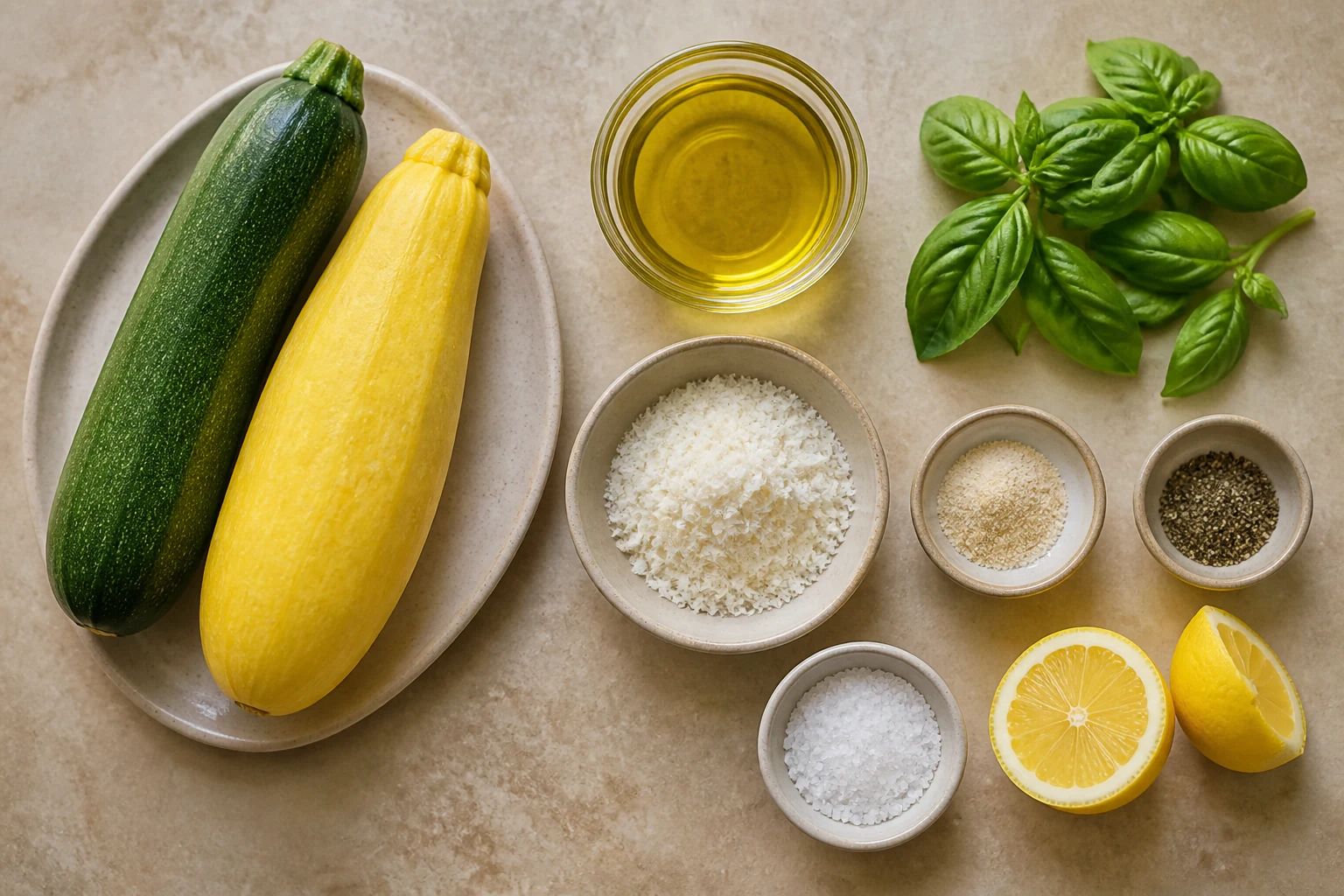
- 1 pound zucchini
- 1 pound yellow summer squash
- 1 1/2 tablespoons olive oil
- 3/4 teaspoon kosher salt
- 1/2 teaspoon garlic powder
- 1/4 teaspoon black pepper
- 1/3 cup finely grated Parmesan
- 1 teaspoon lemon zest
- 1 tablespoon chopped basil or parsley
Ingredient notes
Summer squash
Choose small to medium firm squash; very large specimens have more seeds and watery centers.
Parmesan
Finely grated cheese distributes lightly and browns faster than thick shreds.
Salt
Season immediately before roasting rather than letting salted raw squash stand and release water.
How to make roasted summer squash
1. Heat the pan
Place a large bare metal sheet pan in the oven and heat to 450°F.
2. Cut and dry
Trim the squash and cut into 3/4-inch half-moons. Blot the cut surfaces if visibly wet.
3. Season
Toss with olive oil, salt, garlic powder and pepper until lightly coated.
4. Roast the first side
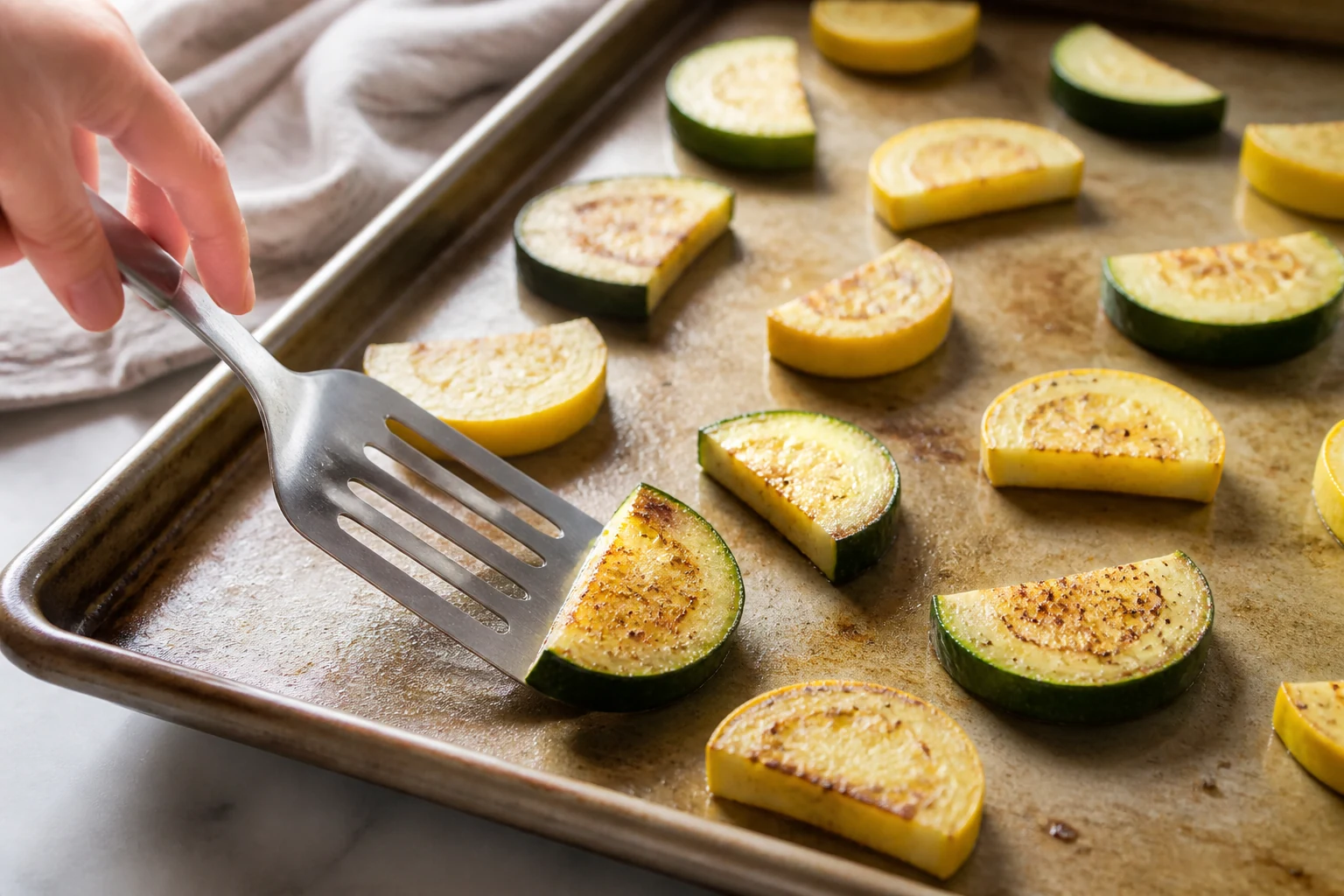
Spread on the hot pan in one layer with gaps. Roast 10 minutes without moving.
5. Turn and add cheese
Flip the pieces, scatter Parmesan evenly, and roast 7 to 12 minutes more until browned at the edges and just tender.
6. Finish
Rest 3 minutes, then add lemon zest and herbs. Serve before the hot squash releases more liquid.
Quick timing and doneness guide
| Stage | What to look for | What to do |
|---|---|---|
| Preparation | Three-quarter-inch pieces can brown while the center remains tender rather than collapsing. | Complete the size, moisture or equipment setup before cooking |
| First check | Spread on the hot pan in one layer with gaps. Roast 10 minutes without moving. | Check at the early end of the range and keep unfinished portions cooking |
| Finished | Rest 3 minutes, then add lemon zest and herbs. Serve before the hot squash releases more liquid. | Stop when the stated texture or safe temperature is reached |
| If adjustment is needed | Preheat the pan and wait until the first side releases naturally. | Make the smallest useful change, then check again |
This table is a decision guide, not a replacement for ingredient labels, the appliance manual or safe-temperature guidance. When food safety depends on internal temperature, check more than one thick piece with a reliable thermometer.
Substitutions and variations
Dairy-free
Omit Parmesan and add toasted breadcrumbs or nutritional yeast after roasting.
Mediterranean finish
Replace Parmesan with crumbled feta after cooking and add oregano before roasting.
Spicy
Add 1/4 teaspoon red pepper flakes with the garlic powder.
Change one major component at a time. Moisture, sweetness, structure and cooking time affect one another, so several simultaneous substitutions are harder to predict.
Serving ideas
Serve with grilled chicken, fish, pasta or grain bowls. Roasted squash is best soon after cooking; lemon zest and fresh herbs keep the simple side bright.
Troubleshooting
The squash is watery
Likely cause: Pieces were thin, crowded or salted long before roasting.
Fix: Use thicker cuts, a larger hot pan and season immediately before cooking.
The pieces are mushy
Likely cause: The squash was oversized or cooked beyond tenderness.
Fix: Choose firm smaller squash and remove pieces as soon as the centers yield.
The cheese burns
Likely cause: It was added at the start or formed thick piles.
Fix: Add a fine even layer only after turning the squash.
The squash sticks
Likely cause: The pan was not hot or the pieces were turned before browning.
Fix: Preheat the pan and wait until the first side releases naturally.
Storage, freezing and reheating
Refrigerator: Cool promptly and refrigerate in a shallow covered container for up to 4 days.
Freezer: Freezing is not recommended for texture; thawed summer squash becomes very soft.
Reheating or serving after storage: Reheat at 425°F for 5 to 8 minutes or air fry at 375°F until hot, avoiding a covered microwave when texture matters.
For general handling, the FoodSafety.gov Four Steps to Food Safety is the authoritative outside reference used for this article. FoodSafety.gov’s clean and chill practices provide the general framework for produce preparation and leftover storage.
Frequently asked questions
How do you roast summer squash without it getting soggy?
Use thick pieces, a hot pan, one layer and a short high-heat roast.
Do you peel summer squash?
No. The tender skin is edible and helps the pieces keep their shape.
Can zucchini and yellow squash roast together?
Yes, when cut to the same thickness and spread without crowding.
Recipe development note
The method for roasted summer squash recipe was developed through culinary research and editorial review. The quantities and time ranges are an editorial recipe specification, not a claim that every ingredient brand, appliance or batch was personally tested in one kitchen.
Nutrition is an estimate per servings and varies with brands, optional ingredients and portion size. The accompanying visuals are AI-assisted food-editorial images, not photographs of a kitchen test.
Printable recipe card
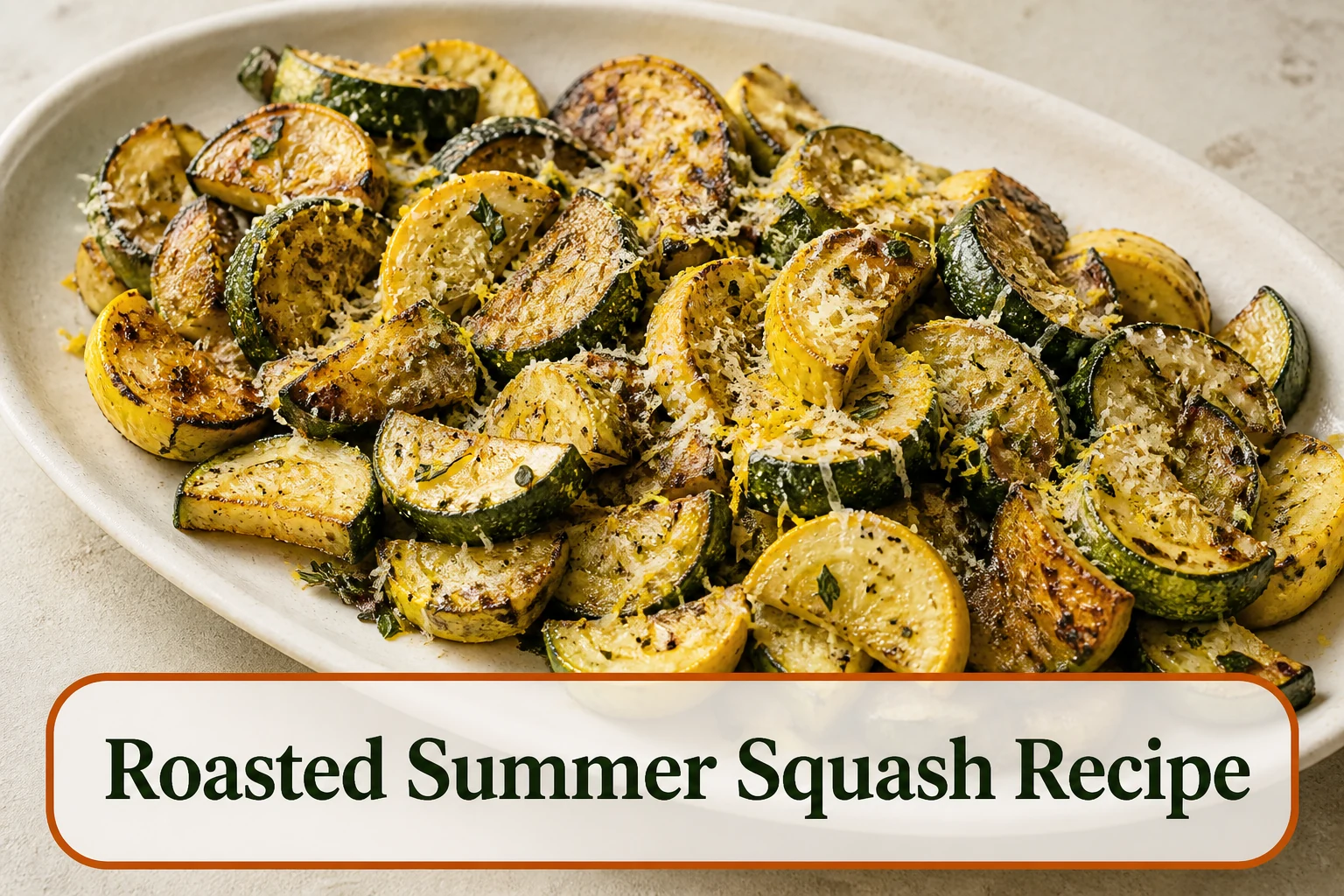
Roasted Summer Squash Recipe
Ingredients
Equipment
Method
- Place a large bare metal sheet pan in the oven and heat to 450°F.
- Trim the squash and cut into 3/4-inch half-moons. Blot the cut surfaces if visibly wet.
- Toss with olive oil, salt, garlic powder and pepper until lightly coated.
- Spread on the hot pan in one layer with gaps. Roast 10 minutes without moving.
- Flip the pieces, scatter Parmesan evenly, and roast 7 to 12 minutes more until browned at the edges and just tender.
- Rest 3 minutes, then add lemon zest and herbs. Serve before the hot squash releases more liquid.
Notes
- Read ingredient labels and the manual for any appliance used.
- Begin checking at the early end of the range.
- FoodSafety.gov’s clean and chill practices provide the general framework for produce preparation and leftover storage.
- This recipe was developed through culinary research and editorial review.
This recipe was developed through culinary research and editorial review. Equipment, ingredient brands, starting temperature and batch size can change timing; follow the method cues and applicable safety guidance.
Nutrition is an estimate per servings and varies with brands, optional ingredients and portion size.