Acorn squash in the air fryer develops browned edges in less time than a full oven roast, but the dense flesh and sugary glaze need different stages. Add maple syrup at the beginning and it can darken before a thick wedge is tender. Cut uneven pieces and the narrow tips dry while the wide ends stay firm.
This recipe solves both problems by cutting the squash into even 3/4-inch half-moons. The pieces roast first with oil, salt and pepper; maple-cinnamon butter goes on only for the final few minutes. The result is tender orange flesh, edible crisp-edged skin and a glaze that caramelizes without turning bitter.
The method was developed through culinary research and editorial review. Squash maturity, wedge thickness and air-fryer power change the timing, so use a knife or skewer to check the thickest flesh.
Serve the squash beside whole chicken from the air fryer for a fall dinner, or add it to a grain bowl with sliced air fryer turkey burgers and a tart vinaigrette.
Why the glaze goes on near the end
- Oil transfers heat first. The plain seasoned surface begins browning while the dense center softens.
- Maple syrup gets a shorter exposure. Its sugar can caramelize without sitting near the heating element for the full cook.
- Butter adds flavor after the rind has softened. Less of it drains immediately through the basket.
- A final flip coats both sides. The half-moons develop glossy edges instead of one sticky face.
- Doneness stays easy to read. A skewer can reach the thickest flesh before glaze obscures the surface.
Ingredients
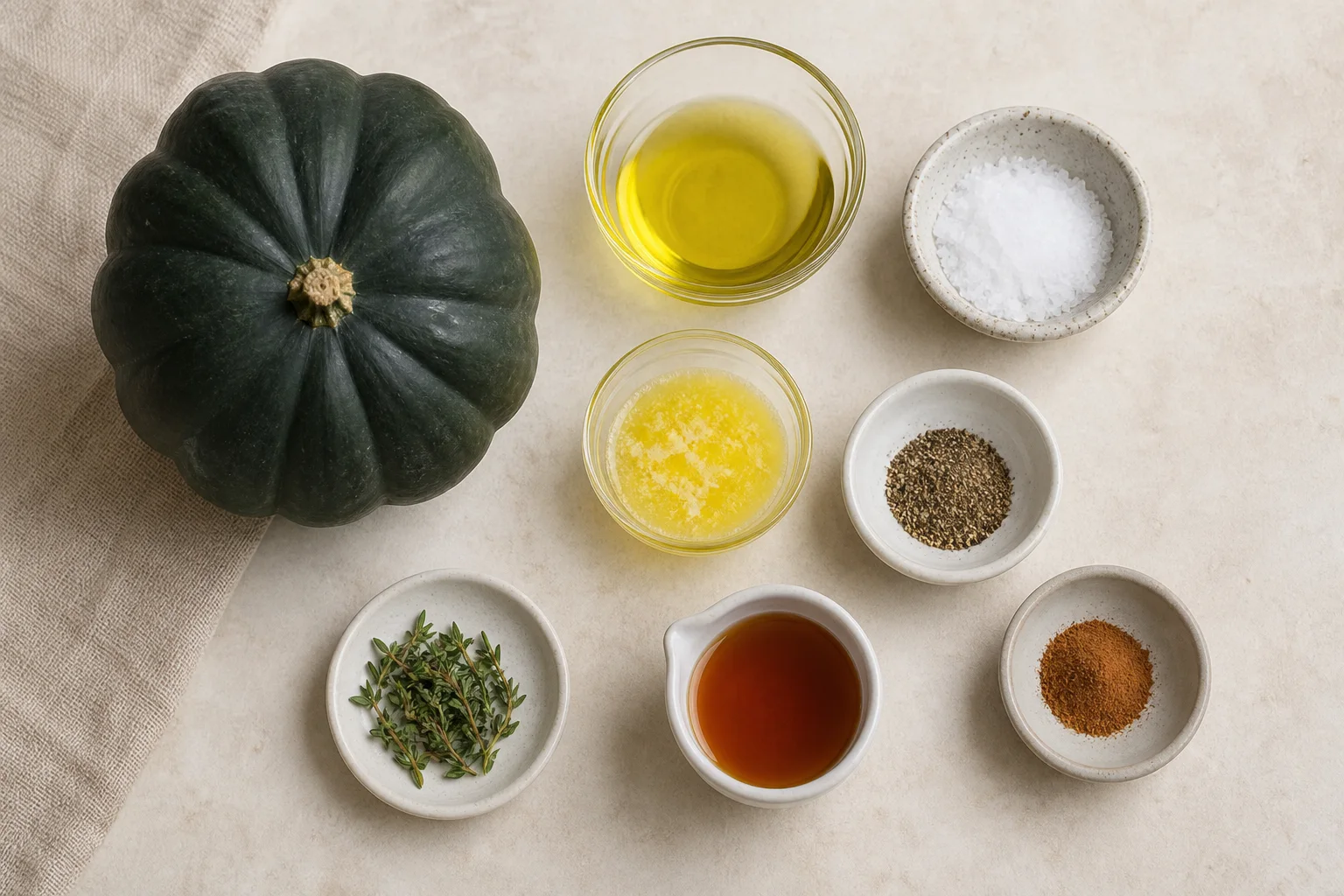
- 1 medium acorn squash, about 1 1/2 pounds
- 1 tablespoon avocado oil or olive oil
- 1/2 teaspoon Diamond Crystal kosher salt, or 1/4 teaspoon fine salt
- 1/4 teaspoon ground black pepper
- 1 tablespoon unsalted butter, melted
- 1 tablespoon pure maple syrup
- 1/2 teaspoon ground cinnamon
- 1 teaspoon chopped fresh thyme, optional
Ingredient notes and substitutions
Acorn squash: Choose one that feels heavy for its size with firm, dull skin. A large orange patch where it rested on the ground is normal. Skip squash with cracks, wet spots or soft sunken areas.
Skin: Acorn squash skin is edible after cooking, so peeling the deep ridges is unnecessary. Leaving it on also helps thin half-moons hold their shape. Diners can easily separate the soft flesh from the rind if they prefer not to eat it.
Oil: Avocado oil is neutral and suited to high heat. Olive oil also works. Use enough to make the surface glisten lightly; excess oil can drip into the drawer and soften the wedges.
Maple syrup: Pure maple syrup gives a thin glaze. Honey can replace it, but it browns more quickly, so begin checking a minute earlier during the glaze stage.
Butter: Melted unsalted butter rounds out the maple flavor. For a dairy-free version, use one more tablespoon of oil or melted plant-based butter.
Cinnamon and thyme: Cinnamon makes a classic sweet-savory side. Thyme is optional but keeps the glaze from tasting like dessert. For a fully savory version, omit maple and cinnamon and use garlic powder, smoked paprika and thyme.
How to cut acorn squash safely
Winter squash has a hard rind and an uneven shape. Illinois Extension specifically advises care when cutting acorn squash and notes that leaving the skin on is practical for halves or wedges; see its winter squash preparation guide.
1. Wash and dry
Rinse the whole squash under running water and scrub away soil with a clean produce brush. Dry it thoroughly so it does not slip on the board.
2. Create a stable surface
Set the squash on its side and cut a very thin slice from the pointed bottom—only enough to create a flat base. Stand it upright on that base with the stem at the top.
Use a large, sharp chef’s knife. A dull blade requires more force and is more likely to slip. Keep fingertips away from the cutting path.
3. Cut beside the stem
Position the knife just beside the woody stem rather than trying to split the stem itself. Press down through one side, rotate the squash and complete the cut through the bottom. Separate the two halves.
If the rind is too hard to cut confidently, pierce the squash several times and microwave it for 2 minutes, then let it stand until cool enough to handle. This only begins softening the rind; the wedges may finish 1 to 2 minutes earlier in the air fryer.
4. Remove seeds and slice evenly
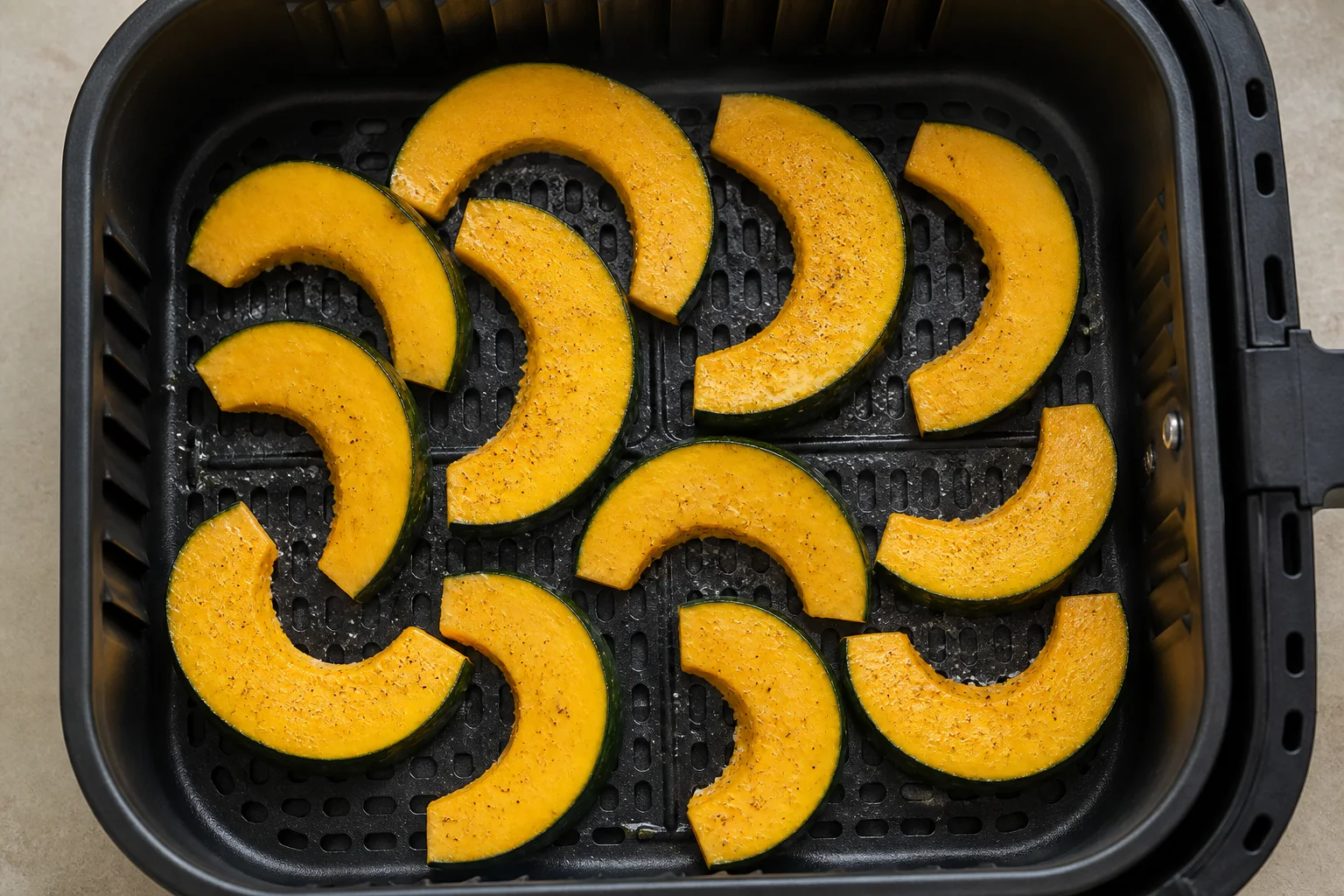
Scoop out the seeds and fibrous strands with a sturdy spoon. Place each half cut-side down and slice crosswise into 3/4-inch-thick half-moons. Keep the thickness consistent rather than trying to make every arc the same length.
Save the cleaned seeds for roasting separately if desired. Do not add loose seeds to this basket; they require a shorter time and can blow toward the heating element.
How to air fry acorn squash
1. Preheat
Preheat the air fryer to 390°F for 3 minutes if recommended by the manufacturer. Make sure the crisper plate is clean and fully seated.
2. Season the wedges
Toss the squash half-moons with oil, salt and pepper until both sides have a thin, even sheen. Do not add maple syrup or butter yet.
3. Arrange one layer
Place the wedges in the basket in a mostly single layer. A little edge overlap is acceptable, but broad surfaces should not be stacked. A 5- to 6-quart basket may need two batches for a large squash.
4. Air fry the first side
Cook at 390°F for 7 minutes. Turn each wedge with silicone-tipped tongs, moving paler pieces toward hotter areas and deeply browned pieces away from the outer edge.
5. Tenderize the second side
Cook for 4 to 6 minutes more. Test the thickest orange flesh with a thin knife or skewer. It should slide in with slight resistance but not yet feel completely soft.
If the outside is browning faster than the center softens, reduce the temperature to 375°F and continue in 2-minute intervals.
6. Add the maple glaze
Stir melted butter, maple syrup and cinnamon. Brush a thin layer over both sides of each wedge. Return them to the basket with the paler side facing up.
Air fry at 375°F for 2 to 4 minutes, turning once if needed. Remove pieces as soon as the thickest flesh is easily pierced and the glaze is bubbling around browned edges.
7. Finish and serve
Transfer the wedges to a platter immediately so residual heat in the basket does not continue darkening the sugar. Add thyme if using and taste before adding more salt.
Acorn squash air fryer time
At 390°F, 3/4-inch half-moons generally need 11 to 13 minutes before glazing, then 2 to 4 minutes at 375°F with glaze. The common total is 13 to 17 minutes.
Use this thickness guide as a starting point:
| Cut | First check | Common total time |
|---|---|---|
| 1/2-inch half-moons | 10 minutes | 11 to 14 minutes |
| 3/4-inch half-moons | 11 minutes | 13 to 17 minutes |
| 1-inch wedges | 14 minutes | 16 to 21 minutes |
| 1-inch cubes, peeled | 10 minutes | 12 to 16 minutes |
These totals include a short late glaze stage. Pieces softened briefly in the microwave can finish earlier. A second batch may also cook 1 to 2 minutes faster because the appliance is fully heated.
How to tell when acorn squash is done
Pierce the thickest orange portion, not the thin tip and not the rind alone. A knife or skewer should enter with almost no resistance. The flesh should look moist and deep orange, with light browning where it touches the basket.
The skin may retain a little chew even when the flesh is tender. That is normal. If the center is firm or chalky, cook for 2 minutes more before adding additional sweetener.
Glaze color is not a doneness test. Maple can darken while the interior is still undercooked, which is why tenderness is checked before the glaze is applied.
Savory variation without maple
For a savory air fried acorn squash, toss the wedges with oil, salt, pepper, 1/2 teaspoon garlic powder and 1/2 teaspoon smoked paprika. Air fry at 390°F using the same turning and tenderness checks.
Skip the glaze-stage temperature reduction unless the spices are becoming dark. Finish tender wedges with thyme, grated Parmesan or a squeeze of lemon. Add Parmesan only for the final 2 minutes so it does not scorch.
Other flavor variations
Maple pecan: Use the base glaze and add 2 tablespoons finely chopped toasted pecans after cooking. Loose nuts should not go into the air fryer where small pieces can move toward the heating element.
Brown sugar spice: Replace maple syrup with 1 packed tablespoon light brown sugar whisked into warm butter. Add a pinch each of nutmeg and cayenne. Watch closely because dry sugar can brown quickly.
Miso maple: Whisk 1 teaspoon white miso into the maple butter and omit the recipe salt until serving. The glaze will be saltier and can darken faster.
Herb garlic: Omit maple and cinnamon. Combine melted butter with 1/2 teaspoon garlic powder, thyme and black pepper, then brush it on for the final 3 minutes.
Troubleshooting
The glaze burned
It was added too early, applied too thickly or cooked at the full 390°F during the finishing stage. Roast with oil first, lower to 375°F and brush on only a thin layer for the last 2 to 4 minutes.
The squash is browned but still hard
The wedges are thick or the squash is mature and dry. Reduce heat to 375°F and continue without more glaze in 2-minute intervals. Check the thickest flesh with a skewer.
The wedges are pale
The basket was crowded, the squash surface was wet or the air fryer was not hot. Dry the cut pieces, coat lightly with oil and use one layer. Browning is secondary to tenderness, so do not overcook simply to force a dark color.
The thin ends are dry
The slices taper too dramatically or remained in the basket while thicker pieces finished. Aim for even thickness and remove smaller wedges individually.
The squash is mushy
The pieces were too thin, microwaved too long before slicing or cooked beyond the tender stage. Begin checking earlier and use 3/4-inch half-moons for better structure.
The skin is too chewy
Some mature squash have tougher rind. The flesh is still usable: serve the half-moons with a fork so diners can scoop it away from the skin. Do not extend cooking once the flesh is already soft, or it may turn watery.
Serving ideas
These maple-glazed wedges work with roast chicken, turkey, pork or lentils. For a composed salad, cool them for 10 minutes and layer with arugula, goat cheese, dried cranberries and a sharp cider vinaigrette.
For a grain bowl, pair the squash with farro or wild rice, chickpeas and pumpkin seeds. Keep crunchy toppings off until serving so they do not soften under the warm glaze.
One medium 1 1/2-pound squash makes about four side-dish servings. For a holiday table, cook batches and hold them on a sheet pan in a 200°F oven; add the final maple glaze in the air fryer shortly before serving.
Make-ahead guidance
Cut the raw squash up to 2 days ahead and refrigerate the half-moons in an airtight container. Illinois Extension advises refrigerating cut winter squash; its guidance notes that prepared uncooked squash can be held sealed for up to 3 days.
Mix the maple butter separately and refrigerate it. Gently remelt before brushing. Do not coat raw squash with salt or glaze hours ahead because the surface can release moisture and brown less effectively.
Storage and reheating
Refrigerate cooked squash in a shallow airtight container within 2 hours. Use within 3 to 4 days. Separate layers with parchment if the glaze is sticky.
Reheat in the air fryer at 350°F for 3 to 5 minutes, just until hot. Arrange one layer and check early; the existing glaze can darken. A microwave works for 45- to 60-second portions but softens the browned edges.
For longer storage, freeze cooked unglazed squash in a single layer, then transfer it to an airtight freezer container. Thawed squash will be softer and is best mashed or added to soup rather than served as crisp-edged wedges.
Frequently asked questions
Do I need to peel acorn squash before air frying?
No. The ridged skin is difficult to peel and becomes edible when tender. Leave it on for structure, or scoop the cooked flesh away at the table.
Can I air fry acorn squash halves?
Yes, but halves take longer and brown less evenly than 3/4-inch half-moons. Wedges provide more exposed surface and make doneness easier to check.
What temperature is best for acorn squash?
Use 390°F for the oil-roasting stage, then 375°F after adding maple butter. The lower finishing heat reduces the chance of burned sugar.
Can I use honey instead of maple syrup?
Yes. Brush it on near the end and begin checking a minute earlier because honey can brown quickly.
Is acorn squash skin edible?
Yes. Tender cooked skin is edible, though texture varies with maturity. It is also easy to leave behind if you prefer only the soft flesh.
Why is my acorn squash stringy?
Fibrous strands around the seed cavity were not fully scraped away, or the squash was old. Use a sturdy spoon to clean the cavity before slicing and choose a firm, heavy squash.
Printable recipe card
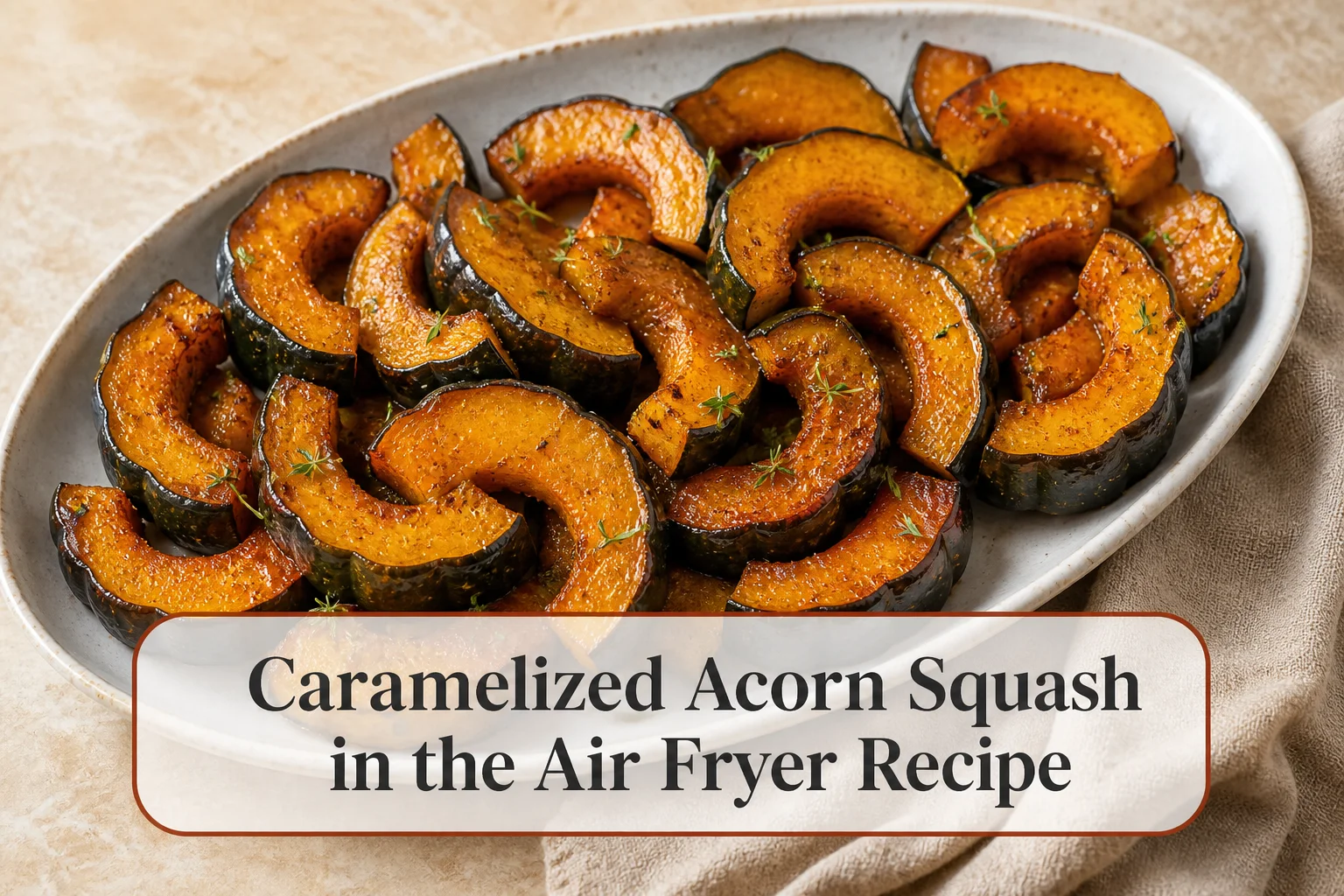
Caramelized Acorn Squash in the Air Fryer Recipe
Ingredients
Equipment
Method
- Preheat the air fryer to 390°F if recommended. Wash and thoroughly dry the squash.
- Cut beside the stem, halve the squash and remove seeds. Place cut-side down and slice into even 3/4-inch half-moons.
- Toss wedges with oil, salt and pepper. Arrange in a mostly single layer.
- Air fry at 390°F for 7 minutes. Turn and cook 4 to 6 minutes more, until the thickest flesh is almost tender.
- Mix melted butter, maple syrup and cinnamon. Brush a thin layer over both sides of the wedges.
- Reduce to 375°F and cook 2 to 4 minutes more, turning if needed, until easily pierced and caramelized at the edges.
- Transfer immediately, add thyme if using and serve warm.
Notes
- Keep half-moons close to 3/4 inch thick for consistent timing.
- Microwaving the pierced whole squash for 2 minutes can make cutting easier; begin checking air-fryer doneness earlier.
- Add the maple-butter glaze only after the flesh is almost tender.
- This recipe was developed through culinary research and editorial review.
This recipe was developed through culinary research and editorial review. Squash maturity, wedge thickness and air-fryer performance vary; check the thickest flesh for tenderness before and after glazing.
Nutrition is an estimate based on generic ingredient data; actual values vary with squash yield and glaze left in the bowl or basket.