
This high-fiber bread machine recipe combines whole-wheat flour, oats, ground flaxseed, chia and wheat bran with bread flour and vital wheat gluten. The measured water and mid-cycle dough check help these absorbent ingredients form a soft, cohesive dough instead of a dry, dense lump.
The formula is sized for a 2-pound machine. Select the whole-wheat cycle when available because its rest and rise pattern is designed for bran-rich dough. Ingredient order and cycle names differ by manufacturer, so the machine manual takes priority.
This recipe was developed through culinary research and editorial review. Flour storage, whole-wheat grind, room humidity and machines vary, so the dough texture at 8 to 10 minutes is an intentional part of the method.
For a lighter oat loaf baked conventionally, try soft oatmeal bread. The oat flour banana bread is a quick bread with no yeast cycle.
Why high-fiber bread can become short and heavy
Bran has sharp edges that interrupt developing gluten, while oats, flax and chia compete strongly for water. A dough that looks firm in the first minute can become even tighter as these ingredients hydrate.
Bread flour and vital wheat gluten provide extra elastic protein. They do not replace correct hydration: the dough still needs to look soft, tacky and slightly relaxed during kneading.
Too much yeast is not the solution. A weak, dry dough may rise quickly and then collapse because it cannot hold the gas. Use the measured amount and adjust water or flour in small steps during the dough check.
Ingredients
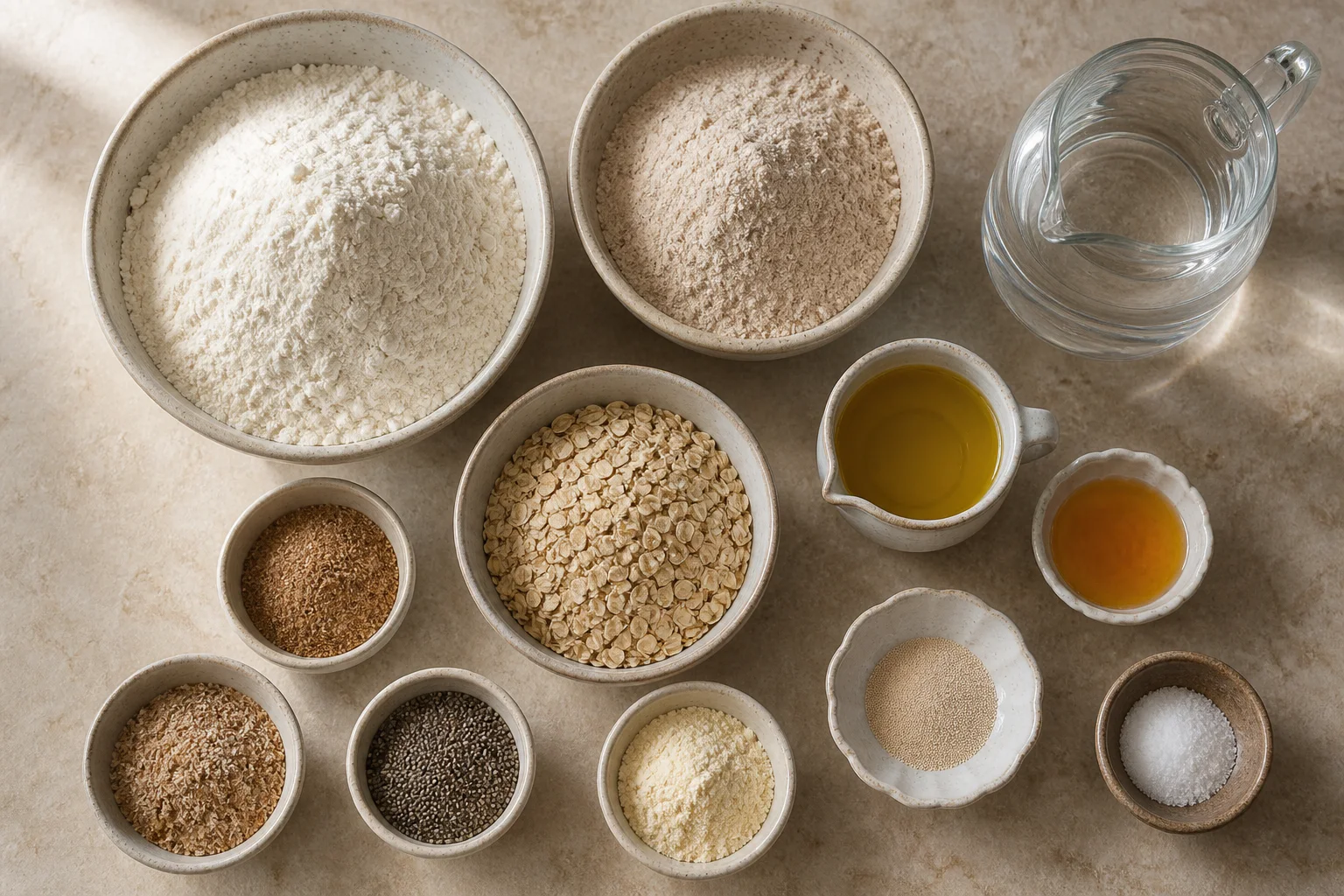
- 1 2/3 cups water, 400 grams, at the temperature recommended by the machine
- 2 tablespoons extra-virgin olive oil, 28 grams
- 2 tablespoons honey, 42 grams
- 1 1/2 cups bread flour, 180 grams
- 2 cups whole-wheat flour, 240 grams
- 1/2 cup old-fashioned rolled oats, 45 grams
- 1/3 cup ground flaxseed, 35 grams
- 1/3 cup wheat bran, 20 grams
- 3 tablespoons chia seeds, 36 grams
- 3 tablespoons vital wheat gluten, 27 grams
- 1 3/4 teaspoons fine salt, 10 grams
- 2 1/4 teaspoons bread-machine or instant yeast, 7 grams
- Up to 2 tablespoons water or bread flour for dough adjustment, only if needed
Ingredient notes and substitutions
Water: Weigh 400 grams for the starting formula. Use the machine maker’s temperature guidance, especially when a delayed cycle is not being used.
Whole-wheat flour: Fresh whole-wheat flour rises better and tastes less bitter than flour stored warm for many months. White whole-wheat flour can replace it by weight for a milder flavor.
Bread flour: Its higher protein supports the whole grains. All-purpose flour makes a softer but potentially shorter loaf and may need less water.
Oats: Old-fashioned rolled oats contribute texture and absorb moisture gradually. Do not use steel-cut oats, which remain hard in this cycle.
Flax and chia: Ground flax disperses better than whole flax. Chia is used whole and thickens the dough as it hydrates.
Wheat bran: Fine wheat bran spreads more evenly than coarse flakes. Oat bran can substitute by weight, but water demand may change.
Vital wheat gluten: This is concentrated wheat protein, not a gluten-free ingredient. It is important to the height of this bran-rich formula.
How to make high-fiber bread in a bread machine
1. Confirm machine capacity
Use a machine rated for a 2-pound loaf. Install the kneading paddle and make sure the pan is locked in place.
2. Add ingredients in manual order
Add water, oil and honey first if the manual specifies liquids first. Layer bread flour, whole-wheat flour, oats, flax, bran, chia and vital wheat gluten over the liquid. Place salt away from the yeast, and add yeast to a shallow well on top.
If the manufacturer’s required order differs, follow it. This is especially important for delayed-start protection between yeast and liquid.
3. Choose the cycle
Select the whole-wheat cycle, 2-pound loaf and medium crust. If the machine has no whole-wheat program, use the basic cycle only if its manual allows whole-grain formulas.
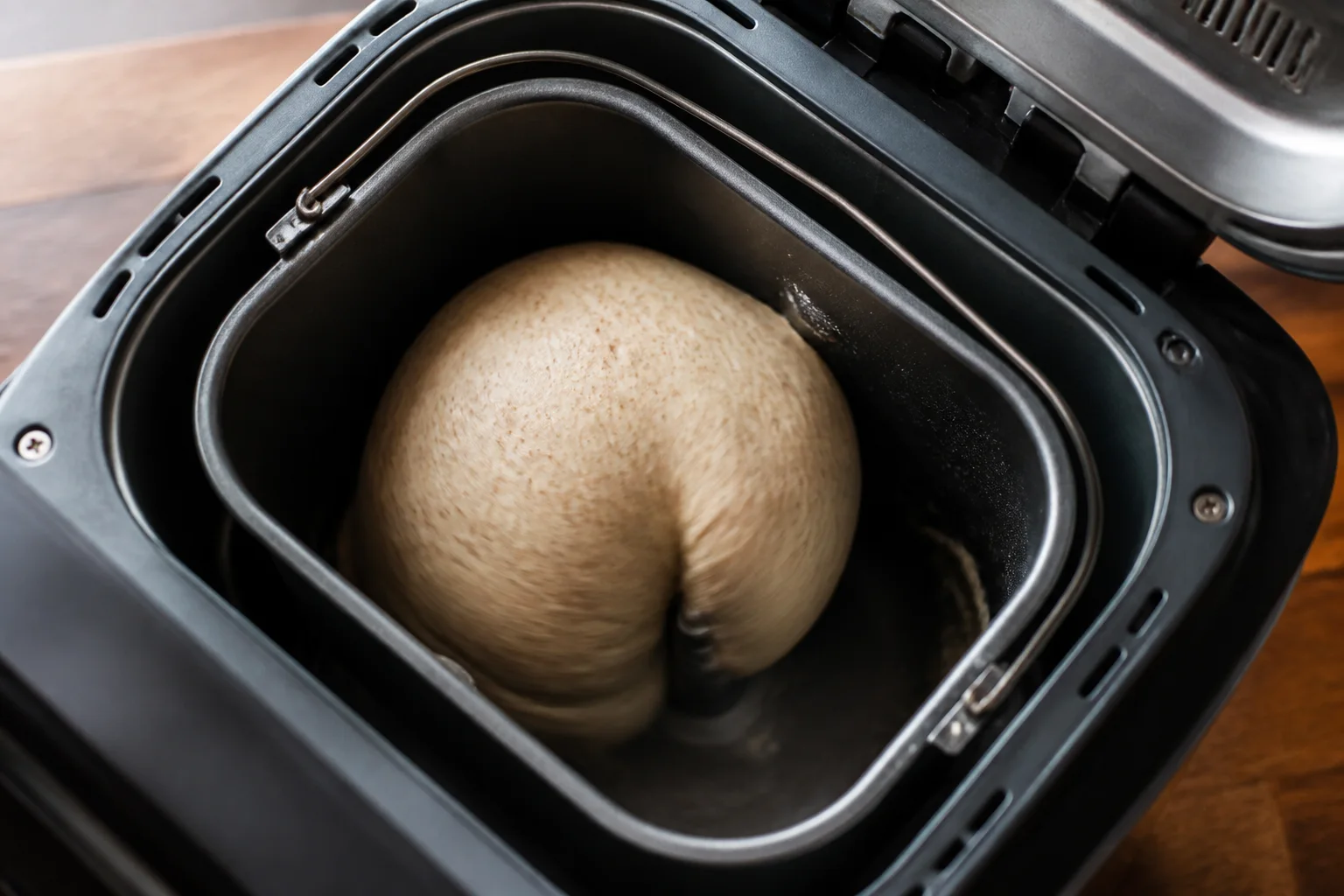
4. Check at 8 to 10 minutes
Open the lid briefly during kneading. The dough should have gathered into one soft ball that clears most of the pan but still looks tacky at its base. It should flex and fold, not bounce as a hard dry lump.
5. Adjust in tiny steps
If dry flour remains and the ball is stiff, add water 1 teaspoon at a time, waiting a full minute between additions. If the dough smears like thick batter after 10 minutes, add bread flour 1 tablespoon at a time.
Most batches need no adjustment. Do not add a large handful of flour simply because the dough feels tacky.
6. Let the cycle continue
Close the lid and avoid opening it during final rise and baking. If desired and permitted by the machine, remove the paddle after the final knead using the manual’s timing.
7. Remove promptly
When the cycle ends, use oven mitts to remove the pan. Turn the loaf onto a wire rack and remove the paddle carefully if it stayed in the bread.
8. Cool completely
Cool at least 2 hours before slicing. Cutting a hot whole-grain loaf compresses the moist crumb and makes it appear gummy.
Bread-machine dough texture guide
| Dough appearance at 8 to 10 minutes | Meaning | Correction |
|---|---|---|
| Soft ball, tacky base, flexible surface | Hydration is balanced | Make no change |
| Hard ball riding around the pan | Too dry for the fiber blend | Add water 1 teaspoon at a time |
| Dry flour in corners after scraping | Liquid is insufficient or pan is large | Scrape once, then add water gradually |
| Thick smear with no ball forming | Too wet or flour underweighed | Add bread flour 1 tablespoon at a time |
| Ball tears instead of stretching | Dough is dry or gluten underdeveloped | Add 1 teaspoon water and knead longer |
| Dough rises high then collapses | Too wet, too much yeast or room very warm | Verify weights and yeast next loaf |
Wait after every adjustment. Oats, flax, chia and bran continue absorbing water through the knead.
Why weighing flour matters
Scooped cups of flour can vary by several tablespoons depending on how tightly they are packed. In a high-fiber loaf, that variation decides whether the machine can knead the dough effectively.
Place the bread-machine pan on a scale only if the machine manual and pan design allow safe taring away from the base. Otherwise weigh each dry ingredient into separate bowls before loading.
Use grams as the primary measure. If measuring by volume, fluff flour, spoon it into the cup and level without packing.
Cycle, crust and yeast choices
A whole-wheat cycle often includes a rest that gives bran and flour time to hydrate before intensive kneading. It may also use a longer rise than the basic cycle.
Medium crust protects the moist interior while giving enough structure for clean slices. Dark crust can become hard around a bran-rich loaf; light crust may leave the sides soft in some machines.
Bread-machine yeast and instant yeast are suitable in the measured 7-gram amount. Active dry yeast should be used only according to the machine maker’s directions.
Fiber estimate and serving size
One of 12 equal slices has an estimated 6 grams of fiber, depending on the exact flour, bran and seed labels. This is a calculation, not laboratory analysis.
The FDA lists a Daily Value of 28 grams for dietary fiber on a 2,000-calorie reference diet and explains that 20% Daily Value or more per serving is generally considered high. Use the actual ingredient labels and slice weight when a nutrition claim needs precision.
Fiber absorbs water in the diet as well as in dough. Increase fiber intake gradually and follow individual medical advice when relevant.
For individually portioned baking with bran, oats and flax, high-fiber apple muffins uses those ingredients in a muffin batter with its own serving-size estimate.
Troubleshooting
The loaf is dense
The dough may have been too dry, whole-wheat flour old or yeast inactive. Use the 10-minute texture check and verify yeast freshness.
The top collapses
Excess water, yeast or a very warm kitchen can overexpand the structure. Weigh ingredients and reduce water by 1 tablespoon next time only if the kneading dough was genuinely loose.
The top is pale
Choose medium crust and remove the loaf promptly. Very cool ingredients can also delay the cycle; follow the machine temperature guidance.
The crumb is gummy
The loaf was sliced hot or underbaked by a machine cycle not designed for whole grains. Cool 2 hours and use the whole-wheat program.
The sides are hard
The crust setting was too dark or the loaf stayed in keep-warm mode. Use medium crust and remove at cycle end.
Seeds collect at the bottom
The dough was too wet to suspend additions. Verify the weighed water and check that a cohesive ball forms during kneading.
Storage and freezing
Cool completely before wrapping. Store at room temperature in a bread bag or covered container for up to 3 days. Refrigeration slows mold but firms the starch and makes the loaf taste stale sooner.
For longer storage, slice the cooled loaf and freeze with parchment between portions for up to 3 months. Toast slices directly from frozen or thaw covered at room temperature.
If condensation appears inside the bag, the bread was wrapped too warm. Unwrap briefly, let the surface dry and repackage in a clean container.
Frequently asked questions
Can I omit vital wheat gluten?
The loaf will likely be shorter and denser. This recipe is balanced around the added gluten.
Can I use the delay timer?
Only if the machine manual permits these ingredients and specifies the loading order. Never let yeast contact liquid early on a delayed cycle.
Can I use all whole-wheat flour?
Not as a direct swap. Removing bread flour changes gluten strength and water demand.
Why check the dough if a bread machine is automatic?
Flour and fiber ingredients vary in absorption. One brief early check prevents most dense or collapsed loaves.
Can I use steel-cut oats?
No. They remain too firm in this formula. Use old-fashioned rolled oats.
When can I slice the loaf?
Wait at least 2 hours, until the center is completely cool.
Recipe development note
This high-fiber bread machine recipe was developed through culinary research and editorial review. It is not represented as a personal kitchen test. Flour storage, grain grind, room humidity and machine programs vary; follow the manual and the dough-texture cues.
Nutrition is an estimate per one of 12 slices. The accompanying visuals are AI-assisted food-editorial images, not photographs of a kitchen test.
Printable recipe card
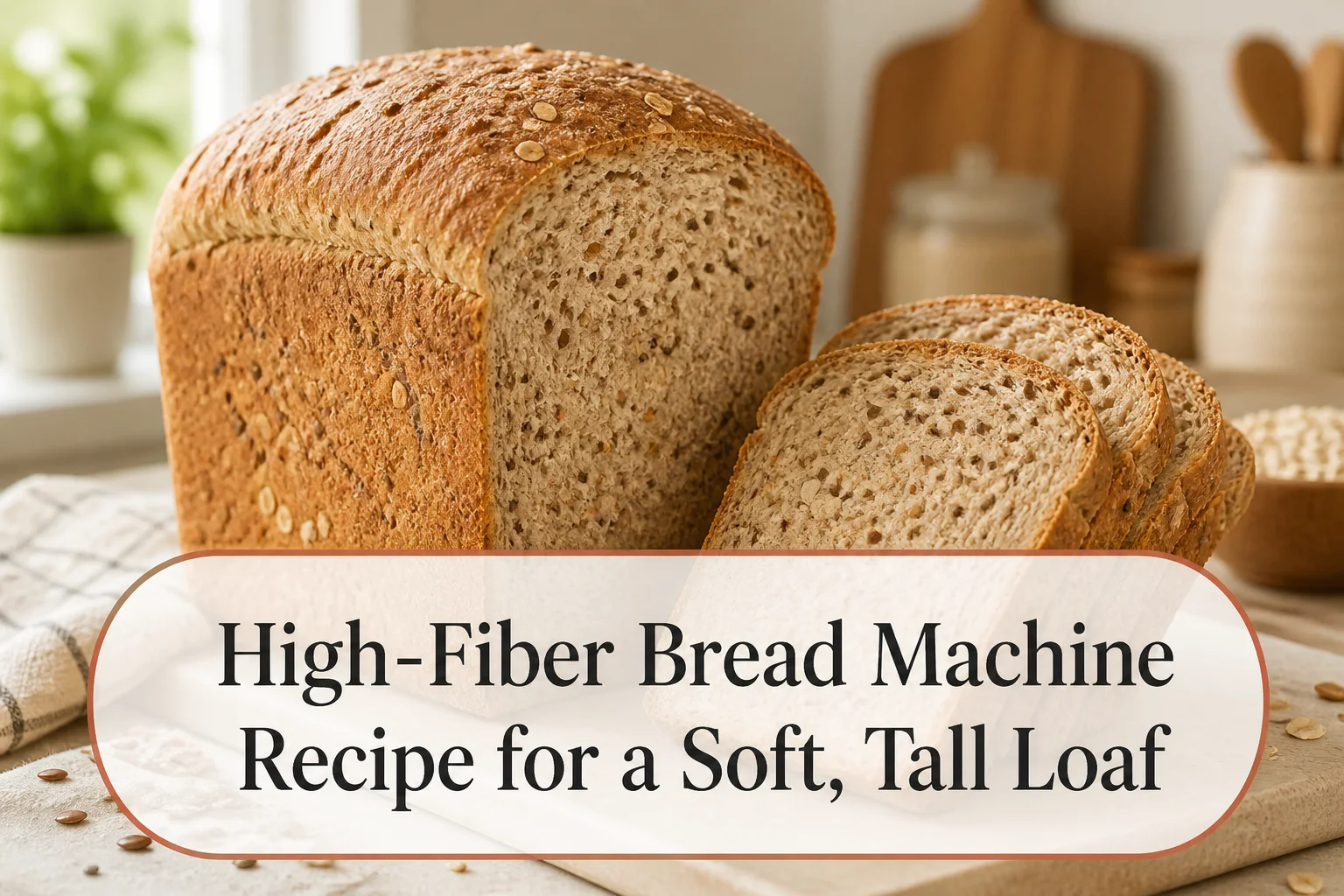
High-Fiber Bread Machine Recipe for a Soft, Tall Loaf
Ingredients
Equipment
Method
- Use a bread machine rated for a 2-pound loaf and install the paddle.
- Add ingredients in the exact order required by the manual; if liquids go first, layer water, oil, honey, dry ingredients, separated salt and yeast.
- Choose whole-wheat, 2-pound loaf and medium crust, or the approved equivalent in the manual.
- At 8 to 10 minutes, look for one soft flexible ball that clears most of the pan and remains tacky at the base.
- If stiff, add water 1 teaspoon at a time; if batter-like, add bread flour 1 tablespoon at a time, waiting between additions.
- Close the lid and avoid opening during final rise and baking.
- At cycle end, remove the hot pan with oven mitts and turn the loaf onto a rack.
- Cool completely for at least 2 hours before slicing.
Notes
- Recipe is for a 2-pound bread machine.
- Follow the manufacturer’s loading order and cycle guidance.
- Weigh flour and water for consistency.
- Adjust dough only in small steps at 8 to 10 minutes.
- Contains wheat.
- This recipe was developed through culinary research and editorial review.
This recipe was developed through culinary research and editorial review. Flour storage, grain grind, room humidity and machine programs vary; follow the manual and dough cues.
Nutrition is an estimate per one of 12 slices; estimated fiber is about 6 grams per slice and depends on ingredient labels.