
This oat flour banana bread has a moist, sliceable crumb rather than the wet, gummy center that can trouble oat-based quick breads. Mashed ripe banana supplies the main moisture, Greek yogurt softens the crumb, and a measured 15-minute batter rest lets the oat flour hydrate before baking.
The loaf is baked until the center reaches 200 to 205°F and a tester shows moist crumbs instead of streaks of raw batter. It then cools completely before slicing. Those cues matter more than color alone because oat flour can brown at the edges while the center still needs time.
This recipe was developed through culinary research and editorial review. Banana moisture, oat-flour grind, pan color and oven calibration vary, so use the batter thickness, internal-temperature and cooling cues below.
For smaller banana portions, try the banana muffins made with Greek yogurt. If you want a yeast loaf for sandwiches instead of a sweet quick bread, see the soft oatmeal bread recipe.
Why oat flour banana bread becomes gummy
Oat flour has no gluten network to trap steam and support the crumb in the same way wheat flour does. Its soluble fiber absorbs water and can create a gel-like center when the batter contains too much banana, is underbaked or is sliced while warm.
Measuring banana by weight prevents the biggest variation. Three bananas can provide less than 250 grams or more than 400 grams after peeling. This formula uses 330 grams, about 1 1/3 cups when smoothly mashed.
Resting the batter gives the flour time to thicken before it enters the oven. Full cooling lets steam move out and the starches finish setting. A warm loaf may appear underbaked even when its temperature was correct.
Ingredients
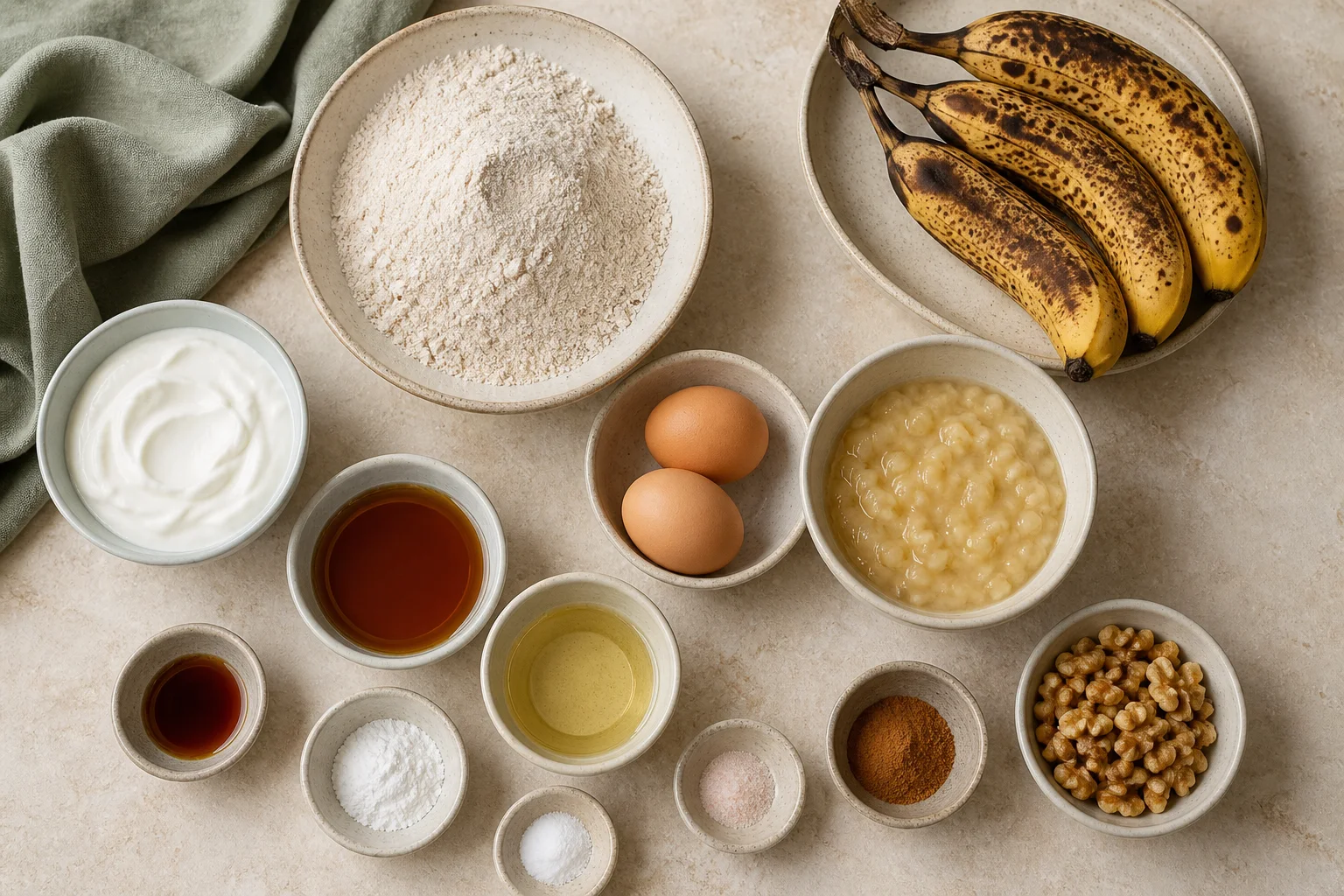
- 2 1/4 cups oat flour, 270 grams
- 1 teaspoon baking powder
- 1 teaspoon baking soda
- 1 teaspoon ground cinnamon
- 1/2 teaspoon fine salt
- 1 1/3 cups mashed very ripe banana, 330 grams
- 2 large eggs, about 100 grams without shells
- 1/3 cup plain Greek yogurt, 80 grams
- 1/4 cup pure maple syrup, 80 grams
- 1/4 cup neutral oil, 56 grams
- 2 teaspoons vanilla extract
- 1/2 cup chopped walnuts or mini chocolate chips, 55 grams, optional
Ingredient notes and substitutions
Oat flour: Use finely milled oat flour and weigh 270 grams. Homemade flour ground from rolled oats works, but a coarse grind creates a more rustic crumb and may need additional blending. Spoon-and-level measuring is preferable to packing a cup.
Banana: Choose heavily spotted bananas that mash easily. Weigh the peeled fruit, then mash. If only 300 grams are available, add 2 tablespoons milk; if there is extra banana, save it rather than exceeding 350 grams.
Eggs: Two large eggs provide structure that oat flour cannot supply alone. A flax-egg substitution changes the set substantially and is not a direct swap for this particular loaf.
Greek yogurt: Plain yogurt adds moisture and acidity. Sour cream can replace it by weight. Regular plain yogurt is thinner; use 70 grams and watch the batter cue.
Maple syrup: Maple syrup adds sweetness and liquid. Honey works by weight and creates a slightly darker, more aromatic loaf. Granulated sugar is not a one-for-one substitution because it removes liquid.
Oil: Avocado, canola or another neutral oil keeps the loaf soft after refrigeration. Melted coconut oil works if every cold ingredient is brought to room temperature so the oil does not solidify in small pieces.
Walnuts or chocolate chips: Both are optional. Walnuts introduce a tree-nut allergen. Keep additions to 55 grams so the loaf still rises and slices cleanly.
How to make oat flour banana bread
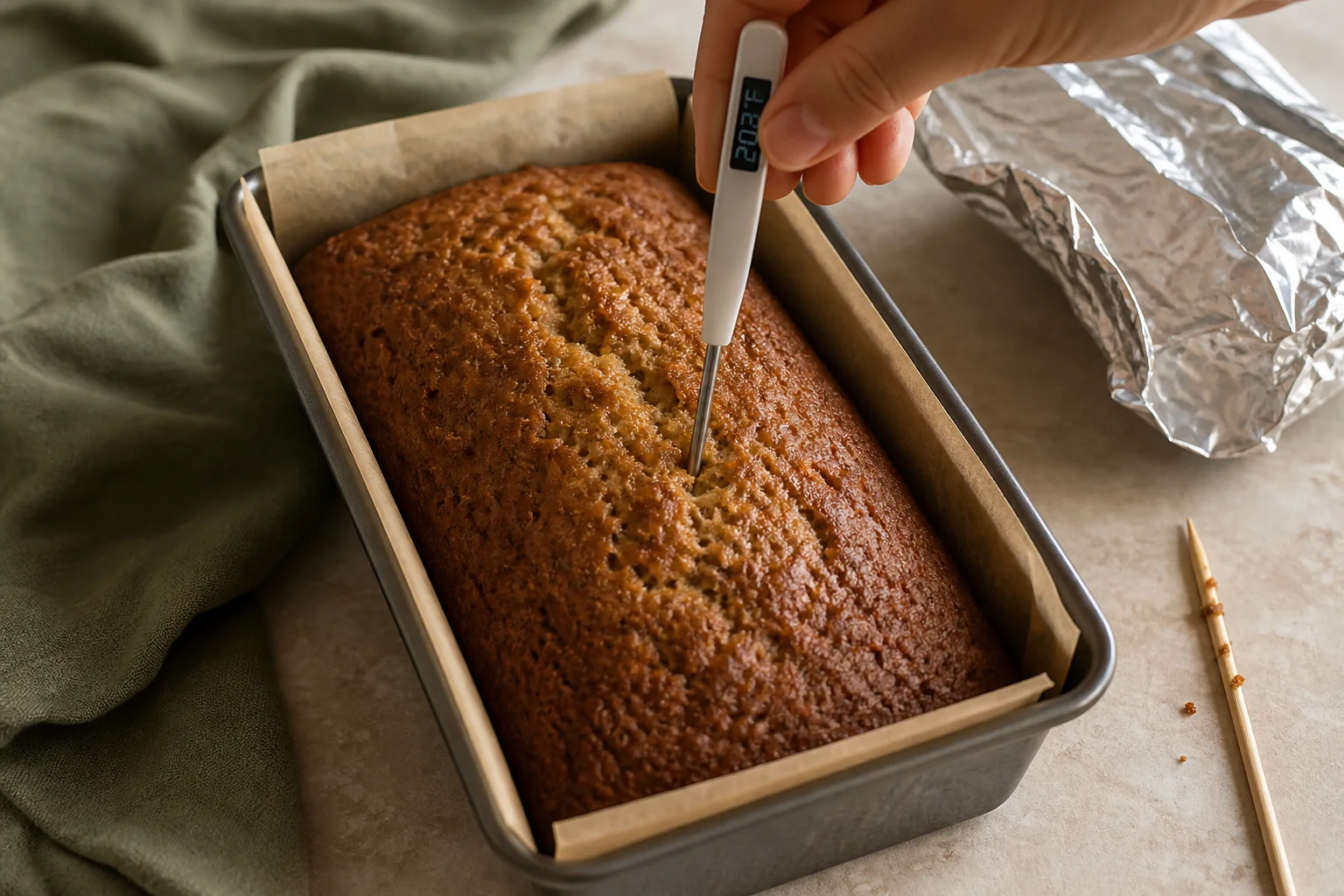
1. Prepare the oven and pan
Heat the oven to 350°F with a rack in the center. Lightly grease an 8 1/2-by-4 1/2-inch metal loaf pan and line the long sides with a parchment sling.
Avoid a larger 9-by-5-inch pan if a tall loaf is the goal; the same batter spreads lower and may finish sooner. Set the prepared pan on a light-colored sheet pan only if the loaf pan tends to tip or has a dark exterior.
2. Measure and mash the banana
Peel the ripe bananas and weigh 330 grams into a large bowl. Mash until mostly smooth, leaving no pieces larger than 1/4 inch.
Large banana lumps create wet pockets that resemble uncooked batter. A few tiny pieces are fine and preserve natural texture.
3. Combine the wet ingredients
Whisk eggs into the banana until no separate whites remain. Add Greek yogurt, maple syrup, oil and vanilla, then whisk until glossy and evenly emulsified.
Scrape around the bowl where thick yogurt or banana can hide. The mixture should pour in a heavy ribbon without visible oil pooling on top.
4. Whisk the dry ingredients separately
In a medium bowl, whisk oat flour, baking powder, baking soda, cinnamon and salt for at least 20 seconds.
Break up every flour lump. Leaveners trapped in a lump can leave bitter spots and uneven tunnels in the finished bread.
5. Fold wet and dry mixtures
Add the dry mixture to the wet. Fold with a silicone spatula, scraping the bottom, just until no dry flour remains.
The batter will initially be thick but pourable. Fold in optional walnuts or mini chips at the end, reserving 1 tablespoon for the top if desired.
6. Rest the batter for 15 minutes
Leave the bowl at room temperature for 15 minutes while the oven finishes heating. Oat flour absorbs moisture and the batter should thicken enough to mound softly before settling.
If the rested batter is stiff enough to hold sharp peaks, fold in 1 tablespoon milk. If it still pours like pancake batter, fold in 1 tablespoon oat flour and wait 2 minutes.
7. Fill and level the pan
Scrape the batter into the prepared pan. Spread it into the corners and form a shallow lengthwise trough down the center, leaving the long sides slightly higher.
This shaping encourages a controlled center rise. Add the reserved topping without pressing it deep into the batter.
8. Bake and shield if needed
Bake for 50 minutes without opening the oven. Check the color; if the top is already deep brown, tent loosely with foil without touching the surface.
Continue baking 10 to 20 minutes. The center should spring back slowly, a tester should show moist crumbs but no glossy batter, and an instant-read thermometer inserted through the center should register 200 to 205°F.
9. Cool before slicing
Cool in the pan for 15 minutes. Lift the loaf by the parchment and set it upright on a wire rack.
Wait at least 90 minutes, until the loaf is fully cool, before cutting. Use a thin serrated knife and wipe it between slices if the crumb is very moist.
Oat banana bread doneness guide
| Cue | Too early | Ready | Too far |
|---|---|---|---|
| Center surface | Shiny and visibly wet | Matte and slowly springs back | Dry, rigid or deeply split |
| Tester | Glossy batter streaks | A few moist crumbs | Completely dry with scorched crumbs |
| Internal temperature | Below 198°F | 200–205°F | Above about 210°F |
| Pan edges | Batter clings tightly | Loaf just begins pulling away | Dark, hard gap around loaf |
| Cooled slice | Compresses into paste | Moist, tender and holds shape | Crumbly or dry at edges |
Temperature is a useful confirmation, not the only test. Place the probe in the true center without touching the bottom or a melted chocolate chip.
Why a 15-minute batter rest helps
Oat particles continue absorbing water after the batter first looks mixed. Baking immediately can set the outside while excess free moisture remains concentrated in the center.
During the rest, the batter becomes more uniform and the flour’s fiber begins binding liquid. That supports a finer crumb and makes an unexpectedly thin batter visible before it is committed to the pan.
Do not extend the rest much beyond 20 minutes. Baking soda begins reacting once it contacts the wet acidic mixture, and a long delay can reduce the loaf’s rise.
Use the time to confirm the oven is fully preheated, prepare the parchment and wash mixing tools. Stir the batter only once after resting if a small texture correction is needed.
Measuring banana is more reliable than counting it
Bananas vary by cultivar and size. “Three medium bananas” is convenient shopping language but a weak baking measurement.
Place the bowl on a scale, tare it and add peeled banana to 330 grams. A variance of about 15 grams is manageable. Much more fruit increases sugar and water without adding enough flour or egg structure.
If the bananas are ripe but not soft, mash them thoroughly rather than adding larger pieces. Do not bake unpeeled bananas simply to imitate natural ripening; heating softens fruit but does not reproduce all the flavor changes of ripening.
Frozen bananas can work if thawed completely. Include the released liquid in the 330-gram weight and mash everything together. Do not add a full 330 grams of solids plus extra thawing liquid.
Pan size and material
An 8 1/2-by-4 1/2-inch light metal pan gives the intended height and baking range. A dark nonstick pan transfers more heat to the crust and may require a foil shield earlier.
A 9-by-5-inch pan makes a shorter loaf. Begin checking 5 to 10 minutes earlier because more batter surface is exposed.
Glass heats slowly and retains heat. If it is the only available pan, expect the timing to differ and rely on center temperature and crumb cues. Avoid moving hot glass onto a wet or cold surface.
Mini loaf pans finish much sooner and should be treated as a separate format. Fill equally and begin checking around 25 minutes.
Flavor variations
Blueberry: Fold in 3/4 cup fresh blueberries tossed with 1 tablespoon oat flour. Dry washed berries thoroughly and expect a few additional minutes of baking.
Chocolate: Add 1/3 cup mini chocolate chips and omit cinnamon if preferred. Probe a chip-free spot when checking temperature.
Walnut cinnamon: Use the optional walnuts and increase cinnamon to 1 1/2 teaspoons. Sprinkle a few nuts over the top after leveling.
Peanut butter: Replace 2 tablespoons oil with 2 tablespoons smooth peanut butter. The loaf becomes denser and includes a peanut allergen.
Orange: Replace vanilla with 1 teaspoon finely grated orange zest plus 1 teaspoon vanilla. Zest adds aroma without extra juice.
Less sweet: Reduce maple syrup to 3 tablespoons and add 1 tablespoon milk. Very ripe banana remains important for flavor.
Troubleshooting
The center is gummy
Too much banana, underbaking or warm slicing are the common causes. Weigh 330 grams, bake to 200 to 205°F and cool at least 90 minutes before evaluating the crumb.
The loaf sank after baking
The center may not have set, the batter may contain excess fruit, or the oven door was opened early. Do not check before 50 minutes and use both the tester and temperature cues.
The top is dark but the center is raw
The pan is dark or the oven runs hot. Loosely tent after 50 minutes and continue baking. Check the oven with a separate thermometer before the next loaf.
The bread is dry
Oat flour may have been packed into cups, the loaf may be overbaked or too little banana was used. Weigh the flour and fruit and remove the loaf once the center reaches the ready range.
The loaf crumbles when sliced
It may still be warm, an egg may have been omitted or the oat flour may be very coarse. Cool fully, retain both eggs and use a fine grind.
The bread barely rose
Leaveners may be old, the batter rested too long or the pan may be oversized. Check baking powder and soda freshness and bake after the 15-minute hydration period.
The crumb has wet banana pockets
Banana pieces were too large. Mash until no piece exceeds approximately 1/4 inch and whisk the wet mixture thoroughly.
The loaf sticks to the pan
Grease the short ends and use a parchment sling across the long sides and bottom. Allow 15 minutes of pan cooling before lifting.
Storage and reheating
Store the completely cool loaf in a covered container at room temperature for up to 2 days. Place a folded paper towel beneath the loaf if condensation makes the surface tacky, replacing it when damp.
For up to 5 days, refrigerate individual slices in a covered container. Oat bread firms when cold, so let a slice stand 10 minutes or warm it before eating.
Microwave one slice for 10 to 15 seconds, or warm in a 300°F oven for 6 to 8 minutes. Avoid prolonged heating, which drives out moisture.
To freeze, wrap cool individual slices and place them in a freezer bag for up to 2 months for best quality. Thaw overnight in the refrigerator or warm from frozen in short microwave intervals.
Do not taste raw batter. The FDA notes that flour is a raw food and advises cooking foods made with flour in its flour-handling safety guidance.
Frequently asked questions
Can I make oat flour from rolled oats?
Yes. Blend rolled oats in a high-speed blender until very fine, pause to stir, then blend again. Weigh 270 grams after grinding; coarse homemade flour gives a more rustic crumb.
Is this banana bread gluten-free?
It can be when every packaged ingredient, particularly oat flour, is labeled gluten-free and suitable for the eater’s needs. Oats may encounter gluten-containing grains during production.
Can I use quick oats instead of oat flour?
Not directly. Quick oats remain flakes. Grind them finely, then measure by weight as oat flour.
Why does the batter rest before baking?
The rest lets oat flour absorb moisture, makes the final consistency visible and reduces free liquid that can contribute to a gummy center.
Can I omit Greek yogurt?
Sour cream can replace it by weight. A thinner yogurt changes the batter, so use slightly less and follow the rested-batter cue.
How ripe should the bananas be?
The peel should have extensive brown spotting and the fruit should mash easily. Ripe banana gives better sweetness and smoother distribution than firm yellow fruit.
Can I bake this in a 9-by-5-inch pan?
Yes. The loaf will be shorter and may finish 5 to 10 minutes earlier. Begin checking before the listed lower range ends.
Why must the loaf cool completely?
The crumb continues setting as steam redistributes and escapes. Slicing warm oat bread compresses the center and can make a properly baked loaf look gummy.
Recipe development note
This oat flour banana bread was developed through culinary research and editorial review. It is not represented as a personal kitchen test. Banana moisture, oat-flour grind, pan color and oven calibration vary; use the rested-batter, doneness and full-cooling cues.
Nutrition is an estimate per one of 10 slices without optional walnuts or chocolate chips. The accompanying visuals are AI-assisted food-editorial images, not photographs of a kitchen test.
Printable recipe card
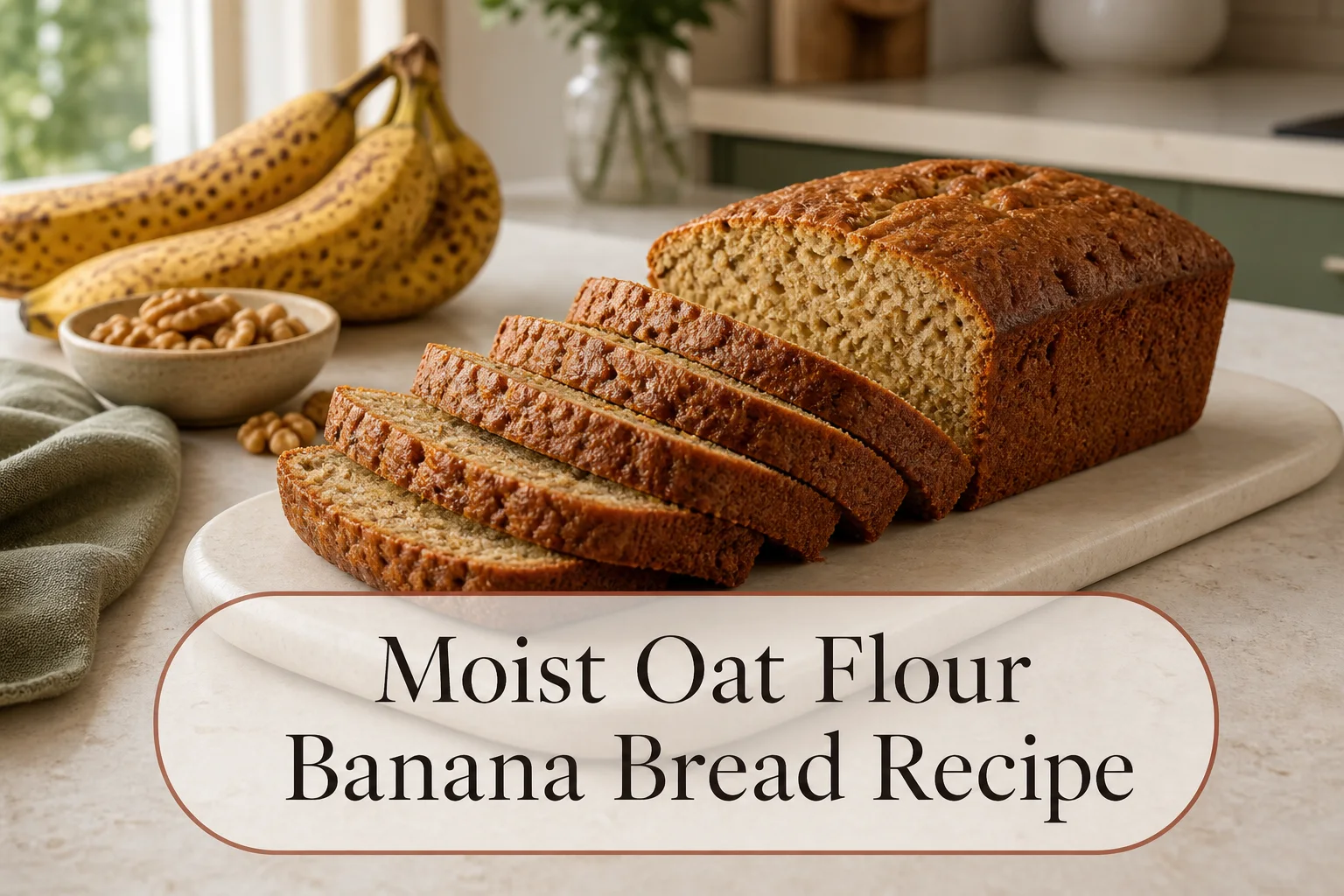
Moist Oat Flour Banana Bread Recipe
Ingredients
Equipment
Method
- Heat the oven to 350°F. Grease and parchment-line an 8 1/2-by-4 1/2-inch metal loaf pan.
- Weigh 330 grams peeled ripe banana into a large bowl and mash until no piece exceeds about 1/4 inch.
- Whisk in eggs, Greek yogurt, maple syrup, oil and vanilla until glossy with no separate oil or egg-white streaks.
- Whisk oat flour, baking powder, baking soda, cinnamon and salt in a separate bowl, breaking up every lump.
- Fold dry ingredients into wet just until no flour remains. Fold in optional walnuts or mini chips.
- Rest batter 15 minutes. It should mound softly before settling; add 1 tablespoon milk if sharply stiff or 1 tablespoon oat flour if still thin.
- Spread batter into the prepared pan and form a shallow lengthwise trough, leaving the long sides slightly higher.
- Bake 50 minutes, tent loosely if deeply browned, then continue 10 to 20 minutes until the center is 200 to 205°F and a tester shows moist crumbs without glossy batter.
- Cool in the pan 15 minutes, lift onto a wire rack and cool at least 90 minutes before slicing.
Notes
- Weigh 330 grams peeled banana rather than relying only on a banana count.
- Use 270 grams finely milled oat flour.
- Rest the mixed batter 15 minutes for oat hydration.
- Bake until the true center reaches 200 to 205°F and the tester has no glossy batter.
- Cool fully for at least 90 minutes before judging the crumb.
- Optional walnuts add a tree-nut allergen.
- This recipe was developed through culinary research and editorial review.
This recipe was developed through culinary research and editorial review. Banana moisture, oat-flour grind, pan color and oven calibration vary; use the rested-batter, doneness and full-cooling cues.
Nutrition is an estimate per one of 10 slices without optional walnuts or chocolate chips.