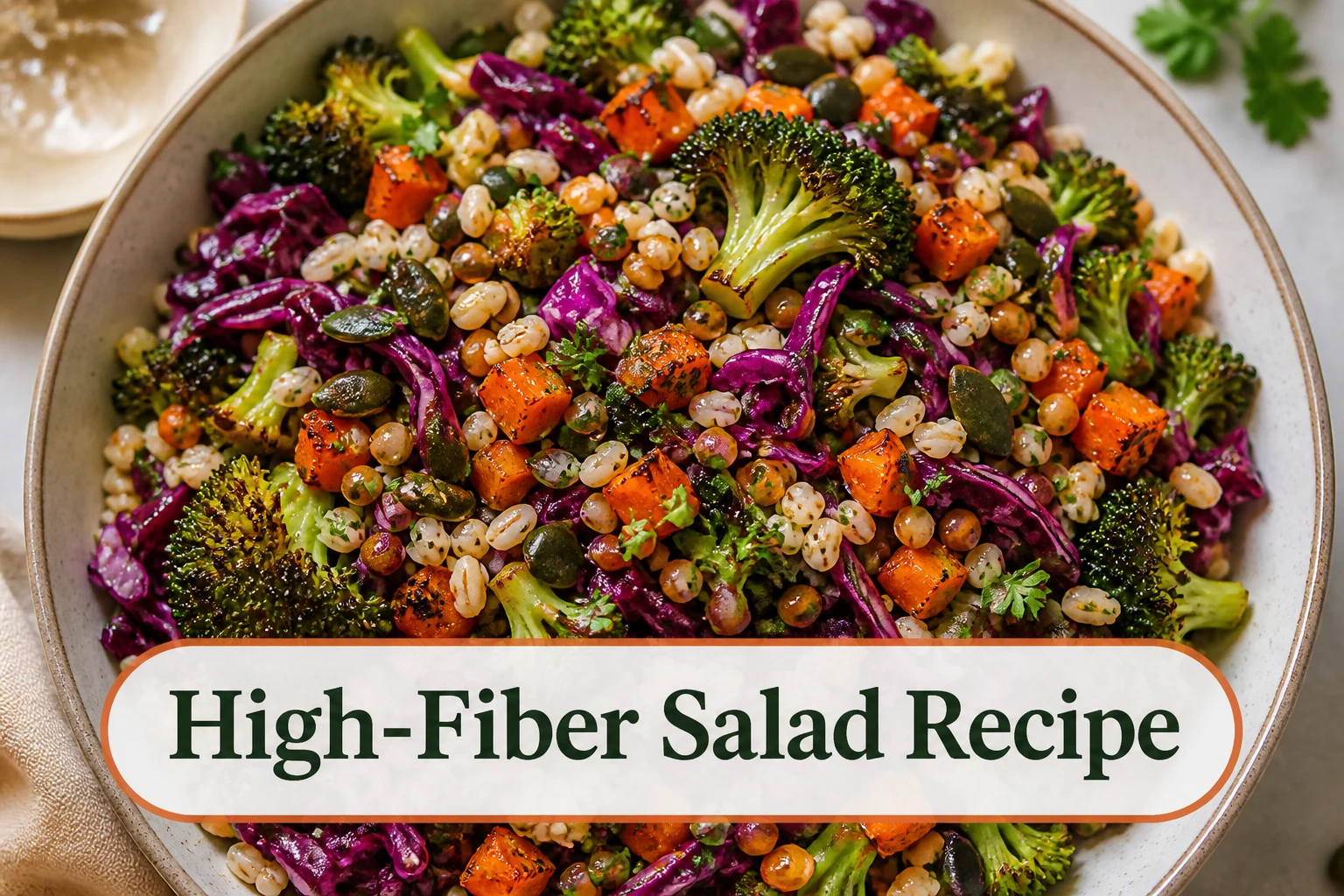
A high-fiber meal-prep salad needs sturdy ingredients that improve after dressing. Lentils and barley absorb flavor, while roasted vegetables and raw cabbage provide soft and crisp textures without wilted lettuce.
The ingredient amounts and timing are sized for 6 servings. Ingredient brands, starting temperature, piece size and natural moisture can change the finish, so use the texture and doneness cues below along with the clock.
This recipe was developed through culinary research and editorial review. It is not represented as a personal kitchen test.
For another useful method in the same collection, see greek yogurt chicken salad recipe. You may also want greek yogurt tuna salad.
Why this recipe works
Sturdy base: Lentils and barley hold texture after dressing.
Two vegetable textures: Roasted vegetables add sweetness while cabbage stays crisp.
Seeds go on last: They remain crunchy.
The method is designed around observable cues rather than one exact clock time. Begin checking at the early end of the range, then note any small adjustment that gives you the best result next time.
Ingredients
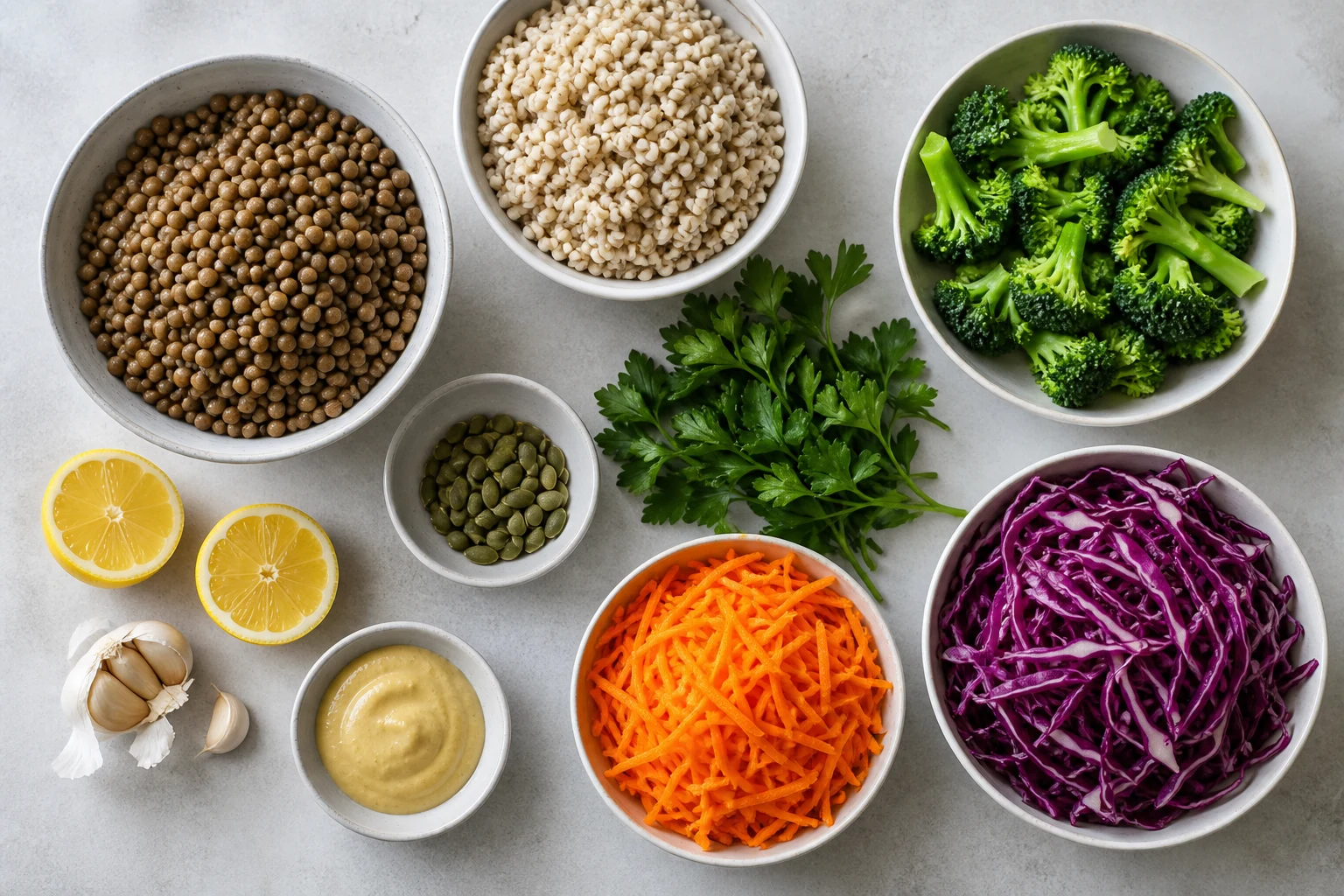
- 3 cups cooked green lentils, drained
- 2 cups cooked pearl barley, cooled
- 1 pound broccoli and carrots, bite-size
- 2 tablespoons olive oil, divided
- 2 cups shredded red cabbage
- 1/2 cup parsley, chopped
- 1/3 cup pumpkin seeds
- 3 tablespoons lemon juice
- 1 teaspoon Dijon mustard
- 1 clove garlic, grated
- salt and pepper, to taste
Ingredient notes
Lentils: Use firm green or brown lentils, not red lentils.
Barley: Pearl barley is chewy; follow package timing.
Cabbage: Slice thinly so it integrates with grains.
Measure the first batch as written. Once you know how the recipe behaves with your ingredients and equipment, change one variable at a time so you can tell which adjustment improved it.
How to make high fiber salad
1. Roast vegetables
Heat oven to 425°F; toss vegetables with 1 tablespoon oil and roast 22 to 28 minutes.
2. Make dressing
Whisk remaining oil, lemon, Dijon, garlic, salt and pepper.
3. Cool
Cool roasted vegetables 15 minutes.
4. Combine base
Toss lentils, barley, cabbage and parsley.
5. Dress
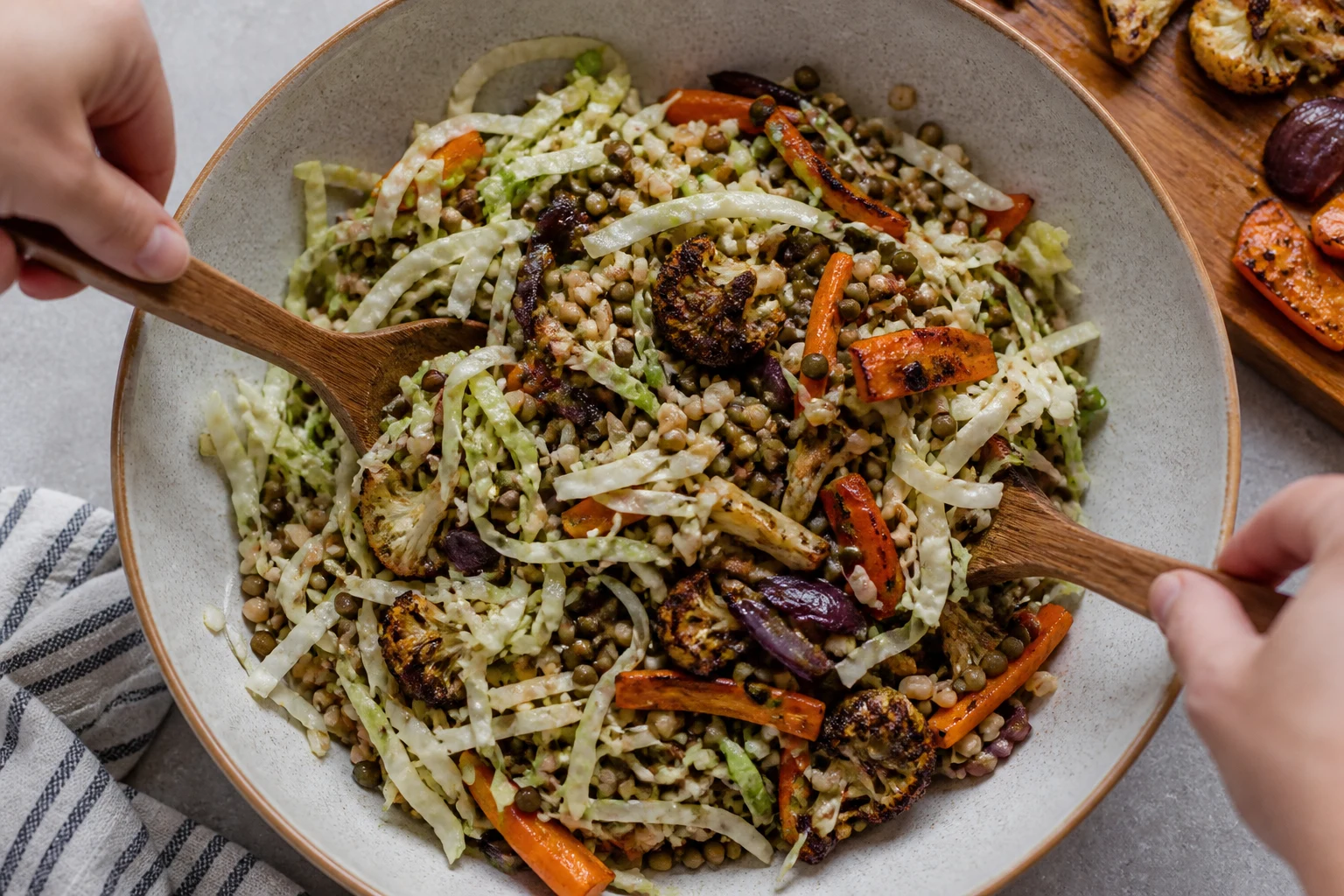
Add roasted vegetables and most dressing; fold gently.
6. Finish
Add pumpkin seeds and remaining dressing at serving.
Quick timing and doneness guide
| Stage | What to look for | What to do |
|---|---|---|
| Before you start | Lentils and barley hold texture after dressing. | Measure and prepare everything before the main cooking or mixing step |
| First check | Toss lentils, barley, cabbage and parsley. | Check texture or doneness at the early end of the stated range |
| Finished | Add pumpkin seeds and remaining dressing at serving. | Stop when the described finish is reached instead of chasing one exact clock time |
| If it needs adjustment | Shred finely and massage with a spoon of dressing. | Make the smallest useful adjustment, then check again |
Use this table as a decision guide. Follow ingredient labels and applicable food-safety guidance, and use a food thermometer whenever a safe internal temperature matters.
Substitutions and variations
Gluten-free
Replace barley with cooked quinoa or brown rice.
No lentils
Use chickpeas.
Creamy
Add crumbled feta at serving.
Change only one major component in your first variation. Moisture, sweetness, structure and cooking time affect one another, so a single change is easier to evaluate and repeat.
Serving ideas
Serve at room temperature or chilled. Add avocado, feta or cooked chicken only when serving if desired.
Troubleshooting
Salad is mushy
Likely cause: Lentils or barley were overcooked.
Fix: Cook firm and cool separately.
It is dry
Likely cause: Grains absorbed dressing.
Fix: Reserve dressing for serving.
Vegetables steam
Likely cause: The sheet pan was crowded.
Fix: Use one layer.
Cabbage is tough
Likely cause: Slices were thick.
Fix: Shred finely and massage with a spoon of dressing.
Storage, freezing and reheating
Refrigerator: Refrigerate up to 4 days.
Freezer: Freeze lentils and barley separately, not the assembled salad.
Reheating: Serve cold or bring to room temperature.
For general handling, the FDA Daily Value guidance is the outside reference used for this article. The FDA Nutrition Facts reference uses 28 grams as the Daily Value for dietary fiber on a 2,000-calorie diet; the recipe nutrition is an estimate, not laboratory analysis.
Frequently asked questions
Can I make it ahead?
Yes; reserve seeds and some dressing.
Is barley gluten-free?
No; use quinoa or brown rice when gluten must be avoided.
Can I use canned lentils?
Yes, rinsed and drained very well.
Recipe development note
The method for high fiber salad recipe was developed through culinary research and editorial review. The times are a practical range, not a claim that every appliance, ingredient brand or batch was personally tested in one kitchen.
Nutrition is an estimate per serving and varies with brands, trimming, optional ingredients and serving size. The accompanying visuals are AI-assisted food-editorial images, not photographs of a kitchen test.
Printable recipe card
High-Fiber Salad Recipe
Ingredients
Equipment
Method
- Heat oven to 425°F; toss vegetables with 1 tablespoon oil and roast 22 to 28 minutes.
- Whisk remaining oil, lemon, Dijon, garlic, salt and pepper.
- Cool roasted vegetables 15 minutes.
- Toss lentils, barley, cabbage and parsley.
- Add roasted vegetables and most dressing; fold gently.
- Add pumpkin seeds and remaining dressing at serving.
Notes
- Read relevant ingredient labels and the manual for any appliance used.
- Begin checking at the early end of the time range.
- The FDA Nutrition Facts reference uses 28 grams as the Daily Value for dietary fiber on a 2,000-calorie diet; the recipe nutrition is an estimate, not laboratory analysis.
- This recipe was developed through culinary research and editorial review.
This recipe was developed through culinary research and editorial review. Equipment, ingredient brands, starting temperature and batch size can change the timing; follow the method cues and applicable safety guidance.
Nutrition is an estimate per serving and varies with brands, optional ingredients and portion size.