
Cooking frozen chicken in the air fryer is useful when dinner needs to start before there is time to thaw anything. The challenge is not simply getting the middle hot. It is cooking a firm, icy center all the way through without turning the thinner edges tough and dry.
This recipe uses plain, individually frozen boneless skinless chicken breasts between 5 and 7 ounces each. A lower-temperature first stage loosens surface ice and begins heating the center. The chicken is then oiled, seasoned and finished at a moderately higher temperature for color. Starting gently gives the inside more time to catch up with the exterior.
This method was developed through culinary research and editorial review. Air-fryer power, breast thickness and the amount of surface ice can change the timing substantially. Use the clock only to decide when to check; use an instant-read thermometer to confirm that every piece reaches at least 165°F in its thickest part.
For more chicken dinners, browse the air fryer recipe hub. Use air fryer boneless chicken thighs when your chicken is thawed and you want a shorter cook. For a crunchy coating, try air fryer fried chicken thighs; that separate recipe begins with thawed chicken.
Which frozen chicken works for this recipe?
Use four plain, raw, boneless skinless breasts that were frozen individually and are not stuck in a solid block. Pieces between 5 and 7 ounces and roughly 3/4 to 1 inch thick cook most evenly. They do not need to be identical, but markedly different sizes should be checked and removed separately.
This is not the right method for bone-in chicken, cooked frozen strips or breaded products. Most importantly, do not use it for raw frozen stuffed or breaded chicken breasts. The USDA’s air-fryer food-safety guidance says those raw stuffed products should be cooked in a conventional oven according to their package directions, not in an air fryer. If the package gives appliance-specific instructions, follow them.
For packaged breaded strips, use the frozen chicken tenders guide to distinguish raw products from fully cooked ones before choosing a cooking time.
Why the two-temperature method helps
- The first stage warms the center gradually. Moderate heat starts thawing the dense middle before the surface receives oil and spices.
- Seasoning sticks after the frost melts. Salt and ground spices slide off heavily frosted meat, but adhere once the surface has softened and been dried.
- A single layer supports even circulation. Stacked or overlapping breasts shield cold spots from hot air.
- Separate temperature checks prevent overcooking. A smaller breast can leave the basket while a thicker one continues cooking.
- A short rest keeps more juice in the meat. Resting also allows the internal temperature to settle before slicing.
Ingredients
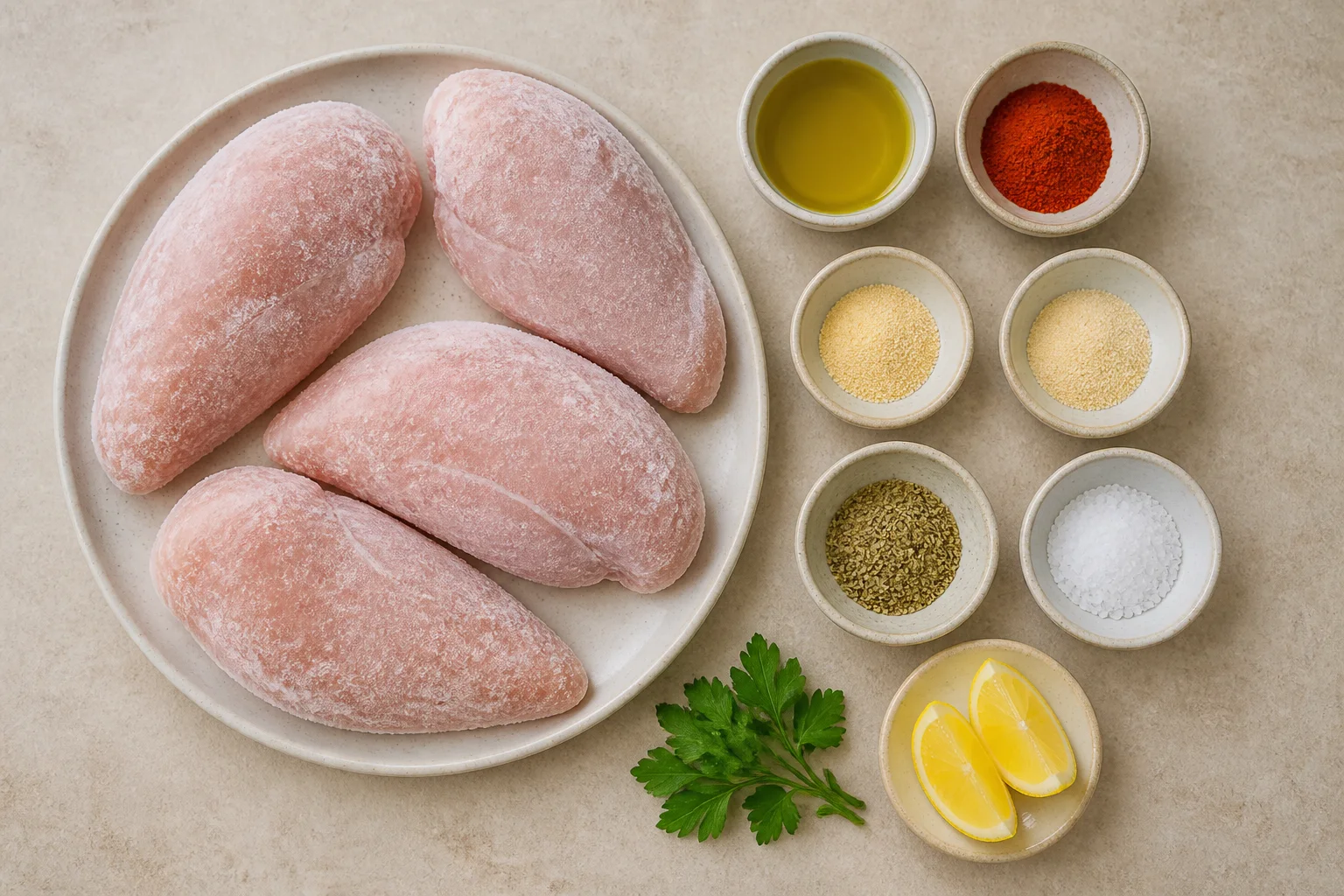
- 4 individually frozen boneless skinless chicken breasts, 5 to 7 ounces each, about 1 1/2 pounds total
- 1 tablespoon olive oil or avocado oil
- 1 teaspoon smoked paprika
- 1 teaspoon garlic powder
- 1/2 teaspoon onion powder
- 1/2 teaspoon dried oregano
- 3/4 teaspoon Diamond Crystal kosher salt, or 1/2 teaspoon fine salt
- 1/4 teaspoon ground black pepper
- Lemon wedges and chopped parsley, optional for serving
Ingredient notes and substitutions
Chicken size: Thickness matters more than package weight. Extra-large breasts can remain cold in the center long after their edges are done. Thaw pieces larger than about 8 ounces in the refrigerator.
Oil: Olive oil is savory, while avocado oil is neutral. Apply it to the partially thawed chicken in a bowl or on a plate. Do not spray aerosol oil toward a hot heating element.
Paprika: Smoked paprika adds color without sugar. Sweet paprika is an easy substitute. Skip spice blends containing sugar because they can darken before the frozen center has cooked.
Oregano: Italian seasoning or dried thyme can replace it in the same amount. Add lemon zest after cooking for brighter flavor.
How to cook frozen chicken in the air fryer
1. Check the chicken and preheat
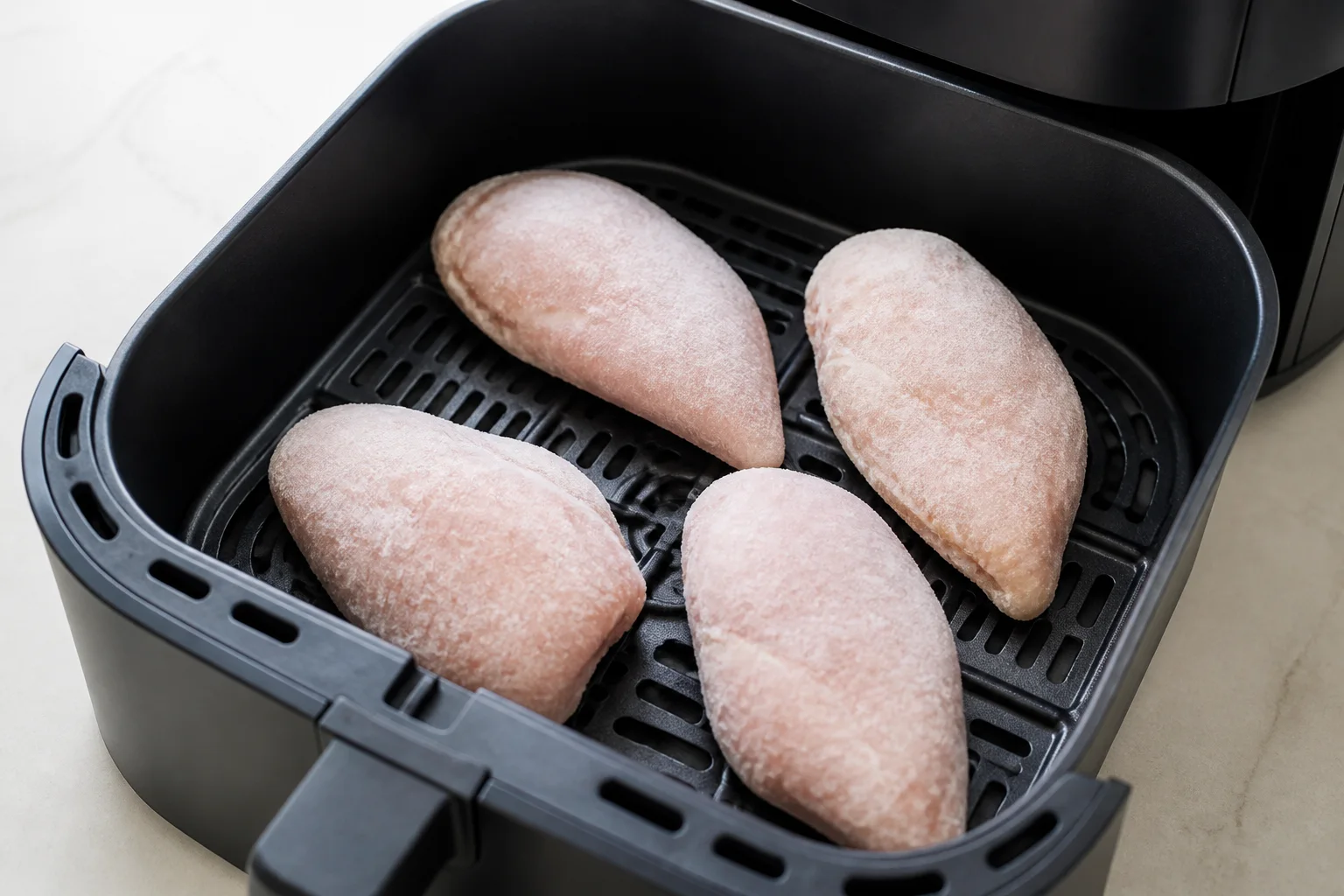
Confirm that the breasts are individually frozen, plain and unstuffed. Remove all packaging and any absorbent pad. Preheat the air fryer to 360°F for 3 minutes if the manufacturer recommends preheating.
Never place foam trays, plastic wrap or absorbent pads in the appliance. If pieces form one hard block, thaw them safely in the refrigerator until they separate.
2. Begin at moderate heat
Brush off loose ice crystals. Arrange the frozen breasts in one layer with visible space between them. Air-fry at 360°F for 10 minutes. The surface should lose its frost and become flexible enough to hold oil and seasoning, although the middle will still be raw and frozen.
3. Dry, oil and season
Mix the spices while the first stage runs. Transfer the chicken to a clean plate with tongs. Pour away melted ice according to the appliance manual.
Pat the chicken surface dry, taking care around the hot edges. Rub with oil, then distribute the seasoning over both sides. Use clean utensils and wash anything that contacted raw chicken.
4. Finish cooking
Return the breasts to the basket in a single layer. Increase the temperature to 375°F and cook for 7 minutes. Turn each piece, then cook for another 7 minutes.
Begin checking the smallest breast after about 24 minutes total. Insert a thermometer from the side into the thickest section. Continue in 2- to 3-minute increments until each piece reaches at least 165°F. Most 5- to 7-ounce breasts need roughly 27 to 32 minutes, but the thermometer decides when they are done.
5. Rest before slicing
Move finished pieces to a clean plate as they reach temperature. Rest for 5 minutes before slicing across the grain. Add lemon and parsley if desired. Do not put cooked chicken back on the plate that held it raw unless the plate has been thoroughly washed.
Timing guide by size
These ranges are checkpoints for plain frozen breasts, not guarantees:
- Small, about 5 ounces: begin checking around 24 to 27 minutes total.
- Medium, about 6 ounces: begin checking around 27 to 30 minutes total.
- Larger, about 7 ounces: expect roughly 30 to 34 minutes total.
A broad, thin breast may cook faster than a lighter compact piece. Remove each breast when its own center reaches 165°F instead of waiting for the largest.
Troubleshooting
The outside is dry but the middle is below 165°F
The chicken is probably too thick or the appliance runs hot. Reduce the heat to 340°F and continue checking in short intervals. Next time, thaw unusually thick breasts.
The seasoning will not stick
Complete the first 10-minute stage, then remove surface moisture before adding oil. Spices applied directly to ice will fall away or collect unevenly in the basket.
The breasts cooked at different speeds
Check the smallest and thinnest first, move it to a clean plate at 165°F and let larger pieces continue.
The surface looks pale
Crowding and moisture reduce browning. Leave space and dry the chicken after warming. Once the center is safe, one minute at 400°F can add color; watch the edges.
Liquid collected under the basket
Some water is expected. If it interferes with airflow, switch off the appliance and empty it as directed in the manual.
Flavor variations
For lemon herb chicken, replace smoked paprika with sweet paprika and finish with lemon zest and parsley. For a mild Southwest version, replace oregano with 1/2 teaspoon ground cumin and serve with lime.
Barbecue sauce contains sugar, so do not apply it during the long frozen-to-cooked process. Brush on a thin layer only after the chicken reaches 160°F, then return it briefly to the fryer and verify a final temperature of at least 165°F.
What to serve with it
Slice the rested chicken for rice bowls, salads, wraps or pasta. Roasted broccoli, green beans or mashed potatoes all work well.
If you plan to reheat the chicken, store the breasts whole. A whole piece loses less moisture than one sliced immediately after cooking.
Storage, freezing and reheating
Refrigerate cooked chicken within 2 hours in a shallow airtight container. FoodSafety.gov’s cold-storage chart recommends using cooked poultry leftovers within 3 to 4 days at 40°F or below.
Reheat a whole breast at 350°F for 4 to 6 minutes, turning once, until it reaches 165°F. For a microwave, add a teaspoon of water, cover loosely and use short intervals.
Cooked chicken can be frozen for about 2 to 3 months for best quality. Cool it promptly, wrap each piece and place the wrapped portions in a freezer-safe container. Thaw overnight in the refrigerator before reheating.
Frequently asked questions
Can you put raw frozen chicken in an air fryer?
Plain, unstuffed frozen boneless chicken can be air-fried when the appliance manual allows it and every piece reaches 165°F. Follow package directions for stuffed or breaded products.
Do I need to thaw chicken before air-frying it?
Not for this recipe. It is designed for individually frozen 5- to 7-ounce boneless breasts. Thaw extra-thick pieces and attached blocks.
Do I need to flip frozen chicken breasts?
Yes. Turning after the first 7 minutes at 375°F exposes both sides to circulating heat and gives a more even finish.
What temperature makes frozen chicken safe?
All poultry should reach at least 165°F in the thickest part. Check every breast separately; the FoodSafety.gov temperature chart lists the same minimum.
Can I stack the chicken?
No. Stacking prevents hot air from reaching all surfaces and can leave cold spots. Cook in batches if the basket cannot hold the breasts in one layer.
Can I use this method for frozen chicken thighs?
Not without adjusting for their shape and fat content. Use a method written specifically for frozen thighs, or thaw them safely and follow the separate boneless-thigh recipe linked above.
Recipe at a glance
| Metric | Details |
|---|---|
| Prep time | 8 minutes |
| Cook time | 30 minutes |
| Total time | 38 minutes |
| Yield | 4 servings |
Printable recipe card
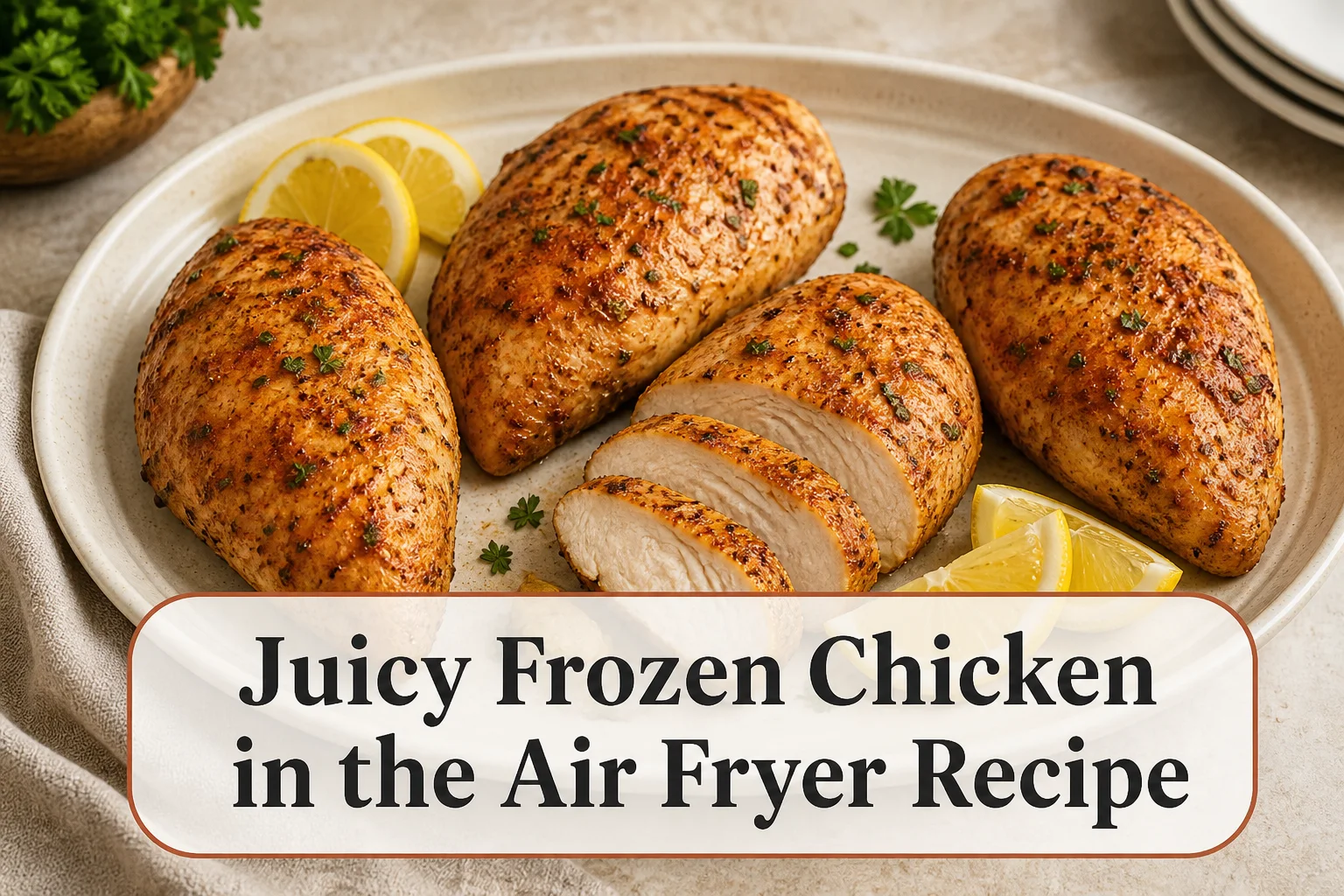
Juicy Frozen Chicken in the Air Fryer Recipe
Ingredients
Equipment
Method
- Preheat the air fryer to 360°F for 3 minutes if recommended. Confirm the breasts are plain, individually frozen and unstuffed.
- Brush off loose ice, arrange the breasts in one layer and cook at 360°F for 10 minutes.
- Mix the spices. Transfer the chicken to a clean plate, pat the surface dry, rub with oil and season both sides.
- Return the chicken to the basket. Cook at 375°F for 7 minutes, turn and cook for another 7 minutes.
- Continue in 2- to 3-minute increments, removing each breast when its thickest point reaches at least 165°F.
- Rest on a clean plate for 5 minutes before slicing. Add lemon and parsley if desired.
Notes
- Use only plain, individually frozen, unstuffed boneless chicken breasts.
- Do not air-fry raw frozen stuffed or breaded chicken products; follow the package directions.
- Check every breast separately and remove it at 165°F.
- This recipe was developed through culinary research and editorial review. Appliance performance and chicken thickness vary.
This recipe was developed through culinary research and editorial review. Air-fryer power and chicken thickness vary, so confirm every piece reaches at least 165°F.
Nutrition is an estimate based on generic ingredient data; actual values vary with breast size and trimming.