
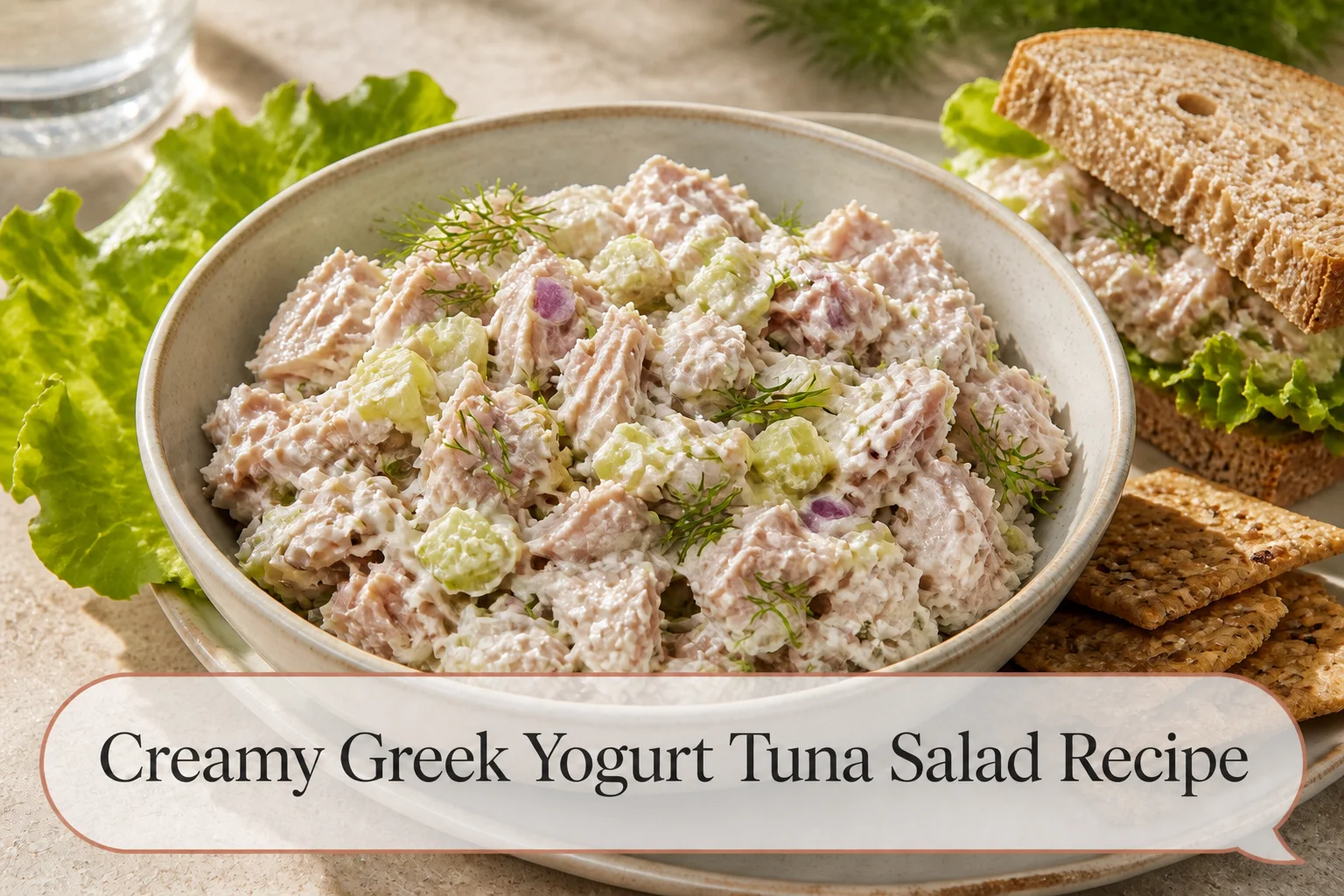
This Greek yogurt tuna salad is creamy enough for a sandwich but sturdy enough to spoon into lettuce cups. Thick yogurt, well-drained tuna and crisp vegetables keep the mixture fresh rather than watery, while Dijon, lemon, dill and pickles build the savory flavor that plain yogurt needs.
The recipe takes about 15 minutes and requires no cooking. The important work happens before mixing: drain the tuna thoroughly, use Greek yogurt rather than regular yogurt and cut the celery and onion small so every spoonful holds together.
This recipe was developed through culinary research and editorial review. Tuna brands, yogurt thickness and pickle saltiness vary, so the method includes texture and seasoning cues instead of relying only on fixed measurements.
For another mayo-free lunch, try the Greek yogurt chicken salad recipe. If you have extra yogurt, the 5-minute Greek yogurt herb sauce uses many of the same fresh flavors.
Why some Greek yogurt tuna salad turns watery
Canned tuna holds liquid between its flakes even after the can is tipped over the sink. That moisture releases when the fish is stirred with salt, acidic lemon juice and vegetables. Celery, onion and pickles also contribute water.
The solution is not to keep adding yogurt. Drain the tuna in a fine-mesh strainer for several minutes, then press it gently with the back of a spoon. Thick Greek yogurt supplies creaminess without the loose whey found in regular yogurt.
Mix the dressing before adding the tuna. This distributes Dijon, lemon and seasonings evenly, so the fish needs only a few folds and keeps a pleasant flaky texture.
Ingredients
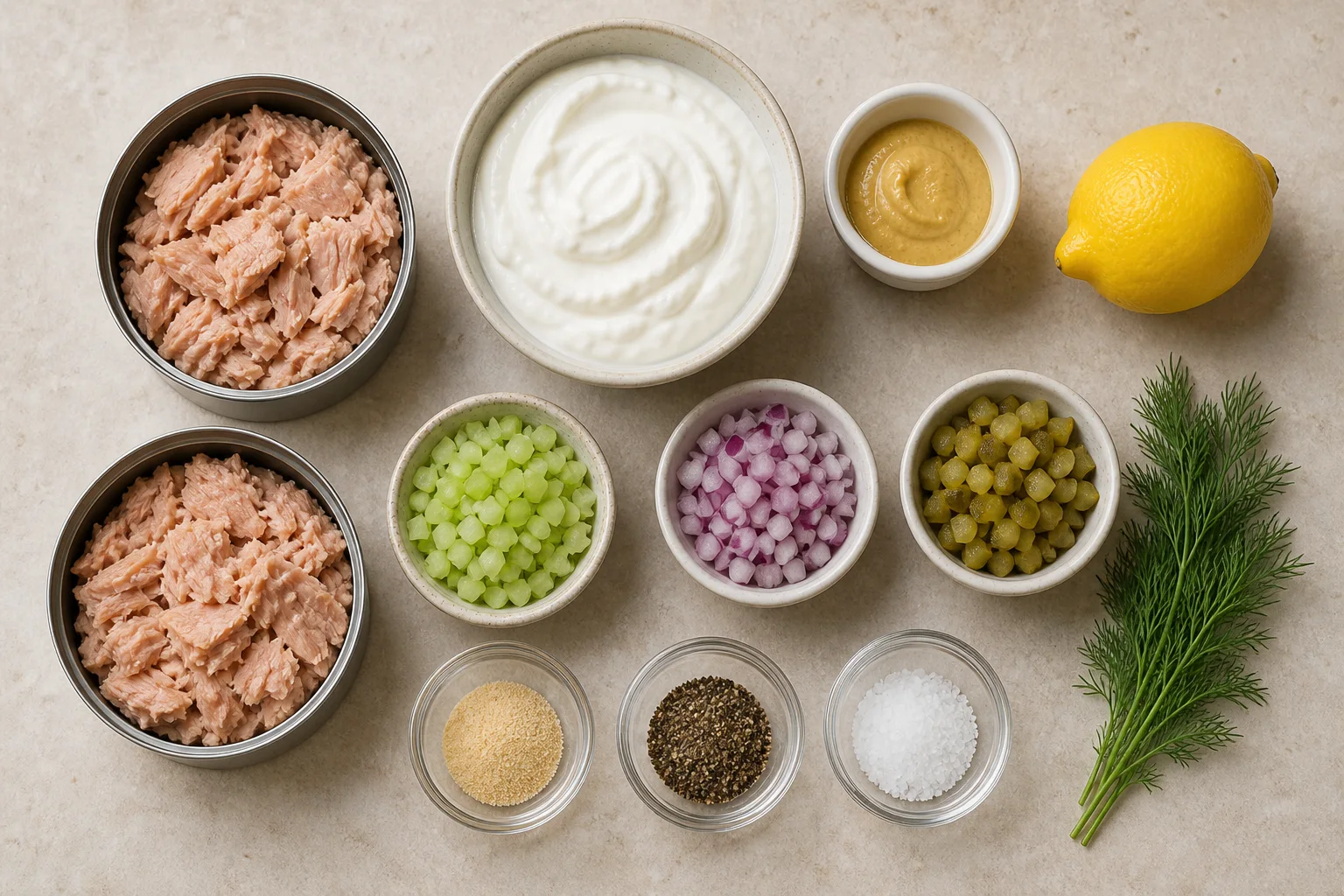
- 2 cans (5 ounces each) tuna packed in water, thoroughly drained
- 1/3 cup plain Greek yogurt, preferably 2% or whole-milk
- 1 tablespoon Dijon mustard
- 1 tablespoon fresh lemon juice
- 1/3 cup finely chopped celery
- 1/4 cup finely chopped red onion
- 2 tablespoons finely chopped dill pickles
- 2 tablespoons chopped fresh dill or flat-leaf parsley
- 1/4 teaspoon garlic powder
- 1/4 teaspoon freshly ground black pepper
- Kosher salt, to taste
Ingredient notes and substitutions
Tuna: Canned light tuna has a softer flake and generally milder price point; solid white albacore is firmer and milder in flavor. Use tuna packed in water for the calibrated moisture level. Oil-packed tuna can work, but drain it very well and expect a richer dressing.
FDA fish guidance classifies canned light tuna as a “Best Choice” and canned albacore as a “Good Choice” in its advice for people who are pregnant or breastfeeding and for children. Consult the current FDA advice about eating fish when those recommendations apply to your household.
Greek yogurt: A thick 2% or whole-milk Greek yogurt gives the most mayo-like texture. Nonfat yogurt works but tastes tangier and may loosen sooner. Regular yogurt is not a direct substitute unless it is strained until thick.
Dijon mustard: Dijon gives a smooth, sharp background. Yellow mustard is milder and slightly sweeter; start with 2 teaspoons and adjust.
Lemon juice: Fresh juice brightens canned tuna. If substituting pickle brine, start with 2 teaspoons because its salt level varies.
Celery and onion: Chop both finely—roughly 1/8- to 1/4-inch pieces. Scallions can replace red onion for a gentler flavor. Seeded cucumber is refreshing but releases more water, so add it only just before serving.
Pickles: Dill pickles add salt, acidity and crunch without making the salad sweet. Sweet relish changes the flavor but can be used if that is your preference. Pat very juicy pickles dry before chopping.
Fresh herbs: Dill is especially good with tuna and lemon; parsley is more neutral. Use 2 teaspoons dried dill when fresh herbs are unavailable, then let the salad rest 10 minutes before adjusting.
How to make Greek yogurt tuna salad
1. Drain the tuna well
Empty the tuna into a fine-mesh strainer set over the sink or a bowl. Let it stand for 3 to 5 minutes, then press gently with the back of a spoon.
Do not squeeze until chalky-dry. The flakes should feel moist but no liquid should pool when they are moved to a plate.
2. Cut the vegetables small
Finely chop the celery, red onion, pickles and herbs. Large pieces make a sandwich fall apart and prevent the dressing from coating the tuna evenly.
If the chopped pickles look wet, blot them on a clean towel. Very sharp red onion can be rinsed briefly in cold water and dried thoroughly.
3. Build the yogurt dressing
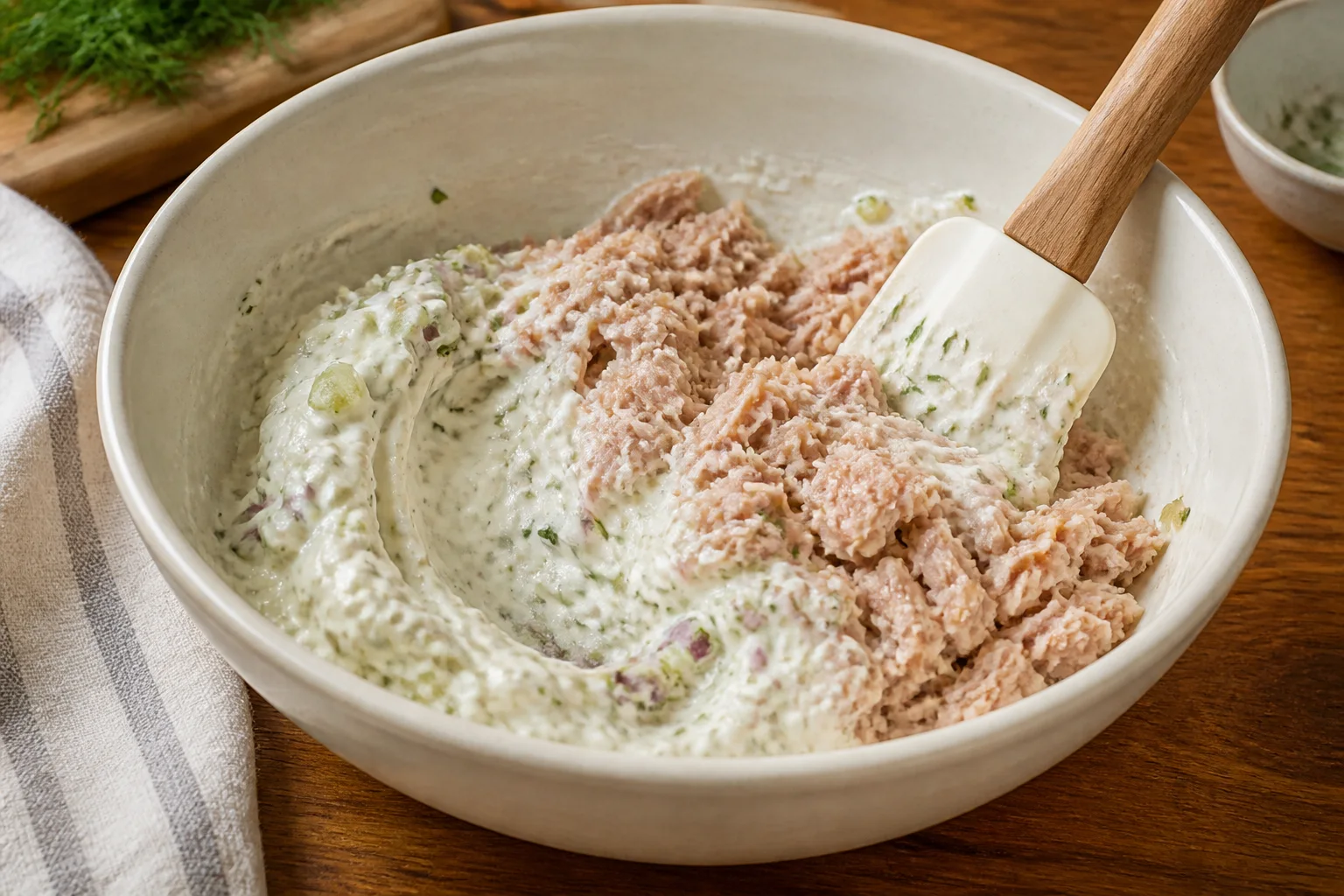
In a medium bowl, stir Greek yogurt, Dijon, lemon juice, garlic powder and black pepper until smooth. Add the celery, onion, pickles and herbs.
Taste the dressing before adding salt. Tuna, mustard and pickles all bring different amounts of sodium, so salting at the beginning can make the finished salad too salty.
4. Fold in the tuna
Add drained tuna and fold with a flexible spatula or fork until coated. Break up only the largest chunks and stop while some distinct flakes remain.
Overmixing compresses the fish into a paste. A few deliberate folds produce a lighter salad that still holds together.
5. Rest, then adjust
Let the salad rest in the refrigerator for 10 minutes. This gives dried herbs time to hydrate and allows the tuna to absorb some dressing.
Stir once. If dry, add Greek yogurt 1 tablespoon at a time. If loose, fold in a little more well-drained tuna or chill 15 minutes. Add salt, pepper or a few drops of lemon only after checking the final balance.
The best Greek yogurt for tuna salad
Choose unflavored Greek yogurt with a short ingredient list and a texture that sits in a mound on a spoon. Some brands are naturally much thicker than others, even at the same fat percentage.
Whole-milk yogurt makes the roundest, least tangy dressing. A 2% yogurt is a reliable middle ground. Nonfat Greek yogurt makes a leaner, sharper salad; an extra teaspoon of Dijon or lemon usually makes that sharpness stronger rather than balancing it.
If the only option is regular plain yogurt, strain it in a coffee filter or cheesecloth set over a strainer in the refrigerator. Once it resembles Greek yogurt, measure the 1/3 cup needed for the recipe.
Do not use vanilla or sweetened yogurt. Even lightly sweetened varieties compete with tuna, mustard and pickles.
How to keep the salad creamy, not wet
Start with drained ingredients. Tuna should not drip, chopped pickles should not carry visible brine and rinsed onion must be dried.
Measure the yogurt rather than adding a large spoonful by eye. More yogurt does not necessarily mean creamier; once the tuna cannot hold the dressing, the excess collects at the bottom.
Keep salt until the end. Salt draws moisture from chopped vegetables during storage. Season only after the 10-minute rest and use the smallest amount that makes the flavors clear.
For meal prep, keep watery additions such as tomato, cucumber or grapes separate. Fold them into an individual portion immediately before eating.
Serving ideas
For sandwiches, use sturdy bread and add lettuce as a moisture barrier. Toasted sourdough, whole-wheat bread and split rolls all hold the filling well.
Spoon the salad into romaine leaves, butter-lettuce cups or halved mini bell peppers for a crisp lunch. It also works over mixed greens with cherry tomatoes and crackers on the side.
For a grain bowl, serve it over cooled quinoa or brown rice and add cucumber just before eating. A squeeze of lemon keeps the bowl bright without requiring another dressing.
To make tuna melts, spread the salad in a thin layer over toasted bread, top with cheese and broil only until melted. Long heating can cause the yogurt dressing to separate, so keep the broiling brief.
Troubleshooting
The tuna salad is watery
The tuna or vegetables carried too much moisture, the yogurt was thin or the mixture sat with salted vegetables. Drain off any obvious liquid, fold in more well-drained tuna and chill for 15 minutes. Do not add breadcrumbs solely to hide excess liquid; they quickly turn pasty.
The dressing tastes too tangy
Nonfat yogurt and a full tablespoon of lemon can taste sharp. Add 1 tablespoon thicker whole-milk yogurt, a pinch of sugar or a little more tuna. Next time begin with 2 teaspoons lemon and adjust.
The salad tastes flat
First add a small pinch of salt, then taste. If the salt is adequate, add another teaspoon of Dijon, a few drops of lemon or more fresh herbs. Adding all three at once makes it difficult to identify what was missing.
The onion is too strong
Rinse chopped onion under cold water, then dry it completely before mixing. Scallions are a milder substitute.
The texture is pasty
The tuna was squeezed too dry or stirred too aggressively. Fold in 1 tablespoon yogurt and some diced celery, stopping as soon as the mixture loosens.
The sandwich becomes soggy
Drain the salad if liquid collected during storage. Toast the bread, use a lettuce barrier and assemble just before serving.
Make-ahead and storage
Store the tuna salad in a shallow airtight container in the refrigerator at 40°F or below. FoodSafety.gov lists tuna salad for 3 to 4 days of refrigerated storage, but texture is best during the first 2 days.
Use a clean utensil each time and return the container promptly to the refrigerator. If the salad has been held above refrigerator temperature for an unsafe length of time, do not rely on smell or appearance to judge it.
Freezing is not recommended. Yogurt can separate after thawing, and celery and onion lose their crisp texture. Make a half batch instead when four servings are more than needed.
Do not store assembled sandwiches for multiple days. Keep bread and wet fillings separate and assemble each portion shortly before eating.
Frequently asked questions
Can you replace mayonnaise with Greek yogurt in tuna salad?
Yes. Thick plain Greek yogurt replaces mayonnaise here, but it is tangier and contains more water. Thorough draining and Dijon help create a creamy, balanced result.
Can I use tuna packed in oil?
Yes. Drain it very well and expect a richer flavor. Because residual oil softens the acidity, taste before adding extra yogurt or lemon.
Is canned light tuna or albacore better?
Canned light tuna is softer and more savory; albacore is firmer and milder. Either works structurally. People following pregnancy, breastfeeding or child fish-consumption guidance should check the current FDA chart because the recommendations differ.
Can I make it without celery?
Yes. Use finely diced bell pepper or simply omit it. Avoid replacing the full amount with cucumber unless adding it just before serving.
How can I make it spicy?
Add minced jalapeño, hot sauce or a pinch of cayenne to the dressing. Start small because hot sauce also contributes acid and salt.
Can I double the recipe?
Yes. Drain each can thoroughly and mix in a wide bowl so the tuna folds evenly without becoming compressed.
Recipe development note
This recipe was developed through culinary research and editorial review. It has not been represented as a personal kitchen test. Tuna moisture, yogurt thickness and ingredient salt levels vary; use the draining, texture and seasoning cues in the method.
Nutrition is an estimate based on generic tuna packed in water and 2% Greek yogurt. The accompanying visuals are AI-assisted food-editorial images, not photographs of a kitchen test.
Recipe at a glance
| Metric | Details |
|---|---|
| Prep time | 15 minutes |
| Total time | 25 minutes |
| Yield | 4 servings |
Printable recipe card
Creamy Greek Yogurt Tuna Salad Recipe
Ingredients
Equipment
Method
- Empty tuna into a fine-mesh strainer for 3 to 5 minutes, then press gently with a spoon. It should remain moist but release no pooling liquid.
- Finely chop celery, red onion, pickles and herbs. Blot juicy pickles dry; rinse and thoroughly dry the onion if a milder flavor is preferred.
- Stir Greek yogurt, Dijon, lemon juice, garlic powder and black pepper in a medium bowl. Fold in celery, onion, pickles and herbs.
- Fold in the drained tuna, breaking up only the largest chunks. Stop while some distinct flakes remain.
- Refrigerate for 10 minutes so the tuna absorbs some dressing and the flavors settle.
- Stir once. Add Greek yogurt 1 tablespoon at a time if dry, then season with salt, pepper or a few drops of lemon to taste. Serve chilled.
Notes
- Drain the tuna for 3 to 5 minutes and press gently.
- Use thick plain Greek yogurt, preferably 2% or whole-milk.
- Salt only after the 10-minute rest.
- Keep tomato and cucumber separate until serving.
- This recipe was developed through culinary research and editorial review.
This recipe was developed through culinary research and editorial review. Tuna moisture, yogurt thickness and ingredient salt levels vary; use the draining, texture and seasoning cues in the method.
Nutrition is an estimate based on generic tuna packed in water and 2% Greek yogurt; actual values vary by brand and serving size.