
This high-protein overnight oats recipe uses Greek yogurt and blended cottage cheese instead of protein powder. The result is creamy rather than chalky, with an estimated 25 grams of protein in each berry-topped jar.
The recipe makes four breakfasts at once. Old-fashioned oats and chia absorb the dairy base overnight, while a small amount of maple syrup, vanilla and cinnamon rounds out the tang without making the jars dessert-sweet.
This recipe was developed through culinary research and editorial review. Oat brands, yogurt thickness and cottage-cheese moisture vary, so use the texture adjustments below after chilling.
For a warm make-ahead option, the high-protein breakfast casserole cuts into reheatable portions. If you prefer a fruit-forward oat recipe without cottage cheese, try these apple cinnamon overnight oats.
Why these protein overnight oats stay creamy
Protein powder is convenient, but many formulas absorb aggressively and leave chilled oats pasty or gritty. This base gets its protein from ordinary refrigerated ingredients: Greek yogurt, cottage cheese and milk.
Blending the cottage cheese is the important step. It breaks down the curds before they meet the oats, making the dairy base smooth and spoonable. The oats then hydrate evenly instead of sitting in pockets of dry powder.
Chia seeds provide structure, but the recipe keeps them measured. Too much chia turns a jar into a firm gel. Three tablespoons across four servings are enough to prevent looseness without masking the oat texture.
Ingredients
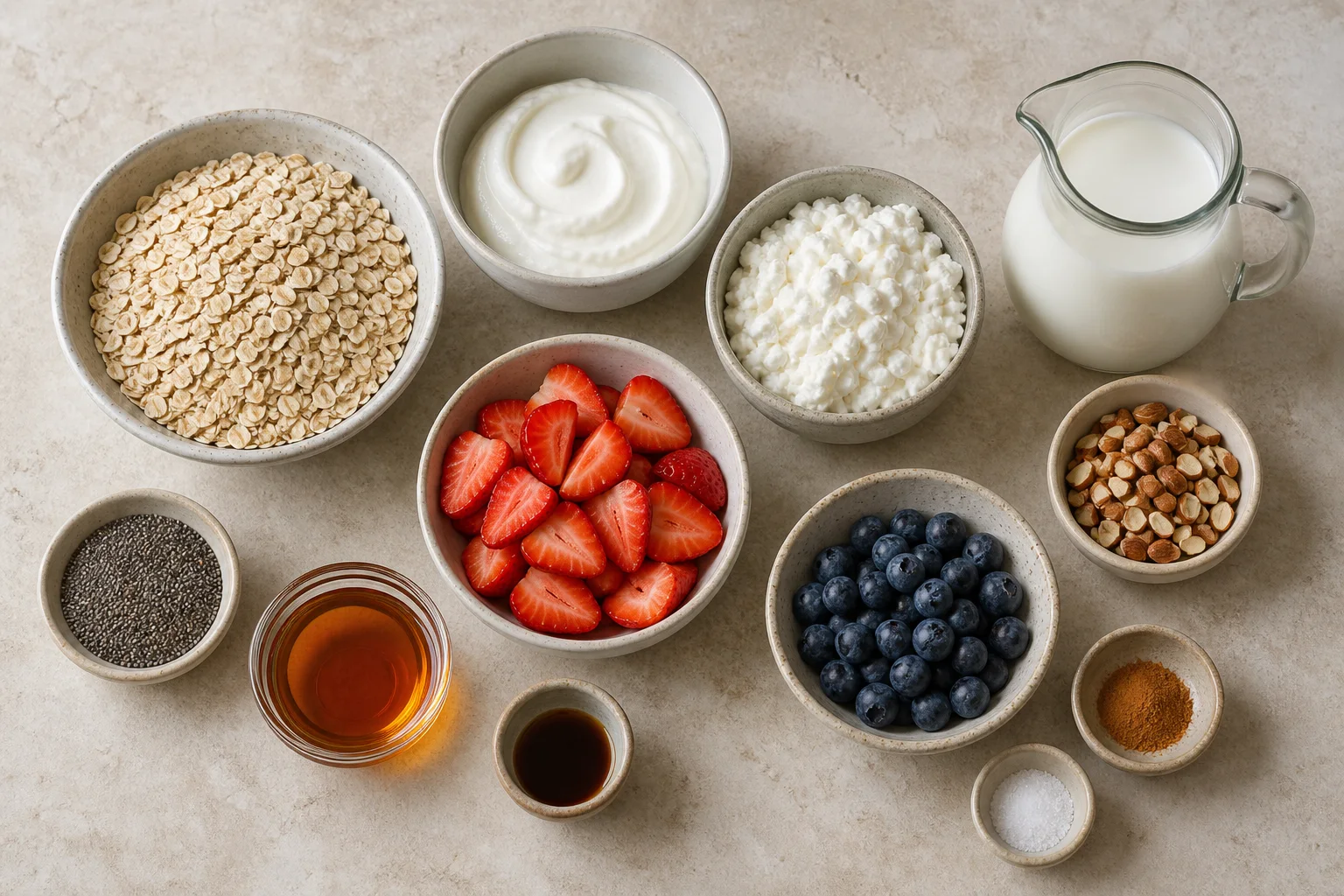
- 2 cups old-fashioned rolled oats, 180 grams
- 1 1/2 cups plain Greek yogurt, 360 grams
- 1 cup 2% cottage cheese, 226 grams
- 1 1/2 cups milk, plus more to adjust, 360 grams
- 3 tablespoons chia seeds, 36 grams
- 3 tablespoons pure maple syrup, 60 grams
- 2 teaspoons vanilla extract, 10 milliliters
- 1 teaspoon ground cinnamon
- 1/4 teaspoon fine salt
- 2 cups sliced strawberries or mixed berries, 300 grams
- 1/4 cup chopped toasted almonds, optional, 30 grams
Ingredient notes and substitutions
Old-fashioned rolled oats: These soften while retaining a gentle chew. Quick oats produce a softer, more uniform texture. Steel-cut oats do not soften enough in this formula and should not be substituted one-for-one.
Greek yogurt: Plain 2% Greek yogurt gives a creamy, balanced result. Nonfat yogurt works but tastes tangier and may need an extra teaspoon of maple syrup. Regular yogurt is thinner; begin with 1 cup milk instead of 1 1/2 cups.
Cottage cheese: Use small- or large-curd cottage cheese because it will be blended. A 2% version balances protein and richness. Sodium and moisture vary by brand, which is why the salt is modest.
Milk: Dairy milk contributes additional protein. Unsweetened soy milk is the closest nondairy option for protein, though the nutrition estimate changes. Almond and oat milks work for texture but generally provide less protein.
Chia seeds: Black or white chia seeds work equally well. Ground flaxseed can replace them, but the jars will be softer and slightly less cohesive.
Maple syrup: Honey can replace maple syrup. For an unsweetened version, omit it and add ripe banana or naturally sweet fruit when serving.
Berries: Fresh berries give the cleanest texture. Frozen berries release juice as they thaw; add them on top, not stirred through, or wait until serving.
Almonds: Toasted almonds add crunch but are optional. Pumpkin seeds or sunflower seeds provide a nut-free topping; check packaging for cross-contact if allergies are a concern.
How to make high-protein overnight oats
1. Blend the dairy base
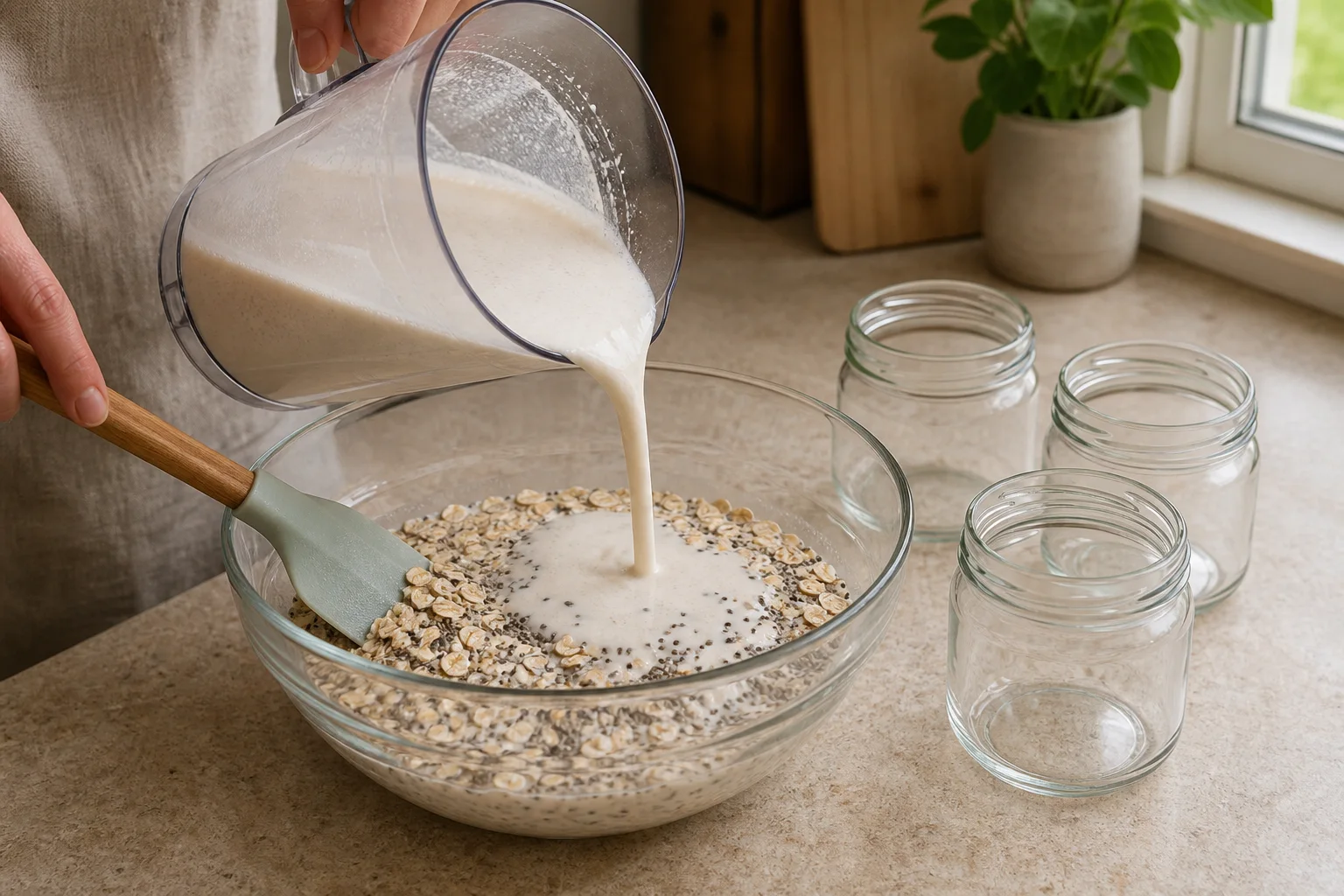
Add Greek yogurt, cottage cheese, milk, maple syrup, vanilla, cinnamon and salt to a blender. Blend for 30 to 45 seconds, stopping once the mixture is completely smooth. Prolonged blending can make the base foamy.
2. Combine oats and chia
Put rolled oats and chia seeds in a large bowl. Stir them together before adding liquid so the chia is evenly distributed rather than clumped in one jar.
3. Add the blended mixture
Pour the dairy base over the oats. Fold slowly, scraping the bottom of the bowl, until no dry pockets remain. Let the mixture stand for 5 minutes, then stir once more; this second stir catches early chia clumps.
4. Divide into containers
Divide among four clean containers with lids, about 1 1/4 cups of oat mixture per container. Leave room for fruit and a final splash of milk. Pint jars fit, but wider meal-prep containers are easier to stir.
5. Chill
Cover immediately and refrigerate for at least 4 hours, preferably 8 to 12 hours. Keep the refrigerator at 40°F or below. The oats should become tender and creamy, not dry enough to hold a sharp peak.
6. Adjust and serve
Stir each jar thoroughly before eating. If it is thicker than you like, add milk 1 tablespoon at a time. Top with berries and optional almonds just before serving.
Overnight-oats texture guide
| What you see after chilling | Likely reason | Best adjustment |
|---|---|---|
| Creamy and softly mounded | Ratio is balanced | Add fruit and serve |
| Very thick or pasty | Yogurt or oats absorbed more liquid | Stir in 1 to 2 tablespoons milk |
| Loose liquid around oats | Yogurt was thin or chia was omitted | Stir in 1 teaspoon chia and chill 30 minutes |
| Chalky or gritty | Protein powder was added or not dissolved | Blend powder into the dairy base; reduce to 1 tablespoon per jar |
| Watery streaks near fruit | Frozen fruit thawed in the oats | Layer fruit on top or add it at serving |
| Hard, distinctly chewy grains | Steel-cut oats were used | Use old-fashioned rolled oats next time |
The best container size
Each serving needs space for approximately 1 1/4 cups of oat mixture plus fruit and stirring room. A 16-ounce wide-mouth jar is workable when the berries are packed separately. An 18- to 20-ounce container is more comfortable when fruit is added before transport.
Use containers with tight-fitting lids because dairy absorbs refrigerator odors. Wide openings also make it easier to scrape the corners where chia can settle.
Glass is convenient for seeing the texture, but food-safe plastic is lighter for commuting. The material does not change hydration; the seal and refrigerator temperature matter more.
How much protein is in one jar?
One of four servings has an estimated 25 grams of protein before optional almonds. Greek yogurt and cottage cheese provide most of it, with smaller contributions from milk, oats and chia.
The estimate is based on common U.S. package labels, not laboratory analysis. Yogurt, cottage cheese and milk vary by brand, so use your package values when precise tracking matters.
“High protein” describes this recipe’s protein-forward ingredient balance. It is not a medical, muscle-building or weight-loss promise, and individual needs vary.
Can I add protein powder?
Yes, but it is not needed for the base recipe. If you want to use it, start with 1/4 cup unflavored or vanilla powder for the entire batch—about 1 tablespoon per jar.
Blend the powder with the dairy ingredients before it touches the oats. Then add 1/4 cup extra milk because powder usually absorbs liquid. Chill one portion before increasing the amount; whey, casein and plant blends thicken differently.
Avoid adding a full scoop to every jar without more liquid. That is the most common route to a chalky, cement-like texture.
Flavor variations
Peanut butter banana: Blend 1/4 cup peanut butter into the base. Add sliced banana only at serving so it does not brown. This increases calories, fat and protein.
Blueberry lemon: Replace cinnamon with 2 teaspoons finely grated lemon zest. Top with blueberries after chilling.
Chocolate: Blend in 2 tablespoons unsweetened cocoa and add 2 to 4 tablespoons milk. Taste before adding extra maple syrup.
Apple cinnamon: Fold in 1 cup finely diced apple and increase cinnamon to 1 1/2 teaspoons. Choose a crisp apple for texture.
Pumpkin spice: Replace 1/2 cup milk with 1/2 cup pumpkin purée and add 1 teaspoon pumpkin pie spice. The batch will be thicker, so adjust after chilling.
Nut-free crunch: Use toasted pumpkin seeds or crisp rice cereal added at serving. Do not stir crisp toppings in overnight.
Meal-prep order for the best texture
Blend the base first, mix the oats second and portion the batch before adding fruit. That order gives every jar the same oat-to-liquid ratio.
For four days of breakfasts, keep berries in a separate container and add them each morning. Fresh strawberries soften and release juice with prolonged storage; blueberries and raspberries generally hold their shape a little better.
Pack crunchy toppings separately. Even toasted nuts soften when surrounded by yogurt overnight.
Do not warm the entire batch repeatedly. Remove one jar, keep the other three refrigerated and use a clean spoon each time.
Troubleshooting
My overnight oats are too thick
Greek-yogurt brands differ considerably. Stir in cold milk 1 tablespoon at a time after chilling. Adjusting before the full soak can make the final jar too loose.
The oats are watery
Regular yogurt or thawing fruit may have added water. Stir thoroughly first. If still loose, add 1 teaspoon chia per jar and wait 30 minutes.
I can still see cottage-cheese curds
The base was not blended long enough. The oats are still safe to eat if kept cold, but blend the dairy mixture completely next time for a smoother texture.
The chia formed clumps
Chia settled before it hydrated evenly. Mix it with dry oats first and stir the combined mixture again after a 5-minute rest.
The flavor is too tangy
Nonfat yogurt can taste sharper. Add berries, a small extra drizzle of maple syrup or use 2% Greek yogurt next time. A pinch of salt also softens perceived acidity.
The oats taste raw
They did not soak long enough or the grains are unusually thick. Give old-fashioned oats 8 to 12 hours for the most even texture.
Storage and food safety
Cover and refrigerate the jars immediately at 40°F or below. Use within 4 days. Add delicate fruit and crunchy toppings at serving for the best quality.
The USDA advises keeping cold perishable food at 40°F or below and generally using refrigerated leftovers within 3 to 4 days in its leftovers and food safety guidance.
Do not leave a dairy-based jar at room temperature longer than 2 hours, or 1 hour when the surrounding temperature is above 90°F. For commuting, use an insulated lunch bag with a frozen cold pack.
Freezing is not recommended for the best texture. Yogurt can separate, fresh fruit softens and hydrated oats may become watery after thawing. If you do freeze a plain jar, thaw it overnight in the refrigerator and stir thoroughly before judging the consistency.
Frequently asked questions
Do overnight oats have to sit all night?
No. Four hours is the practical minimum, but 8 to 12 hours produces more evenly tender rolled oats.
Can I eat these oats warm?
Yes. Transfer one portion to a microwave-safe bowl and heat gently, stirring every 30 seconds. The yogurt may look slightly less smooth when warmed.
Can I use quick oats?
Yes, but the result will be softer and less chewy. Check after 2 to 4 hours because quick oats hydrate faster.
Can I use steel-cut oats?
Not in this ratio. Steel-cut oats remain much firmer and need a recipe developed specifically for them.
Is protein powder required?
No. Greek yogurt, blended cottage cheese, milk, oats and chia provide an estimated 25 grams per serving.
How long do the jars keep?
Keep them covered at 40°F or below and use within 4 days. Add berries and nuts at serving for better texture.
Can I make this dairy-free?
Use a thick plant-based yogurt, blended silken tofu and unsweetened soy milk. Protein and liquid absorption will change, so begin with less milk and adjust after chilling.
Recipe development note
This high-protein overnight oats recipe was developed through culinary research and editorial review. It is not represented as a personal kitchen test. Yogurt thickness, cottage-cheese moisture and oat absorption vary; use the visual texture guide and final milk adjustment.
Nutrition is an estimate per one of four servings before optional almonds. The accompanying visuals are AI-assisted food-editorial images, not photographs of a kitchen test.
Printable recipe card
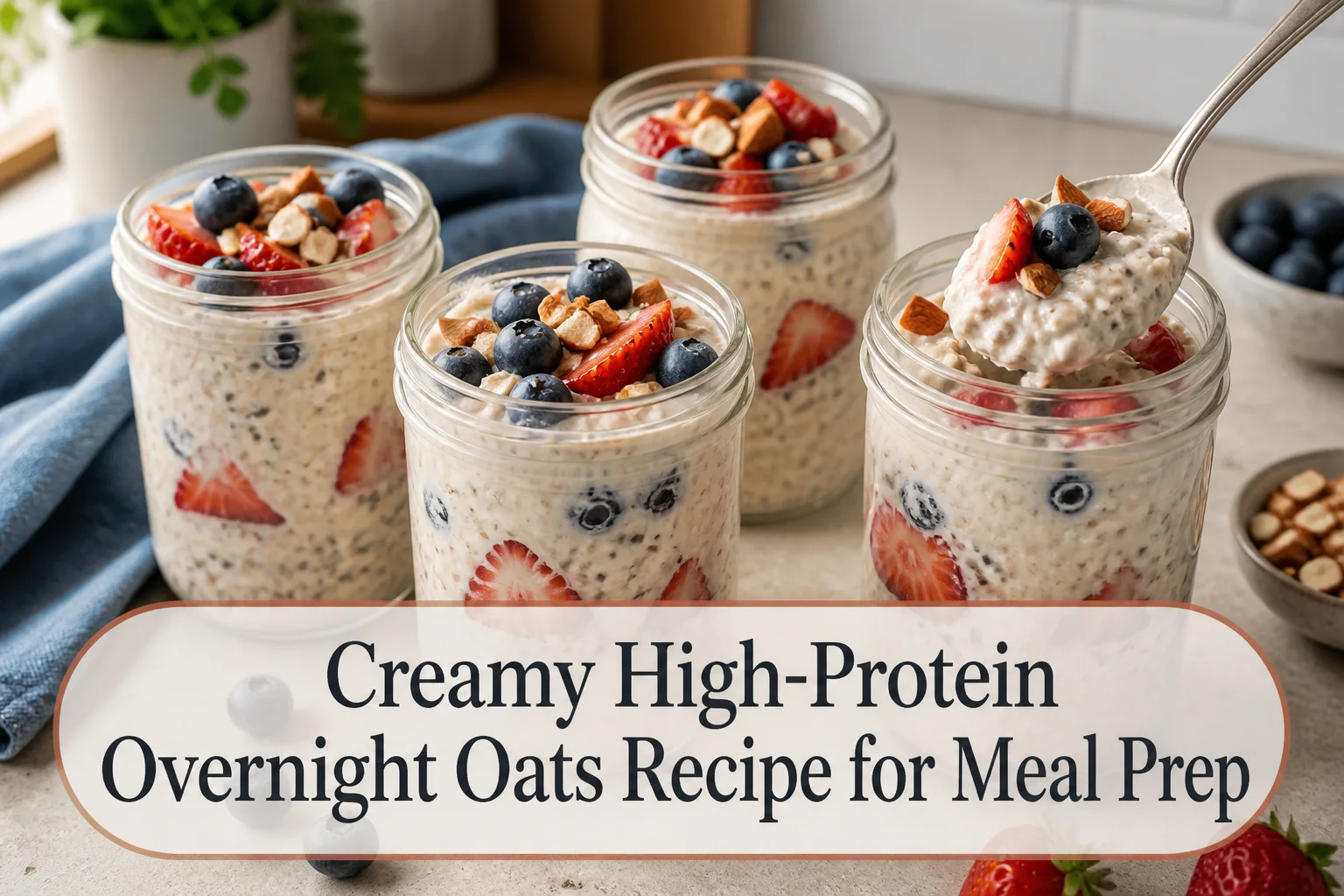
Creamy High-Protein Overnight Oats Recipe for Meal Prep
Ingredients
Equipment
Method
- Blend Greek yogurt, cottage cheese, milk, maple syrup, vanilla, cinnamon and salt for 30 to 45 seconds until completely smooth.
- Stir rolled oats and chia seeds together in a large bowl so the chia is evenly distributed.
- Fold the dairy base into the oats until no dry pockets remain; rest 5 minutes, then stir again to break up early chia clumps.
- Divide the mixture among four clean 16- to 20-ounce containers, leaving room for fruit and stirring.
- Cover immediately and refrigerate at 40°F or below for at least 4 hours, preferably 8 to 12 hours.
- Stir each jar, add milk 1 tablespoon at a time if too thick, and top with berries and optional almonds just before serving.
Notes
- Use old-fashioned rolled oats; steel-cut oats do not soften sufficiently in this ratio.
- Blend cottage cheese completely smooth before combining with oats.
- Stir again after 5 minutes to prevent chia clumps.
- Add fruit and crunchy toppings at serving for the best texture.
- Keep at 40°F or below and use within 4 days.
- Contains milk; optional almonds are tree nuts.
- This recipe was developed through culinary research and editorial review.
This recipe was developed through culinary research and editorial review. Yogurt thickness, cottage-cheese moisture and oat absorption vary; use the texture guide and final milk adjustment.
Nutrition is an estimate per one of four servings before optional almonds.