
This high-protein breakfast casserole combines eggs, egg whites, cottage cheese, turkey sausage, vegetables and cheddar in a 9-by-13-inch pan. It cuts into eight substantial portions with an estimated 32 grams of protein each and is designed to remain moist after reheating.
The moisture comes from a controlled egg-white ratio and blended cottage cheese, not from leaving the center underdone. Cooked vegetables are cooled before the custard is added, and the casserole leaves the oven as soon as the center reaches 165°F.
This recipe was developed through culinary research and editorial review. Cottage-cheese moisture, pan material and oven calibration vary, so use the thermometer, center-set and resting cues below.
For a fast single-serving savory breakfast, try the rolled oats with egg and spinach recipe. The banana oat breakfast cookies are a portable make-ahead option without sausage.
Why reheated egg casseroles become dry
Egg proteins continue firming as temperature rises. A casserole baked until deeply browned and completely rigid is already overcooked before it reaches the refrigerator; reheating makes it tougher.
Liquid egg whites increase protein but contain little fat. Using them in equal partnership with whole eggs—rather than replacing every yolk—keeps the custard tender. Blended cottage cheese holds moisture and disappears into the egg base.
Vegetables need precooking. Raw peppers, onions and spinach release water in the oven, creating wet pockets that tempt extra baking. Sautéing drives off excess moisture before assembly.
Ingredients
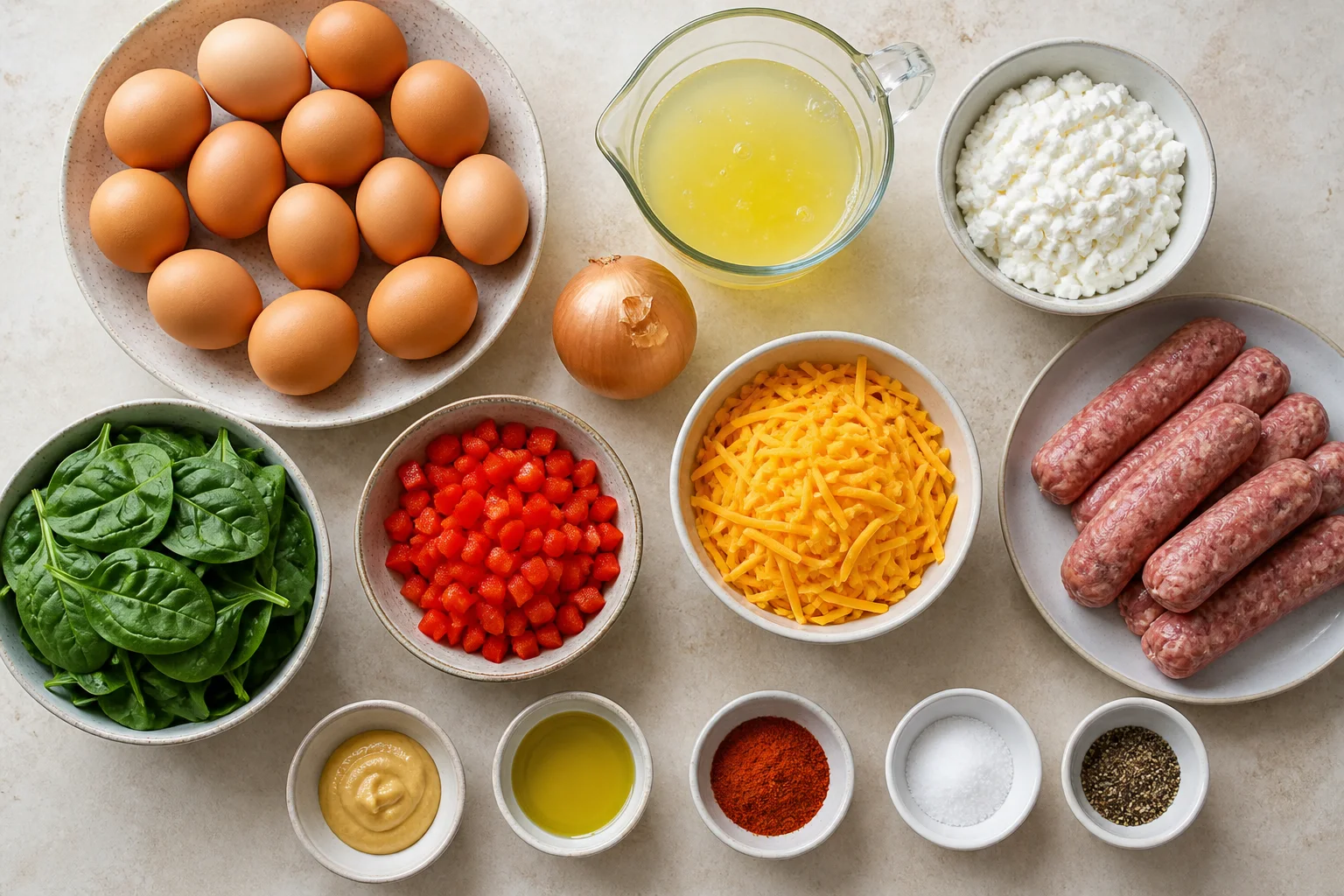
- 1 tablespoon olive oil, 14 grams
- 12 ounces raw turkey breakfast sausage, casings removed, 340 grams
- 1 medium yellow onion, diced, about 150 grams
- 1 medium red bell pepper, diced, about 150 grams
- 5 ounces baby spinach, roughly chopped, 142 grams
- 12 large eggs, about 600 grams without shells
- 2 cups pasteurized liquid egg whites, 480 grams
- 1 1/2 cups cottage cheese, 340 grams
- 1 teaspoon Dijon mustard, 5 grams
- 1 teaspoon garlic powder
- 1/2 teaspoon smoked paprika
- 1/2 teaspoon fine salt
- 1/2 teaspoon black pepper
- 1 cup shredded sharp cheddar, divided, 113 grams
- Chopped scallions or parsley for serving, optional
Ingredient notes and substitutions
Turkey sausage: Use raw turkey breakfast sausage and cook it fully before assembly. Chicken sausage works when crumbled and cooked. Fully cooked links may be diced and browned briefly.
Egg whites: Refrigerated pasteurized liquid egg whites are easiest to measure. Do not use a sweetened or flavored egg product.
Cottage cheese: Full-fat or 2% cottage cheese gives the most forgiving texture. Blending removes curds. Low-fat cottage cheese can make the bake slightly firmer.
Spinach: Fresh spinach cooks down quickly. Thawed frozen spinach works only after it is squeezed extremely dry; use 5 ounces after squeezing.
Cheddar: Sharp cheddar contributes flavor with a measured amount. Monterey Jack melts more softly; part-skim mozzarella is milder.
Vegetables: Broccoli, mushrooms or zucchini can substitute only after cooking away their water. Keep the cooked vegetable volume near 3 cups.
Dijon: Dijon adds savory depth without making the casserole taste mustardy. It may contain sulfites depending on brand.
How to make high-protein breakfast casserole
1. Prepare the pan and oven
Heat the oven to 350°F. Lightly grease a 9-by-13-inch metal or ceramic baking dish. Set it on a sheet pan if the dish is very full.
2. Cook the turkey sausage
Heat olive oil in a large skillet over medium. Add turkey sausage and break it into small crumbles. Cook until no pink remains and the center of the largest piece reaches 165°F. Transfer to a plate.
3. Sauté onion and pepper
Add onion and bell pepper to the same skillet. Cook 6 to 8 minutes, stirring, until softened and surface moisture has evaporated.
4. Wilt and dry the spinach
Add spinach in handfuls. Cook 2 to 3 minutes until wilted, then continue until no liquid remains in the skillet. Remove from heat and cool for 10 minutes.
5. Blend the cottage cheese base
Blend cottage cheese, Dijon, garlic powder, smoked paprika, salt and pepper for 30 to 45 seconds until smooth.
6. Mix the eggs gently
In a large bowl, whisk whole eggs and liquid egg whites only until uniform. Whisk in the blended cottage cheese. Avoid creating a thick layer of foam.
7. Assemble
Spread turkey sausage and cooled vegetables evenly in the baking dish. Sprinkle with 3/4 cup cheddar. Pour egg mixture slowly over the fillings and use a fork to distribute any crowded areas. Top with remaining 1/4 cup cheese.
8. Bake and check early
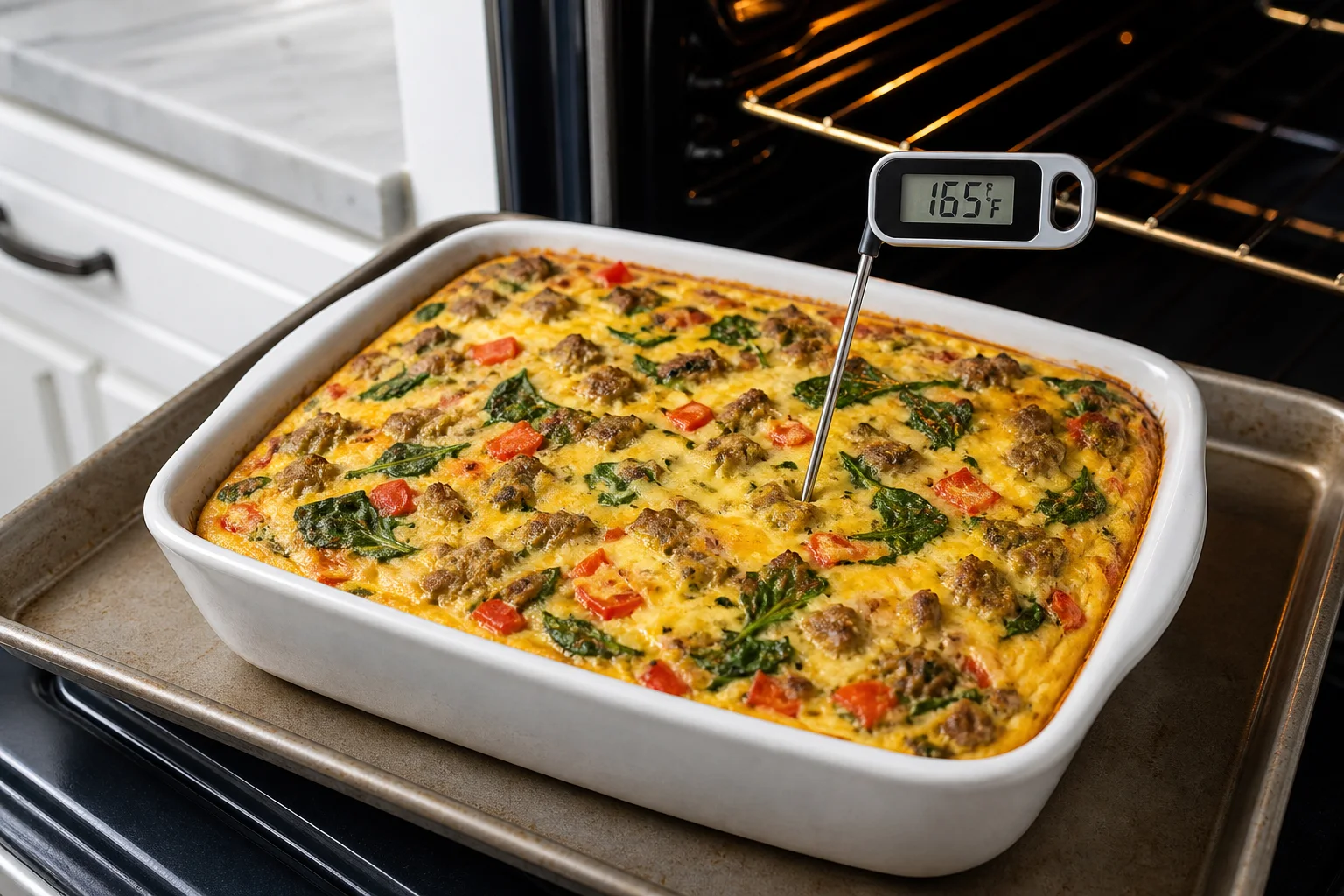
Bake 32 to 42 minutes. Begin checking at 30 minutes. The edges should be set, the center should no longer ripple and a thermometer inserted in the center should reach 165°F.
9. Rest before cutting
Rest on a rack for 15 minutes. The center finishes settling and slices release more cleanly. Cut into eight portions with a thin knife.
Breakfast casserole doneness guide
| Cue | Meaning | Action |
|---|---|---|
| Center ripples like liquid | Not set | Bake 5 minutes, then recheck |
| Center moves as one soft piece | Nearly done | Check temperature in the center |
| Center reaches 165°F | Done | Remove from oven |
| Edges are deeply brown and center domed | Likely overbaked | Remove immediately and shorten next bake |
| Water appears around vegetables | Vegetables were wet | Precook until skillet is dry |
| Slice holds after 15-minute rest | Correct structure | Portion for serving or cooling |
Why cottage cheese works in egg casserole
Cottage cheese contains milk protein, moisture and a moderate amount of fat. Blended into the egg base, it creates a cohesive custard without visible curds.
It is not a substitute for every egg. Whole eggs provide emulsifiers and structure, while liquid whites raise protein. The combination is more balanced than using whites alone.
Blend cottage cheese separately before it meets raw eggs. This produces a smoother base without prolonged blending that would whip excessive air into the eggs.
Protein per serving
Based on common ingredient labels, one of eight portions provides an estimated 32 grams of protein. The main sources are eggs, egg whites, cottage cheese, turkey sausage and cheddar.
That number is not laboratory-tested. Sausage, cottage cheese and liquid egg-white labels vary, so calculate from the packages you use if precise intake matters.
“High protein” describes the recipe’s protein-forward formulation; it is not a medical, muscle-building or weight-loss promise. Suitability depends on individual needs and the full eating pattern.
Make-ahead options
Cook now, reheat later: This is the preferred approach. Bake, rest 15 minutes, cut and cool portions in shallow containers before refrigerating.
Prep components one day ahead: Cook sausage and vegetables and refrigerate separately. Blend cottage cheese and refrigerate. Whisk eggs and assemble shortly before baking.
Do not hold the fully assembled raw casserole for days: Raw eggs and cooked fillings have different storage considerations, and a refrigerator-cold dish takes longer to bake. Assemble within 24 hours if necessary and cook immediately after removing from the refrigerator, allowing extra time while still using temperature cues.
Reheating without drying it out
Place one portion on a microwave-safe plate and cover loosely with a microwave cover or damp paper towel. Microwave at 50% power for 60 seconds, then in 20-second intervals until the center reaches 165°F.
Lower power warms the center before the edges tighten. A teaspoon of water beside—not poured over—the slice can add steam under a cover.
For several portions, cover in a baking dish and heat at 325°F until centers reach 165°F. Remove the cover for only the last few minutes if a drier top is desired.
Variations
Vegetarian: Omit sausage and add 2 cups cooked dry vegetables plus another 1/2 cup cottage cheese. Protein per serving will change.
Broccoli cheddar: Replace spinach and pepper with 3 cups finely chopped cooked broccoli, dried well.
Southwest: Add one seeded jalapeño, replace smoked paprika with chili powder and use pepper Jack.
Mushroom: Brown 12 ounces sliced mushrooms until the skillet is completely dry before adding spinach.
No cheddar: Omit cheese and increase salt only after considering sausage sodium. The casserole will be less rich.
Turkey-free: Use cooked chicken sausage or a fully cooked plant-based crumble, checking package directions and allergens.
Troubleshooting
The casserole is watery
Vegetables released moisture or the casserole was cut immediately. Cook vegetables until the skillet is dry and rest 15 minutes.
The casserole is rubbery
It baked too long or reheated at full power. Remove at 165°F and reheat at 50% microwave power.
The center is underdone
The pan may be deep, ingredients cold or oven inaccurate. Continue in 5-minute intervals and verify the center reaches 165°F.
Cottage cheese curds are visible
The cheese was not blended long enough. Process until smooth before mixing with eggs.
The casserole puffed and collapsed
Eggs were whipped foamy or the bake was too hot. Whisk gently and verify 350°F with an oven thermometer.
The bottom is greasy
Sausage released fat. Drain cooked crumbles before spreading them in the pan.
Storage, cooling and freezing
Refrigerate portions within 2 hours. Use shallow covered containers and keep the refrigerator at 40°F or below. Eat within 3 to 4 days.
USDA lists 165°F for casseroles and reheated leftovers on its safe minimum internal temperature chart. Check the center with a clean food thermometer.
Freeze fully cooled individual portions for up to 2 months for best quality. Wrap each slice, place in a freezer container and thaw overnight in the refrigerator before reheating. Freezing can release a small amount of moisture, but blended cottage cheese helps the structure remain cohesive.
Do not leave the whole hot casserole in a deep covered pan for prolonged cooling. Portioning creates more surface area so heat leaves faster.
Frequently asked questions
How much protein is in each serving?
One of eight portions has an estimated 32 grams, depending on ingredient brands.
Can I use only egg whites?
It is not recommended. Yolks contribute fat, emulsifiers and tenderness that protect reheated texture.
Can I make the casserole the night before?
You may assemble up to 24 hours ahead, but cooking and reheating is more predictable. A cold assembled dish needs extra bake time.
What temperature should the center reach?
For this casserole, cook the center to 165°F and verify with a food thermometer.
Can I use frozen spinach?
Yes. Thaw and squeeze it extremely dry; measure 5 ounces after squeezing.
How long does it keep?
Refrigerate for 3 to 4 days or freeze individual portions for up to 2 months for best quality.
Can I reheat it in the microwave?
Yes. Cover and use 50% power, checking in short intervals until the center reaches 165°F.
Recipe development note
This high-protein breakfast casserole was developed through culinary research and editorial review. It is not represented as a personal kitchen test. Cottage-cheese moisture, pan material and oven calibration vary; use the thermometer, center-set and resting cues.
Nutrition is an estimate per one of eight portions. The accompanying visuals are AI-assisted food-editorial images, not photographs of a kitchen test.
Printable recipe card

Moist High-Protein Breakfast Casserole Recipe for Meal Prep
Ingredients
Equipment
Method
- Heat oven to 350°F and lightly grease a 9-by-13-inch baking dish.
- Brown turkey sausage in olive oil, breaking into crumbles, until the largest piece reaches 165°F; transfer to a plate.
- Sauté onion and pepper 6 to 8 minutes, add spinach and cook until wilted and the skillet is dry; cool 10 minutes.
- Blend cottage cheese, Dijon, garlic powder, smoked paprika, salt and pepper for 30 to 45 seconds until smooth.
- Whisk whole eggs and liquid whites gently until uniform, then whisk in blended cottage cheese without making foam.
- Spread sausage and cooled vegetables in the dish, add 3/4 cup cheddar, pour in egg mixture and top with remaining cheese.
- Bake 32 to 42 minutes, checking at 30, until the center no longer ripples and reaches 165°F.
- Rest on a rack 15 minutes before cutting into eight portions.
Notes
- Cook turkey sausage to 165°F before assembly.
- Cook vegetables until the skillet is dry.
- Blend cottage cheese separately and whisk eggs gently.
- Remove casserole when the center reaches 165°F.
- Rest 15 minutes before slicing.
- Refrigerate 3 to 4 days; reheat leftovers to 165°F.
- Contains egg and milk; Dijon may contain sulfites depending on brand.
- This recipe was developed through culinary research and editorial review.
This recipe was developed through culinary research and editorial review. Cottage-cheese moisture, pan material and oven calibration vary; use the thermometer, center-set and resting cues.
Nutrition is an estimate per one of eight portions.