
This rolled oats recipe turns a familiar breakfast grain into a savory one-pan meal with spinach, egg, Parmesan, scallions and black pepper. The oats cook in broth until creamy, then beaten eggs are streamed into the simmering pan so they form tender ribbons and cook evenly rather than sitting raw on top.
The result is closer to a loose risotto or congee than a sweet bowl of oatmeal. Toasting the oats briefly builds a nutty base, adding broth in two stages controls thickness, and wilting the spinach only at the end preserves its color.
This recipe was developed through culinary research and editorial review. Rolled-oat thickness, broth sodium, burner strength, pan width and egg size vary, so use the simmer, spoon-path and egg-setting cues instead of relying only on minutes.
For a baked use of the same grain, see the soft oatmeal bread recipe or blueberry oat muffins. The healthy oatmeal raisin cookies retain whole flakes for chew rather than cooking them into a creamy meal.
Why rolled oats work in a savory meal
Rolled oats have been steamed and flattened, so they cook quickly while retaining some structure. Their starch thickens broth in much the same way rice can thicken a simple porridge, but the cooking time is shorter.
Broth, garlic, scallion and Parmesan replace the cinnamon, milk and sweetener commonly paired with oatmeal. Egg adds protein and a soft ribbon texture when it is poured slowly into simmering oats.
The flavor is intentionally moderate so toppings can change the direction. Chili crisp makes it spicier; mushrooms add earthiness; lemon adds brightness. The base remains recognizable as oatmeal, but it no longer tastes like dessert.
Ingredients
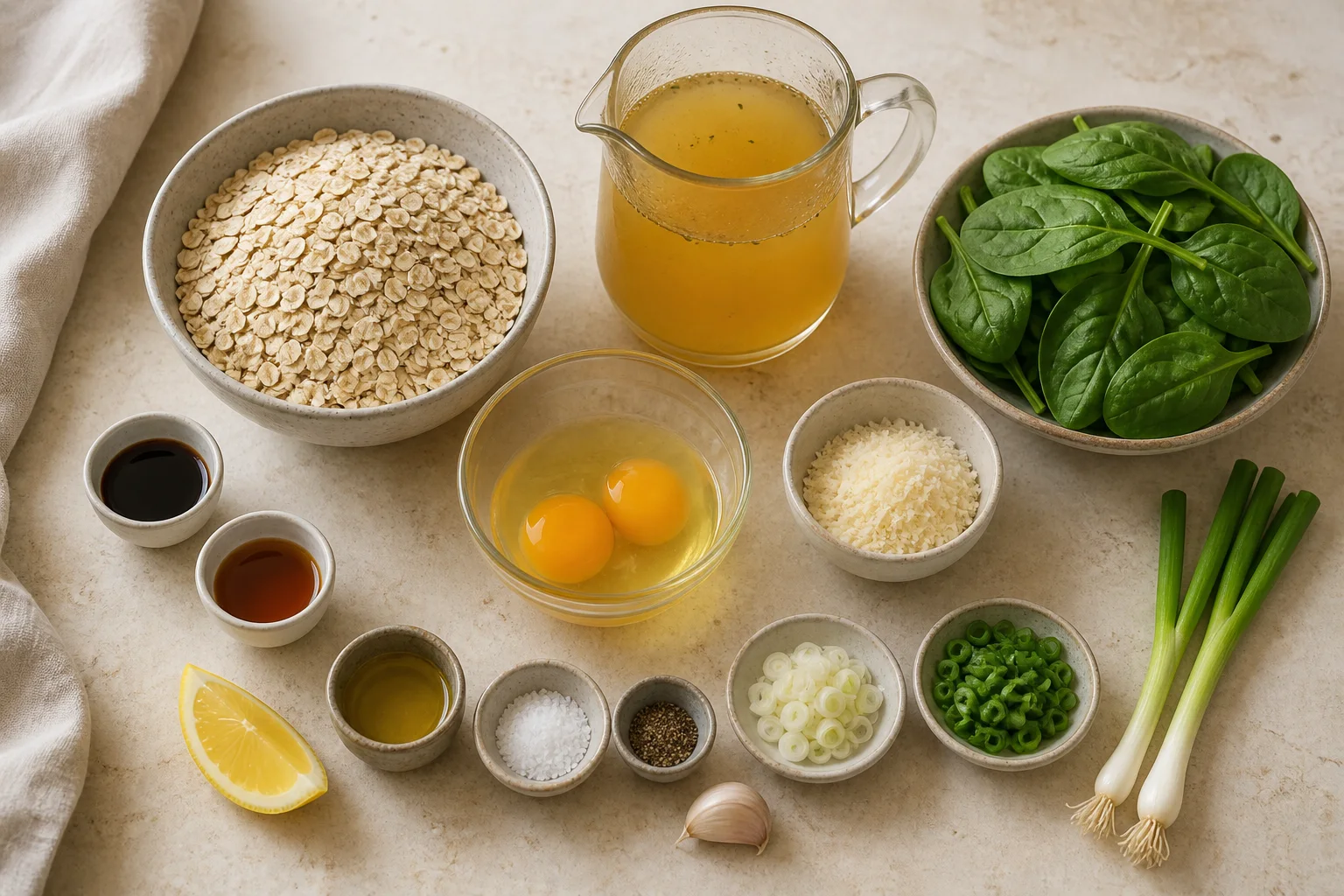
- 1 cup old-fashioned rolled oats, 90 grams
- 1 teaspoon extra-virgin olive oil
- 3 scallions, white and green parts separated and thinly sliced
- 1 garlic clove, finely grated or minced
- 2 1/2 cups low-sodium vegetable or chicken broth, divided
- 1/4 teaspoon kosher salt, plus more to taste
- 1/4 teaspoon ground black pepper, plus more for serving
- 2 large eggs
- 2 cups lightly packed baby spinach, about 60 grams
- 1/3 cup finely grated Parmesan cheese, 30 grams
- 1 teaspoon toasted sesame oil or extra-virgin olive oil, optional for finishing
- 1 teaspoon low-sodium soy sauce, optional
- lemon wedges, chili crisp or toasted sesame seeds, optional for serving
Ingredient notes and substitutions
Rolled oats: Old-fashioned rolled oats provide creamy starch while keeping a little chew. Quick oats work but cook faster and become smoother; begin checking after 2 minutes. Steel-cut oats require much more liquid and time and are not a substitute in this method.
Broth: Low-sodium broth lets you control the final seasoning. Chicken broth gives a fuller savory flavor; vegetable broth keeps the recipe meatless. Water works, but add extra scallion, pepper or herbs to compensate.
Eggs: Beating eggs before they enter the pan creates small tender ribbons and helps them cook evenly. Pouring whole eggs on top would require a different covered-cooking method and creates a less predictable safety endpoint.
Spinach: Baby spinach wilts quickly. Chopped mature spinach works if tough stems are removed. Frozen spinach can replace fresh only after thawing and squeezing it very dry; use 1/2 cup packed.
Parmesan: Finely grated Parmesan melts into the oats and adds salt and umami. Pecorino is saltier, so reduce added salt. Nutritional yeast can provide a dairy-free savory note, but it does not melt in the same way.
Scallions and garlic: Cooking the white scallion parts and garlic in oil builds the base; green tops are added at the end for freshness. A small minced shallot can replace the scallion whites.
Soy sauce: This is optional and should be measured after the broth’s saltiness is known. Tamari works for an appropriate diet if all other ingredients and cross-contact meet that person’s needs.
How to make savory rolled oats
1. Prepare everything before heating
Separate the sliced scallion whites from the greens. Grate the garlic and Parmesan, measure the spinach, and beat the eggs in a small bowl until no separate streaks of white remain.
The final stages move quickly. Having the egg and spinach ready prevents the oats from thickening excessively while ingredients are prepared.
2. Soften the aromatics
Heat olive oil in a 3-quart saucepan over medium. Add scallion whites and cook for 1 minute, stirring, until bright and fragrant but not browned.
Add garlic and stir for 20 to 30 seconds. Do not let it darken; grated garlic becomes bitter quickly.
3. Toast the rolled oats
Add rolled oats to the pan and stir for 1 to 2 minutes. The flakes should smell nutty and look slightly dry at the edges without changing to a deep brown color.
Toasting coats some surfaces in the aromatic oil and deepens flavor. Keep the oats moving so the fine particles at the pan bottom do not scorch.
4. Add the first broth portion
Pour in 2 cups broth slowly while stirring. Add salt and pepper, then increase heat to medium-high just until the mixture reaches a gentle boil.
Reduce to medium-low. Cook uncovered for 4 minutes, stirring every 30 to 45 seconds and scraping the pan bottom. The oats should soften and the liquid should begin looking creamy.
5. Adjust the base texture
Add 1/4 cup of the remaining broth and simmer for 1 to 2 minutes. Drag the spoon across the bottom; the path should remain visible for approximately 1 second before the oats flow back.
Reserve the final 1/4 cup broth for the egg and finishing stage. The bowl will thicken as it rests, so the base should look slightly looser than the desired serving texture.
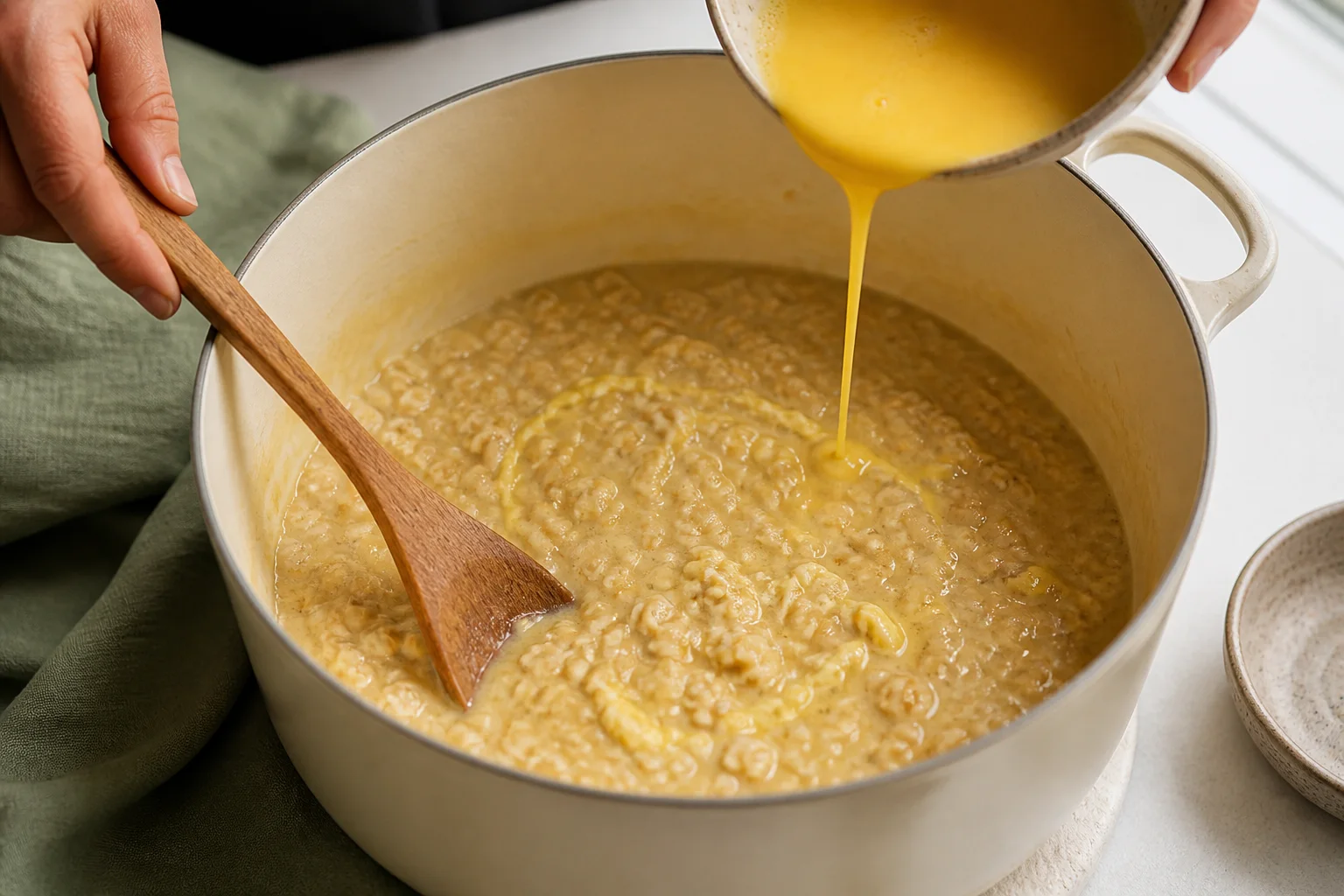
6. Stream in the beaten eggs
Bring the oats to a gentle, visible simmer. Stir in one direction to create a slow current, then pour the beaten eggs in a thin stream while continuing to stir.
Cook for 2 to 3 minutes, stirring and scraping, until no liquid raw egg remains and small pale ribbons are distributed throughout. The mixture should return to a steady simmer. For a temperature check, the center should reach at least 160°F.
7. Wilt the spinach
Add baby spinach in two handfuls, folding each portion until just wilted. This takes about 1 minute.
If the oats become too thick to fold easily, add some or all of the reserved 1/4 cup broth. Keep the pan over low heat so the egg remains tender.
8. Finish off the heat
Remove the pan from heat. Stir in Parmesan and half the scallion greens. Add optional soy sauce only after tasting.
Adjust texture with 1 tablespoon broth at a time. Finish with optional sesame or olive oil, the remaining scallion greens and black pepper.
9. Serve promptly
Divide between two warm bowls. Add lemon, chili crisp or sesame seeds at the table so each serving can be adjusted without changing the base.
Savory oats continue absorbing liquid after cooking. If they stand longer than 5 minutes, stir in a splash of hot broth before serving.
Rolled oats texture guide
| Spoon-path cue | Current texture | What to do next |
|---|---|---|
| Closes immediately like soup | Too loose before egg | Simmer 1 to 2 minutes before adding egg |
| Remains about 1 second | Ideal base | Stream in egg |
| Remains 3 seconds or longer | Too thick | Add broth 1 tablespoon at a time |
| Oats mound and do not flow | Overthickened | Add 1/4 cup hot broth and stir over low heat |
The finished bowl should be looser than mashed potatoes and thicker than soup. It will firm as it cools.
How to make tender egg ribbons
Beat the eggs completely. Thick strands of unblended egg white cook into large rubbery pieces, while a uniform mixture forms smaller ribbons.
The oats must be gently simmering when the egg enters. A cold or barely warm pan lets the egg disperse without setting; a violent boil makes tight curds.
Pour slowly while stirring in one direction. This stretches the setting egg through the oats rather than allowing it to pool in one place.
Continue cooking until no translucent egg remains. USDA guidance for egg mixtures uses 160°F as the safety endpoint. Use a clean instant-read thermometer in the center if serving someone for whom precise doneness is important.
Why broth is added in stages
Oat brands and pan widths change evaporation. Adding all 2 1/2 cups at once can leave one batch soupy while another becomes correct.
The first 2 cups cook and hydrate the flakes. The next 1/4 cup fine-tunes the base before egg. The last portion is held for spinach, Parmesan and the inevitable thickening after heat is turned off.
Warm broth is helpful but not required. Cold broth briefly pauses the simmer and adds a minute or two. Do not pour broth directly from a carton that has touched raw egg or a contaminated utensil.
Savory oatmeal toppings
Chili crisp: Use 1 teaspoon per bowl and include some crunchy solids. It can be high in sodium, so taste before adding soy sauce.
Lemon: A squeeze lifts the greens and cheese. Add it at the table; simmering lemon with dairy can create a sharper, less balanced flavor.
Mushrooms: Sauté 4 ounces sliced mushrooms separately until browned and use them as a topping. Adding raw mushrooms directly to oats releases water and prevents browning.
Avocado: Add sliced avocado after the oats are plated. Its cool richness contrasts with the hot peppery base.
Tomatoes: Halved cherry tomatoes can top the bowl. Do not cook a large quantity into the oatmeal unless you reduce the broth, because they release liquid.
Extra greens: Arugula can be folded in off heat. Kale needs longer cooking; finely slice it and add during the last 2 minutes before the egg.
Leftover chicken: Add fully cooked diced chicken during the final 2 minutes and reheat it to 165°F. Do not add raw poultry to the oats.
Is savory oatmeal a balanced meal?
The bowl includes a whole-grain base, egg, spinach and dairy. It supplies carbohydrates, protein and fat, but “balanced” depends on individual needs and what else is eaten during the day.
FDA guidance considers rolled oats a whole grain because simply flattened or steamed oats retain the bran, germ and endosperm. That factual grain description does not make every flavored oat dish automatically low in sodium, high in fiber or suitable for a medical diet.
Broth, Parmesan and soy sauce all contribute sodium. Use low-sodium broth, taste before adding soy sauce and calculate from exact package labels if sodium intake needs monitoring.
Troubleshooting
The oats are gluey
They were stirred aggressively for too long, cooked over high heat or held after cooking without extra liquid. Use a gentle simmer, stir only enough to prevent sticking and loosen before serving.
The oats are watery
The pan was narrow with little evaporation or quick oats released starch differently. Simmer uncovered before adding egg until the spoon path remains for about 1 second.
The egg formed large rubbery chunks
It was not beaten fully, the pour was too fast or the heat was too high. Use a thin stream into a gentle simmer and keep the oats moving.
The egg seems raw
Continue stirring over medium-low heat until no translucent liquid remains and the pan returns to a simmer. Check for at least 160°F in the center if uncertain.
The spinach released water
Fresh leaves may have been wet, or frozen spinach not squeezed. Dry fresh spinach after washing and squeeze thawed frozen spinach thoroughly.
The oats taste flat
Broth may be low in salt and the cheese mild. Add a small pinch of salt, black pepper, lemon or Parmesan one at a time. Acidity often fixes flatness without extra sodium.
The bottom scorched
The heat was high or the pan left unstirred. Use a heavy saucepan, reduce to a gentle simmer and scrape the bottom regularly.
The bowl became solid while waiting
This is normal absorption. Stir in hot broth 1 tablespoon at a time over low heat. Do not keep boiling, which makes the egg tougher.
Flavor variations
Mediterranean: Use olive oil for finishing, replace Parmesan with crumbled feta added after cooking, and top with tomato, dill and lemon.
Miso mushroom: Replace salt and Parmesan with 1 tablespoon white miso whisked into a little warm broth off heat. Top with browned mushrooms. Do not boil miso for an extended time.
Southwestern: Add 1/2 teaspoon ground cumin with the oats, fold in 1/2 cup rinsed black beans with spinach and top with salsa after cooking. Reduce broth slightly if salsa is very loose.
Cheddar: Replace Parmesan with 1/2 cup finely shredded sharp cheddar and omit sesame oil. Stir off heat to prevent oil separation.
Herb: Add 2 tablespoons chopped parsley or dill with the scallion greens. Fresh herbs become dull if boiled for several minutes.
Egg-free: Omit eggs and reduce total broth to about 2 cups. Add 1/2 cup rinsed white beans at the end for body and protein. This changes the texture but remains a savory oat bowl.
For a sweet oat breakfast with egg whites and Greek yogurt, high-protein oatmeal explains when to add each ingredient for a creamy finish.
Meal prep, storage and reheating
Savory oats are creamiest immediately after cooking, but they can be prepared ahead. Transfer leftovers to a shallow container, cover and refrigerate within 2 hours. Use within 3 to 4 days.
The oats will set firmly when cold. For each serving, add 1/4 cup water or broth and reheat in a saucepan over medium-low, stirring until steaming and reaching 165°F. Add more liquid by the tablespoon if needed.
Microwave in a vented covered bowl at 50% to 70% power, stirring every 30 seconds. The egg can toughen at full power while the center remains cool.
Freezing is possible for up to 1 month, but spinach darkens and the egg ribbons become firmer. Freeze individual portions, thaw overnight in the refrigerator and reheat with broth.
For better meal prep, mix the dry oats, pepper and measured salt in advance, then cook fresh. Slice scallions and grate cheese up to 2 days ahead and refrigerate them separately.
Frequently asked questions
Can rolled oats be savory?
Yes. Cook them in broth with aromatics rather than milk and sweetener. Egg, greens, cheese and pepper make a complete savory direction.
Are rolled oats the same as old-fashioned oats?
Usually, yes. “Old-fashioned rolled oats” describes whole oat groats that have been steamed and flattened. Check the package because thickness varies.
Can I use quick oats?
Yes, but reduce the first cooking stage and begin checking after 2 minutes. Quick oats produce a smoother, less chewy bowl.
Can I use steel-cut oats?
Not with these liquid amounts or times. Steel-cut oats need a longer, separately balanced method.
Why put egg into oatmeal?
Egg adds protein and tender ribbons, making the bowl more substantial. Beating and streaming it into simmering oats spreads it evenly.
Can I put a fried egg on top instead?
Yes, omit the streamed eggs and use about 2 cups broth. Cook the topping egg to the doneness appropriate for the people being served; a fully cooked egg has firm white and yolk.
Is savory oatmeal gluten-free?
Oats themselves do not contain wheat, but cross-contact is possible, and soy sauce may contain wheat. Anyone with celiac disease or a medical need should use appropriately labeled oats, gluten-free tamari if desired and verified broth and toppings.
Can I make it dairy-free?
Yes. Omit Parmesan and finish with nutritional yeast, miso or extra olive oil. Check broth and toppings for dairy ingredients.
Recipe development note
This savory rolled oats recipe was developed through culinary research and editorial review. It has not been represented as a personal kitchen test. Rolled-oat thickness, broth sodium, burner strength, pan width and egg size vary; use the simmer, spoon-path and egg-setting cues.
Nutrition is an estimate without optional toppings and changes with broth and cheese brands. The accompanying visuals are AI-assisted food-editorial images, not photographs of a kitchen test.
Printable recipe card
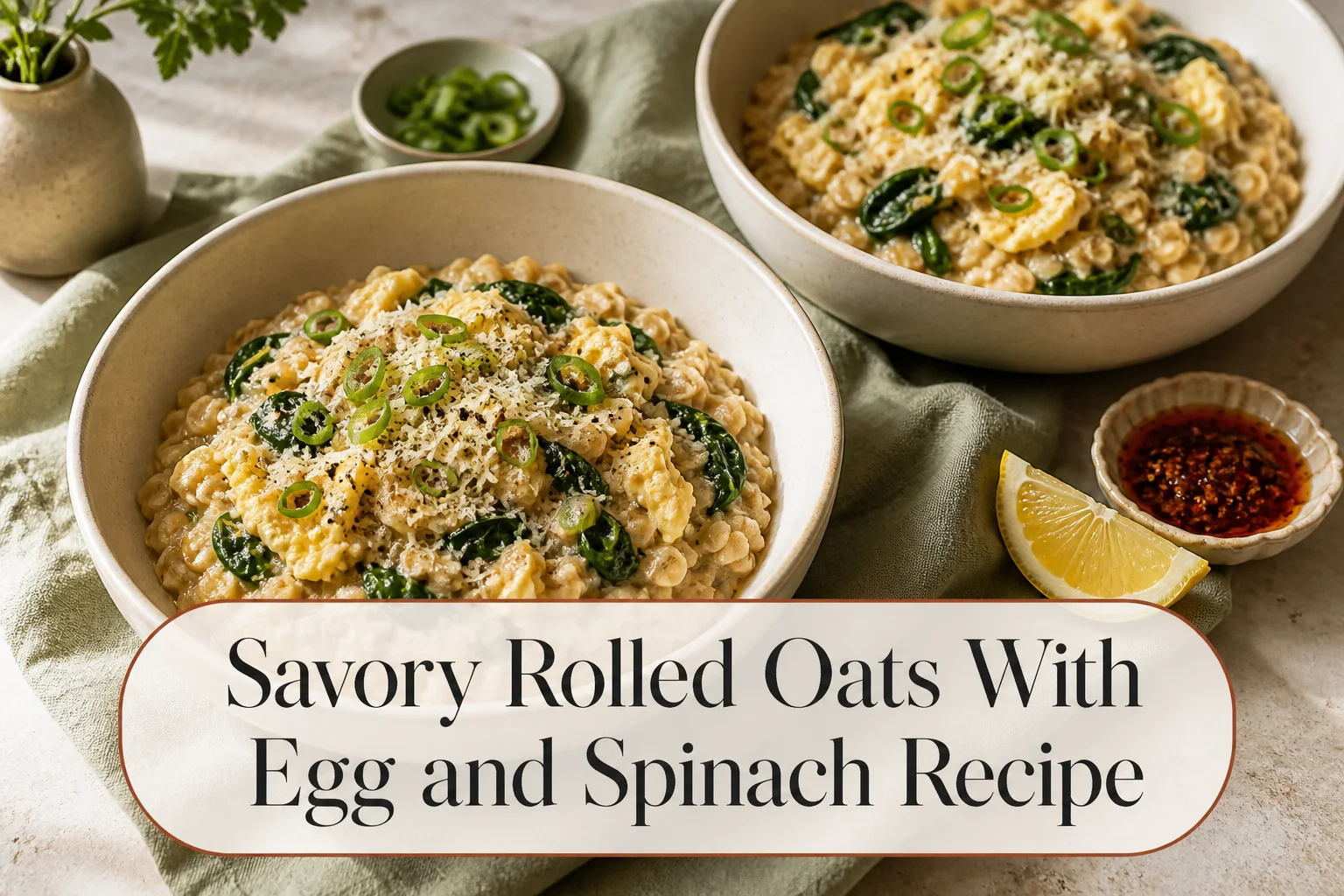
Savory Rolled Oats With Egg and Spinach Recipe
Ingredients
Equipment
Method
- Separate scallion whites and greens, grate garlic and Parmesan, measure spinach, and beat eggs until no white streaks remain.
- Heat olive oil over medium. Cook scallion whites 1 minute; add garlic and stir 20 to 30 seconds without browning.
- Add rolled oats and stir 1 to 2 minutes, until nutty-smelling and slightly dry at the edges.
- Add 2 cups broth, salt and pepper. Bring to a gentle boil, reduce heat and cook uncovered 4 minutes, stirring regularly.
- Add 1/4 cup broth and simmer 1 to 2 minutes, until a spoon path across the bottom remains visible about 1 second.
- At a gentle simmer, stir in one direction and pour beaten eggs in a thin stream. Cook 2 to 3 minutes until no liquid egg remains and the center reaches at least 160°F.
- Fold in spinach in two additions until just wilted, about 1 minute. Add reserved broth as needed for a creamy flow.
- Remove from heat. Stir in Parmesan, half the scallion greens and optional soy sauce after tasting. Adjust with broth by the tablespoon.
- Divide into warm bowls and finish with remaining scallions, pepper, optional oil, lemon, chili crisp or sesame seeds.
Notes
- Use old-fashioned rolled oats, not steel-cut oats.
- Hold back 1/4 cup broth for the egg, spinach and final texture adjustment.
- Beat eggs completely and pour in a thin stream at a gentle simmer.
- Cook the egg mixture to at least 160°F.
- Add Parmesan and soy sauce only after tasting the broth-seasoned base.
- Contains egg and milk; soy sauce may contain wheat and soy.
- This recipe was developed through culinary research and editorial review.
This recipe was developed through culinary research and editorial review. Rolled-oat thickness, broth sodium, burner strength, pan width and egg size vary; use the simmer, spoon-path and egg-setting cues.
Nutrition is an estimate per bowl without optional toppings and changes with broth and cheese brands.