
This Greek yogurt chicken recipe uses a lemon-garlic marinade to season boneless chicken breasts and help the surface stay moist over the grill. The coating is thinned with olive oil, flavored with oregano and paprika, then scraped to a light, even layer before cooking so it browns instead of forming scorched clumps.
Uniform thickness and a thermometer matter more than an exact minute count. Pound the breasts to about 3/4 inch, grill over medium-high heat and cook every piece to 165°F in the thickest part.
This recipe was developed through culinary research and editorial review. Chicken thickness, grill heat, yogurt composition and weather vary, so use the coating, release and internal-temperature cues below.
Serve the chicken with a fresh batch of 5-minute Greek yogurt herb sauce—never the raw-contact marinade. The cottage cheese cucumber tomato salad makes a cool no-cook side.
Why yogurt works as a chicken marinade
Greek yogurt creates a thick vehicle for salt, garlic and spices, helping seasonings remain in contact with the chicken. Its acidity is milder than a marinade based largely on citrus juice or vinegar.
More time is not automatically better. A 2- to 8-hour refrigerator rest gives the coating time to flavor the surface while keeping the meat firm. An overnight rest up to 24 hours is workable, but very long acidic marination can give the exterior a soft or pasty texture.
The yogurt itself does not guarantee juicy meat. Even a well-marinated chicken breast dries when it is cooked far beyond a safe temperature, which is why thickness control and thermometer placement are part of the recipe.
Ingredients
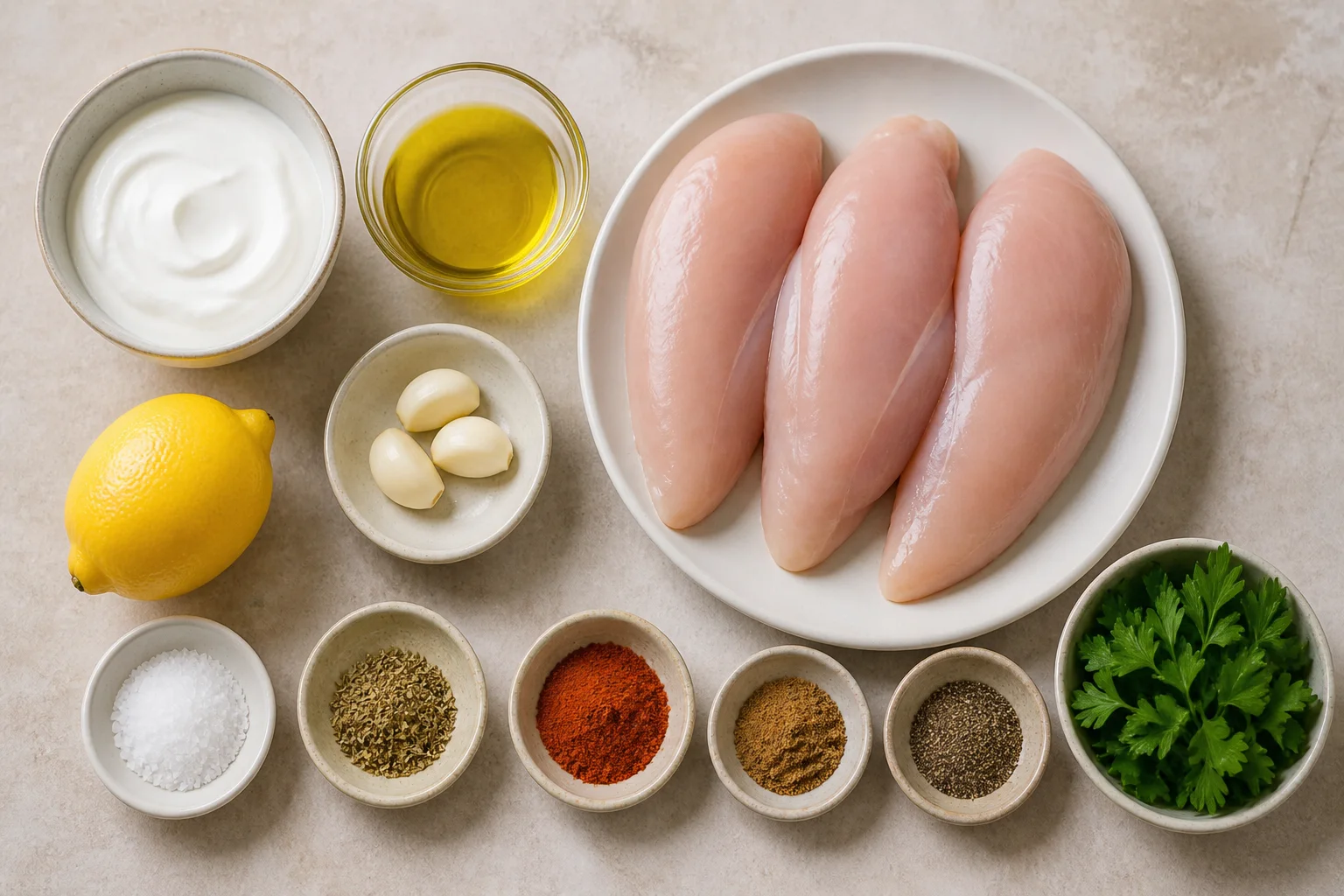
- 1 1/2 pounds boneless, skinless chicken breasts
- 3/4 cup plain Greek yogurt, preferably 2% or whole-milk
- 2 tablespoons extra-virgin olive oil, divided
- 1 tablespoon fresh lemon juice
- 1 teaspoon finely grated lemon zest
- 3 medium garlic cloves, finely grated
- 1 1/2 teaspoons kosher salt
- 1 teaspoon dried oregano
- 1 teaspoon smoked or sweet paprika
- 1/2 teaspoon ground cumin
- 1/2 teaspoon freshly ground black pepper
- Chopped fresh parsley and lemon wedges, optional for serving
Ingredient notes and substitutions
Chicken breasts: Choose similarly sized pieces and pound thick sections to 3/4 inch. Boneless, skinless thighs can be substituted, but they often need more time and must still reach 165°F.
Greek yogurt: Two-percent or whole-milk yogurt gives a smooth coating. Nonfat works but can cling more chalkily. Regular plain yogurt is thinner; use 1/2 cup initially so the marinade does not slide off.
Olive oil: One tablespoon loosens the marinade, while the second lightly oils the grill-ready chicken or grate. A neutral high-heat oil can replace it.
Lemon: The recipe uses only 1 tablespoon juice plus zest, keeping acidity controlled. Do not increase the juice substantially for a long marination; add fresh lemon at the table instead.
Garlic: Finely grated garlic disperses evenly. Large chopped pieces burn on a hot grill, so scrape away any visible clumps before cooking.
Oregano, paprika and cumin: These produce a warm Mediterranean-inspired flavor. Sweet paprika gives color without smoke; smoked paprika is more assertive. Coriander can replace cumin.
Salt: The amount is calibrated for 1 1/2 pounds of chicken. Measure the meat after trimming so the seasoning ratio stays reasonable.
How to make Greek yogurt chicken
1. Even the chicken thickness
Place the chicken between sheets of parchment or inside a sturdy food-safe bag. Pound the thicker ends gently to about 3/4 inch, avoiding torn or paper-thin edges.
Pat the surfaces dry with paper towels. Do not rinse raw chicken, which can spread droplets around the sink and nearby surfaces.
2. Mix the marinade
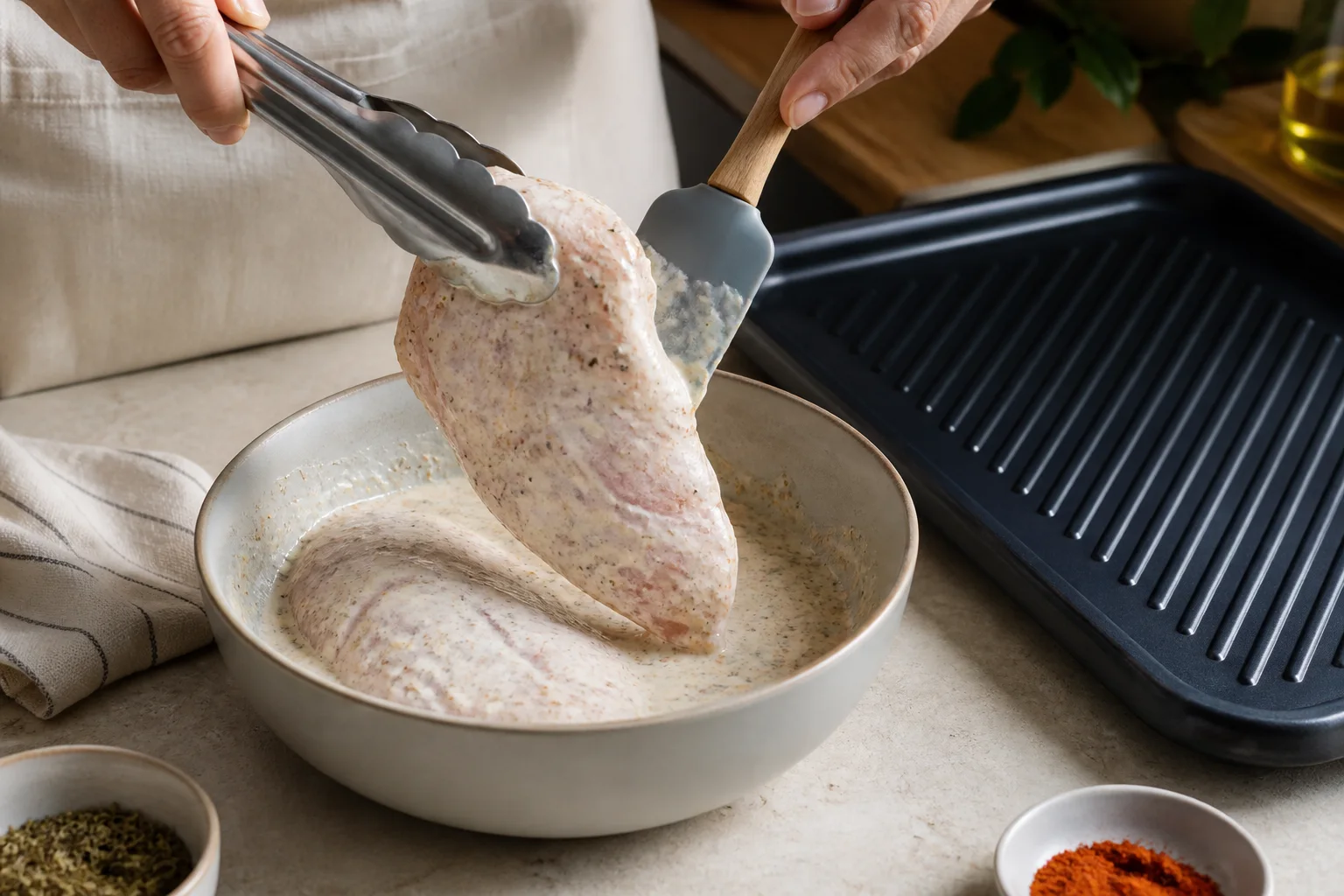
In a nonreactive bowl, stir Greek yogurt, 1 tablespoon olive oil, lemon juice, zest, garlic, salt, oregano, paprika, cumin and black pepper until uniform.
The marinade should coat a spoon without falling in heavy clumps. If exceptionally stiff, stir in 1 teaspoon water.
3. Marinate in the refrigerator
Add chicken and turn each piece until fully coated. Cover and refrigerate for at least 2 hours and preferably no longer than 8 hours; up to 24 hours is the practical maximum for this formula.
Never marinate poultry on the counter. FoodSafety.gov identifies the refrigerator as the safe place to thaw or marinate meat and poultry.
4. Preheat the grill
Heat a clean gas or charcoal grill to medium-high, about 400 to 450°F at the grates. Establish a cooler zone for moving pieces that color too quickly.
Clean the grates and oil them carefully using the grill manufacturer’s recommended method.
5. Remove excess marinade
Lift the chicken from the bowl and let excess fall back. Scrape away thick yogurt ridges, leaving a thin opaque coating. Discard all marinade and tools that contacted raw chicken, or wash tools thoroughly before reuse.
USDA poultry guidance says to marinate in the refrigerator, discard the used bag or raw-contact marinade and cook poultry to 165°F. See its current poultry marinating guidance.
6. Grill the first side
Lightly brush the chicken with the remaining oil. Place it on the hot grates and cook with the lid closed for 5 to 7 minutes, depending on thickness.
Leave it undisturbed until it releases with gentle pressure. Forcing it early tears away the coating and leaves it on the grate.
7. Flip and finish to 165°F
Flip once and grill another 4 to 7 minutes. Move the chicken to the cooler zone if the coating darkens before the center is ready.
Insert an instant-read thermometer sideways into the thickest portion so the sensing area reaches the center. Cook each piece to 165°F; USDA lists that as the safe minimum temperature for poultry.
8. Rest and slice
Transfer to a clean plate or board—never the raw-chicken plate—and rest 5 minutes. Slice across the grain or serve whole.
Garnish with parsley and fresh lemon only after cooking. Use clean utensils for the finished chicken.
How to prevent the yogurt coating from burning
Leave only a thin, even film of marinade. Thick ridges contain milk solids and garlic that darken before the chicken center reaches a safe temperature.
Use medium-high rather than maximum grill heat. A 400 to 450°F surface provides browning but gives a 3/4-inch breast time to cook through.
Build a two-zone grill. If the exterior has enough color, move the piece to lower heat and close the lid. Direct high heat is for developing the first marks, not necessarily every minute of cooking.
Keep sugar out of the marinade. This formula uses no honey or maple syrup; add sweet glazes only near the end if making a variation.
Marinade timing guide
At 30 minutes, the chicken receives surface flavor but the garlic and herbs remain relatively light. It is usable when time is short, provided the meat stays refrigerated.
Two to 8 hours is the preferred window. The coating adheres well and seasoning has time to distribute across the pounded surface.
Eight to 24 hours produces stronger garlic and lemon flavor. The chicken remains workable, but the surface can begin softening, especially with nonfat yogurt or extra lemon.
Do not keep raw marinated chicken beyond safe refrigerated storage limits. If plans change, cook it promptly rather than extending the marinade for multiple days.
Indoor cooking options
Grill pan
Preheat a heavy grill pan over medium-high and ventilate the kitchen. Scrape the marinade to a thin film, oil the chicken and cook about 5 to 7 minutes per side, reducing heat if the coating darkens. Verify 165°F.
Cast-iron skillet
Heat 1 tablespoon oil over medium. Cook the chicken without moving for about 6 minutes, flip, reduce heat slightly and cook until the center reaches 165°F. Work in batches so the pan does not cool and steam the coating.
Oven
Arrange on a foil-lined sheet pan fitted with a rack. Bake at 425°F for roughly 18 to 24 minutes, depending on thickness, and verify 165°F. Broil briefly only after the chicken is safely cooked if more color is desired.
Troubleshooting
The coating stuck to the grill
The grates were dirty, the chicken was flipped too early or the coating was too thick. Clean and oil the grates, leave a thin film and wait for natural release.
The outside burned before the center cooked
Heat was too high or the breasts were too thick. Move to the cooler zone, close the lid and pound chicken evenly next time.
The chicken is dry
It likely cooked beyond 165°F or rested on a hot surface for too long. Check thin pieces first and remove each one as it reaches temperature.
The surface is mushy
The chicken marinated too long or used substantially more lemon. Keep the preferred window at 2 to 8 hours and the measured acidity.
The flavor is bland
Confirm the chicken weight and measured salt. Finish cooked chicken with fresh lemon and herbs rather than adding more acid to the raw marinade.
The marinade slides off
The chicken was wet, the yogurt was thin or too much marinade remained. Pat chicken dry and use Greek yogurt that holds a mound on a spoon.
Storage and reheating
Refrigerate cooked chicken in a shallow airtight container within 2 hours and use within 3 to 4 days. Slice only what is needed; whole pieces retain moisture better.
Reheat covered in a 300°F oven with a tablespoon of water or broth until hot. A microwave works at 50% power in short intervals; full power can tighten lean chicken breast quickly.
Freeze cooled cooked chicken for up to 2 months for best quality. Wrap individual portions, thaw overnight in the refrigerator and reheat gently.
Do not store or reuse the raw-contact yogurt marinade. If sauce is wanted, mix a separate clean batch before opening or handling the chicken.
Frequently asked questions
How long should chicken marinate in Greek yogurt?
Two to 8 hours is preferred for this recipe. Up to 24 hours is workable, but the surface can soften with longer marination.
Can I use chicken thighs?
Yes. Boneless thighs may take longer because of their shape. Cook every piece to 165°F and use the thermometer rather than color alone.
Do I rinse off the yogurt?
No. Let excess drip and scrape thick ridges, leaving a thin coating. Rinsing raw chicken can spread contamination.
Can the marinade become a sauce?
Not as written after it contacts raw poultry. Discard it. Prepare a separate clean yogurt sauce for serving.
Why did the chicken not get grill marks?
The coating may have been too wet, the grill not fully preheated or the chicken moved too soon. Thin the coating and wait for natural release.
Can I prepare this without a grill?
Yes. Use a grill pan, cast-iron skillet or 425°F oven and verify a 165°F center in every case.
Recipe development note
This recipe was developed through culinary research and editorial review. It has not been represented as a personal kitchen test. Chicken thickness, grill heat, yogurt composition and marinating time vary; use the coating, release and temperature cues in the method.
Nutrition is an estimate based on generic 2% Greek yogurt and boneless chicken breast; much of the marinade is discarded. The accompanying visuals are AI-assisted food-editorial images, not photographs of a kitchen test.
Recipe at a glance
| Metric | Details |
|---|---|
| Prep time | 15 minutes |
| Cook time | 14 minutes |
| Total time | 154 minutes |
| Yield | 6 servings |
Printable recipe card
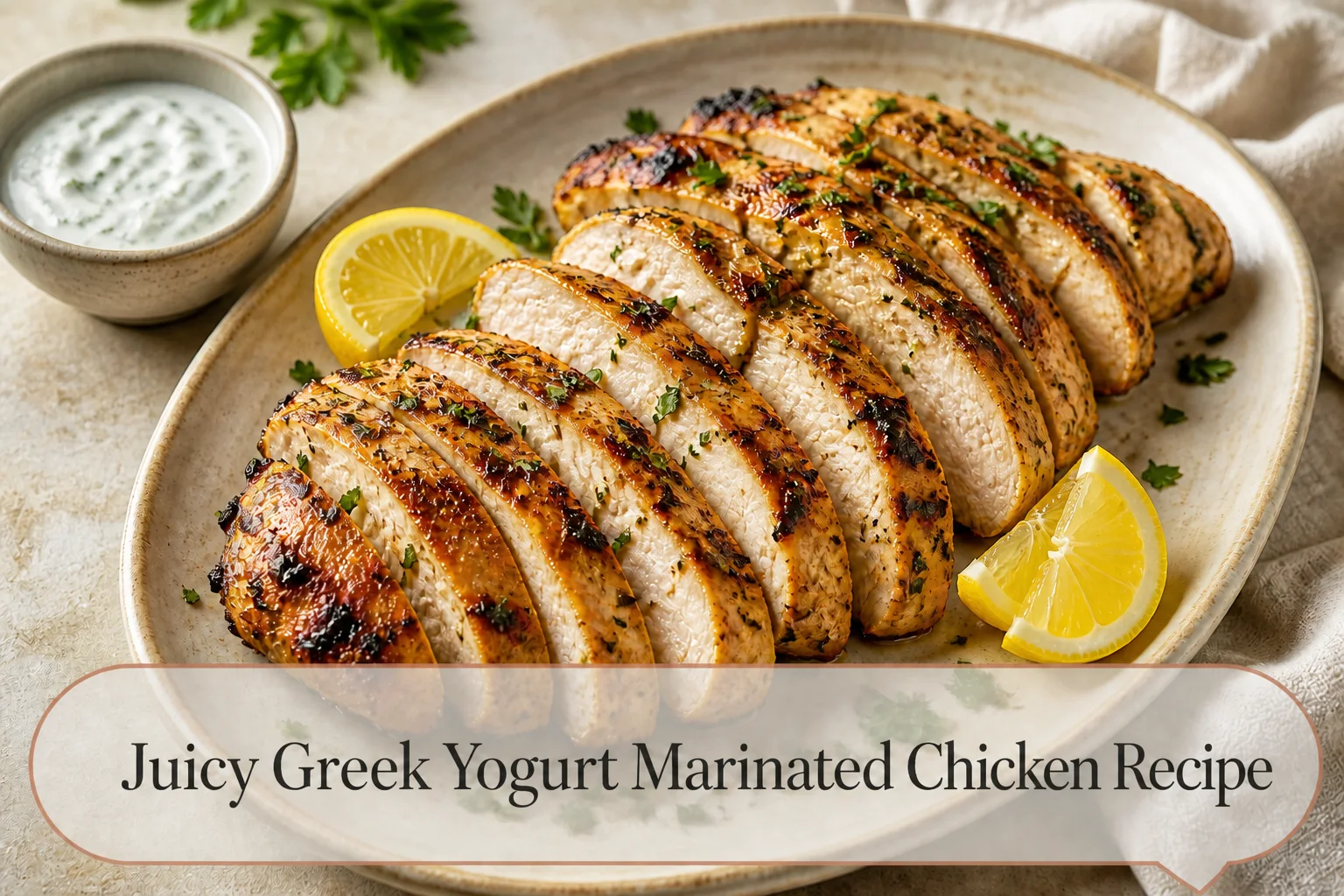
Juicy Greek Yogurt Marinated Chicken Recipe
Ingredients
Equipment
Method
- Pound chicken breasts to about 3/4 inch thick and pat dry. Do not rinse raw chicken.
- Stir Greek yogurt, 1 tablespoon olive oil, lemon juice, zest, garlic, salt, oregano, paprika, cumin and pepper until uniform.
- Coat chicken, cover and refrigerate at least 2 hours and preferably no longer than 8 hours; do not exceed 24 hours.
- Heat a clean grill to medium-high, about 400 to 450°F, with a cooler zone available. Clean and oil the grates safely.
- Lift chicken from the marinade and scrape away thick ridges, leaving a thin coating. Discard all raw-contact marinade and brush chicken lightly with remaining oil.
- Grill with the lid closed for 5 to 7 minutes without moving, until the chicken releases with gentle pressure.
- Flip once and cook another 4 to 7 minutes, moving to cooler heat if needed, until the thickest part reaches 165°F.
- Transfer to a clean plate, rest 5 minutes and garnish with fresh parsley and lemon if desired.
Notes
- Marinate only in the refrigerator.
- Leave a thin coating; scrape away thick yogurt ridges.
- Discard all marinade that touched raw chicken.
- Cook every piece to 165°F in the thickest part.
- This recipe was developed through culinary research and editorial review.
This recipe was developed through culinary research and editorial review. Chicken thickness, grill heat, yogurt composition and marinating time vary; use the coating, release and temperature cues in the method.
Nutrition is an estimate based on generic 2% Greek yogurt and boneless chicken breast; much of the marinade is discarded and actual values vary.