
This cottage cheese salad combines cool curds with crisp cucumber, juicy tomatoes, red onion and fresh herbs for a savory lunch or side. Lemon and olive oil dress the vegetables lightly, while a simple salting order keeps their moisture from collecting at the bottom of the bowl.
The recipe takes 15 minutes and needs no cooking. Cut the vegetables into bite-size pieces, dry them after washing and fold them into cottage cheese only when ready to serve. That timing preserves both the crunchy vegetables and distinct, creamy curds.
This recipe was developed through culinary research and editorial review. Cottage cheese salt and moisture, tomato ripeness and cucumber size vary, so use the draining, seasoning and texture cues below.
For a completely blended cottage-cheese option, try the creamy cottage cheese ranch dip. The Greek yogurt tuna salad is another no-cook lunch designed to stay creamy rather than wet.
Why cottage cheese salad becomes watery
Tomatoes and cucumbers release liquid after they are cut, especially once salt is added. Cottage cheese also contains whey between its curds. Mixing everything far in advance gives all three sources time to pool.
Dry washed vegetables, remove the loose seed gel from very juicy tomatoes and use an English or Persian cucumber with small seeds. Season the vegetables with lemon and oil, but add the final salt only after folding them into the cottage cheese.
For meal prep, keep the vegetable mixture and cottage cheese in separate containers. Combine an individual portion shortly before eating.
Ingredients
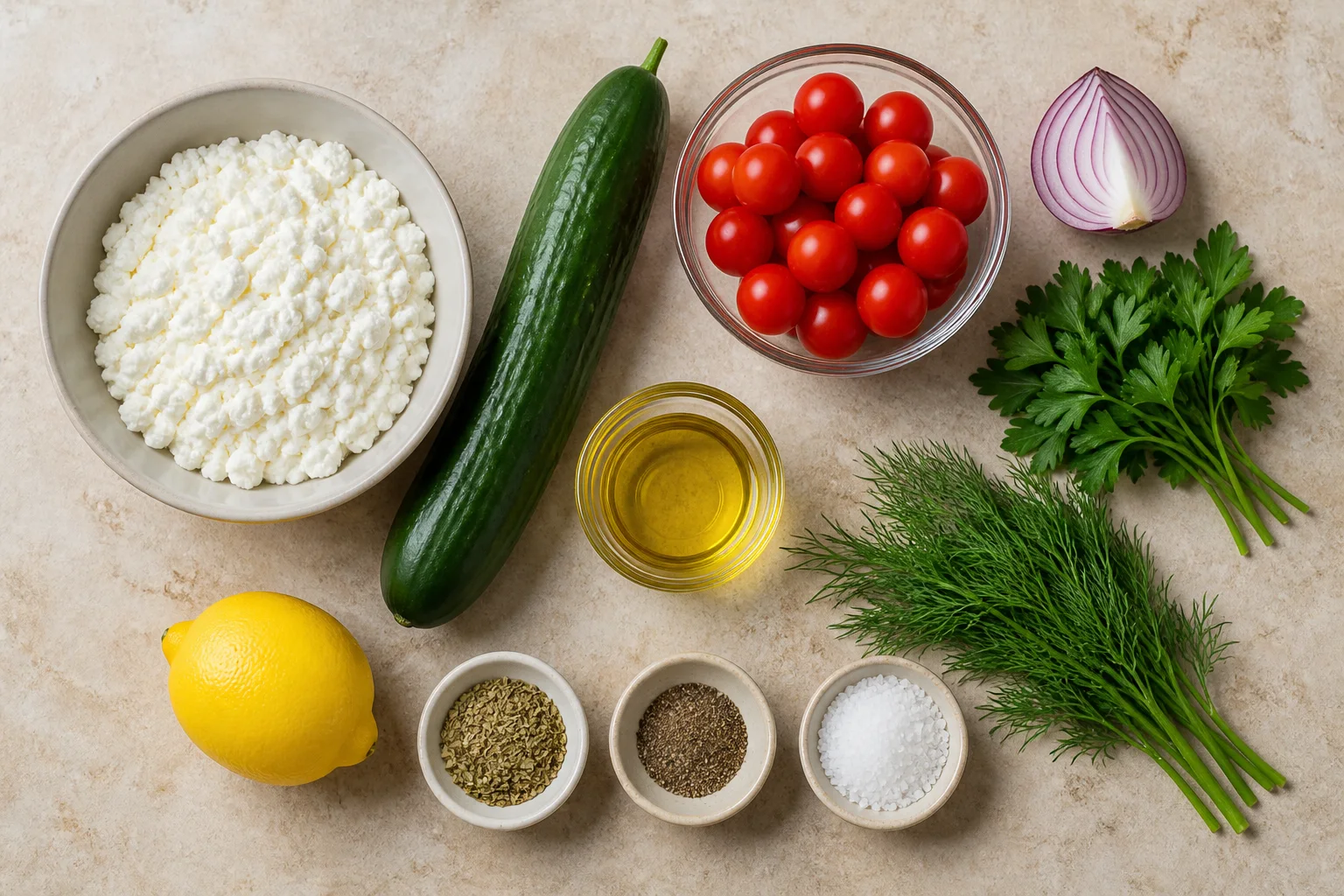
- 2 cups whole-milk or 2% cottage cheese
- 1 medium English cucumber, diced
- 1 pint cherry tomatoes, halved or quartered
- 1/4 cup finely chopped red onion
- 1/4 cup chopped fresh parsley
- 2 tablespoons chopped fresh dill or basil
- 1 tablespoon extra-virgin olive oil
- 1 tablespoon fresh lemon juice
- 1/2 teaspoon dried oregano
- 1/4 teaspoon freshly ground black pepper
- Kosher salt, to taste
Ingredient notes and substitutions
Cottage cheese: Whole-milk cottage cheese gives the richest mouthfeel; 2% is a reliable lighter option. Small curds distribute more evenly, while large curds make a more textured bowl. If the container has a visible pool of whey, spoon from the solids or drain briefly in a fine-mesh strainer—do not press the curds dry.
Cucumber: English cucumber has thin skin and small seeds, so it needs no peeling. Persian cucumbers work in the same total volume. For a standard garden cucumber, peel it, halve lengthwise and scrape out the wet seed core before dicing.
Tomatoes: Cherry or grape tomatoes usually release less liquid than chopped slicing tomatoes. Cut only large ones into quarters. If using a large tomato, remove loose seeds and watery gel before dicing.
Red onion: Chop it finely so its flavor does not overwhelm the mild cottage cheese. Rinse under cold water for 30 seconds and dry thoroughly for a gentler bite, or substitute scallions.
Herbs: Parsley supplies freshness without dominating. Dill leans cool and savory; basil makes the salad taste more summery. Use one or a combination.
Lemon and olive oil: These create a light dressing rather than a separate sauce. Red wine vinegar can replace lemon juice; start with 2 teaspoons because it may taste sharper.
Oregano: Dried oregano gives a Mediterranean direction and disperses better than fresh woody stems. Italian seasoning works but changes the herb profile.
Salt: Cottage cheese brands range from mild to distinctly salty. Taste the assembled salad before adding any.
How to make cottage cheese salad
1. Wash and dry the produce
Rinse cucumber, tomatoes and herbs under running water, then dry them thoroughly. Water left on the surface goes directly into the salad.
FDA guidance recommends washing produce under running water before preparing or eating it and advises against using soap or detergent. See the current FDA produce-safety guidance.
2. Cut the vegetables
Dice cucumber into roughly 1/2-inch pieces. Halve cherry tomatoes, quartering only the largest. Finely chop red onion and herbs.
Keep the pieces small enough to share a spoonful with cottage cheese but large enough to remain crisp.
3. Season the vegetables
In a medium bowl, combine cucumber, tomatoes, red onion, parsley and dill or basil. Add olive oil, lemon juice, oregano and black pepper.
Toss gently until glossy. Do not add salt yet; salt immediately begins drawing water from the cut vegetables.
4. Fold in the cottage cheese
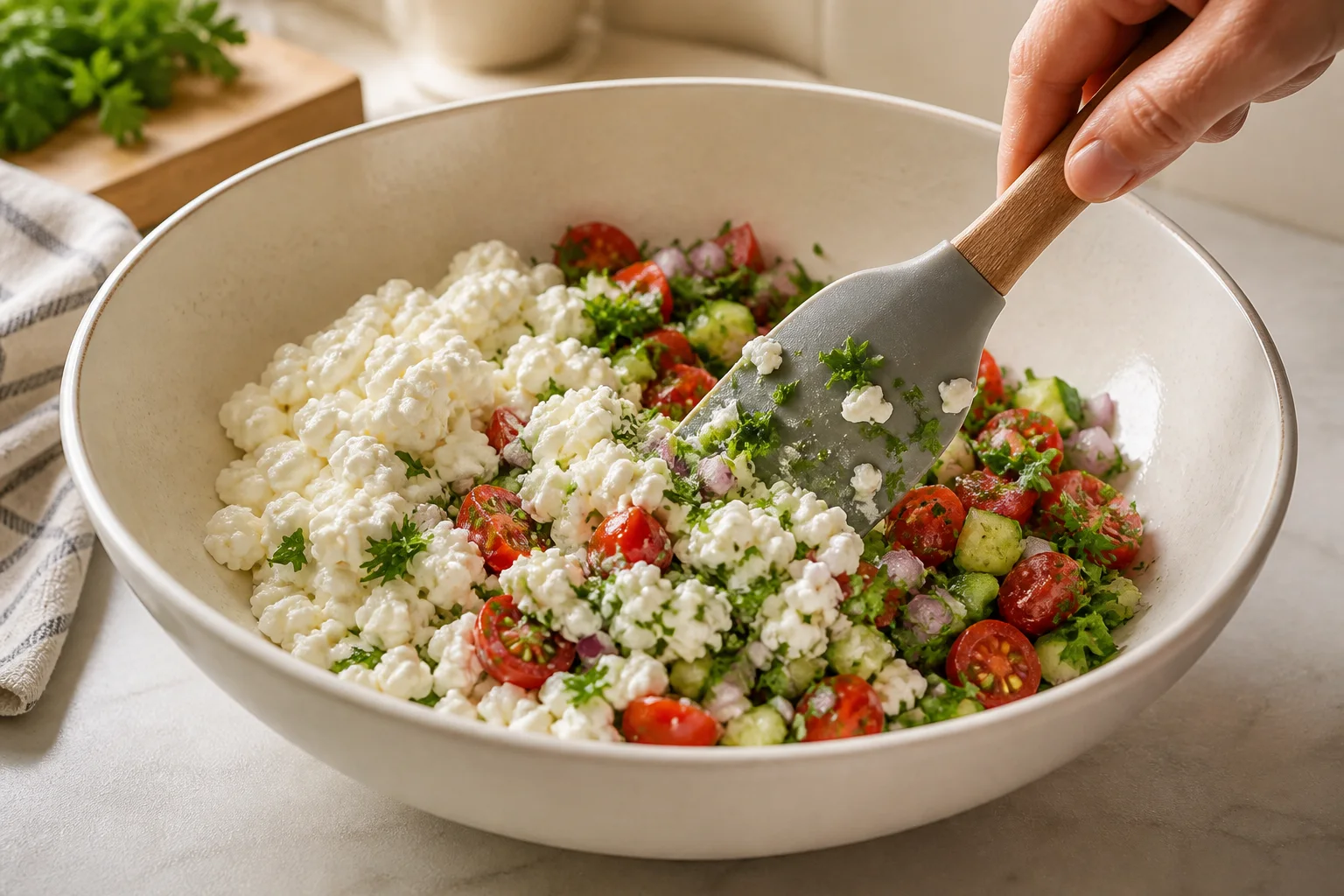
Add cottage cheese and fold with a flexible spatula until the vegetables are evenly distributed. Avoid vigorous stirring, which breaks the curds and makes the bowl look creamy rather than textured.
If the cottage cheese is unusually loose, add it with a slotted spoon and reserve the whey.
5. Taste and serve
Taste, then add kosher salt a pinch at a time only if needed. Add more lemon by the teaspoon for brightness or olive oil by the teaspoon for richness.
Serve immediately, or chill no more than 15 minutes before serving. Spoon rather than pour so any small amount of released liquid remains behind.
How to keep the vegetables crisp
Begin with cold, firm produce. Soft overripe tomatoes release more juice and lose their shape during folding.
Drying matters as much as draining. A salad spinner handles herbs well; clean towels work for cucumber and tomatoes. Cut produce after drying so water does not collect in the cut surfaces.
Do not salt the cucumber separately unless you also plan to drain and squeeze it. For this quick salad, late seasoning preserves a fresher crunch without adding another 20-minute step.
If serving buffet-style, place the bowl over ice and use a slotted serving spoon. Stir only once or twice; constant mixing encourages more curd breakdown.
Serving ideas
Serve the salad in a shallow bowl with whole-grain toast, crackers or warm pita. It also fits beside grilled chicken, salmon or roasted vegetables.
For a larger lunch, spoon it over arugula or chopped romaine and add chickpeas. The cottage cheese mixture acts as the dressing, so additional creamy dressing is unnecessary.
Stuff it into halved mini bell peppers or lettuce cups for a crisp snack. Drain any collected liquid before filling.
For breakfast, omit oregano and onion, keep cucumber and tomato, and add a soft-boiled or fried egg prepared to your preferred safe doneness.
Variations
Mediterranean cottage cheese salad
Add 1/3 cup rinsed chickpeas, 2 tablespoons sliced olives and 1/4 cup crumbled feta. Taste before salting because feta and olives contribute plenty.
Avocado version
Fold in one diced avocado just before serving and increase lemon to 1 1/2 tablespoons. Avocado softens during storage, so this version is not ideal for advance preparation.
Spicy cottage cheese bowl
Add minced jalapeño, red pepper flakes or hot sauce. Reduce lemon slightly when the hot sauce is highly acidic.
Corn and tomato
Replace half the cucumber with 1 cup cooked, cooled corn kernels. Smoked paprika or chili powder works well with this sweeter variation.
Everything-seasoned salad
Omit oregano and add 1 to 2 teaspoons everything bagel seasoning at serving time. Because the blend contains salt, do not add separate salt until after tasting.
Troubleshooting
Liquid is pooling in the bowl
The vegetables were wet, salted too early or the cottage cheese carried extra whey. Spoon the salad into a fine-mesh strainer for a minute, then transfer to a dry bowl. Next time keep components separate until serving.
The salad tastes too salty
Cottage cheese and optional add-ins vary. Fold in more unsalted cucumber and tomato or another portion of lower-sodium cottage cheese. Lemon does not remove salt; it may only make the flavor busier.
The curds disappeared
The salad was stirred too aggressively or used very small, soft curds. Fold with a spatula and stop as soon as the vegetables are dispersed.
The onion is overpowering
Rinse the chopped onion and dry it before mixing, or use scallions. Add more cucumber and cottage cheese to an existing batch.
The salad tastes bland
Taste for salt first. If adequately salted, add lemon by the teaspoon, black pepper or another tablespoon of fresh herbs.
The cucumber is soft
Use a firm English cucumber and combine near serving time. Standard cucumbers should be seeded so the watery center does not soften the bowl.
Make-ahead and storage
For meal prep, store the dressed vegetable mixture and cottage cheese separately for up to 2 days, keeping final salt out until serving. Tomatoes soften over time, so cutting them the day of serving gives the best texture.
Once combined, refrigerate in an airtight container and use within 2 days for best quality. Some separation is normal; stir gently or serve with a slotted spoon.
FoodSafety.gov advises keeping cold foods at 40°F or below and refrigerating perishables within 2 hours, or 1 hour above 90°F. Review the four steps to food safety for packing and serving dairy-based salads.
Freezing is not recommended. Cottage cheese may separate and cucumber and tomato become soft after thawing.
Frequently asked questions
Do cottage cheese and cucumber go together?
Yes. Mild cottage cheese provides a creamy, salty base for cool, crisp cucumber. English cucumber is especially useful because it has small seeds and relatively little loose water.
Should I drain cottage cheese first?
Only if the container has a visible pool of whey. Drain briefly without pressing so the curds remain moist.
Can I make this salad the night before?
Prepare the components, but keep vegetables and cottage cheese separate. Combine and salt shortly before eating for the best texture.
Can I use low-fat cottage cheese?
Yes. The result may taste tangier and contain more visible whey depending on the brand. Drain only excess liquid.
What can replace tomatoes?
Use diced bell pepper, radishes or cooled corn. They release less water and make the salad more suitable for meal prep.
Can I blend the cottage cheese?
You can, but the result becomes a creamy vegetable dip rather than a curd-textured salad. Use the cottage cheese ranch recipe when a smooth base is the goal.
Recipe development note
This recipe was developed through culinary research and editorial review. It has not been represented as a personal kitchen test. Cottage cheese moisture and salt, vegetable ripeness and herb intensity vary; use the draining, folding and seasoning cues in the method.
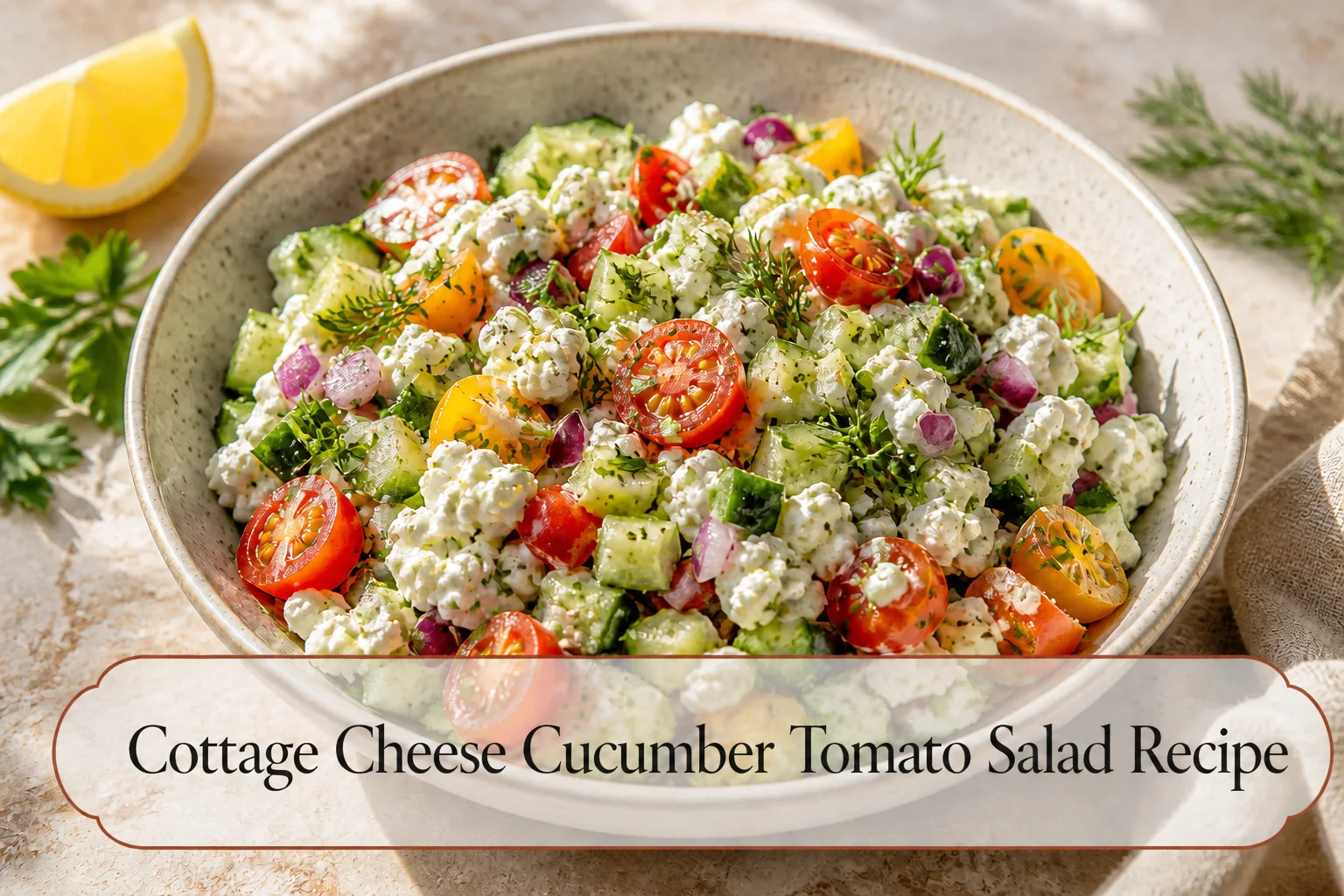
Nutrition is an estimate based on generic whole-milk cottage cheese. The accompanying visuals are AI-assisted food-editorial images, not photographs of a kitchen test.
Recipe at a glance
| Metric | Details |
|---|---|
| Prep time | 15 minutes |
| Total time | 15 minutes |
| Yield | 4 servings |
Printable recipe card
Cottage Cheese Cucumber Tomato Salad Recipe
Ingredients
Equipment
Method
- Rinse cucumber, tomatoes and herbs under running water, then dry them thoroughly so surface water does not enter the salad.
- Dice cucumber into 1/2-inch pieces, halve or quarter tomatoes and finely chop red onion and herbs.
- Toss cucumber, tomatoes, onion and herbs with olive oil, lemon juice, oregano and black pepper. Do not add salt yet.
- Add cottage cheese and fold gently with a flexible spatula until evenly distributed, keeping the curds distinct.
- Add salt a pinch at a time only if needed. Adjust with lemon or olive oil and serve immediately or chill no more than 15 minutes.
Notes
- Dry washed produce thoroughly.
- Seed a standard cucumber before dicing.
- Add salt only after cottage cheese is folded in.
- For meal prep, store vegetables and cottage cheese separately.
- This recipe was developed through culinary research and editorial review.
This recipe was developed through culinary research and editorial review. Cottage cheese moisture and salt, vegetable ripeness and herb intensity vary; use the draining, folding and seasoning cues in the method.
Nutrition is an estimate based on generic whole-milk cottage cheese; actual values vary by brand, ingredient measurement and serving size.