
Canned white beans make ham and bean soup practical without a soaking schedule. One portion of the beans is mashed to give the broth body while the rest remain whole. Cooked ham joins after the vegetables soften so it heats through without giving all its salt to the soup too early.
Ingredient moisture, piece size, cookware and starting temperature can shift the finish. The method therefore pairs a practical time range with visible or temperature-based doneness cues.
This recipe was developed through culinary research and editorial review. It is not represented as a personal kitchen test.
For a related idea, see pumpkin soup recipe. You may also want vegetable soup recipe.
Why this recipe works
Mashed beans thicken without flour: Their starch gives the broth body while whole beans preserve texture.
Ham joins late: Fully cooked ham only needs reheating and can make the broth overly salty during a long simmer.
Salt is adjusted last: Broth, beans and ham contribute different amounts of sodium.
The first batch is the useful reference point. Measure as written, note the finish in your equipment, and change only one variable at a time if an adjustment is needed.
Ingredients
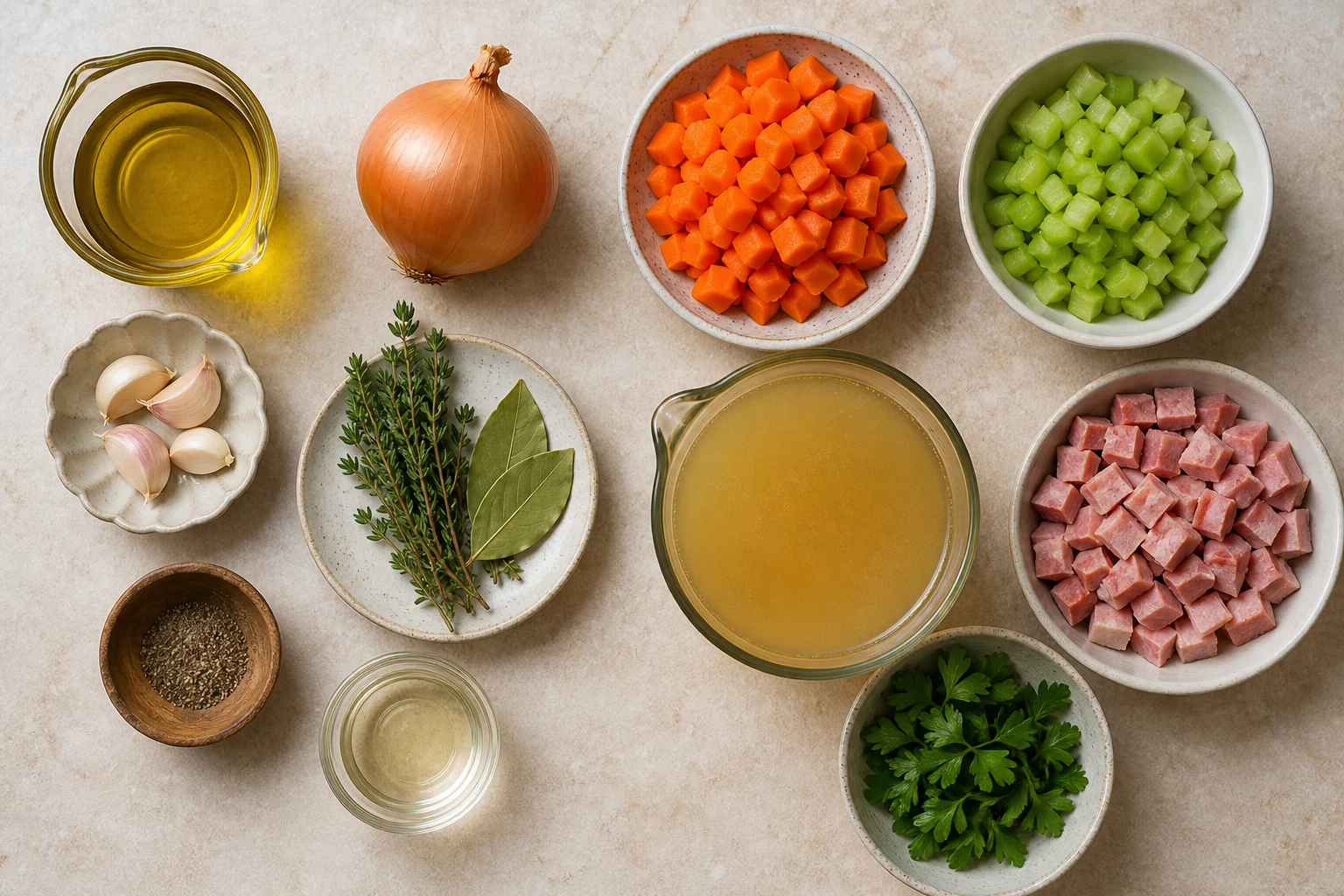
- 1 tablespoon olive oil
- 1 medium yellow onion, diced
- 3 medium carrots, sliced
- 3 ribs celery, sliced
- 3 cloves garlic, minced
- 1 teaspoon dried thyme
- 1 bay leaf
- 6 cups low-sodium chicken broth
- 4 cans cannellini or great northern beans, 15 ounces each, drained and rinsed
- 2 cups diced fully cooked ham
- 1/2 teaspoon black pepper
- 1 tablespoon apple cider vinegar, plus more to taste
- 2 tablespoons chopped parsley, optional
Ingredient notes
Ham
Use fully cooked ham and verify its label; keep it refrigerated until adding.
Beans
Draining and rinsing canned beans removes some packing liquid and lets the broth seasoning stay controlled.
Broth
Start with low-sodium broth because ham adds significant seasoning.
How to make ham and bean soup
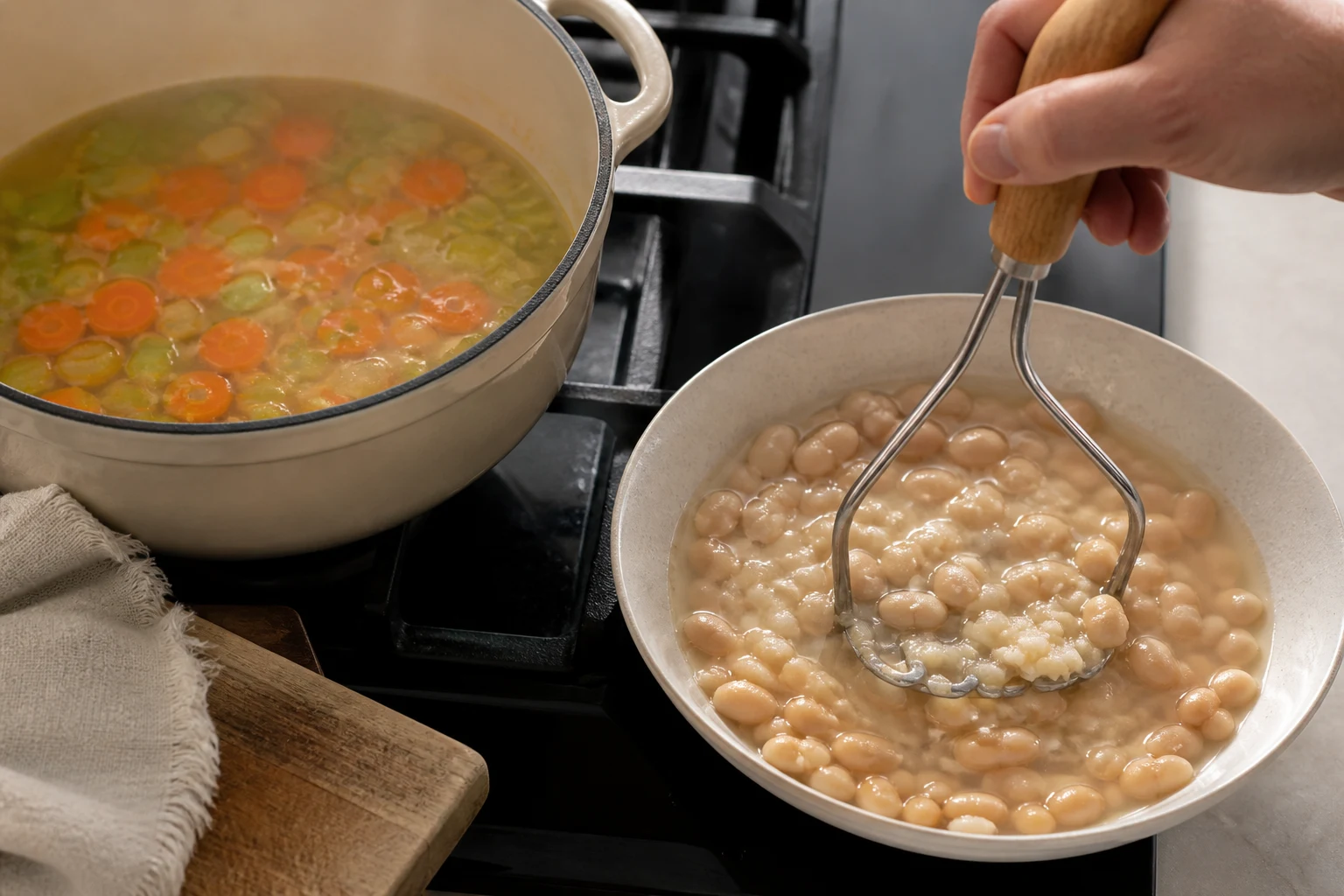
1. Build the vegetable base
Heat oil in a heavy pot over medium. Cook onion, carrots and celery for 8 minutes until beginning to soften.
2. Add aromatics
Stir in garlic and thyme for 30 seconds, then add bay leaf and broth.
3. Simmer
Bring to a boil, reduce to a gentle simmer, cover partially and cook 15 to 20 minutes until carrots are nearly tender.
4. Mash some beans
Mash 1 can of drained beans with a little hot broth, then stir the mash and the remaining whole beans into the pot.
5. Add ham
Stir in fully cooked ham and pepper and simmer 8 to 12 minutes until the soup is hot and the vegetables are tender.
6. Finish and rest
Remove bay leaf, stir in vinegar, taste before adding any salt and rest 10 minutes. Add optional parsley.
Quick timing and doneness guide
| Stage | What to look for | What to do |
|---|---|---|
| Preparation | Their starch gives the broth body while whole beans preserve texture. | Complete the size, moisture or equipment setup before cooking |
| First check | Mash 1 can of drained beans with a little hot broth, then stir the mash and the remaining whole beans into the pot. | Check at the early end of the range and keep unfinished portions cooking |
| Finished | Remove bay leaf, stir in vinegar, taste before adding any salt and rest 10 minutes. Add optional parsley. | Stop when the stated texture or safe temperature is reached |
| If adjustment is needed | Add vinegar by the teaspoon and black pepper after resting. | Make the smallest useful change, then check again |
This table is a decision guide, not a replacement for ingredient labels, the appliance manual or safe-temperature guidance. When food safety depends on internal temperature, check more than one thick piece with a reliable thermometer.
Substitutions and variations
Smoked turkey
Replace ham with diced fully cooked smoked turkey and adjust salt at the end.
Different beans
Use navy beans or a mixture of mild white beans.
Greens
Stir in chopped kale with the whole beans and simmer until tender.
Change one major component at a time. Moisture, sweetness, structure and cooking time affect one another, so several simultaneous substitutions are harder to predict.
Serving ideas
Serve with cornbread, whole-grain toast or a crisp cabbage salad. Add parsley or extra vinegar at the table.
Troubleshooting
The soup is thin
Likely cause: Too few beans were mashed or the pot remained tightly covered.
Fix: Mash another cup of beans and simmer uncovered.
The soup is too salty
Likely cause: The ham or broth was highly seasoned.
Fix: Add unsalted beans and broth; acid can balance flavor but cannot remove sodium.
The beans break apart
Likely cause: The soup boiled hard after they were added.
Fix: Maintain a gentle simmer and stir carefully.
The flavor is flat
Likely cause: Rich beans and ham need contrast.
Fix: Add vinegar by the teaspoon and black pepper after resting.
Storage, freezing and reheating
Refrigerator: Cool in shallow containers, refrigerate within 2 hours and use within 3 to 4 days.
Freezer: Freeze for 2 to 3 months, leaving expansion space; thaw in the refrigerator.
Reheating or serving after storage: Reheat while stirring until the soup and ham reach 165°F, adding broth as the beans thicken in storage.
For general handling, the FoodSafety.gov Four Steps to Food Safety is the authoritative outside reference used for this article. FoodSafety.gov recommends refrigerating perishable cooked foods within 2 hours, using shallow containers and reheating leftovers to 165°F.
Frequently asked questions
Do canned beans need to be soaked?
No. Drain and rinse them, then add after the vegetables are nearly tender.
How do I thicken ham and bean soup?
Mash one can of beans with hot broth and simmer the soup uncovered if needed.
When should salt be added?
Taste after the ham and broth have simmered, because they may provide enough salt.
Recipe development note
The method for ham and bean soup recipe was developed through culinary research and editorial review. The quantities and time ranges are an editorial recipe specification, not a claim that every ingredient brand, appliance or batch was personally tested in one kitchen.
Nutrition is an estimate per servings and varies with brands, optional ingredients and portion size. The accompanying visuals are AI-assisted food-editorial images, not photographs of a kitchen test.
Printable recipe card
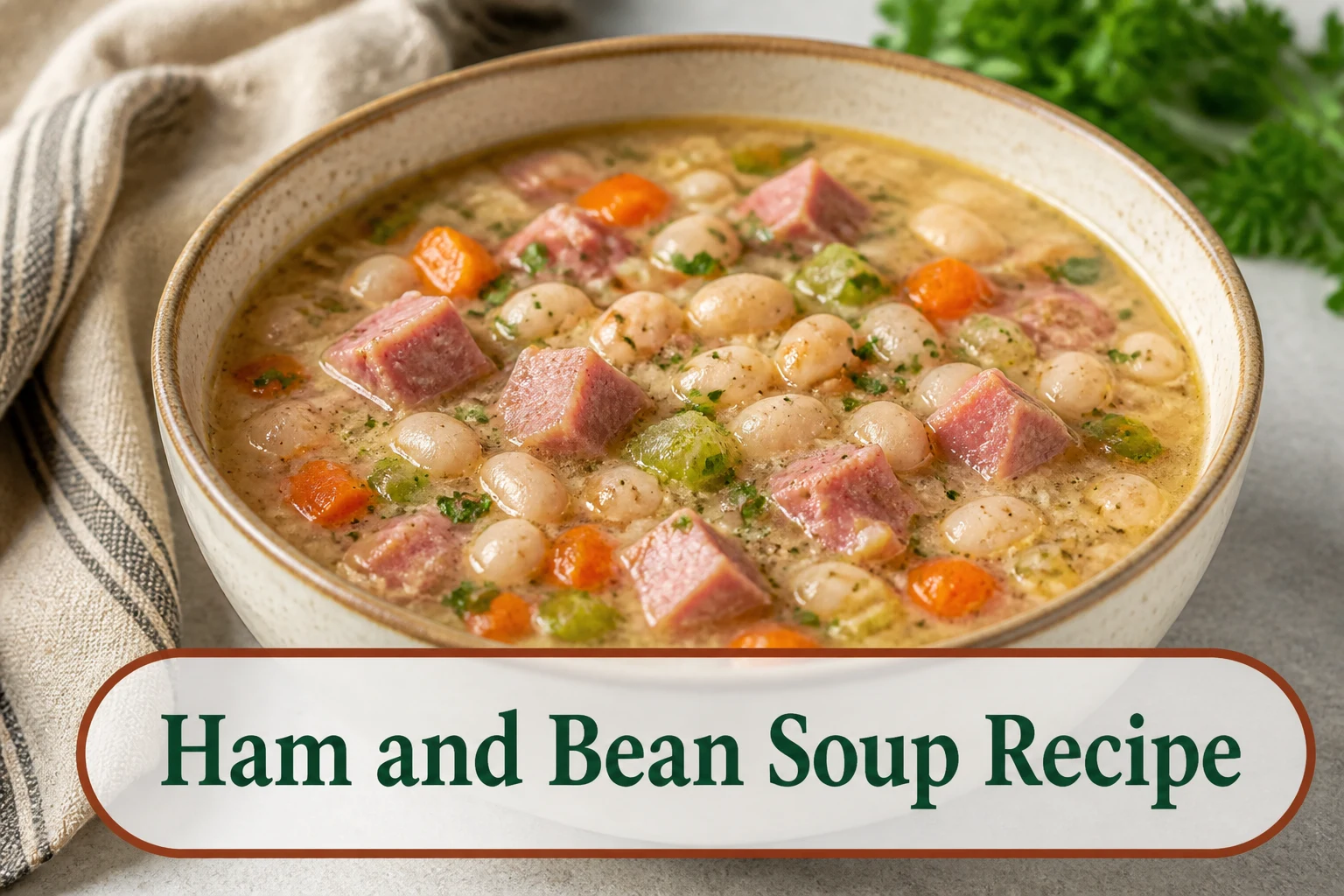
Ham and Bean Soup Recipe
Ingredients
Equipment
Method
- Heat oil in a heavy pot over medium. Cook onion, carrots and celery for 8 minutes until beginning to soften.
- Stir in garlic and thyme for 30 seconds, then add bay leaf and broth.
- Bring to a boil, reduce to a gentle simmer, cover partially and cook 15 to 20 minutes until carrots are nearly tender.
- Mash 1 can of drained beans with a little hot broth, then stir the mash and the remaining whole beans into the pot.
- Stir in fully cooked ham and pepper and simmer 8 to 12 minutes until the soup is hot and the vegetables are tender.
- Remove bay leaf, stir in vinegar, taste before adding any salt and rest 10 minutes. Add optional parsley.
Notes
- Read ingredient labels and the manual for any appliance used.
- Begin checking at the early end of the range.
- FoodSafety.gov recommends refrigerating perishable cooked foods within 2 hours, using shallow containers and reheating leftovers to 165°F.
- This recipe was developed through culinary research and editorial review.
This recipe was developed through culinary research and editorial review. Equipment, ingredient brands, starting temperature and batch size can change timing; follow the method cues and applicable safety guidance.
Nutrition is an estimate per servings and varies with brands, optional ingredients and portion size.