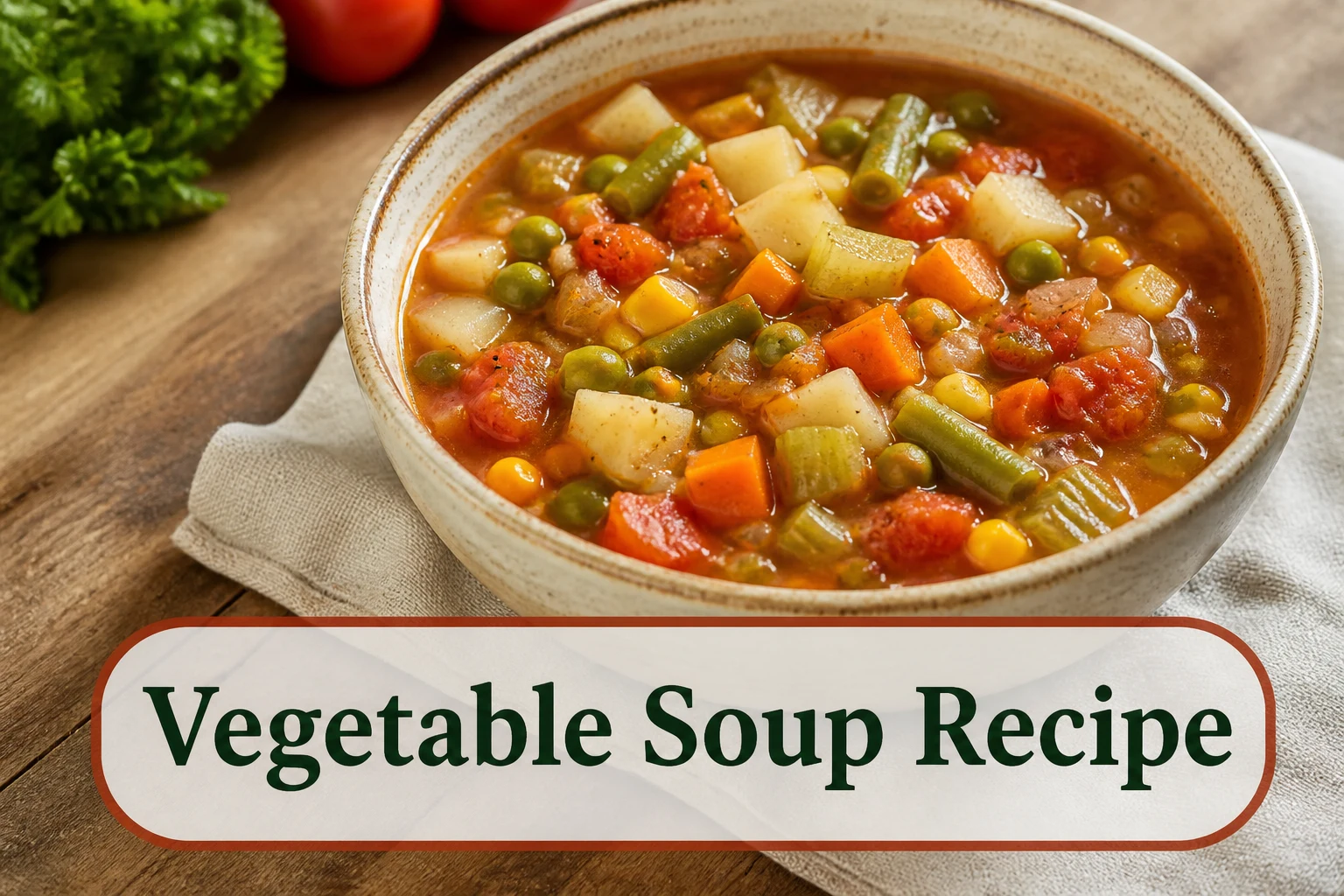
Vegetable soup tastes cohesive when sturdy vegetables simmer first and quick-cooking vegetables join later. Potatoes and carrots need time to soften, while green beans, corn and peas keep better color and texture with a shorter finish. A modest tomato base and low-sodium broth leave room for final seasoning.
Ingredient moisture, piece size, cookware and starting temperature can shift the finish. The method therefore pairs a practical time range with visible or temperature-based doneness cues.
This recipe was developed through culinary research and editorial review. It is not represented as a personal kitchen test.
For a related idea, see pumpkin soup recipe. You may also want butternut squash soup recipe.
Why this recipe works
Vegetables enter in stages: Potatoes need much longer than peas, so one start time would create either hard potatoes or dull soft peas.
Partial covering controls evaporation: The soup concentrates without losing so much broth that the potatoes crowd the pot.
Acid comes at the end: A final splash of lemon brightens the vegetables without slowing potato softening.
The first batch is the useful reference point. Measure as written, note the finish in your equipment, and change only one variable at a time if an adjustment is needed.
Ingredients
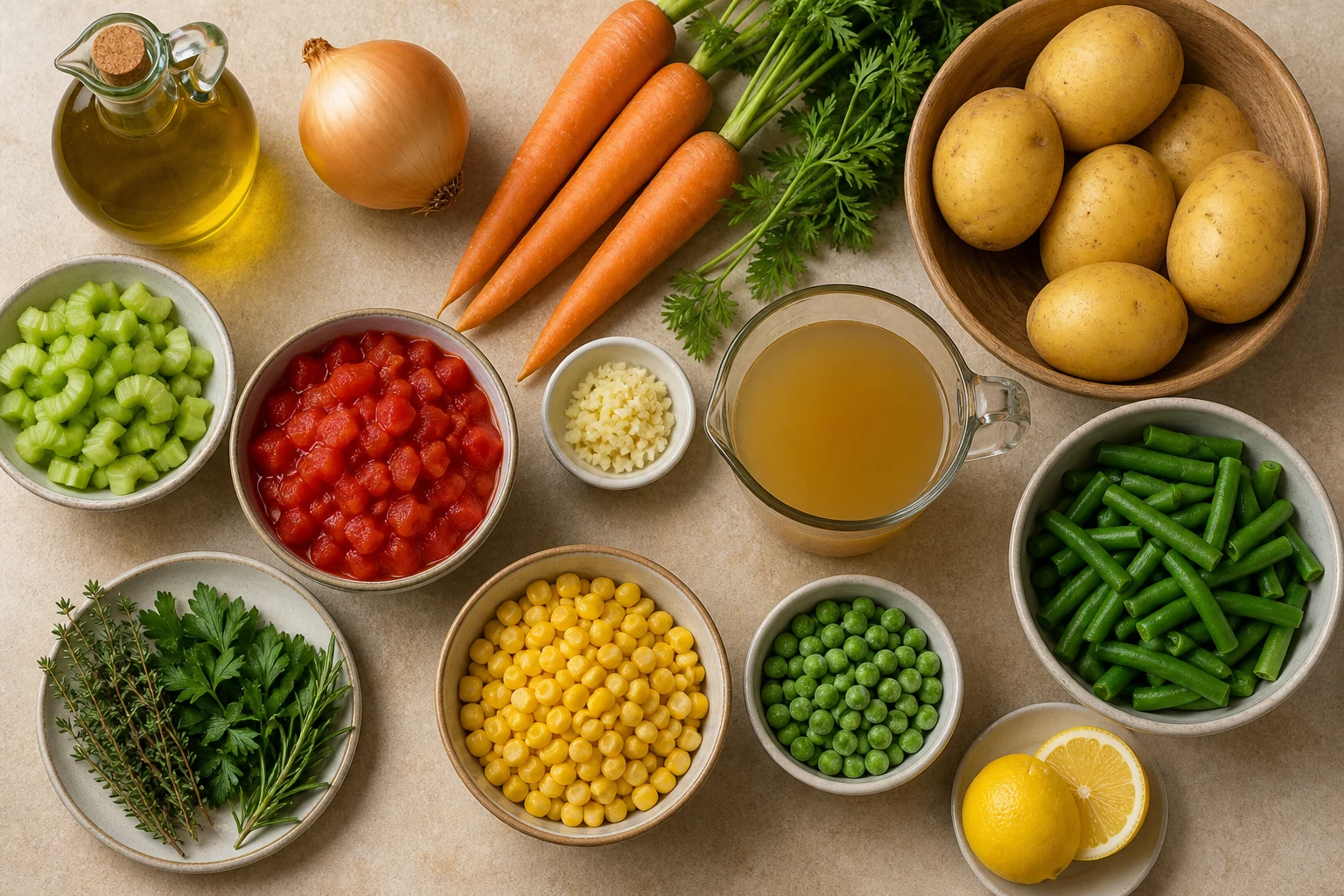
- 2 tablespoons olive oil
- 1 medium yellow onion, diced
- 3 medium carrots, sliced
- 3 ribs celery, sliced
- 3 cloves garlic, minced
- 1 1/2 pounds Yukon Gold potatoes, cut into 3/4-inch cubes
- 1 can diced tomatoes, 14.5 ounces
- 6 cups low-sodium vegetable broth
- 1 teaspoon dried Italian seasoning
- 1 teaspoon kosher salt, plus more to taste
- 1/2 teaspoon black pepper
- 2 cups cut green beans, fresh or frozen
- 1 cup corn kernels, fresh or frozen
- 1 cup frozen peas
- 1 tablespoon lemon juice, optional finish
Ingredient notes
Produce
Choose firm unspoiled vegetables and rinse before peeling or cutting so surface dirt is not carried inward.
Potatoes
Yukon Gold cubes hold shape while adding light body; russets break down more.
Frozen vegetables
Add them directly from frozen during the later stages and allow the soup to return to a simmer.
How to make vegetable soup
1. Clean and cut
Rinse fresh produce under running water without soap and cut the potatoes, carrots, celery and beans into consistent pieces.
2. Build the base
Heat oil in a heavy pot over medium. Cook onion, carrots and celery for 7 minutes, then add garlic for 30 seconds.
3. Simmer the sturdy vegetables
Add potatoes, tomatoes, broth, Italian seasoning, salt and pepper. Bring to a boil, reduce to a gentle simmer and cover partially for 18 minutes.
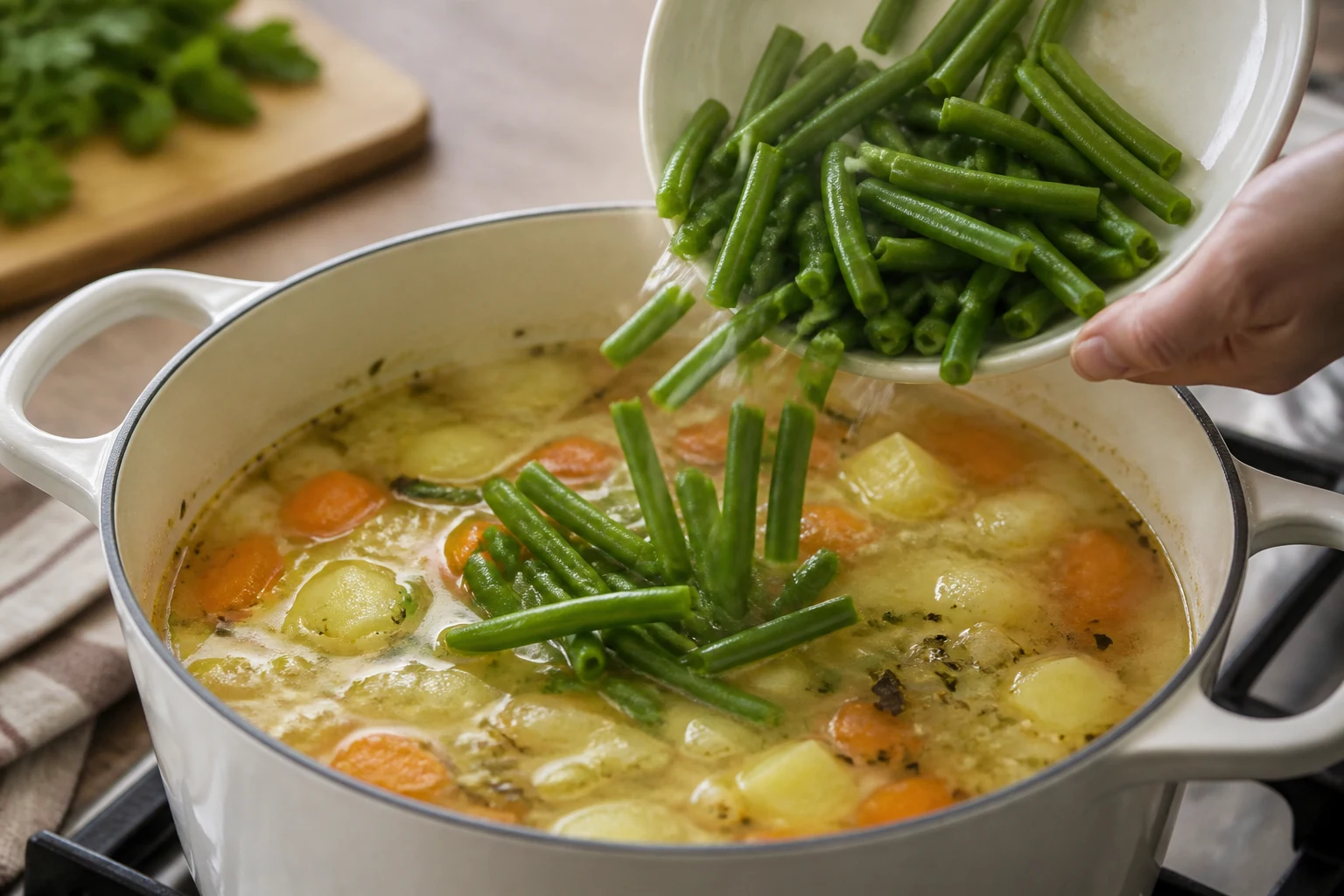
4. Add the green beans
Stir in green beans and simmer 8 to 12 minutes, until the potatoes are tender and the beans are cooked but still hold shape.
5. Finish with corn and peas
Add corn and peas for the final 3 to 5 minutes, just until hot.
6. Rest and adjust
Turn off heat, add optional lemon, rest 10 minutes and adjust salt, pepper and broth.
Quick timing and doneness guide
| Stage | What to look for | What to do |
|---|---|---|
| Preparation | Potatoes need much longer than peas, so one start time would create either hard potatoes or dull soft peas. | Complete the size, moisture or equipment setup before cooking |
| First check | Stir in green beans and simmer 8 to 12 minutes, until the potatoes are tender and the beans are cooked but still hold shape. | Check at the early end of the range and keep unfinished portions cooking |
| Finished | Turn off heat, add optional lemon, rest 10 minutes and adjust salt, pepper and broth. | Stop when the stated texture or safe temperature is reached |
| If adjustment is needed | Add salt by the pinch and lemon by the teaspoon. | Make the smallest useful change, then check again |
This table is a decision guide, not a replacement for ingredient labels, the appliance manual or safe-temperature guidance. When food safety depends on internal temperature, check more than one thick piece with a reliable thermometer.
Substitutions and variations
Bean addition
Add one drained 15-ounce can of white beans with the green beans for a heartier soup.
Different greens
Stir chopped kale in with the green beans or baby spinach with the peas.
Herbs
Replace Italian seasoning with thyme and a bay leaf, removing the bay leaf before serving.
Change one major component at a time. Moisture, sweetness, structure and cooking time affect one another, so several simultaneous substitutions are harder to predict.
Serving ideas
Serve with whole-grain bread, crackers, grilled cheese or a bean salad. Add parsley, Parmesan or olive oil at the table.
Troubleshooting
The potatoes are hard
Likely cause: The cubes are large or the tomatoes were especially acidic.
Fix: Continue simmering with enough broth until a knife slides into the potatoes.
The vegetables are mushy
Likely cause: All vegetables were added at once or the soup boiled hard.
Fix: Use staged additions and maintain a gentle simmer.
The soup is too thin
Likely cause: The ratio favors broth or vegetables released little starch.
Fix: Mash a cup of potatoes and vegetables against the pot, then stir them back in.
The soup tastes dull
Likely cause: It needs final seasoning after the vegetables absorb broth.
Fix: Add salt by the pinch and lemon by the teaspoon.
Storage, freezing and reheating
Refrigerator: Cool in shallow containers and refrigerate promptly for 3 to 4 days.
Freezer: Freeze for 2 to 3 months; potatoes soften somewhat after thawing but remain useful in soup.
Reheating or serving after storage: Reheat while stirring until 165°F, adding broth if the soup thickened in storage.
For general handling, the FDA Selecting and Serving Produce Safely is the authoritative outside reference used for this article. FDA guidance recommends rinsing produce under running water without soap, separating it from raw animal foods and refrigerating perishable cut produce at 40°F or below.
Frequently asked questions
What vegetables go in vegetable soup?
This version uses onion, carrots, celery, potatoes, tomatoes, green beans, corn and peas.
Can I use frozen vegetables?
Yes. Add sturdy frozen vegetables during the middle stage and peas or corn near the end.
How do I keep vegetable soup from becoming mushy?
Cut evenly, simmer gently and add quick-cooking vegetables later.
Recipe development note
The method for vegetable soup recipe was developed through culinary research and editorial review. The quantities and time ranges are an editorial recipe specification, not a claim that every ingredient brand, appliance or batch was personally tested in one kitchen.
Nutrition is an estimate per servings and varies with brands, optional ingredients and portion size. The accompanying visuals are AI-assisted food-editorial images, not photographs of a kitchen test.
Printable recipe card
Vegetable Soup Recipe
Ingredients
Equipment
Method
- Rinse fresh produce under running water without soap and cut the potatoes, carrots, celery and beans into consistent pieces.
- Heat oil in a heavy pot over medium. Cook onion, carrots and celery for 7 minutes, then add garlic for 30 seconds.
- Add potatoes, tomatoes, broth, Italian seasoning, salt and pepper. Bring to a boil, reduce to a gentle simmer and cover partially for 18 minutes.
- Stir in green beans and simmer 8 to 12 minutes, until the potatoes are tender and the beans are cooked but still hold shape.
- Add corn and peas for the final 3 to 5 minutes, just until hot.
- Turn off heat, add optional lemon, rest 10 minutes and adjust salt, pepper and broth.
Notes
- Read ingredient labels and the manual for any appliance used.
- Begin checking at the early end of the range.
- FDA guidance recommends rinsing produce under running water without soap, separating it from raw animal foods and refrigerating perishable cut produce at 40°F or below.
- This recipe was developed through culinary research and editorial review.
This recipe was developed through culinary research and editorial review. Equipment, ingredient brands, starting temperature and batch size can change timing; follow the method cues and applicable safety guidance.
Nutrition is an estimate per servings and varies with brands, optional ingredients and portion size.