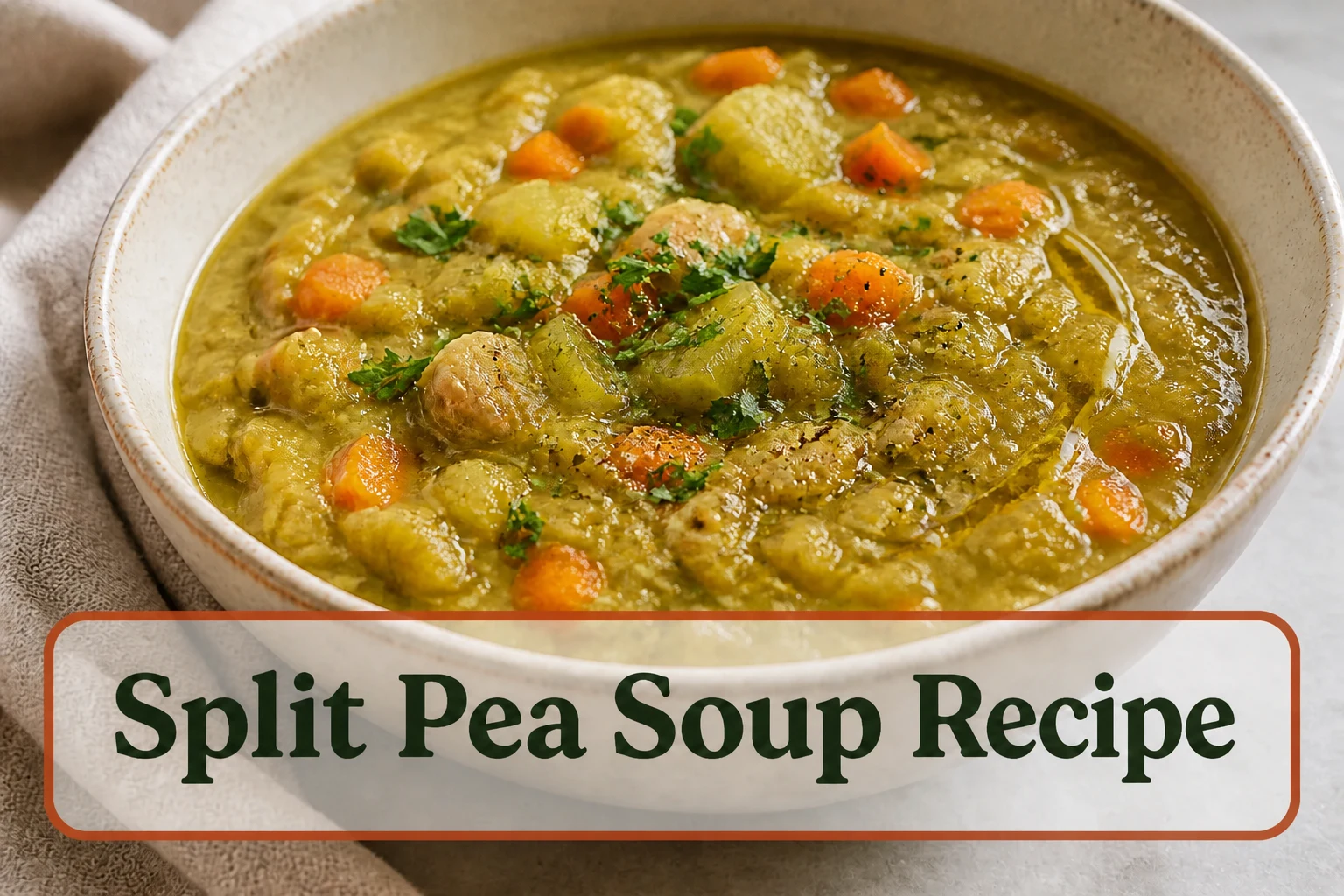
Split pea soup becomes creamy without a blender because the dried peas soften and partially break down during a steady simmer. Starting with a measured broth ratio and stirring more often near the end prevents scorching, while a modest amount of smoked paprika provides depth without requiring meat.
Ingredient moisture, piece size, cookware and starting temperature can shift the finish. The method therefore pairs a practical time range with visible or temperature-based doneness cues.
This recipe was developed through culinary research and editorial review. It is not represented as a personal kitchen test.
For a related idea, see pumpkin soup recipe. You may also want butternut squash soup recipe.
Why this recipe works
A heavy pot spreads heat: Even heat reduces the risk of dense pea solids catching on the bottom.
Partial covering balances evaporation: Some steam escapes to concentrate flavor without reducing the broth too quickly.
Frequent late stirring protects the finish: The soup thickens rapidly once the peas break down.
The first batch is the useful reference point. Measure as written, note the finish in your equipment, and change only one variable at a time if an adjustment is needed.
Ingredients
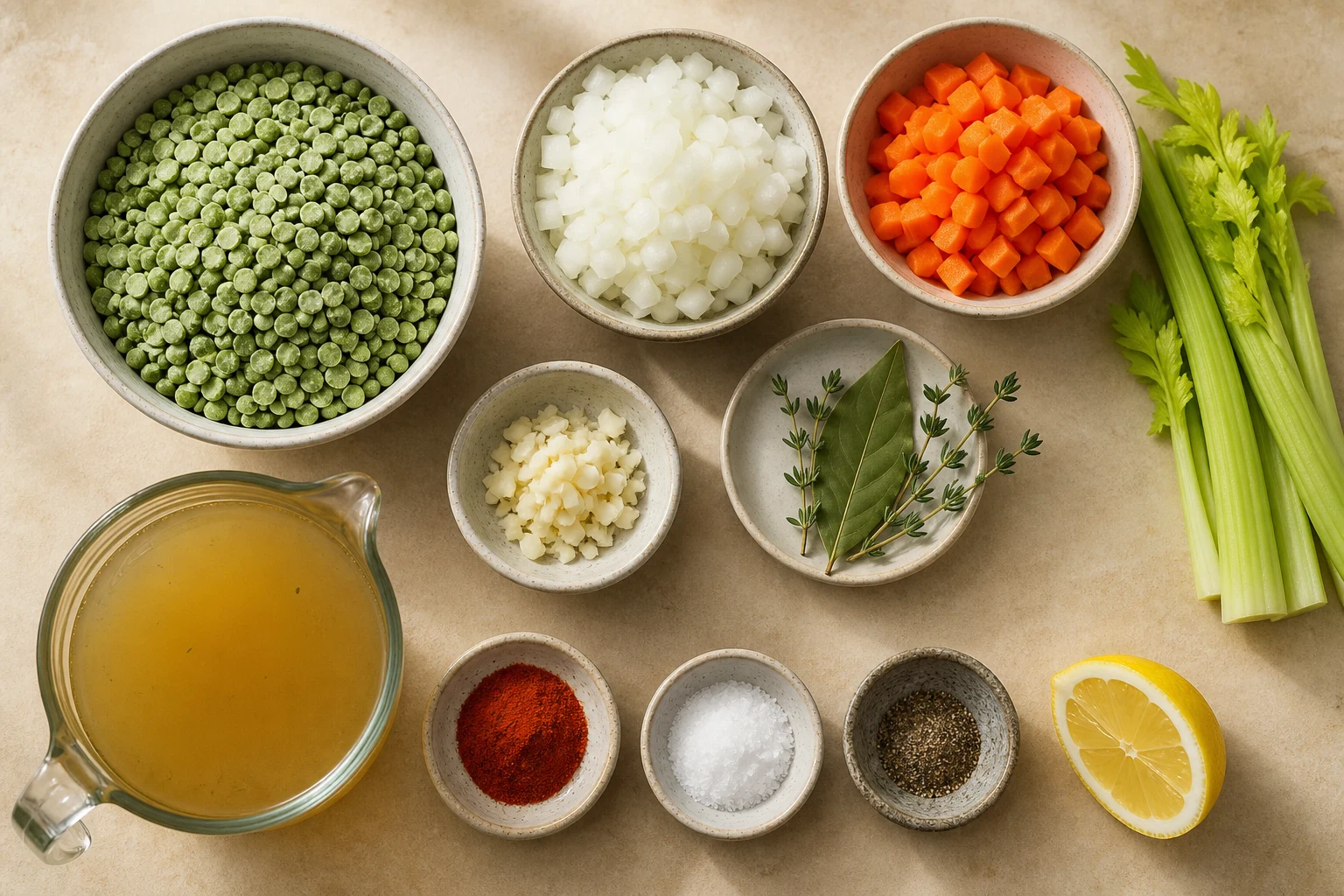
- 1 pound dried green split peas, rinsed and sorted
- 2 tablespoons olive oil
- 1 medium yellow onion, diced
- 2 medium carrots, diced
- 2 ribs celery, diced
- 3 cloves garlic, minced
- 8 cups low-sodium vegetable broth, plus more as needed
- 1 bay leaf
- 1 teaspoon dried thyme
- 1/2 teaspoon smoked paprika
- 1 teaspoon kosher salt, plus more to taste
- 1/2 teaspoon black pepper
- 1 tablespoon lemon juice, optional finish
Ingredient notes
Split peas
They do not require soaking, but older peas may take longer to soften.
Broth
Low-sodium broth leaves room to season after reduction; salty broth can become harsh as the soup thickens.
Acid
Add lemon only after the peas are tender because acidic ingredients can slow softening.
How to make split pea soup
1. Sort and rinse
Check the split peas for stones or debris, then rinse in a fine-mesh sieve until the water runs mostly clear.
2. Soften the vegetables
Heat olive oil in a heavy pot over medium heat. Cook onion, carrots and celery for 7 to 9 minutes until the onion is translucent; add garlic for 30 seconds.
3. Build the soup
Add split peas, broth, bay leaf, thyme, paprika, salt and pepper. Bring just to a boil, then reduce to a gentle simmer.
4. Simmer
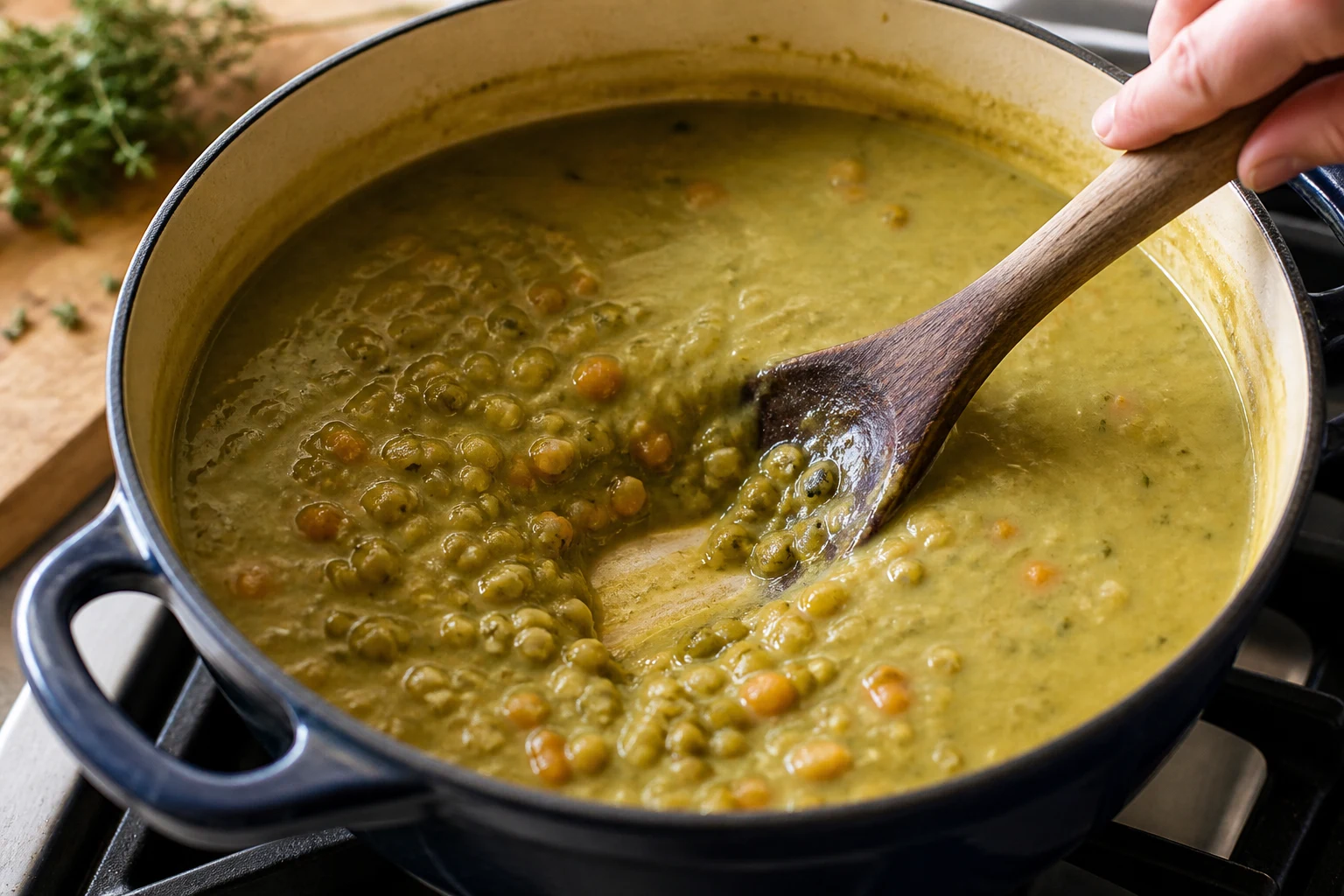
Partially cover and simmer 55 minutes, stirring every 15 minutes and scraping the bottom.
5. Finish the texture
Continue 10 to 25 minutes, stirring every 5 minutes, until the peas are tender and the soup is creamy with some pieces remaining. Add broth if it becomes too thick.
6. Season and rest
Remove the bay leaf, stir in optional lemon, rest 10 minutes and adjust salt, pepper and thickness before serving.
Quick timing and doneness guide
| Stage | What to look for | What to do |
|---|---|---|
| Preparation | Even heat reduces the risk of dense pea solids catching on the bottom. | Complete the size, moisture or equipment setup before cooking |
| First check | Partially cover and simmer 55 minutes, stirring every 15 minutes and scraping the bottom. | Check at the early end of the range and keep unfinished portions cooking |
| Finished | Remove the bay leaf, stir in optional lemon, rest 10 minutes and adjust salt, pepper and thickness before serving. | Stop when the stated texture or safe temperature is reached |
| If adjustment is needed | Simmer uncovered while stirring often until the desired body develops. | Make the smallest useful change, then check again |
This table is a decision guide, not a replacement for ingredient labels, the appliance manual or safe-temperature guidance. When food safety depends on internal temperature, check more than one thick piece with a reliable thermometer.
Substitutions and variations
Ham option
Add a meaty ham bone during simmering or fold in diced cooked ham near the end, then adjust salt carefully.
Yellow split peas
Use the same quantity; color and flavor will differ slightly and the final timing may shift.
Herbs
Replace thyme with rosemary, but use only 1/2 teaspoon dried rosemary because it is assertive.
Change one major component at a time. Moisture, sweetness, structure and cooking time affect one another, so several simultaneous substitutions are harder to predict.
Serving ideas
Serve with crusty bread, a green salad or roasted vegetables. Offer lemon, black pepper or chopped parsley at the table.
Troubleshooting
The peas stay firm
Likely cause: The peas are old, the simmer is too low or acid was added early.
Fix: Add hot broth and continue simmering; wait to add acid until tender.
The soup scorches
Likely cause: The pot is thin or stirring was too infrequent after thickening.
Fix: Transfer the unburned top portion to a clean pot without scraping the scorched layer.
The soup is too thick
Likely cause: It reduced during cooking or standing.
Fix: Whisk in hot broth 1/2 cup at a time until spoonable.
The soup is thin
Likely cause: The peas need more time or too much liquid was added.
Fix: Simmer uncovered while stirring often until the desired body develops.
Storage, freezing and reheating
Refrigerator: Cool in shallow containers and refrigerate promptly for 3 to 4 days.
Freezer: Freeze for 2 to 3 months, leaving expansion room; the soup will thicken after thawing.
Reheating or serving after storage: Reheat gently with added broth, stirring often, until steaming hot throughout and 165°F when measured.
For general handling, the FoodSafety.gov Four Steps to Food Safety is the authoritative outside reference used for this article. FoodSafety.gov lists soups and stews at 3 to 4 refrigerated days and 2 to 3 freezer months, with leftovers reheated to 165°F.
Frequently asked questions
Do split peas need to be soaked?
No. Rinse and sort them, then simmer until tender.
How long does split pea soup take?
Most batches need about 65 to 80 minutes of simmering, but older peas may take longer.
Why does split pea soup thicken after cooling?
The softened pea starches continue absorbing liquid; loosen leftovers with broth during reheating.
Recipe development note
The method for split pea soup recipe was developed through culinary research and editorial review. The quantities and time ranges are an editorial recipe specification, not a claim that every ingredient brand, appliance or batch was personally tested in one kitchen.
Nutrition is an estimate per servings and varies with brands, optional ingredients and portion size. The accompanying visuals are AI-assisted food-editorial images, not photographs of a kitchen test.
Printable recipe card
Split Pea Soup Recipe
Ingredients
Equipment
Method
- Check the split peas for stones or debris, then rinse in a fine-mesh sieve until the water runs mostly clear.
- Heat olive oil in a heavy pot over medium heat. Cook onion, carrots and celery for 7 to 9 minutes until the onion is translucent; add garlic for 30 seconds.
- Add split peas, broth, bay leaf, thyme, paprika, salt and pepper. Bring just to a boil, then reduce to a gentle simmer.
- Partially cover and simmer 55 minutes, stirring every 15 minutes and scraping the bottom.
- Continue 10 to 25 minutes, stirring every 5 minutes, until the peas are tender and the soup is creamy with some pieces remaining. Add broth if it becomes too thick.
- Remove the bay leaf, stir in optional lemon, rest 10 minutes and adjust salt, pepper and thickness before serving.
Notes
- Read ingredient labels and the manual for any appliance used.
- Begin checking at the early end of the range.
- FoodSafety.gov lists soups and stews at 3 to 4 refrigerated days and 2 to 3 freezer months, with leftovers reheated to 165°F.
- This recipe was developed through culinary research and editorial review.
This recipe was developed through culinary research and editorial review. Equipment, ingredient brands, starting temperature and batch size can change timing; follow the method cues and applicable safety guidance.
Nutrition is an estimate per servings and varies with brands, optional ingredients and portion size.