
This Instant Pot beef barley soup cooks browned beef chuck and pearl barley in the same pressure cycle, producing tender meat and pleasantly chewy grain in a rich tomato-beef broth. Carrots are cut substantially, while peas and parsley go in after pressure cooking so they keep their color and texture.
The recipe uses a 6-quart electric pressure cooker and a 15-minute natural release before any remaining pressure is released according to the appliance manual. The rest period lets the bubbling soup settle and gives the beef and barley time to finish gently.
This recipe was developed through culinary research and editorial review. Beef cut, barley age, cooker model and altitude vary; use the timing as a tested-style framework and check tenderness before serving. The instructions never override the safety, fill-limit or release directions for your exact model.
For a slow-cooked broth base, see the slow cooker chicken bone broth recipe. The hearty meatless Crock-Pot chili recipe offers a bean-based comfort-food alternative.
Why beef and barley can pressure-cook together
Beef chuck becomes tender through moist heat, while pearl barley needs enough time and liquid to soften. One-inch beef cubes and pearl—not hulled—barley fit a similar high-pressure window.
The soup uses enough broth for the barley to hydrate without turning the pot into porridge. A 15-minute natural release continues cooking more gently and reduces the force of starchy soup at the valve.
Quick-cooking barley is not interchangeable; it would become too soft. Hulled barley retains more bran and generally needs longer, so it is not calibrated here.
Ingredients
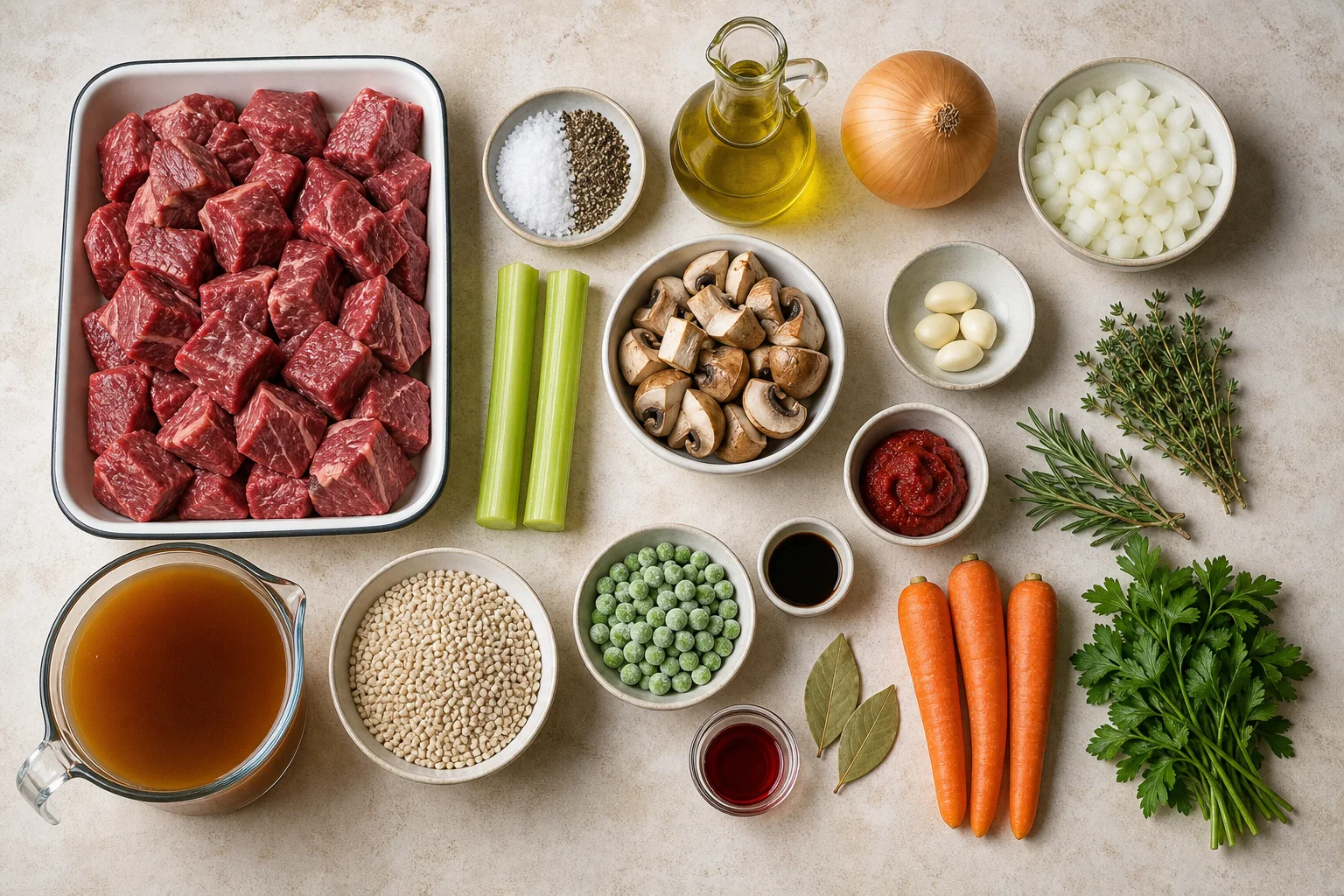
- 2 pounds boneless beef chuck roast, trimmed and cut into 1-inch cubes
- 1 1/4 teaspoons kosher salt, divided
- 1/2 teaspoon black pepper
- 2 tablespoons olive oil, divided
- 1 medium yellow onion, diced
- 2 celery ribs, cut into 1/2-inch pieces
- 8 ounces cremini mushrooms, quartered
- 4 garlic cloves, minced
- 2 tablespoons tomato paste
- 1 teaspoon dried thyme
- 1/2 teaspoon dried rosemary, crushed
- 1 tablespoon Worcestershire sauce
- 1 cup pearl barley, rinsed and drained
- 6 cups low-sodium beef broth
- 2 bay leaves
- 3 medium carrots, cut into 3/4-inch pieces
- 1 cup frozen peas
- 1 tablespoon red wine vinegar
- 1/4 cup chopped flat-leaf parsley
Ingredient notes and substitutions
Beef chuck: Chuck contains connective tissue that becomes tender under pressure. Trim large exterior fat and silver skin, then cut uniform 1-inch cubes. Lean sirloin can dry before barley is ready.
Pearl barley: Use regular pearl barley, not quick-cooking barley. Rinse it in a fine-mesh strainer to remove surface dust. Do not soak it for this formula.
Mushrooms: Quartered cremini mushrooms add savoriness and retain texture better than thin slices. White button mushrooms work as a substitute.
Broth: Low-sodium beef broth leaves room to season after pressure cooking. Enhanced meat and Worcestershire contribute additional sodium.
Carrots: Three-quarter-inch pieces are intentionally larger than ordinary soup dice. Pressure cooking softens small pieces rapidly.
Worcestershire: It deepens the broth. Check the label for fish and gluten when dietary restrictions apply.
Vinegar: Red wine vinegar brightens the finished soup. Add it after pressure cooking so its aroma remains distinct.
How to make Instant Pot beef barley soup
1. Dry and season the beef
Pat beef cubes dry with paper towels. Season with 1 teaspoon salt and the black pepper. Moist beef steams instead of browning.
Keep the raw-meat board and knife separate from parsley and other ready-to-eat ingredients.
2. Brown in batches
Select Sauté on a 6-quart electric pressure cooker and heat 1 tablespoon oil. Brown half the beef in one uncrowded layer, about 2 minutes per broad side. Transfer to a clean plate.
Add remaining oil and brown the second batch. The centers remain raw and will finish under pressure.
3. Cook the aromatics
Add onion, celery and mushrooms. Cook for 4 to 5 minutes, scraping and stirring, until mushrooms release some moisture and onion softens.
Add garlic, tomato paste, thyme and rosemary. Cook for 1 minute, stirring constantly so tomato paste darkens slightly without scorching.
4. Deglaze completely
Pour in 1 cup broth and Worcestershire. Scrape the bottom with a flat wooden spoon until no browned or stuck material remains. This reduces the chance of a burn warning.
Cancel Sauté. Do not proceed until the base feels smooth under the spoon.
5. Layer the soup
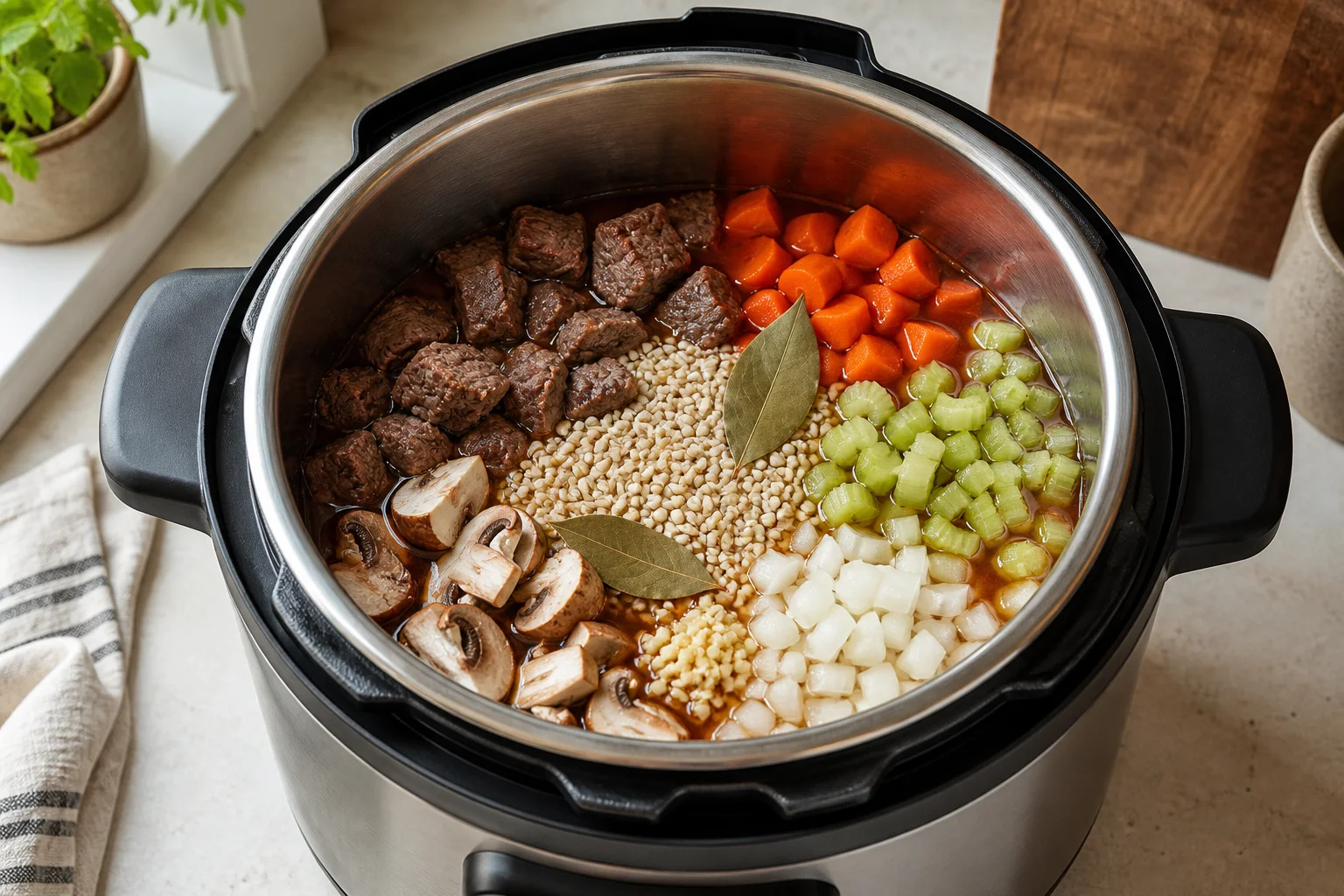
Return beef and accumulated juices. Add rinsed pearl barley, remaining broth, bay leaves, carrots and remaining 1/4 teaspoon salt. Stir evenly rather than leaving barley in one dense mound.
Confirm the contents are below the fill limit for your exact cooker. Starchy foods can have model-specific limits; follow the manufacturer’s manual.
6. Pressure-cook
Lock the lid and set the steam-release mechanism to the sealed position required by your model. Pressure-cook on high for 20 minutes.
The display time begins only after the cooker reaches pressure. Preheating may take 15 to 25 minutes depending on food temperature and model.
7. Use a 15-minute natural release
When the pressure cycle ends, leave the cooker undisturbed for 15 minutes. Then release any remaining pressure only as your model’s manual directs, keeping face and hands away from the steam path.
Do not force the lid. Open it only after the float valve or pressure indicator confirms depressurization.
Instant Pot provides model-specific instructions through its official product manuals page. Those directions take priority over generic wording.
8. Check texture and finish
Discard bay leaves. Test one beef cube and several barley grains. Beef should yield easily, and barley should be tender with a gentle chew.
Stir in frozen peas and cover loosely for 3 to 5 minutes, until hot. Add red wine vinegar and parsley. Taste before adding more salt.
If beef or barley remains firm, use Sauté at a gentle simmer for 5 to 10 minutes, adding broth if the soup becomes thick.
Natural release versus quick release
Soup contains a large volume of hot liquid and suspended starch from barley. A full immediate release can produce vigorous bubbling and may carry droplets or foam toward the valve.
A 15-minute natural release lets pressure and boiling intensity decrease. After that, follow the exact manual for releasing what remains. Never cover the valve with a towel, touch hot steam or try to open a pressurized lid.
If the cooker sputters liquid during the permitted final release, stop the release using the model’s directions and allow more natural-release time.
How to avoid a burn warning
- Brown in batches rather than letting juices accumulate.
- Deglaze every stuck bit after tomato paste is cooked.
- Use the full measured broth.
- Rinse barley but do not leave it as a compact pile.
- Do not add flour or cornstarch before pressure cooking.
- Verify the silicone sealing ring, valve and inner pot are correctly installed for the model.
If a burn notice appears, cancel the cycle and follow the appliance manual. After pressure is safely gone, inspect the bottom. Transfer unscorched food to a clean inner pot rather than scraping burnt material into the soup.
Beef doneness and tenderness
Whole cuts of beef have a federal minimum of 145°F followed by a 3-minute rest, as shown on the safe minimum temperature chart. Soup beef chuck is intentionally cooked well beyond the minimum for tenderness.
Temperature alone does not guarantee tender chuck. Collagen needs time to soften. A safe but tough cube benefits from additional gentle simmering, not serving immediately.
Troubleshooting
The beef is tough
Beef pieces may be larger than 1 inch or the chuck may contain dense connective tissue. Simmer with the lid off for 10 to 20 minutes, adding broth as needed. Next time, cut uniform cubes.
The barley is firm
The product may be hulled barley, unusually old or insufficiently submerged. Simmer until tender. Verify the package says pearl barley for the stated pressure time.
The soup is too thick
Barley continues absorbing liquid as soup stands. Stir in hot broth 1/2 cup at a time and adjust seasoning afterward.
The soup is too thin
Use Sauté to simmer uncovered for 5 to 10 minutes. Mash a few carrots or barley grains into the broth. Do not add dry flour directly.
The vegetables are mushy
Pieces were too small. Use 3/4-inch carrots and quartered mushrooms. For firmer carrots, omit them from the pressure cycle and simmer them after opening.
The broth tastes flat
Add salt in small pinches, then vinegar. Worcestershire supplies savory depth; parsley adds freshness. Do not increase all three before tasting between additions.
The soup is greasy
Trim chuck thoroughly and skim surface fat after opening. For make-ahead soup, chill promptly and lift solid fat from the top before reheating.
Can other barley types be used?
Quick-cooking barley: No direct substitution. It softens much faster and would be added after pressure cooking during a simmer.
Hulled barley: It retains more bran and usually needs longer. Using it would require a separate timing and perhaps more liquid.
Barley-free: Substitute 1 pound diced potatoes for a different soup, or omit barley and reduce broth by 1 to 2 cups. The result is no longer beef barley soup.
Barley contains gluten. For a gluten-free soup, use a recipe developed around rice or potatoes and verify broth and Worcestershire labels.
Storage and reheating
Divide soup into shallow containers within 2 hours; a large deep pot cools too slowly. USDA leftover safety guidance specifically recommends shallow containers for large amounts of soup.
Refrigerate for 3 to 4 days. Barley absorbs broth overnight, so add water or broth when reheating. Bring soup to a rolling boil and stir so cold spots do not remain.
Do not cool or store soup in the pressure-cooker base. Transfer it to proper food-storage containers.
Freezing instructions
Cool promptly and freeze meal-size portions for up to 3 months for best quality. Leave headspace and label with the date.
Thaw overnight in the refrigerator or reheat from frozen in a saucepan or microwave. Add broth because barley becomes softer and absorbs more liquid after freezing.
Frequently asked questions
Can I use stew meat?
Yes, if it is mostly chuck cut into consistent 1-inch pieces. Packages labeled stew meat can contain mixed cuts that tenderize at different rates.
Can I use quick barley?
Not in the pressure cycle. Cook the beef and vegetables without barley, then add quick barley after opening and simmer according to its package.
Can I use frozen beef?
This recipe is calibrated for thawed cubes that can be dried and browned. Frozen clumps brown poorly and alter the time to pressure; thaw safely in the refrigerator first.
Can I double the recipe?
Not in a 6-quart cooker. The doubled volume may exceed the model’s safe fill limit, especially with expanding, foaming grain. Make separate batches or use a larger compatible recipe and manual limits.
Why did my barley absorb all the broth?
Barley continues hydrating during holding and refrigeration. Loosen with broth before serving and store knowing the soup will thicken.
Can I quick-release immediately?
This method calls for a 15-minute natural release. After that, release remaining pressure only as your exact model manual permits. Stop if liquid sputters.
Can I add potatoes?
You can replace some carrots with 3/4-inch Yukon Gold pieces. Adding a large amount changes liquid balance and crowds the pot, so keep the total vegetable volume similar.
Recipe development note
This recipe was developed through culinary research and editorial review. It has not been represented as a personal kitchen test. Beef cut, barley type, altitude and pressure-cooker model vary; follow the exact appliance manual and check tenderness after opening.
Nutrition is an estimate based on generic ingredients. The accompanying visuals are AI-assisted food-editorial images, not photographs of a kitchen test.
Recipe at a glance
| Metric | Details |
|---|---|
| Prep time | 25 minutes |
| Cook time | 20 minutes |
| Total time | 85 minutes |
| Yield | 8 servings |
Printable recipe card

Instant Pot Beef Barley Soup Recipe
Ingredients
Equipment
Method
- Pat 1-inch beef cubes dry and season with 1 teaspoon salt and pepper.
- Using Sauté, brown beef in two batches with oil. Transfer browned pieces to a clean plate.
- Cook onion, celery and mushrooms 4 to 5 minutes. Add garlic, tomato paste, thyme and rosemary for 1 minute.
- Add 1 cup broth and Worcestershire. Scrape until no browned or stuck material remains, then cancel Sauté.
- Return beef. Add rinsed pearl barley, remaining broth, bay leaves, carrots and remaining salt; stir and verify model fill limits.
- Lock lid and pressure-cook on high for 20 minutes using the sealing setup required by the exact model.
- Allow 15 minutes natural release, then release remaining pressure only according to the model manual. Open only after depressurization is confirmed.
- Discard bay leaves. Check beef and barley tenderness; stir in peas for 3 to 5 minutes, then vinegar and parsley. Adjust seasoning.
Notes
- Use regular pearl barley, not quick-cooking or hulled barley.
- Deglaze the inner pot completely before pressure cooking.
- Respect the exact model’s fill limit and pressure-release instructions.
- Allow a 15-minute natural release before releasing any remaining pressure.
- This recipe was developed through culinary research and editorial review.
This recipe was developed through culinary research and editorial review. Beef cut, barley type, altitude and pressure-cooker model vary; follow the exact appliance manual and check tenderness after opening.
Nutrition is an estimate based on generic ingredients; actual values vary by beef trimming, broth and serving size.