
Pressure cooking combines chili flavors quickly, but thick tomato products stirred against the bottom can trigger a burn warning. This method browns the beef, deglazes the pot completely, layers tomatoes on top without stirring, and adjusts thickness only after pressure release so the cooker can build pressure safely.
The programmed pressure time does not include the time required to build or release pressure. Follow the appliance manual for valve position, fill limits and safe venting, and use the finished texture—not the display alone—as the final check.
This recipe was developed through culinary research and editorial review. It is not represented as a personal kitchen test.
For a related idea, see instant pot apple butter. You may also want instant pot vegetable soup.
Why this recipe works
Deglazing protects the heat sensor: Removing stuck browned bits lowers the chance that the cooker interprets them as scorching.
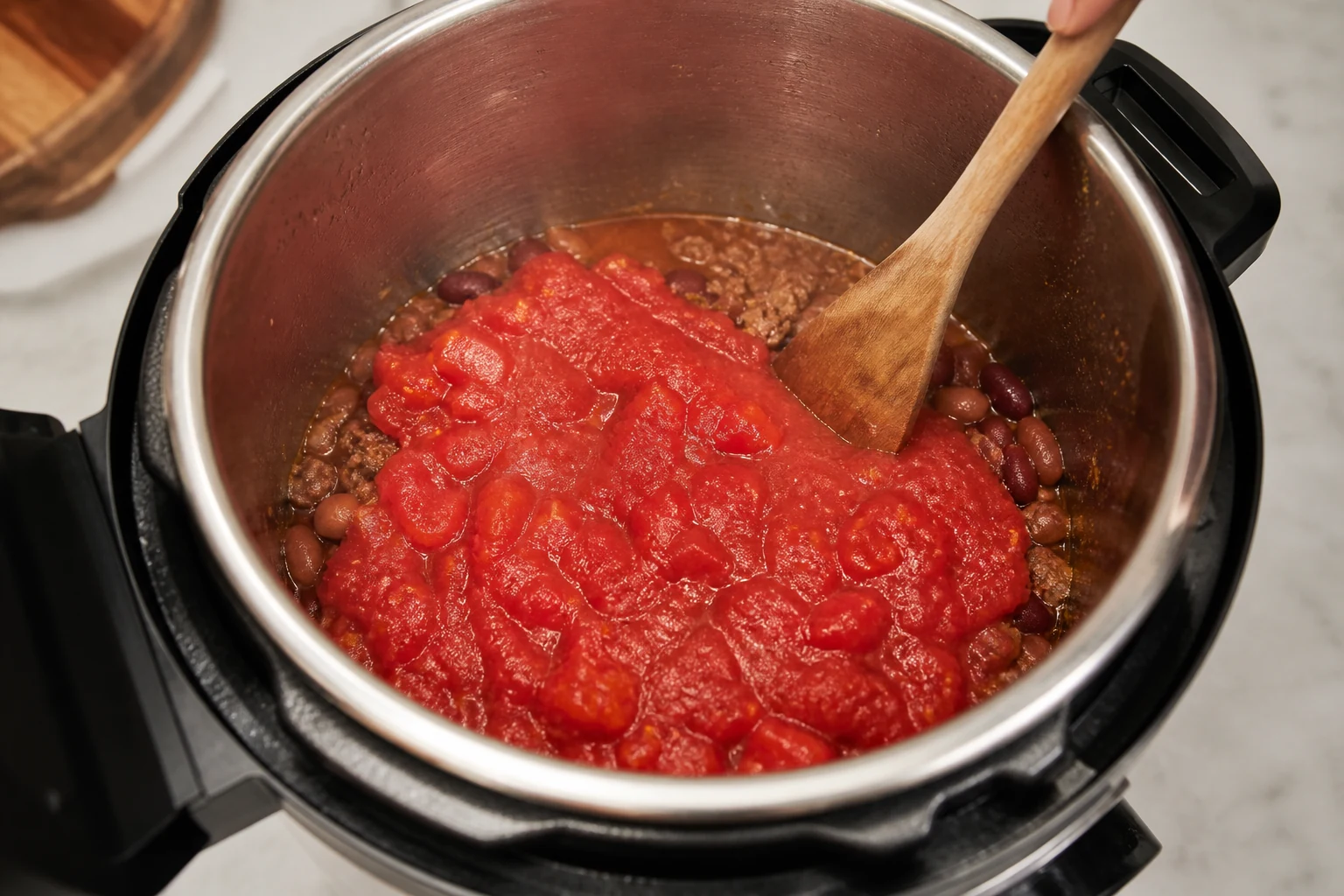
Tomatoes stay on top: Keeping thick tomato solids off the base helps thin broth circulate while pressure builds.
Thickness is adjusted afterward: A final uncovered simmer gives control without beginning with a mixture too thick for pressure cooking.
The first batch is the useful reference point. Measure as written, note the finish in your equipment, and change only one variable at a time if an adjustment is needed.
Ingredients
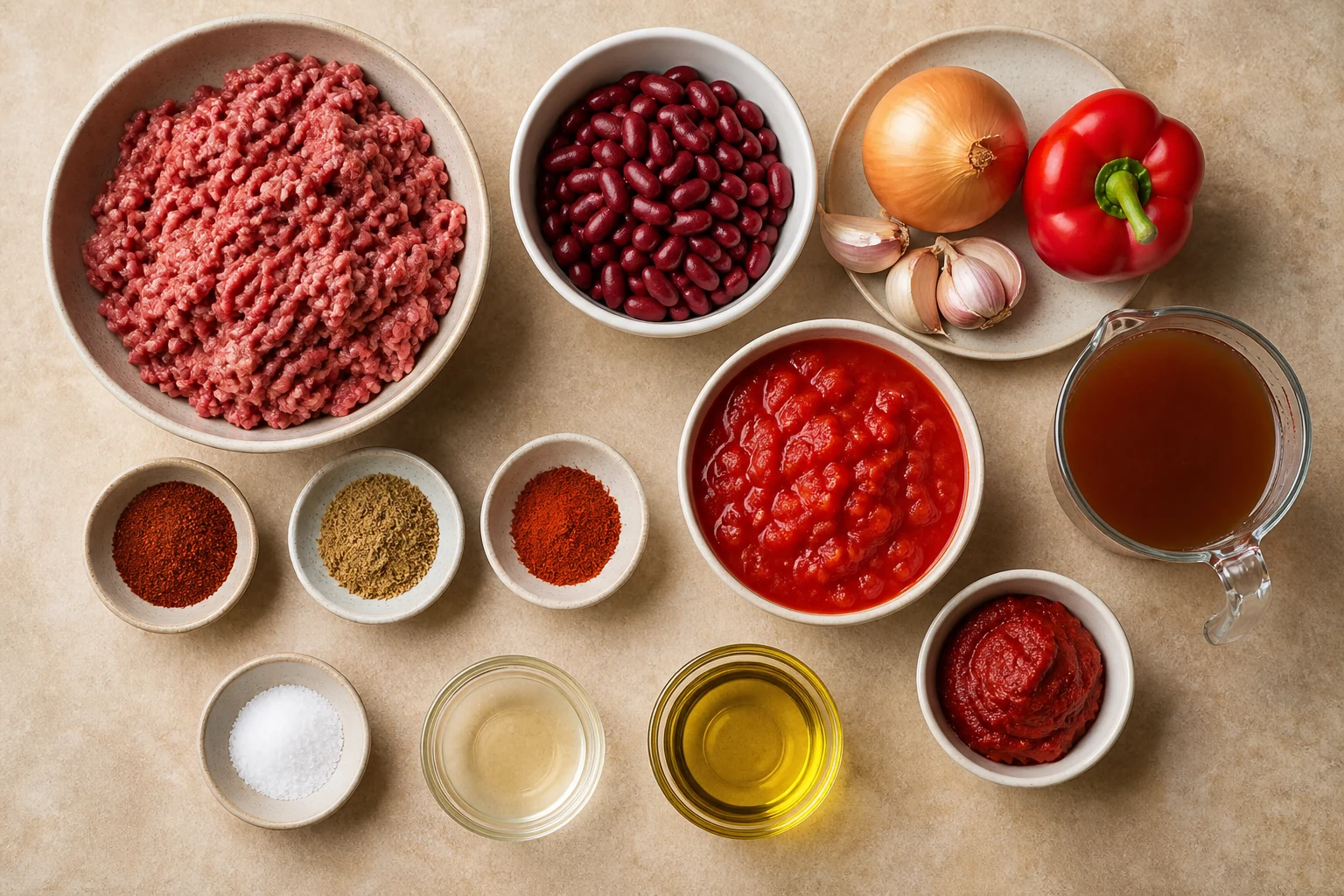
- 1 tablespoon olive oil
- 2 pounds 85% lean ground beef
- 1 large yellow onion, diced
- 1 large red bell pepper, diced
- 4 cloves garlic, chopped
- 3 tablespoons chili powder, mild blend
- 2 teaspoons ground cumin
- 1 teaspoon smoked paprika
- 1 teaspoon kosher salt
- 1 cup low-sodium beef broth
- 2 15-ounce cans kidney or pinto beans, rinsed and drained
- 1 28-ounce can crushed tomatoes, do not stir before pressure cooking
- 2 tablespoons tomato paste, added after pressure cooking
- 1 tablespoon apple cider vinegar
Ingredient notes
Chili powder
Use an American-style mild chili blend, not pure ground chile, unless you know its heat level.
Ground beef
Moderately lean beef supplies flavor without an extreme grease layer; drain only obvious excess fat.
Beans
Rinse canned beans to remove packing liquid and excess sodium, then drain well.
How to make instant pot chili
1. Brown the beef
Select sauté, heat oil and cook beef in two batches until no pink remains and browned spots develop; drain excess fat if needed.
2. Cook aromatics
Return beef, add onion and bell pepper for 4 minutes, then add garlic, chili powder, cumin, paprika and salt for 30 seconds.
3. Deglaze thoroughly
Pour in broth and scrape every browned bit from the bottom with a wooden spoon. Cancel sauté.
4. Layer and pressure cook
Stir in beans, then pour crushed tomatoes over the top without stirring them into the bottom. Lock the lid and cook at high pressure for 10 minutes.
5. Release safely
Allow a 15-minute natural release, then release remaining pressure as the manual directs and open away from your face.
6. Adjust thickness
Stir in tomato paste and vinegar. Use low sauté for 3 to 8 minutes if needed, stirring often, then taste and rest 5 minutes.
Quick timing and doneness guide
| Stage | What to look for | What to do |
|---|---|---|
| Preparation | Removing stuck browned bits lowers the chance that the cooker interprets them as scorching. | Complete the size, moisture or equipment setup before cooking |
| First check | Stir in beans, then pour crushed tomatoes over the top without stirring them into the bottom. Lock the lid and cook at high pressure for 10 minutes. | Check at the early end of the range and keep unfinished portions cooking |
| Finished | Stir in tomato paste and vinegar. Use low sauté for 3 to 8 minutes if needed, stirring often, then taste and rest 5 minutes. | Stop when the stated texture or safe temperature is reached |
| If adjustment is needed | Add extra beans and tomatoes, then serve with yogurt or sour cream rather than adding sugar. | Make the smallest useful change, then check again |
This table is a decision guide, not a replacement for ingredient labels, the appliance manual or safe-temperature guidance. When food safety depends on internal temperature, check more than one thick piece with a reliable thermometer.
Substitutions and variations
Ground turkey
Use ground turkey and cook it fully during sauté; add one extra teaspoon oil if very lean.
Bean mix
Use black beans and pinto beans in any combination, keeping the total drained amount similar.
Vegetable chili
Replace beef with 16 ounces chopped mushrooms and an extra can of beans, using vegetable broth.
Change one major component at a time. Moisture, sweetness, structure and cooking time affect one another, so several simultaneous substitutions are harder to predict.
Serving ideas
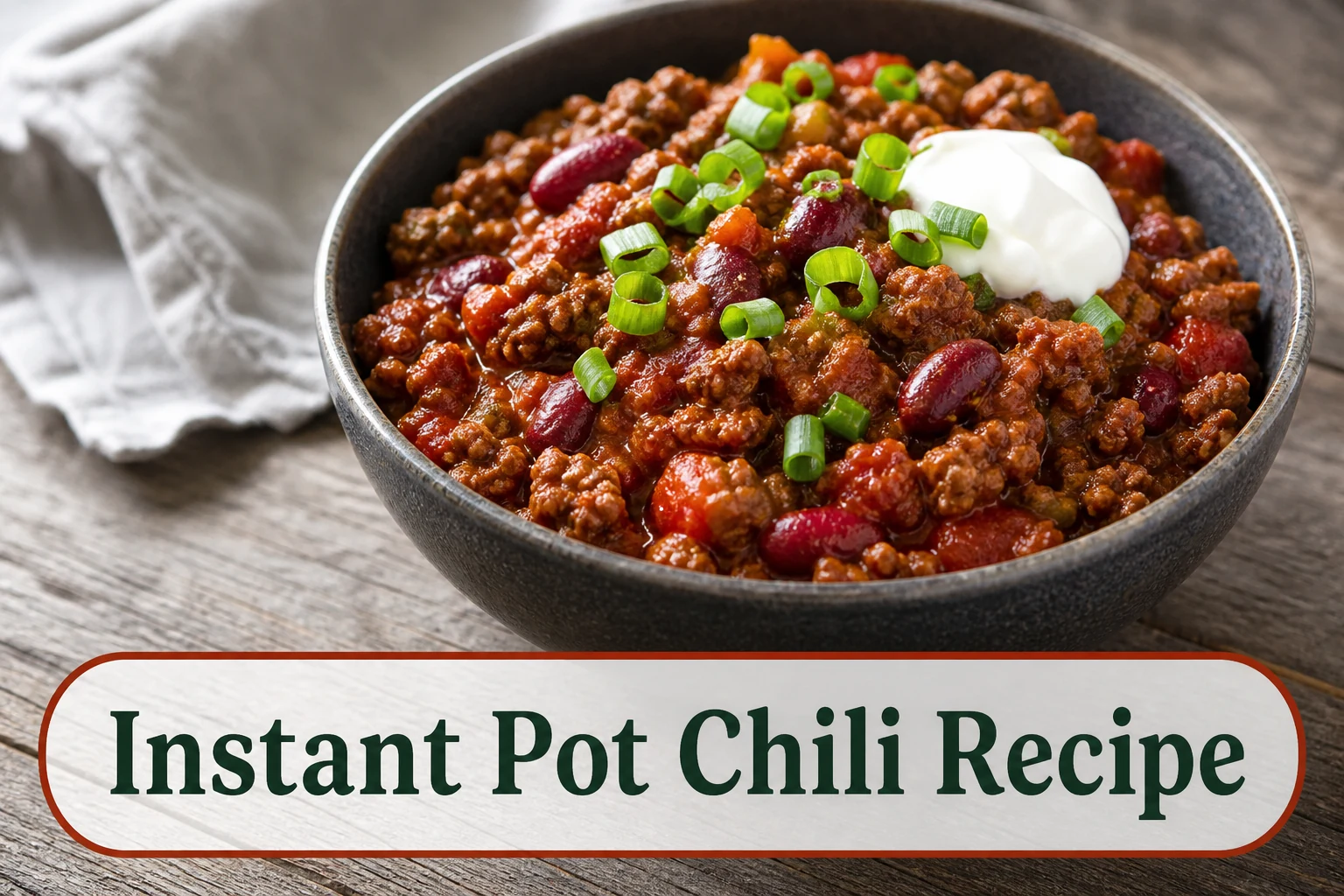
Serve with scallions, cilantro, grated cheese, yogurt, avocado or cornbread. Keep toppings separate so leftovers cool and reheat evenly.
Troubleshooting
The burn warning appears
Likely cause: The pot was not deglazed or tomatoes were stirred onto the base.
Fix: Stop according to the manual, release safely, clean the bottom and restart with broth below and tomatoes layered on top.
The chili is thin
Likely cause: Pressure cooking traps evaporation.
Fix: Use low sauté after release, stir frequently and stop when a cooled spoonful has the desired body.
The beans are breaking
Likely cause: They were stirred aggressively or simmered too long after pressure cooking.
Fix: Fold gently and shorten the final sauté.
The chili is too spicy
Likely cause: The chili blend or added pepper is stronger than expected.
Fix: Add extra beans and tomatoes, then serve with yogurt or sour cream rather than adding sugar.
Storage, freezing and reheating
Refrigerator: Cool in shallow covered containers within 2 hours and refrigerate for 3 to 4 days.
Freezer: Freeze in meal-size containers for up to 3 months.
Reheating or serving after storage: Reheat on the stove or in the microwave, stirring often, until the chili reaches 165°F.
For general handling, the FoodSafety.gov Four Steps to Food Safety is the authoritative outside reference used for this article. Follow the pressure cooker’s manual for fill limits, valve position and safe release; reheat leftovers to 165°F.
Frequently asked questions
Why does Instant Pot chili get a burn warning?
Stuck browned bits and thick tomato solids on the base are common causes. Deglaze completely and layer tomatoes on top.
How long does chili cook under pressure?
This recipe uses 10 minutes at high pressure plus the time to build pressure and a 15-minute natural release.
Can I freeze Instant Pot chili?
Yes. Cool promptly and freeze practical portions for up to 3 months.
Recipe development note
The method for instant pot chili recipe was developed through culinary research and editorial review. The quantities and time ranges are an editorial recipe specification, not a claim that every ingredient brand, appliance or batch was personally tested in one kitchen.
Nutrition is an estimate per servings and varies with brands, optional ingredients and portion size. The accompanying visuals are AI-assisted food-editorial images, not photographs of a kitchen test.
Printable recipe card
Instant Pot Chili Recipe
Ingredients
Equipment
Method
- Select sauté, heat oil and cook beef in two batches until no pink remains and browned spots develop; drain excess fat if needed.
- Return beef, add onion and bell pepper for 4 minutes, then add garlic, chili powder, cumin, paprika and salt for 30 seconds.
- Pour in broth and scrape every browned bit from the bottom with a wooden spoon. Cancel sauté.
- Stir in beans, then pour crushed tomatoes over the top without stirring them into the bottom. Lock the lid and cook at high pressure for 10 minutes.
- Allow a 15-minute natural release, then release remaining pressure as the manual directs and open away from your face.
- Stir in tomato paste and vinegar. Use low sauté for 3 to 8 minutes if needed, stirring often, then taste and rest 5 minutes.
Notes
- Read ingredient labels and the manual for any appliance used.
- Begin checking at the early end of the range.
- Follow the pressure cooker’s manual for fill limits, valve position and safe release; reheat leftovers to 165°F.
- This recipe was developed through culinary research and editorial review.
This recipe was developed through culinary research and editorial review. Equipment, ingredient brands, starting temperature and batch size can change timing; follow the method cues and applicable safety guidance.
Nutrition is an estimate per servings and varies with brands, optional ingredients and portion size.