
Pumpkin cookies naturally bake softer than classic drop cookies because pumpkin purée brings substantial water to the dough. This version uses melted butter, blots the measured pumpkin, and chills the mixed dough so the cookies spread gently while keeping defined edges and a tender center.
Oven calibration, pan material, fruit moisture and ingredient measuring can shift the finish. Begin checking at the early end of the range and use the center cues described below.
This recipe was developed through culinary research and editorial review. It is not represented as a personal kitchen test.
For a related idea, see pumpkin muffins recipe. You may also want black sesame cookies.
Why this recipe works
Blotted pumpkin limits cakiness: Removing some free water gives the dough better structure and prevents a gummy center.
One yolk adds richness: The yolk binds and tenderizes without adding all the extra water found in a whole egg.
A short chill controls spread: Cool dough gives the flour time to hydrate and helps each scoop retain a round shape.
The first batch is the useful reference point. Measure as written, note the finish in your equipment, and change only one variable at a time if an adjustment is needed.
Ingredients
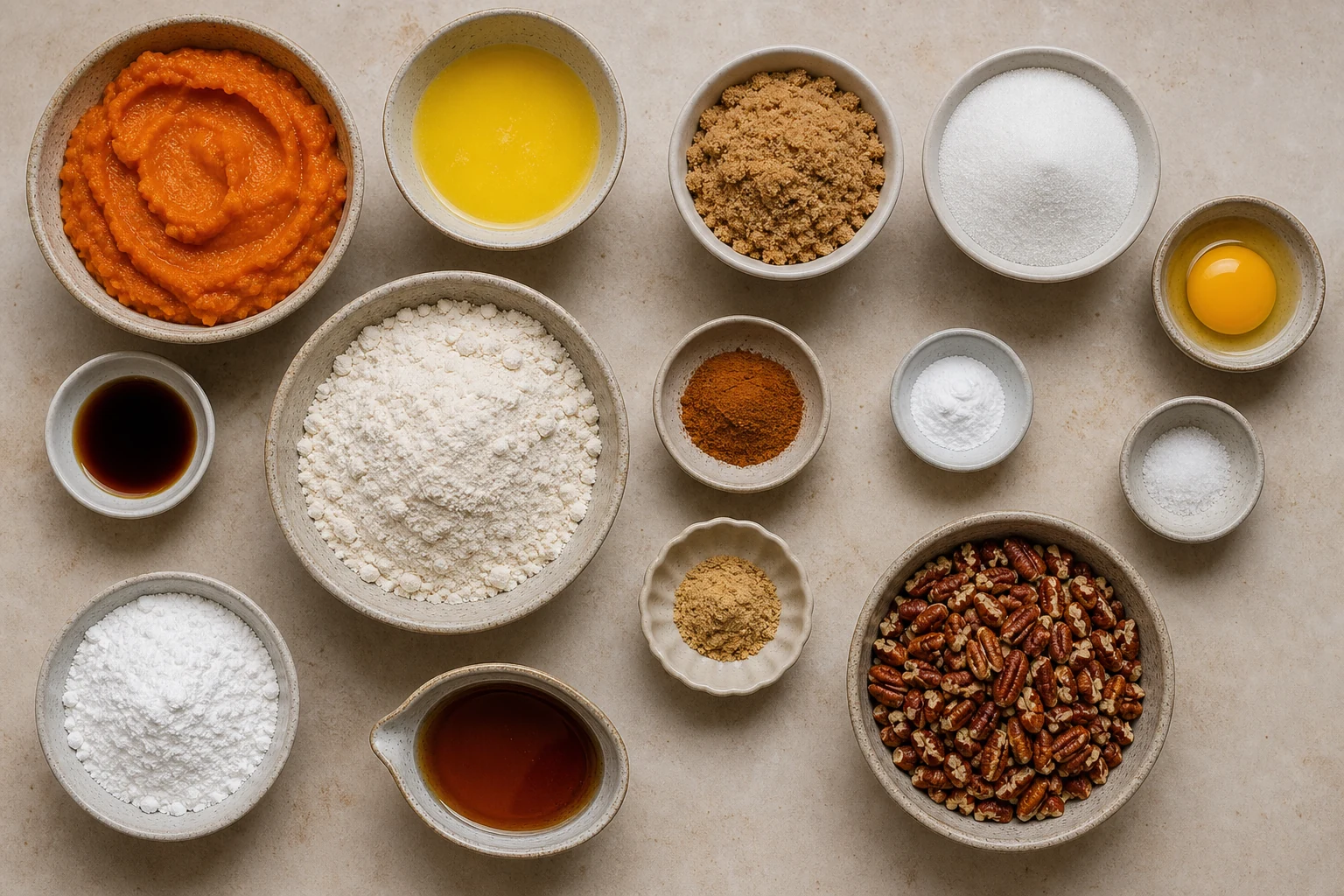
- 1/2 cup unsalted butter, melted and cooled
- 3/4 cup packed light brown sugar
- 1/4 cup granulated sugar
- 1/3 cup pumpkin purée, blotted with paper towels; not pie filling
- 1 large egg yolk
- 1 teaspoon vanilla extract
- 1 3/4 cups all-purpose flour, 210 grams
- 1 teaspoon ground cinnamon
- 1/2 teaspoon baking soda
- 1/4 teaspoon ground ginger
- 1/4 teaspoon kosher salt
- 1/2 cup chopped toasted pecans, optional
- 1/2 cup confectioners’ sugar, for optional glaze
- 1 tablespoon maple syrup, for optional glaze
- 1 teaspoon milk, as needed for glaze
Ingredient notes
Pumpkin purée
Use plain canned pumpkin rather than sweetened pumpkin pie filling. Different brands vary in moisture, so blot until the measured portion is dense.
Flour
A gram weight is most dependable. If measuring by cups, spoon flour into the cup and level it instead of packing it.
Maple glaze
The glaze is optional and should be thick enough to sit on the cookie. Add milk a few drops at a time because it loosens quickly.
How to make pumpkin cookies
1. Reduce the pumpkin
Spread the measured pumpkin on folded paper towels, press with more towels, and repeat until it looks thick rather than glossy or watery.
2. Mix the wet ingredients
Whisk melted butter with both sugars until smooth, then whisk in the blotted pumpkin, egg yolk and vanilla.
3. Make the dough
Whisk flour, cinnamon, baking soda, ginger and salt separately. Fold the dry mixture into the wet ingredients just until no flour streaks remain; fold in pecans if using.
4. Chill
Cover and chill the dough for 30 minutes. Meanwhile, heat the oven to 350°F and line two sheet pans with parchment.
5. Portion and bake
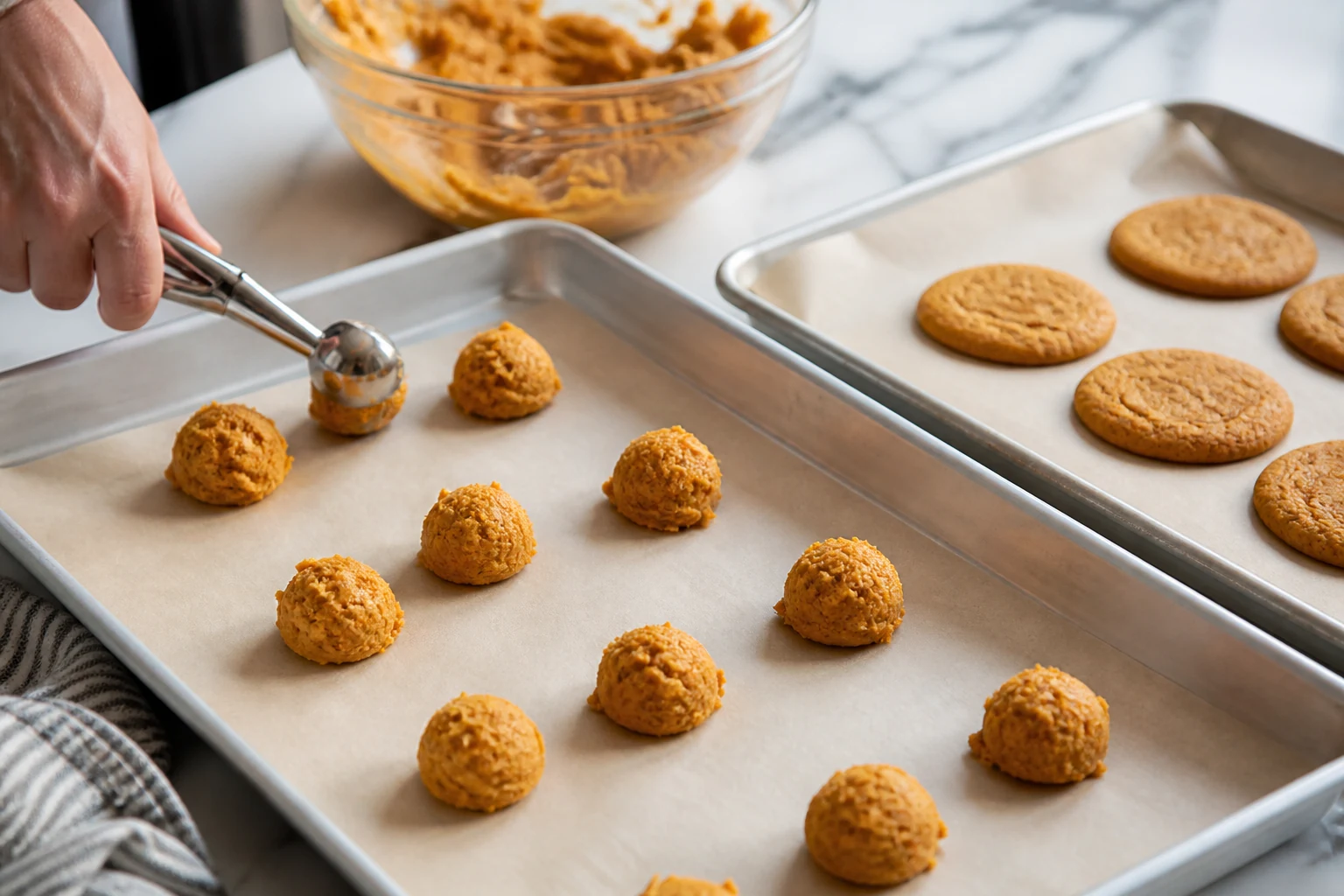
Scoop level 1 1/2-tablespoon portions 2 inches apart. Bake one pan at a time for 10 to 13 minutes, until the edges are set and the centers look matte but still soft.
6. Cool and glaze
Cool on the pan for 5 minutes, then move to a rack. Whisk the glaze ingredients to a thick drizzle and add only after the cookies are completely cool.
Quick timing and doneness guide
| Stage | What to look for | What to do |
|---|---|---|
| Preparation | Removing some free water gives the dough better structure and prevents a gummy center. | Complete the size, moisture or equipment setup before cooking |
| First check | Cover and chill the dough for 30 minutes. Meanwhile, heat the oven to 350°F and line two sheet pans with parchment. | Check at the early end of the range and keep unfinished portions cooking |
| Finished | Cool on the pan for 5 minutes, then move to a rack. Whisk the glaze ingredients to a thick drizzle and add only after the cookies are completely cool. | Stop when the stated texture or safe temperature is reached |
| If adjustment is needed | Cool completely and thicken the glaze with additional confectioners’ sugar. | Make the smallest useful change, then check again |
This table is a decision guide, not a replacement for ingredient labels, the appliance manual or safe-temperature guidance. When food safety depends on internal temperature, check more than one thick piece with a reliable thermometer.
Substitutions and variations
Chocolate chips
Replace the pecans with 1/2 cup semisweet chocolate chips; keep the dough chilled so the added pieces distribute evenly.
No glaze
Roll the chilled portions in cinnamon sugar before baking for a dry, lightly crisp finish.
Dairy-free
Use a firm plant-based butter intended for baking and an unsweetened plant milk in the glaze; spread may differ by brand.
Change one major component at a time. Moisture, sweetness, structure and cooking time affect one another, so several simultaneous substitutions are harder to predict.
Serving ideas
Serve once the glaze has set, with coffee, tea or cold milk. For a dessert plate, sandwich two unglazed cookies with a thin layer of cream-cheese frosting just before serving.
Troubleshooting
The cookies spread too much
Likely cause: The butter was hot, the pumpkin remained wet or the dough skipped chilling.
Fix: Chill the remaining dough until firm and bake one test cookie before portioning the next pan.
The centers are gummy
Likely cause: Too much pumpkin moisture or an underbaked center weakened the structure.
Fix: Blot the pumpkin more thoroughly and bake until the center surface changes from shiny to matte.
The cookies are dry
Likely cause: The flour was packed or the cookies stayed in the oven after the edges set.
Fix: Use 210 grams flour and remove the pan while the centers still feel soft.
The glaze disappears
Likely cause: It was added while the cookies were warm or mixed too thin.
Fix: Cool completely and thicken the glaze with additional confectioners’ sugar.
Storage, freezing and reheating
Refrigerator: Store glazed cookies in a covered container in the refrigerator for up to 5 days, separating layers with parchment.
Freezer: Freeze unglazed baked cookies for up to 2 months; thaw covered at room temperature before glazing.
Reheating or serving after storage: These cookies are best at room temperature. If desired, warm an unglazed cookie for 5 to 8 seconds in the microwave.
For general handling, the FoodSafety.gov Four Steps to Food Safety is the authoritative outside reference used for this article. FoodSafety.gov’s clean, separate, cook and chill framework applies to handling eggs, dough and finished cookies.
Frequently asked questions
Why are pumpkin cookies cakey?
Pumpkin contributes water and fiber, so the cookies naturally stay soft. Blotting the purée and using only an egg yolk makes them less cake-like.
Can I chill pumpkin cookie dough overnight?
Yes. Cover it tightly, refrigerate overnight, and let it stand only until it is scoopable before baking.
Can I use homemade pumpkin purée?
Yes, but drain and blot it well because homemade purée often contains more water than canned pumpkin.
Recipe development note
The method for pumpkin cookies recipe was developed through culinary research and editorial review. The quantities and time ranges are an editorial recipe specification, not a claim that every ingredient brand, appliance or batch was personally tested in one kitchen.
Nutrition is an estimate per cookies and varies with brands, optional ingredients and portion size. The accompanying visuals are AI-assisted food-editorial images, not photographs of a kitchen test.
Printable recipe card
Pumpkin Cookies Recipe
Ingredients
Equipment
Method
- Spread the measured pumpkin on folded paper towels, press with more towels, and repeat until it looks thick rather than glossy or watery.
- Whisk melted butter with both sugars until smooth, then whisk in the blotted pumpkin, egg yolk and vanilla.
- Whisk flour, cinnamon, baking soda, ginger and salt separately. Fold the dry mixture into the wet ingredients just until no flour streaks remain; fold in pecans if using.
- Cover and chill the dough for 30 minutes. Meanwhile, heat the oven to 350°F and line two sheet pans with parchment.
- Scoop level 1 1/2-tablespoon portions 2 inches apart. Bake one pan at a time for 10 to 13 minutes, until the edges are set and the centers look matte but still soft.
- Cool on the pan for 5 minutes, then move to a rack. Whisk the glaze ingredients to a thick drizzle and add only after the cookies are completely cool.
Notes
- Read ingredient labels and the manual for any appliance used.
- Begin checking at the early end of the range.
- FoodSafety.gov’s clean, separate, cook and chill framework applies to handling eggs, dough and finished cookies.
- This recipe was developed through culinary research and editorial review.
This recipe was developed through culinary research and editorial review. Equipment, ingredient brands, starting temperature and batch size can change timing; follow the method cues and applicable safety guidance.
Nutrition is an estimate per cookies and varies with brands, optional ingredients and portion size.