
Pumpkin keeps muffins tender, but too much puree can leave a damp stripe through the center. This formula balances one cup of pumpkin with enough flour and leavening for a soft crumb, then folds the batter only until combined so the muffins rise instead of turning tough.
Oven calibration, pan material, fruit moisture and ingredient measuring can shift the finish. Begin checking at the early end of the range and use the center cues described below.
This recipe was developed through culinary research and editorial review. It is not represented as a personal kitchen test.
For a related idea, see apple muffins healthy. You may also want zucchini muffins healthy.
Why this recipe works
Pumpkin is measured by volume: One level cup keeps moisture predictable; using a whole can would overload this amount of flour.
Oil stays fluid after cooling: Neutral oil gives the muffins a soft crumb on day two without a greasy flavor.
Gentle folding limits gluten: Stopping when the last flour disappears protects tenderness and lets the leaveners lift the batter.
The first batch is the useful reference point. Measure as written, note the finish in your equipment, and change only one variable at a time if an adjustment is needed.
Ingredients
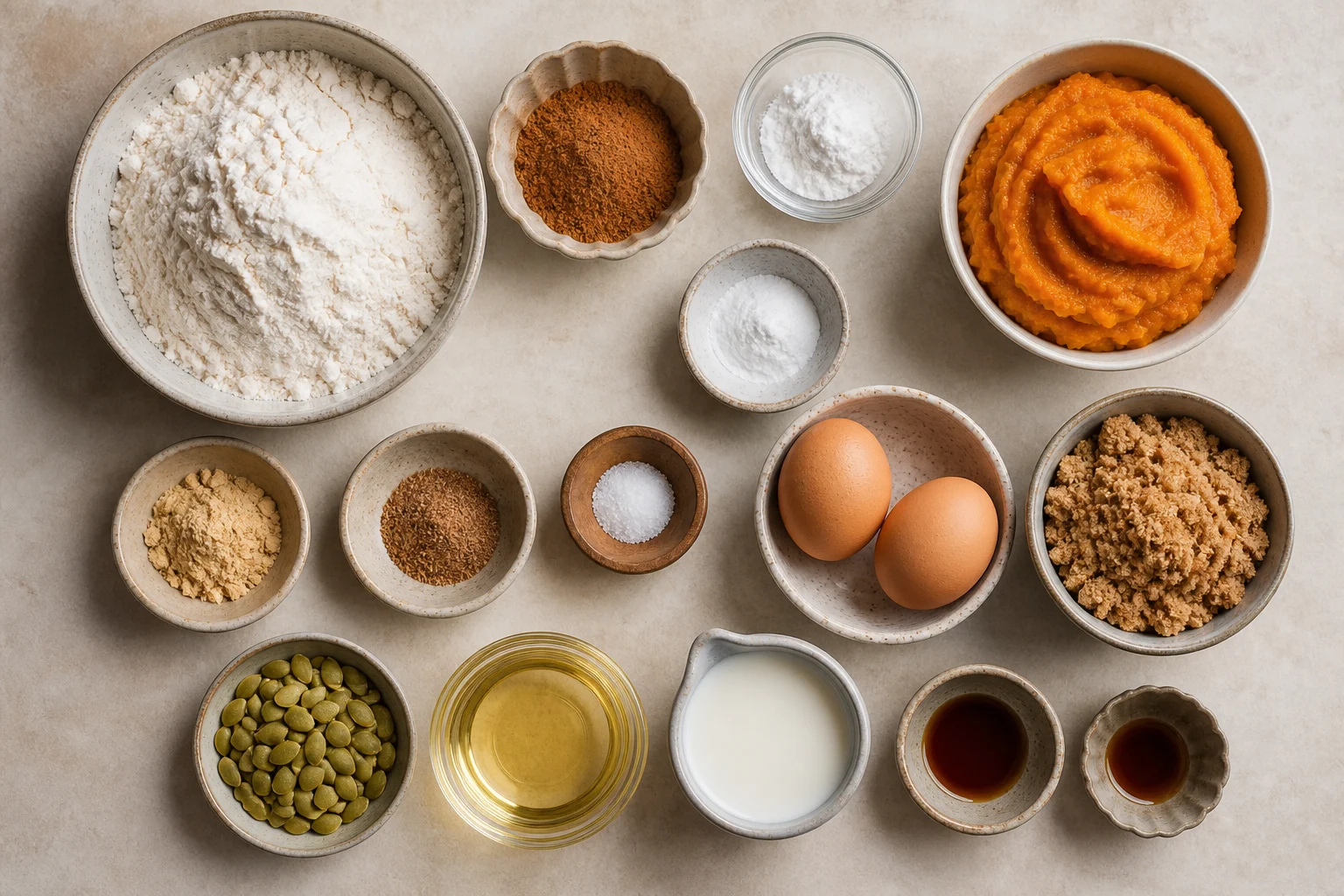
- 1 3/4 cups all-purpose flour, 210 grams
- 1 1/2 teaspoons ground cinnamon
- 1 teaspoon baking powder
- 1/2 teaspoon baking soda
- 1/2 teaspoon ground ginger
- 1/4 teaspoon ground nutmeg
- 1/2 teaspoon fine salt
- 1 cup plain pumpkin puree, not pumpkin pie filling
- 2 large eggs, room temperature
- 3/4 cup packed light brown sugar, 150 grams
- 1/3 cup neutral oil
- 1/4 cup milk
- 1 teaspoon vanilla extract
- 1/3 cup pepitas or chopped pecans, optional topping
Ingredient notes
Pumpkin puree
Use plain puree. Pumpkin pie filling contains sugar and spices and would change both sweetness and structure.
Brown sugar
Packing the cup gives the intended amount. Its molasses flavor supports pumpkin without requiring a heavy spice mix.
Leaveners
Both baking powder and baking soda are used. Check expiration dates because old leaveners produce short, dense muffins.
How to make pumpkin muffins
1. Prepare
Heat the oven to 375°F. Line all 12 muffin cups and place the pan in the center of the oven when ready.
2. Mix dry ingredients
Whisk flour, cinnamon, baking powder, baking soda, ginger, nutmeg and salt until evenly dispersed.
3. Mix wet ingredients
In a second bowl, whisk pumpkin, eggs, brown sugar, oil, milk and vanilla until smooth.
4. Fold
Add the dry mixture to the wet. Fold just until no dry flour pockets remain; the batter will be thick.
5. Portion
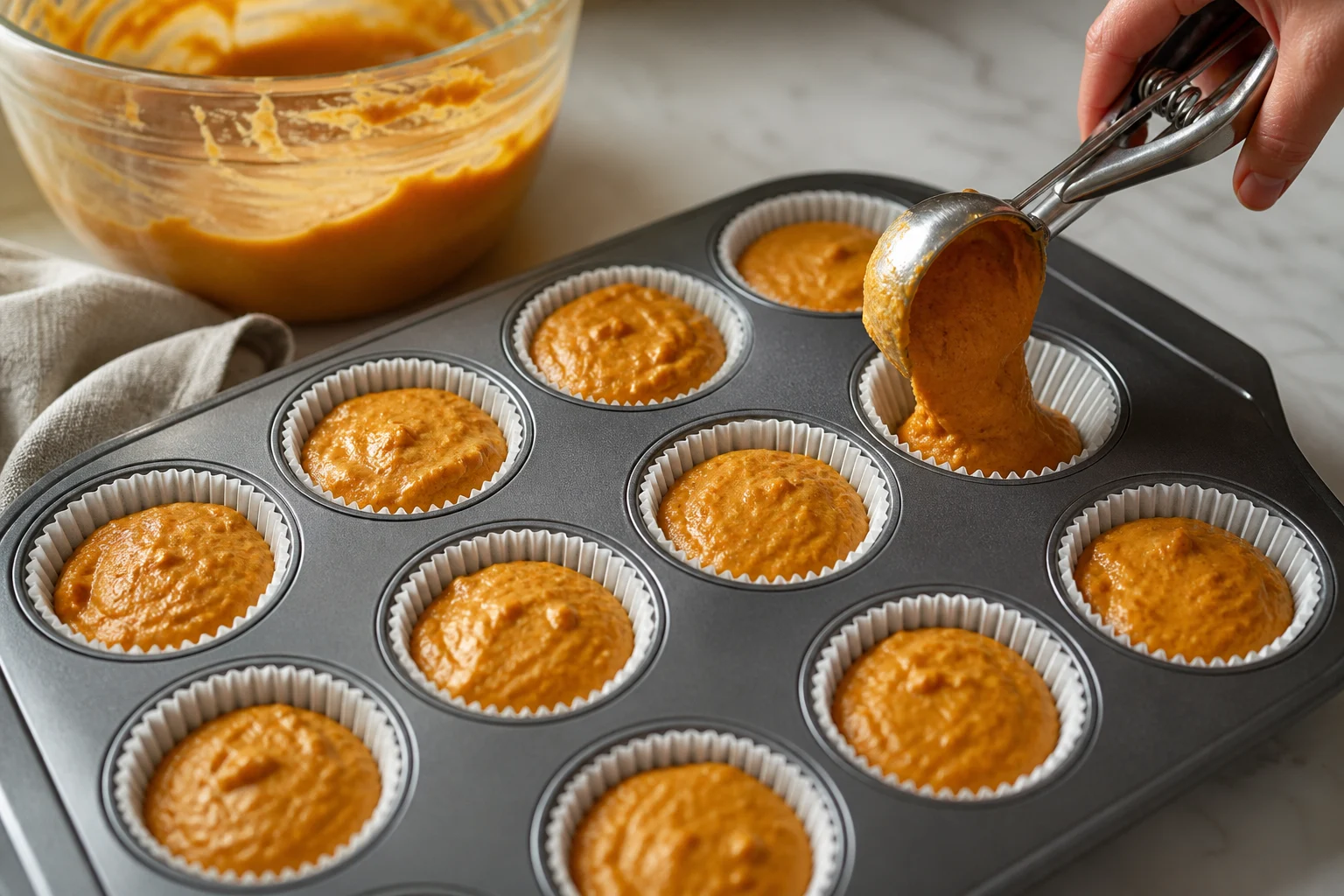
Divide evenly among 12 cups, about three-quarters full. Add optional pepitas or pecans.
6. Bake and cool
Bake 18 to 22 minutes, until tops spring back and a tester has moist crumbs but no wet batter. Cool 5 minutes in the pan, then move to a rack.
Quick timing and doneness guide
| Stage | What to look for | What to do |
|---|---|---|
| Preparation | One level cup keeps moisture predictable; using a whole can would overload this amount of flour. | Complete the size, moisture or equipment setup before cooking |
| First check | Add the dry mixture to the wet. Fold just until no dry flour pockets remain; the batter will be thick. | Check at the early end of the range and keep unfinished portions cooking |
| Finished | Bake 18 to 22 minutes, until tops spring back and a tester has moist crumbs but no wet batter. Cool 5 minutes in the pan, then move to a rack. | Stop when the stated texture or safe temperature is reached |
| If adjustment is needed | Cool fully and use greaseproof parchment liners. | Make the smallest useful change, then check again |
This table is a decision guide, not a replacement for ingredient labels, the appliance manual or safe-temperature guidance. When food safety depends on internal temperature, check more than one thick piece with a reliable thermometer.
Substitutions and variations
Whole-wheat option
Replace up to half the all-purpose flour with white whole-wheat flour and add 1 tablespoon milk if the batter seems unusually stiff.
Chocolate chip
Fold in 3/4 cup mini chocolate chips and skip the pepita topping.
Dairy-free
Use unsweetened oat or soy milk; the rest of the base recipe contains no dairy.
Change one major component at a time. Moisture, sweetness, structure and cooking time affect one another, so several simultaneous substitutions are harder to predict.
Serving ideas
Serve after at least 10 minutes of cooling so the crumb sets. A thin spread of butter, cream cheese or nut butter works well, but the muffins are moist enough to eat plain.
Troubleshooting
The centers are gummy
Likely cause: Too much pumpkin was used or the muffins were removed before the centers set.
Fix: Measure one level cup and look for moist crumbs rather than wet batter on the tester.
The muffins are tough
Likely cause: The batter was stirred after the flour hydrated.
Fix: Fold gently and stop as soon as no dry pockets remain.
The tops are flat
Likely cause: The leaveners were old or the oven was not fully heated.
Fix: Preheat completely and replace leaveners that no longer react reliably.
The liners stick
Likely cause: The muffins were uncooled or the liners have a grabby paper finish.
Fix: Cool fully and use greaseproof parchment liners.
Storage, freezing and reheating
Refrigerator: Store at room temperature in a covered container for 2 days or refrigerate for up to 5 days.
Freezer: Freeze fully cooled muffins individually for up to 3 months.
Reheating or serving after storage: Warm a thawed muffin for 10 to 15 seconds in the microwave or 5 minutes in a 300°F oven.
For general handling, the FoodSafety.gov Four Steps to Food Safety is the authoritative outside reference used for this article. FoodSafety.gov’s clean and chill guidance applies to preparation, cooling and storage; baked goods with perishable toppings should be refrigerated promptly.
Frequently asked questions
Can I use a whole can of pumpkin?
No. A standard can contains more than this recipe needs and would make the batter too wet.
Can I make mini pumpkin muffins?
Yes. Fill 24 mini cups and begin checking at 10 minutes; most finish in about 11 to 14 minutes.
How do I keep pumpkin muffins from getting soggy?
Cool them completely on a rack before covering. Trapped steam is a common cause of wet tops.
Recipe development note
The method for pumpkin muffins recipe was developed through culinary research and editorial review. The quantities and time ranges are an editorial recipe specification, not a claim that every ingredient brand, appliance or batch was personally tested in one kitchen.
Nutrition is an estimate per muffins and varies with brands, optional ingredients and portion size. The accompanying visuals are AI-assisted food-editorial images, not photographs of a kitchen test.
Printable recipe card
Pumpkin Muffins Recipe
Ingredients
Equipment
Method
- Heat the oven to 375°F. Line all 12 muffin cups and place the pan in the center of the oven when ready.
- Whisk flour, cinnamon, baking powder, baking soda, ginger, nutmeg and salt until evenly dispersed.
- In a second bowl, whisk pumpkin, eggs, brown sugar, oil, milk and vanilla until smooth.
- Add the dry mixture to the wet. Fold just until no dry flour pockets remain; the batter will be thick.
- Divide evenly among 12 cups, about three-quarters full. Add optional pepitas or pecans.
- Bake 18 to 22 minutes, until tops spring back and a tester has moist crumbs but no wet batter. Cool 5 minutes in the pan, then move to a rack.
Notes
- Read ingredient labels and the manual for any appliance used.
- Begin checking at the early end of the range.
- FoodSafety.gov’s clean and chill guidance applies to preparation, cooling and storage; baked goods with perishable toppings should be refrigerated promptly.
- This recipe was developed through culinary research and editorial review.
This recipe was developed through culinary research and editorial review. Equipment, ingredient brands, starting temperature and batch size can change timing; follow the method cues and applicable safety guidance.
Nutrition is an estimate per muffins and varies with brands, optional ingredients and portion size.