
Pumpkin cake should be moist without becoming heavy or gummy. Oil keeps the crumb tender, the eggs provide structure for the pumpkin-rich batter, and a metal 9-by-13-inch pan gives the center enough time to set before the edges dry. The cream-cheese frosting goes on only after complete cooling.
Oven calibration, pan material, fruit moisture and ingredient measuring can shift the finish. Begin checking at the early end of the range and use the center cues described below.
This recipe was developed through culinary research and editorial review. It is not represented as a personal kitchen test.
For a related idea, see apple cake recipe. You may also want pumpkin cookies recipe.
Why this recipe works
Oil keeps the crumb tender: Liquid fat stays fluid after cooling and suits a moist pumpkin sheet cake.
The batter is mixed briefly: Stopping as soon as the flour disappears limits gluten development and a tough crumb.
Complete cooling protects the frosting: A cold cake keeps cream-cheese frosting thick instead of melting into the surface.
The first batch is the useful reference point. Measure as written, note the finish in your equipment, and change only one variable at a time if an adjustment is needed.
Ingredients
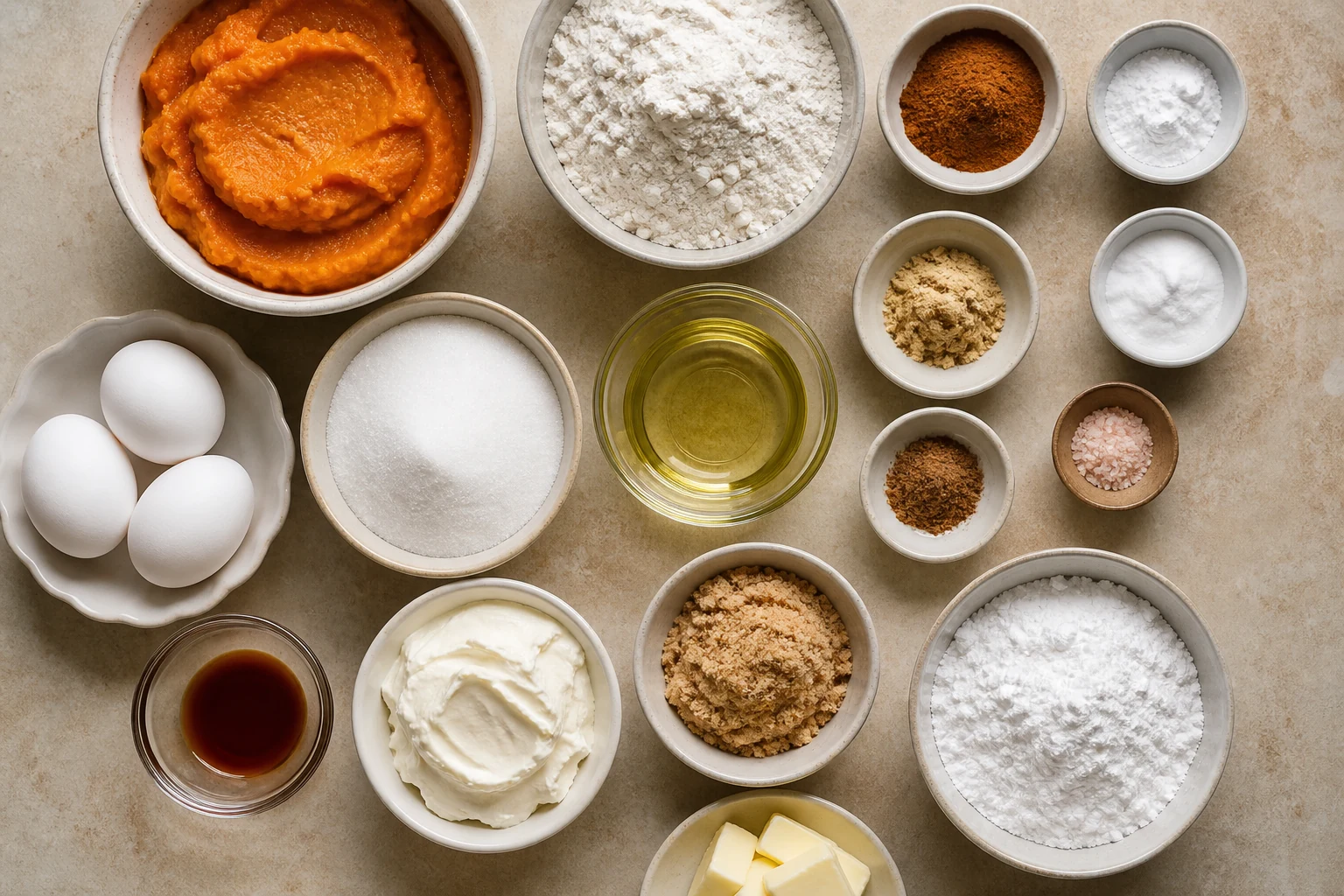
- 2 cups all-purpose flour, 240 grams
- 2 teaspoons ground cinnamon
- 1 teaspoon baking powder
- 1 teaspoon baking soda
- 1/2 teaspoon ground ginger
- 1/4 teaspoon ground nutmeg
- 1/2 teaspoon kosher salt
- 1 15-ounce can pumpkin purée, not pie filling
- 3/4 cup neutral oil
- 3/4 cup packed brown sugar
- 1/2 cup granulated sugar
- 3 large eggs, room temperature
- 2 teaspoons vanilla extract, divided
- 8 ounces block cream cheese, softened
- 1/4 cup unsalted butter, softened
- 2 cups confectioners’ sugar, sifted
- 1 tablespoon milk, as needed
Ingredient notes
Pumpkin purée
Use plain canned pumpkin, not pie filling. Do not add extra purée because the added water can make the center gummy.
Cream cheese
Block cream cheese produces firmer frosting than spreadable tub cheese. Soften it until flexible but not warm or oily.
Flour
Weigh 240 grams when possible. Packed cups add excess flour and can turn a moist cake dry.
How to make pumpkin cake
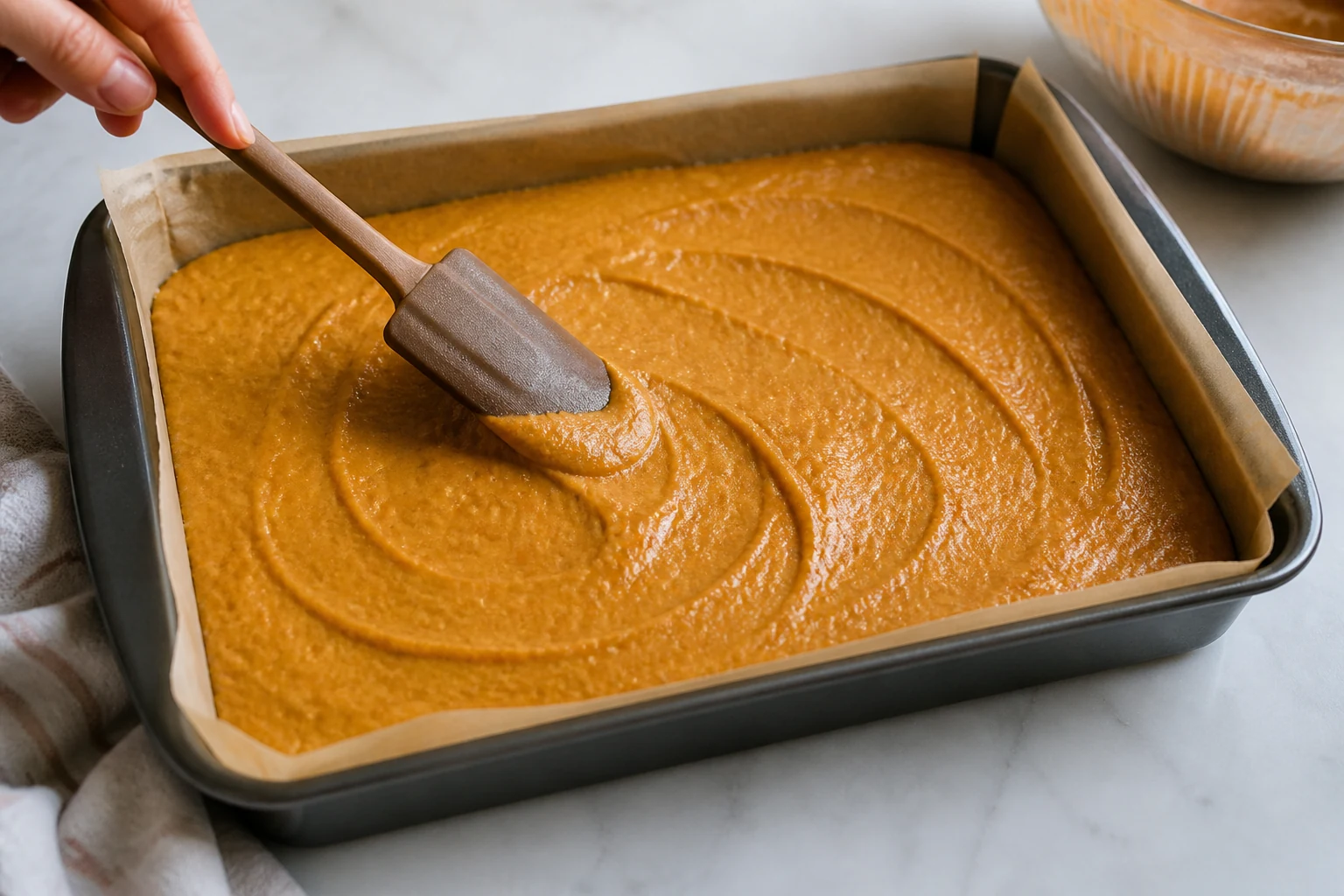
1. Prepare the pan
Heat the oven to 350°F. Grease a 9-by-13-inch metal pan and line the bottom with parchment.
2. Combine dry ingredients
Whisk flour, cinnamon, baking powder, baking soda, ginger, nutmeg and salt until evenly distributed.
3. Combine wet ingredients
Whisk pumpkin, oil, both sugars, eggs and 1 teaspoon vanilla until smooth and fully blended.
4. Make the batter
Fold dry ingredients into the pumpkin mixture just until the last flour streak disappears. Spread evenly in the prepared pan.
5. Bake and cool
Bake for 28 to 36 minutes, until the center springs back lightly and a pick inserted away from a wet pumpkin pocket has a few moist crumbs. Cool completely.
6. Frost
Beat cream cheese and butter until smooth, then beat in confectioners’ sugar and remaining vanilla. Add milk only if needed and spread over the cold cake.
Quick timing and doneness guide
| Stage | What to look for | What to do |
|---|---|---|
| Preparation | Liquid fat stays fluid after cooling and suits a moist pumpkin sheet cake. | Complete the size, moisture or equipment setup before cooking |
| First check | Fold dry ingredients into the pumpkin mixture just until the last flour streak disappears. Spread evenly in the prepared pan. | Check at the early end of the range and keep unfinished portions cooking |
| Finished | Beat cream cheese and butter until smooth, then beat in confectioners’ sugar and remaining vanilla. Add milk only if needed and spread over the cold cake. | Stop when the stated texture or safe temperature is reached |
| If adjustment is needed | Verify oven temperature and avoid moving the pan until the cake is visibly set. | Make the smallest useful change, then check again |
This table is a decision guide, not a replacement for ingredient labels, the appliance manual or safe-temperature guidance. When food safety depends on internal temperature, check more than one thick piece with a reliable thermometer.
Substitutions and variations
Nuts
Fold 3/4 cup chopped toasted pecans into the batter or scatter them over the frosting.
No frosting
Dust the cooled cake with confectioners’ sugar or serve plain for a less sweet snack cake.
Cupcakes
Divide among lined cups and begin checking around 18 minutes; bake only until the centers spring back.
Change one major component at a time. Moisture, sweetness, structure and cooking time affect one another, so several simultaneous substitutions are harder to predict.
Serving ideas
Cut with a clean knife after the frosting has chilled briefly. Serve with coffee, black tea or cold milk; small pieces work well because the frosting is rich.
Troubleshooting
The center is gummy
Likely cause: The cake was underbaked, extra pumpkin was added or the pan was glass and heated slowly.
Fix: Use the stated metal pan and bake until the center springs back and a tester shows moist crumbs, not batter.
The cake is dry
Likely cause: Flour was packed or baking continued after the center set.
Fix: Use 240 grams flour and begin checking at 28 minutes.
The frosting is loose
Likely cause: The cream cheese was warm, tub-style or mixed with too much milk.
Fix: Chill briefly and beat in additional confectioners’ sugar only as needed.
The cake sinks
Likely cause: The center lacked structure or the oven door opened very early.
Fix: Verify oven temperature and avoid moving the pan until the cake is visibly set.
Storage, freezing and reheating
Refrigerator: Cover and refrigerate frosted cake for up to 5 days; let individual slices stand briefly before serving.
Freezer: Freeze unfrosted cake or individual frosted slices well wrapped for up to 2 months.
Reheating or serving after storage: Serve at cool room temperature rather than heating cream-cheese frosting. An unfrosted slice may be warmed for a few seconds.
For general handling, the FoodSafety.gov Four Steps to Food Safety is the authoritative outside reference used for this article. FoodSafety.gov’s clean and chill framework applies to eggs, batter and prompt refrigeration of cream-cheese-frosted cake.
Frequently asked questions
Can I use pumpkin pie filling?
No. Pie filling contains sweeteners and spices that would upset the recipe’s moisture and flavor balance.
Does pumpkin cake need refrigeration?
Cake with cream-cheese frosting should be covered and refrigerated, then brought toward room temperature for serving.
Can I make pumpkin cake ahead?
Yes. Bake and cool the cake one day ahead, cover it, and frost the next day.
Recipe development note
The method for pumpkin cake recipe was developed through culinary research and editorial review. The quantities and time ranges are an editorial recipe specification, not a claim that every ingredient brand, appliance or batch was personally tested in one kitchen.
Nutrition is an estimate per slices and varies with brands, optional ingredients and portion size. The accompanying visuals are AI-assisted food-editorial images, not photographs of a kitchen test.
Printable recipe card
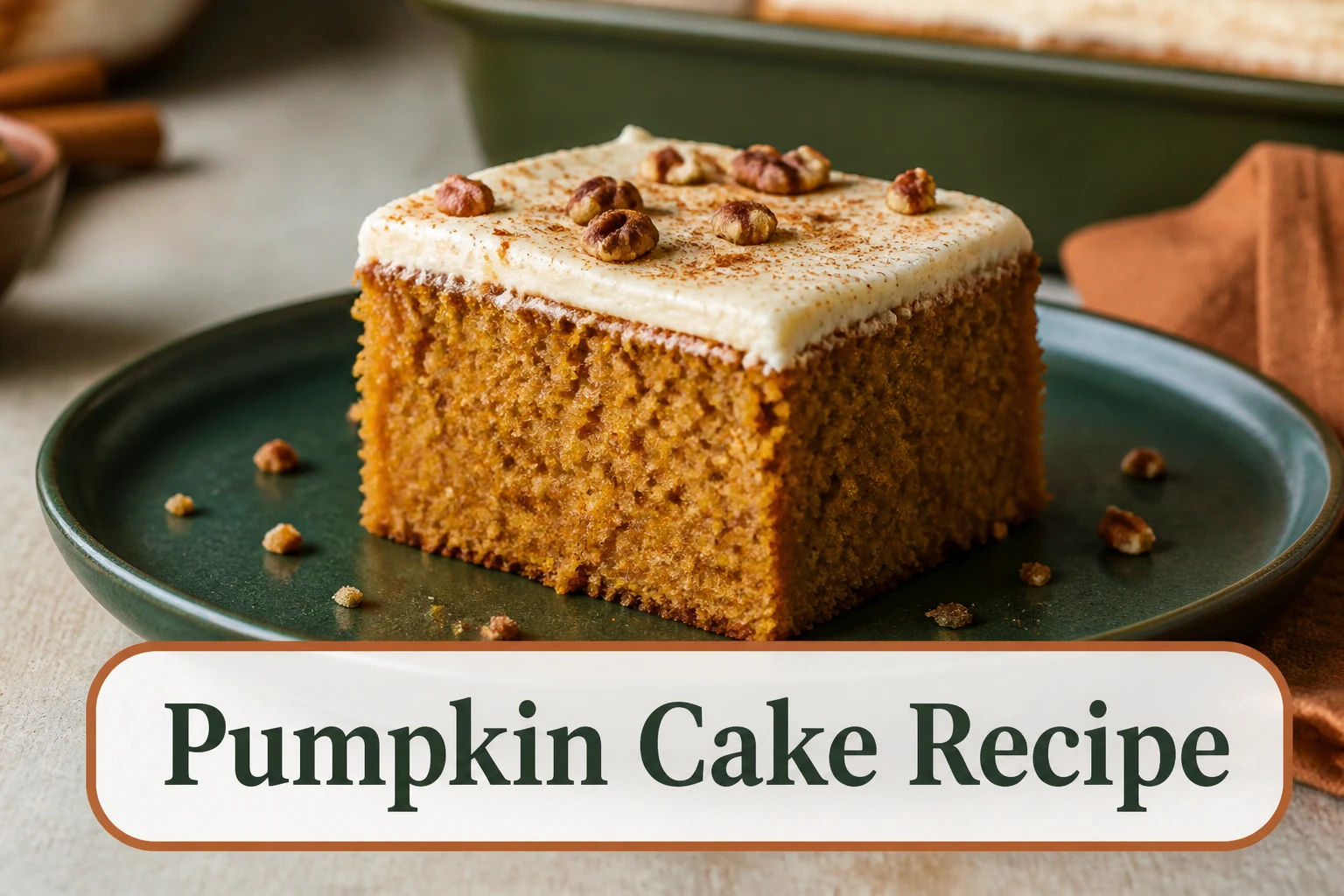
Pumpkin Cake Recipe
Ingredients
Equipment
Method
- Heat the oven to 350°F. Grease a 9-by-13-inch metal pan and line the bottom with parchment.
- Whisk flour, cinnamon, baking powder, baking soda, ginger, nutmeg and salt until evenly distributed.
- Whisk pumpkin, oil, both sugars, eggs and 1 teaspoon vanilla until smooth and fully blended.
- Fold dry ingredients into the pumpkin mixture just until the last flour streak disappears. Spread evenly in the prepared pan.
- Bake for 28 to 36 minutes, until the center springs back lightly and a pick inserted away from a wet pumpkin pocket has a few moist crumbs. Cool completely.
- Beat cream cheese and butter until smooth, then beat in confectioners' sugar and remaining vanilla. Add milk only if needed and spread over the cold cake.
Notes
- Read ingredient labels and the manual for any appliance used.
- Begin checking at the early end of the range.
- FoodSafety.gov’s clean and chill framework applies to eggs, batter and prompt refrigeration of cream-cheese-frosted cake.
- This recipe was developed through culinary research and editorial review.
This recipe was developed through culinary research and editorial review. Equipment, ingredient brands, starting temperature and batch size can change timing; follow the method cues and applicable safety guidance.
Nutrition is an estimate per slices and varies with brands, optional ingredients and portion size.