
These peanut butter oatmeal protein balls are soft enough to bite straight from the refrigerator but firm enough to pack without falling apart. Creamy peanut butter and honey bind the oats, while protein powder and ground flax absorb moisture and give the mixture structure.
The useful part of this recipe is its adjustable texture method. Peanut butter brands and protein powders do not absorb liquid equally, so the mixture is checked twice: once immediately after mixing and again after a short rest. Milk is added only if the rested mixture still crumbles when squeezed.
This recipe was developed through culinary research and editorial review. Ingredient brands, room temperature and measuring methods vary, so use the squeeze-and-roll cues rather than adding all the optional milk automatically.
For a crisp baked snack using similar pantry ingredients, try these peanut butter cookies with oat flour. For a cold fruit-based option, the Greek yogurt berry bark recipe explains how to prevent an icy texture.
Why protein balls crumble or turn sticky
A rollable protein-ball mixture needs a balance between binders and dry ingredients. Peanut butter and honey provide cohesion. Oats, protein powder and ground flax absorb those liquids and stop the mixture from spreading.
If there is too much dry material, a spoonful breaks apart even when pressed firmly. If there is too much liquid, the mixture coats the palms and cannot hold a clean round shape. Resting for 10 minutes before correcting the texture is important because oats and flax continue taking up moisture after the first stir.
Protein powder creates the largest variable. Whey-based powder can become tacky, while many plant blends absorb more liquid and make a mixture firmer. The fix is not a completely different recipe: add milk by the teaspoon to a dry mixture or add oats by the tablespoon to a sticky one.
Ingredients
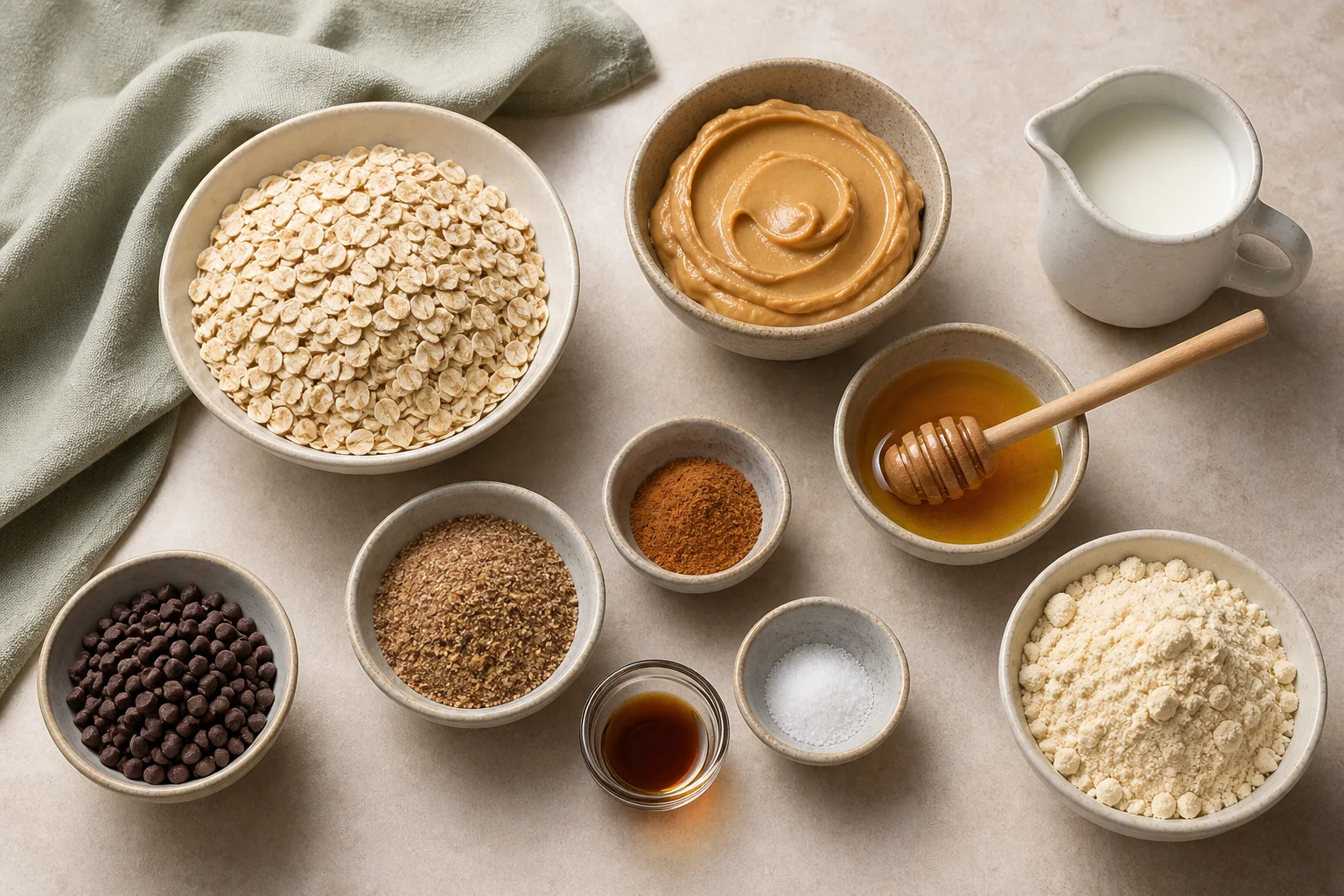
- 1 1/2 cups old-fashioned rolled oats, 135 grams
- 1/2 cup creamy peanut butter, 128 grams
- 1/3 cup honey, 113 grams
- 1/2 cup vanilla protein powder, about 50 grams
- 1/4 cup ground flaxseed, 28 grams
- 1 teaspoon vanilla extract
- 1/2 teaspoon ground cinnamon
- 1/4 teaspoon fine salt
- 1 to 3 tablespoons milk, only as needed
- 1/4 cup mini chocolate chips, 45 grams, optional
Ingredient notes and substitutions
Rolled oats: Old-fashioned oats give the balls a chewy texture without becoming pasty. Quick oats absorb faster and make a softer, more uniform interior; begin with the same weight and correct only after the rest. Steel-cut oats stay hard and are not a direct substitute.
Peanut butter: A smooth conventional peanut butter gives the most predictable bind because the oil remains emulsified. Stir natural peanut butter thoroughly from the bottom of the jar before measuring. A very runny natural product may need 1 to 3 extra tablespoons of oats.
Honey: Honey contributes both sweetness and adhesion. Pure maple syrup can replace it by weight, but the mixture may be softer and may need additional oats. A dry granulated sweetener cannot replace honey one-for-one because it removes a major binder.
Protein powder: Vanilla whey, whey-casein blends and plant-based powders all work differently. Use 50 grams rather than assuming every scoop has the same volume. An unsweetened powder produces a less sweet result; taste can be adjusted after the mixture rests.
Ground flaxseed: Ground flax absorbs moisture and helps the balls stay together. Finely ground chia can replace it by weight, although chia thickens more strongly and may require an extra teaspoon or two of milk.
Milk: This is a texture adjustment, not an automatic addition. Dairy or unsweetened nondairy milk works. Add only enough for a firmly squeezed spoonful to hold together.
Mini chocolate chips: Mini chips distribute more evenly than standard-size chips and interfere less with rolling. They are optional and are not included in the nutrition estimate.
How to make peanut butter oatmeal protein balls
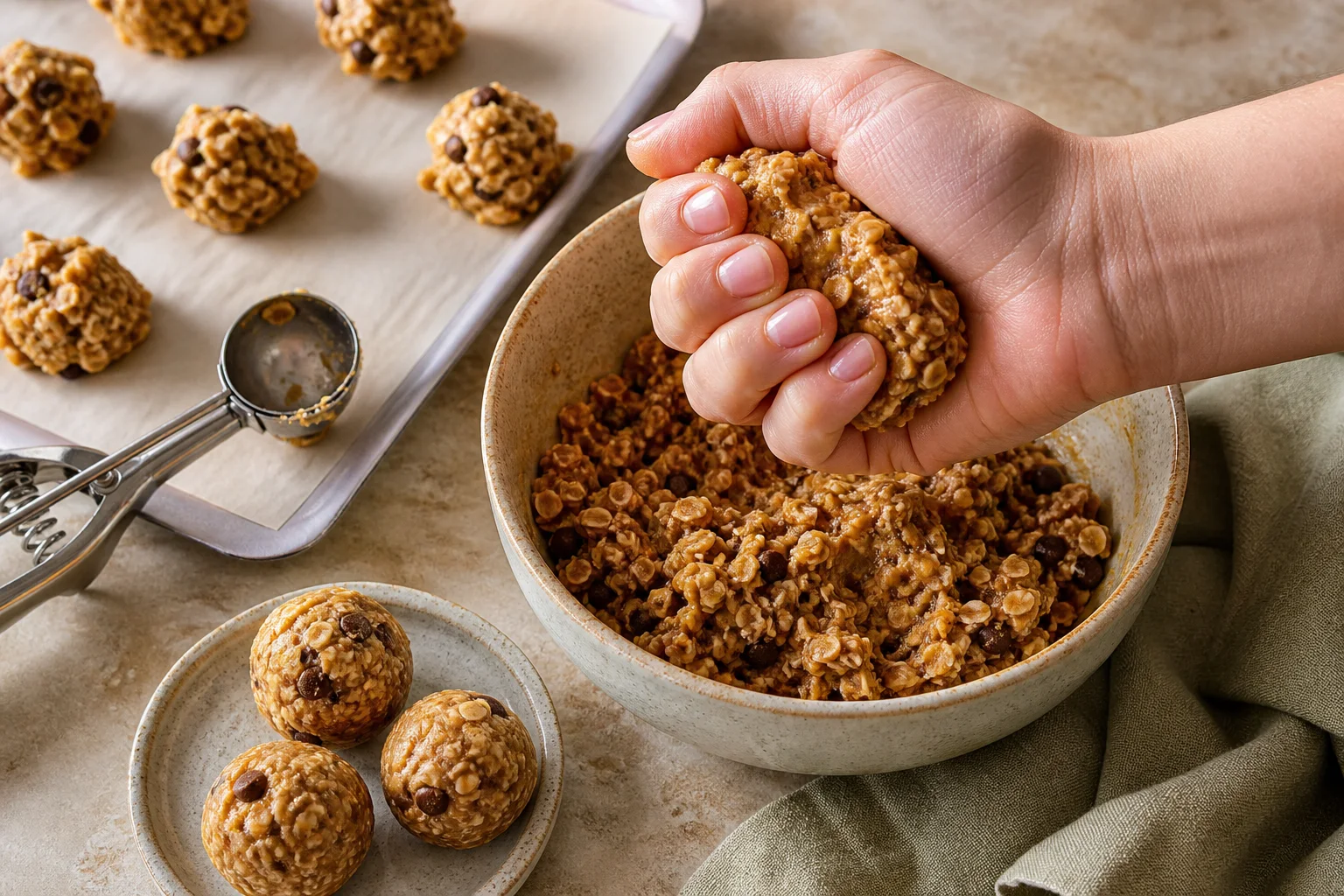
1. Measure by weight when possible
Set a medium mixing bowl on a kitchen scale and weigh the oats, peanut butter, honey, protein powder and flax. Level cup measures if a scale is unavailable; a packed cup of protein powder can make the mixture unexpectedly dry.
Use peanut butter at a comfortable room temperature. Cold peanut butter is difficult to distribute and can leave dry pockets that look like a failed mixture.
2. Combine the liquid ingredients
Stir peanut butter, honey and vanilla until glossy and uniform. Scrape the bottom of the bowl so no dense peanut butter remains unmixed.
If the peanut butter is stiff, warm the measured peanut butter and honey together for 10 seconds in a microwave-safe bowl, then stir. The mixture should be fluid enough to coat the oats but not hot.
3. Add the dry ingredients
Add rolled oats, protein powder, ground flax, cinnamon and salt. Fold slowly until no streaks of powder remain.
At first, the mixture may look looser or drier than expected. Do not correct it yet. Continue mixing until the binder touches all the oats.
4. Rest for 10 minutes
Leave the bowl at room temperature for 10 minutes. Oats and flax hydrate during this interval, and the true consistency becomes easier to judge.
Cover the bowl if the kitchen is particularly warm or dry. A normal short rest is enough; a long rest can make the surface dry before rolling.
5. Perform the squeeze test
Scoop about 1 tablespoon and squeeze it firmly in one hand. The portion should become a cohesive clump with no loose crumbs falling away.
If it crumbles, stir in 1 teaspoon milk and test again. Repeat only as needed, up to 3 tablespoons total. If it smears heavily on the hand, add 1 tablespoon oats, wait 2 minutes and retest.
6. Fold in optional chips
Add mini chocolate chips only after the base texture is correct. Fold just until evenly distributed.
Large mix-ins create weak points in small balls. Chop nuts or dried fruit to mini-chip size before using, and keep the total amount near 1/4 cup.
7. Portion evenly
Use a 1 1/2-tablespoon cookie scoop to divide the mixture into 20 portions. Place them on a parchment-lined tray.
Even portions chill at the same rate and make the nutrition estimate more meaningful. If the final portion is much smaller, redistribute a little from the largest scoops.
8. Roll with light pressure
Compress each portion once between the palms, then roll in small circles until round. Firm compression closes cracks; excessive rolling warms the peanut butter and makes the exterior oily.
If the mixture begins sticking as the room warms, refrigerate the portions for 10 minutes before finishing. Do not coat the palms with water, which changes the exterior texture.
9. Chill to set
Refrigerate the tray for 30 minutes before transferring the balls to an airtight container. The peanut butter firms as it cools and the oats finish absorbing moisture.
The balls can be eaten immediately, but chilling gives a cleaner bite and makes them easier to pack.
Protein ball texture guide
| What happens | Likely cause | Practical correction |
|---|---|---|
| Loose crumbs fall away when squeezed | Dry powder absorbs more than expected | Add milk 1 teaspoon at a time |
| Clump holds, but small surface cracks remain | Mixture is nearly balanced | Compress once, then roll briefly |
| Thick paste coats both palms | Peanut butter is runny or too much milk was added | Add oats 1 tablespoon at a time |
| Exterior becomes oily while rolling | Mixture or hands are warm | Chill portions for 10 minutes |
| Balls firm in the refrigerator but soften in a lunch bag | Peanut butter warms above refrigerator temperature | Pack with a cold source |
| Interior feels powdery | Protein powder was packed or poorly mixed | Weigh powder and mix binder first next time |
Make corrections in small increments. A tablespoon of milk added all at once can move the mixture from crumbly to sticky before the oats have time to absorb it.
The squeeze test is more useful than appearance
An oat mixture can look crumbly in the bowl and still roll perfectly after compression. Stirring separates the flakes, while squeezing forces the peanut butter and honey between them.
Test a full tablespoon, not a pinch. Press for 2 to 3 seconds, open the hand and gently turn the clump. If it stays in one piece, begin portioning even if the bowl still looks pebbly.
When the clump breaks along a dry center, add 1 teaspoon milk. When it holds but leaves a thick film, add oats. Wait briefly after each correction because absorption is not instantaneous.
Choosing a protein powder for this recipe
Protein powder is not a standardized baking ingredient. Scoop size, sweetener, gum content and protein source vary considerably.
Whey protein usually produces a softer mixture and can become slightly tacky after vigorous mixing. A whey-casein blend often thickens more during the rest. Pea, rice and mixed plant proteins commonly absorb more liquid and may need the upper end of the milk range.
Start with 50 grams of any powder. If its label lists a much smaller scoop, weigh the amount rather than using an extra scoop to reach the volume mark.
Flavored powders affect sweetness. With a strongly sweetened vanilla powder, 1/3 cup honey gives both necessary binding and a dessert-like flavor. With an unflavored powder, cinnamon and vanilla remain important, and the result is less sweet.
Do not use collagen peptides as a complete one-for-one substitute and expect the same texture. They dissolve and hydrate differently. If collagen is preferred, replace only half the protein powder initially and retain the texture-correction steps.
Can you make oatmeal protein balls without protein powder?
Yes, but the formula needs a dry replacement. Replace the 50 grams of protein powder with 1/2 cup oat flour, about 50 grams. The result is an oatmeal energy ball rather than a high-protein formulation, and its nutrition profile changes.
Finely ground rolled oats can serve as oat flour. Pulse them until powdery before measuring by weight. Do not substitute all-purpose flour in this no-bake recipe; conventional flour is a raw ingredient and is intended to be cooked.
The FDA explains that processing grain into conventional flour does not reliably kill harmful bacteria and advises against eating uncooked flour or dough in its raw flour safety guidance.
Flavor variations
Chocolate: Use chocolate protein powder, add 1 tablespoon unsweetened cocoa and expect to add 1 to 2 teaspoons milk because cocoa absorbs moisture.
Peanut butter and jelly: Flatten each portion, add 1/4 teaspoon thick fruit preserves, pinch closed and roll. Store refrigerated; soft jam can leak during packing.
Cranberry almond: Replace mini chips with 2 tablespoons finely chopped dried cranberries and 2 tablespoons chopped almonds. This version includes peanuts and tree nuts.
Coconut: Add 1/4 cup finely shredded unsweetened coconut. If the mixture becomes dry, correct with milk by the teaspoon.
Espresso: Add 1 teaspoon instant espresso powder to the binder. This variation contains caffeine and may not suit children or caffeine-sensitive readers.
Lower sweetness: Reducing honey also removes binder. Replace only 1 tablespoon honey with 1 tablespoon peanut butter rather than cutting the honey in half; then use the squeeze test.
Troubleshooting
The mixture will not hold together
Allow the full 10-minute rest, then squeeze a tablespoon firmly. If it still breaks, add milk 1 teaspoon at a time. Check that the peanut butter and honey were measured fully and distributed throughout the bowl.
The mixture is too sticky to roll
Stir in 1 tablespoon oats and rest 2 minutes. If it is still tacky, chill the bowl for 10 minutes. Runny natural peanut butter often needs both adjustments.
The balls crack around the edges
Compress each scoop before rolling. If cracks open completely, the mixture needs another teaspoon of milk. Small shallow lines are normal with whole rolled oats.
The exterior looks oily
Warm hands or over-rolling can release peanut oil. Chill the portions, wipe the palms and roll only until round. Thoroughly stir separated natural peanut butter before measuring it next time.
The protein balls taste chalky
Too much protein powder, an intensely flavored product or insufficient liquid can cause chalkiness. Weigh 50 grams, add milk cautiously and choose a protein powder that tastes pleasant when mixed according to its label.
The balls become hard in the refrigerator
A very firm peanut butter, too many oats or an absorbent plant protein may be responsible. Let one portion stand 5 minutes before eating. Next time use the upper end of the milk range.
Mix-ins keep falling out
Pieces are too large or were added before the base was cohesive. Use mini chips or finely chopped additions and fold them in after the squeeze test passes.
Storage and packing
Store the protein balls in a covered container in the refrigerator for up to 1 week for best quality. Place parchment between layers if the surface is slightly tacky.
Keep the refrigerator at 40°F or below. USDA refrigeration guidance recommends verifying that temperature with an appliance thermometer and covering refrigerated foods to retain moisture and limit odor transfer.
For longer storage, freeze the balls in one layer until firm, then transfer them to a freezer container for up to 2 months for best texture. Thaw the needed portions overnight in the refrigerator.
For a lunch box, pack chilled balls beside a frozen gel pack. Warm peanut butter softens, so a ball that sits in a hot car or uncooled bag will not retain its tidy texture.
Frequently asked questions
How much protein is in each ball?
The estimate here is about 5 grams when the batch makes 20 balls, but the exact amount depends heavily on the protein powder and peanut butter labels. Use those packages for a personalized calculation.
Can I use quick oats?
Yes. Use the same 135-gram weight. Quick oats make the interior softer and absorb liquid faster, so judge the mixture after the 10-minute rest.
Do I need a food processor?
No. A bowl and sturdy spoon are enough. A processor makes the oats finer and changes the texture from chewy to smooth.
Can I make these without honey?
Maple syrup can replace honey by weight, although the mixture may need extra oats. A granulated sweetener is not a direct substitute because honey is part of the binder.
Are these protein balls gluten-free?
They can be if every packaged ingredient, including oats and protein powder, is labeled gluten-free and suitable for the eater’s needs. Oats can encounter gluten-containing grains during growing and processing.
Can I make them nut-free?
Sunflower seed butter can replace peanut butter by weight, but its consistency varies and the flavor changes. Verify every protein powder and mix-in label for the intended allergy context and use the texture test.
Why do the balls need to rest before rolling?
Oats and flax need time to absorb moisture. Correcting the mixture immediately can lead to too much milk and a sticky final texture.
Can children help roll them?
Yes, with normal kitchen supervision and after allergen suitability is confirmed. An adult should manage weighing, warming ingredients and storage decisions.
Recipe development note
These peanut butter oatmeal protein balls were developed through culinary research and editorial review. They are not represented as a personal kitchen test. Peanut butter viscosity, protein powder absorption, oat thickness and room temperature vary, so rely on the rest, squeeze test and small texture corrections.
Nutrition is an estimate per one of 20 balls without optional chocolate chips. The accompanying visuals are AI-assisted food-editorial images, not photographs of a kitchen test.
Printable recipe card
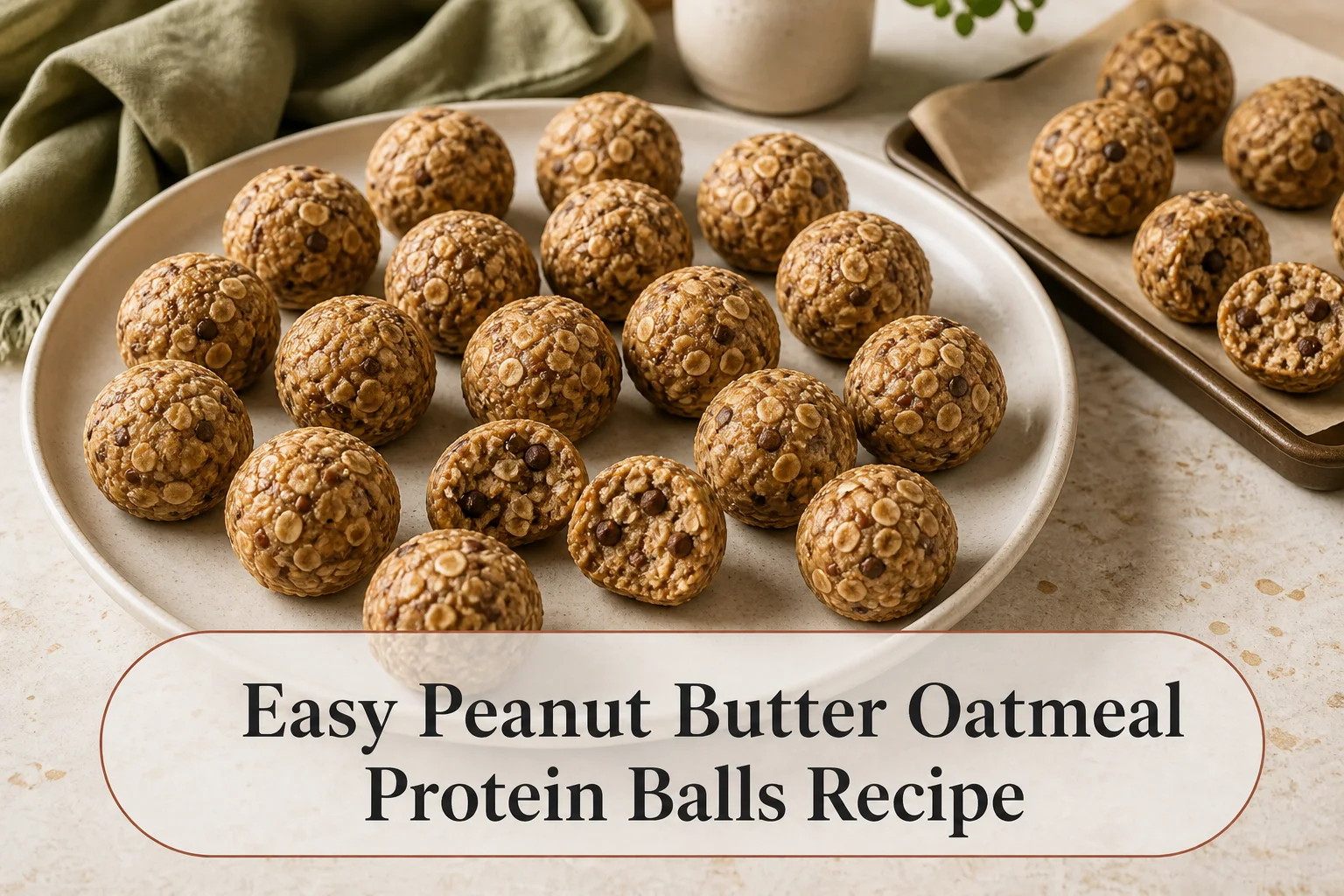
Easy Peanut Butter Oatmeal Protein Balls Recipe
Ingredients
Equipment
Method
- Weigh the oats, peanut butter, honey, protein powder and flax when possible. Bring stiff peanut butter to a workable room temperature.
- Stir peanut butter, honey and vanilla in a medium bowl until glossy and completely uniform.
- Fold in oats, protein powder, ground flax, cinnamon and salt until no dry streaks remain.
- Rest the mixture at room temperature for 10 minutes so the oats and flax can absorb moisture.
- Firmly squeeze 1 tablespoon. If it crumbles, add milk 1 teaspoon at a time, up to 3 tablespoons. If it smears, add oats 1 tablespoon at a time and wait 2 minutes.
- Fold in optional mini chocolate chips only after the base mixture passes the squeeze test.
- Divide with a 1 1/2-tablespoon scoop into 20 even portions on a parchment-lined tray.
- Compress each portion once, then roll briefly between the palms until round. Chill portions 10 minutes first if they become sticky.
- Refrigerate the tray for 30 minutes, then transfer the balls to a covered refrigerator container.
Notes
- Rest the mixture 10 minutes before making any texture correction.
- Add milk by the teaspoon because protein powders absorb differently.
- Use the squeeze test: a firmly pressed tablespoon should remain one clump.
- Chill warm, sticky portions before rolling rather than adding excessive oats.
- Store covered in a refrigerator at 40°F or below.
- Contains peanuts and may contain milk depending on the protein powder and milk used.
- This recipe was developed through culinary research and editorial review.
This recipe was developed through culinary research and editorial review. Peanut butter viscosity, protein powder absorption, oat thickness and room temperature vary; use the rest, squeeze test and incremental corrections.
Nutrition is an estimate per one of 20 balls without optional chocolate chips.