
These healthy peanut butter cookies have nutty flavor, lightly crisp edges and soft, bendable centers. Oat flour replaces refined wheat flour, while maple syrup and a modest amount of brown sugar provide enough sweetness and structure without using the full cup of granulated sugar found in many flourless versions.
“Healthy” is relative, especially for a cookie. This is still a dessert made with calorie-dense peanut butter and added sweeteners. The practical differences are a whole-grain oat base, a controlled 16-cookie yield and less added sugar than a classic one-cup-peanut-butter, one-cup-sugar formula—not a claim that the cookies are sugar-free, low-calorie or suitable for every diet.
This recipe was developed through culinary research and editorial review. Peanut butter thickness, oat-flour grind, egg size and oven calibration vary, so use the dough texture, edge and cooling cues below rather than adding flour automatically.
For another naturally sweetened snack-style bake, see the banana yogurt muffin recipe. The Greek yogurt pancakes recipe explains a different way dairy and whole-grain flour can produce a tender breakfast texture.
Why lower-sugar peanut butter cookies can turn dry
Sugar does more than sweeten cookies. It dissolves, holds moisture, encourages spread and helps the edges brown. Removing most of it without replacing those functions can leave a sandy dough that bakes into crumbly pucks.
Peanut butter also varies. A stabilized no-stir jar is thick and consistent. Natural peanut butter made only with peanuts and salt can range from pourable to very stiff depending on the brand, temperature and how thoroughly its oil has been mixed back in.
This formula balances those variables with two sweeteners. Maple syrup supplies liquid and helps the oat flour hydrate; a small measure of brown sugar improves edge texture. Chilling gives the oats time to absorb moisture, while pressing the dough before baking controls the final thickness.
Ingredients
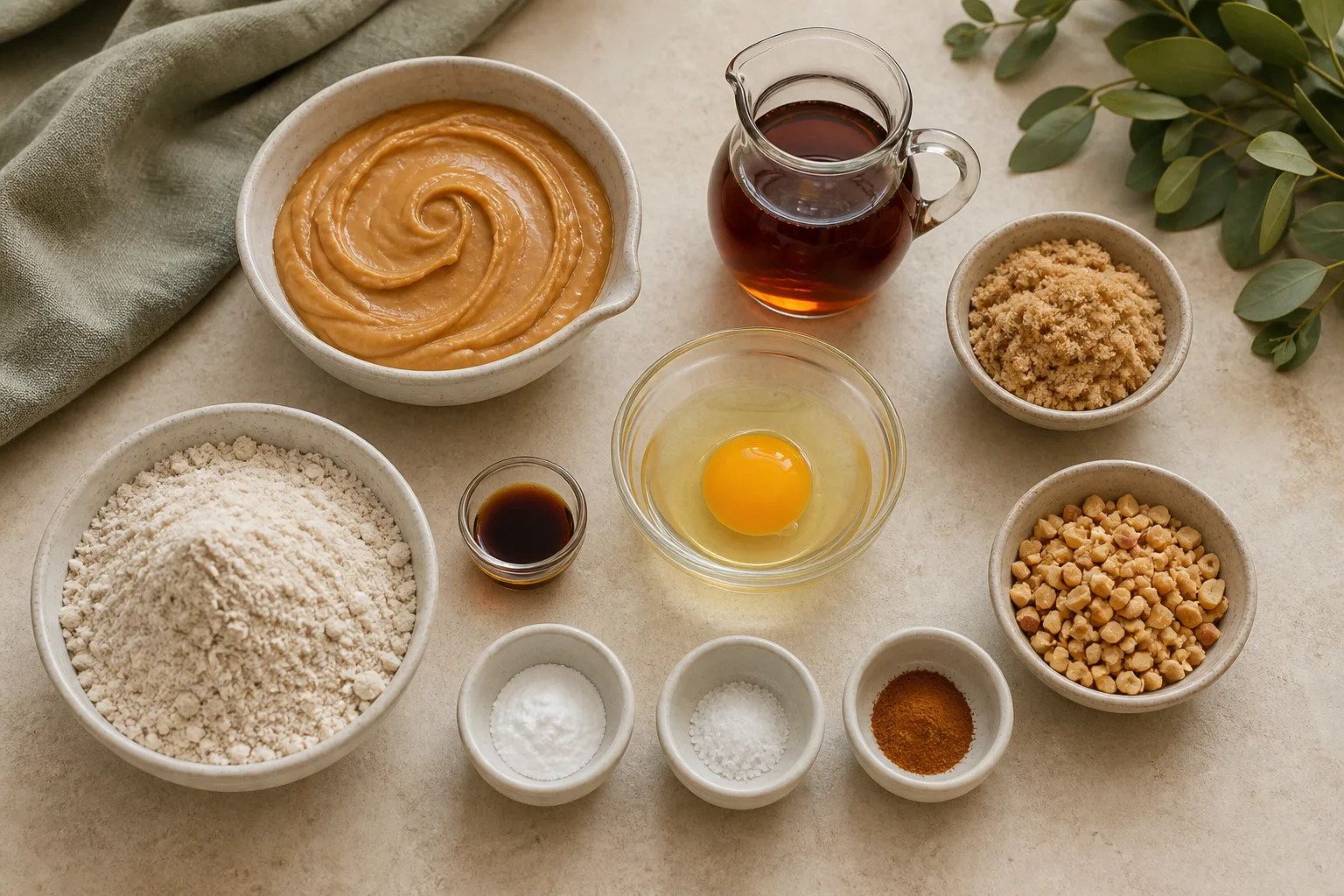
- 1 cup creamy no-stir peanut butter, 256 grams
- 1/3 cup pure maple syrup, 105 grams
- 2 tablespoons packed light brown sugar, 25 grams
- 1 large egg, at cool room temperature
- 1 teaspoon vanilla extract
- 3/4 cup oat flour, 75 grams
- 1/2 teaspoon baking soda
- 1/4 teaspoon fine salt, omit if peanut butter is very salty
- 1/2 teaspoon ground cinnamon, optional
- 2 tablespoons finely chopped roasted peanuts, optional
- flaky salt, optional for finishing
Ingredient notes and substitutions
Peanut butter: Creamy no-stir peanut butter gives the most repeatable dough. A well-stirred natural peanut butter can work, but texture may need a small adjustment after the 30-minute chill. Avoid reduced-fat spreads, which often contain a different balance of solids, sugars and stabilizers.
Maple syrup: Use pure maple syrup, not pancake syrup. Honey can replace it by weight, but the cookies will taste more floral and may brown sooner.
Brown sugar: Two tablespoons help the edges caramelize and keep the centers from becoming chalky. Coconut sugar works by weight but often makes a slightly drier, darker cookie. Omitting this small amount changes both spread and texture.
Egg: One large egg binds the oats and peanut butter. A packaged egg replacer may work only if its label says it is suitable for cookies; it has not been assumed as a direct substitution here.
Oat flour: Store-bought oat flour has a consistent fine grind. To make it at home, blend rolled oats until powdery, then measure 75 grams after blending. Coarse particles absorb moisture slowly and produce a more rustic texture.
Baking soda: It promotes browning and a little spread. Baking powder is not an equal substitute and makes a puffier, more cake-like cookie.
Peanuts: Chopped roasted peanuts add crunch without changing the base dough. Chocolate chips are possible, but they add sweetness and make the nutrition estimate less applicable.
How to make healthy peanut butter cookies
1. Combine the wet ingredients
In a medium bowl, whisk peanut butter, maple syrup and brown sugar until glossy and smooth. Add the egg and vanilla and whisk again until no streaks of egg remain.
The mixture may tighten briefly when maple syrup first touches the peanut butter, then relax as it becomes uniform. Scrape the sides and bottom of the bowl so no dense peanut butter pockets remain.
2. Mix the dry ingredients
In a separate small bowl, whisk oat flour, baking soda, fine salt and optional cinnamon. Break up any baking-soda clumps with your fingers or the back of a spoon.
Even distribution matters in a small batch. A concentrated pocket of baking soda tastes bitter and can create a dark spot.
3. Form the dough
Add the dry mixture to the peanut butter mixture. Fold with a sturdy spatula just until no dry oat flour remains. Fold in chopped peanuts if using.
The fresh dough should be soft and glossy, similar to thick frosting, not dry enough to roll immediately. Resist adding more flour now; oat flour needs time to hydrate.
4. Chill for 30 minutes
Cover the bowl and refrigerate for 30 minutes. During this rest, the oat flour absorbs maple-syrup and egg moisture and the peanut butter firms.
After chilling, a scoop should hold its shape while remaining easy to press. If the dough still flows, use the natural-peanut-butter adjustment below. If it crumbles when squeezed, correct it with moisture rather than more mixing.
5. Heat the oven and prepare pans
While the dough chills, heat the oven to 350°F with a rack in the center. Line two light-colored sheet pans with parchment paper.
Using two pans gives the cookies enough room and prevents a hot second batch from spreading differently. If reusing one pan, cool it completely under running air—not water—before portioning the next batch.
6. Portion and press
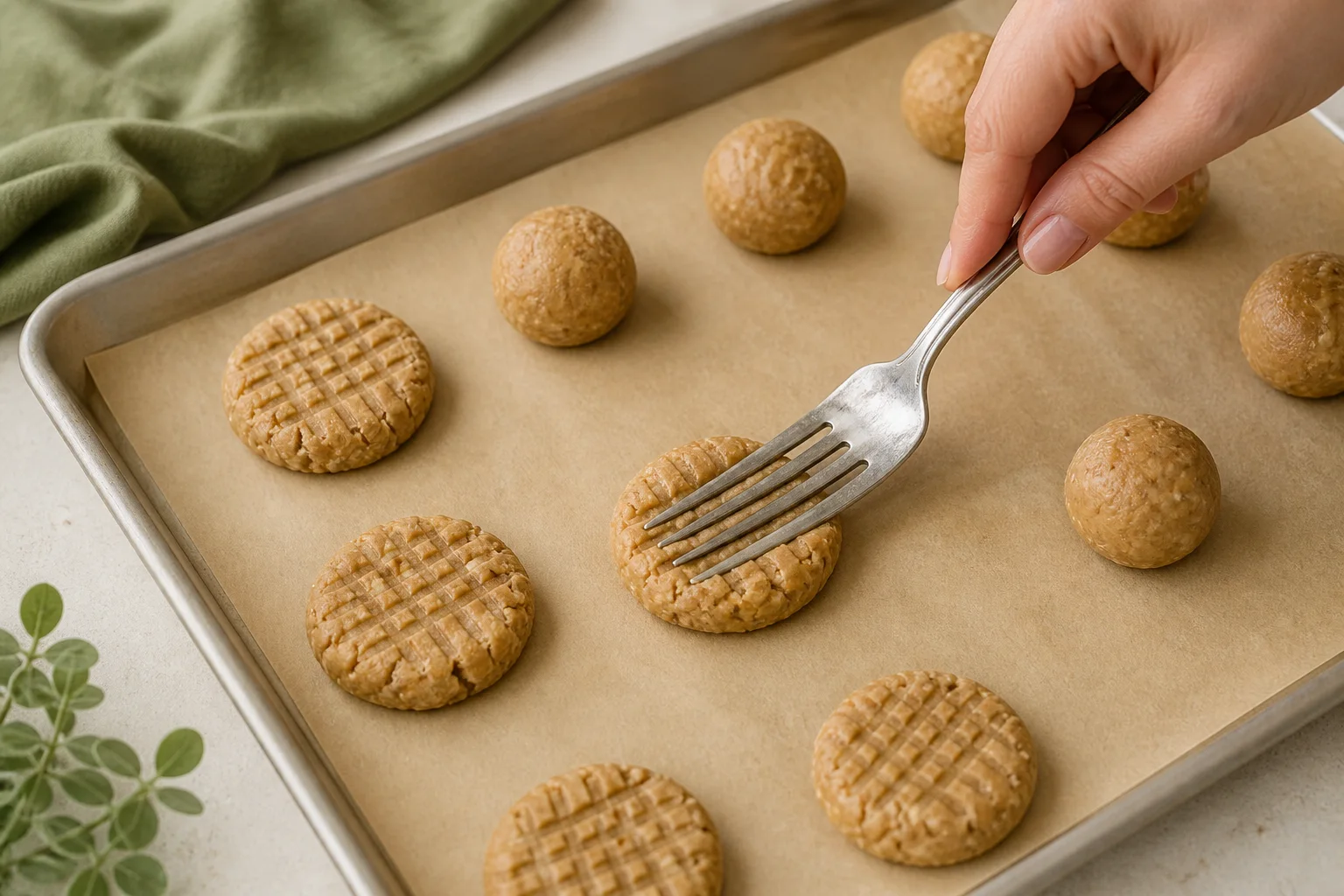
Divide the dough into 16 portions of about 1 1/2 tablespoons or 31 grams each. Roll gently into balls and place 2 inches apart.
Use a fork to press each ball to about 1/2 inch thick, making a crosshatch. Dip the fork in water and shake off the excess if it sticks. These cookies do not spread dramatically, so their pressed shape controls the baked center.
7. Bake until the edges set
Bake one pan at a time for 9 to 12 minutes. The edges should look dry and lightly browned, while the centers remain a little soft and matte rather than wet and shiny.
Do not wait for the entire cookie to feel firm in the oven. Peanut butter cookies set as they cool, and prolonged baking removes the moisture the lower-sugar dough needs.
8. Cool before moving
Place the pan on a heat-safe surface and leave the cookies undisturbed for 10 minutes. They are fragile when hot.
Transfer with a thin spatula to a wire rack and cool completely. The edges become lightly crisp as steam escapes; storing warm cookies traps that steam and softens them.
Dough texture guide
| Dough after chilling | What it means | Adjustment before scooping |
|---|---|---|
| Holds a soft mound and presses without cracking | Balanced hydration | No adjustment |
| Glossy and slowly spreads in the bowl | Peanut butter is loose or warm | Mix in 1 tablespoon oat flour; wait 5 minutes |
| Cracks deeply and will not hold together | Peanut butter or oat flour is unusually dry | Mix in 1 teaspoon maple syrup or milk |
| Sticky but holds its shape | Normal for a maple-sweetened dough | Dampen the fork; do not add flour |
Make one small adjustment, wait, then reassess. Adding several tablespoons of oat flour at once is the quickest route to a dry cookie.
How to get crisp edges and soft centers
Weigh the oat flour
Oat flour packs easily into cups. A heavy three-quarter cup absorbs more liquid and makes the cookies thicker and drier. Seventy-five grams is the useful control.
Chill, but do not leave the dough rock-hard
Thirty minutes gives the oats time to hydrate. A multi-hour chill makes the dough very firm; let it stand at room temperature for 10 to 15 minutes before pressing so the edges do not split.
Press to an even thickness
A domed ball stays soft in the center while its bottom darkens. A half-inch crosshatched disk cooks more evenly and creates more edge area.
Use a light-colored pan
Dark pans absorb heat and can overbrown the bottoms before the tops appear ready. On a dark pan, reduce the oven to 340°F and check a minute early.
Let carryover heat finish the centers
The 10-minute pan rest is part of the bake. Moving cookies immediately can break them; baking until they are rigid makes them dry after cooling.
Natural peanut butter adjustments
Natural peanut butter is usable only when the separated oil has been thoroughly stirred back through the entire jar. Scrape all the way to the bottom, where dense peanut solids often remain.
Measure after stirring. Make the dough exactly as written and wait until after the 30-minute chill before deciding whether it needs adjustment.
If it slowly puddles, fold in 1 tablespoon oat flour and wait 5 minutes. If it is firm and cracks badly, add 1 teaspoon maple syrup. The goal is not a dry, nonsticky dough; it is a soft mound that can be pressed.
Very runny natural peanut butter may require more than one adjustment and will produce a flatter, crisper result than no-stir peanut butter. Do not pour off the oil, because that changes the jar’s intended fat-to-solid ratio.
What “healthy” means in this recipe
Oat flour keeps the whole oat kernel’s bran, germ and endosperm, whereas refined wheat flour has had the bran and germ removed. Peanut butter contributes fat, protein and flavor, and the 16-cookie portioning prevents an oversized yield from hiding the serving size.
The cookies still contain added sugar from maple syrup and brown sugar. Maple syrup is not nutritionally equivalent to fruit and does not make a dessert sugar-free. Peanut butter is also energy-dense, so portion size still matters.
No single cookie determines an overall eating pattern. If you track carbohydrates, added sugar, sodium or calories for a medical reason, calculate from the exact package labels or ask a qualified clinician; the recipe-card figures are estimates.
Peanut allergy and cross-contact
Peanuts are one of the FDA-recognized major food allergens. Do not serve these cookies to someone with a peanut allergy or assume that a casual nut-butter swap makes a shared kitchen safe.
For a nut-free household, use a separately developed sunflower-seed-butter cookie recipe and ingredients labeled for the person’s needs. Sunflower butter can react with baking soda and sometimes turn baked goods green; it also changes spread and flavor, so it is not presented as an invisible one-for-one substitution.
Clean bowls, scoops, pans, cooling racks and storage containers thoroughly. If baking for another person, read every packaged ingredient label—including oats, chocolate additions and cooking sprays—and communicate clearly that the recipe contains peanut and egg.
Flavor variations
Peanut crunch: Fold in 2 tablespoons finely chopped roasted peanuts. Keep pieces small so the soft dough stays cohesive.
Cinnamon: Add the optional 1/2 teaspoon cinnamon and sprinkle the tops with a tiny pinch before baking.
Dark chocolate: Fold in 1/3 cup mini dark chocolate chips. The cookies become sweeter and the nutrition estimate changes.
Jam centers: Press a shallow indentation instead of a crosshatch and add 1/2 teaspoon thick jam. Expect a softer center and allow the cookies to cool completely before stacking.
Flaky salt: Add only a few crystals after pressing. Omit it when the peanut butter tastes distinctly salty.
Avoid adding mashed banana or applesauce to this exact dough. Both add water and turn the centers cakier, which conflicts with the crisp-edge target.
Troubleshooting
The cookies are dry and crumbly
Too much oat flour was added, the flour was packed, or the cookies baked until fully firm. Weigh 75 grams, bake only until the edges set and let the pan rest finish the centers.
The cookies spread too much
The peanut butter was runny, the dough was warm or the pan was hot. Chill 30 minutes, use a cool pan and add only 1 tablespoon oat flour if the chilled dough still flows.
The cookies did not spread
They are designed to hold much of their pressed shape. Flatten each portion to 1/2 inch before baking. A rounded scoop will remain thick.
The bottoms burned
The pan may be dark, the rack too low or the oven running hot. Use a light pan on the center rack and check at 9 minutes. An inexpensive oven thermometer can reveal calibration differences.
The centers seem underdone
Hot centers are soft. Leave the cookies on the pan for 10 minutes, then cool fully before judging. The surface should look matte, not liquid, when removed from the oven.
The fork sticks to the dough
Dampen it in water and shake off drops between cookies. Do not coat the fork heavily in oat flour, which leaves dry patches on the surface.
The cookies taste bitter
Baking soda may have clumped or been overmeasured. Level the half teaspoon and whisk it thoroughly into the oat flour before combining.
The dough is oily
Natural peanut butter may not have been mixed evenly, or the kitchen is warm. Stir the jar from bottom to top before measuring and complete the 30-minute chill.
Storage and freezing
Cool cookies completely before storage. Keep them in an airtight container at room temperature for up to 3 days. Place parchment between layers to protect the soft centers.
For longer quality, refrigerate up to 7 days. Let a cookie stand at room temperature for 10 minutes or warm it for 5 to 8 seconds in the microwave; excessive heat can make peanut butter cookies oily or tough.
Freeze baked cookies in a rigid airtight container for up to 2 months. Thaw in the container at room temperature so condensation forms outside the cookies rather than directly on their surfaces.
To freeze dough, portion and crosshatch it first, freeze on a lined pan, then transfer the firm disks to a freezer bag. Bake from frozen at 350°F, adding approximately 1 to 3 minutes and watching for set edges.
Frequently asked questions
Are these peanut butter cookies sugar-free?
No. They contain maple syrup and brown sugar. The recipe uses a smaller amount of added sweetener than many classic flourless peanut butter cookies, but it is not sugar-free.
Can I make oat flour from rolled oats?
Yes. Blend rolled oats until very fine, then weigh 75 grams. A coarse homemade flour creates a more textured cookie and may hydrate more slowly.
Can I use quick oats instead of oat flour?
Not directly. Whole quick-oat pieces do not absorb or bind the dough in the same way as finely ground flour. Grind them first and weigh after grinding.
Can I use crunchy peanut butter?
Yes, if it is a no-stir style. The cookies will be more fragile at the edges, so press gently and cool fully before moving.
Do I have to chill the dough?
Yes. The 30-minute rest hydrates oat flour and controls spread. Skipping it makes natural-peanut-butter variation harder to manage.
Why do peanut butter cookies have fork marks?
The crosshatch flattens a dense dough that does not spread dramatically, helping the center bake before the bottom becomes too dark.
Can children eat the raw dough?
No. It contains raw egg, and USDA guidance says raw cookie dough with raw egg is not safe to eat.
Are the cookies gluten-free?
The formula contains no wheat ingredient, but oats can have cross-contact. For someone with celiac disease or a medical requirement, use oats labeled or certified for that need and verify every packaged ingredient.
Recipe development note
These healthy peanut butter cookies were developed through culinary research and editorial review. They have not been represented as a personal kitchen test. Peanut butter consistency, oat-flour grind, egg size, pan color and oven calibration vary; use the chilled-dough, pressed-thickness and set-edge cues.
Nutrition is an estimate and changes with brands and optional additions. The accompanying visuals are AI-assisted food-editorial images, not photographs of a kitchen test.
Printable recipe card
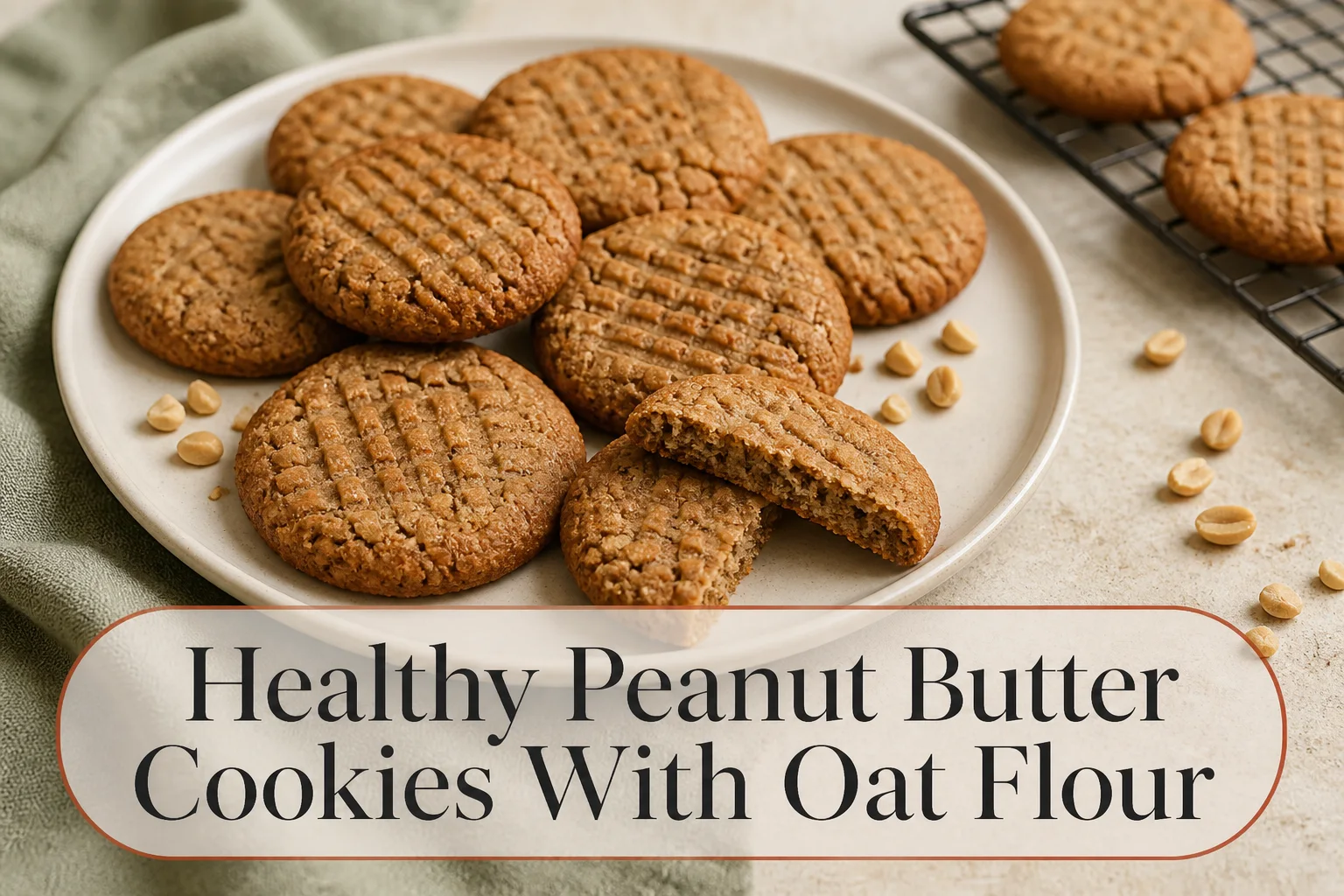
Healthy Peanut Butter Cookies With Oat Flour
Ingredients
Equipment
Method
- Whisk peanut butter, maple syrup and brown sugar until glossy. Whisk in the egg and vanilla until no streaks remain.
- In a separate bowl, whisk oat flour, baking soda, fine salt and optional cinnamon, breaking up all soda clumps.
- Fold dry ingredients into the peanut butter mixture just until no flour remains. Fold in optional chopped peanuts.
- Cover and refrigerate for 30 minutes. The dough should hold a soft mound; adjust only after chilling if needed.
- Heat the oven to 350°F with a center rack and line two light-colored sheet pans with parchment.
- Divide into 16 portions of about 31 grams. Roll gently, place 2 inches apart and crosshatch with a fork to 1/2 inch thick.
- Bake one pan at a time for 9 to 12 minutes, until the edges are dry and lightly browned while the centers remain soft and matte.
- Leave cookies undisturbed on the pan for 10 minutes, then transfer with a thin spatula to a rack and cool completely.
Notes
- Weigh oat flour at 75 grams to avoid a dry dough.
- Chill 30 minutes before deciding whether the dough needs adjustment.
- If chilled dough flows, add 1 tablespoon oat flour; if it crumbles, add 1 teaspoon maple syrup or milk.
- Press dough to 1/2 inch because these cookies do not spread dramatically.
- Do not eat raw dough; it contains raw egg.
- Contains peanut and egg.
- This recipe was developed through culinary research and editorial review.
This recipe was developed through culinary research and editorial review. Peanut butter consistency, oat-flour grind, egg size, pan color and oven calibration vary; use the chilled-dough, pressed-thickness and set-edge cues.
Nutrition is an estimate per cookie without optional peanuts, chocolate or flaky salt; brands and portion size vary.