
Jerk-style wings need more than surface heat: allspice, thyme, scallion and chile should season the meat before cooking, while the oven still needs enough dry heat to brown the skin. Blending a thick marinade and wiping away excess before roasting gives both flavor and better color.
Ingredient moisture, piece size, cookware and starting temperature can shift the finish. The method therefore pairs a practical time range with visible or temperature-based doneness cues.
This recipe was developed through culinary research and editorial review. It is not represented as a personal kitchen test.
For a related idea, see buffalo chicken wing recipe. You may also want korean chicken wing recipe.
Why this recipe works
The marinade is a thick paste: A concentrated paste carries aromatics onto the wings without adding enough free liquid to steam them.
Excess marinade is removed: A thin coating can brown; heavy wet clumps are more likely to burn on the rack.
Cold marinating is controlled: Two hours develops flavor, while an overnight upper limit prevents lime and salt from making the surface mushy.
The first batch is the useful reference point. Measure as written, note the finish in your equipment, and change only one variable at a time if an adjustment is needed.
Ingredients
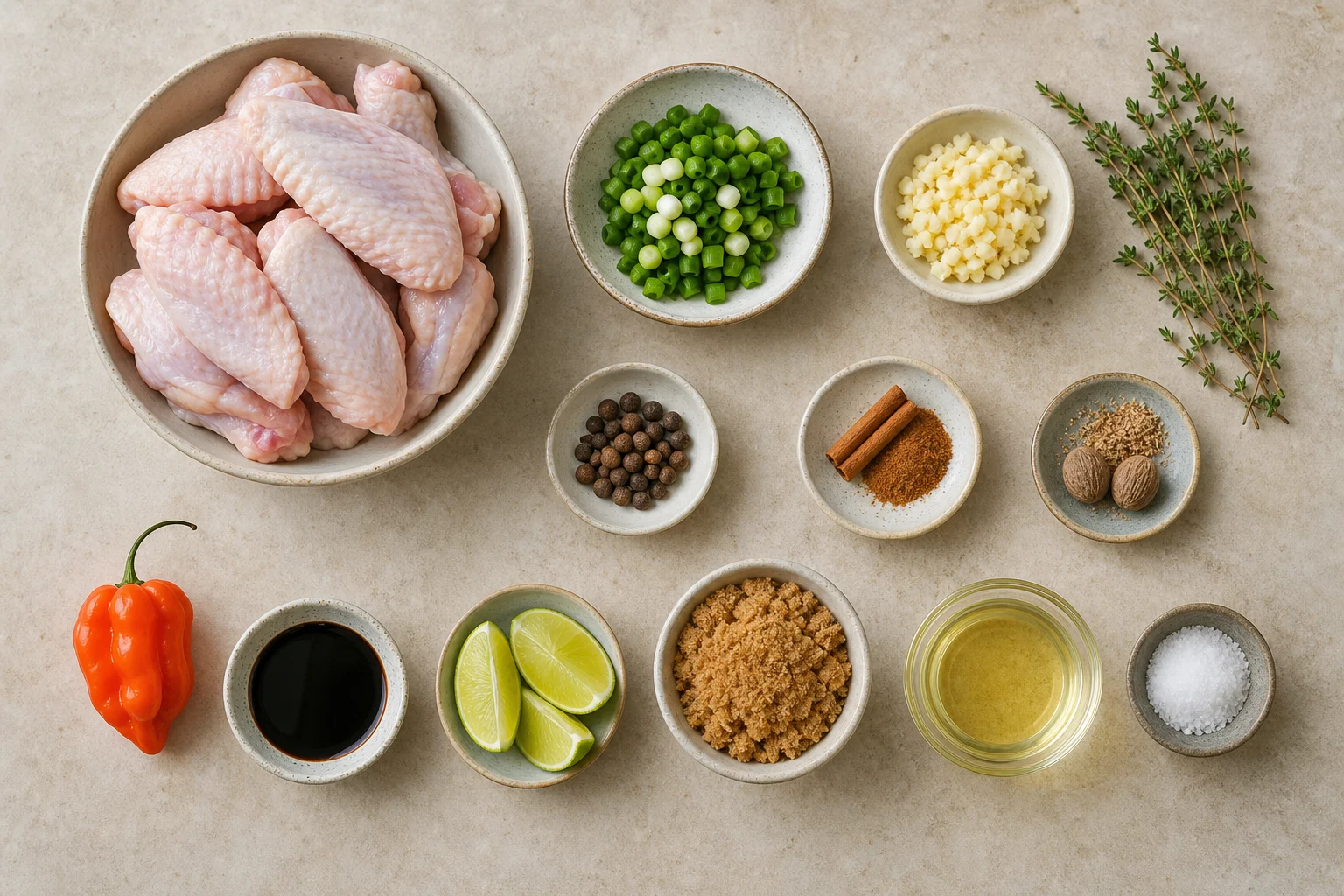
- 2 pounds split chicken wings, flats and drumettes
- 3 scallions, roughly chopped
- 3 cloves garlic
- 1 tablespoon fresh thyme leaves
- 1 tablespoon ground allspice
- 1 teaspoon ground cinnamon
- 1/2 teaspoon ground nutmeg
- 1 Scotch bonnet or habanero chile, seeded for less heat
- 2 tablespoons reduced-sodium soy sauce
- 2 tablespoons lime juice
- 1 tablespoon brown sugar
- 1 tablespoon neutral oil
- 3/4 teaspoon kosher salt
Ingredient notes
Allspice
Ground allspice is the central warm spice here; it is not a blend of several spices despite its name.
Scotch bonnet
Heat varies widely. Wear gloves, avoid touching your face and use part of one chile for a gentler batch.
Thyme
Fresh thyme gives a brighter herbal note, but 1 teaspoon dried thyme can replace the tablespoon of fresh leaves.
How to make jerk chicken wing
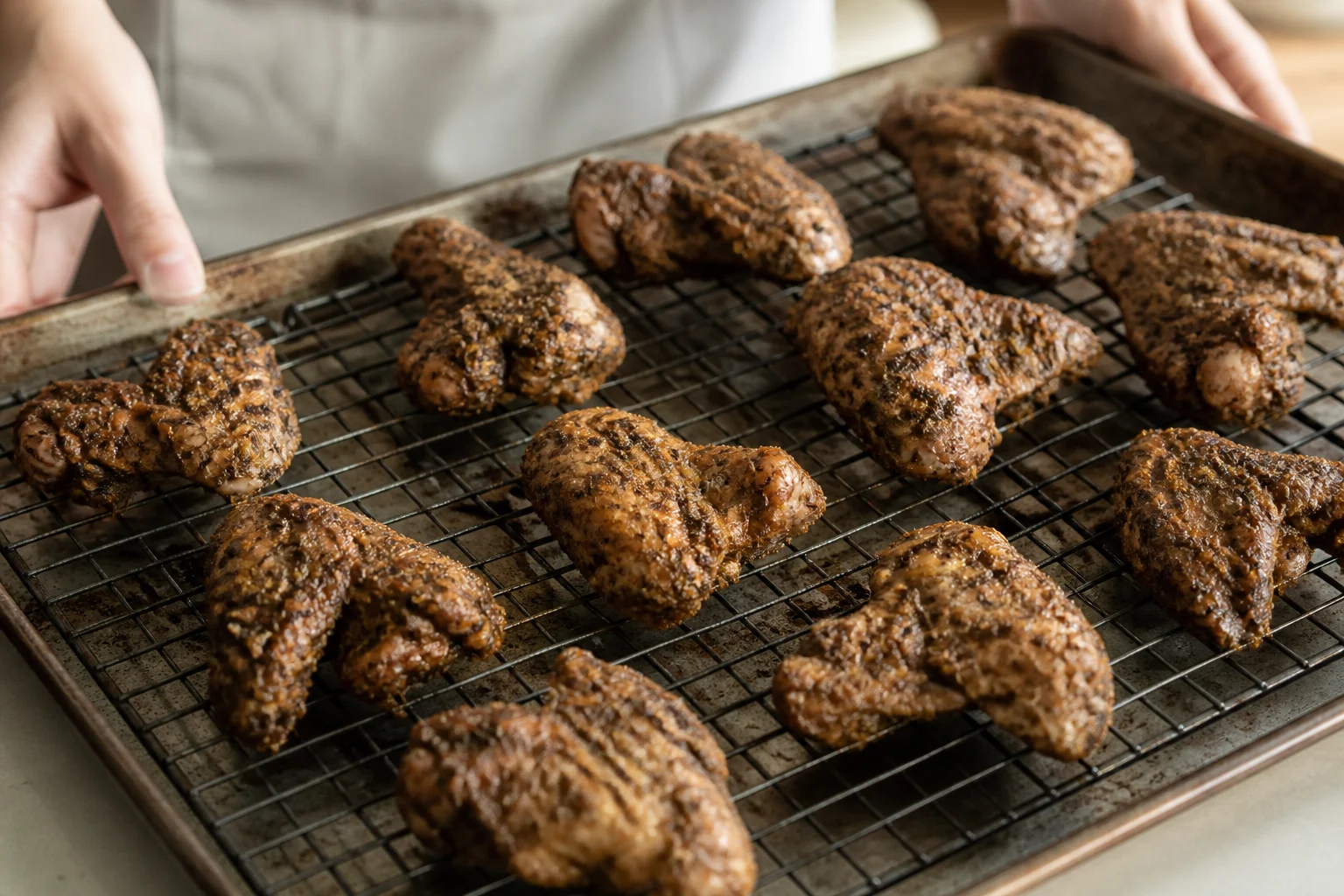
1. Blend the marinade
Blend scallions, garlic, thyme, allspice, cinnamon, nutmeg, chile, soy sauce, lime, brown sugar, oil and salt into a thick coarse paste.
2. Marinate cold
Toss wings with the marinade in a nonreactive container. Cover and refrigerate for 2 to 12 hours; do not marinate on the counter.
3. Heat the oven
Heat the oven to 425°F and set a wire rack over a foil-lined rimmed sheet pan.
4. Arrange
Lift wings from the marinade and let excess drip away. Arrange with space between pieces; discard used marinade.
5. Roast
Roast 25 minutes, turn, then roast 18 to 25 minutes more until deeply browned.
6. Check and rest
Verify at least 165°F in several thick pieces away from bone, then rest 5 minutes before serving.
Quick timing and doneness guide
| Stage | What to look for | What to do |
|---|---|---|
| Preparation | A concentrated paste carries aromatics onto the wings without adding enough free liquid to steam them. | Complete the size, moisture or equipment setup before cooking |
| First check | Lift wings from the marinade and let excess drip away. Arrange with space between pieces; discard used marinade. | Check at the early end of the range and keep unfinished portions cooking |
| Finished | Verify at least 165°F in several thick pieces away from bone, then rest 5 minutes before serving. | Stop when the stated texture or safe temperature is reached |
| If adjustment is needed | Remove finished wings and continue cooking cooler pieces until each reaches 165°F. | Make the smallest useful change, then check again |
This table is a decision guide, not a replacement for ingredient labels, the appliance manual or safe-temperature guidance. When food safety depends on internal temperature, check more than one thick piece with a reliable thermometer.
Substitutions and variations
Milder chile
Use one seeded jalapeño plus 1/4 teaspoon cayenne; the flavor will be less fruity but easier to control.
Gluten-aware
Use certified gluten-free tamari and verify all packaged seasonings.
Grill finish
Cook over indirect medium heat with the lid closed, turning regularly, then move briefly over direct heat and verify 165°F.
Change one major component at a time. Moisture, sweetness, structure and cooking time affect one another, so several simultaneous substitutions are harder to predict.
Serving ideas
Serve with rice and peas, pineapple slaw, roasted plantains or a cucumber salad. Lime wedges add brightness, but squeeze them on individual portions so the whole platter stays crisp.
Troubleshooting
The outside burns
Likely cause: Wet marinade clumps or sugar-heavy spots stayed on the skin.
Fix: Let excess marinade drip away and move darkening pieces to a cooler oven position.
The flavor is weak
Likely cause: The wings marinated briefly or the paste was too loose.
Fix: Use a thick paste and allow at least two refrigerated hours.
The wings are soft
Likely cause: They were crowded or covered immediately after roasting.
Fix: Leave space on the rack and rest uncovered so steam can escape.
Some pieces are underdone
Likely cause: Sizes varied or the pan has uneven heat.
Fix: Remove finished wings and continue cooking cooler pieces until each reaches 165°F.
Storage, freezing and reheating
Refrigerator: Refrigerate cooked wings promptly in a shallow covered container and use within 3 to 4 days.
Freezer: Freeze cooked wings for up to 3 months for best quality; thaw in the refrigerator.
Reheating or serving after storage: Reheat on a rack at 375°F for 8 to 12 minutes or air fry at 350°F for 4 to 7 minutes until 165°F.
For general handling, the USDA Safe Minimum Internal Temperature Chart is the authoritative outside reference used for this article. USDA guidance lists 165°F as the safe minimum for poultry and recommends marinating poultry under refrigeration rather than on the counter.
Frequently asked questions
How spicy are jerk chicken wings?
With a whole Scotch bonnet they are hot. Using half a seeded chile lowers heat while keeping some fruity chile flavor.
Can I use bottled jerk seasoning?
Yes. Follow its label for quantity and salt, then still remove excess wet marinade before roasting.
Can I reuse the wing marinade?
Discard marinade that contacted raw poultry unless it is brought to a full safe boil in accordance with official guidance; making a fresh small sauce is simpler.
Recipe development note
The method for jerk chicken wing recipe was developed through culinary research and editorial review. The quantities and time ranges are an editorial recipe specification, not a claim that every ingredient brand, appliance or batch was personally tested in one kitchen.
Nutrition is an estimate per servings and varies with brands, optional ingredients and portion size. The accompanying visuals are AI-assisted food-editorial images, not photographs of a kitchen test.
Printable recipe card
Jerk Chicken Wing Recipe
Ingredients
Equipment
Method
- Blend scallions, garlic, thyme, allspice, cinnamon, nutmeg, chile, soy sauce, lime, brown sugar, oil and salt into a thick coarse paste.
- Toss wings with the marinade in a nonreactive container. Cover and refrigerate for 2 to 12 hours; do not marinate on the counter.
- Heat the oven to 425°F and set a wire rack over a foil-lined rimmed sheet pan.
- Lift wings from the marinade and let excess drip away. Arrange with space between pieces; discard used marinade.
- Roast 25 minutes, turn, then roast 18 to 25 minutes more until deeply browned.
- Verify at least 165°F in several thick pieces away from bone, then rest 5 minutes before serving.
Notes
- Read ingredient labels and the manual for any appliance used.
- Begin checking at the early end of the range.
- USDA guidance lists 165°F as the safe minimum for poultry and recommends marinating poultry under refrigeration rather than on the counter.
- This recipe was developed through culinary research and editorial review.
This recipe was developed through culinary research and editorial review. Equipment, ingredient brands, starting temperature and batch size can change timing; follow the method cues and applicable safety guidance.
Nutrition is an estimate per servings and varies with brands, optional ingredients and portion size.