Shrimp cook in minutes, so a Buffalo method designed for chicken would leave them rubbery. Here the shrimp are dried, lightly seasoned and seared in one layer; hot sauce and butter go in only after the centers turn opaque, coating the seafood off heat instead of extending the cook.
Ingredient moisture, piece size, cookware and starting temperature can shift the finish. The method therefore pairs a practical time range with visible or temperature-based doneness cues.
This recipe was developed through culinary research and editorial review. It is not represented as a personal kitchen test.
For a related idea, see buffalo chicken drumstick recipe. You may also want buffalo chicken wing recipe.
Why this recipe works
Dry shrimp sear instead of steam: Surface moisture must leave before the skillet can brown the exterior.
One layer keeps timing even: Crowded shrimp release liquid and finish at different rates.
Sauce goes on off heat: Residual heat attaches flavor without pushing cooked shrimp into a tight rubbery curl.
The first batch is the useful reference point. Measure as written, note the finish in your equipment, and change only one variable at a time if an adjustment is needed.
Ingredients
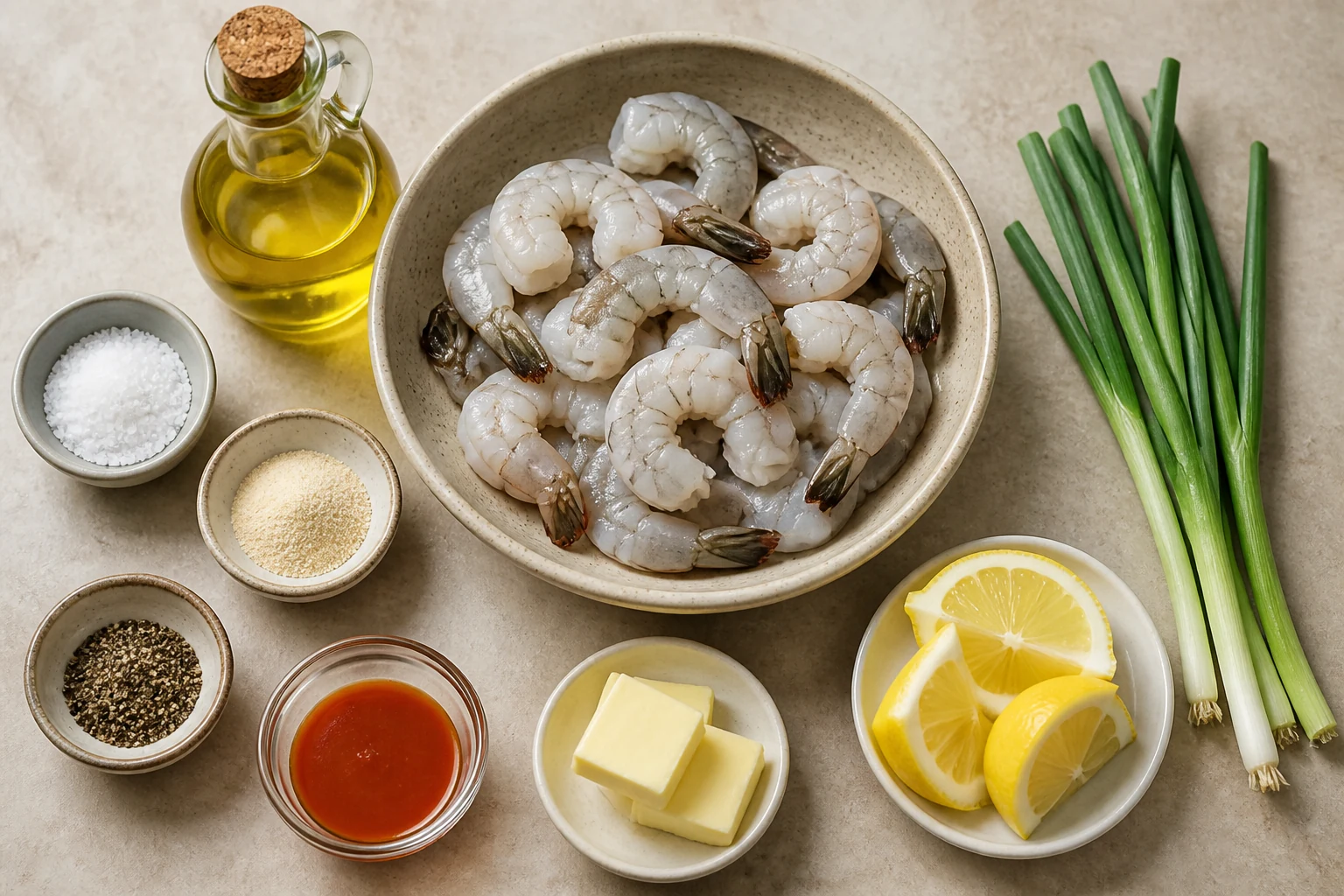
- 1 1/2 pounds large raw shrimp, peeled, deveined and tails optional
- 1 tablespoon olive oil
- 1/2 teaspoon kosher salt
- 1/2 teaspoon garlic powder
- 1/4 teaspoon black pepper
- 1/3 cup Buffalo-style cayenne hot sauce
- 2 tablespoons unsalted butter, melted
- 1 teaspoon lemon juice
- 2 scallions, thinly sliced
Ingredient notes
Shrimp size
Large shrimp are easier to sear before overcooking than very small shrimp. Match sizes within a batch.
Hot sauce
Use a thin cayenne-forward sauce without a high-sugar glaze.
Butter
Two tablespoons soften the acidity; use less for a sharper Buffalo finish.
How to make buffalo shrimp
1. Prepare the shrimp
Thaw safely if frozen, drain and blot very dry. Toss with salt, garlic powder and pepper.
2. Mix the sauce
Whisk hot sauce, melted butter and lemon juice in a small bowl.
3. Heat the skillet
Heat olive oil in a wide skillet over medium-high until shimmering.
4. Sear the first side
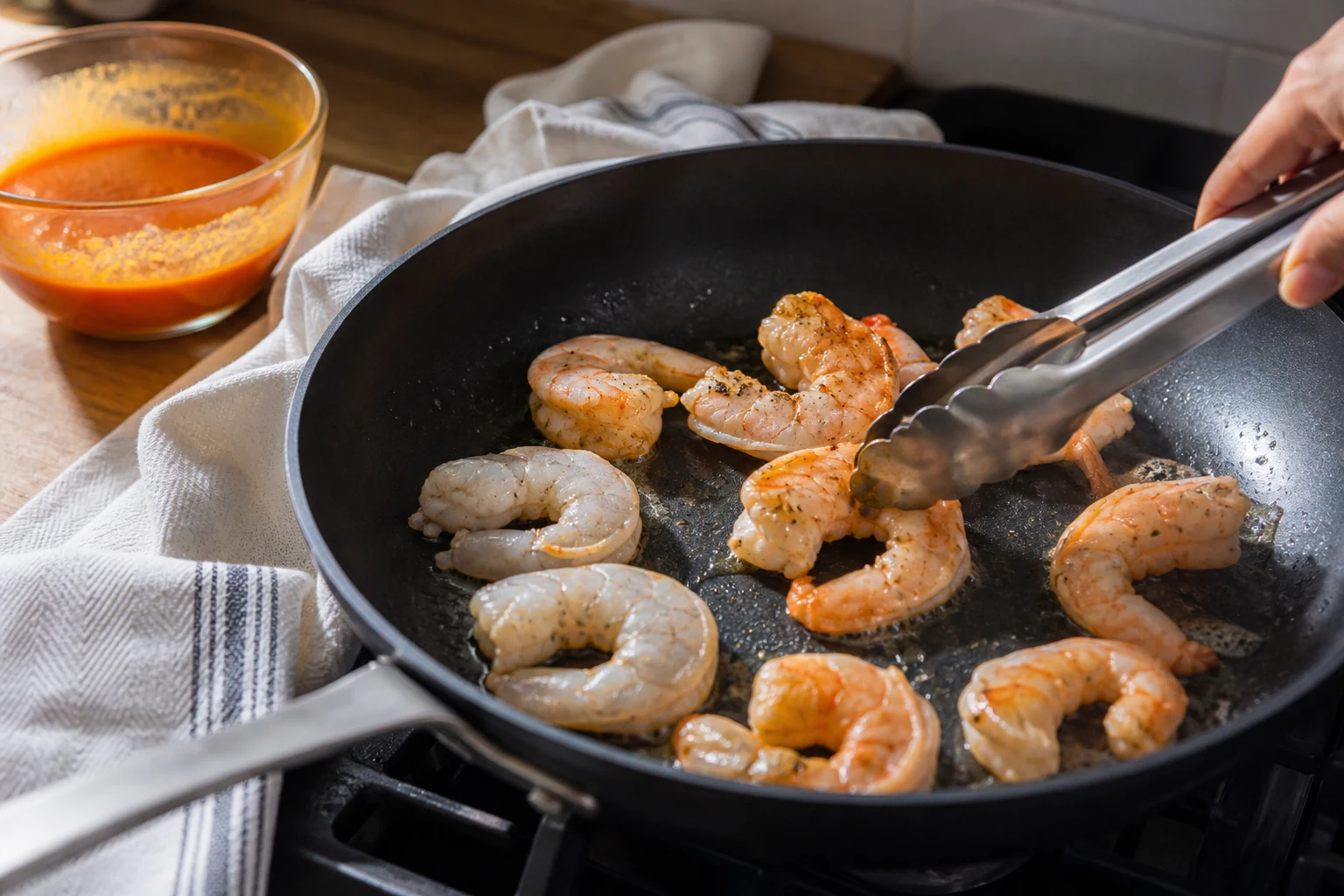
Add shrimp in one layer and cook 1 1/2 to 2 minutes without crowding; work in batches if needed.
5. Turn and finish
Turn and cook 1 to 2 minutes more, until opaque with a loose C shape; large shrimp may reach 145°F.
6. Sauce off heat
Remove the skillet from heat, add only enough Buffalo mixture to coat, toss briefly and finish with scallions.
Quick timing and doneness guide
| Stage | What to look for | What to do |
|---|---|---|
| Preparation | Surface moisture must leave before the skillet can brown the exterior. | Complete the size, moisture or equipment setup before cooking |
| First check | Add shrimp in one layer and cook 1 1/2 to 2 minutes without crowding; work in batches if needed. | Check at the early end of the range and keep unfinished portions cooking |
| Finished | Remove the skillet from heat, add only enough Buffalo mixture to coat, toss briefly and finish with scallions. | Stop when the stated texture or safe temperature is reached |
| If adjustment is needed | Preheat fully and leave space between pieces. | Make the smallest useful change, then check again |
This table is a decision guide, not a replacement for ingredient labels, the appliance manual or safe-temperature guidance. When food safety depends on internal temperature, check more than one thick piece with a reliable thermometer.
Substitutions and variations
Dairy-free
Replace butter with 1 tablespoon olive oil and whisk well with hot sauce.
Air-fryer method
Dry and lightly oil shrimp, cook in one layer at 400°F for 5 to 7 minutes and sauce only after doneness.
Milder
Use 1/4 cup hot sauce plus 2 tablespoons melted butter and offer more at the table.
Change one major component at a time. Moisture, sweetness, structure and cooking time affect one another, so several simultaneous substitutions are harder to predict.
Serving ideas
Serve with celery, slaw, rice, tacos or a green salad. Keep extra Buffalo sauce separate so the shrimp retain their seared surface.
Troubleshooting
The shrimp are rubbery
Likely cause: They stayed over heat after turning opaque.
Fix: Remove each batch promptly and add sauce off heat.
The skillet is watery
Likely cause: Shrimp were wet, crowded or thawing during cooking.
Fix: Drain and blot thoroughly and use smaller batches.
The sauce separates
Likely cause: Butter and hot sauce were at very different temperatures.
Fix: Whisk while both are warm and toss immediately; separation does not affect safety.
The shrimp are pale
Likely cause: The pan cooled under a crowded batch.
Fix: Preheat fully and leave space between pieces.
Storage, freezing and reheating
Refrigerator: Refrigerate within 2 hours and use within 3 to 4 days.
Freezer: Freezing cooked sauced shrimp is possible but texture suffers; freeze raw shrimp according to package guidance instead.
Reheating or serving after storage: Warm gently in a skillet just until 165°F for leftovers, avoiding a second long cook.
For general handling, the USDA Safe Minimum Internal Temperature Chart is the authoritative outside reference used for this article. USDA guidance lists 145°F for fish and shellfish; reheated leftovers should reach 165°F.
Frequently asked questions
How do I know shrimp are cooked?
They should be opaque with a loose C shape; large shrimp may be checked for 145°F.
Can I use frozen shrimp?
Yes. Thaw safely in the refrigerator or under cold running water, then drain and dry well.
When should Buffalo sauce be added?
Add it off heat after the shrimp are cooked so they do not become rubbery.
Recipe development note
The method for buffalo shrimp recipe was developed through culinary research and editorial review. The quantities and time ranges are an editorial recipe specification, not a claim that every ingredient brand, appliance or batch was personally tested in one kitchen.
Nutrition is an estimate per servings and varies with brands, optional ingredients and portion size. The accompanying visuals are AI-assisted food-editorial images, not photographs of a kitchen test.
Printable recipe card
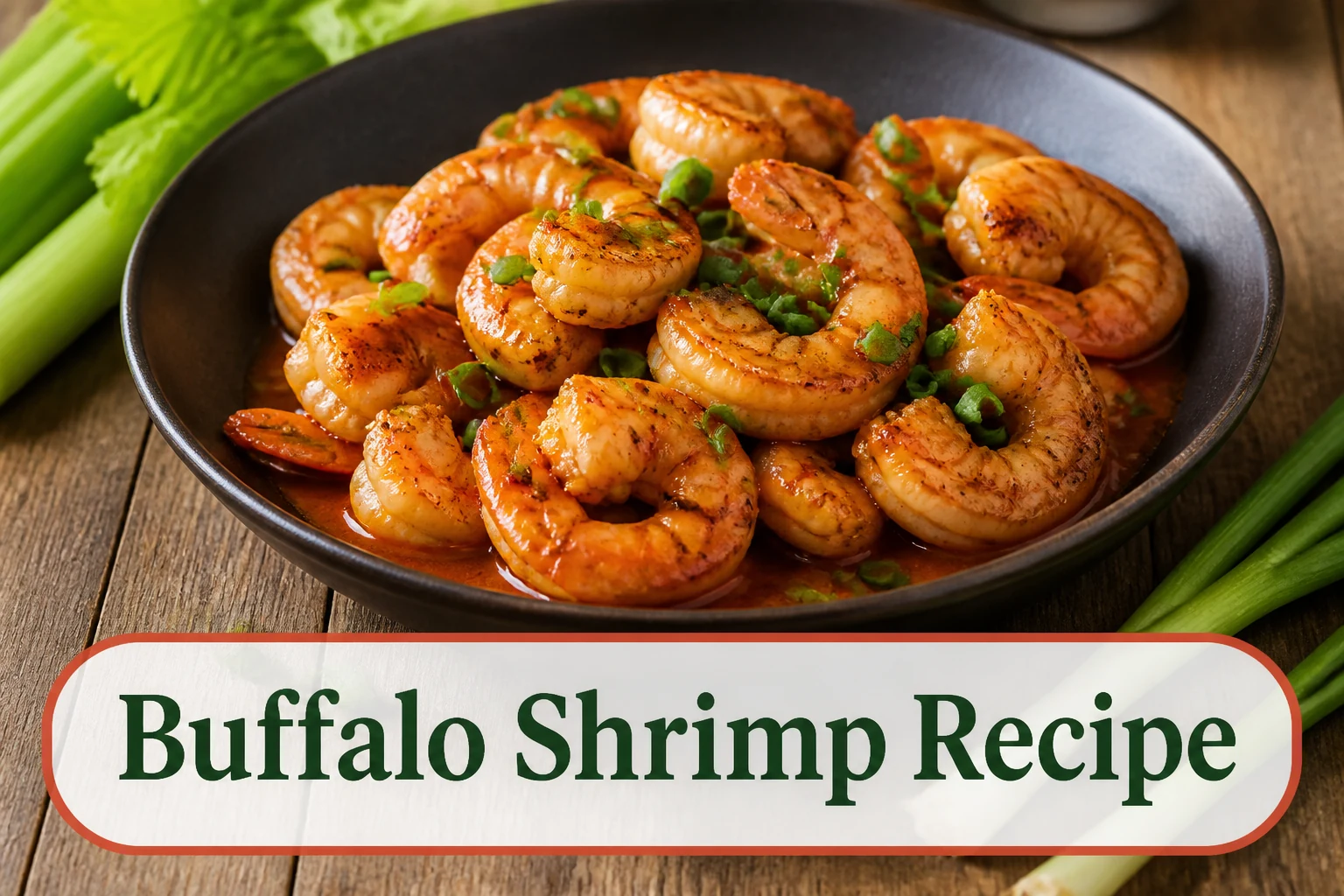
Buffalo Shrimp Recipe
Ingredients
Equipment
Method
- Thaw safely if frozen, drain and blot very dry. Toss with salt, garlic powder and pepper.
- Whisk hot sauce, melted butter and lemon juice in a small bowl.
- Heat olive oil in a wide skillet over medium-high until shimmering.
- Add shrimp in one layer and cook 1 1/2 to 2 minutes without crowding; work in batches if needed.
- Turn and cook 1 to 2 minutes more, until opaque with a loose C shape; large shrimp may reach 145°F.
- Remove the skillet from heat, add only enough Buffalo mixture to coat, toss briefly and finish with scallions.
Notes
- Read ingredient labels and the manual for any appliance used.
- Begin checking at the early end of the range.
- USDA guidance lists 145°F for fish and shellfish; reheated leftovers should reach 165°F.
- This recipe was developed through culinary research and editorial review.
This recipe was developed through culinary research and editorial review. Equipment, ingredient brands, starting temperature and batch size can change timing; follow the method cues and applicable safety guidance.
Nutrition is an estimate per servings and varies with brands, optional ingredients and portion size.