
This Instant Pot vegetable soup uses two cooking stages to solve a common pressure-cooker problem: potatoes and carrots need more time than zucchini, green beans and spinach. The firm vegetables pressure-cook in a tomato-herb broth, while the quick-cooking vegetables go in after the lid comes off.
The finished soup is hearty without meat or dairy. Yukon Gold potatoes give the broth body, cannellini beans add protein, and a final splash of red wine vinegar brightens the tomato base. Nothing needs to be blended, and the method leaves recognizable pieces of every vegetable.
This recipe was developed through culinary research and editorial review. Vegetable age, cut size, altitude and pressure-cooker model affect texture, so follow the exact appliance manual and check the vegetables at each finishing stage.
For a heartier pressure-cooked soup with beef and grain, see the Instant Pot beef barley soup recipe. The creamy Instant Pot broccoli cheddar soup recipe uses a different staged method for dairy and broccoli.
Why staging the vegetables works
Dense carrots and potatoes take longer to soften than zucchini, cut green beans and leafy greens. Putting everything under pressure together may save one small step, but it sacrifices color and texture.
Here, 3/4-inch carrot and potato pieces cook at High Pressure for 1 minute, followed by a 5-minute natural release. Pressure build and release add significant cooking time beyond the display countdown.
After opening, green beans and zucchini simmer briefly on the lowest Sauté setting. Already-cooked cannellini beans, corn and spinach need only enough time to heat through or wilt. This order makes the soup forgiving: each late vegetable can be checked before the next is added.
Ingredients
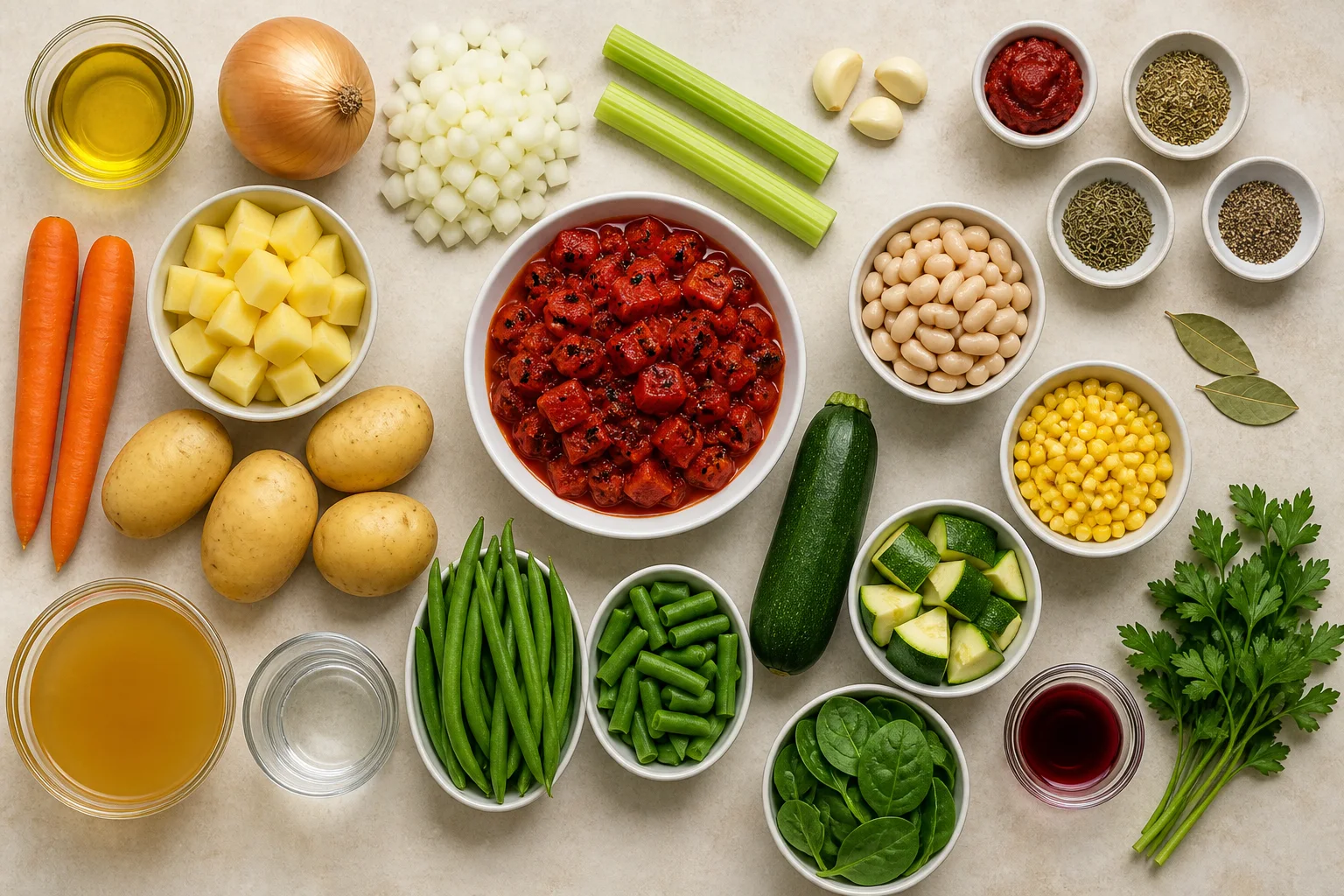
- 2 tablespoons olive oil
- 1 medium yellow onion, diced
- 2 celery ribs, cut into 1/2-inch pieces
- 3 garlic cloves, minced
- 2 tablespoons tomato paste
- 2 large carrots, cut into 3/4-inch pieces
- 12 ounces Yukon Gold potatoes, cut into 3/4-inch pieces
- 1 can (14.5 ounces) fire-roasted diced tomatoes, with juices
- 4 cups low-sodium vegetable broth
- 2 cups water
- 1 teaspoon Italian seasoning
- 1/2 teaspoon dried thyme
- 2 bay leaves
- 1 teaspoon kosher salt, divided
- 1/2 teaspoon black pepper
- 8 ounces fresh green beans, trimmed and cut into 1-inch pieces
- 1 small zucchini, cut into 3/4-inch pieces
- 1 can (15 ounces) cannellini beans, rinsed and drained
- 1 cup frozen corn
- 2 packed cups baby spinach
- 1 tablespoon red wine vinegar
- 1/4 cup chopped flat-leaf parsley
Ingredient notes and substitutions
Potatoes: Yukon Gold potatoes keep their shape while releasing enough starch to round out the broth. Red potatoes work with the same cut size. Russets can break down more readily and are better if you prefer a thicker, less defined soup.
Carrots: Cut them to a true 3/4 inch rather than thin coins. Small pieces may become soft during pressure build and release.
Tomatoes: Fire-roasted diced tomatoes add flavor without extra cooking. Regular diced tomatoes are a direct substitute. Keep the tomatoes above the broth and vegetables rather than stirring them against the pot bottom before pressure cooking.
Green beans and zucchini: Both are intentionally held back. Fresh green beans retain the best texture. Frozen green beans can be used, but add them with the corn because they are already blanched and will soften faster.
Cannellini beans: These mild white beans make the soup more substantial. Great Northern beans or drained chickpeas work. All are already cooked, so they go in after pressure cooking.
Spinach: Baby spinach wilts almost immediately. Chopped kale needs longer; add it with the green beans and allow extra simmering time.
Broth and seasoning: Low-sodium vegetable broth lets you season after the canned tomatoes and beans are considered. Check that broth and other packaged ingredients meet any gluten-free or dietary requirements.
How to make Instant Pot vegetable soup
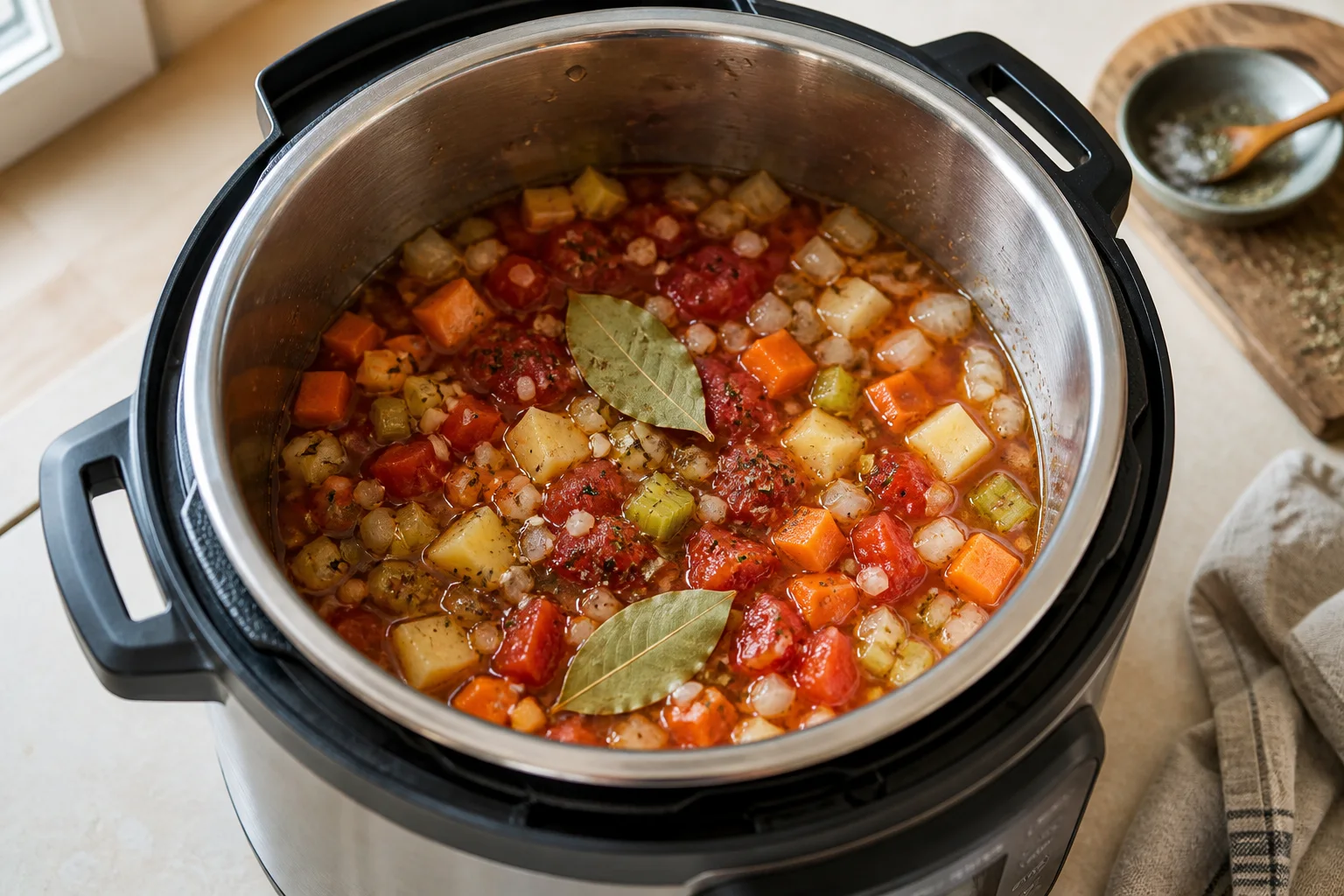
1. Cut vegetables by cooking speed
Prepare the onion, celery, garlic, carrots and potatoes for the pressure stage. Keep the green beans, zucchini, beans, corn, spinach, vinegar and parsley in a separate late-addition group.
Uniform cut size matters more than perfect appearance. Three-quarter-inch carrots and potatoes should be large enough to remain intact but small enough to become tender during the short cycle.
2. Sauté the aromatics
Set a 6-quart electric pressure cooker to Sauté. Add olive oil, onion and celery, then cook for 4 minutes, stirring, until the onion softens. Add garlic and tomato paste and cook for 1 minute.
The tomato paste should darken slightly without scorching. If it sticks aggressively, cancel Sauté before moving on.
3. Deglaze completely
Pour in 1 cup vegetable broth. Scrape the inner pot with a flat wooden spoon until no browned or stuck areas remain. This is both a flavor step and protection against a burn warning.
Cancel Sauté. Add remaining broth, water, carrots, potatoes, Italian seasoning, thyme, bay leaves, 3/4 teaspoon salt and pepper. Pour the diced tomatoes and juices on top. Do not stir them down against the pot bottom.
4. Check the fill line and seal
Confirm that the soup is below the fill limit specified for the exact cooker model. Secure the lid and use the sealing position or setup required by that appliance.
Do not rely on a generic valve description if the model uses a different release mechanism. The manufacturer’s directions take priority.
5. Pressure-cook for 1 minute
Cook on High Pressure for 1 minute. The short displayed time is intentional; the carrots and potatoes also cook while the machine builds pressure and during the initial natural release.
6. Use a 5-minute natural release
When the cook cycle ends, leave the cooker undisturbed for 5 minutes. Release remaining pressure only according to the exact model manual. Keep hands and face away from the vent and stop if soup liquid sputters.
Never force the lid. Open it only when depressurization is confirmed. Instant Pot’s official product manuals page provides current directions for individual models.
7. Simmer the green beans and zucchini
Remove the bay leaves. Test one potato and carrot piece; they should be tender but intact. Set Sauté to the lowest available heat, then stir in the fresh green beans and zucchini.
Simmer uncovered for 4 to 6 minutes, stirring occasionally, until both are just tender. Avoid a hard boil, which can roughen the potatoes and overcook the zucchini.
8. Finish the soup
Stir in cannellini beans and frozen corn and heat for about 2 minutes. Add spinach and stir just until wilted. Cancel Sauté.
Add red wine vinegar, parsley and the remaining 1/4 teaspoon salt. Taste and adjust. The soup may need more salt if the broth and beans were very low in sodium, but taste after the vinegar because acidity makes flavors clearer.
How to keep vegetable soup from becoming mushy
Cut size and ingredient order are the two biggest controls. Potatoes and carrots should be substantial and consistent, while zucchini should not enter the pressure cycle at all.
Use the natural-release timer rather than forgetting the pot for 20 or 30 minutes. Extended holding continues cooking the dense vegetables even after the programmed cycle ends.
Finally, stop the open-pot simmer while green beans and zucchini retain a little bite. Residual heat will continue working after Sauté is canceled, especially if the soup stays in the heavy inner pot.
Adjusting the broth
The soup should have enough broth for vegetables to move easily without looking sparse. Potatoes and beans absorb liquid during storage, so a freshly made pot may look slightly looser than next-day soup.
For a brothier result, add 1 to 2 cups warm vegetable broth after pressure cooking. For a thicker soup, mash several potato pieces against the side of the pot and stir them back in. Avoid pressure-cooking with less liquid than your exact appliance requires.
For a cabbage soup with ground turkey and white beans, follow the separate high-protein cabbage soup method; it browns the turkey and adds the cabbage in stages on the stovetop.
Troubleshooting
The potatoes are undercooked
Potato pieces may be larger than 3/4 inch, or the cooker may have come to pressure unusually quickly. After opening, simmer on low Sauté until tender before adding zucchini. Cut the next batch more consistently.
The potatoes or carrots are too soft
The pieces were too small or the natural release ran longer than 5 minutes. Use larger cuts and time the release promptly. Waxy potatoes also stay intact better than russets.
The zucchini disappeared
It was added before pressure cooking or simmered too long afterward. Keep it in 3/4-inch pieces and add it only for the open-pot finishing stage.
The soup triggered a burn warning
Tomato paste may have remained stuck to the bottom, or the diced tomatoes may have been stirred into a hot bottom layer. Turn the cooker off and follow the manual before opening. Once safe, inspect and clean the inner pot rather than restarting over scorched residue.
The soup tastes watery
Check salt first, then add more vinegar a teaspoon at a time. Mashing a few potatoes and beans adds body. More Italian seasoning should simmer several minutes so the dried herbs hydrate.
The broth tastes too acidic
Some canned tomatoes are sharper than others. Skip the final vinegar and add a little more broth. A small pinch of sugar can soften harshness, but it should not make the soup sweet.
The soup is too salty
Add unsalted water or broth plus extra vegetables if available. Do not add more canned beans without rinsing them. Potato does not extract salt; extra volume simply dilutes it.
Storage and reheating
Divide leftovers among shallow containers and refrigerate within 2 hours. USDA leftover safety guidance advises using most cooked leftovers within 3 to 4 days.
Reheat in a saucepan over medium-low heat, stirring occasionally, or microwave in a covered vented container in intervals. Heat until steaming throughout. Add broth as needed because potatoes and beans thicken the stored soup.
Freezing instructions
Cool promptly and freeze meal-size portions for up to 3 months for best quality. Leave headspace in containers. The potatoes and zucchini will be softer after thawing, but the soup remains useful for quick meals.
Thaw overnight in the refrigerator or reheat from frozen gently in a saucepan or microwave-safe container. Stir periodically so the center heats evenly. For the best planned freezer texture, omit zucchini and spinach, then add fresh vegetables during reheating.
Frequently asked questions
Can I use frozen mixed vegetables?
Yes, but add them after pressure cooking. Most frozen vegetables are blanched and can become very soft under pressure. Simmer only until heated through.
Can I add pasta or rice?
Cook them separately and add them to individual bowls. Storing pasta or rice in the soup absorbs broth and makes reheating less predictable. Adding dry starch to this pressure formula also changes the liquid requirement.
Can I use sweet potatoes?
Yes. Cut them slightly larger than the Yukon Gold pieces because they soften faster. Expect some edges to break down and thicken the broth.
Can I add cabbage?
Add 2 cups of 1-inch cabbage pieces with the green beans after pressure cooking. Simmer until just tender. Pressure-cooked cabbage will be much softer and more aromatic.
Can I double the recipe?
Not in a 6-quart cooker. A doubled batch may exceed the model’s safe fill limit for soup. Make two batches or use a properly calibrated recipe for a larger appliance.
Is this soup vegan?
It is vegan when the vegetable broth and packaged seasonings contain no animal-derived ingredients. Check individual labels.
Can I leave out the beans?
Yes. Replace them with another cup of vegetables or simply omit them. The soup will be lighter and provide less protein.
Recipe development note
This recipe was developed through culinary research and editorial review. It has not been represented as a personal kitchen test. Vegetable age, exact cuts, altitude and pressure-cooker model change cooking speed; follow the appliance manual and use tenderness cues before serving.
Nutrition is an estimate based on generic ingredients. The accompanying visuals are AI-assisted food-editorial images, not photographs of a kitchen test.
Recipe at a glance
| Metric | Details |
|---|---|
| Prep time | 30 minutes |
| Cook time | 15 minutes |
| Total time | 60 minutes |
| Yield | 8 servings |
Printable recipe card
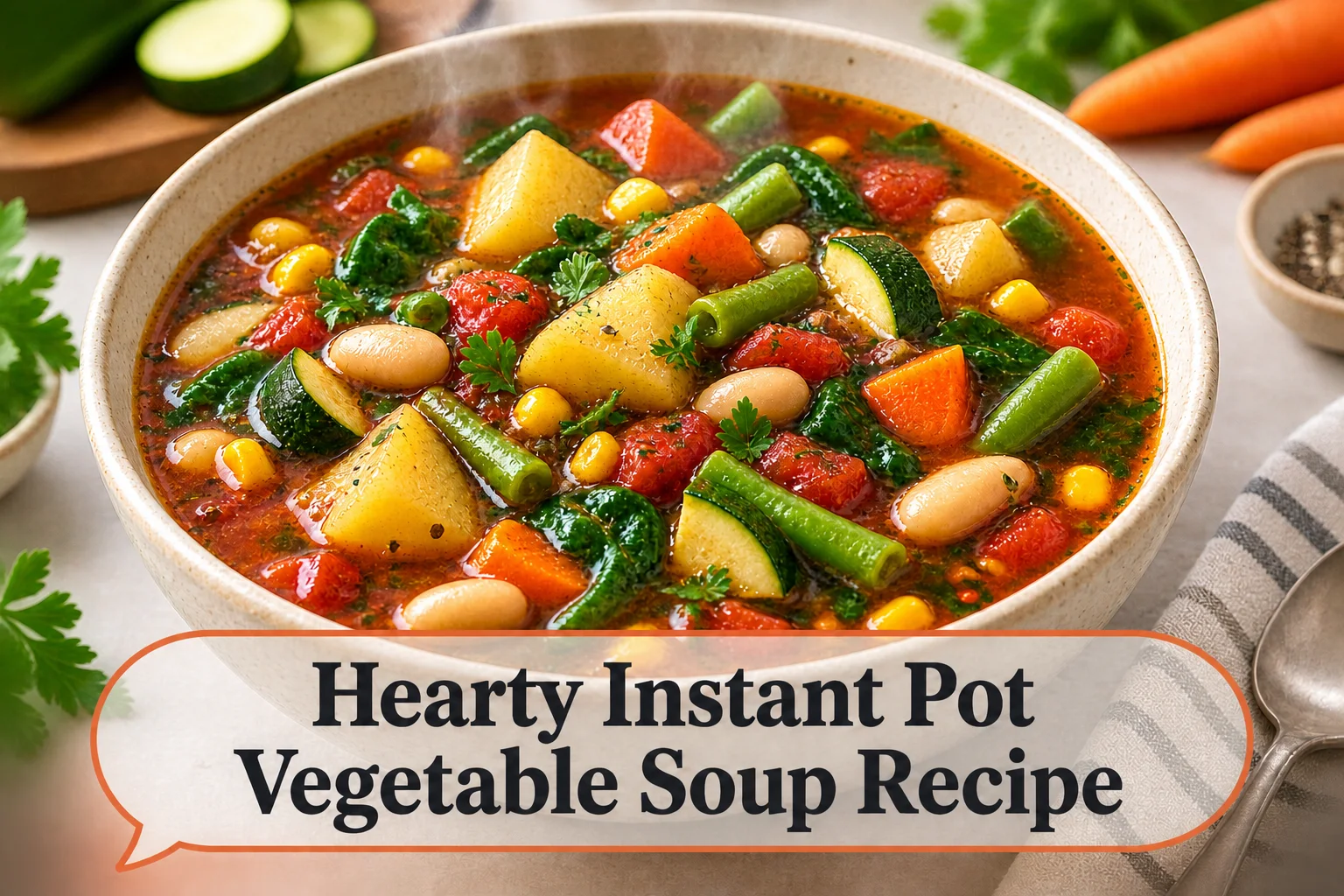
Hearty Instant Pot Vegetable Soup Recipe
Ingredients
Equipment
Method
- Prepare onion, celery, garlic, 3/4-inch carrots and potatoes for pressure cooking. Keep green beans, zucchini, beans, corn, spinach, vinegar and parsley separate.
- Using Sauté, cook onion and celery in olive oil for 4 minutes. Add garlic and tomato paste for 1 minute.
- Add 1 cup broth and scrape the bottom completely clean. Cancel Sauté; add remaining broth, water, carrots, potatoes, seasonings, bay leaves, 3/4 teaspoon salt and pepper. Pour tomatoes on top without stirring them down.
- Verify the model fill limit, lock the lid using its sealing setup and cook on High Pressure for 1 minute.
- Allow a 5-minute natural release, then release remaining pressure only as the model manual directs. Open only after depressurization is confirmed.
- Discard bay leaves. On low Sauté, simmer green beans and zucchini uncovered for 4 to 6 minutes until just tender.
- Stir in cannellini beans and frozen corn and heat for about 2 minutes.
- Add spinach and stir until wilted. Cancel Sauté, then add vinegar, parsley and remaining salt. Taste and adjust.
Notes
- Keep quick-cooking vegetables out of the pressure cycle.
- Cut potatoes and carrots to a consistent 3/4 inch.
- Deglaze fully and layer tomatoes on top.
- Follow the exact model’s fill-limit and pressure-release directions.
- This recipe was developed through culinary research and editorial review.
This recipe was developed through culinary research and editorial review. Vegetable age, exact cuts, altitude and pressure-cooker model change cooking speed; follow the appliance manual and use tenderness cues.
Nutrition is an estimate based on generic ingredients; actual values vary by broth, canned goods, vegetable size and serving size.