
These healthier no-bake cookies combine oats, peanut butter, cocoa and maple syrup in soft, chewy clusters that set in the refrigerator. Coconut oil firms the warm binder as it cools, while ground flax absorbs free moisture without requiring the large amount of sugar used in classic boiled no-bake cookies.
The method is based on texture cues rather than an exact boiling stage. The peanut-butter mixture is warmed only until smooth and glossy, then rested with the oats for 5 minutes before portioning. That short pause reveals whether the cookie needs a tablespoon of oats or a teaspoon of milk.
This recipe was developed through culinary research and editorial review. Peanut butter viscosity, oat thickness, cocoa absorption and room temperature vary, so use the rested-mixture and chilled-set cues below.
For a higher-protein no-bake option, try the peanut butter oatmeal protein balls recipe. For a baked whole-grain cookie with chocolate chips, see the healthier chocolate chip cookies recipe.
Why no-bake cookies stay sticky or turn dry
Classic no-bake cookies often rely on a concentrated cooked sugar syrup. A short boil can leave them sticky; a long boil can make them grainy and dry. This version uses a different setting system: peanut butter provides body, coconut oil firms when chilled and oats plus flax bind water.
The mixture is intentionally soft while warm. Adding more oats immediately can overcorrect it because the flakes and flax continue absorbing moisture during the five-minute rest.
Refrigerator temperature matters. These cookies are designed to set cold, not remain rigid on a warm counter. A cookie that softens slightly after 10 minutes at room temperature is behaving normally.
Ingredients
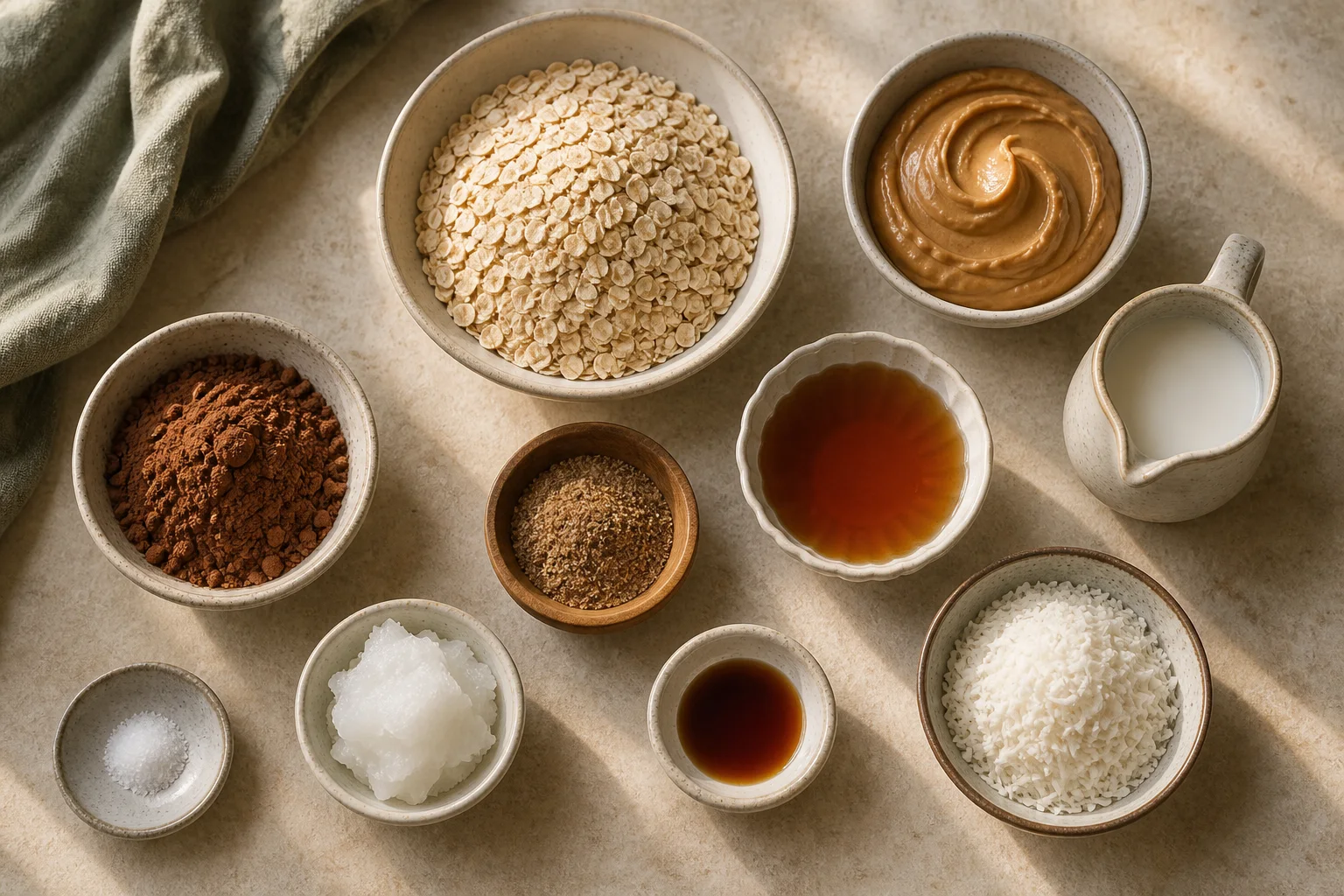
- 2 cups quick oats, 180 grams
- 1/4 cup ground flaxseed, 28 grams
- 1/4 cup unsweetened cocoa powder, 22 grams
- 1/4 teaspoon fine salt
- 1/2 cup creamy peanut butter, 128 grams
- 1/3 cup pure maple syrup, 107 grams
- 1/4 cup refined coconut oil, 54 grams
- 2 tablespoons milk, 30 grams
- 1 teaspoon vanilla extract
- 1/4 cup unsweetened shredded coconut, 20 grams, optional
Ingredient notes and substitutions
Quick oats: Quick oats hydrate evenly and create cohesive cookies. Old-fashioned oats can be pulsed five to eight times in a processor to break the flakes; do not grind them into flour.
Ground flaxseed: Flax absorbs moisture and supports the set. Finely ground chia works by weight but creates a slightly more gelled texture and may need 1 teaspoon extra milk.
Cocoa powder: Natural unsweetened cocoa provides strong chocolate flavor. Dutch-process cocoa also works, but absorption and flavor differ. Spoon and level or weigh it so the cookies do not become chalky.
Peanut butter: Conventional creamy peanut butter is the most predictable. Natural peanut butter must be stirred completely. A very runny jar may require 1 to 2 tablespoons more oats after the rest.
Maple syrup: Maple syrup sweetens and helps the mixture stay cohesive. Honey can replace it by weight, creating a thicker binder and different flavor. Granulated sweetener is not a direct swap.
Coconut oil: Refined coconut oil has little coconut flavor and firms in the refrigerator. Butter can replace it by weight, but the cookies then contain dairy and soften differently.
Milk: Dairy or unsweetened nondairy milk works. It helps hydrate cocoa and oats. Add more only by the teaspoon if a rested scoop crumbles.
Shredded coconut: Optional coconut adds chew. Keep it finely shredded; large flakes interfere with clean portions.
How to make healthy no-bake cookies
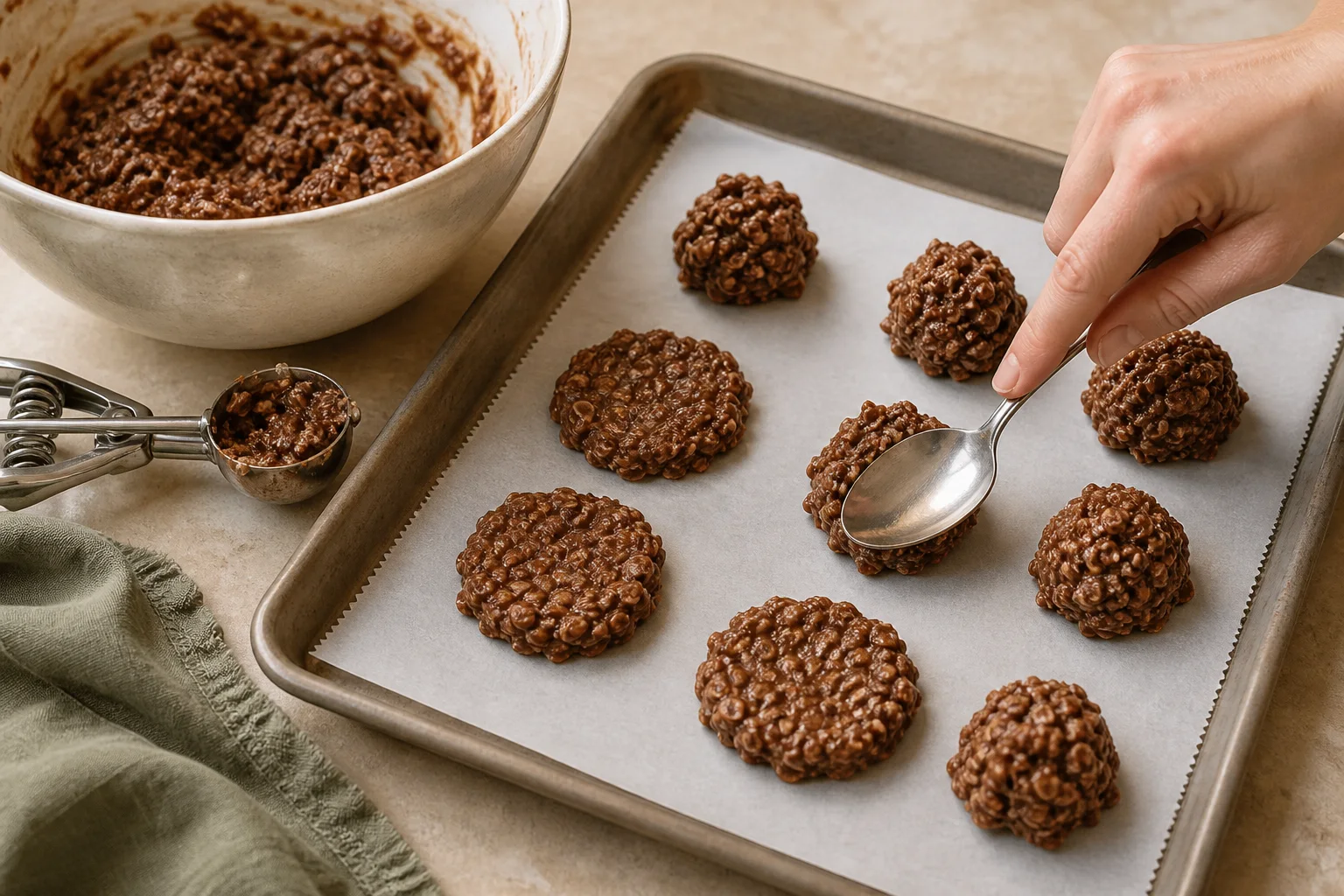
1. Prepare the tray
Line a large sheet pan or tray with parchment. Clear a level refrigerator shelf before warming the binder.
Use a tray that fits the refrigerator without tilting. A tilted tray produces thick and thin cookies that set at different rates.
2. Combine dry ingredients
In a large bowl, whisk quick oats, ground flax, cocoa and salt. Add optional shredded coconut.
Break up cocoa lumps before liquid is added. Dry cocoa pockets are difficult to eliminate once the mixture thickens.
3. Warm the binder
Place peanut butter, maple syrup, coconut oil and milk in a small saucepan. Warm over low heat for 2 to 3 minutes, whisking until smooth and glossy.
Do not bring it to a hard boil. The goal is a uniform emulsion, not a candy syrup. Remove from heat as soon as the coconut oil is melted and no peanut-butter streaks remain.
4. Add vanilla
Whisk vanilla into the warm binder off heat. Let the saucepan stand 1 minute so the mixture is warm rather than aggressively hot.
Very hot binder can make oats swell unevenly at the surface before the bowl is fully mixed.
5. Coat the oats
Pour the binder over the dry mixture. Fold slowly, scraping the bowl bottom, until every oat looks chocolate-coated and no dry cocoa remains.
The warm mixture should look soft and moundable. Do not add corrective oats yet.
6. Rest and check texture
Rest for 5 minutes. Squeeze a tablespoon: it should hold a cohesive clump and leave only a thin film on the fingers.
If it smears like thick frosting, fold in 1 tablespoon quick oats and wait 2 minutes. If it cracks and drops crumbs, add milk 1 teaspoon at a time.
7. Portion the cookies
Use a 1 1/2-tablespoon scoop to make 18 portions on the lined tray. Compress each scoop against the bowl before releasing it.
Leave about 1 inch between portions. They will not spread, but the spacing lets cold air circulate.
8. Shape into disks
Press each mound into a disk about 1/2 inch thick with the back of a spoon or damp fingertips. Smooth large cracks around the edges.
Uniform thickness gives every cookie the same chilled center. Thin cookies feel firmer and can become dry around the rim.
9. Chill until set
Refrigerate for 45 to 60 minutes. A set cookie should lift cleanly from parchment and bend only slightly before breaking.
Transfer to a covered refrigerator container. These cookies are best served cool and should not be expected to stay firm in a hot lunch bag.
No-bake cookie texture guide
| Rested or chilled cue | Meaning | Correction |
|---|---|---|
| Warm scoop holds but leaves a thin film | Ratio is balanced | Portion and chill |
| Mixture smears and will not mound | Peanut butter is runny or oats are thin | Add 1 tablespoon quick oats |
| Mixture cracks into dry crumbs | Cocoa or oats absorbed more liquid | Add milk 1 teaspoon at a time |
| Chilled cookie sticks to parchment | It needs more chill or binder was too wet | Chill 20 minutes longer |
| Chilled cookie is hard and chalky | Too many dry ingredients were added | Temper before serving; reduce oats next time |
| Cookie softens after 10 minutes | Coconut oil is warming | Serve cool or pack with a cold source |
Small corrections are important. Oats and flax keep absorbing after the mixture first appears balanced.
Why these cookies are refrigerator-set
Coconut oil changes from liquid to firm over a common kitchen temperature range. In the refrigerator, it reinforces the peanut butter and gives the oat cluster a clean lift from parchment.
Maple syrup does not create the same room-temperature candy structure as a high-sugar boiled syrup. That is deliberate: the recipe avoids depending on an exact boil but needs cold storage.
Refrigerator setting also reduces the chance of overcooking cocoa or scorching peanut butter. The binder needs only enough heat to become uniform.
If a shelf-stable cookie is required, choose a baked formula. Do not try to make this version counter-stable by adding uncontrolled amounts of oats.
How to adjust natural peanut butter
Natural peanut butter can be thick at the jar bottom and oily at the top. Stir until the texture is identical from top to bottom before measuring 128 grams.
A runny product may leave the rested mixture too soft. Add quick oats one tablespoon at a time, waiting 2 minutes between additions.
A dry product may create cracks. Add milk by the teaspoon rather than extra maple syrup, which changes sweetness as well as moisture.
Do not drain all natural peanut oil. The intended fat helps cocoa disperse and the chilled cookie stay tender.
What “healthier” means in this recipe
This recipe uses oats, ground flax, peanut butter and a moderate amount of maple syrup. It contains less added sugar than many classic no-bake-cookie formulas that use a large boiled-sugar base.
It remains a sweet snack containing concentrated fat and sugar. “Healthier” is a comparative description, not a medical claim and not permission to ignore portion size.
The defined serving is one of 18 cookies. Brand labels and individual dietary needs determine the most accurate nutrition and allergen information.
Peanut butter, oats and flax contribute nutrients, but the overall eating pattern matters more than any single cookie.
Flavor variations
Espresso chocolate: Add 1 teaspoon instant espresso powder to the warm binder. This adds caffeine.
Almond: Replace peanut butter with smooth almond butter by weight and use optional coconut. This contains a tree-nut allergen.
Sunflower seed: Use smooth sunflower seed butter for a peanut-free variation, verifying every ingredient label for the intended allergy needs.
Chocolate cherry: Fold in 1/4 cup finely chopped dried cherries and reduce oats by 2 tablespoons. Large sticky pieces make portioning harder.
Cinnamon raisin: Omit cocoa, add 1 teaspoon cinnamon and increase quick oats by 2 tablespoons. Fold in 1/4 cup raisins.
Mini size: Use a 1-tablespoon scoop for about 27 pieces and chill 35 to 45 minutes. Smaller cookies firm more quickly.
For an oat snack shaped into bars, peanut butter granola bars includes nuts and seeds and explains how to press and chill the mixture before slicing.
Troubleshooting
The cookies never set
The binder may be too wet, coconut oil was undermeasured or the refrigerator is warm. Chill longer, then add oats only if the cookie remains sticky when fully cold.
The cookies are dry and crumbly
Too much cocoa, flax or oats were added. Let a cookie temper 5 minutes. Next time weigh dry ingredients and add correction milk by the teaspoon.
Oil separates in the saucepan
The peanut butter was not stirred or heat was too high. Lower the heat and whisk continuously until glossy. If the mixture will not emulsify, cool slightly before whisking again.
The cookies taste bitter
Cocoa was overmeasured or scorched. Weigh 22 grams and warm the binder on low; cocoa does not need to cook in the saucepan.
The cookies stick to fingers while shaping
Use the back of a spoon or lightly damp fingertips. If the mixture cannot mound at all, perform the rested-texture correction first.
The edges crack
The mixture is slightly dry or the disk was pressed too thin. Smooth cracks immediately and add 1 teaspoon milk to the remaining bowl if they continue.
The cookies soften in a lunch box
They are refrigerator-set and coconut oil warms. Pack in a rigid container with a frozen gel pack.
The oats feel raw or tough
Use quick oats or pulse old-fashioned oats. The five-minute warm rest and full chill should hydrate them without making paste.
Storage
Store the cookies in an airtight refrigerator container for up to 1 week for best quality. Place parchment between layers to prevent bonding.
Keep the refrigerator at 40°F or below. USDA refrigeration guidance recommends verifying the temperature with an appliance thermometer; see its refrigeration and food-safety guidance.
Freeze set cookies in one layer, then transfer to a freezer container for up to 2 months. Thaw in the refrigerator for a softer chewy texture.
Do not leave the milk-containing cookies at room temperature for more than 2 hours. In temperatures above 90°F, limit that time to 1 hour.
Frequently asked questions
Are no-bake cookies healthy?
That depends on ingredients, portion and individual needs. This version uses whole-food ingredients and less added sugar than many classic formulas, but it is still a sweet cookie.
Do no-bake cookies contain raw flour?
This recipe does not use flour. It uses quick oats and ground flax. Check product labels for allergy and processing information.
Can I use old-fashioned oats?
Yes. Pulse them five to eight times to break the flakes, then use the same weight. Whole large flakes make the cookies looser.
Can I omit coconut oil?
Not without changing the set. Butter can replace it by weight, but the cookies contain dairy and still require refrigeration.
Can I use honey instead of maple syrup?
Yes, by weight. Honey makes a slightly thicker, sweeter-tasting binder.
Why do the cookies need refrigeration?
They set as coconut oil firms and oats hydrate. The lower-sugar binder is not cooked into a room-temperature candy syrup.
Can I make them nut-free?
Smooth sunflower seed butter can replace peanut butter, but verify every package for the relevant allergy and use the rested-texture cues.
How long do no-bake cookies take to set?
Allow 45 to 60 minutes in a cold refrigerator. Very thick cookies or a warm refrigerator can take longer.
Recipe development note
These healthier no-bake cookies were developed through culinary research and editorial review. They are not represented as a personal kitchen test. Peanut butter viscosity, oat thickness, cocoa absorption and room temperature vary; use the rest, small corrections and chilled-set cues.
Nutrition is an estimate per one of 18 cookies without optional coconut. The accompanying visuals are AI-assisted food-editorial images, not photographs of a kitchen test.
Printable recipe card
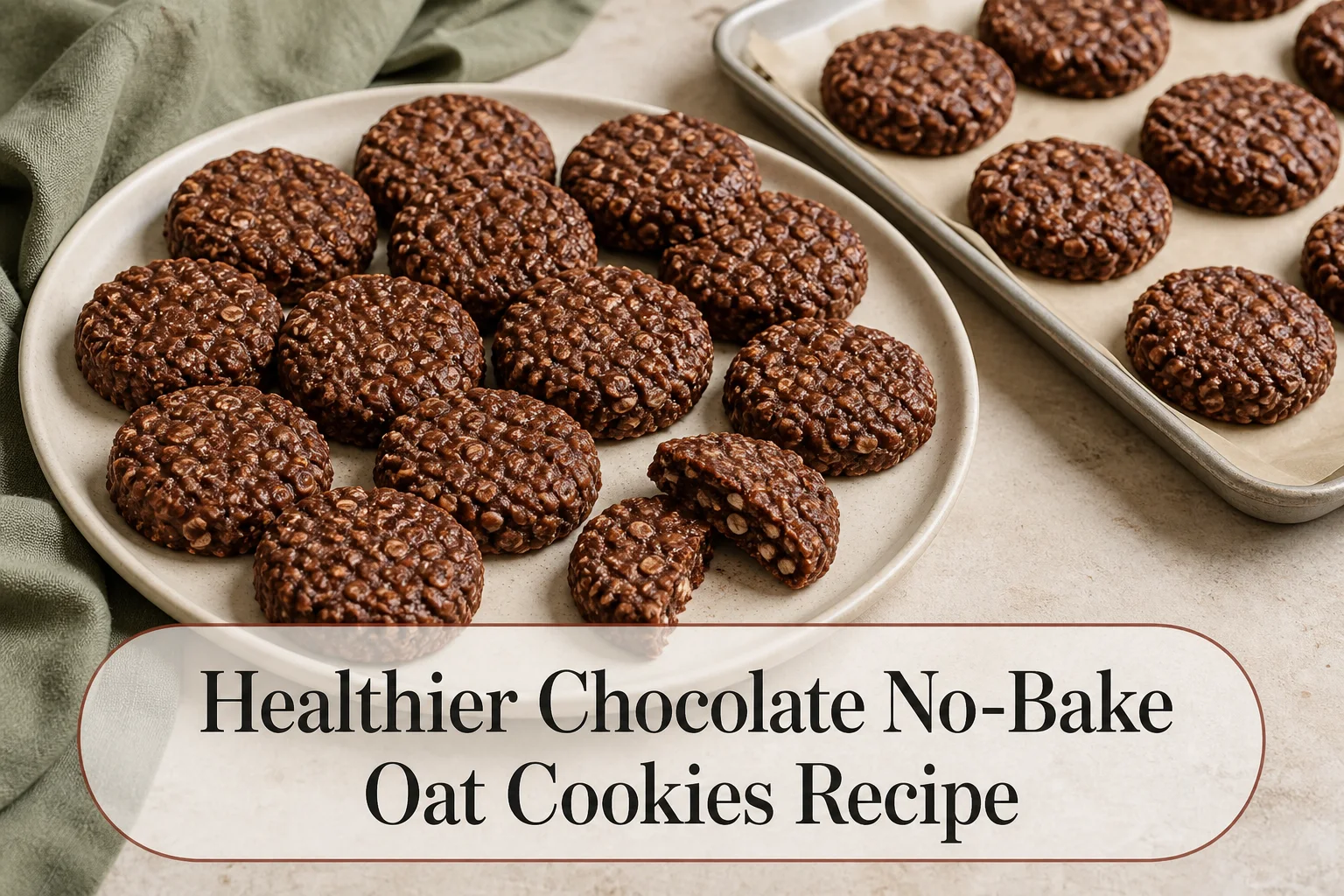
Healthier Chocolate No-Bake Oat Cookies Recipe
Ingredients
Equipment
Method
- Parchment-line a large tray and clear a level refrigerator shelf.
- Whisk quick oats, flax, cocoa and salt in a large bowl; add optional coconut.
- Warm peanut butter, maple syrup, coconut oil and milk over low heat for 2 to 3 minutes, whisking until smooth and glossy without boiling.
- Remove from heat, whisk in vanilla and stand 1 minute.
- Fold binder into the oat mixture until every oat is coated and no dry cocoa remains.
- Rest 5 minutes. If it smears, add quick oats 1 tablespoon at a time; if it crumbles, add milk 1 teaspoon at a time.
- Scoop 18 portions with a 1 1/2-tablespoon scoop onto the lined tray.
- Press each mound into a uniform half-inch disk and smooth large edge cracks.
- Refrigerate 45 to 60 minutes until cookies lift cleanly, then store covered and cold.
Notes
- Warm the binder only until smooth; do not make a candy syrup.
- Rest the coated oats 5 minutes before correcting texture.
- Add oats by the tablespoon or milk by the teaspoon.
- Press to a uniform one-half inch.
- These lower-sugar cookies are refrigerator-set and soften when warm.
- Contains peanuts and may contain milk depending on the milk used.
- This recipe was developed through culinary research and editorial review.
This recipe was developed through culinary research and editorial review. Peanut butter viscosity, oat thickness, cocoa absorption and room temperature vary; use the rest, small corrections and chilled-set cues.
Nutrition is an estimate per one of 18 cookies without optional coconut.