
This Greek yogurt chicken thigh marinade coats every piece with lemon, garlic, smoked paprika, cumin and oregano. Yogurt helps the seasoning cling, while a restrained amount of lemon keeps the flavor bright without leaving the surface wet or overly acidic.
The most important step happens after marinating: remove the chicken from the bag and scrape away the heavy excess. A thin film can brown; thick clumps steam, scorch or stick before the meat is ready. The recipe includes grill, oven and air-fryer paths, all tied to the same dependable 165°F safety endpoint.
This recipe was developed through culinary research and editorial review. Chicken thickness, yogurt brand, grill heat, pan color and air-fryer airflow vary, so use time as a planning estimate and temperature as the doneness decision.
For a leaner, quick-cooking cut, use the dedicated Greek yogurt marinated chicken breast recipe. If air frying is your priority, compare the air fryer boneless chicken thighs recipe for basket arrangement and cooking cues.
Why Greek yogurt works as a chicken marinade
Greek yogurt is thick enough to hold spices against irregular chicken surfaces. Its dairy proteins and sugars encourage flavorful browning, and its mild acidity seasons differently from a large dose of vinegar or citrus juice.
The word “tenderize” can be misleading. A marinade does not travel evenly to the center of a thick piece in a few minutes. Salt provides seasoning, while the yogurt changes the surface texture and helps the aromatics remain in place. Chicken thighs are already forgiving because they contain more connective tissue and fat than breasts.
More yogurt is not automatically better. A heavy paste blocks direct heat and can create pale, damp patches. This formula makes enough to coat 2 pounds without leaving a large pool.
Ingredients
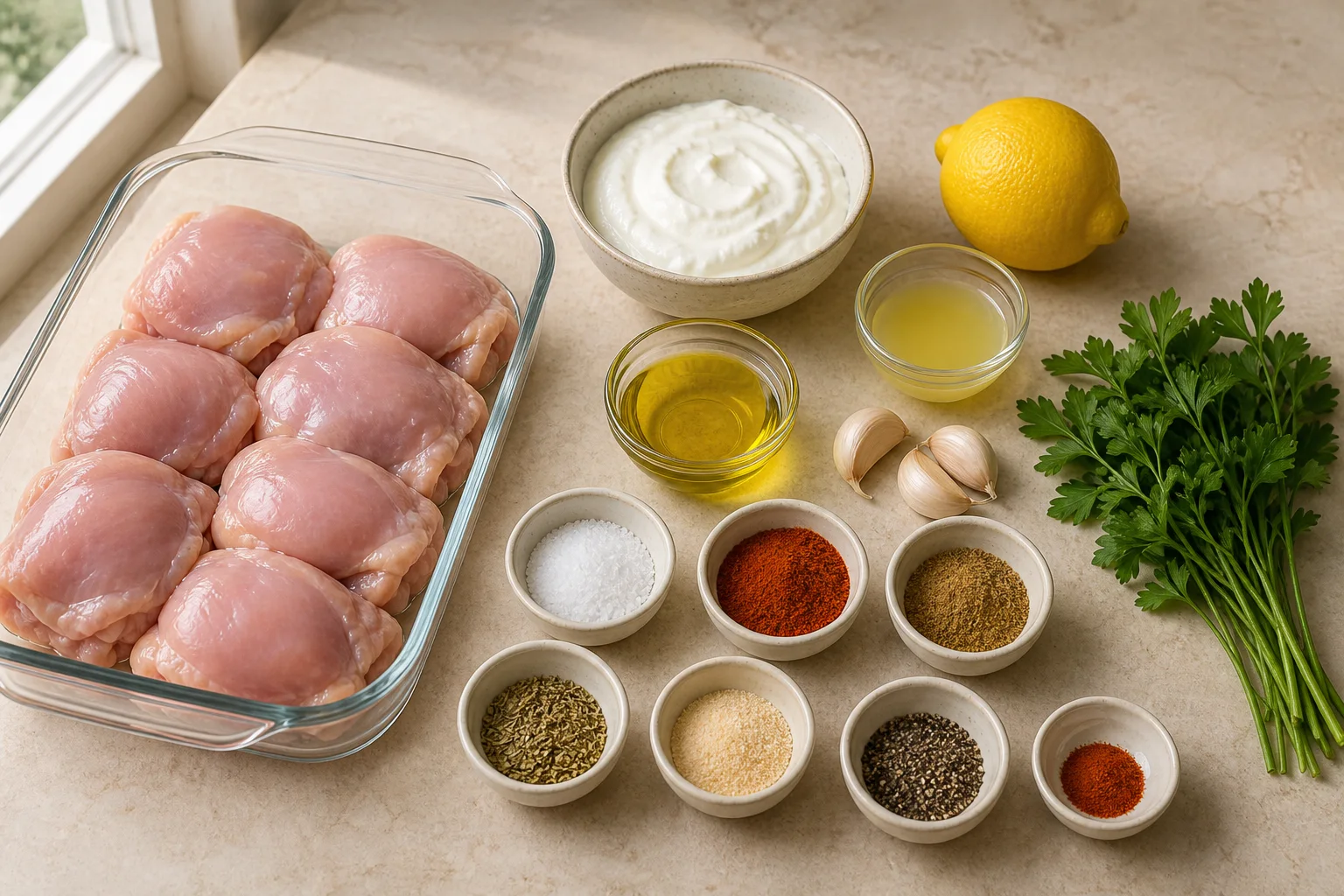
- 2 pounds boneless, skinless chicken thighs, about 6 to 8 pieces
- 3/4 cup plain whole-milk Greek yogurt
- 2 tablespoons extra-virgin olive oil
- 1 tablespoon fresh lemon juice
- 1 teaspoon finely grated lemon zest
- 3 garlic cloves, finely grated or pressed
- 1 1/2 teaspoons kosher salt
- 1 teaspoon smoked paprika
- 1 teaspoon ground cumin
- 1 teaspoon dried oregano
- 1/2 teaspoon onion powder
- 1/2 teaspoon ground black pepper
- 1/4 teaspoon cayenne pepper, optional
- 2 tablespoons chopped fresh parsley, for serving
- lemon wedges, for serving
Ingredient notes and substitutions
Chicken thighs: Boneless, skinless thighs give the most even timing across grill, oven and air fryer. Unfold each piece before marinating. Bone-in thighs need a separately adjusted cooking time and should not be assumed done on this schedule.
Greek yogurt: Whole-milk Greek yogurt browns well and stays cohesive. A 2% product works. Regular yogurt is thinner; if using it, start with 1/2 cup and expect a looser coating. Flavored or sweetened yogurt is unsuitable.
Lemon: One tablespoon of juice plus zest gives citrus character without flooding the marinade. Zest supplies aroma with little additional liquid. Lime can replace both juice and zest for a different profile.
Oil: Oil distributes fat-soluble spices and reduces sticking. Avocado oil is a neutral, high-heat substitute.
Garlic: Finely grated garlic spreads evenly. Large chopped pieces may burn on the grill or basket. One teaspoon garlic powder can replace the fresh cloves for a smoother coating.
Smoked paprika and cumin: These give warmth and color. Sweet paprika can replace smoked paprika; ground coriander can replace half the cumin.
Salt: The quantity is calibrated for 2 pounds of chicken. If the package says the chicken contains an added salt solution, reduce to 1 teaspoon.
How to make Greek yogurt marinated chicken thighs
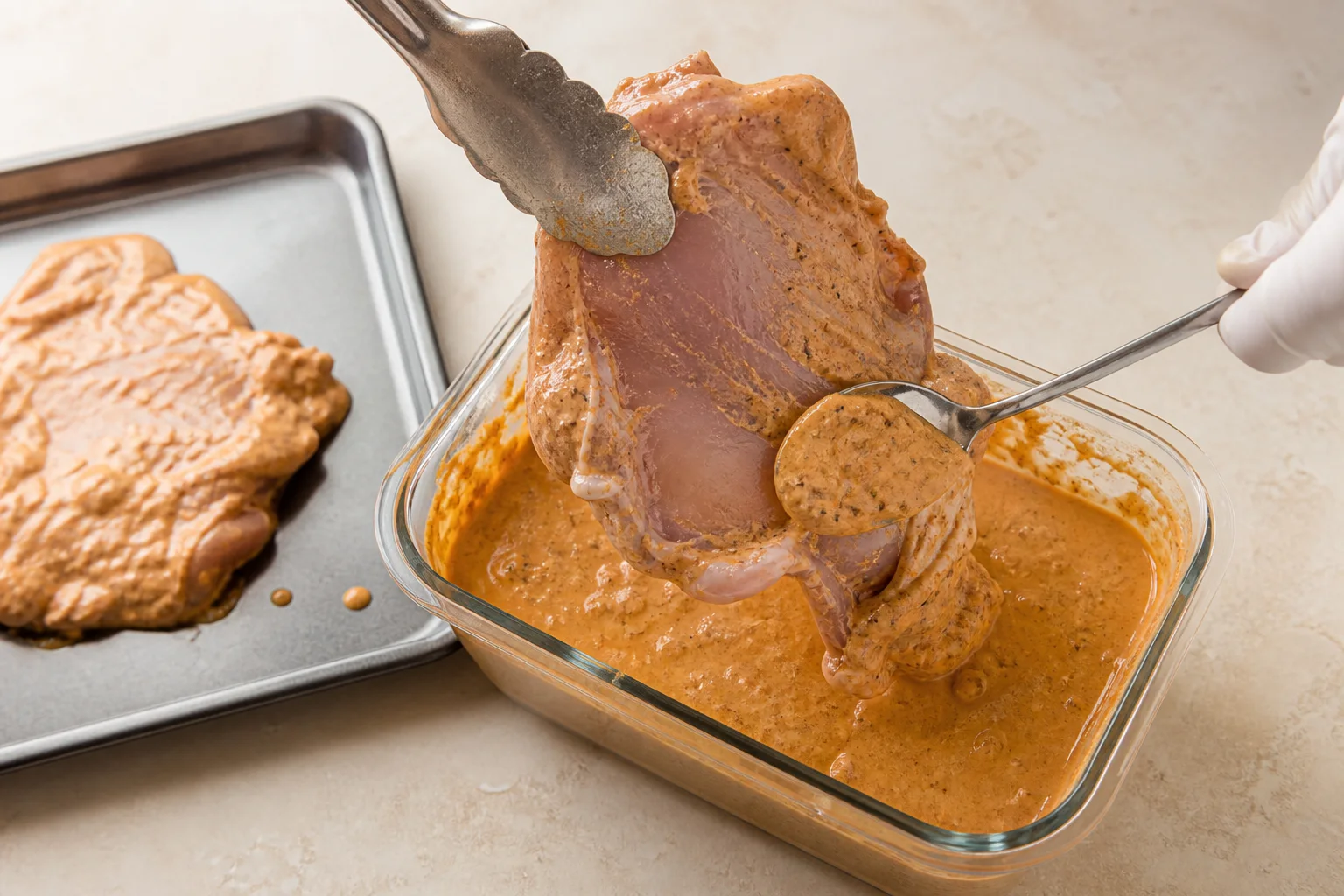
1. Mix the marinade
In a medium bowl, whisk Greek yogurt, olive oil, lemon juice, lemon zest, garlic, salt, smoked paprika, cumin, oregano, onion powder, black pepper and optional cayenne until uniformly colored.
If you want a yogurt sauce for the cooked chicken, reserve some plain yogurt separately and season it with clean utensils. Do not plan to use marinade after it contacts raw poultry.
2. Prepare the chicken safely
Do not rinse raw chicken. Washing can splash poultry juices onto nearby surfaces without making the meat safer. Instead, open the package near the marinating container and unfold each thigh so the coating can reach the creases.
If pieces vary greatly in thickness, place the thickest thighs at the hottest part of the grill or give them a small head start in the oven or air fryer.
3. Coat the thighs
Place the chicken in a food-safe zip-top bag or nonreactive glass or stainless-steel container. Add the marinade and turn every piece until all surfaces carry a thin, even layer.
Press excess air from the bag and seal, or cover the container. Set it on a rimmed plate or in a shallow tray so an accidental leak cannot reach other refrigerator foods.
4. Refrigerate
Marinate in the refrigerator for at least 2 hours and up to 24 hours for the best balance of seasoning and texture. Turn the bag once halfway through if convenient.
Do not marinate on the counter. A 30-minute coating adds surface flavor but is not as developed; if time is short, refrigerate for that period while the oven, grill or air fryer preheats.
5. Remove heavy excess
Take the chicken from the refrigerator while the cooking appliance preheats. Lift each thigh from the marinade and let the loose coating drip away. Scrape off thick clumps with the edge of a spoon or a clean gloved hand, leaving a thin visible film.
Discard the used marinade and bag. Do not rinse the coated thighs. Lightly oil the grill grates, rack or basket only if needed for the appliance.
6. Cook by your preferred method
Choose the grill, oven or air-fryer directions below. Keep the thighs unfolded and separated so hot air or direct heat reaches the surface.
Whichever method you use, check the thickest part of more than one piece with an instant-read thermometer. Chicken is safe at 165°F. Rest it for 5 minutes before slicing.
7. Finish and serve
Transfer the cooked chicken to a clean platter—never the raw-chicken plate. Sprinkle with parsley and serve with fresh lemon wedges.
Slice across the thickest folds. Any clear juices on the resting platter can be spooned over the chicken, but do not add uncooked marinade.
Grill directions
Preheat a gas or charcoal grill for medium-high direct heat, approximately 425°F to 450°F at the grates. Clean the grate, then oil it carefully with a folded, oil-dampened paper towel held in long tongs.
Place scraped, lightly coated thighs smooth-side down. Close the lid and grill for 5 to 7 minutes, until the chicken releases with little resistance and has browned grill marks. Turn with clean tongs and cook another 4 to 7 minutes.
Begin checking temperature at the shortest time. Move a piece to a cooler zone if its coating darkens before its center reaches 165°F. Avoid repeatedly flipping or pressing the meat; both interfere with browning.
Oven directions
Heat the oven to 425°F with a rack in the upper-middle position. Line a rimmed sheet pan with foil for cleanup and set an oven-safe wire rack on it. Lightly oil the rack.
Arrange the thighs smooth-side up without touching. Roast for 18 to 24 minutes, checking the thickest pieces for 165°F. For deeper surface color, broil 6 inches from the element for 1 to 3 minutes after the chicken is cooked, watching continuously because yogurt and spices darken quickly.
The rack lets hot air reach the underside and prevents the chicken from sitting in released liquid. If using a bare sheet pan, expect less browning on the bottom.
Air-fryer directions
Preheat the air fryer to 380°F for 3 minutes if the manufacturer recommends preheating. Lightly oil the basket only if it is prone to sticking.
Arrange the thighs in one layer with space around them. Air fry for 7 minutes, turn, then continue for 5 to 8 minutes, or until the thickest portion of each checked piece reaches 165°F. Total time is commonly 12 to 15 minutes, but basket size and thigh thickness matter.
Cook in batches instead of overlapping. A second batch may finish sooner because the appliance is fully heated. Let cooked chicken rest on a clean platter, not in the warm basket where carryover heat can dry the edges.
Cooking-time guide
| Method | Appliance setting | First temperature check | Common total range |
|---|---|---|---|
| Grill | 425°F to 450°F | 9 minutes | 9 to 14 minutes |
| Oven on rack | 425°F | 18 minutes | 18 to 24 minutes |
| Air fryer | 380°F | 12 minutes | 12 to 15 minutes |
These ranges apply to unfolded boneless, skinless thighs. They are not substitutes for a thermometer. Check the thickest portion without touching the cooking grate, sheet pan or basket.
How to get better browning
Use thick yogurt
Greek yogurt supplies a clingy coating without excessive free water. If the yogurt has separated whey on top, stir it back in before measuring unless there is an unusually large pool.
Scrape, do not rinse
The target is a thin film. A thick white blanket insulates the surface and leaves wet pockets. Rinsing would undo the seasoning and spread raw poultry juices, so simply scrape away the excess.
Preheat the cooking surface
Chicken placed on a cool grate, rack or basket releases water before browning begins. A fully heated appliance sets the coating sooner.
Leave space
Crowding traps steam. On a grill, leave at least 1 inch between pieces; in an air fryer, keep a visible path for airflow. In the oven, use a rack large enough that the pieces do not overlap.
Limit sugary additions
Honey and maple syrup can burn before a thick thigh cooks through. If you want sweetness, brush a small amount onto nearly finished chicken or include it in a clean serving sauce.
Safe marinating and used-marinade rules
USDA guidance says poultry can be marinated in the refrigerator for up to 2 days. This recipe recommends 2 to 24 hours for eating quality; a longer acidic soak may soften the exterior more than desired.
Never marinate at room temperature. Keep the sealed container below ready-to-eat food so leaks cannot drip onto produce or leftovers.
Used marinade has contacted raw chicken. The simplest approach is to discard it. If marinade will be served as a sauce, reserve a clean portion before raw chicken is added. USDA says used marinade must be boiled before it can be brushed onto cooked poultry, but a separately reserved portion provides cleaner flavor and avoids an extra handling step.
Wash hands with soap and water after handling the bag or raw chicken. Clean and sanitize the work surface, faucet handles and utensils that may have been touched.
Troubleshooting
The coating is pale and wet
Too much marinade remained on the chicken, the cooking surface was not fully preheated or the pieces were crowded. Scrape to a thin film and allow space around every thigh.
The yogurt burns before the chicken is done
The heat is too intense, the coating is too thick or large garlic pieces are scorching. Move the chicken to indirect grill heat, lower the air fryer by 15°F, or tent oven-cooked pieces loosely while they finish.
The chicken sticks
The surface or grate may not have been clean and preheated, or the chicken was turned before browning released it. Oil the grate or rack lightly and wait another minute before forcing the turn.
The flavor is bland
Confirm that the salt was measured for 2 pounds and that the chicken marinated at least 2 hours. Add fresh lemon after cooking rather than more acidic juice to the raw marinade.
The exterior is flavorful but the middle is plain
Marinades work mostly near the surface. Unfold thighs so more area is exposed, use the full salt amount and slice the cooked meat across the folds so each bite includes seasoned exterior.
The thighs cooked at different speeds
Chicken pieces vary. Arrange the thickest pieces at the hotter zone, rotate positions once, and remove individual pieces as each reaches 165°F instead of waiting for the entire batch.
The chicken became mushy at the surface
It marinated too long for the amount of acid or sat in a very thin yogurt mixture. Use Greek yogurt, keep lemon juice measured and stay within the 24-hour quality window.
Serving ideas
Serve the chicken over rice, couscous or quinoa with cucumber, tomato and herbs. A spoonful of the Greek yogurt herb sauce adds a clean cold contrast; prepare it with ingredients and utensils that never contacted raw chicken.
For a salad, cool the chicken slightly and slice over romaine, cabbage or arugula. Add pickled onions and a lemony dressing. For wraps, use warm pita, shredded lettuce and a thick sauce so the bread does not become soggy.
Roasted carrots, zucchini, potatoes or cauliflower can cook alongside the oven version, but use a separate section of the pan and avoid any raw-chicken marinade dripping onto vegetables that might be removed early.
Storage and reheating
Refrigerate cooked chicken in a shallow airtight container within 2 hours and use within 3 to 4 days. Store sauce, salad and fresh garnishes separately.
Reheat covered in a 325°F oven with 1 tablespoon water until the center reaches 165°F, commonly 10 to 15 minutes depending on thickness. In an air fryer, use 325°F for 3 to 5 minutes and check early. Microwave at 50% power in short intervals to reduce edge drying.
Freeze cooked, fully cooled thighs for up to 3 months for best quality. Wrap pieces individually or separate with parchment. Thaw in the refrigerator before reheating.
Raw marinated chicken can be frozen promptly in a freezer-safe bag, but do not hold it in the refrigerator through the full marinating window and then decide to freeze it. Label the bag and thaw in the refrigerator; the marinade continues contacting the chicken during thawing.
Frequently asked questions
How long should chicken thighs marinate in Greek yogurt?
Two to 24 hours gives a useful balance of seasoning and surface texture. USDA allows refrigerated poultry in marinade for up to 2 days, but this recipe’s lemon and yogurt can soften the exterior during a longer hold.
Can I marinate chicken in yogurt overnight?
Yes. Seal it, place it on a rimmed plate and refrigerate. An 8- to 12-hour overnight marinade fits comfortably within the recommended quality window.
Do I rinse off yogurt marinade before cooking?
No. Lift the chicken out and scrape away thick excess, leaving a thin coating. Rinsing raw poultry can spread contamination around the sink area.
Can I use chicken breasts?
Yes, but use the dedicated breast recipe for thickness and timing guidance. Breasts are leaner and dry sooner than thighs.
Can I use bone-in chicken thighs?
The marinade works, but cooking will take longer. Measure the thickest meat away from the bone and do not use the boneless timing table as the endpoint.
What temperature should chicken thighs reach?
Chicken thighs must reach at least 165°F in the thickest portion. Some cooks prefer dark meat at a higher temperature for a softer connective-tissue texture, but 165°F is the minimum safety endpoint.
Can I make a sauce from the leftover marinade?
The safest, simplest option is to reserve a clean portion before raw chicken enters the bowl. Discard used marinade; USDA requires it to be boiled before reuse.
Can the chicken be cooked straight from the refrigerator?
Yes. Keep it refrigerated until the cooking appliance is nearly ready. The short time required to scrape the pieces is enough; there is no safety or browning benefit to leaving raw chicken on the counter for an extended period.
Recipe development note
This Greek yogurt chicken thigh marinade recipe was developed through culinary research and editorial review. It has not been represented as a personal kitchen test. Chicken size, yogurt thickness, refrigerator temperature and appliance heat vary; follow the thin-coating, spacing and 165°F temperature cues.
Nutrition is an estimate and assumes some marinade is discarded. The accompanying visuals are AI-assisted food-editorial images, not photographs of a kitchen test.
Printable recipe card
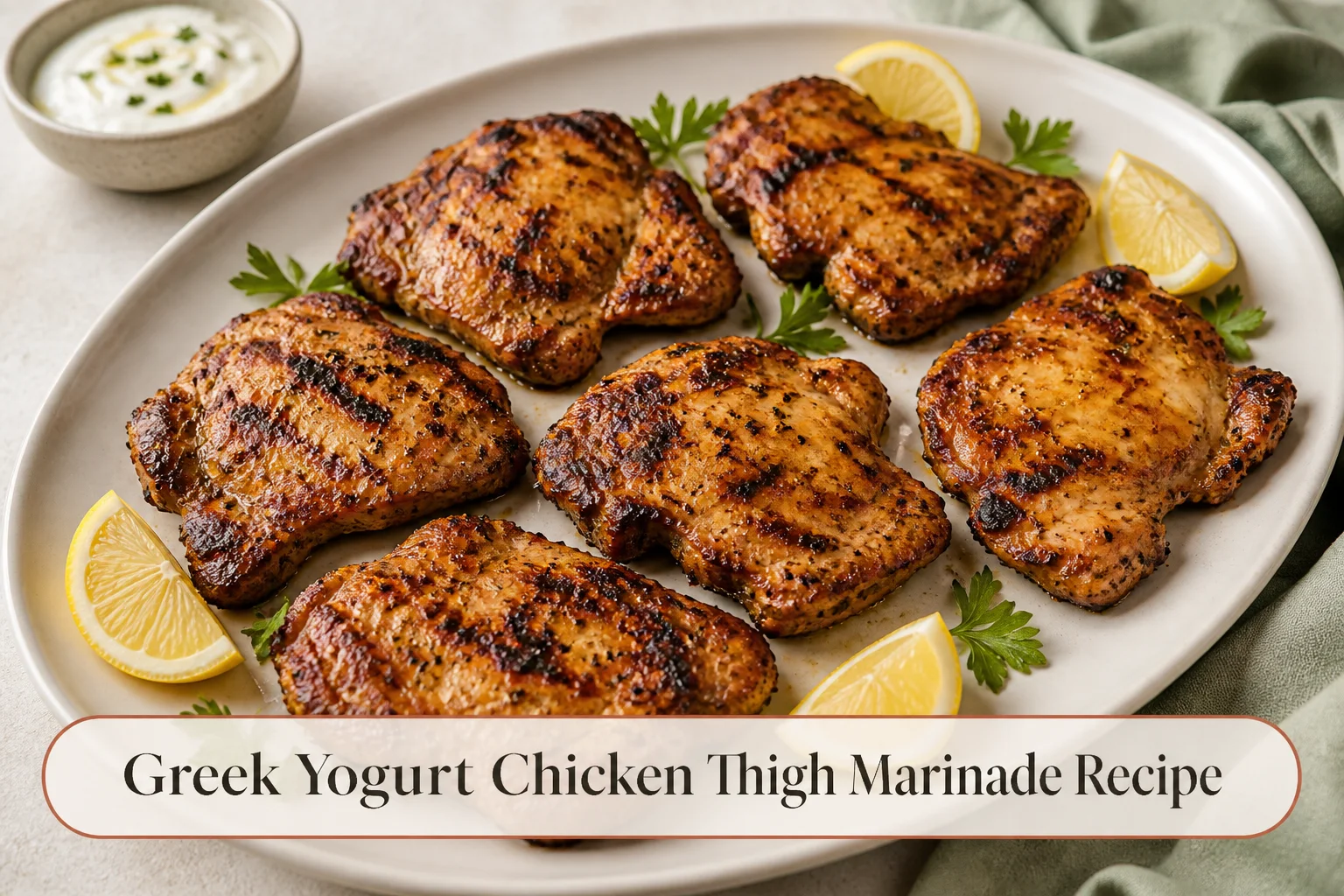
Greek Yogurt Chicken Thigh Marinade Recipe
Ingredients
Equipment
Method
- Whisk Greek yogurt, oil, lemon juice and zest, garlic, salt, paprika, cumin, oregano, onion powder, black pepper and optional cayenne until uniform.
- Do not rinse the raw chicken. Open each thigh flat and place it directly in a food-safe bag or nonreactive container.
- Add marinade and turn every piece until all surfaces have a thin even coating. Seal or cover and set on a rimmed plate.
- Marinate in the refrigerator for at least 2 hours and up to 24 hours for the best flavor and texture.
- Lift out the thighs and let loose marinade drip away. Scrape off thick clumps, leaving a thin film. Discard the used marinade and bag.
- Grill at 425°F to 450°F for 9 to 14 minutes, roast on a rack at 425°F for 18 to 24 minutes, or air fry at 380°F for 12 to 15 minutes, turning once as appropriate.
- Measure the thickest part of more than one thigh and continue cooking until every checked piece reaches at least 165°F.
- Transfer with clean tongs to a clean platter, rest 5 minutes, then garnish with parsley and serve with fresh lemon wedges.
Notes
- Do not rinse raw poultry.
- Always marinate covered in the refrigerator, never on the counter.
- For best quality, marinate 2 to 24 hours; USDA allows refrigerated poultry in marinade up to 2 days.
- Discard used marinade or boil it before reuse; reserving a clean portion before adding chicken is simpler.
- Scrape off heavy coating so the thin film can brown.
- Cook every checked piece to at least 165°F.
- This recipe was developed through culinary research and editorial review.
This recipe was developed through culinary research and editorial review. Chicken thickness, yogurt brand, refrigerator temperature, grill heat, pan color and air-fryer airflow vary; use the thin coating, spacing and 165°F cues.
Nutrition is an estimate per serving and assumes some marinade is discarded; actual absorption and brands vary.