
This cottage cheese breadsticks recipe turns blended cottage cheese into a soft, no-yeast dough with a chewy center and golden edges. The dough uses baking powder for lift, so there is no yeast to proof and no long rise. A warm garlic-butter finish makes the breadsticks useful beside soup, salad or pasta.
Cottage cheese varies more in moisture than yogurt or cream cheese. The recipe therefore starts with a measured flour amount, rests the mixed dough for 5 minutes and adds extra flour only when the dough still cannot hold its shape. That order prevents a slightly wet cheese from creating a puddle without making an ordinary batch dense.
This recipe was developed through culinary research and editorial review. Cottage cheese brand, curd size, flour measurement, humidity and oven calibration vary, so use the dough and doneness cues rather than forcing in every optional spoonful of flour.
Serve the breadsticks with the creamy Instant Pot broccoli cheddar soup recipe or use them to round out the hearty Instant Pot vegetable soup recipe.
What cottage cheese does in breadstick dough
Blended cottage cheese contributes water, milk protein and fat. Its moisture hydrates the flour, while the protein helps the baked interior feel substantial. Baking powder supplies lift because this is not a fermented yeast dough.
The curds need to be blended smooth before mixing. Unblended cottage cheese leaves wet pockets that make a rope split or spread unevenly. A compact blender, food processor or immersion blender in a narrow container all work.
This dough will not feel exactly like pizza dough. It is softer and slightly tacky, but it should release from lightly floured fingers and hold a 7-inch rope on the baking sheet.
Ingredients
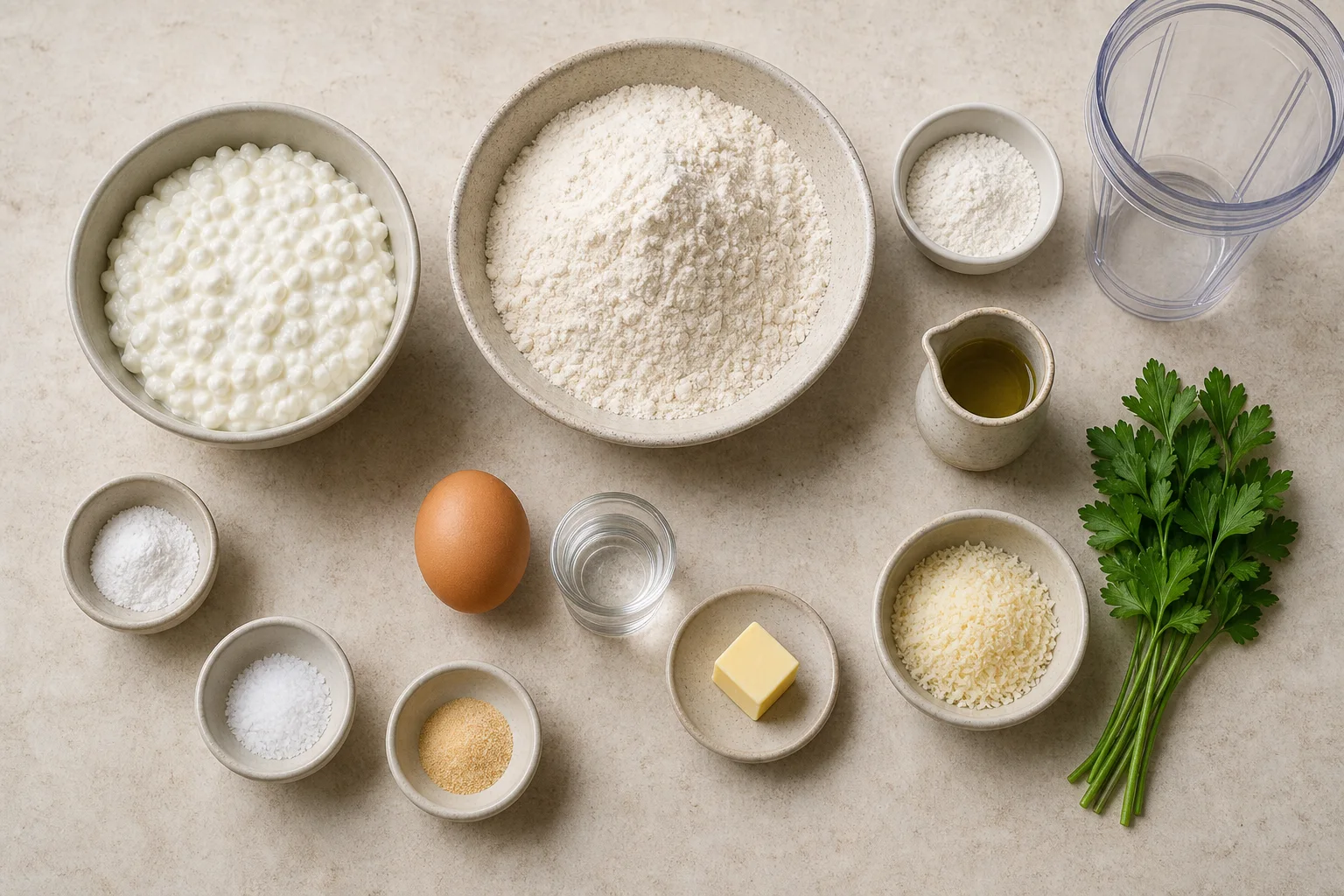
- 1 cup (226 grams) full-fat small-curd cottage cheese
- 1 1/2 cups (180 grams) all-purpose flour, spooned and leveled
- 2 teaspoons baking powder
- 1/2 teaspoon kosher salt
- 1/2 teaspoon garlic powder
- 1 tablespoon olive oil
- 2 to 4 tablespoons additional all-purpose flour, only as needed
- 1 large egg
- 1 teaspoon water
- 1 tablespoon unsalted butter, melted
- 1/4 teaspoon garlic powder, for finishing
- 2 tablespoons finely grated Parmesan
- 1 tablespoon chopped flat-leaf parsley, optional
Ingredient notes and substitutions
Cottage cheese: Full-fat small-curd cottage cheese produces the most forgiving dough. Low-fat cottage cheese can work but may be wetter or contain stabilizers that change consistency. Do not substitute dry-curd cottage cheese without recalibrating the liquid.
Flour: Weigh 180 grams when possible. Scooping a measuring cup directly through the bag can compact flour and make the breadsticks heavy. Bread flour creates more chew but usually needs slightly different hydration, so all-purpose flour is the baseline here.
Baking powder: Use fresh double-acting baking powder. It provides lift during mixing and again in the oven. Baking soda is not a direct substitute because the recipe is not balanced around enough acid to neutralize it.
Egg wash: Egg and water create a glossy golden top. Milk can replace the egg wash for a lighter finish. The egg does not go into the dough.
Parmesan: Finely grated Parmesan clings to the warm garlic butter. For a vegetarian version, choose a Parmesan-style cheese made without animal rennet if that distinction matters to you.
Garlic: Garlic powder distributes evenly and will not burn like fresh garlic pieces on a hot baking sheet. The amount is split between the dough and finishing butter.
How to make cottage cheese breadsticks
1. Heat the oven and prepare the pan
Place a rack in the center of the oven and heat it to 425°F. Line a large light-colored sheet pan with parchment paper.
A dark pan browns the bottoms faster. If that is the only pan available, begin checking a few minutes early or place it on top of a second sheet pan for insulation.
2. Blend the cottage cheese
Blend the cottage cheese and olive oil until the mixture is smooth and pourable, scraping the container as needed. Small air bubbles are fine, but no distinct curds should remain.
Measure the blended mixture rather than discarding any liquid. Draining first would change the hydration the flour amount is designed to handle.
3. Mix the dry ingredients
In a medium bowl, whisk 1 1/2 cups flour with baking powder, salt and 1/2 teaspoon garlic powder. Break up every baking-powder lump so the finished breadsticks rise evenly.
Make a well in the center, pour in the blended cottage cheese and stir with a flexible spatula until no broad patches of dry flour remain. The mixture should look shaggy and soft.
4. Rest before adjusting the flour
Leave the dough in the bowl for 5 minutes. This gives the flour time to absorb moisture and often turns a sticky-looking mixture into a manageable dough.
After resting, press it lightly with a floured fingertip. If it coats the finger and slumps instead of holding a mound, fold in additional flour 1 tablespoon at a time. Stop as soon as it can be handled; many brands need only 1 or 2 tablespoons, and some need none.
5. Fold the dough briefly
Turn the dough onto a lightly floured work surface. With floured hands, flatten and fold it over itself 5 or 6 times, rotating between folds. This is enough to bring it together without developing a tough, tight crumb.
If the dough sticks to the surface, dust the surface—not the entire dough—with a teaspoon of flour. A bench scraper is useful for lifting it cleanly.
6. Divide and shape
Pat the dough into an even rectangle and divide it into 8 portions. For the most uniform bake, weigh the dough and divide the total by eight; each piece will be roughly 50 to 55 grams depending on flour adjustment.
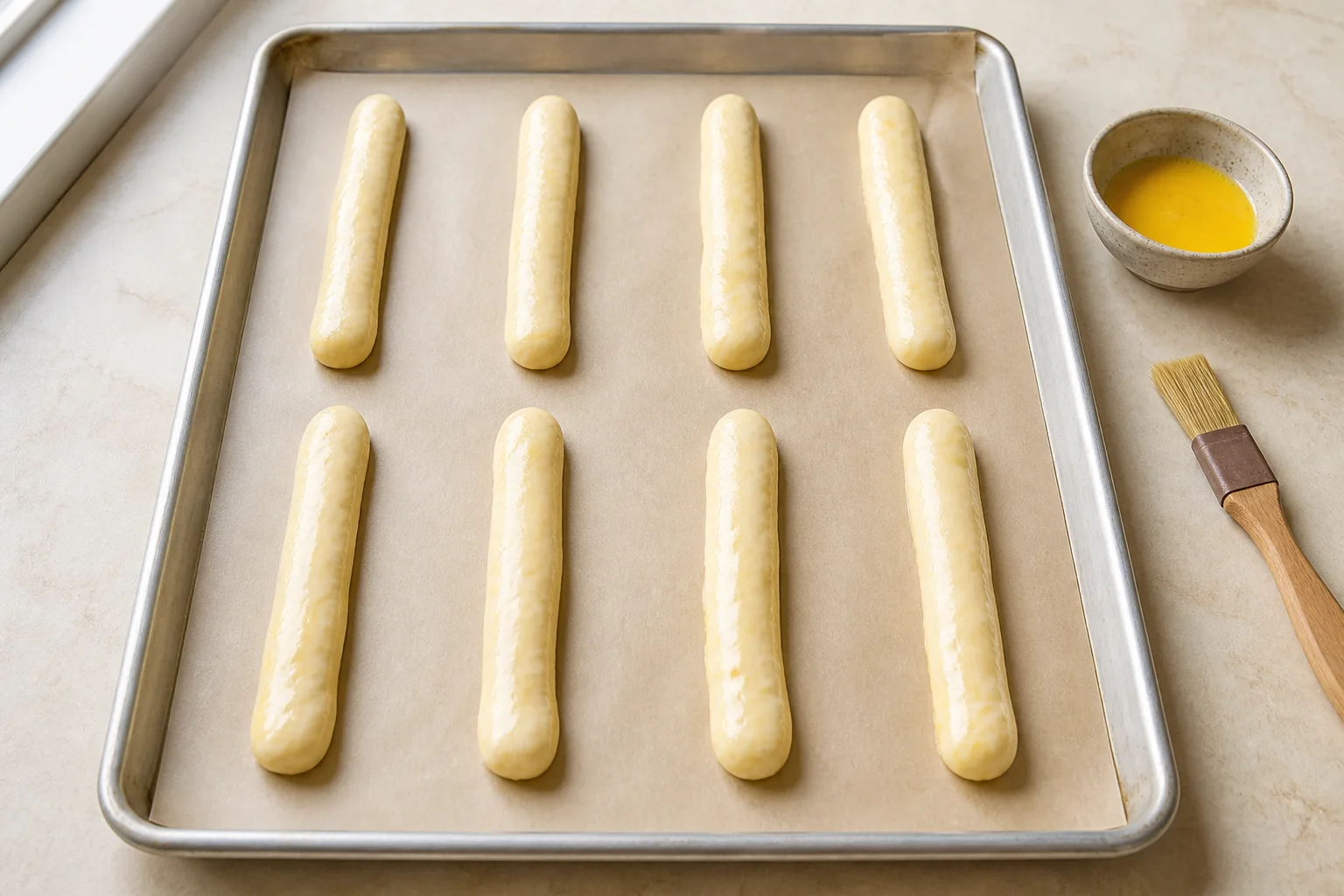
Roll each piece from the center outward into a rope about 7 inches long. Arrange the ropes at least 1 1/2 inches apart on the prepared pan. If a rope springs back, let it rest for 2 minutes and finish rolling gently.
7. Apply the egg wash
Beat the egg with 1 teaspoon water. Brush a thin coat over the tops and exposed sides of each breadstick. Avoid large puddles at the base, which can cook into a dark egg edge.
The FDA notes that flour is a raw food and advises against tasting raw dough. Its flour safety guidance also recommends cleaning hands, tools and counters after handling raw flour and dough.
8. Bake until golden
Bake for 14 to 17 minutes, rotating the pan front to back after about 9 minutes. The breadsticks are ready when the tops are evenly golden, the bottoms are set and the center of the thickest one is no longer gummy.
An instant-read thermometer inserted from the end should register about 200°F. Temperature is a useful confirmation, but color and a dry interior are equally important because thin breadsticks cool quickly while being checked.
9. Finish with garlic butter
Stir the remaining 1/4 teaspoon garlic powder into melted butter. Brush it over the hot breadsticks, then immediately sprinkle with Parmesan and optional parsley so the topping adheres.
Cool for 5 minutes before serving. The crumb finishes setting during that short rest and will tear more cleanly.
How to tell whether the dough needs more flour
Look for shape, not dryness. Proper dough is soft and may feel faintly tacky, but a portion should roll into a rope without spreading flat within a minute.
If dough coats both hands like batter, it needs more flour. Add one tablespoon, fold, then reassess. If it cracks around the edges and refuses to lengthen, too much flour has been added; knead in 1 teaspoon water or cottage cheese at a time.
Do not add flour before the 5-minute rest. The first mixture often appears wetter than it becomes once the flour hydrates.
Shaping options
For classic straight breadsticks, roll uniform 7-inch ropes. For twists, roll each portion into a 9-inch rope, fold it in half and twist the two strands together. Twists may need 1 or 2 extra minutes because the center is thicker.
To make shorter dipping sticks, divide the dough into 12 pieces and roll 5-inch ropes. Begin checking them around 11 minutes. Keep the diameter consistent so the bake remains predictable.
The dough can also become a single flat garlic bread: pat it into an 8-by-10-inch oval, brush with egg wash and bake until the center is set. Slice after the garlic-butter finish.
Troubleshooting
The dough is extremely sticky
First confirm that it rested for 5 minutes and that the cottage cheese amount was one level cup or 226 grams. Fold in flour 1 tablespoon at a time. Very wet cottage cheese may require the full 4 tablespoons.
The breadsticks spread
The dough was too wet, the pan was warm before shaping or the ropes sat too long before baking. Add only enough flour for a rope to hold, shape on a cool pan and bake promptly after egg washing.
The breadsticks are dense
Too much flour, expired baking powder or overworking can limit lift. Weigh flour, check the leavener date and stop folding once the dough is cohesive.
The centers are gummy
The breadsticks need more baking time or were shaped too thick. Return them to the oven for 2 to 4 minutes. Next time, keep each rope near the same diameter from end to end.
The bottoms browned too quickly
Dark metal transfers heat rapidly. Use parchment and a light pan, double the pans or move the oven rack one level higher. Check the actual oven temperature with an oven thermometer if baked goods routinely darken early.
The ropes keep shrinking
The dough needs a brief rest. Cover the divided portions and wait 5 minutes, then roll with light outward pressure rather than pulling the ends.
The topping falls off
Brush with melted butter as soon as the breadsticks leave the oven and add finely grated Parmesan while the surface is still wet. Coarsely shredded cheese does not cling as well.
Storage and reheating
Because the dough contains cottage cheese, cool the breadsticks and refrigerate leftovers in an airtight container within 2 hours. Use within 3 to 4 days, consistent with USDA leftover safety guidance.
Reheat at 350°F for 5 to 8 minutes until hot, or use an air fryer at 325°F for 3 to 4 minutes. A microwave softens them but does not restore the crust; heat one for 15 to 25 seconds and avoid overcooking.
Freezing instructions
Freeze fully baked, cooled breadsticks in a single layer, then transfer them to a freezer bag for up to 2 months for best quality. Separate layers with parchment and press out excess air.
Reheat from frozen at 350°F for about 10 to 12 minutes. Add a fresh light brush of garlic butter after reheating if desired.
Freezing raw shaped dough is less reliable because baking powder begins reacting once wet and cottage-cheese dough can release moisture during thawing. Freeze the baked breadsticks instead.
Frequently asked questions
Do cottage cheese breadsticks taste like cottage cheese?
The flavor is mild and savory after baking. Blending removes curd texture, while garlic butter and Parmesan are more noticeable than the cottage cheese.
Can I use low-fat cottage cheese?
Yes, but its moisture and stabilizers vary by brand. Use the 5-minute rest and flour-adjustment test rather than automatically adding all optional flour.
Can I make the dough without a blender?
You can mash small-curd cottage cheese through a fine-mesh sieve, though it takes longer and may leave tiny curds. A smooth mixture shapes more evenly.
Is self-rising flour a direct substitute?
Not without changing the formula. Self-rising flour already contains leavener and salt, and brands differ. Use all-purpose flour, baking powder and measured salt for this version.
Can I make these gluten-free?
A cup-for-cup gluten-free blend may absorb moisture differently and has not been calibrated here. Choose a recipe written for the specific blend rather than promising a direct swap.
Can I prepare the dough ahead?
The best rise comes from mixing, shaping and baking promptly. You can blend the cottage cheese and measure dry ingredients separately a day ahead, refrigerating the cheese mixture, then combine them before baking.
Can I skip the egg wash?
Yes. Brush the unbaked ropes lightly with milk or olive oil. They will be less glossy and may brown a little less deeply.
Recipe development note
This recipe was developed through culinary research and editorial review. It has not been represented as a personal kitchen test. Cottage cheese moisture, flour measurement, humidity and oven calibration vary; use the dough consistency and doneness cues before serving.
Nutrition is an estimate based on generic ingredients. The accompanying visuals are AI-assisted food-editorial images, not photographs of a kitchen test.
Recipe at a glance
| Metric | Details |
|---|---|
| Prep time | 25 minutes |
| Cook time | 16 minutes |
| Total time | 46 minutes |
| Yield | 8 breadsticks |
Printable recipe card

Chewy Cottage Cheese Breadsticks Recipe
Ingredients
Equipment
Method
- Heat the oven to 425°F with a rack in the center. Line a large light-colored sheet pan with parchment.
- Blend cottage cheese and olive oil until completely smooth, scraping the container as needed.
- Whisk 1 1/2 cups flour, baking powder, salt and 1/2 teaspoon garlic powder. Stir in blended cottage cheese until a shaggy soft dough forms.
- Rest dough 5 minutes. If it coats a floured finger and slumps, fold in additional flour 1 tablespoon at a time, stopping once it holds shape.
- On a lightly floured surface, fold dough 5 or 6 times. Divide into 8 portions and roll each into a 7-inch rope. Space ropes 1 1/2 inches apart.
- Beat egg with water and brush a thin coat over the tops and sides without puddling at the base.
- Bake 14 to 17 minutes, rotating after about 9 minutes, until golden and no longer gummy inside; the thickest center should be about 200°F.
- Mix melted butter with remaining garlic powder. Brush hot breadsticks, sprinkle with Parmesan and optional parsley, and cool 5 minutes.
Notes
- Use 180 grams flour when possible and add the optional flour only after a 5-minute rest.
- Do not taste raw dough; flour and egg are raw ingredients.
- The dough should be soft and slightly tacky but able to hold a rope.
- Bake until the thickest breadstick is golden, dry inside and about 200°F.
- This recipe was developed through culinary research and editorial review.
This recipe was developed through culinary research and editorial review. Cottage cheese moisture, flour measurement, humidity and oven calibration vary; use the dough consistency and doneness cues.
Nutrition is an estimate based on generic ingredients; actual values vary by cottage cheese, flour adjustment, topping and serving size.