This black-eyed pea salad combines tender beans with bell pepper, cucumber, celery, tomatoes and plenty of parsley and dill. A bright apple-cider vinaigrette seasons the peas without covering their earthy flavor, making the salad useful as a cookout side or make-ahead lunch.
Black-eyed peas are softer than many canned beans, so the method avoids unnecessary stirring. The vegetables are dressed first, well-drained peas are folded in last and the finished bowl rests only long enough for flavor to develop.
Some searches call this a black eyed beans salad recipe; in US English, the ingredient is more commonly labeled black-eyed peas. Both names refer to the same legume used here.
This recipe was developed through culinary research and editorial review. Canned-pea firmness, cucumber moisture and vinegar strength vary, so use the drying, gentle-folding and final-taste cues.
For a corn-and-bean variation, try the black bean corn salad recipe. The green bean salad recipe uses crisp blanched vegetables and mustard vinaigrette.
Why black-eyed peas become mushy in salad
Canned black-eyed peas are fully cooked and often delicate. High-pressure rinsing, rubbing them dry or stirring with a narrow spoon can loosen skins and crush the creamy centers.
Rinse under a gentle stream, drain for 2 minutes and spread the peas over a towel. Blot the tops without rolling them. Mix the vinaigrette and sturdy vegetables in a wide bowl, then lift the peas through the mixture with a broad spatula.
Acid also firms flavor but does not restore damaged beans. A 30-minute rest is enough; there is no need to marinate the salad overnight before it tastes good.
Ingredients
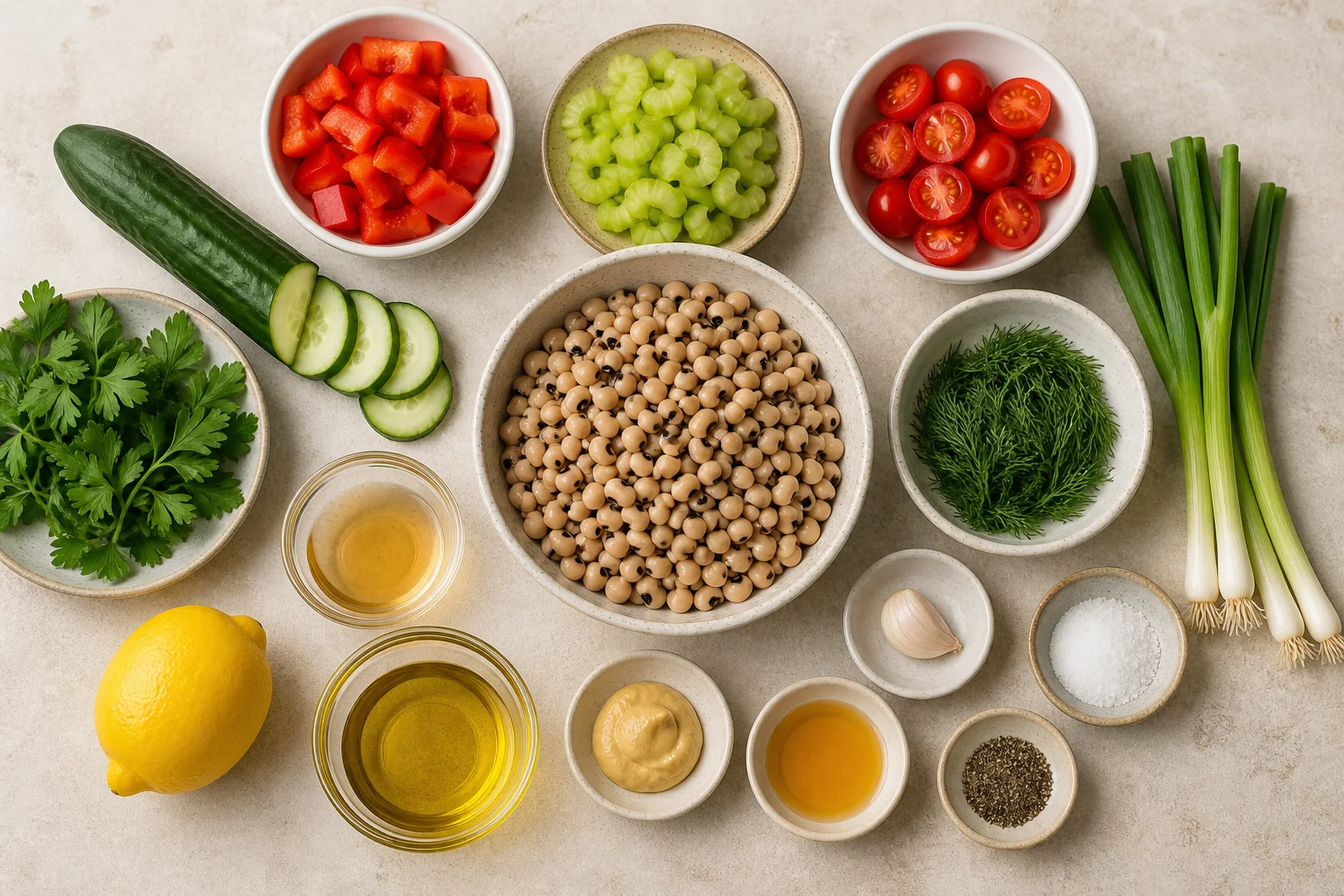
For the salad
- 2 cans black-eyed peas, 15 ounces each, rinsed and drained, about 500 grams drained
- 1 medium red bell pepper, diced 1/4 inch, about 150 grams
- 1 cup diced English cucumber, 150 grams
- 2 celery ribs, diced 1/4 inch, about 100 grams
- 1 cup quartered cherry tomatoes, 150 grams
- 1/2 cup sliced scallions, 45 grams
- 1/2 cup chopped flat-leaf parsley, 20 grams
- 1/4 cup chopped fresh dill, 10 grams
For the apple-cider vinaigrette
- 3 tablespoons apple cider vinegar, 45 grams
- 1 tablespoon fresh lemon juice, 15 grams
- 1 teaspoon Dijon mustard, 5 grams
- 1 teaspoon honey or maple syrup, 7 grams
- 1 small garlic clove, finely grated
- 1/4 cup extra-virgin olive oil, 54 grams
- 3/4 teaspoon fine salt, plus more only after tasting
- 1/4 teaspoon black pepper
Ingredient notes and substitutions
Black-eyed peas: Canned peas make this fast and consistent. Cooked dried peas work when chilled and drained; use 3 cups and stop cooking while they still hold their shape.
Bell pepper: Red pepper gives sweetness and color. Orange or yellow works at the same weight. Green pepper is sharper but still suitable.
Cucumber: English or Persian cucumber has fewer watery seeds. If using a standard cucumber, peel it if waxed and scrape out the loose seed core.
Celery: Celery supplies structure after the peas soften slightly in dressing. Dice it small so it does not dominate a bite.
Scallions: Scallions are gentler than raw red onion. Substitute 1/3 cup finely diced red onion after a 10-minute cold-water soak.
Parsley and dill: The two herbs create a fresh, savory profile. All parsley works; all dill can dominate, so keep dill to 1/4 cup.
Apple cider vinegar: Red wine vinegar works but tastes sharper. Begin with 2 1/2 tablespoons and adjust after resting.
How to make black-eyed pea salad
1. Rinse gently
Place black-eyed peas in a colander and rinse under a gentle stream until the canning liquid is gone. Avoid tossing the colander aggressively.
2. Drain and blot
Drain for 2 minutes, then spread peas over a clean towel. Blot the tops lightly and leave them for 5 minutes. Remove badly crushed peas without handling the rest.
3. Prepare the vegetables
Dice bell pepper, cucumber and celery into consistent 1/4-inch pieces. Quarter tomatoes, slice scallions and chop the herbs. Blot cucumber and tomatoes if they leave visible water on the cutting board.
4. Whisk the vinaigrette
In a wide mixing bowl, whisk apple cider vinegar, lemon juice, Dijon, honey, garlic, salt and pepper. Stream in olive oil while whisking until slightly thickened.
5. Dress the vegetables first
Add bell pepper, cucumber, celery, tomatoes and scallions. Toss until every piece is lightly coated. This distributes dressing before delicate peas enter the bowl.
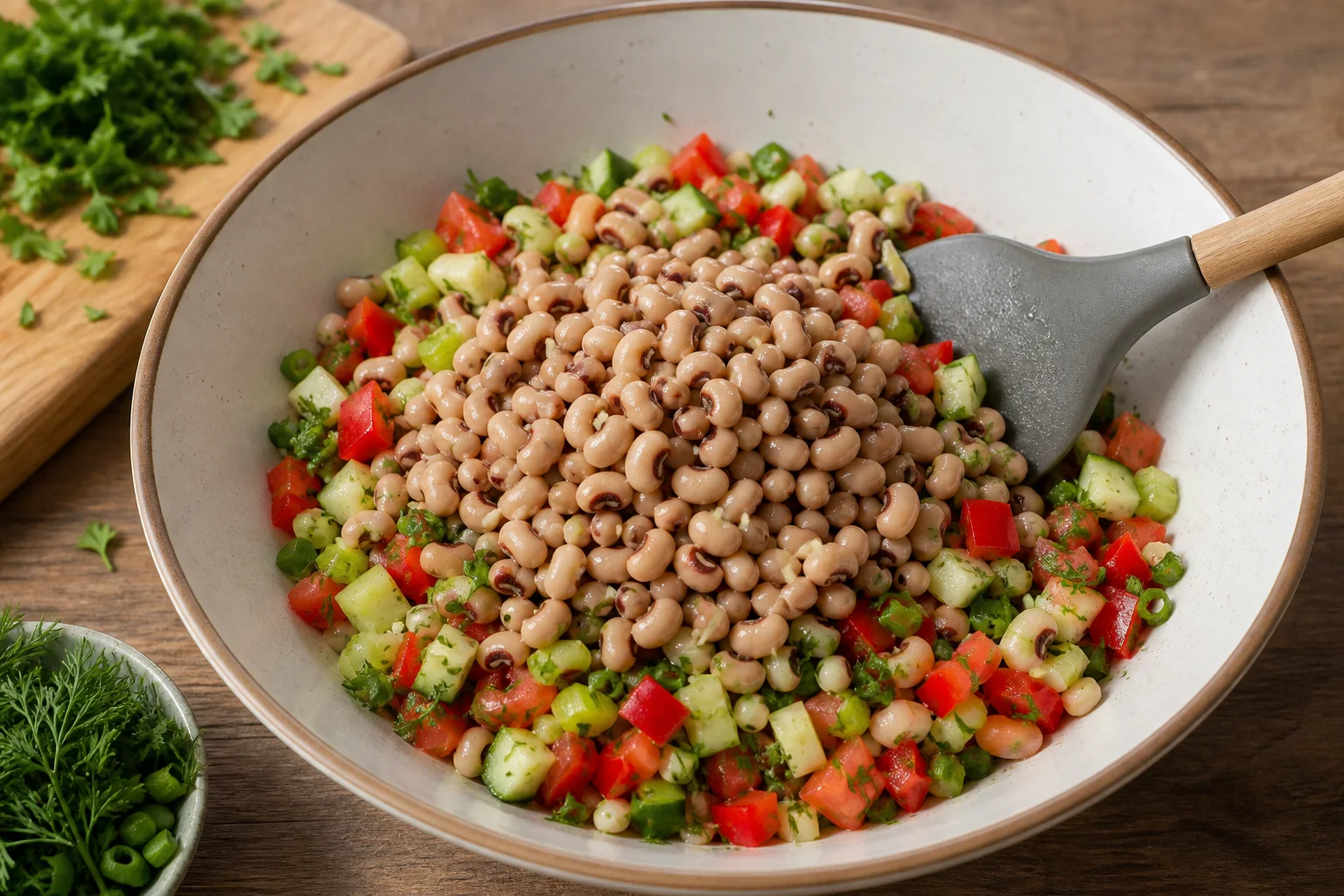
6. Fold in peas
Add the dry black-eyed peas. Use a broad silicone spatula to lift from the bottom and fold six to eight times, stopping as soon as evenly distributed.
7. Add herbs
Sprinkle parsley and dill over the bowl and fold only two or three more times.
8. Rest and adjust
Cover and refrigerate for 30 minutes. Taste a complete spoonful. Add vinegar or lemon by the teaspoon for brightness, or salt by a small pinch if the peas taste flat.
Black-eyed pea texture guide
| Cue | What it means | Action |
|---|---|---|
| Peas remain oval with attached skins | Good canned firmness | Drain, blot and fold gently |
| Many skins float during rinsing | The brand is very soft | Use low water pressure and fewer folds |
| Vegetables leave water on the board | Salad may dilute | Blot cucumber and tomatoes |
| Peas smear on the spatula | Mixing is too vigorous | Switch from stirring to lifting folds |
| Flavor is dull after chilling | Acid or salt is low | Add acid by the teaspoon before more salt |
| Liquid collects on day two | Vegetables released moisture | Fold once and serve with a slotted spoon |
Canned versus dried black-eyed peas
Canned peas need no cooking and make the recipe practical for a weekday. Their texture varies by brand, so inspect them while rinsing. Very soft peas still taste good but require fewer folds.
For dried peas, soak if the package directs, then simmer gently until creamy inside but still intact. Rapid boiling knocks the legumes together and can split skins. Drain, spread in one layer and cool completely before measuring 3 cups for the salad.
Do not add warm cooked peas to raw cucumber and herbs. Heat softens the vegetables and raises the temperature of a dish meant to remain refrigerated.
How to balance the vinaigrette
Apple cider vinegar gives round fruit acidity, lemon adds a fresher high note and Dijon keeps the oil dispersed. Honey is not intended to make the salad sweet; one teaspoon softens the sharper edges of vinegar.
Black-eyed peas absorb seasoning as they rest. Taste immediately, then again after 30 minutes. The second taste is the one that should guide final adjustment.
If the salad is too sharp, add olive oil by the tablespoon. If it is dull, add vinegar by the teaspoon. Adding more of every ingredient at once makes the balance harder to control.
Make-ahead plan
Up to 24 hours ahead: Chop bell pepper, celery and scallions. Whisk the dressing and refrigerate it separately. Keep tomatoes, cucumber and herbs uncut when possible.
Two hours ahead: Assemble the complete salad and chill. This is enough time for flavor to move into the peas without prolonged softening.
For meal prep: Divide into shallow covered containers and keep crunchy add-ons such as seeds or crackers separate. Stir only the portion being eaten.
The complete salad can be made one day ahead, but it will release a little more liquid. Use a slotted spoon rather than draining away all the seasoned vinaigrette.
Variations
Southern-inspired: Add 1/4 teaspoon smoked paprika and replace dill with more parsley.
Corn: Add 1 cup thawed, well-dried corn and reduce cucumber to 1/2 cup.
Feta: Fold 3/4 cup crumbled feta into the serving portion and reduce initial salt to 1/2 teaspoon. This adds a milk allergen.
Jalapeño lime: Replace lemon with lime, add one seeded jalapeño and omit dill.
Leafy lunch: Spoon over chopped romaine just before serving, not during storage.
Sunflower crunch: Add 1/3 cup toasted sunflower seeds at serving.
For a sweeter, vinegar-forward picnic salad, classic three-bean salad combines kidney, green and wax beans and includes an overnight marinating option.
Troubleshooting
The peas are mushy
They may have been soft from the can or handled aggressively. Rinse gently, blot without rolling and fold them into already-dressed vegetables.
The salad is watery
Cucumber, tomatoes or peas were wet. Blot cut produce and let rinsed peas drain for the full 2 minutes plus 5 minutes on a towel.
It tastes too vinegary
Fold in 1 tablespoon olive oil and wait 2 minutes. Add another 1/2 teaspoon honey only if the acid still feels severe.
It tastes flat
Cold beans need adequate seasoning. Add lemon or vinegar first, then a small pinch of salt after tasting again.
The dill is overpowering
Keep dill to 1/4 cup and use 1/2 cup parsley for balance. Add another cup of peas and vegetables to rescue a strongly herbed batch.
The celery pieces feel too large
Cut every sturdy vegetable to about 1/4 inch. Small, similar dice prevents one ingredient from dominating.
Storage and serving
Store the salad in a covered refrigerator container for up to 4 days, with the best crisp texture during the first 2 days. Keep it at 40°F or below and refrigerate within 2 hours of serving.
Serve cold or let a portion stand for 10 minutes to loosen the olive oil. Reheating is not recommended because it wilts herbs and softens raw vegetables.
Rinse fresh vegetables and herbs under running water and dry them with a clean towel. FDA’s fresh-produce safety guidance advises plain running water rather than soap or commercial produce wash.
Do not freeze the assembled salad. Cucumber, tomato and herbs lose their fresh texture after thawing.
Frequently asked questions
Are black-eyed peas beans?
Yes. Despite the name “pea,” black-eyed peas are legumes in the bean family and are also called black-eyed beans in some regions.
Can I use dried black-eyed peas?
Yes. Cook them until tender but intact, cool completely and use 3 cups in place of two cans.
Should canned black-eyed peas be rinsed?
Yes. Gentle rinsing removes thick canning liquid that would cloud the vinaigrette.
Can I make the salad the night before?
Yes. It will be flavorful, though a little more liquid may collect. Stir gently before serving.
Can I omit dill?
Yes. Replace it with more parsley or a small amount of fresh basil added at serving.
Is this salad spicy?
No. The base recipe has black pepper but no chile. Add jalapeño or red-pepper flakes if desired.
Can I freeze it?
Freezing is not recommended because the raw vegetables and herbs become soft.
Recipe development note
This black-eyed pea salad was developed through culinary research and editorial review. It is not represented as a personal kitchen test. Canned-pea firmness, cucumber moisture and vinegar strength vary; use the drying, gentle-folding and final-taste cues.
Nutrition is an estimate per one of eight servings. The accompanying visuals are AI-assisted food-editorial images, not photographs of a kitchen test.
Printable recipe card
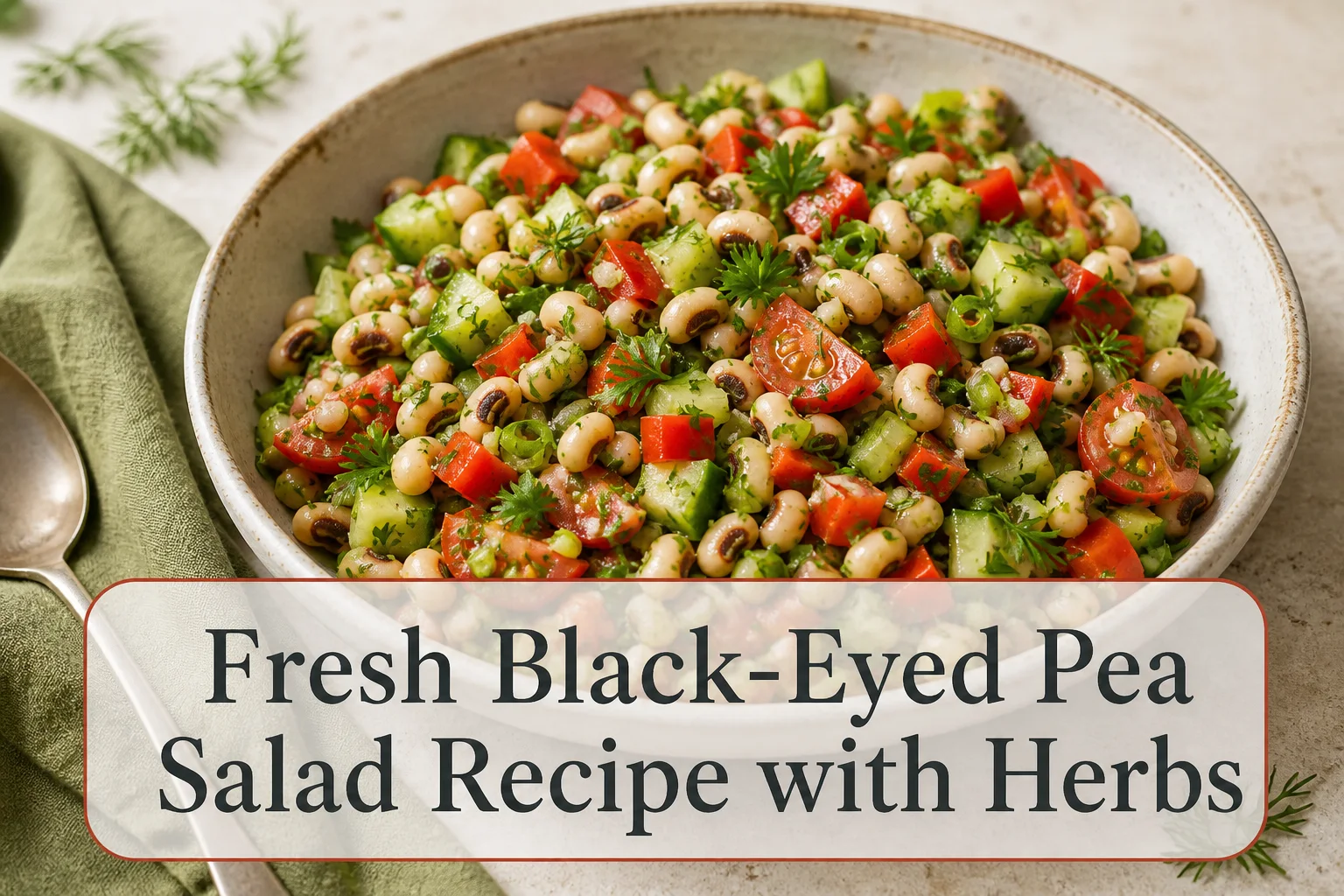
Fresh Black-Eyed Pea Salad Recipe with Herbs
Ingredients
Equipment
Method
- Rinse black-eyed peas under a gentle stream until canning liquid is gone.
- Drain 2 minutes, spread over a clean towel, blot lightly and stand 5 minutes.
- Dice bell pepper, cucumber and celery; quarter tomatoes, slice scallions and chop herbs. Blot watery pieces.
- Whisk vinegar, lemon, Dijon, honey, garlic, salt and pepper, then stream in olive oil.
- Toss bell pepper, cucumber, celery, tomatoes and scallions in the vinaigrette.
- Add dry black-eyed peas and fold six to eight times with a broad spatula.
- Sprinkle parsley and dill over the bowl and fold two or three more times.
- Refrigerate 30 minutes, then adjust acid by the teaspoon or salt by a small pinch.
Notes
- Rinse canned peas under a gentle stream.
- Drain and blot without rubbing.
- Dress sturdy vegetables before adding peas.
- Fold with a broad spatula.
- Chill 30 minutes before final seasoning.
- Refrigerate up to 4 days; best texture is within 2 days.
- Dijon may contain sulfites depending on brand.
- This recipe was developed through culinary research and editorial review.
This recipe was developed through culinary research and editorial review. Canned-pea firmness, cucumber moisture and vinegar strength vary; use the drying, gentle-folding and final-taste cues.
Nutrition is an estimate per one of eight servings.