
Air fryer turkey tenderloin is a practical way to cook a lean turkey cut without heating the oven. The real challenge is thickness: the tapered end can dry out while the broad center is still below a safe temperature.
This recipe folds the thin tip underneath to create a more even shape, then seasons the meat with a savory rosemary-paprika rub. It cooks at 380°F, flips once and rests before slicing. A thermometer—not color or a rigid timer—determines when each tenderloin is ready.
The method is designed for a package containing two plain, raw turkey breast tenderloins totaling about 24 ounces, not a whole turkey breast, ground turkey, pre-cooked turkey or a frozen roast. Some packaged tenderloins are pre-brined or marinated; the label determines how much additional salt is appropriate.
This recipe was developed through culinary research and editorial review. Product weight, thickness, retained solution and air-fryer power vary, so begin checking early and remove each piece when its thickest part reaches 165°F.
For another lean turkey option, try the air fryer turkey burgers recipe. Serve tenderloin slices with crispy diced potatoes or honey garlic air fryer carrots.
Why this method keeps turkey tenderloin juicy
- The narrow tip is folded under. A more uniform cylinder cooks from edge to center at a similar rate.
- Oil carries the dry rub. The surface stays lightly coated without a wet marinade dripping below the basket.
- Moderate 380°F heat browns gradually. The exterior develops color while the center comes to temperature.
- The pieces are checked separately. One tenderloin can finish before its partner even when both came from the same package.
- A thermometer replaces guesswork. Poultry color and juices are not reliable safety tests.
- Resting redistributes moisture. Slicing immediately sends more juice onto the board instead of keeping it in the meat.
Ingredients
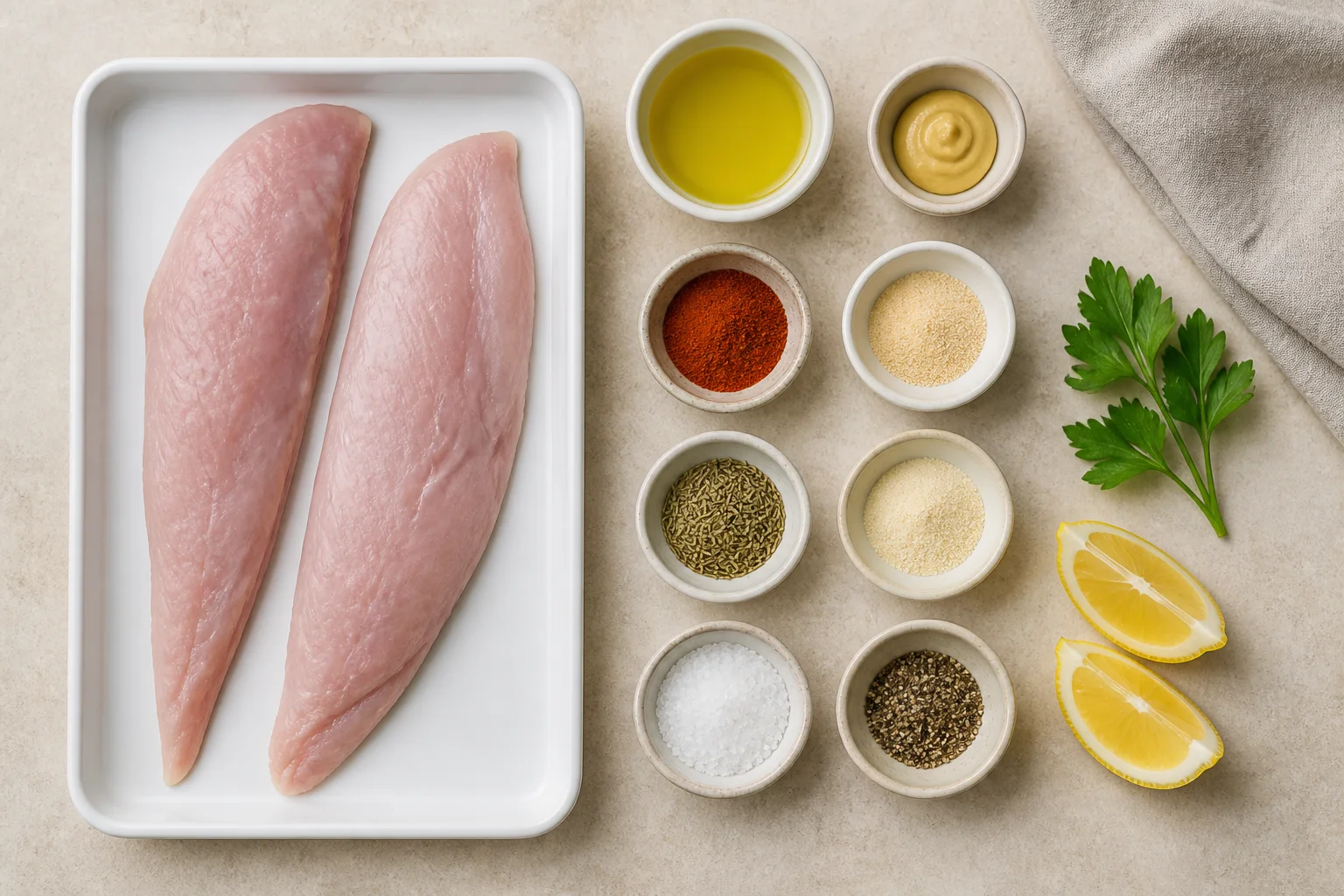
- 2 plain raw turkey breast tenderloins, about 24 ounces total
- 1 tablespoon avocado oil or olive oil
- 1 teaspoon sweet paprika
- 1 teaspoon garlic powder
- 1 teaspoon dried rosemary, crushed
- 3/4 teaspoon onion powder
- 3/4 teaspoon Diamond Crystal kosher salt, or 3/8 teaspoon fine salt
- 1/2 teaspoon ground black pepper
- 1 teaspoon Dijon mustard, optional
- Chopped parsley and lemon wedges, optional for serving
Ingredient notes and substitutions
Turkey breast tenderloins: These are long, boneless strips from the underside of the turkey breast. A common package contains two pieces and weighs around 24 ounces. Do not confuse them with pork tenderloin or a larger turkey breast roast.
Enhanced or pre-brined turkey: Read the ingredient label. If it lists a salt solution, broth or marinade, reduce the added kosher salt by half or omit it. Never rely only on the front package name.
Oil: A tablespoon lets the seasoning adhere and promotes surface browning. Avocado oil is neutral; olive oil is slightly more flavorful.
Paprika: Sweet paprika gives color without heat. Smoked paprika works but creates a stronger barbecue flavor.
Rosemary: Crush dried rosemary between your fingers so large needles do not become hard or bitter. Dried thyme or poultry seasoning can replace it.
Dijon: A teaspoon helps the rub cling and adds acidity without creating a heavy wet coating. Omit it if preferred.
How to prepare turkey tenderloins
1. Thaw completely
Thaw frozen tenderloins in the refrigerator until flexible and free of ice in the center. Place the package on a rimmed plate to contain leaks. Do not use this timing for frozen turkey.
For cold-water thawing, keep the turkey in a leakproof bag, submerge it in cold water and change the water every 30 minutes. Cook it immediately after thawing.
2. Read the label
Confirm the turkey is raw and note whether it is already seasoned or contains retained solution. Follow mandatory package handling instructions when they differ from this general recipe.
3. Pat dry
Open the package in a clean sink area and move the tenderloins to a dedicated raw-meat cutting board. Do not rinse raw poultry; splashing can spread contamination. Pat every surface dry with paper towels and discard them immediately.
4. Even the thickness
If one end is much thinner, fold the final 2 to 3 inches underneath the tenderloin. Secure with a short wooden toothpick if necessary, counting the toothpicks so every one is removed before slicing.
Do not pound turkey tenderloin flat for this recipe. Flattening changes the time and makes the edges more vulnerable to drying.
How to cook turkey tenderloin in the air fryer
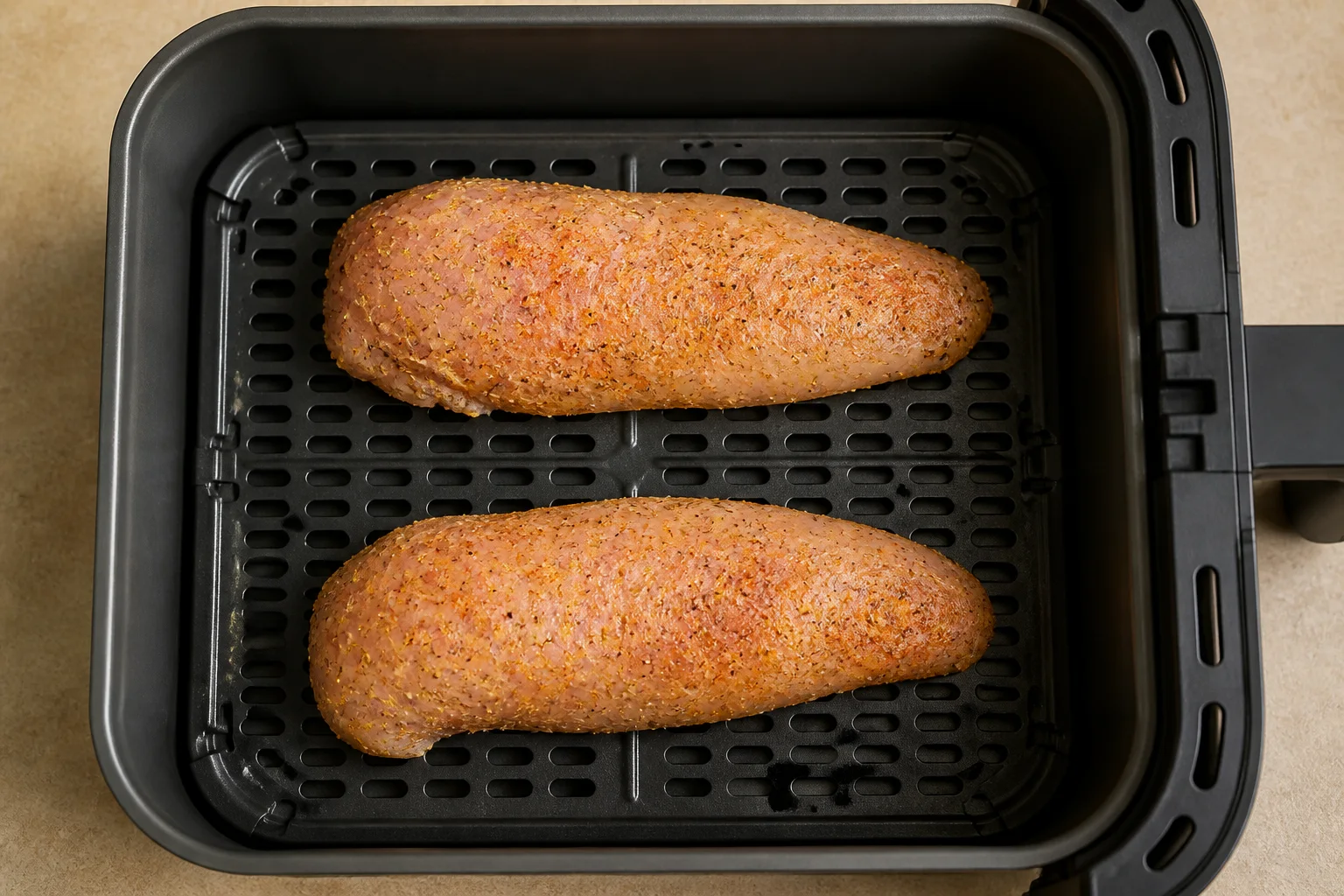
1. Preheat
Preheat the air fryer to 380°F for 3 minutes if recommended by the manufacturer. Clean the basket and crisper plate before handling raw poultry.
USDA’s Food Safety and Inspection Service notes that air-fryer power and size change cooking time, while the safe poultry endpoint remains 165°F; see its official air fryer food-safety guidance.
2. Mix the rub
Combine paprika, garlic powder, crushed rosemary, onion powder, salt and pepper. Brush the dry tenderloins with oil and Dijon if using, then coat every side evenly with the seasoning.
Use clean hands or a dedicated utensil. Wash anything that touched raw turkey before using it for cooked food.
3. Arrange with space
Place the two tenderloins in the basket with space between them. Position folded tips downward so they stay tucked. The pieces should not overlap.
If the basket is too narrow to leave a gap, cook one at a time. Air circulation matters more than fitting the full package into one load.
4. Cook the first side
Air fry at 380°F for 10 minutes. Open the basket and turn both pieces with clean silicone-tipped tongs.
Avoid piercing repeatedly with a fork. Tongs keep more juice inside and reduce cross-contamination from raw-use utensils.
5. Begin temperature checks
Cook 8 minutes after flipping, then check each tenderloin in its thickest point with a thin instant-read thermometer. Insert the probe from the side toward the center and avoid touching the basket.
Continue in 2-minute intervals. Most 10- to 14-ounce individual tenderloins need roughly 20 to 26 minutes total at 380°F, but thickness controls the finish.
6. Reach the safe endpoint
Remove each tenderloin when its thickest part reaches 165°F. FoodSafety.gov lists 165°F for all chicken, turkey and other poultry on its official safe minimum temperature chart.
Check more than one area of an unusually thick piece. Do not let a smaller tenderloin overcook while waiting for a larger one.
7. Rest and slice
Move the cooked turkey to a clean board and rest for 5 to 10 minutes. Remove any toothpicks, then slice across the grain into 1/2-inch pieces.
Spoon any clean board juices over the slices. Do not reuse the raw-meat board, plate, brush or tongs without washing and sanitizing them.
Turkey tenderloin air fryer time
Two tenderloins totaling about 24 ounces commonly take 20 to 26 minutes at 380°F, with a flip after 10 minutes. Use weight only as a starting point:
| Individual tenderloin weight | Begin checking | Common total range |
|---|---|---|
| 8 to 10 ounces | 17 minutes | 18 to 22 minutes |
| 10 to 14 ounces | 18 minutes | 20 to 26 minutes |
| 14 to 16 ounces | 22 minutes | 24 to 30 minutes |
Very thick, closely packed or refrigerator-cold pieces can take longer. A second single-piece batch may finish sooner because the appliance is fully heated.
Never average the temperature of two tenderloins. Check each thickest center and remove each at 165°F.
How to check temperature correctly
Use a thin digital instant-read thermometer. Insert it from the side into the widest portion so more of the probe tip lies within the center. Inserting from the top can push the tip through the meat into hot basket air and give a misleading reading.
Check two nearby points in a very thick tenderloin. If one reads below 165°F, return that piece and cook for 2 minutes before checking again.
Clean the thermometer stem with hot soapy water after it touches undercooked turkey and before using it on cooked meat. Follow the thermometer manufacturer’s sanitation instructions.
Do not rely on turkey color alone
Cooked turkey may retain a pink tint, and some turkey can turn white before reaching a safe temperature. Clear juices are not a precise test either.
The required endpoint is 165°F in the thickest part. Once safely cooked, the meat should look opaque and moist when sliced, with no translucent raw texture.
If the exterior is dark before the center reaches temperature, reduce the air fryer to 360°F and continue in short intervals. Do not cover loosely placed foil unless the appliance manual explicitly permits secured foil that cannot reach the heating element.
Flavor variations
Lemon herb
Replace paprika with 1 teaspoon finely grated lemon zest and use dried thyme instead of rosemary. Add lemon juice only after cooking so the surface stays dry enough to brown.
Maple Dijon
Whisk 1 tablespoon maple syrup with 1 tablespoon Dijon. Brush it on only during the final 3 to 5 minutes after the turkey is nearly cooked, then watch closely for sugar browning.
Cajun
Replace all dry seasoning with 1 1/2 tablespoons low-sodium Cajun seasoning. Check the label before adding salt.
Garlic Parmesan
Use the base rub without rosemary. Sprinkle 2 tablespoons finely grated Parmesan on during the final 3 minutes. Secure loose cheese to the oiled surface and watch for scorching.
Mediterranean
Use oregano, garlic powder, paprika and black pepper. Finish sliced turkey with lemon and parsley, then serve with yogurt-cucumber sauce.
Troubleshooting
The turkey is dry
It cooked beyond 165°F, rested too briefly or was sliced with the grain. Begin checking early, remove each tenderloin separately, rest 5 to 10 minutes and slice across the visible fibers.
The thin end is overcooked
It was not folded underneath. Tuck the tapered 2 to 3 inches under before seasoning and secure if needed.
The outside is browned but the center is under 165°F
The tenderloin is thick or the appliance runs hot. Reduce to 360°F and continue in 2-minute intervals. Keep using the thermometer; surface color is not the endpoint.
The rub is patchy
The turkey surface was wet or oil was applied unevenly. Pat thoroughly dry, coat with measured oil and sprinkle the mixed rub across all sides rather than applying spices separately.
The meat cooked unevenly
The pieces touched, differed in weight or were partly frozen. Leave a gap, thaw completely and remove the smaller one when it reaches temperature.
The turkey tastes too salty
The package was likely pre-brined or enhanced. Read the label and reduce or omit recipe salt when solution is listed.
Serving ideas
Serve turkey tenderloin with roasted vegetables, diced potatoes, rice, quinoa or a crisp green salad. A pan-free gravy can be made with warm broth thickened on the stovetop while the turkey rests.
For sandwiches, cool the cooked turkey promptly and slice thinly. Layer with cranberry sauce, greens and mustard. For meal-prep bowls, pair 4 ounces of sliced turkey with grain and vegetables, storing sauce separately.
Turkey tenderloin also works for a smaller holiday meal. One 24-ounce package provides about six moderate servings once cooked and sliced.
Make-ahead guidance
Mix the dry rub up to one month ahead and keep it airtight. The raw tenderloins can be seasoned, covered and refrigerated for up to 12 hours, provided their use-by date and storage conditions remain safe.
Do not leave seasoned raw poultry at room temperature. Keep it at 40°F or below and move directly from the refrigerator to the preheated appliance.
For stress-free serving, cook the turkey earlier in the day, cool it promptly and reheat covered with a spoonful of broth. Freshly cooked and rested turkey will still have the best texture.
Storage and reheating
Refrigerate cooked turkey within 2 hours in a shallow airtight container. Use within 3 to 4 days according to the FoodSafety.gov cold-storage chart.
For reheating, place sliced turkey in a small covered dish with 1 to 2 tablespoons broth or water. Warm at 300°F in the air fryer, if the covered container is appliance-safe, or in a conventional oven until leftovers reach 165°F. Avoid high heat, which dries the edges before the center warms.
Freeze sliced turkey in meal-size portions for up to 3 months for best quality. Add a little broth to the package, press out air and thaw in the refrigerator before reheating.
Frequently asked questions
Is turkey tenderloin the same as turkey breast?
It is a specific narrow, boneless muscle from beneath the breast, not an entire turkey breast roast. It cooks more quickly and has a tapered shape.
Can I cook frozen turkey tenderloin in the air fryer?
Not with this method. Thaw completely so the pieces can be shaped, seasoned and cooked evenly. Follow package directions if the manufacturer provides a frozen-cooking method.
What temperature should turkey tenderloin reach?
Cook the thickest part of every tenderloin to 165°F. Use a food thermometer rather than color or clear juices.
Do I need to marinate turkey tenderloin?
No. Oil and a dry herb rub add flavor without extra time. A marinade is optional, but blot excess liquid before air frying to support browning.
How long should turkey rest?
Rest it for 5 to 10 minutes on a clean board before slicing. This also gives you time to prepare sides or sauce.
Can I cook only one tenderloin?
Yes. Start checking earlier because more hot air circulates around a single piece. Store the second raw tenderloin according to its package directions or freeze it before its use-by date.
Printable recipe card
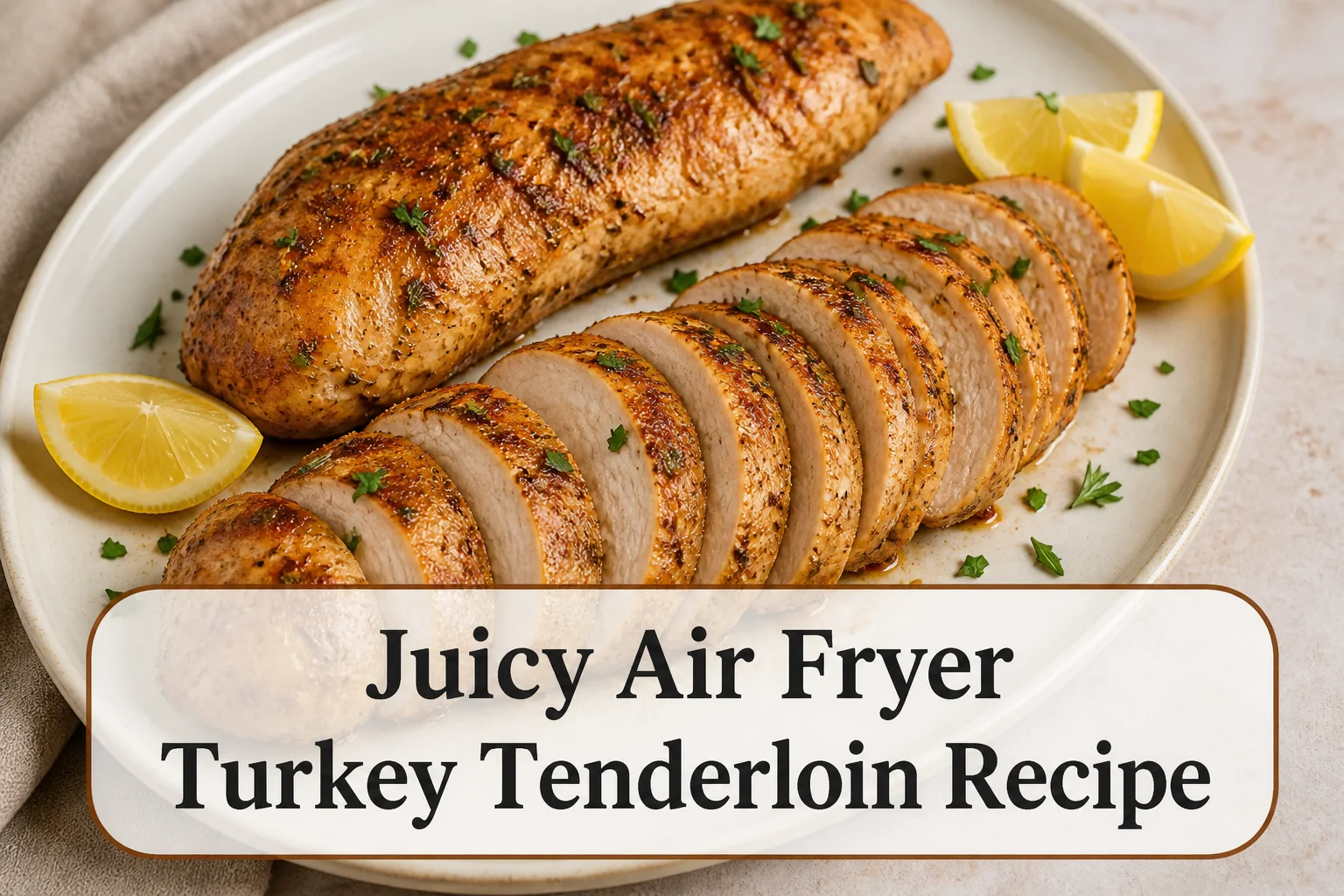
Juicy Air Fryer Turkey Tenderloin Recipe
Ingredients
Equipment
Method
- Preheat the air fryer to 380°F if recommended. Pat fully thawed raw tenderloins dry.
- Fold each thin tapered end underneath to create an even shape; secure with a counted toothpick if needed.
- Combine paprika, garlic powder, rosemary, onion powder, salt and pepper. Coat turkey with oil and Dijon, then apply the rub.
- Arrange with space between pieces. Air fry at 380°F for 10 minutes.
- Turn with clean tongs and cook 8 minutes more. Check each thickest center with a thin thermometer.
- Continue in 2-minute intervals, usually 20 to 26 minutes total, removing each piece when it reaches 165°F.
- Rest on a clean board for 5 to 10 minutes. Remove toothpicks and slice across the grain.
Notes
- This timing is for fully thawed plain raw turkey breast tenderloins, not a whole breast or frozen roast.
- Reduce or omit salt when the package lists retained solution, broth or marinade.
- Check each tenderloin separately and cook every thickest center to 165°F.
- This recipe was developed through culinary research and editorial review.
This recipe was developed through culinary research and editorial review. Tenderloin weight, thickness, retained solution and air-fryer performance vary; check each thickest center and remove the piece when it reaches 165°F.
Nutrition is an estimate based on generic plain turkey tenderloin data; actual values vary with retained solution, brand and oil left in the bowl or basket.