
This cottage cheese bread uses no wheat, almond, coconut or oat flour. Its structure comes from rehydrated egg white powder whipped into a stable foam, while blended cottage cheese adds moisture, mild dairy flavor and a tender crumb.
The result is best understood as a savory, high-protein cloud-style loaf—not a direct copy of yeasted sandwich bread. It is light, flexible and easy to toast, but it will not have wheat bread’s chew or open gluten network. Setting the center fully, limiting free whey and cooling the loaf before slicing are what prevent the wet, eggy middle that can spoil this style of bread.
This recipe was developed through culinary research and editorial review. Egg white powders rehydrate differently, cottage cheese moisture varies by brand, and loaf-pan materials change baking time. Use the foam, internal-temperature and cooling cues below instead of relying on time alone.
If flour is acceptable and you want a chewier result, the cottage cheese breadsticks recipe is the better fit. For another smooth savory use for the same dairy ingredient, try the cottage cheese sauce recipe.
What flourless cottage cheese bread is really like
Traditional bread relies on hydrated wheat proteins to form gluten. Gluten traps fermentation gases, creates chew and supports an airy crumb. This loaf has no gluten and no yeast, so it needs a different structure.
Egg white powder contains concentrated egg proteins. When it is mixed with water and whipped, those proteins unfold around air bubbles. Heat firms that foam into a sliceable network. Cottage cheese interrupts the foam and makes it more tender, but too much liquid or rough mixing can collapse the bubbles before they set.
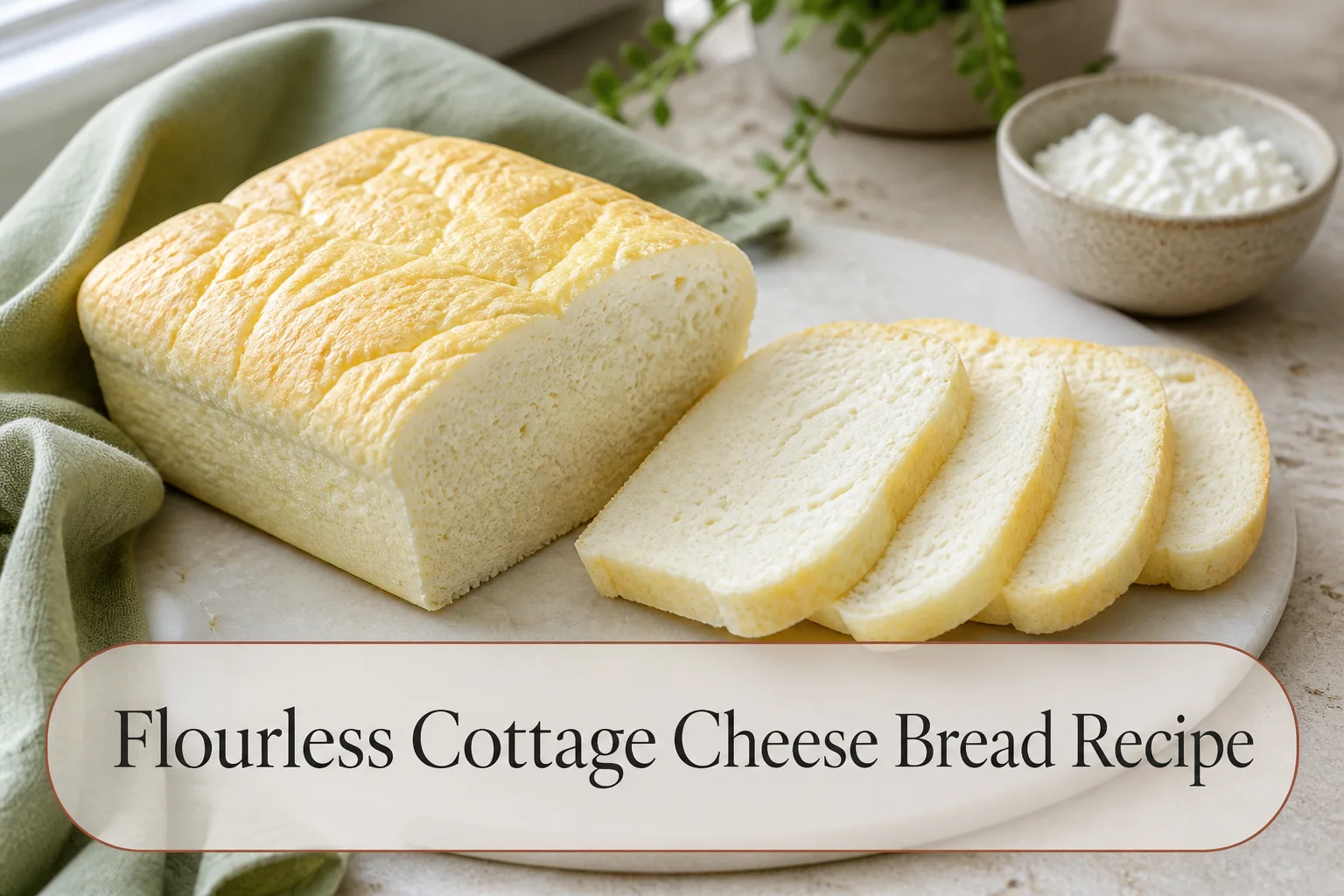
Expect a pale golden loaf with fine, even air pockets. The slices should bend without leaking moisture and should feel springy rather than custardy. Toasting improves the surface and gives the closest experience to conventional bread.
Ingredients
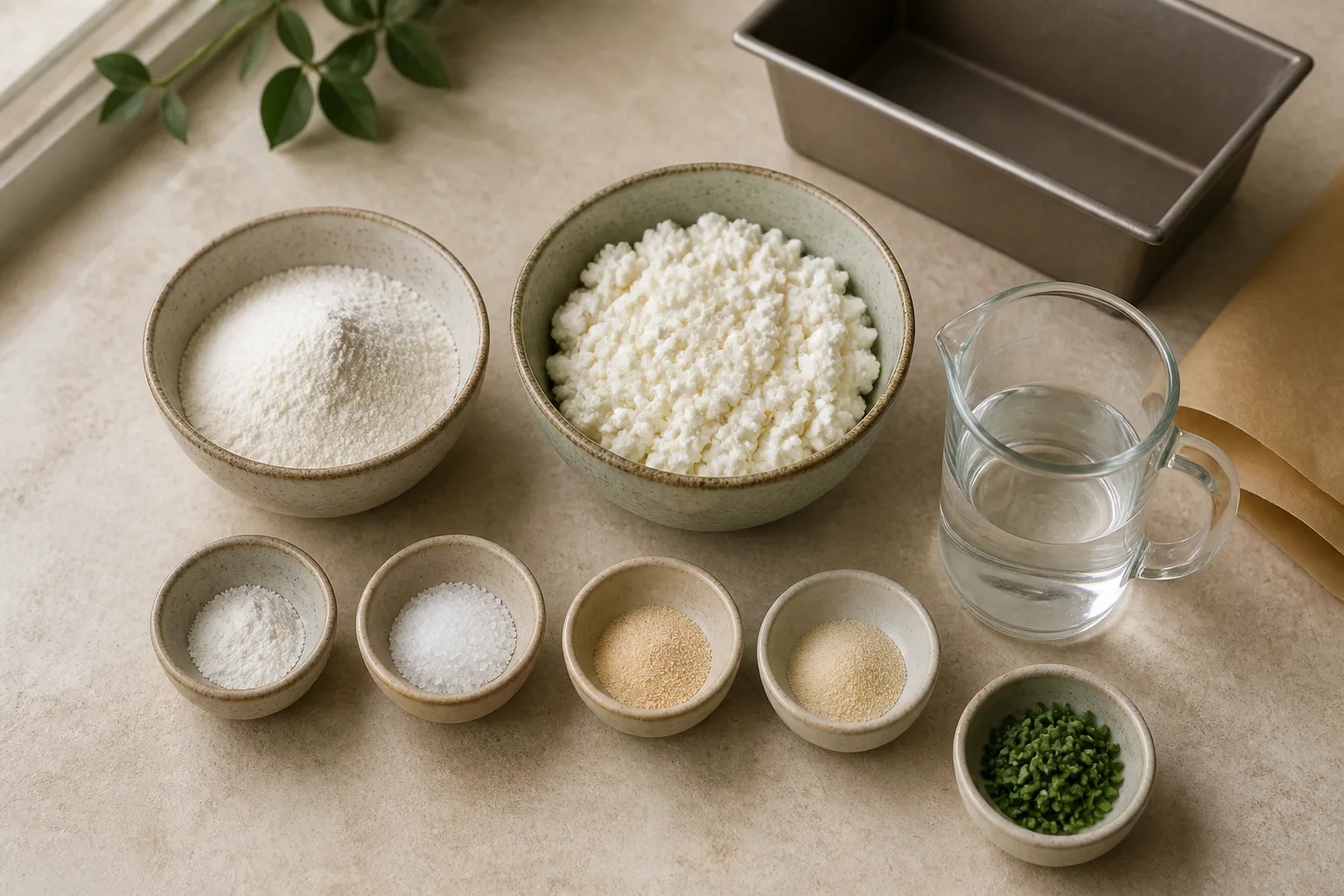
- 1 cup cool water, 70°F to 75°F
- 1 cup pure egg white powder, about 100 grams
- 1 teaspoon cream of tartar
- 1 cup whole-milk cottage cheese, about 225 grams
- 1/2 teaspoon kosher salt
- 1/2 teaspoon garlic powder, optional
- 1/2 teaspoon onion powder, optional
- 1 teaspoon dried chives or Italian seasoning, optional
- nonstick cooking spray, for the pan
Ingredient notes and substitutions
Egg white powder: Use a product whose only main ingredient is dried egg whites. Do not use whey protein, collagen powder, meringue powder with added sugar or a flavored protein shake mix. Their protein structures and added ingredients behave differently. Weighing 100 grams is more dependable than using a cup because powder density varies.
Water: Cool room-temperature water hydrates the powder while allowing a stable foam to develop. Very cold water slows whipping; warm water can make the foam less predictable. If the product label specifies a different water ratio for reconstitution, use the label as a reference and aim for a stiff, glossy foam before folding.
Cream of tartar: This mild acid helps stabilize whipped egg whites. Replace it with 1 teaspoon fresh lemon juice. Do not use both.
Cottage cheese: Whole-milk cottage cheese contributes better tenderness than fat-free cottage cheese. Blend it completely smooth. If a clear pool of whey sits in the container, spoon off that loose liquid before measuring, but do not press the curds dry.
Seasonings: Salt keeps the loaf from tasting flat. Garlic, onion and herbs are optional and can be omitted for a neutral loaf. Avoid wet mix-ins such as chopped tomatoes, fresh spinach or salsa because they compromise the foam and center.
Cooking spray: A light coating helps parchment sit flat and protects any exposed pan edges. It is not mixed into the batter.
Equipment that makes the method easier
- 8 1/2-by-4 1/2-inch light-colored metal loaf pan
- parchment paper
- stand mixer with whisk attachment or powerful hand mixer
- blender or small food processor
- two clean mixing bowls
- flexible spatula
- instant-read thermometer
- wire cooling rack
A metal pan conducts heat into the center more effectively than thick glass or silicone. A 9-by-5-inch pan also works, but the loaf will be lower and may finish sooner. Make sure the mixer bowl and whisk are completely free of oil, which interferes with foam formation.
How to make flourless cottage cheese bread
1. Prepare the oven and pan
Place a rack in the center of the oven and preheat to 350°F. Give the oven at least 20 minutes after it signals that it is ready; a fully heated oven sets the outer foam before the loaf can spread.
Lightly coat the loaf pan with spray. Line the long sides and bottom with one strip of parchment, leaving handles above the rim. Avoid a thick, wrinkled parchment bundle in the corners because it can insulate the batter.
2. Remove excess surface whey
Open the cottage cheese and inspect it before measuring. Spoon off only a separate clear pool of whey. Measure 1 cup without packing it.
This is a controlled moisture adjustment, not full draining. Pressing the curds dry would change both the amount of dairy and the tenderness of the loaf.
3. Blend the cottage cheese
Blend cottage cheese, salt and any dry seasonings for 45 to 60 seconds. Scrape the container safely, then continue until the mixture looks like thick, glossy yogurt with no visible curds.
Set it aside while the egg mixture is whipped. Do not add the blended dairy to the powder before whipping; the fat and weight would prevent maximum volume.
4. Hydrate the egg white powder
Add cool water to the clean mixer bowl. Sprinkle egg white powder gradually over the surface while mixing on low. Continue on low for 60 seconds, scrape any dry pockets from the sides and let the mixture stand for 2 minutes.
The short rest allows stubborn granules to hydrate. The mixture should be smooth before high-speed whipping begins.
5. Whip to stiff peaks
Add cream of tartar. Increase the mixer to medium-high and whip for 6 to 9 minutes, or until the foam is glossy and forms stiff upright peaks when the whisk is lifted.
Stop before the foam becomes dry, clumpy or cottony. A properly whipped peak looks smooth and holds its point; an underwhipped peak droops and cannot support the cottage cheese.
6. Fold without deflating
Stir about one-quarter of the egg-white foam into the blended cottage cheese to lighten it. This first portion can be mixed more firmly.
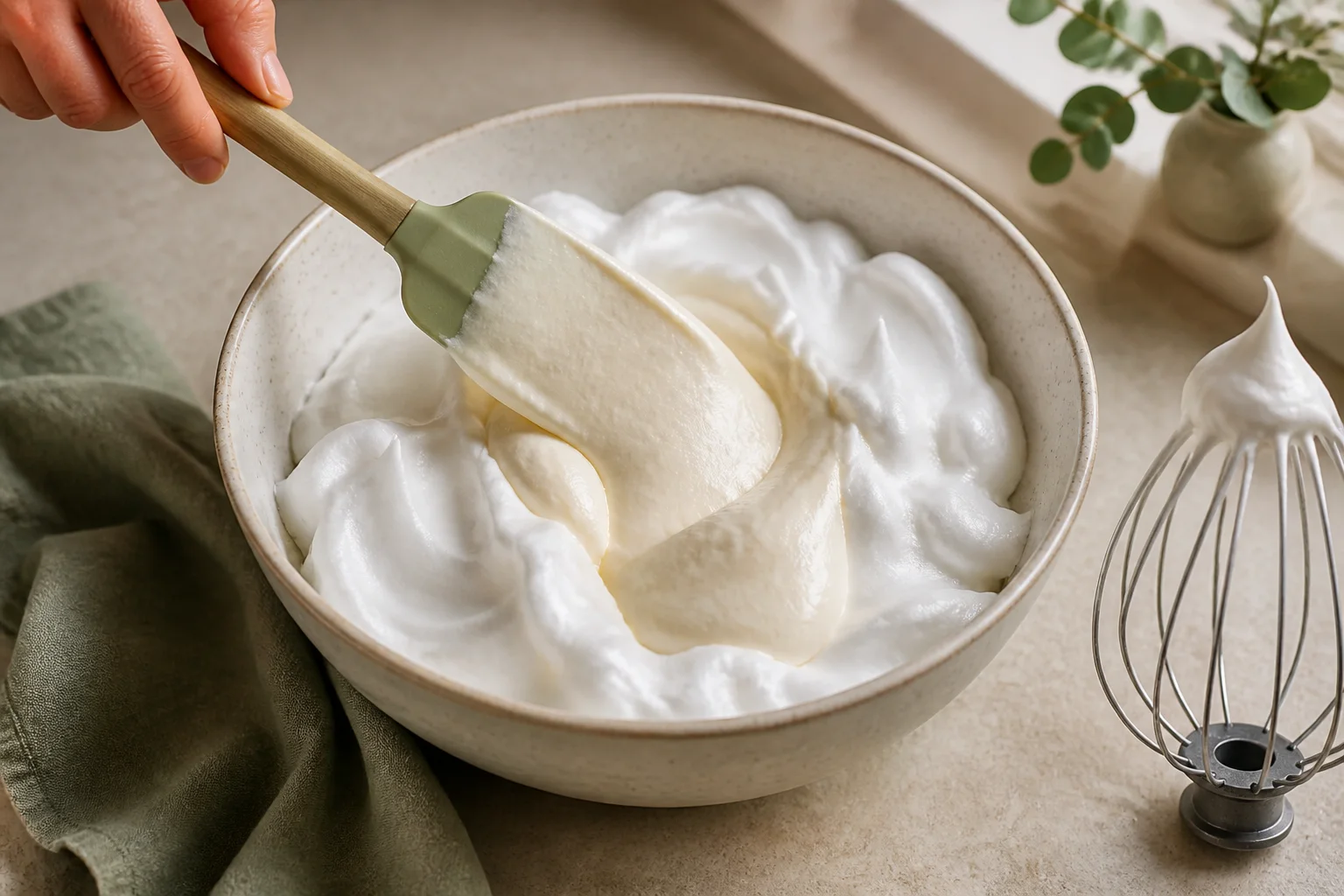
Pour the lightened cottage cheese over the remaining foam. Fold with a flexible spatula: cut down through the center, sweep along the bottom and lift the mixture over itself while rotating the bowl. Stop as soon as no large white streaks or dense dairy pockets remain.
Do not beat, stir in circles or keep folding for perfect uniformity. A few small wisps are less damaging than losing the trapped air.
7. Fill the loaf pan
Transfer the batter immediately to the prepared pan. Mound it slightly higher in the center and smooth the top with only two or three gentle strokes.
Tap the pan once—not repeatedly—to settle one large hidden pocket. The batter should sit above the halfway point and look airy rather than pourable.
8. Bake until the center is set
Bake for 40 minutes without opening the door. Then check through the oven window. When the top is dry and lightly golden, insert an instant-read thermometer into the center without touching the pan.
Continue baking until the center reaches at least 160°F for egg safety and preferably 185°F to 190°F for a firmer, less damp slice, about 45 to 55 minutes total in a metal pan. If the top browns too quickly before the center reaches the texture range, tent it loosely with foil.
The loaf should spring back lightly at the center. A skewer may pick up a little moisture from the protein-rich crumb, so temperature is a more useful doneness measure than expecting a perfectly dry toothpick.
9. Cool in stages
Turn off the oven, crack the door and leave the loaf inside for 10 minutes. This softens the temperature change that can cause a sudden collapse.
Lift the loaf from the pan using the parchment handles. Remove the paper and cool upright on a rack for at least 90 minutes. Do not slice while warm; steam still moving through the crumb can make it appear raw and can compress the delicate structure.
The three cues that prevent a wet center
Stable foam
The egg-white mixture must reach glossy stiff peaks before cottage cheese is folded in. If it is merely frothy or forms soft drooping peaks, the batter has less air and more unstructured liquid. Continuing the recipe at that point usually produces a low, dense loaf.
Center temperature
Color is an unreliable measure. Dairy and egg proteins may remain pale even when cooked, while a dark pan can brown the outside long before the middle firms. An instant-read thermometer reaches the part of the loaf that matters.
USDA guidance says egg dishes should reach 160°F for safety. For this specific bread-like texture, allowing the center to climb further into the 185°F to 190°F range drives off more moisture and improves sliceability. The higher range is a quality cue, not a separate USDA safety rule.
Complete cooling
The crumb continues to organize as steam escapes. Cutting after 15 minutes releases that steam all at once and presses the warm structure together. A 90-minute cooling period is not decorative waiting; it is part of the recipe.
Why the loaf rises and then falls
Some settling is normal because this is an egg-foam loaf without gluten. It may contract slightly at the sides and lose a little height as it cools.
A dramatic collapse usually points to one of four issues: the foam was underwhipped, the folding was too aggressive, the center was underbaked or the hot loaf met a sudden cold draft. An oily bowl can also keep the original foam from becoming strong enough.
Opening the oven early releases heat before the center has formed a stable network. Wait at least 40 minutes before opening the door. When baking is finished, use the cracked-door rest to slow the transition.
How to slice and serve it
Use a serrated knife and a gentle sawing motion. Pressing straight down with a chef’s knife compresses the fine crumb. For the neatest pieces, chill the fully cooled loaf for 30 minutes before cutting.
Toast slices in a toaster oven, skillet or conventional toaster on a moderate setting. Because the loaf is light and protein-rich, it can brown faster than thick wheat bread. Start with a short cycle.
Savory toppings suit its mild flavor: avocado, sliced turkey, smoked salmon, egg salad or the creamy cottage cheese veggie dip used as a spread. For a sweet direction, omit garlic, onion and herbs, then add peanut butter or berries after toasting.
The loaf is not sturdy enough for a very wet sandwich filling unless toasted first. Keep sauces light and place lettuce between the bread and juicy tomatoes.
Troubleshooting
The center looks wet or custardy
The loaf was sliced warm, contained excess cottage-cheese whey or left the oven too soon. Let an uncut loaf cool fully before judging. On the next bake, use a thermometer and aim for 185°F to 190°F in the center for a firmer crumb.
The egg white powder stays lumpy
Sprinkle it gradually over water while mixing on low, then allow the 2-minute hydration rest. Adding water onto a compact pile of powder traps dry pockets that remain difficult to break up.
The foam will not reach stiff peaks
Check for oil on the bowl or whisk. Confirm that the product is pure egg white powder rather than a flavored protein powder. Keep whipping if the foam is glossy but still droops; start again if it is greasy, watery or contaminated with yolk.
The foam becomes dry and clumpy
It was overwhipped. The surface will look dull and broken instead of glossy. A slightly overwhipped foam may be difficult to fold without losing volume; severely clumpy foam is best restarted.
The batter collapses during folding
The cottage cheese may have been too wet, or the spatula motion was too forceful. Lighten the dairy with one-quarter of the foam first and fold the rest only until large streaks disappear.
The loaf sticks to the pan
Use parchment across the bottom and long sides, plus a very light spray. Remove the parchment after the 10-minute oven rest so condensation does not collect between paper and crust.
The bread tastes too eggy
Make sure the center is fully baked and the loaf completely cool. Garlic, onion, herbs and toasting make the flavor more savory. It will still taste more like a delicate egg-white loaf than conventional yeast bread.
The loaf is rubbery
Too much egg white powder, prolonged high heat or aggressive reheating can tighten the proteins. Weigh the powder, remove the loaf once its center is firm, and toast briefly rather than microwaving for a long time.
Flavor variations
Everything seasoning: Omit the kosher salt and fold 1 tablespoon salt-containing everything seasoning into the lightened cottage cheese. Sprinkle a small amount over the top only if it does not weigh down the batter.
Herb and pepper: Add 1 teaspoon Italian seasoning and 1/4 teaspoon black pepper to the blended cottage cheese.
Smoky: Add 1/2 teaspoon smoked paprika and 1/4 teaspoon garlic powder. Expect a warmer-colored crumb.
Neutral breakfast loaf: Omit garlic, onion and herbs. Keep the salt; a completely unsalted loaf tastes noticeably flat.
Avoid folding in shredded vegetables, heavy cheese cubes, olives or fresh fruit. Those additions introduce weight and water. Add them as toppings after the bread is baked instead.
Storage and reheating
Cool the loaf completely before storage. Place parchment between slices and refrigerate in an airtight container for up to 4 days. Because it contains dairy and a high proportion of egg, do not store it at room temperature like ordinary bread.
For longer storage, freeze separated slices in a sealed freezer bag for up to 2 months. Remove excess air and freeze the slices flat so they do not crush one another. Thaw overnight in the refrigerator or toast gently from frozen.
Toast refrigerated slices for 2 to 4 minutes in a toaster oven at 325°F, or warm briefly in a dry skillet over medium-low heat. Microwave reheating softens the surface and can make the crumb rubbery, so use 10-second intervals only when necessary.
Frequently asked questions
Is this bread really flourless?
Yes. It contains no wheat flour or nut, coconut and oat flour alternatives. Egg white powder is dehydrated egg white, not flour.
Can I use liquid egg whites instead of egg white powder?
Not as a direct cup-for-cup swap in this formula. Powder supplies concentrated protein while the measured water controls its hydration. Liquid whites change both quantities and require a separately developed ratio.
Can I use whey protein powder?
No. Whey and egg-white proteins set differently. Flavored whey products also contain sweeteners, gums and flavorings that can prevent the expected foam and loaf structure.
Is flourless cottage cheese bread gluten-free?
The listed ingredients do not inherently contain gluten, but anyone with celiac disease or a medical need should verify that the egg white powder, seasonings and cooking spray are certified or labeled appropriately and avoid cross-contact.
Why does the recipe use whole-milk cottage cheese?
Its small amount of fat improves tenderness and flavor. Lower-fat cottage cheese may work, but brand-to-brand whey differences matter more than the fat number alone.
What pan is best?
An 8 1/2-by-4 1/2-inch light-colored metal loaf pan gives the loaf support and transfers heat efficiently. Silicone can delay center setting, while dark metal may brown the outside quickly.
Can I double the recipe?
Make two separate loaves rather than one oversized loaf. A deeper mass of egg foam is difficult to heat evenly before the outside becomes tough.
Does it work for sandwiches?
Yes, especially after toasting, but it is more delicate than wheat bread. Use moderate fillings and protect it from watery tomatoes or heavy sauces.
Recipe development note
This flourless cottage cheese bread recipe was developed through culinary research and editorial review. It has not been represented as a personal kitchen test. Egg white powder formulation, cottage cheese moisture, mixer power, pan material and oven calibration vary; use stiff peaks, center temperature and a complete cooling period as the main controls.
Nutrition is an estimate and changes with the brands used. The accompanying visuals are AI-assisted food-editorial images, not photographs of a kitchen test.
Recipe at a glance
| Metric | Details |
|---|---|
| Prep time | 20 minutes |
| Cook time | 50 minutes |
| Total time | 170 minutes |
| Yield | 10 slices |
Printable recipe card
Flourless Cottage Cheese Bread Recipe
Ingredients
Equipment
Method
- Preheat the oven to 350°F with a center rack. Lightly spray and parchment-line an 8 1/2-by-4 1/2-inch metal loaf pan.
- Spoon off only a separate clear pool of whey from the cottage cheese, then measure 1 cup without packing or pressing it dry.
- Blend cottage cheese, salt and optional seasonings for 45 to 60 seconds until glossy and completely smooth. Set aside.
- Mix cool water and egg white powder on low for 60 seconds. Scrape any dry pockets and let stand 2 minutes.
- Add cream of tartar and whip on medium-high for 6 to 9 minutes, until glossy stiff peaks stand upright without looking dry or clumpy.
- Stir one-quarter of the foam into the cottage cheese to lighten it. Gently fold that mixture into the remaining foam just until large streaks disappear.
- Transfer batter immediately to the pan, mound it slightly in the center and smooth with only a few gentle strokes.
- Bake undisturbed for 40 minutes, then check. Continue to 185°F to 190°F in the center for a firm slice, about 45 to 55 minutes total; tent if browning quickly.
- Turn off the oven, crack the door and rest the loaf 10 minutes. Unmold, remove parchment and cool upright on a rack for at least 90 minutes before slicing.
Notes
- Use pure egg white powder, not whey protein or flavored protein mix.
- Remove only clearly separated whey; do not press the cottage cheese dry.
- Whip to glossy stiff peaks and fold only until large streaks disappear.
- The USDA egg-dish safety minimum is 160°F; 185°F to 190°F gives this loaf a firmer, less damp crumb.
- Cool at least 90 minutes before slicing.
- This recipe was developed through culinary research and editorial review.
This recipe was developed through culinary research and editorial review. Egg white powder formulation, cottage cheese moisture, mixer power, pan material and oven calibration vary; use the foam, center-temperature and cooling cues in the method.
Nutrition is an estimate per slice and varies with the egg white powder and cottage cheese brands used.